Search results
Search for "surface energy" in Full Text gives 236 result(s) in Beilstein Journal of Nanotechnology. Showing first 200.
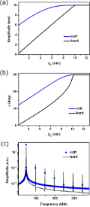
Nanoscale effects in the characterization of viscoelastic materials with atomic force microscopy: coupling of a quasi-three-dimensional standard linear solid model with in-plane surface interactions
Beilstein J. Nanotechnol. 2016, 7, 554–571, doi:10.3762/bjnano.7.49
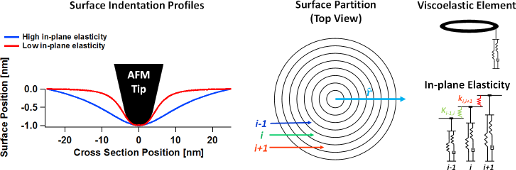
- AFM simulation. A multifrequency AFM simulation tool based on the above sample model is provided as supporting information. Keywords: atomic force microscopy; modeling; polymers; simulation; spectroscopy; standard linear solid; surface elasticity; surface energy; viscoelasticity; Introduction The
- may be difficult to properly define the surface energy (even conceptually) since the local material constituents (e.g., polymer chains) can significantly differ from their neighbors and can be, to a varying degree, flexible and mobile. At this scale, the surface is not a smooth continuum but may
- dangling bonds on the surface [29]. Loosely speaking (that is, without considering reconstruction and/or relaxation), the surface energy correlates with the number of bonds broken per unit area, divided between the two surfaces that are created (the breaking of the bond requires that the appropriate bond


Early breast cancer screening using iron/iron oxide-based nanoplatforms with sub-femtomolar limits of detection
Beilstein J. Nanotechnol. 2016, 7, 364–373, doi:10.3762/bjnano.7.33
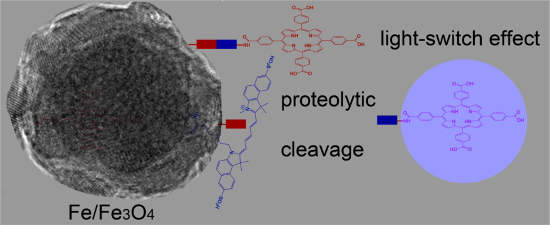
- -resonance quenching (dipole–surface energy transfer (SET) [20][21]) from TCPP to Fe/Fe3O4 and Förster resonance energy transfer (FRET [20][22]) from TCPP to cyanine 5.5. The latter is permanently tethered to the inorganic nanoparticle. For all of the employed consensus sequences, with the exceptions of
- effect” upon proteolytic cleavage: the fluorophore is switched on due to the increase in distance between the Fe/Fe3O4 core/shell nanoparticle, leading to decreased Förster resonance energy transfer (FRET) [21][24], k1, and dipole–surface energy transfer (SET) [20][22], k2. Further explanations are


Synthesis and applications of carbon nanomaterials for energy generation and storage
Beilstein J. Nanotechnol. 2016, 7, 149–196, doi:10.3762/bjnano.7.17
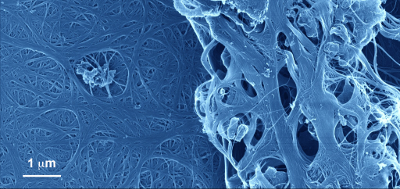
- the solvent molecules [88][89]. In particular, it was discovered that effective solvents are those with a surface energy similar to graphene (≈0–50 mJ m−2) [88]: where ΔHmix is the enthalpy of the mixing, Vmix is the volume of the mixture, TNS is the thickness of a graphene nanosheet, ES,S and ES,G
- sonication [88][90]. Furthermore, some solvents are more suitable because they match the graphene surface energy, such as N,N-dimethylformamide (DMF), benzyl benzoate, γ-butyrolactone (GBL), 1-methyl-2-pyrrolidinone (NMP), N-vinyl-2-pyrrolidone (NVP) and N,N-dimethylacetamide (DMA), while ethanol, acetone















Chemical bath deposition of textured and compact zinc oxide thin films on vinyl-terminated polystyrene brushes
Beilstein J. Nanotechnol. 2016, 7, 102–110, doi:10.3762/bjnano.7.12
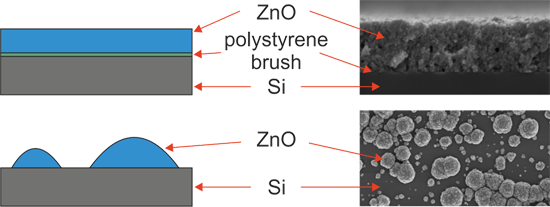
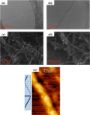
- 20 cycle sample. This Volmer–Weber-like growth [41] indicates that the surface energy of Si is smaller than the interface energy between ZnO and SiOx plus the surface energy of ZnO. In the case of the PS template, the growth of a homogeneous film is favored (Figure 5). A representative cross section


Two step formation of metal aggregates by surface X-ray radiolysis under Langmuir monolayers: 2D followed by 3D growth
Beilstein J. Nanotechnol. 2015, 6, 2406–2411, doi:10.3762/bjnano.6.247
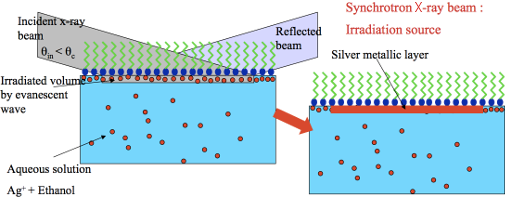
- oriented 2D crystals, the irradiation induced the in-plane coalescence of these 2D crystals. One then obtains a 2D crystal with a surface area of approximately 10 µm2 with thickness of about 4.5 nm (equal to the X-ray penetration depth) [4]. However, the surface energy of the two surfaces of this platelet
- should differ since the interfaces are different (water/Ag below and organic molecule/air above). Such difference should induce a curvature of the platelet, which could rupture when the surface energy reaches a critical value. This could lead to the disorientation of the platelets and the formation of


Nanostructured surfaces by supramolecular self-assembly of linear oligosilsesquioxanes with biocompatible side groups
Beilstein J. Nanotechnol. 2015, 6, 2377–2387, doi:10.3762/bjnano.6.244
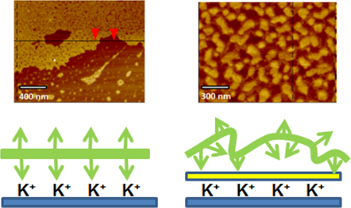
- observed due to the donor–acceptor character of the functional groups. The texture of supramolecular nanostructures formed by the studied materials on mica was analysed with atomic force microscopy and their specific surface energy was estimated by contact angle measurements. Significant differences in the
- operating mechanism of adsorption [34][35]. These two types of monolayers can differ significantly due to conformational variabilities observed for macromolecular chains. On the other hand, PSAMs offer improved surface stability, ease in processing, unique chemical specificity and tunable surface energy [12
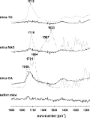
- force microscopy (AFM) and attenuated total reflectance infrared spectroscopy (ATR-FTIR) were used as analytic tools for the studies. The changes in the free surface energy of the prepared hydrophilic surfaces were also investigated for all LPSQ-COOH/X adsorbed on native and primed mica. The obtained




Green and energy-efficient methods for the production of metallic nanoparticles
Beilstein J. Nanotechnol. 2015, 6, 2354–2376, doi:10.3762/bjnano.6.243
- consequently increases their surface energy and biological effectiveness [6][7]. Therefore, nanotechnology attracted the attentions of many researchers in different research areas, such as physics, chemistry, biology, and engineering [8]. Their investigations resulted in development of materials with new


Electrochemical coating of dental implants with anodic porous titania for enhanced osteointegration
Beilstein J. Nanotechnol. 2015, 6, 2183–2192, doi:10.3762/bjnano.6.224
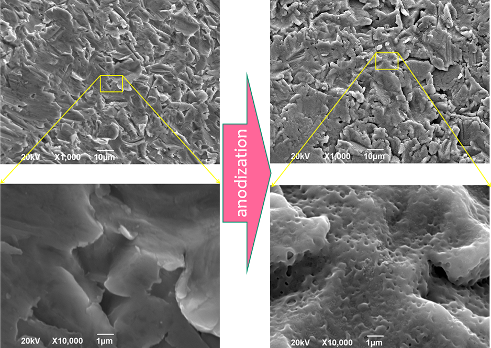
- with most metals, Ti in wet or even ambient air environment develops a thin layer of native oxide, namely TiO2 (titania). While it is generally recognized that surface topography is a major factor for osteointegration of all implants [4], the lower surface energy of titania as compared to that of


A single-source precursor route to anisotropic halogen-doped zinc oxide particles as a promising candidate for new transparent conducting oxide materials
Beilstein J. Nanotechnol. 2015, 6, 2161–2172, doi:10.3762/bjnano.6.222
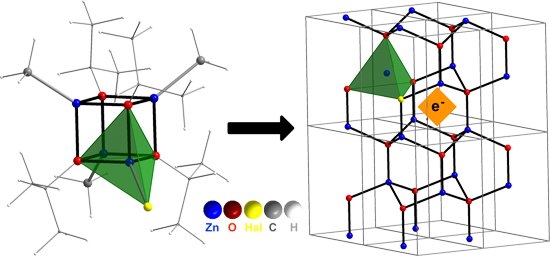
- corresponding to lattice planes with a,b components will be decreased. The latter will raise the surface energy and also the apposition rate of ZnO species on the surfaces [68]. As a result main growth takes places perpendicular to a,b (Figure 3d). The hypothesis that the presence of Cl also influences the



Nanostructured superhydrophobic films synthesized by electrodeposition of fluorinated polyindoles
Beilstein J. Nanotechnol. 2015, 6, 2078–2087, doi:10.3762/bjnano.6.212
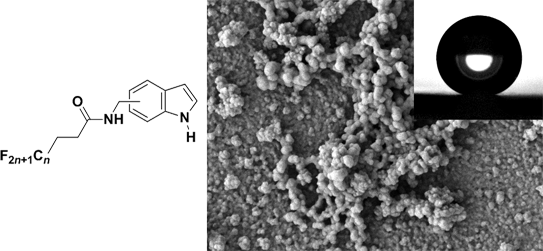
- oleophobic properties are obtained due to the presence of spherical nanoparticles and low surface energy compounds. Keywords: bioinspiration; conducting polymers; electrochemistry; nanostructures; polyindoles; superhydrophobic; Introduction The number of studies about materials with superhydrophobic
- , in both animals and plants, and allow them surviving against predators or hostile environments such as extremely humid or dry regions, for example [7][8][9][10][11][12]. Bioinspiration has shown the importance of developing structured surfaces in the presence of low surface energy materials that
- allow one to obtain more easily superhydrophobic properties with higher robustness [13][14][15]. Controlling the surface energy and the roughness is hence fundamental to achieve the superhydrophobicity. All kind of materials can be used to reach superhydrophobicity, but conducting polymers have many




Two-phase equilibrium states in individual Cu–Ni nanoparticles: size, depletion and hysteresis effects
Beilstein J. Nanotechnol. 2015, 6, 1811–1820, doi:10.3762/bjnano.6.185
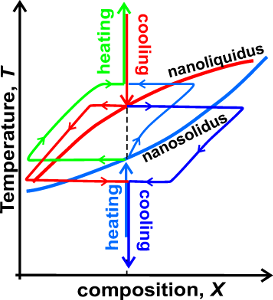
- total number of atoms N0 and the surface area can be defined as: for phase 1 case – for phase 2 case – for solution model – Here the f1, f2 and f are shape factors and the value f/N01/3 represents the well-known surface-to-volume ratio; σ1(X,T) and σ2(X,T) are surface energy functions of phase 1 and
- phase 2, respectively. As one can see in Equations 3–5 to the origin of size effect belong the finite volume or number of atoms, the surface area and surface energy. One may observe also that the Gibbs free energy density in a nanoscale system is increased by the surface energy input. If the nanophase 2
- for different systems (mainly for pure metals and polymorphic transitions when bulk bcc structures transform to fcc or hcp types in a nanoscale) [23][24]. Figure 1 shows three qualitative situations concerning the effects of size and composition dependence of the surface energy on the first-order


The Kirkendall effect and nanoscience: hollow nanospheres and nanotubes
Beilstein J. Nanotechnol. 2015, 6, 1348–1361, doi:10.3762/bjnano.6.139
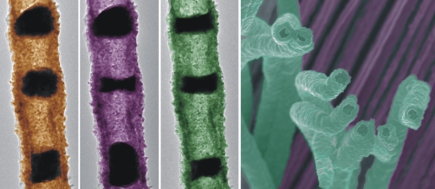
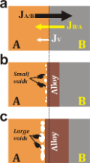
- is higher than the surface energy of a single large void, during the conversion process, multiple small voids tend to agglomerate and form a single large void to minimize the surface energy [32]. Until today, the explanation of such asymmetrical conversion mechanism is still under discussion. In



Growth and morphological analysis of segmented AuAg alloy nanowires created by pulsed electrodeposition in ion-track etched membranes
Beilstein J. Nanotechnol. 2015, 6, 1272–1280, doi:10.3762/bjnano.6.131
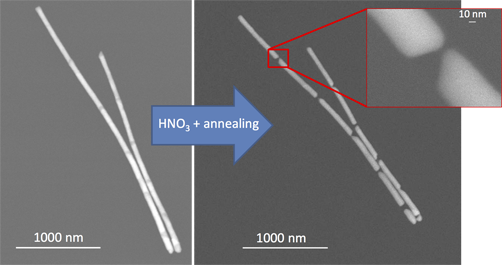
- segments, could be removed. The ends of the Au-rich segments are rounded compared to the unheated segments and the gap sizes are in most of the cases increased. Rounding of the nanowire ends and removal of small bridges can be explained by surface diffusions of the atoms and the lower surface energy of

Surface excitations in the modelling of electron transport for electron-beam-induced deposition experiments
Beilstein J. Nanotechnol. 2015, 6, 1260–1267, doi:10.3762/bjnano.6.129
- features and trends of the surface excitation probability: Surface energy losses can be undergone by the charged projectile on either side of the interface, at the solid side or at the vacuum side. Indeed, a surface charge can be induced regardless of the side at which the projectile is moving on and, thus
- emerging direction. This effect, known as in-out asymmetry in surface energy-losses, has been long predicted but only recently observed experimentally [46]. In-out differences are most accentuated for surface-crossing directions close to the surface normal and for high kinetic energies (about 1 keV). Monte
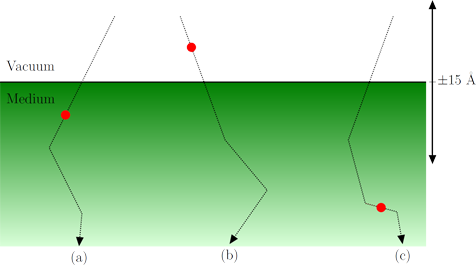
- implies a modification of the sampling algorithm in the vicinity of the surface (typically 15 Å above and below the surface), as schematically shown in Figure 1. Technical details on the implementation of the algorithm for the simulation of surface energy losses can be found elsewhere in great detail [30


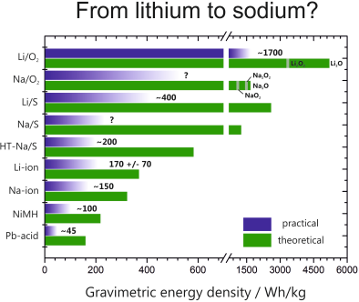
From lithium to sodium: cell chemistry of room temperature sodium–air and sodium–sulfur batteries
Beilstein J. Nanotechnol. 2015, 6, 1016–1055, doi:10.3762/bjnano.6.105


Characterization of nanostructured ZnO thin films deposited through vacuum evaporation
Beilstein J. Nanotechnol. 2015, 6, 971–975, doi:10.3762/bjnano.6.100
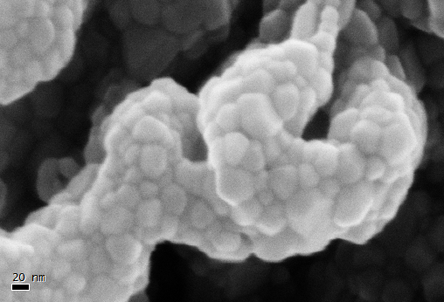
- decomposed into two or three smaller particles that migrate to the substrate. When this particle reaches the substrate, it lacks surface energy to be deposited firmly and has a C-axis orientation growth. However, when the surface energy is activated from an external source, it gives the system a rapid


Electron-stimulated purification of platinum nanostructures grown via focused electron beam induced deposition
Beilstein J. Nanotechnol. 2015, 6, 907–918, doi:10.3762/bjnano.6.94
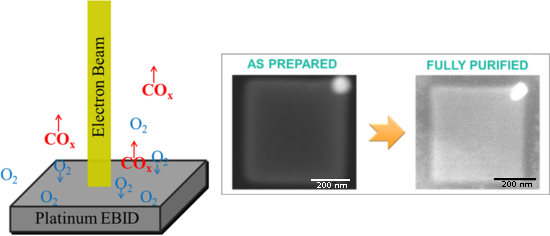
- concentration is believed to be localized near the Pt–PtCx interface due to limited diffusion and trapping at Pt nanoparticles and the purification front, we compare in Figure 4c the normalized purification rate (normalized to 5 keV and adjusted for different currents) from Figure 4a and the near surface energy




Structure and mechanism of the formation of core–shell nanoparticles obtained through a one-step gas-phase synthesis by electron beam evaporation
Beilstein J. Nanotechnol. 2015, 6, 874–880, doi:10.3762/bjnano.6.89
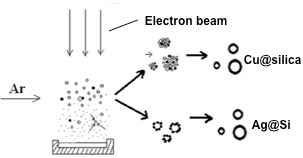
- upper layer is essentially parallel to the bottom plane. It is known that the minimal value of the crystal formation and surface energy is obtained when a crystal plane grows on a substrate of the same crystal structure. As the crystal structure of both of Cu and Cu2O are cubic and the moiré patterns
- a drive to decrease the surface energy of the system or differences in the atomic sizes of the component materials. In the case of the Cu–Si system, the difference in covalent radius between Cu (132 pm) and Si (111 pm) is insignificant and thus size effects are not considered relevant for this
- surface tension with temperature [14]. The empirical dependence of the surface tension of copper with temperature is [15]. The surface tension of silicon varies as [16]. Below the melting point, when the materials are solid, the surface energy is the solid equivalent of the surface tension. The surface


Protein corona – from molecular adsorption to physiological complexity
Beilstein J. Nanotechnol. 2015, 6, 857–873, doi:10.3762/bjnano.6.88
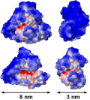
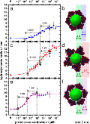
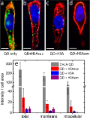
- NP. The effect of changing surface energy or surface restructuring is well-known from the field of catalysis [17][18][19][20][21] but its implications for the biological behavior of NPs remains somewhat elusive. We note that the macromolecular nature of the proteins constituting the corona requires a



Capillary and van der Waals interactions on CaF2 crystals from amplitude modulation AFM force reconstruction profiles under ambient conditions
Beilstein J. Nanotechnol. 2015, 6, 809–819, doi:10.3762/bjnano.6.84
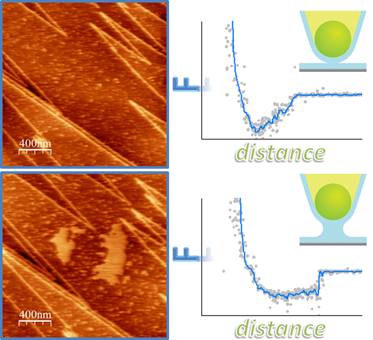
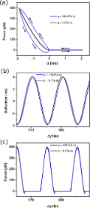
- long range force corresponding to the capillary interaction FCAP. FCAP is written as: where γ is the surface energy and X is the average contact coefficient [3][14]. Equations 7, 8 and 9 have also been included. The resulting force profile is shown in Figure 3b. For distances d < don hysteresis has


In situ observation of biotite (001) surface dissolution at pH 1 and 9.5 by advanced optical microscopy
Beilstein J. Nanotechnol. 2015, 6, 665–673, doi:10.3762/bjnano.6.67
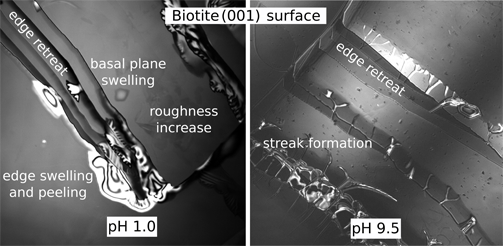
- the existence of a surface energy distribution. In agreement with the above consideration the variability of biotite reactivity is an intrinsic factor of its crystalline anisotropy, i.e., surface energy variance, and thermodynamic parameters, such as activation energy, are not representative of the


Entropy effects in the collective dynamic behavior of alkyl monolayers tethered to Si(111)
Beilstein J. Nanotechnol. 2015, 6, 583–594, doi:10.3762/bjnano.6.60
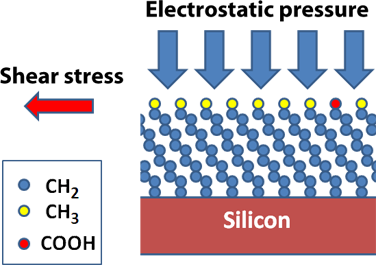
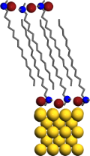
- surface chemistry, surface energy, biocompatibility, friction, corrosion, liquid chromatography, interfacial interactions and electronic transport [1][2][3][4][5][6]. More recent studies have been focused on the functionalization of nanostructures. However, in spite of a large number of experimental and




Dynamic force microscopy simulator (dForce): A tool for planning and understanding tapping and bimodal AFM experiments
Beilstein J. Nanotechnol. 2015, 6, 369–379, doi:10.3762/bjnano.6.36
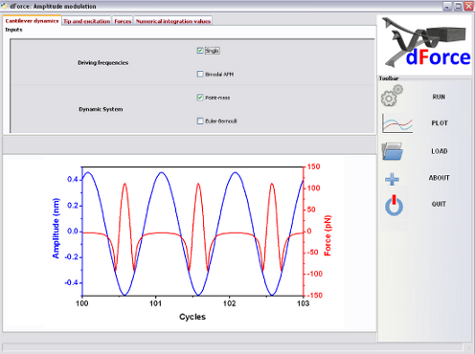
- stiff and small contacts with low adhesion forces. The DMT model [47] considers an elastic term given by Hertz contact mechanics as and an adhesion force that acts outside the contact area given by where γ is the sample surface energy. Johnson–Kendall–Roberts contact mechanics (JKR) The JKR model is




Nanoparticle shapes by using Wulff constructions and first-principles calculations
Beilstein J. Nanotechnol. 2015, 6, 361–368, doi:10.3762/bjnano.6.35
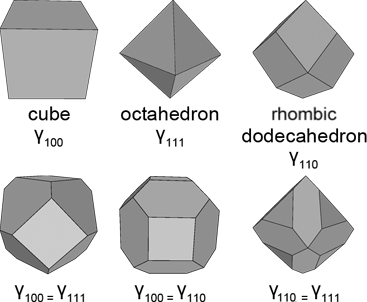
- Substances”, J. Willard Gibbs concluded that a given quantity of matter will attain a shape such that the total surface energy is minimal [7]. For perfect crystalline solids, atomic planes are members of a countable set characterized by integer Miller indexes (hkl). The shape of a crystalline solid will
- therefore be a polyhedron for which only faces parallel to (hkl) planes are allowed. It is only reasonable to assume that faces with a relatively low surface energy will dominate the equilibrium shape. Several decades later, mineralogist Georg Wulff suggested [8] that the polyhedron that corresponds to the
- lowest surface energy of a crystalline substance can be constructed in the following way (the so-called Wulff construction): One chooses a constant c, and a Cartesian set of axes. Starting from the origin, O, one draws a plane that is normal to the [hkl] vector and has a distance dhkl = c·γhkl from O



Strain distribution due to surface domains: a self-consistent approach with respect to surface elasticity
Beilstein J. Nanotechnol. 2015, 6, 321–326, doi:10.3762/bjnano.6.30
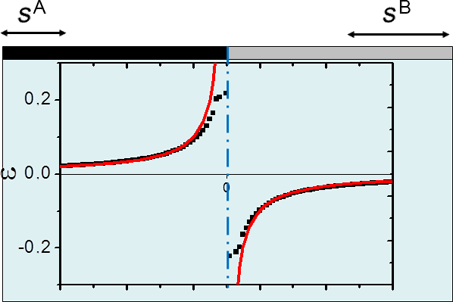
- volume V0 but without any surface. In these expressions are the bulk stress components and Cijkl the bulk elastic constant. The so-defined surface quantities depend on a typical length scale at which surface effects are disentangled from bulk effects. Actually, in surface energy calculations, this
- length is unambiguoulsy determined by a Gibbs dividing surface construction [14]. Surface stress and surface elastic constants values can thus be calculated from strain derivatives of the well-defined surface energy quantity [11]. In contrast to surface energy density and bulk elastic constants, surface