


Search results
Search for "transmission electron microscopy" in Full Text gives 699 result(s) in Beilstein Journal of Nanotechnology. Showing first 200.
Is the Ne operation of the helium ion microscope suitable for electron backscatter diffraction sample preparation?
Beilstein J. Nanotechnol. 2021, 12, 965–983, doi:10.3762/bjnano.12.73
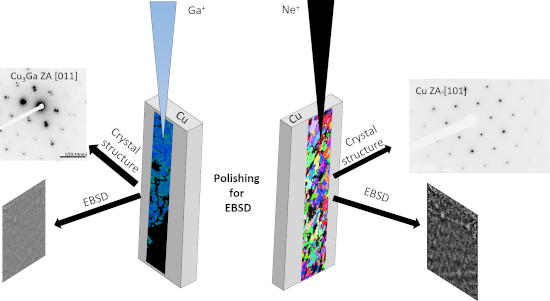
- , defects such as interstitials or vacancies can be created [23]. This can induce a significant amount of crystal structure alterations in a sample and thus artefacts. While these artefacts are well recognized for transmission electron microscopy (TEM) lamella preparation, in which the lamella preparation
- transmission electron microscopy (STEM), TEM, TEM selected area electron diffraction (SAED), and TEM dark-field (DF) measurements. The results for each experiment are compared to those of a non-irradiated area of the Cu TEM grid. Monte Carlo simulations of the occurring ion–solid interactions are evaluated to




The role of convolutional neural networks in scanning probe microscopy: a review
Beilstein J. Nanotechnol. 2021, 12, 878–901, doi:10.3762/bjnano.12.66
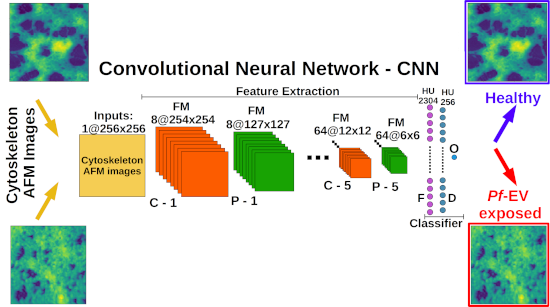
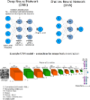
- learning was also applied to reduce noise and increase the resolution in scanning electron microscopy images. An approach for creating a training dataset of low- and high-resolution image pairs from a single image, was developed by using deep learning to up-sample scanning transmission electron microscopy







Silver nanoparticles nucleated in NaOH-treated halloysite: a potential antimicrobial material
Beilstein J. Nanotechnol. 2021, 12, 798–807, doi:10.3762/bjnano.12.63
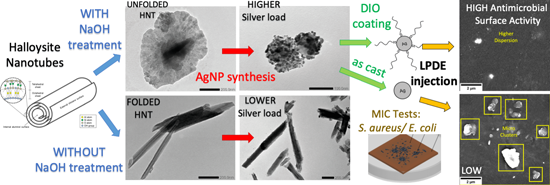
- studied the nucleation of silver on halloysite substrates modified by chemical treatment with NaOH. The resulting stabilized Ag-NPs were characterized by X-ray diffraction, transmission electron microscopy, and energy-dispersive X-ray spectroscopy. The nucleation was characterized by thermogravimetric
- . Transmission electron microscopy (TEM) was performed in a Jeol JEM-1400 plus (480 keV), energy-dispersive X-ray spectroscopy (EDS) and scanning electron microscopy (SEM) in a Zeiss EVO MA15, and thermogravimetric analysis (TGA) and differential scanning calorimetry (DSC) in a simultaneous thermal analyzer




Fate and transformation of silver nanoparticles in different biological conditions
Beilstein J. Nanotechnol. 2021, 12, 665–679, doi:10.3762/bjnano.12.53
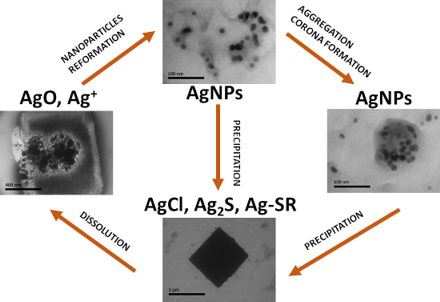
- implementing light scattering (dynamic and electrophoretic) techniques, spectroscopy (UV–vis, atomic absorption, nuclear magnetic resonance) and transmission electron microscopy. The obtained results demonstrated that AgNPs may transform very quickly during their journey through different biological conditions
- absorption spectroscopy (GF-AAS), nuclear magnetic resonance (NMR) spectroscopy, and transmission electron microscopy (TEM) experiments. Physicochemical characteristics of freshly prepared AgNPs Freshly prepared AgNPs coated with PVP, sodium bis(2-ethylhexyl)sulfosuccinate (AOT), and poly(ʟ-lysine) (PLL
- . The results are presented as % of the dissolved Ag fraction compared to the total Ag content in AgNP suspensions before filtration. Transmission electron microscopy was performed for different AgNPs dispersed in PBS, mCYS, and mGSH media at a concentration of 10 mg Ag/L after 30 min of incubation. The




A review of defect engineering, ion implantation, and nanofabrication using the helium ion microscope
Beilstein J. Nanotechnol. 2021, 12, 633–664, doi:10.3762/bjnano.12.52
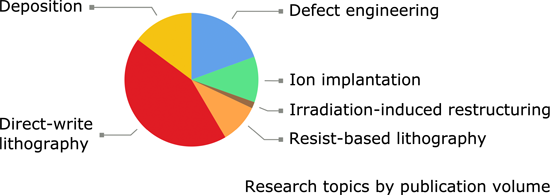
- beam milling that were inspected by transmission electron microscopy (TEM). In this way, the microstructural effect of increasing the helium ion-induced defect density was probed, and threshold doses for a series of structural changes, such as amorphization and subsurface swelling, were established


Stability and activity of platinum nanoparticles in the oxygen electroreduction reaction: is size or uniformity of primary importance?
Beilstein J. Nanotechnol. 2021, 12, 593–606, doi:10.3762/bjnano.12.49
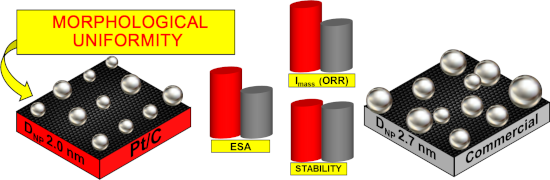
- University, "High-Resolution Transmission Electron Microscopy” Shared Use Center, 344090, 194/2 Stachki st., Rostov-on-Don, Russia 10.3762/bjnano.12.49 Abstract Platinum–carbon catalysts are widely used in the manufacturing of proton-exchange membrane fuel cells. Increasing Pt/C activity and stability is an
- distributions were also studied by transmission electron microscopy (TEM). The TEM images were obtained using a JEOL JEM F200 microscope (voltage 200 kV, current 12–15 μA, CFEG). To prepare a sample for measurements, 0.5 mg of the catalyst was placed into 1 mL of isopropanol and dispersed by ultrasound for 10
- assignment in the field of scientific activity No 0852-2020-0019). Acknowledgements The authors are grateful to Mr. Nikulin A.Yu. for assistance in the XRD pattern registration and to the “Shared Use Center High-Resolution Transmission Electron Microscopy” (SFedU) for conducting the TEM studies.


The preparation temperature influences the physicochemical nature and activity of nanoceria
Beilstein J. Nanotechnol. 2021, 12, 525–540, doi:10.3762/bjnano.12.43
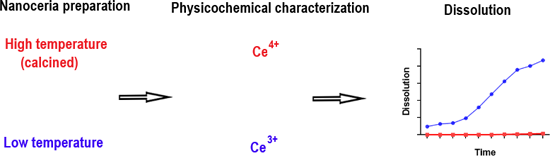
- characterizations. Transmission electron microscopy (TEM) and high-angle annular dark-field scanning transmission electron microscopy (HAADF-STEM) were conducted of NM-212 dispersed in DI water, sonicated for 10 min in a bath, and captured on 300 mesh lacey carbon copper grids dipped into the dispersion for
- nanoceria and their fate and effects. Transmission electron microscopy and high-angle annular dark-field scanning transmission electron microscopy images of NM-212 and its chemical composition determined by energy-dispersive X-ray spectroscopy. (A, B) TEM images, (B) is a part of (A) at higher magnification
- determinations. Non-baseline corrected Fourier-transform infrared spectroscopy of NM-212 with peaks indicated by dashed lines at 1630, 1420, and 1320 cm−1. Transmission electron microscopy image of calcined solvothermally synthesized nanoceria. Electron energy loss spectroscopy of calcined solvothermally




Surface-enhanced Raman scattering of water in aqueous dispersions of silver nanoparticles
Beilstein J. Nanotechnol. 2021, 12, 497–506, doi:10.3762/bjnano.12.40
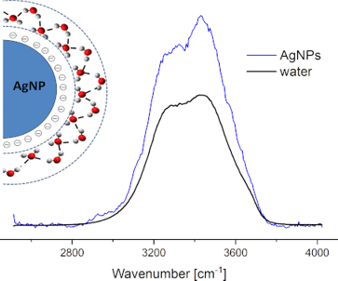
- -resolution transmission electron microscopy (TEM) analysis was performed to estimate the size and identify the shape of the nanoparticles (see Figure 1). The nanoparticles in the AgNPs blue sample had a triangular prism shape with an estimated average size of 34 ± 14 nm, while in the AgNPs yellow sample, the


Boosting of photocatalytic hydrogen evolution via chlorine doping of polymeric carbon nitride
Beilstein J. Nanotechnol. 2021, 12, 473–484, doi:10.3762/bjnano.12.38
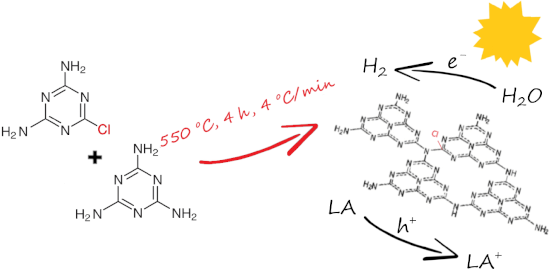
- the morphology of the prepared materials, presented in Figure 1, was performed by transmission electron microscopy (TEM). The images of pristine PCN demonstrate the layered structure with a tendency to fold and aggregate. They also show several stacking layers, indicating the planar graphitic-like
- Ar as a carrier). Each catalyst was tested for 3 h. Every hour, 100 µL of gas was withdrawn from the reactor and injected into the gas chromatograph to measure the amount of H2 evolved. TEM images of PCN (a, b) and Cl-PCN (c, d). Scanning transmission electron microscopy image of Cl-PCN (e) and


Rapid controlled synthesis of gold–platinum nanorods with excellent photothermal properties under 808 nm excitation
Beilstein J. Nanotechnol. 2021, 12, 462–472, doi:10.3762/bjnano.12.37
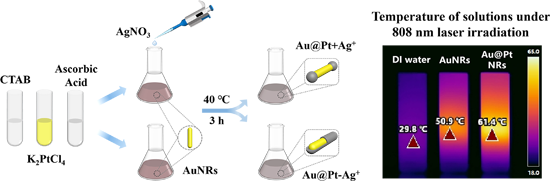
- in all experiments. Instruments The absorption spectra were measured on a UV–vis–NIR spectrophotometer (UV-8000A, 190–1200 nm, Metash, China). Transmission electron microscopy (TEM) images, morphology, and size of nanoparticles were obtained with a transmission electron microscope (JEOL 2100F, 200 kV


A review on nanostructured silver as a basic ingredient in medicine: physicochemical parameters and characterization
Beilstein J. Nanotechnol. 2021, 12, 440–461, doi:10.3762/bjnano.12.36
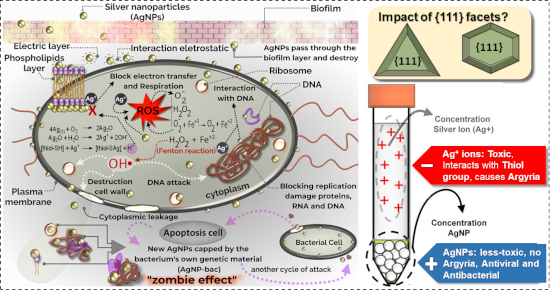
- experimentally analyzed by UV–vis extinction spectra and transmission electron microscopy (TEM). The rate of photo-oxidation in spherical AgNPs was homogeneous and surprisingly inhomogeneous in the case of cubic AgNPs, which was attributed to the difference in morphology. The noticeable formation of small NPs
- interactions with cells and living organisms. Multidisciplinary teams are essential to pave the way for the future use of AgNPs in living beings. Scanning electron microscope (SEM) with different morphologies: (A) bipyramidal, (B) nanowires, (C) nanocubes and transmission electron microscopy (TEM) micrographs


Solution combustion synthesis of a nanometer-scale Co3O4 anode material for Li-ion batteries
Beilstein J. Nanotechnol. 2021, 12, 424–431, doi:10.3762/bjnano.12.34
- the Raman spectrometer as well as Mr. Ryszard Strzałkowski from the Institute of Fundamental Technological Research Polish Academy of Sciences for his support in the performance of transmission electron microscopy investigations.


Spontaneous shape transition of MnxGe1−x islands to long nanowires
Beilstein J. Nanotechnol. 2021, 12, 366–374, doi:10.3762/bjnano.12.30
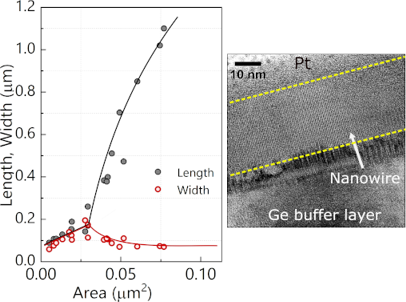
- (SEM), X-ray diffraction (XRD), and high-resolution transmission electron microscopy (HRTEM). We demonstrate that the thickness of the Mn layer and the annealing conditions finely control the shape transition, resulting in NWs up to ≃1.5 μm length with uniform width and homogeneous composition


Nickel nanoparticle-decorated reduced graphene oxide/WO3 nanocomposite – a promising candidate for gas sensing
Beilstein J. Nanotechnol. 2021, 12, 343–353, doi:10.3762/bjnano.12.28
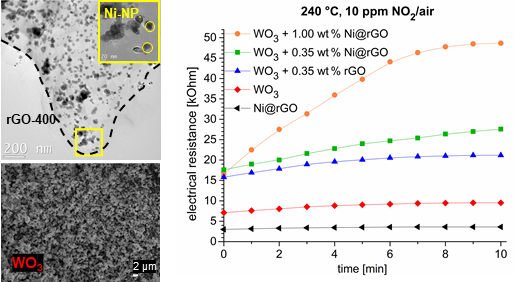
- diluted 1:100. Transmission electron microscopy, TEM was performed with a FEI Tecnai G2 F20 electron microscope [68] operated at 200 kV accelerating voltage or FEI Titan 80-300 TEM operated at 300 kV accelerating voltage [69]. Conventional TEM images were recorded with a Gatan UltraScan 1000P detector


Characterization, bio-uptake and toxicity of polymer-coated silver nanoparticles and their interaction with human peripheral blood mononuclear cells
Beilstein J. Nanotechnol. 2021, 12, 282–294, doi:10.3762/bjnano.12.23
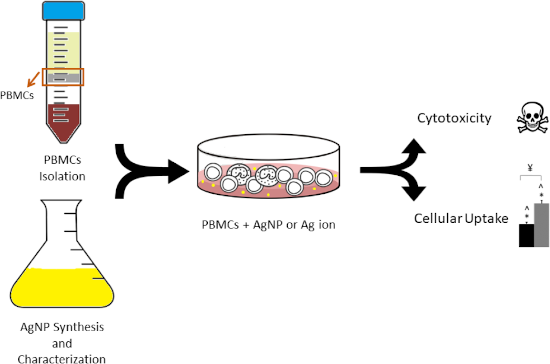
- pristine AgNPs, including dynamic light scattering (DLS), UV–vis spectroscopy (UV–vis), transmission electron microscopy (TEM), and inductively coupled plasma mass spectrometry (ICP-MS). DLS gave a Z-average hydrodynamic size of 33.7 ± 0.7 nm (mean ± standard deviation) and a PDI (polydispersity index) of
- hydration shell around NPs and should be the same as, or larger than, the core size of NPs measured by TEM. Characterization values for pristine PVP-AgNPs can be found in Table 1. Scanning transmission electron microscopy (STEM) images of 1000 µg·L−1 PVP-AgNPs in RPMI medium at the beginning of the



Scanning transmission helium ion microscopy on carbon nanomembranes
Beilstein J. Nanotechnol. 2021, 12, 222–231, doi:10.3762/bjnano.12.18
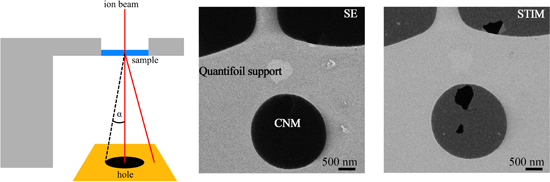
- energy-filtered transmission electron microscopy measurements. Keywords: carbon nanomembranes; dark field; helium ion microscopy (HIM); scanning transmission ion microscopy (STIM); SRIM simulations; Introduction Throughout the past decade, the helium ion microscope (HIM) has emerged as a versatile
- -field signal, similar to scanning transmission electron microscopy (STEM). In this way, it is possible to check qualitatively the milling progress on membranes or even to determine quantitatively the thickness of a sample. Notte et al. used thickness fringes on MgO crystals for thickness determination
- photoelectron emission angle of 13° with respect to the surface normal. Energy-filtered transmission electron microscopy was conducted at energies of 60 and 80 keV on a Cs-corrected JEOL JEM-ARM200F equipped with a cold field emission gun. A GATAN GIF-Quantum ER image filter and a 2k × 2k CCD camera (GATAN


Imaging of SARS-CoV-2 infected Vero E6 cells by helium ion microscopy
Beilstein J. Nanotechnol. 2021, 12, 172–179, doi:10.3762/bjnano.12.13
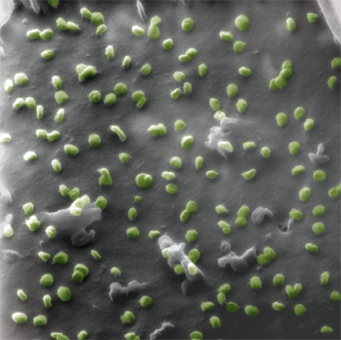
- , while many more cell lines have been reported to be refractory to SARS-CoV-2 infection [15]. Both scanning electron microscopy (SEM) and transmission electron microscopy (TEM) have been used to image SARS-CoV-2 [16][17][18][19][20]. While TEM achieves unsurpassed resolution and can visualize


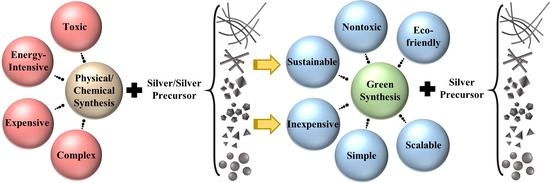
A review on the green and sustainable synthesis of silver nanoparticles and one-dimensional silver nanostructures
Beilstein J. Nanotechnol. 2021, 12, 102–136, doi:10.3762/bjnano.12.9


The role of gold atom concentration in the formation of Cu–Au nanoparticles from the gas phase
Beilstein J. Nanotechnol. 2021, 12, 72–81, doi:10.3762/bjnano.12.6
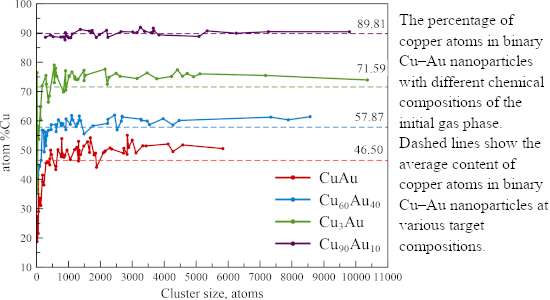
- and copper alloy ranging from 45 to 200 nm in size and with pronounced pentagonal structures were synthesized in [5] by the joint reduction of gold and copper salts. Here, elemental mapping of Cu and Au, using scanning transmission electron microscopy–energy-dispersive X-ray spectroscopy, confirms the
- amorphous carbon or magnesium oxide substrates by the laser evaporation of a bulk alloy with various stoichiometric compositions (Cu–Au, Cu3Au, and Au3Cu). An analysis of individual clusters carried out by using electron diffraction and high-resolution transmission electron microscopy (HRTEM) showed that Cu
- the case of physical methods for producing Cu–Au nanoparticles, it seems possible to create particles with the desired chemical composition. In [3], the Cu–Au nanoparticles obtained by laser deposition on a graphite substrate were analyzed via transmission electron microscopy–energy-dispersive X-ray


ZnO and MXenes as electrode materials for supercapacitor devices
Beilstein J. Nanotechnol. 2021, 12, 49–57, doi:10.3762/bjnano.12.4
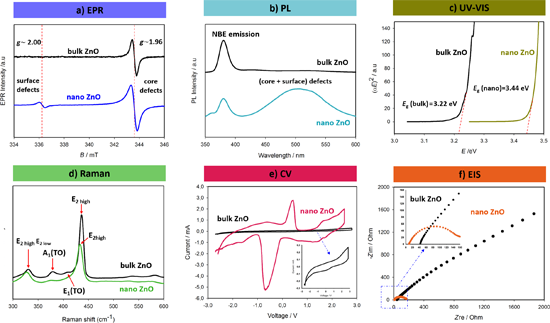
- tantalum carbide MXene sheets was carried out using X-ray diffraction measurements (XRD), field-emission scanning electron microscopy (FE-SEM), transmission electron microscopy (TEM), and Raman spectroscopy. The results of XRD, FE-SEM, and Raman showed that tantalum carbide MXenes are layered solid
Effect of different silica coatings on the toxicity of upconversion nanoparticles on RAW 264.7 macrophage cells
Beilstein J. Nanotechnol. 2021, 12, 35–48, doi:10.3762/bjnano.12.3
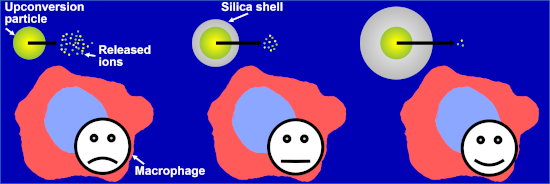
- -aminopropyltrimethoxysilane (AHAPS), which provides the nanoparticle surface with a positive charge, increasing their interaction with the cell membrane. The particles were characterized by scanning transmission electron microscopy (STEM), dynamic light scattering (DLS), electrophoretic light scattering (ELS), and
- were prepared as described in [51]. However, instead of fluorescein isothiocyanate, rhodamine isothiocyanate was used. The functionalization with AHAPs was carried out by using the same procedure, which was also used for the silica-coated UCNPs. Characterization Scanning transmission electron
- microscopy STEM images were taken using a Hitachi SU 8030 scanning electron microscope with an electron acceleration voltage of 30 kV and a current of 20 µA. A droplet of the nanoparticle dispersion (c = 0.5–1 g/L) in either cyclohexane, for oleate-functionalized UCNP cores, or in ethanol, for silica-coated


Bio-imaging with the helium-ion microscope: A review
Beilstein J. Nanotechnol. 2021, 12, 1–23, doi:10.3762/bjnano.12.1
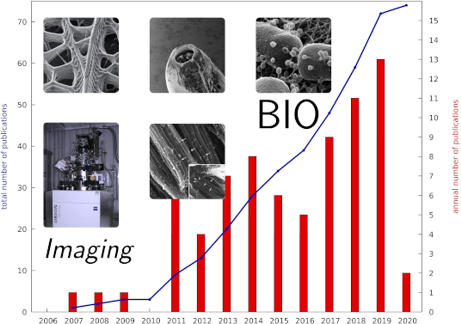
- not ready, for studying the finest details of the ultrastructure of cells or to resolve protein structures, which is state of the art in modern transmission electron microscopy. Another obstacle which had to be overcome was the absence of in situ chemical nanoscale analytical tools for the HIM, which
- range of applications to thin sections, similar to the transmission option in SEMs. In combination with the well-established heavy-metal staining techniques used in transmission electron microscopy (TEM), this would allow for ultrastructural research comparable to standard TEM. SRIM [57] simulations
- , HIM provided high-resolution insight into the complex network of interactions of platelets with cancer cells [10]. In 2012, Berg-Foels et al. used transmission electron microscopy, SEM, and HIM to image rabbit cartilage samples [70]. The long depth of field provided by HIM renders the technique


Free and partially encapsulated manganese ferrite nanoparticles in multiwall carbon nanotubes
Beilstein J. Nanotechnol. 2020, 11, 1891–1904, doi:10.3762/bjnano.11.170
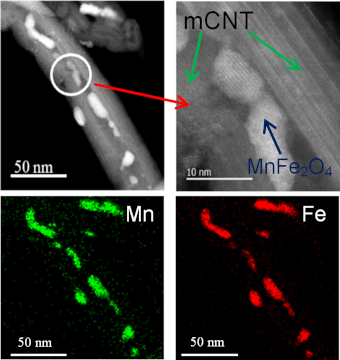
- microscopy (HRTEM) on a JEOL JEM-2100F microscope working at 200 kV. Partially encapsulated manganese ferrite nanoparticles were characterized using HRTEM and energy-dispersive X-ray spectroscopy (EDS); the elemental mapping was performed on a JEOL JEM-ARM200F. Scanning transmission electron microscopy (STEM
- , and Mössbauer characterization The X-ray diffraction patterns were acquired using Cu Kα radiation (λ = 1.5404 Å) at a Philips PW1820 diffractometer. The instrument was calibrated using a silicon disc. Free manganese ferrite nanoparticles were characterized using high-resolution transmission electron




Scanning transmission imaging in the helium ion microscope using a microchannel plate with a delay line detector
Beilstein J. Nanotechnol. 2020, 11, 1854–1864, doi:10.3762/bjnano.11.167
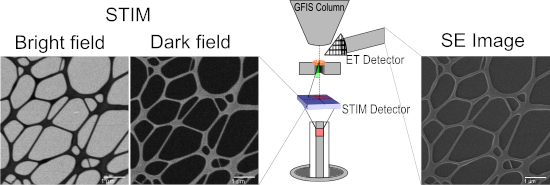
- the sample. Different materials and thickness combinations create distinct polar-angle distributions of scattering, producing a contrast similar to the mass-thickness contrast in transmission electron microscopy. In BF mode, the areas of the sample with little or no scattering appear with high
- combination of MCPs with a delay line readout structure as a position-sensitive detector was first implemented for the detection of 1–15 keV electrons [33]. Since then, it has been used in many other applications such as in astrophysics [34], transmission electron microscopy [35], and hard X-ray photoelectron
- transmission electron microscopy (TEM) grid coated with evaporated thallium chloride (available on https://scienceservices.de/ with product code: Sku:E80045) was also analyzed using STIM. This sample has several small crystallites randomly oriented and it is used as a diffraction standard for TEM. Here, we


Piezotronic effect in AlGaN/AlN/GaN heterojunction nanowires used as a flexible strain sensor
Beilstein J. Nanotechnol. 2020, 11, 1847–1853, doi:10.3762/bjnano.11.166
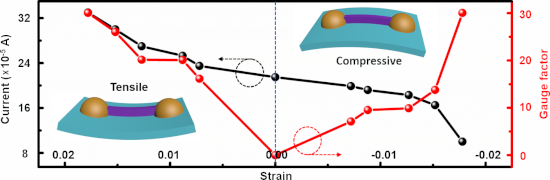
- contrast. Detailed structural parameters are shown in the Experimental section. Figure 1b shows a scanning transmission electron microscopy (STEM) image taken of the AlGaN/AlN/GaN heterojunction (left panel) and a corresponding high-resolution transmission electron microscopy (HRTEM) image of the GaN layer





