Search results
Search for "transport" in Full Text gives 833 result(s) in Beilstein Journal of Nanotechnology. Showing first 200.
Polymer nanoparticles from low-energy nanoemulsions for biomedical applications
Beilstein J. Nanotechnol. 2023, 14, 339–350, doi:10.3762/bjnano.14.29
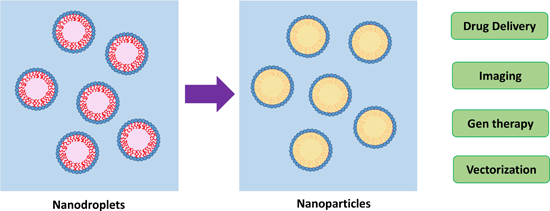
- nanoparticles functionalized with the antibody 8D3. Afamin facilitates the transport of vitamin E to the central nervous system. When the nanoparticles were loaded with a drug, apolipoproteins involved in the transport through the BBB were also identified. Phytochemicals with antioxidant activity have been
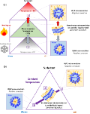


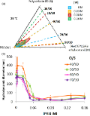


Overview of mechanism and consequences of endothelial leakiness caused by metal and polymeric nanoparticles
Beilstein J. Nanotechnol. 2023, 14, 329–338, doi:10.3762/bjnano.14.28
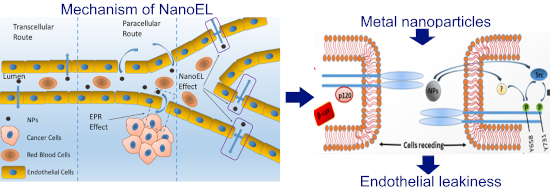
- cells, the inner lining of blood vessels controls the two-way transport of molecules and ions circulating in the blood and protects the inner tissue environment from harmful and dangerous substances [1][2][3][4]. The endothelium secretes vasodilation factors (e.g., nitric oxide and prostacyclin) and
- extracellular signals and regulate the function of the vascular barrier [3]. The endothelium is also covered by a negatively charged layer of glycocalyx, which has a protective function and is involved in the transport of molecules across the endothelium [11][12]. The degree of endothelial permeability depends
- on the physiology of the organ. The continuous endothelium is characterized by the lowest permeability. Most organs possess a continuous endothelium, which allows for diffusion of water and small molecules. Transporters, pumps, transcytosis, and ligand–receptor interactions are used to transport


Bismuth-based nanostructured photocatalysts for the remediation of antibiotics and organic dyes
Beilstein J. Nanotechnol. 2023, 14, 291–321, doi:10.3762/bjnano.14.26
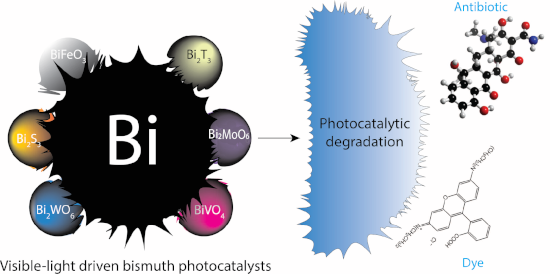
- important for electronic transport and semimetal-to-semiconductor transition, as well as its highly anisotropic Fermi surface (with an electron and hole Fermi energies of 27.2 and 10.8 meV, respectively), which results in an extremely low carrier density of around 3 × 1017 cm−3 [78] and very little overlap
- nanostructures with oriented carrier transport, high optical performance, and a short carrier diffusion length, for instance, were prepared by Li and co-workers [42]. The photodegradation rates of ciprofloxacin and tetracycline were, respectively, 94.8% and 81.1% after 1 h. Additionally, Lin et al. [122


Nanotechnology – a robust tool for fighting the challenges of drug resistance in non-small cell lung cancer
Beilstein J. Nanotechnol. 2023, 14, 240–261, doi:10.3762/bjnano.14.23
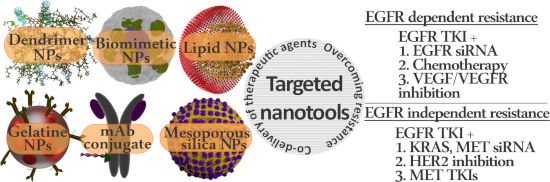
- tumor site, showing facilitated diffusion through tumor tissue due to their smaller size and specific surface engineering [111]. Wong et al. developed a multistage system with facilitated tumor diffusive transport composed of 100 nm gelatin nanoparticles, capable of releasing 10 nm NPs from their


A novel approach to pulsed laser deposition of platinum catalyst on carbon particles for use in polymer electrolyte membrane fuel cells
Beilstein J. Nanotechnol. 2023, 14, 190–204, doi:10.3762/bjnano.14.19
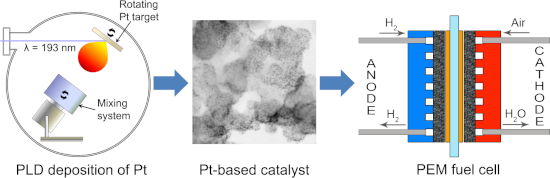
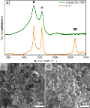
- sufficiently well, which is a problem for the surface deposition of catalysts and leads to ineffective operation in the fuel cell (poor O2 and H2 transport conditions). Considering the above factors, the material marked as C-11 was used as carbon support for the Pt catalyst due to its structure. This material
- the amount of Pt deposited by PLD. The results of performance tests of Pt-based catalysts conducted in a membrane electrode assembly are shown in Figure 7. Polarization curves shown in Figure 7a are used to assess the influence of cell construction on the value of activation, resistance, and transport
- of the polarization curve. However, their contribution differs depending on cell voltages. At high cell voltages, a contribution is dominated by activation losses; at intermediate voltages, it is dominated by resistance losses; and at low voltages by transport losses. The polarization curves of the



High–low Kelvin probe force spectroscopy for measuring the interface state density
Beilstein J. Nanotechnol. 2023, 14, 175–189, doi:10.3762/bjnano.14.18
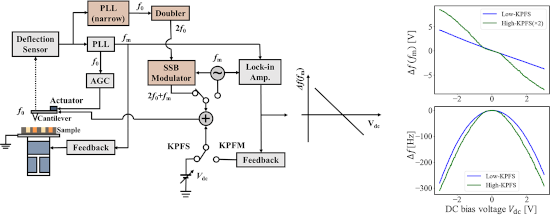
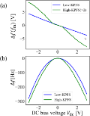
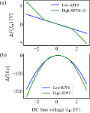
- with respect to the cutoff frequency fc of carrier transport between the bulk and interface states and measuring the difference in CPD by KPFM. In high–low KPFM, frequency modulation (FM) KPFM (FM-KPFM) combined with FM-AFM is used to detect the tip–sample interaction force. FM-KPFM has several
- apply an AC bias voltage at frequencies lower than the cutoff frequency fc of carrier transport, and heterodyne FM-KPFM, based on the heterodyne effect (frequency conversion effect) between mechanical oscillation of the cantilever and electrostatic force oscillation, is used to apply an AC bias voltage
- at frequencies higher than the cutoff frequency fc of carrier transport. To date, high–low KPFM has successfully visualized the surface band bending of pn-patterned silicon substrates [22]. However, in high–low KPFM, the CPD is compensated by a DC bias voltage. Hence, a certain DC voltage, determined



Structural, optical, and bioimaging characterization of carbon quantum dots solvothermally synthesized from o-phenylenediamine
Beilstein J. Nanotechnol. 2023, 14, 165–174, doi:10.3762/bjnano.14.17
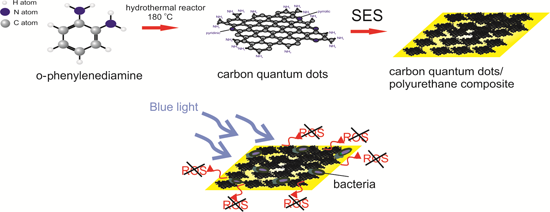
- significantly, especially, by the presence and distribution of various functional groups on the basal plane and edges of carbon network, affecting, in turn, the CQD properties. Doping of CQDs with nitrogen, chlorine, or fluorine heteroatoms induces larger a transport bandgap, increased charge transfer


Cooper pair splitting controlled by a temperature gradient
Beilstein J. Nanotechnol. 2023, 14, 61–67, doi:10.3762/bjnano.14.7
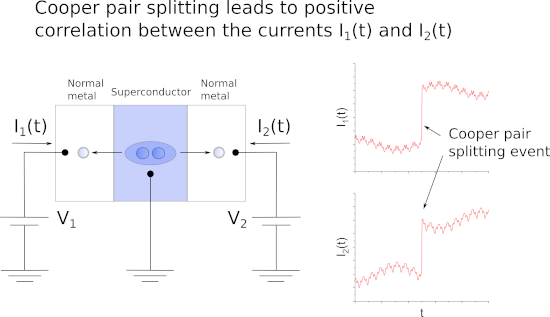
- reflection (CAR): A Cooper pair may split into two electrons [2] (see Figure 1a), thereby generating pairs of entangled electrons in different metallic electrodes [3]. This phenomenon and its effect on electron transport in normal metal–superconductor–normal metal (NSN) hybrid structures were intensively
- high transmissions, the CAR contribution vanishes [6][7]. These observations make an unambiguous identification of CAR in transport experiments a non-trivial task. The way out is to investigate fluctuations of electric currents passing through both NS boundaries of an NSN structure. While in non


Atmospheric water harvesting using functionalized carbon nanocones
Beilstein J. Nanotechnol. 2023, 14, 1–10, doi:10.3762/bjnano.14.1
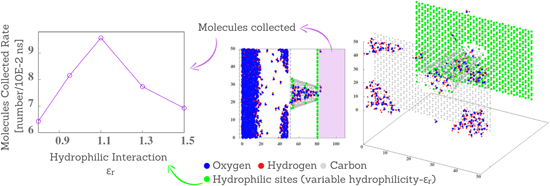
- ), which use hierarchical nano/microstructures to collect water. Some examples are the Trifolium pratense plant, the Cotula fallax cactus, and the Uloborus walckenaerius spider [14][15][16]. Usually, these biomimetic designs have an asymmetrical shape that energetically drives the directional transport of
- hydrophilic ring in the middle of the nanocone. The increase in flux as the radius decreases is a behavior also observed in carbon nanotubes [55]. The increase in flux, followed by a decrease, with increase in hydrophobicity was also observed regarding the transport properties of nanotubes with tunable




Observation of collective excitation of surface plasmon resonances in large Josephson junction arrays
Beilstein J. Nanotechnol. 2022, 13, 1578–1588, doi:10.3762/bjnano.13.132
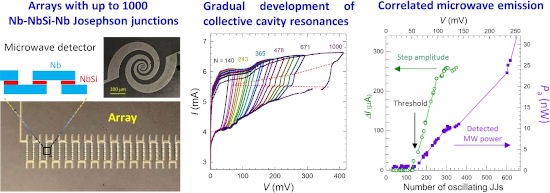
- found in [36]. Figure 1a and Figure 1c show layouts of the two studied arrays, which we refer to as (a) “meander” and (c) “linear”, respectively. The arrays are similar to those studied in [9][34][37], but have smaller JJ areas. Additional information about transport properties of such arrays can be
- function of the number of active junctions, N. Blue symbols are measured directly from the I–V characteristics, and orange symbols are obtained by integration of the resonant peak area in dI/dV. (c) Simultaneous transport and detection measurements of a secondary resonance from Figure 7a. (d) Step




Induced electric conductivity in organic polymers
Beilstein J. Nanotechnol. 2022, 13, 1551–1557, doi:10.3762/bjnano.13.128
- mechanical stress is applied. In this work, the transport properties of thin-film layered lead–PDP–lead structures were experimentally studied in a wide temperature range. At sufficiently high temperatures, the current voltage characteristics are satisfactorily described in terms of the injection model of
- the preparation of a sample for electron microscopy. Results and Discussion The experiment was carried out in a four-contact configuration at direct or alternating currents. Both R(T) and V(I) dependences of the Pb–PDP–Pb sandwich could be measured, as shown in Figure 2a, and the transport
- transport characteristics of thin-film lead electrodes demonstrated the metallic behavior: in normal state, the resistance of the films decreased linearly with decreasing temperature, and the I–V characteristics exhibit ohmic behavior. At temperatures of the order of Tc(Pbfilm) ≈ 8 K, a sharp



Photoelectrochemical water oxidation over TiO2 nanotubes modified with MoS2 and g-C3N4
Beilstein J. Nanotechnol. 2022, 13, 1541–1550, doi:10.3762/bjnano.13.127
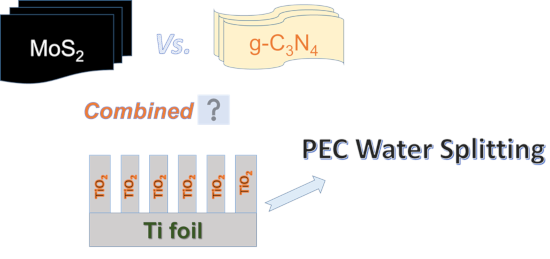
- chemical, thermal, and charge transport properties, which can shift the light absorption of TiO2 to the visible region [29][30][31][32]. An emerging new material in optoelectronics is g-C3N4 (bandgap of 2.65–2.7 eV) because it has an appropriate band structure with suitable energy levels regarding TiO2


A TiO2@MWCNTs nanocomposite photoanode for solar-driven water splitting
Beilstein J. Nanotechnol. 2022, 13, 1520–1530, doi:10.3762/bjnano.13.125
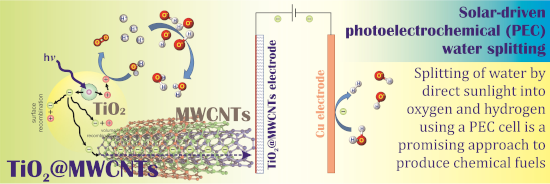
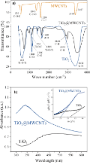
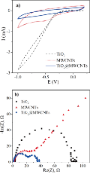
- of the electrodes through Nyquist plots, as shown in Figure 8b. The MWCNTs electrode has the lowest arc radius among the prepared electrodes, indicating the fast charge transport on this electrode [36]. A contrastive result is observed for the TiO2 electrode, which could be due to the poor electrical



Structural studies and selected physical investigations of LiCoO2 obtained by combustion synthesis
Beilstein J. Nanotechnol. 2022, 13, 1473–1482, doi:10.3762/bjnano.13.121
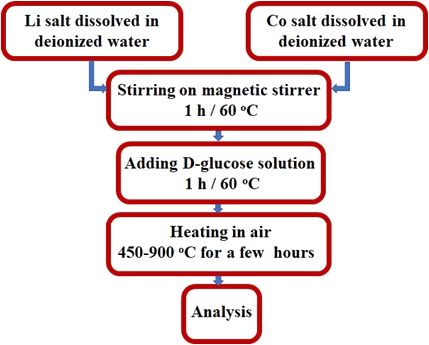
- conversion devices, such as Li-ion batteries, solar cells, solid oxide fuel cells, and thermoelectrics. Unusual and unexpected properties and also unique microstructures (and shapes), such as high porosity, high surface area, short reaction pathways, and diffusion length for Li-ion transport, eventually




Coherent amplification of radiation from two phase-locked Josephson junction arrays
Beilstein J. Nanotechnol. 2022, 13, 1445–1457, doi:10.3762/bjnano.13.119
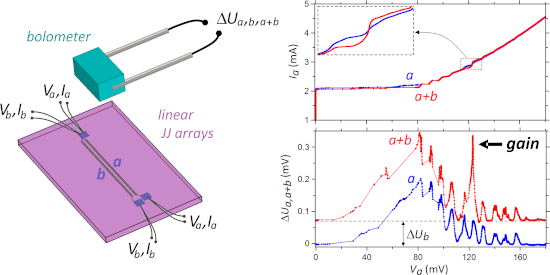
- source of biasing. The algorithm of the numerical calculations allows one to obtain both transport and radiation characteristics of the lines with JJs. A more detailed description of the model and the calculation procedure can be found in [8][22]. Figure 6b shows a part of the IVC of array-b and the


Orally administered docetaxel-loaded chitosan-decorated cationic PLGA nanoparticles for intestinal tumors: formulation, comprehensive in vitro characterization, and release kinetics
Beilstein J. Nanotechnol. 2022, 13, 1393–1407, doi:10.3762/bjnano.13.115
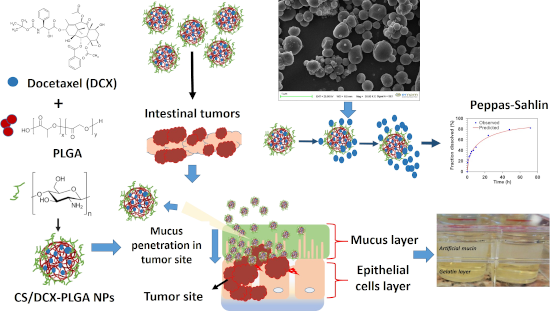
- realized. Therefore, the main purpose of this study is to present an innovative approach to this problem. In this context, it is suggested that CS-coated PLGA nanoparticles with positive surface charge can provide stable and effective drug transport through the upper segments of the GIT to the colon after
- -PLGA NPs. A value of m < 0.45 indicates Fickian diffusion. A value of 0.45 < m < 0.85 shows that the drug release occurs through non-Fickian diffusion. A quotient of m/n = 0.85 is consistent with a case-II transport and m/n > 0.85 indicates super-case-II transport [63][64][65][66]. Here, the
- transport of DCX across the Caco-2 cell line In vitro transport studies of DCX with DCX-PLGA NPs and CS/DCX-PLGA NPs were conducted across the Caco-2 cell line (human adenocarcinoma cells) (HTB-37™, ATCC, USA). Caco-2 cells, ninth passage, were used for this analyses. Before the experiment, cells were


LED-light-activated photocatalytic performance of metal-free carbon-modified hexagonal boron nitride towards degradation of methylene blue and phenol
Beilstein J. Nanotechnol. 2022, 13, 1380–1392, doi:10.3762/bjnano.13.114
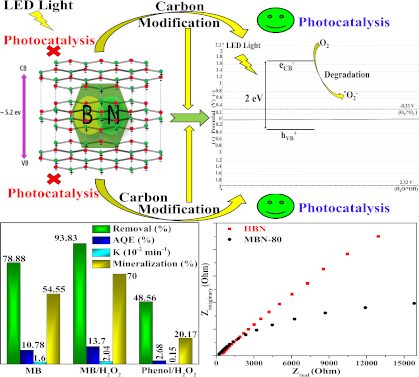
- reduction of the space charge region as seen in Figure 6d. Such reduction results in rapid transport and separation of the charge carriers in comparison to HBN. The electrochemical and potentiodynamic characteristics of MBN-80 were studied by analysing LSV and OCPT data. The LSV response for MBN-80 was


Straight roads into nowhere – obvious and not-so-obvious biological models for ferrophobic surfaces
Beilstein J. Nanotechnol. 2022, 13, 1345–1360, doi:10.3762/bjnano.13.111
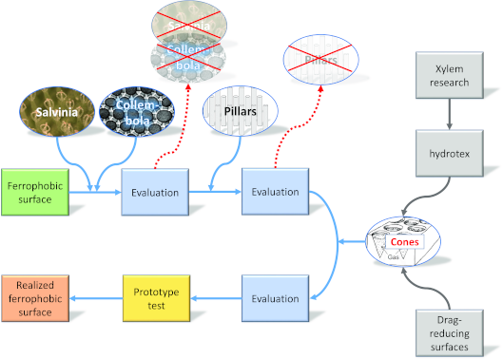
- furnace; Collembola; gas/liquid interfaces; interfacial effects; persistant air layers; pits; Salvinia molesta; surfaces; tuyère failure; water transport in plants; xylem; Young–Laplace equation; Introduction and Motivation The basic concept of biomimetics is the derivation of technical applications from
- background, which has, at first sight, nothing to do with water-repellent biological surfaces. It originated from research dealing with the xylem, the water transport system of plants, which had been pursued by two-co-authors for many years (A. R.-N. and W. K.). A technical exploitation of the transport
- principle was aimed at in the research project “Energy self-sufficient fibre based long-distance transport of liquids” (see appendix A). The xylem is the plant tissue that transports water from the roots to the leaves. In trees and shrubs, the xylem is represented by the wood. It consists of conduits of


Near-infrared photoactive Ag-Zn-Ga-S-Se quantum dots for high-performance quantum dot-sensitized solar cells
Beilstein J. Nanotechnol. 2022, 13, 1337–1344, doi:10.3762/bjnano.13.110
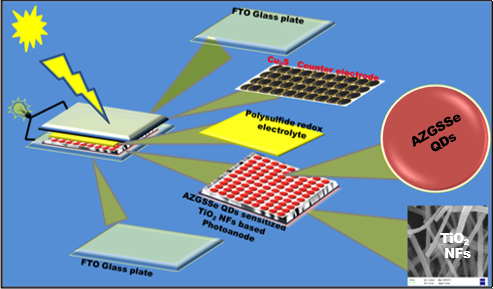
- electrochemical activity. It can boost charge recombination and transport electrons readily, which contributes to the enhanced performance of the QDSC. The J–V curves of the AZGSSe/TiO2 photoanode-based QDSCs are displayed in Figure 8 and the corresponding photovoltaic parameters Jsc, Voc, and FF are 14.20 mA/cm2


Recent trends in Bi-based nanomaterials: challenges, fabrication, enhancement techniques, and environmental applications
Beilstein J. Nanotechnol. 2022, 13, 1316–1336, doi:10.3762/bjnano.13.109
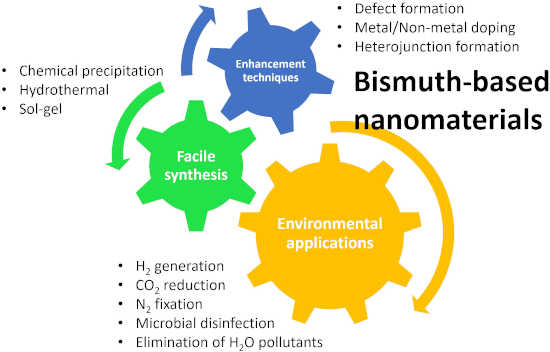
- , is more sensitive to photocurrent, and has a lower electrochemical impedance rate. This is because of surface plasmon resonances (SPRs) and the electron transport capabilities of Bi. The photocatalytic activity for the breakdown of phenol was significantly improved, compared to pristine Bi2WO6 under
- to improve absorption of visible light, charge carrier segregation, and charge transport effectiveness by combining heterojunction and nanomaterials in photocatalysts constructed with care. As a result, this technique offers much potential for photocatalysis applications [94]. The band arrangement




Enhanced electronic transport properties of Te roll-like nanostructures
Beilstein J. Nanotechnol. 2022, 13, 1284–1291, doi:10.3762/bjnano.13.106
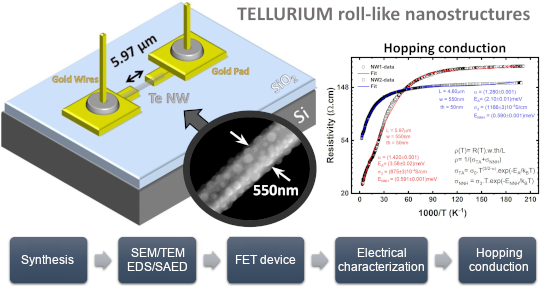
- work, the electronic transport properties of Te roll-like nanostructures were investigated in a broad temperature range by fabricating single-nanostructure back-gated field-effect-transistors via photolithography. These one-dimensional nanostructures, with a unique roll-like morphology, were produced
- these electrical properties with the facile synthesis of one-dimensional nanostructures may bring potential applications of this material in nanoscale optoelectronic integrated devices. However, only a few works have been dedicated to studying the electrical transport in Te-based one-dimensional
- a well-defined geometry with a uniform rectangular cross section along their entire length. This particular morphology makes them a strong candidate for providing a thorough understanding of dimensionally confined transport phenomena, as presented in SnO2 NBs. Moreover, strain-induced polarization




Roll-to-roll fabrication of superhydrophobic pads covered with nanofur for the efficient clean-up of oil spills
Beilstein J. Nanotechnol. 2022, 13, 1228–1239, doi:10.3762/bjnano.13.102
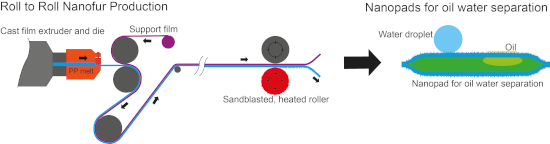
- support layer keeping the PP from melting completely and thus enables transport through the calender. The gap size is set slightly below the nominal film thickness so that the films experience minimal embossing forces. Temperature of the sandblasted roller is set slightly above the melting temperature of




Application of nanoarchitectonics in moist-electric generation
Beilstein J. Nanotechnol. 2022, 13, 1185–1200, doi:10.3762/bjnano.13.99
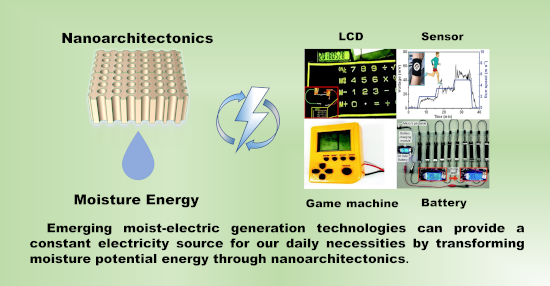
- appropriate device design that satisfies the carrier transport requirements. In previous reviews, the physical mechanisms of solid–liquid interactions and MEGs have been systematically discussed [6][32][33], but there is no comprehensive summary of the various types of nanomaterials and nanoarchitectonics
- can be easily grown on substrates to form nanoscale networks and perform well in MEGs due to their unique electron transport properties [2][47][48]. This includes Al2O3 [49], MoS2 [50][51], Ni–Al layered double hydroxide (LDH) [52], MoS2/SiO2 composites [53], TiO2 [54], and Ti3C2Tx MXene nanosheets
- were summarized. These parameters include material type, nanoarchitectonics, functional group content, humidity, fluid ion type, fluid ion concentration, fluid velocity, and carrier transport structure. In terms of electrical output, the output power of the current MEGs is still very low. As shown in


Microneedle-based ocular drug delivery systems – recent advances and challenges
Beilstein J. Nanotechnol. 2022, 13, 1167–1184, doi:10.3762/bjnano.13.98
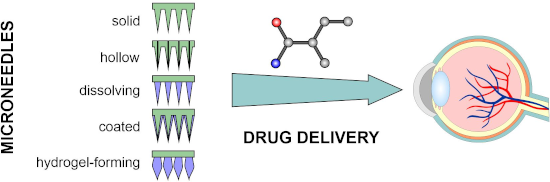
- possible to produce needles containing more than two compartments with different drugs [185]. In order to improve the transport of the steroidal drug difluprednate, applied in the treatment of anterior uveitis, to posterior regions of eye, Shelley et al. developed detachable two-component MN patches for


Rapid fabrication of MgO@g-C3N4 heterojunctions for photocatalytic nitric oxide removal
Beilstein J. Nanotechnol. 2022, 13, 1141–1154, doi:10.3762/bjnano.13.96
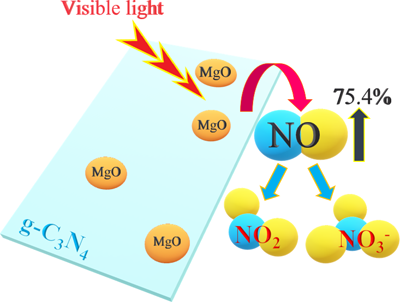
- bandgap reduction can be attributed to Mg−N bonds in the MgO@g-C3N4 materials, which promote charge transport, thus, increasing the photocatalytic efficiency [33][51]. Generally, smaller bandgaps lead to better light absorption, indicating the high photocatalytic activity of MgO@g-C3N4 under visible light