Search results
Search for "van der Waals" in Full Text gives 369 result(s) in Beilstein Journal of Nanotechnology. Showing first 200.
Polymorphic self-assembly of pyrazine-based tectons at the solution–solid interface
Beilstein J. Nanotechnol. 2019, 10, 494–499, doi:10.3762/bjnano.10.50
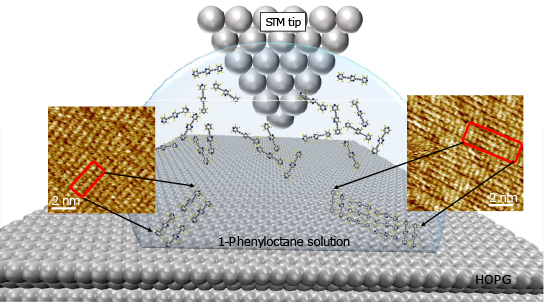
- images suggests van der Waals interactions, instead of hydrogen bonding, between the molecules in adjacent linear chains. Thus only the pyridyl nitrogen atoms are responsible for the molecular ordering observed in region I. On the other hand, in region II both the pyridyl nitrogen (N2) and the pyrazine


One-step nonhydrolytic sol–gel synthesis of mesoporous TiO2 phosphonate hybrid materials
Beilstein J. Nanotechnol. 2019, 10, 356–362, doi:10.3762/bjnano.10.35
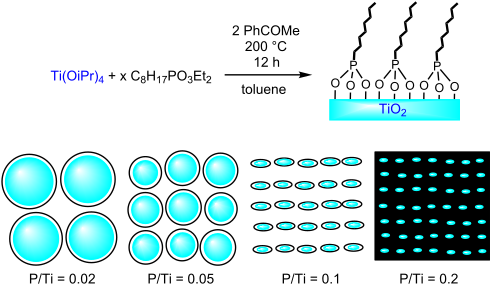
- bonds (e.g., van der Waals or hydrogen bonds), while in Class II hybrid materials, they are linked by stronger ionocovalent or covalent bonds [8]. The majority of Class II hybrid materials utilize the stability of the Si–C bond and are based on organosilsesquioxane (R–SiO1.5) or bridged


Nitrous oxide as an effective AFM tip functionalization: a comparative study
Beilstein J. Nanotechnol. 2019, 10, 315–321, doi:10.3762/bjnano.10.30
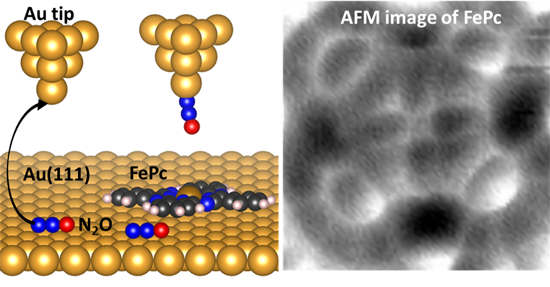
- atomic forces and the total energy were found to be below 10−2 eV/Å and 10−5 eV, respectively. A Monkhorst–Pack grid of 3 × 3 × 1 was used for integration in the Brillouin zone. DFT calculations were performed at the GGA-PBE level including the Tkatchenko–Scheffler treatment of the van der Waals
- probe-particle model [32][45], which takes into account van der Waals (vdW) and electrostatic interactions between the tip and the sample. The calculations were performed varying the effective charge of the probe particle in order to obtain the best possible agreement between the experimental findings


Investigation of CVD graphene as-grown on Cu foil using simultaneous scanning tunneling/atomic force microscopy
Beilstein J. Nanotechnol. 2018, 9, 2953–2959, doi:10.3762/bjnano.9.274
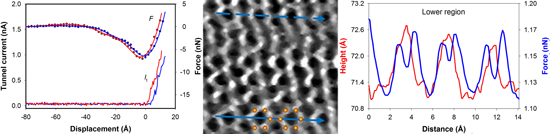
- explicable with the additional effect of electrostatic forces in the experiments. The sample bias voltage values used in the experiments (up to 500 mV) would result in considerable electrostatic force between the tip and the sample. Also, tips with relatively large cone angles would result in van der Waals
- der Waals (vdW) interaction for a small tip structure only, but not the electrostatic force. The discrepancy in the value of the maximum attractive force and the interaction range of the total measured force, which are much larger than the values derived from the theoretical calculations, is
- maximum attractive force is about 7 nN for both sites. Ondracek et al. calculated the maximum attractive force between a tungsten tip and carbon and hollow sites on graphene to be about 2 nN [25]. However, in their calculations they took into account the short-range interaction and the longer-range van


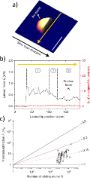
In situ characterization of nanoscale contaminations adsorbed in air using atomic force microscopy
Beilstein J. Nanotechnol. 2018, 9, 2925–2935, doi:10.3762/bjnano.9.271
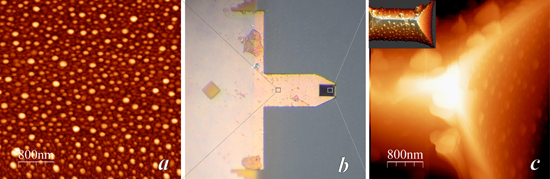
- contamination; tip cleaning; tip–sample interaction; van der Waals interaction; Introduction Surface science is fundamental to understand many processes in industrial applications, environmental science, biology, medicine and phenomena such as self-assembly [1], friction [2][3] and wetting [4]. In any study
- more detail elsewhere [42], data can be acquired in the (true) non-contact regime (nc-DAFM), where only van der Waals and electrostatic interaction is present. In this work we will assume that the tip–sample system can be described by a metallic tip interacting electrostatically with a metallic sample
- ) = πε0R/d2. Then, the total frequency-shift induced by the tip–sample interaction is: where the first term containing the Hamaker constant A describes the van der Waals interaction and the second term describes the electrostatic interaction. We note that the chemical composition of the sample will


Layered calcium phenylphosphonate: a hybrid material for a new generation of nanofillers
Beilstein J. Nanotechnol. 2018, 9, 2906–2915, doi:10.3762/bjnano.9.269
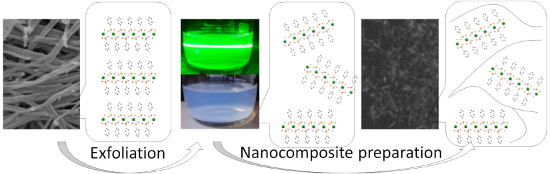
- differ with the metal and organic group incorporated in their structure, the main characteristic remains the same: a strong in-plane bonding in combination with weak van der Waals interactions between the planes. This arrangement enables their use as a host material in intercalation chemistry and as a
- precursor for the preparation of nanosheets by exfoliation. Exfoliation is a process whereby thin sheets of material are completely separated from the bulk. This happens when cohesive forces between the adjacent planes, which are usually caused by van der Waals interactions, are overcome. Mechanical or


Nanostructure-induced performance degradation of WO3·nH2O for energy conversion and storage devices
Beilstein J. Nanotechnol. 2018, 9, 2845–2854, doi:10.3762/bjnano.9.265
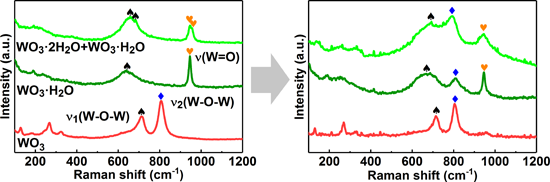
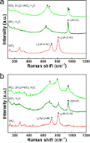
- in a faster performance degradation, due to its weak interlayer van der Waals forces, even though it outranks the 3D network structure in terms of improved electronic properties. The structural transformation of 2D layered WO3·nH2O into 3D nanostructures is observed via ex situ Raman measurements
- layered transition metal oxides. Keywords: 2D layered oxides; interlayer water; van der Waals interaction; WO3·nH2O; Introduction Within the less than 20 years since the successful exfoliation of atomically thin graphene, 2D layered nanomaterials have been contributing greatly to the advances of
- , revealing that the weakness of layered 2D WO3·nH2O originates from weak interlayer van der Waals interactions. The faster performance degradation in electrochemical tests of 2D layered WO3·nH2O further indicated the structural instability of 2D nanostructures compared to 3D nanostructures. The structural


Graphene-enhanced metal oxide gas sensors at room temperature: a review
Beilstein J. Nanotechnol. 2018, 9, 2832–2844, doi:10.3762/bjnano.9.264
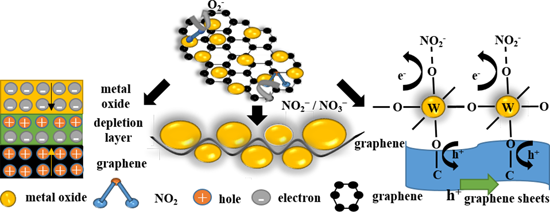
- sensors based on rGO exhibited a rapid and high response to target gas at room temperature. However, these sensors show a common shortage. Since the binding force between graphene and gas molecules is van der Waals force or even covalent bonds [6], the recovery time is too long, sometimes recovery is not



Accurate control of the covalent functionalization of single-walled carbon nanotubes for the electro-enzymatically controlled oxidation of biomolecules
Beilstein J. Nanotechnol. 2018, 9, 2750–2762, doi:10.3762/bjnano.9.257
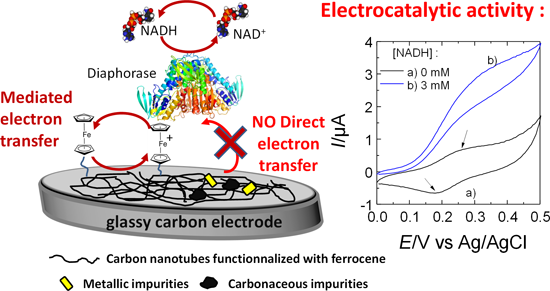
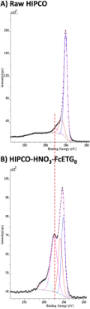
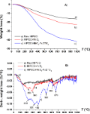
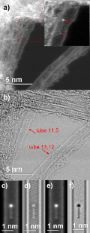
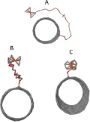
- of water. Once water was added, van der Waals and dipolar interactions between the water molecules and the ETG chain effectively blocked chain flexion and maintained the ferrocene unit at a distance of over 6.41 Å from the tube surface throughout the simulation (Figure 12B). Even for HIPCO-FcETG2






Two-dimensional semiconductors pave the way towards dopant-based quantum computing
Beilstein J. Nanotechnol. 2018, 9, 2668–2673, doi:10.3762/bjnano.9.249
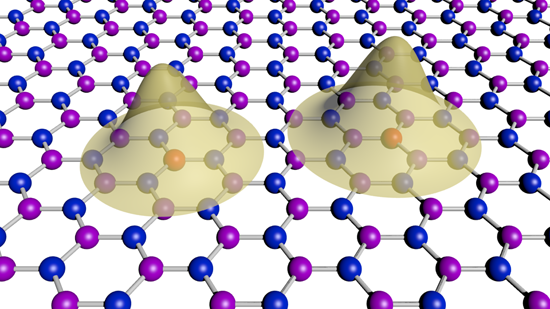
- band gaps range from millielectronvolts to a few electronvolts. They can also be stacked in van der Waals heterostructures [22][24][25] favoring miniaturization and device integration. Incorporation of dopants affects the properties of isolated or stacked monolayers [26][27], as they do in bulk systems


![[Graphic 7]](/bjnano/content/inline/2190-4286-9-249-i7.svg?max-width=637&scale=1.18182) and energy for one electron bound to a donor pair
and energy for one electron bound to a donor pair ![[Graphic 8]](/bjnano/content/inline/2190-4286-9-249-i8.svg?max-width=637&scale=1.18182) as a function of R. For R = 2a*, ...
as a function of R. For R = 2a*, ...

Characterization of the microscopic tribological properties of sandfish (Scincus scincus) scales by atomic force microscopy
Beilstein J. Nanotechnol. 2018, 9, 2618–2627, doi:10.3762/bjnano.9.243

- separating sand particles from the dense scales thereby reducing van der Waals forces [16]. Even a glycosylated technical surface showed a reduced granular friction coefficient [16]. Here, we analyse the tribological properties of single scales of sandfish (S. scincus) by atomic force microscopy and


Improved catalytic combustion of methane using CuO nanobelts with predominantly (001) surfaces
Beilstein J. Nanotechnol. 2018, 9, 2526–2532, doi:10.3762/bjnano.9.235
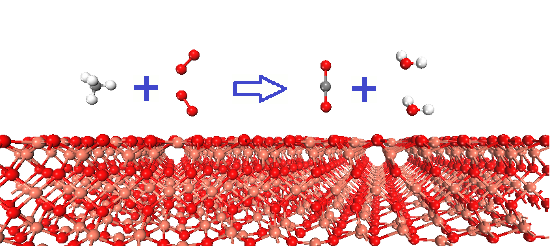
- sampled by the gamma point based on our tests. The k-point and cutoff energy were tested with higher computational settings, as 3 × 3 × 1 and 450 eV, leading to the difference of less than 0.1 eV in terms of the adsorption energies. The van der Waals (vdW) interaction was considered with the use of the


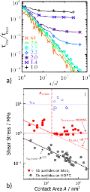
Recent highlights in nanoscale and mesoscale friction
Beilstein J. Nanotechnol. 2018, 9, 1995–2014, doi:10.3762/bjnano.9.190
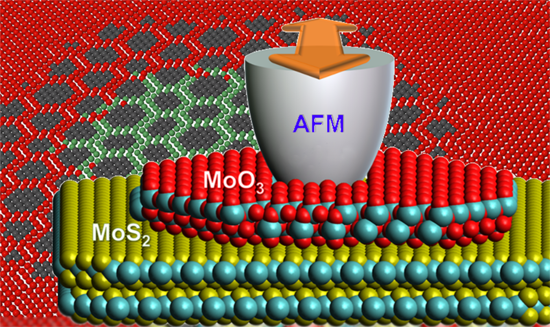
- . But studies of atomically flat surfaces in vacuum demonstrate that the actual origin of friction is at the atomic scale. The friction force results from the sum of atomic-scale forces, including all kinds of interactions including Coulombic forces, covalent bonding and van der Waals forces. As a


Synthesis of hafnium nanoparticles and hafnium nanoparticle films by gas condensation and energetic deposition
Beilstein J. Nanotechnol. 2018, 9, 1868–1880, doi:10.3762/bjnano.9.179
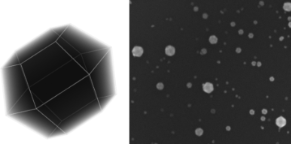
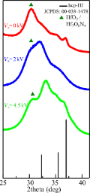
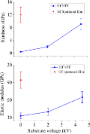
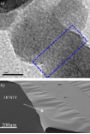
- van der Waals interaction between NPs and substrate [62].When increasing the substrate voltage, the strengthening is attributed to the high temperatures that arise locally when the NPs impact on the substrate [63]. Due to the high temperatures lead to partial coalescence of the NPs and neck formation






Improving the catalytic activity for hydrogen evolution of monolayered SnSe2(1−x)S2x by mechanical strain
Beilstein J. Nanotechnol. 2018, 9, 1820–1827, doi:10.3762/bjnano.9.173
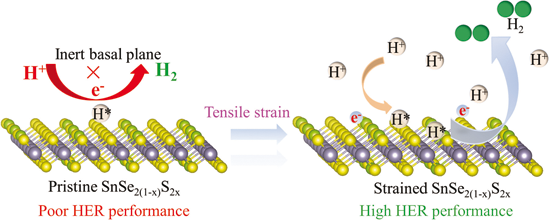
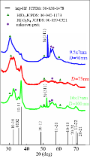
- synthesized by using traditional mechanical exfoliation techniques [24][25] because of the weak van der Waals (vdW) interactions between layers. These mono- and few-layer SnX2 (X = S, Se) compounds are expected to be widely used in the fields of water splitting [26], high-speed photodetection [27


Uniform cobalt nanoparticles embedded in hexagonal mesoporous nanoplates as a magnetically separable, recyclable adsorbent
Beilstein J. Nanotechnol. 2018, 9, 1770–1781, doi:10.3762/bjnano.9.168
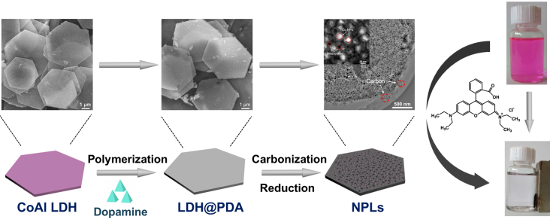
- in their framework has become a quite possible strategy for introduction of metal nanoparticles onto the support. The metal cations might migrate across the interlayer space during the thermal reduction process at high temperature due to the weak van der Waals forces between the interlayer of the LDH


Free-radical gases on two-dimensional transition-metal disulfides (XS2, X = Mo/W): robust half-metallicity for efficient nitrogen oxide sensors
Beilstein J. Nanotechnol. 2018, 9, 1641–1646, doi:10.3762/bjnano.9.156
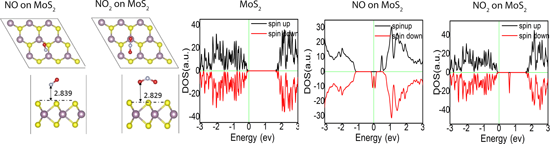
- conditions, a vacuum layer with a thickness of more than 20 Å was set to minimize artificial interactions between neighboring layers. A dispersion correction of total energy (DFT-D3 method) [37] is used to incorporate the long-range van der Waals interaction. The structures are fully relaxed until energy and


Predicting the strain-mediated topological phase transition in 3D cubic ThTaN3
Beilstein J. Nanotechnol. 2018, 9, 1399–1404, doi:10.3762/bjnano.9.132
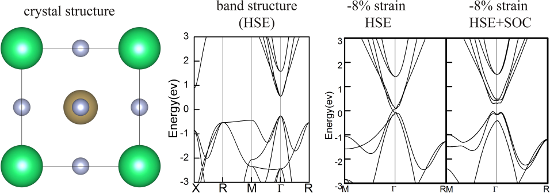
- –correlation functional was used. The hybrid Heyd–Scuseria–Ernzerhof (HSE06) functional [34][35] was adopted for the accurate calculation of band structures of 3D ThTaN3. A plane-wave basis set with an energy cut-off of 500 eV was employed and long range van der Waals dispersion [36] was incorporated to
- ) [1]. The band gap should exhibit substantial differences depending on the relative weights of the Hartree–Fock and traditional LDA or GGA exchange energies in the hybrid functional as well as those of the long range van der Waals interactions. However, we found that the impact of van der Waals


Atomic-level characterization and cilostazol affinity of poly(lactic acid) nanoparticles conjugated with differentially charged hydrophilic molecules
Beilstein J. Nanotechnol. 2018, 9, 1328–1338, doi:10.3762/bjnano.9.126
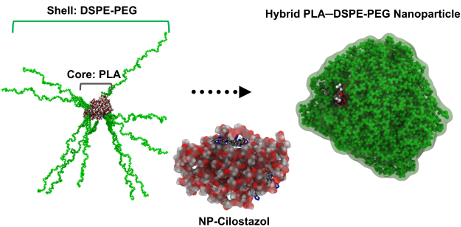
- different biological molecules inside the organism [52]. The interaction energies between the polymeric phase (PLA) and the lipid portion (DSPE–PEG) (Table 1) were similar in all cases and it is governed by hydrophobic interactions. Despite that van der Waals energy was similar in all formulations
- (−664,536.34, −661,500.71 and −659,315.18 kcal/mol for carboxy-, methoxy- and amino-terminated NPs, respectively), the slightly lower energetic contribution (total energy (Etotal), potential energy (PE) and kinetic energy (KD), and van der Waals (vdW) energy (EvdW)) obtained in the amino-terminated NPs could
- process will be studied. Schematic representation of PLA core formation process. Ball and stick representation of A) lactic acid monomer unit and atom definition for polymeric chain formation, B) poly(D,L-lactic acid) 20 monomer structure and C) van der Waals representation of 10 PLA chains with 20


Computational exploration of two-dimensional silicon diarsenide and germanium arsenide for photovoltaic applications
Beilstein J. Nanotechnol. 2018, 9, 1247–1253, doi:10.3762/bjnano.9.116
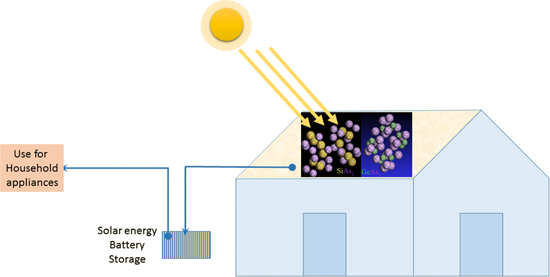
- calculations. It was subsequently used as a generic reference for aligning the band positions that were obtained from HSE06-Wannier calculations. A zero-damped van der Waals correction was incorporated using the DFT-D3 method of Grimme’s scheme [24][25] to better describe non-covalent bonding interactions. The
- atomic layers interacting with neighboring layers through weak van der Waals forces. Detailed structural parameters for bulk and monolayers of SiAs2 and GeAs2 are listed in Table 1. The calculated lattice constants for the bulk materials are in good agreement with previous experimental values [4]. The
- strength of van der Waals interactions in the bulk materials of SiAs2 and GeAs2. Thus, the lower the formation energy the easier it can be extracted from the bulk material. It has been reported that less than 200 meV/atom is considered to be a sufficiently low formation energy that the free-standing 2D


Electrostatic force spectroscopy revealing the degree of reduction of individual graphene oxide sheets
Beilstein J. Nanotechnol. 2018, 9, 1146–1155, doi:10.3762/bjnano.9.106
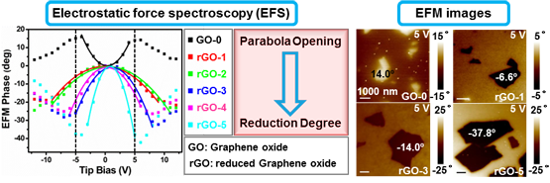
- superposes on the van der Waals force between the tip and sample so that both forces contribute to the imaging. In recent years, its applications have been extended to study the local dielectric properties of semiconductor nanomaterials such as GO sheets or partially reduced rGO sheets [20][21][22], graphene
- information (blue arrows marked in Figure 1i,k), indicating the contributions from the polarization force (dielectric properties) and the van der Waals force (topography) between the tip and sample. As we can see in the Figure 1l,m,n, the apparent height of samples 1 and 5 are 19.3 nm (Figure 1n) and 6.9 nm
- on the sample surface. The electrostatic attractive force superposes on the van der Waals force between the tip and sample so that the SPFM imaging gives a higher apparent height than the topographic height of nanomaterials when the dielectric constant of the nanomaterials is larger than the


Review on nanoparticles and nanostructured materials: history, sources, toxicity and regulations
Beilstein J. Nanotechnol. 2018, 9, 1050–1074, doi:10.3762/bjnano.9.98

- capillary attractive forces and molecular interactions [230] or van der Waals interactions leads to adhesion [231]. This may be due to the production of secretory fluids in the contact area by some animals (insects) [232][233][234], whereas others do not (spiders, geckos) [235][236], which makes the basic
- force in the physical form contribute to their adhesion. In recent reports, the reason for adhesion of gecko setae is due to van der Waals interaction through strong evidence [237] and rejects the capillary adhesion mechanisms. It was predicted that application of contact mechanics may help in smaller
- structures in their feet that are aligned in a series of a small ridges with a projection of 200 nm width in each hair. This increases the total surface area of gecko feet and leads to a van der Waals interaction mediated strong surface adhesion [241]. Similarly, the crystalline composite of CaCO3 crystals


Electro-optical interfacial effects on a graphene/π-conjugated organic semiconductor hybrid system
Beilstein J. Nanotechnol. 2018, 9, 963–974, doi:10.3762/bjnano.9.90
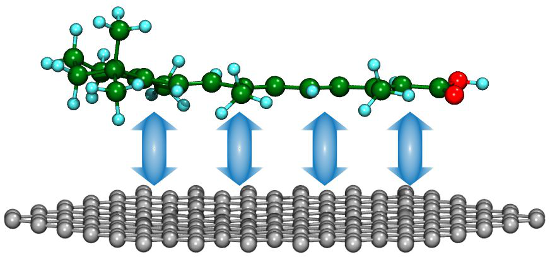
- based on density functional theory [68][69] as implemented in the SIESTA code [70][71]. For the exchange-correlation potential, we used the van der Waals density functional (vdW-DF) [72][73] as implemented on the Román-Pérez and Soler scheme [74]. We employed norm-conserving Troullier–Martins [75




A review of carbon-based and non-carbon-based catalyst supports for the selective catalytic reduction of nitric oxide
Beilstein J. Nanotechnol. 2018, 9, 740–761, doi:10.3762/bjnano.9.68
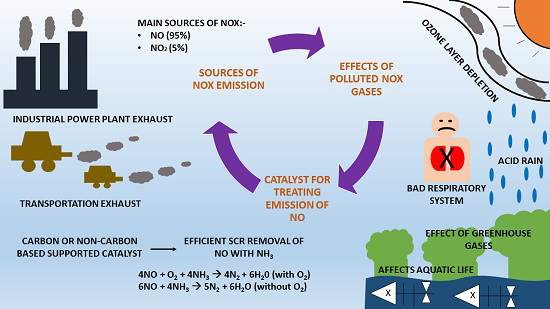
- mechanism suggests that only one molecule will adsorb on the catalyst surface and the second molecule will react with it directly from the gas phase (van der Waals force) to form a new product. Liu et al. [22] found that the Fe2O3 catalyst forms amide species (NH2−) in the presence of NH3 on the Lewis acid
Dynamics and fragmentation mechanism of (C5H4CH3)Pt(CH3)3 on SiO2 surfaces
Beilstein J. Nanotechnol. 2018, 9, 711–720, doi:10.3762/bjnano.9.66
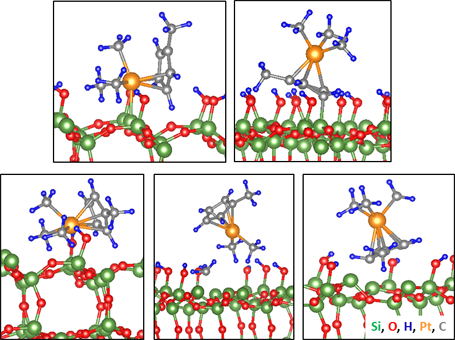
- parameterization of Perdew, Burke and Ernzerhof [20] was used as approximation for the exchange and correlation functional. In addition, dispersion corrections [21] were used to simulate the long-range van der Waals interactions. All calculations were performed in the scalar relativistic approximation. A kinetic