


Search results
Search for "Si" in Full Text gives 841 result(s) in Beilstein Journal of Nanotechnology. Showing first 200.
Low-energy electron interaction and focused electron beam-induced deposition of molybdenum hexacarbonyl (Mo(CO)6)
Beilstein J. Nanotechnol. 2022, 13, 182–191, doi:10.3762/bjnano.13.13
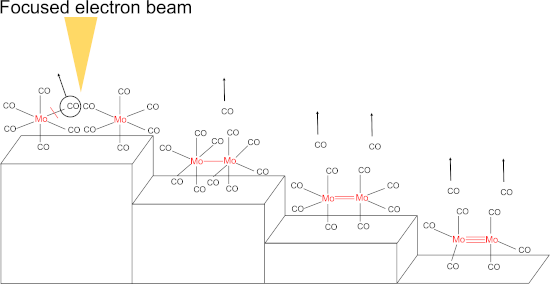
- with an integrated Oxford EDX detector. The elemental composition of Mo(CO)6 FEBID deposits obtained by EDX measurement is shown in Table 3. Figure 4 shows the corresponding EDX spectrum along with the SEM image of the deposit. Traces of the EDX signal are discernable from the Au and Si components of


Thermal oxidation process on Si(113)-(3 × 2) investigated using high-temperature scanning tunneling microscopy
Beilstein J. Nanotechnol. 2022, 13, 172–181, doi:10.3762/bjnano.13.12
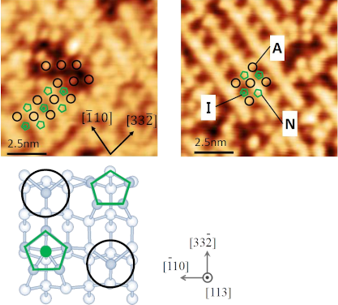
- Institute for Materials Science, 1-1 Namiki, Tsukuba, Ibaraki 305-0044, Japan 10.3762/bjnano.13.12 Abstract Thermal oxidation of Si(113) in a monolayer regime was investigated using high-temperature scanning tunneling microscopy (STM). Dynamic processes during thermal oxidation were examined in three
- oxidation modes – oxidation, etching, and transition modes – in the third of which both oxidation and etching occur. A precise temperature–pressure growth mode diagram was obtained via careful measurements for Si(113), and the results were compared with those for Si(111) in the present work and Si(001) in
- the literature. Initial oxidation processes were identified based on high-resolution STM images. Keywords: high-index Si surface; in situ measurement; oxidation; scanning tunneling microscopy (STM); Introduction High-index silicon surfaces have drawn considerable interest for their usefulness in


Influence of magnetic domain walls on all-optical magnetic toggle switching in a ferrimagnetic GdFe film
Beilstein J. Nanotechnol. 2022, 13, 74–81, doi:10.3762/bjnano.13.5
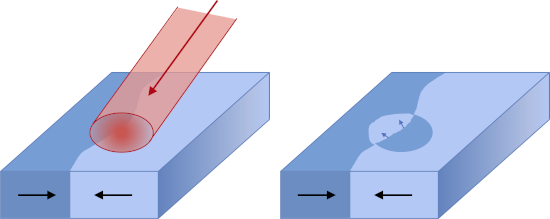
- thickness, deposited at room temperature using magnetron sputtering (base pressure <10−8 mbar) from elemental targets. The Ar sputter pressure was kept constant at 3.5 × 10⁻³ mbar during the deposition process. The film was prepared with 5 nm Pt as a seed layer on a Si(100) substrate with a 100 nm thick
- (100 nm)/Si(100). Magnetic properties were characterized by superconducting quantum interference device vibrating sample magnetometry, which confirmed an out-of-plane easy axis of magnetization with rectangular hysteresis loops and a coercivity of about 5 mT at room temperature, see Supporting


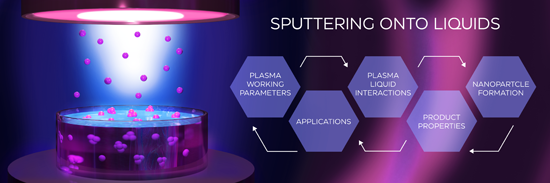
Sputtering onto liquids: a critical review
Beilstein J. Nanotechnol. 2022, 13, 10–53, doi:10.3762/bjnano.13.2






Nonmonotonous temperature dependence of Shapiro steps in YBCO grain boundary junctions
Beilstein J. Nanotechnol. 2021, 12, 1279–1285, doi:10.3762/bjnano.12.95
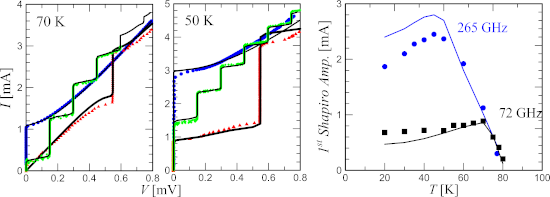
- analysis of the transport properties, the best structure was selected and located at the center of a Si lens for efficient detection. The sample was mounted into a dry cryostat allowing for measurements in a wide temperature range from helium temperatures to ≈80 K. An external gigahertz signal was fed


Morphology-driven gas sensing by fabricated fractals: A review
Beilstein J. Nanotechnol. 2021, 12, 1187–1208, doi:10.3762/bjnano.12.88
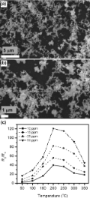
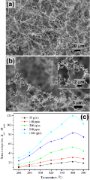
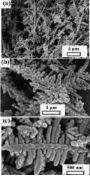
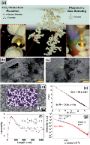
- study, Kante et al. prepared SnO2 films with fractal morphology by an electrochemical method with a subsequent oxidation process [68]. Both groups tested the films for CO gas sensing at different temperatures. Figure 8a–d shows the SEM images of SnO2 thin films on a Si(100) substrate obtained by Chen
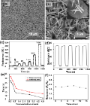
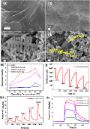
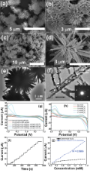
- the sensor, while Figure 12d shows individual EDS maps of Si, Pt, O, and Ti. The fabricated sensor displayed good sensitivity towards acetone under exposure to UV light with a detection limit greater than 97% at 10 ppb. The exceptional sensitivity achieved was attributed to high porosity, network
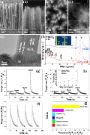
- -assisted chemical etching was used by Qin et al. [79] to prepare a dendritic array of Si/WO3 NW composites, which was tested for the detection of NO2 gas at room temperature. Figure 17a–e SEM and high-resolution transmission electron microscopy (HR-TEM) images of Si/WO3 NWs. Figure 17f shows the XRD










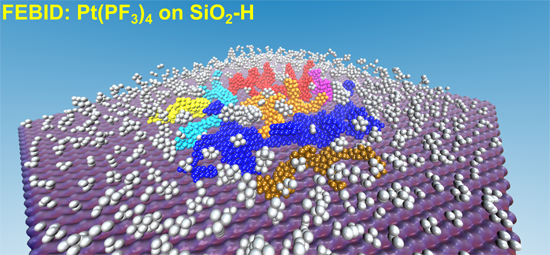
Irradiation-driven molecular dynamics simulation of the FEBID process for Pt(PF3)4
Beilstein J. Nanotechnol. 2021, 12, 1151–1172, doi:10.3762/bjnano.12.86
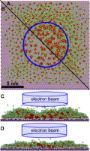
- substrate The first step of the FEBID simulation procedure shown in Figure 1 concerns the specification of a precursor molecule and a substrate. The selection of the system components is usually linked to available experiments. Common experimentally used substrate materials are, for example, SiO2, Si, Au








Open-loop amplitude-modulation Kelvin probe force microscopy operated in single-pass PeakForce tapping mode
Beilstein J. Nanotechnol. 2021, 12, 1115–1126, doi:10.3762/bjnano.12.83
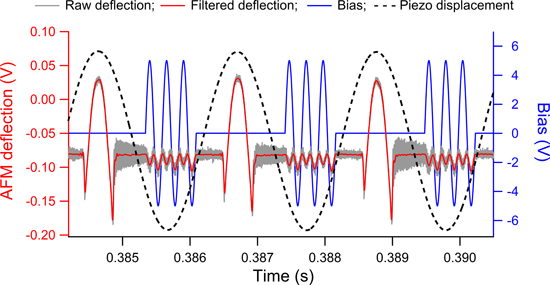
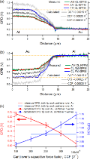
- electrical [57][58], chemical [59], optical [60][61], and mechanical [62][63] measurements. Results and Discussion Closed-loop KPFM measurements in two-pass PFT mode The new OL AM-KPFM implementation was tested on a commercially available sample consisting of large Au and Al metal regions deposited on a Si
- substrate (Bruker Nano Surfaces, Santa Barbara, CA, USA); the metal regions are separated by trenches that expose the Si substrate at their bottom. Figure 1a shows the AFM topographical image of one of these trenches, bordered by Au (left) and Al (right). The CPD maps over the sample were obtained first by
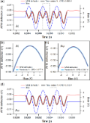
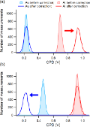
- coated probe (Bruker, Santa Barbara, CA, USA). A set of CPD maps over the same Au/Si/Al trench is shown in Figure 1d–g. As can be seen, the CPD contrast of the maps obtained by CL AM-KPFM changes with the position of the cantilever over either Au or Al (refer to Figure 1d–f) whereas the CPD maps from CL





Assessment of the optical and electrical properties of light-emitting diodes containing carbon-based nanostructures and plasmonic nanoparticles: a review
Beilstein J. Nanotechnol. 2021, 12, 1078–1092, doi:10.3762/bjnano.12.80
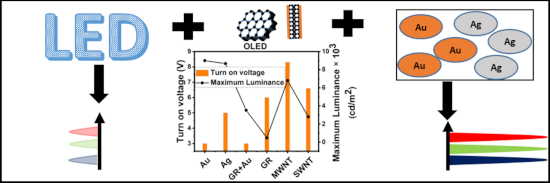
- their sizes [92]. Generally, a QD-based EML is sandwiched between a polymer-based ETL and HTL. Carbon-based nanomaterials such as SWNT have also been investigated as EML in OLED. Firstly, a SWNT p–n junction on a Si substrate has been investigated by Lee et al. [93]. Further, Mueller et al., with some


Progress and innovation of nanostructured sulfur cathodes and metal-free anodes for room-temperature Na–S batteries
Beilstein J. Nanotechnol. 2021, 12, 995–1020, doi:10.3762/bjnano.12.75
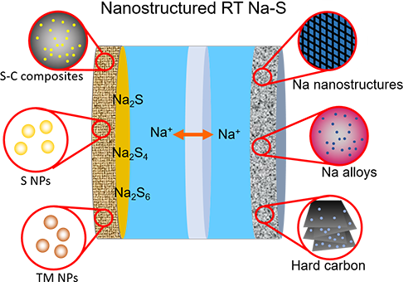
- to the expansion of these batteries into wider consumer markets, for which hard carbon, Si, Sn and Sb alloys, as well as phosphorous compounds are currently investigated [25][26][27]. This review focuses on the most recent designs of cathode materials for RT Na–S batteries, which attempt to overcome
- accommodated by the matrices, especially in the case of flexible ones. Na alloys and intermetallics Sodium is capable of forming alloys and intermetallic compounds with a range of elements at room temperature, most notably with Sb, Sn, P, Si, Ge, and Bi [73]. This way, considerable amounts of Na can be stored
- intermetallic compounds (M-Sn/Sb/P with M = Sn, Sb, P, Si, Bi, Cu, Ni, Fe, Zn). Fully sodiated Sb, Sn, and P form the phases Na3Sb, Na15Sn4, and Na3P, which offer theoretical capacities of 660, 847 and 2596 mAh·g−1, respectively [73]. However, the measured values are usually somewhat lower due to cycle




A Au/CuNiCoS4/p-Si photodiode: electrical and morphological characterization
Beilstein J. Nanotechnol. 2021, 12, 984–994, doi:10.3762/bjnano.12.74
- p-type Si by measuring I–V and C–V characteristics. The fabricated Au/CuNiCoS4/p-Si device exhibited good rectifying properties, high photoresponse activity, low series resistance, and high shunt resistance. The C–V characteristics revealed that capacitance and conductance of the photodiode are
- voltage-and frequency-dependent. The fabricated device with CuNiCoS4 thiospinel nanocrystals can be employed in high-efficiency optoelectronic applications. Keywords: Au/CuNiCoS4/p-Si device; CuNiCoS4; optoelectronic applications; Schottky devices; Introduction Recently, spinel materials have attracted
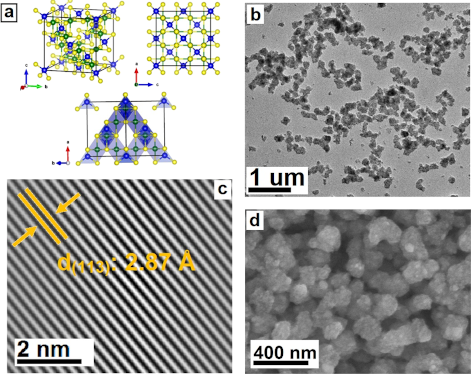
- characteristics of the photodiode after inserting CuNiCoS4 nanocrystals as interlayer between Au metal and p-Si were investigated. The aim is to obtain more powerful photodiodes by using a new type of interlayer material. XRD, HR-TEM, and SEM analyses were carried out to characterize the thiospinel CuNiCoS4



Molecular assemblies on surfaces: towards physical and electronic decoupling of organic molecules
Beilstein J. Nanotechnol. 2021, 12, 950–956, doi:10.3762/bjnano.12.71

- ][37][38][39], while also B deposition was shown to result in effective passivation of the Si surface [40][41]. In particular for electronic devices, oxidized semiconductor surfaces (e.g., silicon dioxide layers formed on bare silicon) are mostly used as substrates for fabricating devices [42]. Most of
- molecules from a semiconducting substrate is discussed for the example of both insulating CaF2 thin films on Si(111) [91] and hydrogen passivation of Ge(001) surfaces [92]. In the first case, three scenarios were compared: PTCDA on Si, on a thin CaF2, and on a thicker CaF2 layer. While isolated PTCDA
- molecules were pinned to defects on Si and also on the thin CaF2 layer, PTCDA was physically decoupled via the thicker CaF2 films and self-assembled into small islands. For FePc on H-passivated Ge(001), efficient physical decoupling facilitated the growth of large islands with upright oriented molecules
In situ transport characterization of magnetic states in Nb/Co superconductor/ferromagnet heterostructures
Beilstein J. Nanotechnol. 2021, 12, 913–923, doi:10.3762/bjnano.12.68
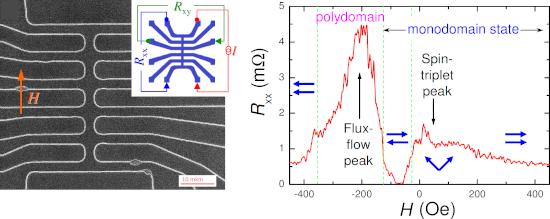
- the procedure for the controllable operation of devices based on S/F heterostructures. Samples We study two types of Nb/Co MLs with different numbers of F-layers and layer thicknesses. The simplest S1, Nb(50 nm)/Co(1.5 nm)/Nb(8 nm)/Co(2.5 nm)/Nb(8 nm)/Si ML (bottom-to-top), has just two dissimilar Co
- layers composing a single pseudo spin valve. A more complex S2, Nb(50 nm)/[Co(1.5 nm)/Nb(6 nm)/Co(2.5 nm)/Nb(6 mn)]3Co(1.5 nm)/Nb(6 nm)/Si (the structure in square brackets is repeated three times) has five Co layers. MLs are deposited by magnetron sputtering in a single deposition cycle without breaking
- the vacuum. We use a Nb target (99.95% purity) for deposition of S-layers, Co (99.95% purity) for F-layers, and Si (99.999%) for seeding bottom and protective top layers. MLs are grown on a Si(111) wafer. Prior to deposition, targets were precleaned by plasma-etching for 3 min and in addition for 1


The role of convolutional neural networks in scanning probe microscopy: a review
Beilstein J. Nanotechnol. 2021, 12, 878–901, doi:10.3762/bjnano.12.66
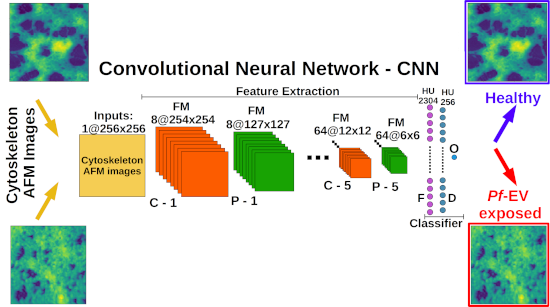
- (STEM) images after nearest neighbor down-sampling. This enabled an increase in image resolution of up to 100-fold, decreasing scanning time and electron dose [120]. Another application of CNNs for STEM was for atomic defect classification [121]. The goal was to characterize defects related to Si
- was trained on simulated STEM images. Then, scanning tunneling microscopy (STM) images of the same sample were used to characterize the defects. STM images, which give the local density of states, measure not only the Si lattice, but also defect areas where this well-ordered lattice disappears. Such
- images were compared with those computed by density functional theory (DFT) based on well-known single and dimer Si defects. The examples given here demonstrate the utility of deep learning in general and CNN in particular in the field of microscopy. In the following section, the emphasis is narrowed








Silver nanoparticles nucleated in NaOH-treated halloysite: a potential antimicrobial material
Beilstein J. Nanotechnol. 2021, 12, 798–807, doi:10.3762/bjnano.12.63
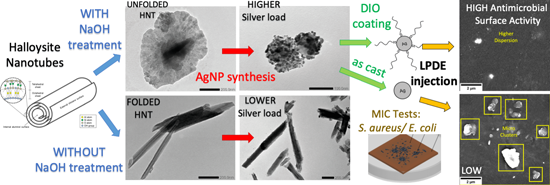
- aluminosilicate sheet that folds over itself in virtue of the internal stress inherent to the crystalline structure of the material, forming nanotubes [25]. As shown in Figure 1, it folds with a silicate phase facing outwards (Si-O), and an aluminol phase facing inwards (Al-OH). Since the internal and external
- spacing” of the oxygen atoms is different for the two crystalline phases, straining them to conform the oxygen into both structures at the same time. It is our theory that as the NaOH chemical bath etches Al and Si atoms from HNT [31][32], internal sharing of apical oxygen is reduced, diminishing the




Reducing molecular simulation time for AFM images based on super-resolution methods
Beilstein J. Nanotechnol. 2021, 12, 775–785, doi:10.3762/bjnano.12.61
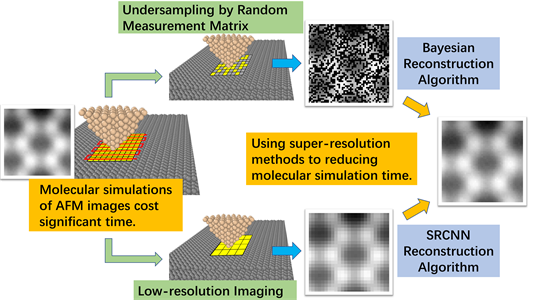
- Lennard–Jones (LJ) potential is used to describe the interaction between the graphene layers and the tip substrate. The LJ parameters for C–C are εC–C = 2.84 meV, σC–C = 0.34 nm and for Si–C the parameters are εSi–C = 8.909 meV, σSi–C = 0.3326 nm (ε is the depth of the potential well, σ is the finite
- distance). The cut-off distance for the C–C interaction is 1.19 nm. The cut-off distance for the Si–C interaction is changed to observe the impact on the simulation. Increasing the cut-off distance increases the number of atoms in the tip–sample interaction but the result is more accurate. For the gold
- substrate, the interaction between Au atoms is calculated by the embedded atom method (EAM) potential [56]. The LJ potential is employed to calculate the interaction between Si and Au (εSi–Au = 5.4297 meV, σSi–Au = 0.33801 nm). Due to the relatively large size of the substrate compared to the tip and a




9.1% efficient zinc oxide/silicon solar cells on a 50 μm thick Si absorber
Beilstein J. Nanotechnol. 2021, 12, 766–774, doi:10.3762/bjnano.12.60
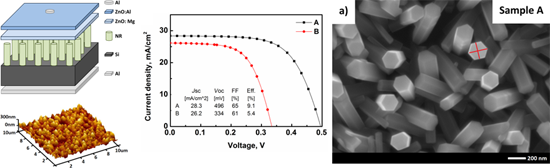
- several articles reporting the photovoltaic effect for the n-type ZnO/p-type Si heterojunction [10][11][12][13][14]. In several works, open-circuit voltage (VOC), short-circuit current (JSC), fill factor (FF), and photovoltaic efficiency (Eff.) were reported for ZnO/Si solar cells. Such results were
- . = 6.7%) [13]. In our previous work, we reported JSC = 32 mA·cm−2; VOC = 470 mV; FF = 69%; Eff. = 10.5%, and JSC = 38 mA·cm−2; VOC = 520 mV; FF = 71%; Eff. = 14% for planar and textured Zn1−xMgxO/Si solar cells, respectively [14]. A solar efficiency of up to 14% was reported by us for structures grown on
- a 180 μm thick p-type Si substrate. Further cost reduction requires the use of a thinner Si substrate/absorber. Thus, in this paper we report photovoltaic results for a 50 μm thick Si absorber. Experimental Silicon preparation The p-type silicon wafer with thickness of 50 μm and a diameter of 5 cm


Recent progress in actuation technologies of micro/nanorobots
Beilstein J. Nanotechnol. 2021, 12, 756–765, doi:10.3762/bjnano.12.59
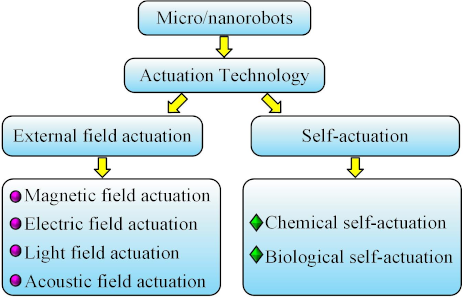
- this, the new microrobot is expected to be used in targeted drug delivery and other biomedical fields. Si et al. [27] proposed a theoretical concept of a nanorobot consisting of a nanoparticle and four single-stranded DNAs placed on a quad-nanopore device for motion control. When an electric field is


A review of defect engineering, ion implantation, and nanofabrication using the helium ion microscope
Beilstein J. Nanotechnol. 2021, 12, 633–664, doi:10.3762/bjnano.12.52
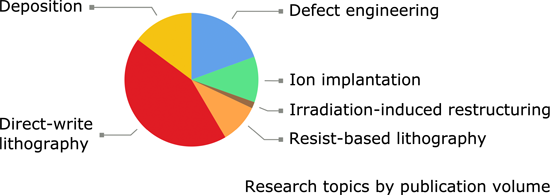
- SiO2/Si substrate were irradiated on one half with 25 keV helium ions. It was found that at a dose of 2 × 10¹⁵ ions/cm2 a domain wall could be injected into the structure due to the introduction of lattice defects that locally reduced the perpendicular magnetic anisotropy. By raising the dose slightly
- were so low, the change in optical properties was attributed to the local accumulation of defects (as opposed to collisional phase mixing). In a plasmonic application, resonant triangular nanostructures were created in a graphene sheet supported on SiO2/Si by selectively irradiating the graphene in the
- ]. Here, neon line irradiation of an Si(25 nm)/SiO2(6.5 nm)/Si(bulk) stack was used to induce collisional mixing of silicon atoms into the buried SiO2 layer. Upon subsequent thermal annealing, 1D chains of silicon nanocrystals of 2.2 nm diameter self-assembled in the center of the SiO2 layer. A TEM-based


Impact of GaAs(100) surface preparation on EQE of AZO/Al2O3/p-GaAs photovoltaic structures
Beilstein J. Nanotechnol. 2021, 12, 578–592, doi:10.3762/bjnano.12.48
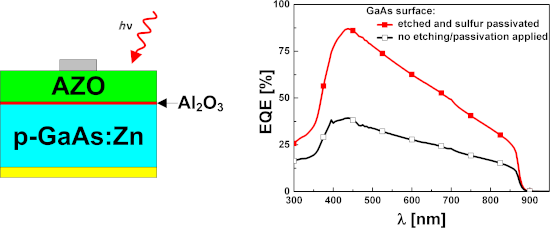
- ; gallium arsenide; photovoltaics; surface passivation; Introduction The atomic layer deposition (ALD) method is used for silicon passivation in photovoltaics. In recent years we proposed the usage of ALD for the construction of simplified Si-based cells [1]. Once zinc oxide (ZnO) nanorods were employed as




Spontaneous shape transition of MnxGe1−x islands to long nanowires
Beilstein J. Nanotechnol. 2021, 12, 366–374, doi:10.3762/bjnano.12.30
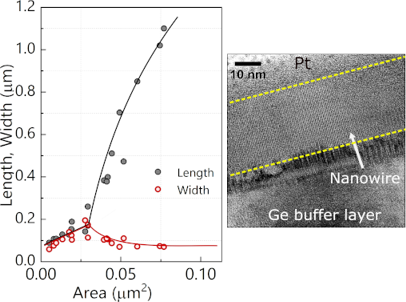
- Ge on Si substrates, or the endotaxial growth of transitional metal silicides (e.g., CoSi2) [34][36]. In these studies, the NWs exhibit a narrow diameter distribution, in contrast to those obtained by VLS, which commonly have wider range due to the droplet size distribution. In the present work, we
- epilayer and the substrate as detected in several heteroepitaxial systems, such as Ge on Si [42][43][44], InAs on GaAs [45], Co silicide [36], and silicides with different metals [35]. Such a mechanism is expected to occur in our Mn layers deposited on Ge(111) substrates, due to the large lattice mismatch


Structural and optical characteristics determined by the sputtering deposition conditions of oxide thin films
Beilstein J. Nanotechnol. 2021, 12, 354–365, doi:10.3762/bjnano.12.29
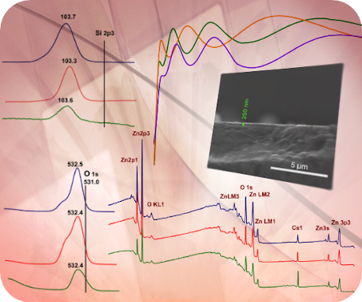
- of the samples by depleting the films of oxygen. Figure 2 shows the general oxide spectra for three SiO2 samples. The high-resolution (HR) analysis of the Si 2p3 and O 1s spectra recorded [43][44] for the SiO2 samples are shown in Figure 3. Using this analysis, we determined the elemental composition
- as well as the chemical and electronic states of the elements that exist in the SiO2 films. Although Si 2p3 shows small chemical changes, the binding energy value of 103.7 eV indicates a completely oxidized Si for the SiO2 films (Figure 3a) [43][44][45][46]. Experimental data reveal that there is
- measured thickness values for the oxide films are shown in Table 2 and they are found to be similar to the predefined ones. The EDS distribution in all investigated samples showed the presence of chemical elements such as Zn L, Si K, and O K (Table 2). In the case of the 200 nm thick SiO2 sample, the


The nanomorphology of cell surfaces of adhered osteoblasts
Beilstein J. Nanotechnol. 2021, 12, 242–256, doi:10.3762/bjnano.12.20
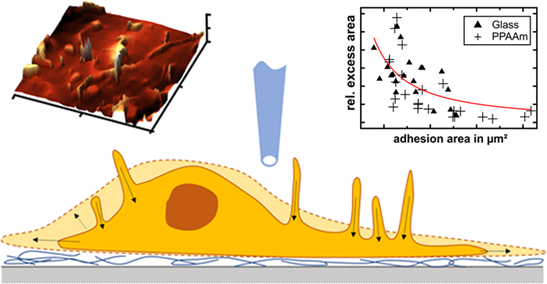
- osteoblast after 3 h of adhesion to titanium. The ruffles on the cell membrane are visible. (FE-SEM SUPRA25, 1 kV, 30° angle, 100 nm Ti on Si wafer, fixation by 2.5% glutardialdehyde (GA), acetone series, critical point drying). Edge height analysis. (a) Topography of a fixed osteoblast on a 10 nm Au layer


Extended iron phthalocyanine islands self-assembled on a Ge(001):H surface
Beilstein J. Nanotechnol. 2021, 12, 232–241, doi:10.3762/bjnano.12.19
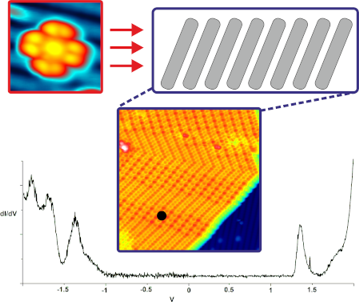
- the passivation of semiconducting materials, which removes surface dangling bonds and significantly reduces surface reactivity, may also provide a sufficiently insulating layer for an efficient decoupling of molecular structures from the substrate influence. Among such surfaces, hydrogen-passivated Si
- (001):H [22][23], Si(111):H [24], and Ge(001):H [25][26][27][28] surfaces are most commonly mentioned. Iron phthalocyanines (FePc) have been studied on Si(111):H [24] and it was concluded that the molecules are weakly coupled to the substrate. Interestingly, in another study, it has been reported that
- FePc molecules deposited at room temperature on Si(111):H serve as sources of single Fe atoms and undergo de-metalation [29]. Importantly, hydrogen-passivated Si/Ge surfaces may also act as platforms for nanostructurization by the atomically precise desorption of individual hydrogen atoms and the
A review on the biological effects of nanomaterials on silkworm (Bombyx mori)
Beilstein J. Nanotechnol. 2021, 12, 190–202, doi:10.3762/bjnano.12.15
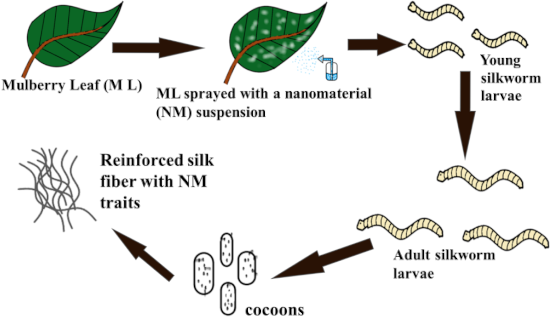
- -doped carbon dots (C-NCDs), and to 0.39 µg/µL of Si NPs in order to study the differences in the immune responses and programmed cell death induced in hemocytes [153]. It was shown that autophagy and apoptosis caused by Si NPs were reverted and experimental groups exposed to C-NCDs, CdTe QDs caused
- autophagy, apoptosis, and necrosis in the hemocytes. Xing et al. [154] studied the outcome of introducing Si NPs in the hemolymph of the silkworm. It was reported that 3.9 µg of Si NPs was toxic to the hemocytes when compared to the groups exposed to 0.39 and 0.039 µg of Si NPs. A high dose of Si NPs (3.9
- of nanomaterials, such as Ag NPs, CdTe QDs, and Si NPs have shown to induce an excessive production of ROS, which causes oxidative stress leading to cell apoptosis and autophagy. This review also discussed the effects of nanomaterials on the silk fibers. Reports indicate that the presence of these





