


Search results
Search for "conductivity" in Full Text gives 675 result(s) in Beilstein Journal of Nanotechnology. Showing first 200.
Bacterial safety study of the production process of hemoglobin-based oxygen carriers
Beilstein J. Nanotechnol. 2022, 13, 114–126, doi:10.3762/bjnano.13.8
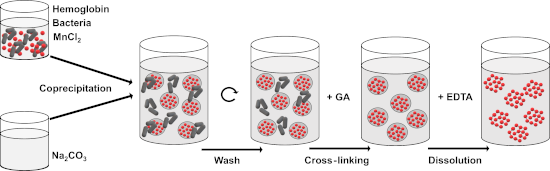
- utilizing an excitation wavelength of 488 nm and a 505 nm long-pass emission filter. The zeta potential of HbMP in 0.9% NaCl (pH 7.4, conductivity 17.2 ± 0.9 mS/cm) was measured using the Zetasizer Nano ZS instrument. For the determination of the concentration of free hemoglobin in the HbMP suspension


Tin dioxide nanomaterial-based photocatalysts for nitrogen oxide oxidation: a review
Beilstein J. Nanotechnol. 2022, 13, 96–113, doi:10.3762/bjnano.13.7
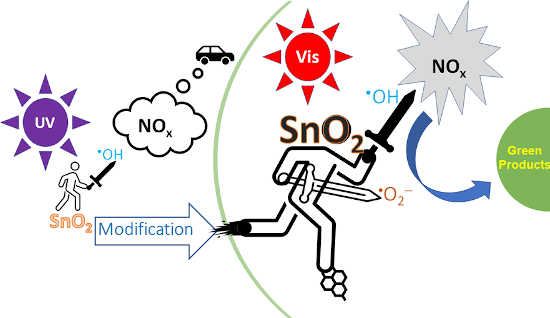
- potential because they exhibit a wide range of useful properties, including high conductivity, cost-effectiveness, high flexibility and processability, and ease of fabrication. These recent advances are highlighted and discussed in terms of preparation method and photocatalytic mechanism in this review


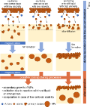
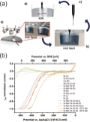
Sputtering onto liquids: a critical review
Beilstein J. Nanotechnol. 2022, 13, 10–53, doi:10.3762/bjnano.13.2






Design aspects of Bi2Sr2CaCu2O8+δ THz sources: optimization of thermal and radiative properties
Beilstein J. Nanotechnol. 2021, 12, 1392–1403, doi:10.3762/bjnano.12.103
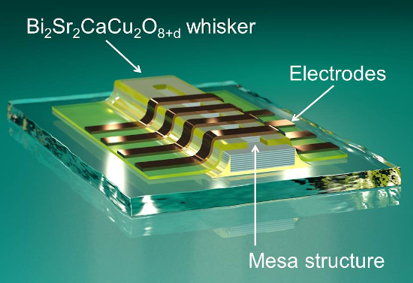
- large crystals, requiring more epoxy, this is more difficult and the remaining epoxy layer is usually thicker. For this reason we assume the epoxy thickness de = 1 μm for whisker and de = 5 μm for crystal-based devices. The monocrystalline sapphire substrate has a very good thermal conductivity, κ, at
- chosen to be similar (but not identical) to studied samples in order to optimize the mesh size and the calculation time. Therefore, such simulations serve for a qualitative illustration of the difference between crystal- and whisker-based devices and the role of the electrodes. The conductivity of


Measurement of polarization effects in dual-phase ceria-based oxygen permeation membranes using Kelvin probe force microscopy
Beilstein J. Nanotechnol. 2021, 12, 1380–1391, doi:10.3762/bjnano.12.102
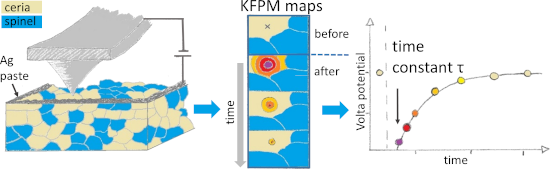
- microscopy; oxygen permeation; Introduction Acceptor-doped cerium dioxide, where cerium is partially substituted by cations of lower valence (most prominently Gd3+), is a fluorite material with a very high oxide ion conductivity at comparably moderate temperatures (around 600 °C). It has already been in
- focus of research for roughly 50 years [1]. The ion conductivity is combined with a moderate electron conductivity, which strongly depends on the oxygen partial pressure [2][3][4]. These features make ceria an interesting material for high-temperature industrial applications, for example, as oxygen
- partial oxidation reactions. Apart from Gd-doped ceria, Sm-doped ceria also could be an interesting alternative in this kind of composite due to its high ionic conductivity [17]. Obstacles that generally still need to be addressed for the application of dual-phase ceria-based membranes in such an


Chemical vapor deposition of germanium-rich CrGex nanowires
Beilstein J. Nanotechnol. 2021, 12, 1365–1371, doi:10.3762/bjnano.12.100
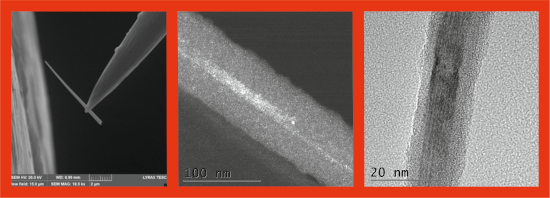
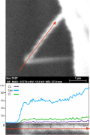
- transfer single NWs onto contact lithographic pads (Supporting Information File 1, Figure S9) to measure their conductivity. The NWs, however, turned out to be fragile and were destroyed when an attempt was made to cut them from the tungsten tip using a focused ion beam (FIB). Therefore, a method to
- directly contact an as-grown single NW was developed. This method allowed us to measure the conductivity between the molybdenum substrate and the point of contact of the tungsten tip with the NW. To limit the contact resistance between the tungsten tip and the NW, the tip was soldered to the NW with a



Electrical, electrochemical and structural studies of a chlorine-derived ionic liquid-based polymer gel electrolyte
Beilstein J. Nanotechnol. 2021, 12, 1252–1261, doi:10.3762/bjnano.12.92
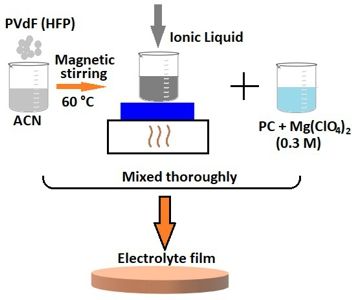
- conductivity of σ = 8.9 × 10⁻³ S·cm−1. The temperature dependence of the prepared polymer gel electrolytes follows the thermally activated behavior of the Vogel–Tammann–Fulcher equation. The total ionic transference number was ≈0.91 with a wider electrochemical potential window of 4.0 V for the prepared
- in the polymer which assists in the rapid ion motion while keeping its mechanical stability. The second aim is to increase the ionic conductivity of the electrolytes, which is generally insufficient for practical applications in electrochemical energy storage devices. Hence, different kinds of
- techniques, such as the addition of ionic liquids (ILs) with low viscosity and high dielectric constant values or some suitable fillers have been used by the research community to increase the ionic conductivity of polymer electrolytes [6][7]. As mentioned above, one way to increase the ionic conductivity is



Morphology-driven gas sensing by fabricated fractals: A review
Beilstein J. Nanotechnol. 2021, 12, 1187–1208, doi:10.3762/bjnano.12.88
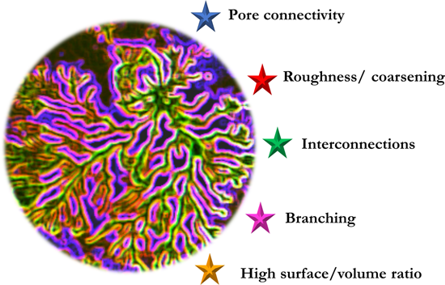
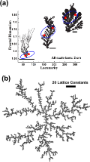
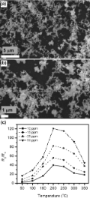
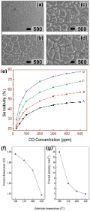
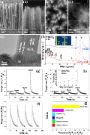
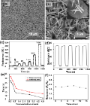
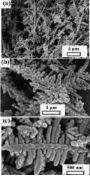
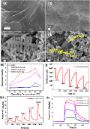
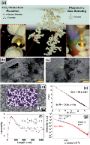
- and dendritic BiVO4, the increased surface area of dendritic structures, as well as conductivity and acceleration of electrons between gas molecules and hybrid material. Figure 20e shows responses of pure BiVO4 and BiVO4/rGO hybrids towards 10 ppm TEA with different rGO mass ratios at different




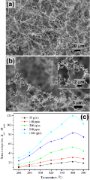


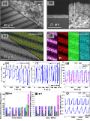

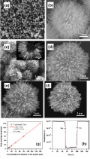
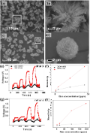



The effect of cobalt on morphology, structure, and ORR activity of electrospun carbon fibre mats in aqueous alkaline environments
Beilstein J. Nanotechnol. 2021, 12, 1173–1186, doi:10.3762/bjnano.12.87
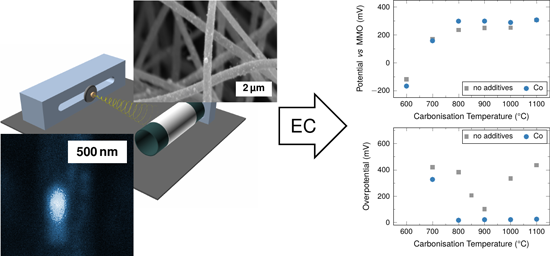
- -rolling at 120 °C directly onto the mat without an additional current collector. Physical characterisation SEM images were recorded using a Quanta FEG 650 (FEI Europe) with an acceleration voltage of 5 kV. The samples were attached to the sample holder using double-sided graphite tape. Conductivity was
- . The signal was detected using a heat conductivity detector. ICP-OES for cobalt mass analysis was performed by blending 30 to 50 mg of a sample with 250 mg of a mixture of lithium borates. The blend was heated to 1000 °C within 3 h and kept at this temperature for 30 min. The resulting melt was
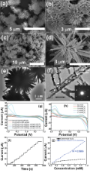
- regard the entirety of the insights found in a holistic approach. The behaviour of the reference fibres without cobalt is governed by two competing properties, nitrogen-content and electrical conductivity. As discussed in detail in a previous study, a higher nitrogen content and a higher conductivity


Irradiation-driven molecular dynamics simulation of the FEBID process for Pt(PF3)4
Beilstein J. Nanotechnol. 2021, 12, 1151–1172, doi:10.3762/bjnano.12.86
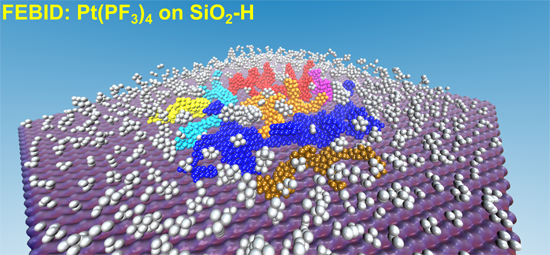
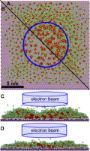
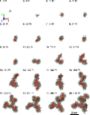
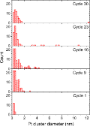
- atomistic level although it governs many physical properties such as electrical and thermal conductivity, and magnetic properties [27][28]. Atomistic simulations provide insights into the internal structure of the deposits and its evolution depending on the regimes of the FEBID process. In this study








First-principles study of the structural, optoelectronic and thermophysical properties of the π-SnSe for thermoelectric applications
Beilstein J. Nanotechnol. 2021, 12, 1101–1114, doi:10.3762/bjnano.12.82
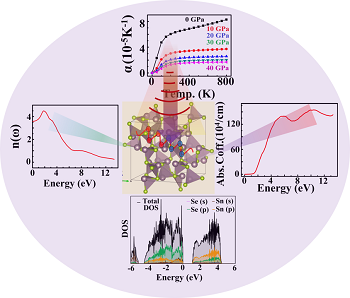
- is exceptionally promising for the next generation of photovoltaic and thermoelectric devices at room and high temperatures. Keywords: density functional theory (DFT); electronic properties; lattice thermal conductivity; optical properties; thermodynamic properties; thermoelectric properties; tin
- conductivity, thermal conductivity, electronic thermal conductivity, lattice thermal conductivity, and absolute temperature, respectively [5]. The bottleneck that limits the extensive use of TE materials is their relatively low value of ZT. The close interdependency of the three entities S, σ, and κtot offer
- the power factor (PF = S2σ) which is connected with the electrical transport [8][9] and the lowest value of κtot [10]. To date, a considerable amount of research has been performed to enhance the ZT value. For instance, by lowering the value of the lattice thermal conductivity (through all-scale


Assessment of the optical and electrical properties of light-emitting diodes containing carbon-based nanostructures and plasmonic nanoparticles: a review
Beilstein J. Nanotechnol. 2021, 12, 1078–1092, doi:10.3762/bjnano.12.80
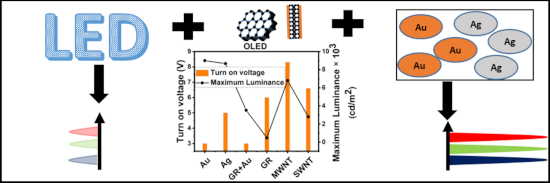
- manifests as an increment in the photoluminescence (PL), conductivity, and electroluminescence (EL) of the LED [24][25]. Other MNP with SPR properties include Al, Pt, Pd, and Cu [26][27][28][29]. In general, SPR not only increases the radiative recombination lifetime values, but also the quantum yield
- review is available in Table 1. Enhancing the anode characteristics For LED, the general strategy is to use a current-spreading layer (anode) with a high electrical conductivity and a high transparency ranging from the UV to the red region. Additionally, it should also be cost-effective and producible on
- (Figure 7) present the best results in terms of luminance and EL emission. In addition, the electron conductivity of the device is increased by four orders of magnitude. Concerning graphene–polymer nanocomposites, Choudhary et al. have inserted MoS2 and graphene oxide NP into a polyaniline ETL [72]. The


Progress and innovation of nanostructured sulfur cathodes and metal-free anodes for room-temperature Na–S batteries
Beilstein J. Nanotechnol. 2021, 12, 995–1020, doi:10.3762/bjnano.12.75
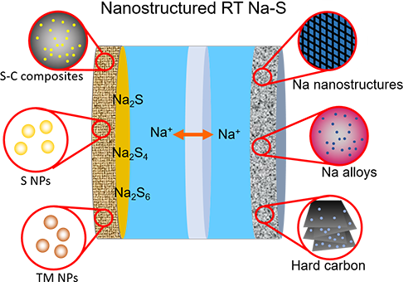
- design a cathode material that improves the conductivity of the system [4][11]. Common approaches are based on the incorporation of conductive carbon nanomaterials [23]. The volume expansion of sulfur during the discharge process is caused by the formation of the discharge product Na2S. This expansion is
- the drawbacks of sulfur-based cathodes. The strategies to solve the polysulfide shuttle effect, conductivity drop, and structural damage caused by sulfur volume expansion are discussed. Moreover, concepts for Na metal-free anodes in Na–S batteries are reviewed and analyzed. Other strategies including
- this technology has currently developed and where future research could be directed at. Review Conventional sulfur–carbon cathode materials Sulfur–carbon composites are the most widely studied cathode materials because carbon increases the cathode conductivity and also improves the reactivity of sulfur




A Au/CuNiCoS4/p-Si photodiode: electrical and morphological characterization
Beilstein J. Nanotechnol. 2021, 12, 984–994, doi:10.3762/bjnano.12.74
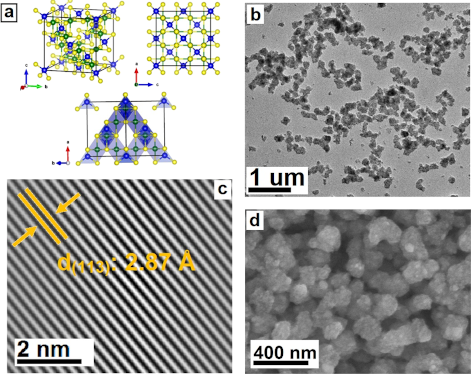
- frequency and then decreased towards 1000 kHz. The decreasing of Rs with increasing frequency can be attributed to an increase of the conductivity of the photodiode. The Nss values for the Au/CuNiCoS4/p-Si photodiode are acceptable for optoelectronic devices [44]. The plots of resistance as function of the



The role of deep eutectic solvents and carrageenan in synthesizing biocompatible anisotropic metal nanoparticles
Beilstein J. Nanotechnol. 2021, 12, 924–938, doi:10.3762/bjnano.12.69
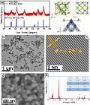
- surface coating with nanoparticles through electrodeposition. A general electrodeposition setup consists of three electrodes, that is cathode, anode, and a reference electrode [78]. The solvation property and the conductivity of DESs also play a critical role in determining the physical structure, yield
- of carrageenan and surfactants. The dissolution of several compounds would significantly contribute to a species-rich system with higher conductivity. This unique hybrid model will create a platform for synthesizing n different nanomaterials with combinatorial possibilities of 2n since there are n


Fate and transformation of silver nanoparticles in different biological conditions
Beilstein J. Nanotechnol. 2021, 12, 665–679, doi:10.3762/bjnano.12.53
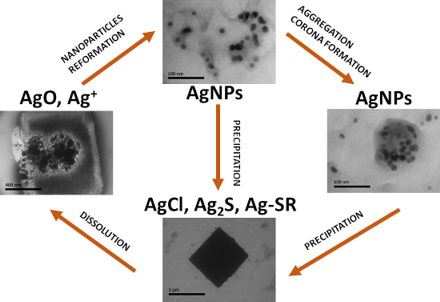
- possible toxic effects following the biomedical applications. Experimental Chemicals All chemicals were purchased from Merck (Darmstadt, Germany) unless otherwise specified. Ultrapure water (UPW), characterized with conductivity of 18.2 MΩ·cm, was obtained from a GenPure UltraPure water system (GenPure UV




A review of defect engineering, ion implantation, and nanofabrication using the helium ion microscope
Beilstein J. Nanotechnol. 2021, 12, 633–664, doi:10.3762/bjnano.12.52
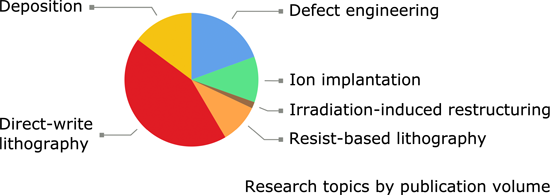
- analysis of these substrate effects can be found in [18]. Electrical and electronic properties The majority of defect engineering studies using the HIM have focused on tuning electrical conductivity. First work in this area concentrated on graphene, seeking to locally modulate its 2D electronic structure
- traps that pin the Fermi level at the Dirac point. Later conductivity tuning of graphene went on to combine this irradiation-induced effect with the fine patterning capabilities of the HIM performing line irradiations across graphene with varying step sizes between dwell points [21]. This produced
- continuously irradiated lines in the one extreme, and lines comprising a chain of separated points in the other. Conductivity analysis of these samples showed that in addition to the total dose, the scan strategy (which controls the uniformity of the dose and hence the uniformity of the resulting defects) can


High-yield synthesis of silver nanowires for transparent conducting PET films
Beilstein J. Nanotechnol. 2021, 12, 624–632, doi:10.3762/bjnano.12.51
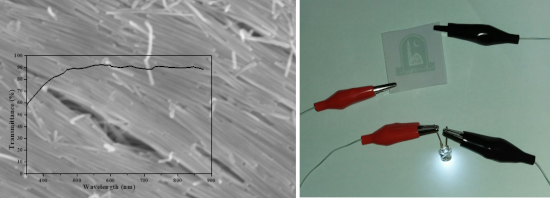
- electrodes made of sputtered indium tin oxide (ITO) films [1][2][3]. These films are widely used because of their high transmittance, low sheet resistance, and high electrical conductivity. Yet, they still have some major drawbacks such as high cost, intrinsic brittleness due to the ceramic nature [4], and
- electrical conductivity [12]. AgNWs are important as they offer a possibility to overcome light–matter interaction in the visible region. The optical properties of AgNWs are determined by localized surface plasmon resonance (LSPR), which depends on shape, size, and environment of the material [13]. AgNWs
- as a by-product of the reaction drastically affect the electrical conductivity and transparency of the silver nanowires network, thus limiting the optoelectronic applications [30][31]. Here, a fast one-pot modified polyol protocol [32] was employed to obtain ultrapure silver nanowires. In this facile


Nanoporous and nonporous conjugated donor–acceptor polymer semiconductors for photocatalytic hydrogen production
Beilstein J. Nanotechnol. 2021, 12, 607–623, doi:10.3762/bjnano.12.50
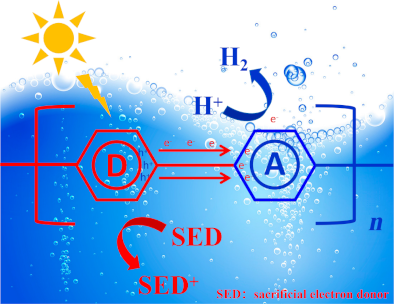
- -based polymers, for example, P45 (Figure 5). The D–π–A-type compound P45 possesses an extended π-conjugation along the backbone and consequently has an enlarged visible-light absorption and enhanced electronic conductivity compared with π-linker-free pyrene–benzothiadiazole-based polymers. After




Properties of graphene deposited on GaN nanowires: influence of nanowire roughness, self-induced nanogating and defects
Beilstein J. Nanotechnol. 2021, 12, 566–577, doi:10.3762/bjnano.12.47
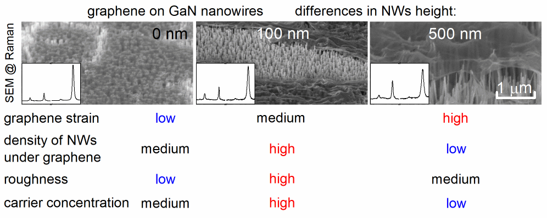
- mobility and, consequently, graphene conductivity. On the other hand, chemical functionalization of graphene may improve the sensitivity of graphene-based sensors [6]. Therefore, the control of density and types of defects in graphene might be a new way to prepare efficient molecular sensors. Systems
- absorption [9]. However, the interaction between corrugated nanowire substrate and graphene could substantially increase the scattering of carriers in a graphene electrode and decrease its conductivity. Therefore, detailed studies of the interaction between nanowire substrate and graphene are crucial to gain




Local stiffness and work function variations of hexagonal boron nitride on Cu(111)
Beilstein J. Nanotechnol. 2021, 12, 559–565, doi:10.3762/bjnano.12.46
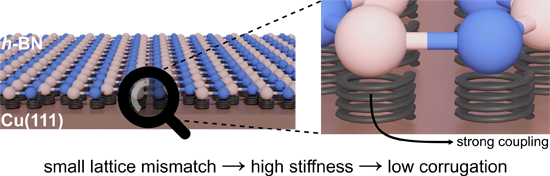
- - and few-layer thick graphene films [1][2]. Unique properties, such as high thermal stability and conductivity, immense intra-sheet stiffness, and excellent dielectric properties, make h-BN interesting for technological applications. For example, thin films of h-BN have been used as a passivating layer


Interface interaction of transition metal phthalocyanines with strontium titanate (100)
Beilstein J. Nanotechnol. 2021, 12, 485–496, doi:10.3762/bjnano.12.39
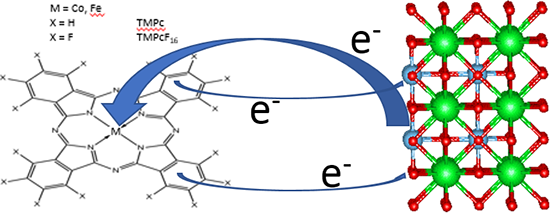
- theoretical approaches [6]. Possible applications of STO/organic interfaces include FETs [7][8], photodiodes [9], and organic spin valves[10]. Strontium titanate is a semiconductor with an indirect band gap of 3.25 eV [11] crystallizing in a perovskite structure with cubic unit cell. The conductivity can be


Solution combustion synthesis of a nanometer-scale Co3O4 anode material for Li-ion batteries
Beilstein J. Nanotechnol. 2021, 12, 424–431, doi:10.3762/bjnano.12.34
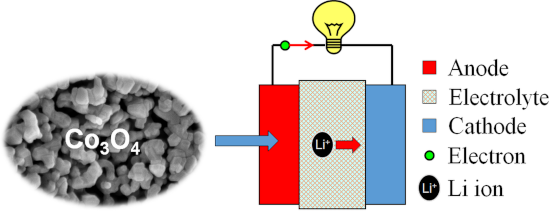
- from the current collector. Besides that, the Co3O4 electrode material suffers from low ionic and electronic conductivity, which influences its relatively slow charge/discharge rate [2][4]. In order to overcome the aforementioned drawbacks, some strategies have been proposed. One of them is related to
- conductivity enhancement and sometimes mitigates the impact of volume changes. However, at the same time, it causes a decrease of the Co3O4 capacity. Another strategy is associated with synthesis procedures that allow one to produce nanometer-scale Co3O4 materials with various shapes and morphologies. It has
- frequently observed for pure and unmodified Co3O4 electrodes tested at current densities above 200 mA·g−1 [4][24][27]. It can be related to low ionic and electronic conductivity, which influences the charge/discharge at high current densities [2][4]. Interestingly, the cyclability test performed at 100 mA·g


A stretchable triboelectric nanogenerator made of silver-coated glass microspheres for human motion energy harvesting and self-powered sensing applications
Beilstein J. Nanotechnol. 2021, 12, 402–412, doi:10.3762/bjnano.12.32
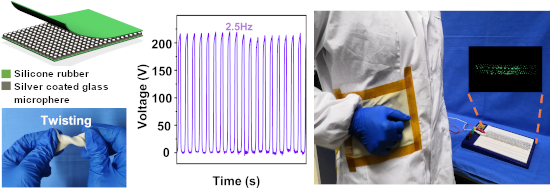
- the mold slowly. Second, SCGMs (diameter of 30 μm, Shenzhen Changxinda Shielding Materials Co. LTD) with good electrical conductivity were spread evenly over the surface. Finally, different films were prepared by adjusting the ratio between silicone and rubber/SCGMs (1:1, 1:1.5, 1:2, 1:2.5




Structural and optical characteristics determined by the sputtering deposition conditions of oxide thin films
Beilstein J. Nanotechnol. 2021, 12, 354–365, doi:10.3762/bjnano.12.29
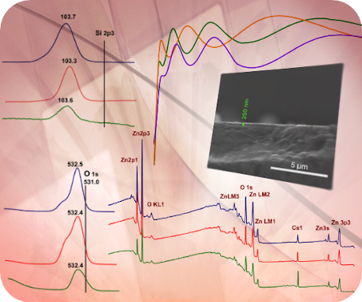
- high dielectric constant and low conductivity. Metamaterial structures with similar repetitive geometric structures, such as Si/SiO2/ITO/Au [62], were obtained worldwide. In the case of our research, the new suggested metamaterial structure will consist of dielectric (SiO2)/inductive elements





