Search results
Search for "core shell" in Full Text gives 259 result(s) in Beilstein Journal of Nanotechnology. Showing first 200.
Silica-coated upconversion lanthanide nanoparticles: The effect of crystal design on morphology, structure and optical properties
Beilstein J. Nanotechnol. 2015, 6, 2290–2299, doi:10.3762/bjnano.6.235
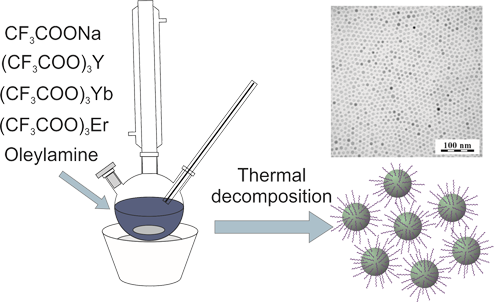
- . Compared with the initial 10 nm OM–NaYF4:Yb3+/Er3+ nanoparticles, the TEM micrograph (Figure 9) showed that the size of the NaYF4:Yb3+/Er3+&SiO2 particles had increased to 17 nm due to the presence of the silica shell on the surface. The NaYF4:Yb3+/Er3+&SiO2 nanoparticles had a clear core–shell structure







Mapping bound plasmon propagation on a nanoscale stripe waveguide using quantum dots: influence of spacer layer thickness
Beilstein J. Nanotechnol. 2015, 6, 2046–2051, doi:10.3762/bjnano.6.208
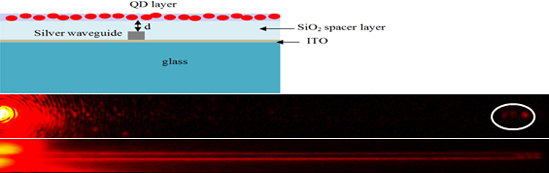
- an emission wavelength of 655 nm were obtained from invitrogen (Cat. No: Q21321MP). These carboxyl QDs are made from CdSe nanocrystals shelled with a ZnS layer. The core–shell material is further coated with a polymer layer to allow for better dispersion of the QDs in aqueous solution. These QDs have




Simulation of thermal stress and buckling instability in Si/Ge and Ge/Si core/shell nanowires
Beilstein J. Nanotechnol. 2015, 6, 1970–1977, doi:10.3762/bjnano.6.201
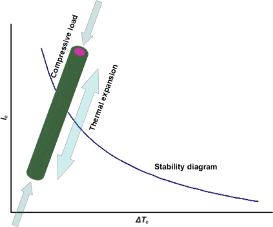
- employs the method of atomistic simulation to estimate the thermal stress experienced by Si/Ge and Ge/Si, ultrathin, core/shell nanowires with fixed ends. The underlying technique involves the computation of Young’s modulus and the linear coefficient of thermal expansion through separate simulations
- proposed methodology can be extended to other materials and structures and helps with the prediction of the conditions under which a nanowire-based device might possibly fail due to elastic instability. Keywords: atomistic simulation; buckling; core–shell nanowire; thermal stress; Introduction In recent
- years, a drastic rise in the research activities on semiconductor core/shell nanowires (CSNWs) made of silicon and germanium has occurred. Such studies are often motivated by the excellent charge transport properties of the materials [1][2][3][4], for which they are now seen as prospective candidates


Nanofibers for drug delivery – incorporation and release of model molecules, influence of molecular weight and polymer structure
Beilstein J. Nanotechnol. 2015, 6, 1939–1945, doi:10.3762/bjnano.6.198
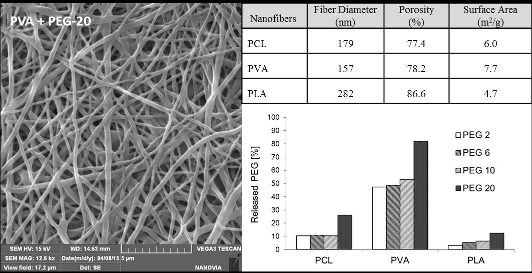
- the materials enables to control the final structure of the prepared materials [6][20]. Generally, nanofibers that carry drugs follow several basic designs – nanofibers with homogenous structures in which the drug is dispersed throughout the polymer matrix, core–shell nanofibers for which the matrix
- primary factors that affect the diffusion mechanism and drug release. For homogenous nanofibers, the rate of release decreases with time, because the drug must travel progressively longer distances to diffuse to the fiber periphery, which requires more time. Contrary, the core–shell design provides the




A facile method for the preparation of bifunctional Mn:ZnS/ZnS/Fe3O4 magnetic and fluorescent nanocrystals
Beilstein J. Nanotechnol. 2015, 6, 1743–1751, doi:10.3762/bjnano.6.178
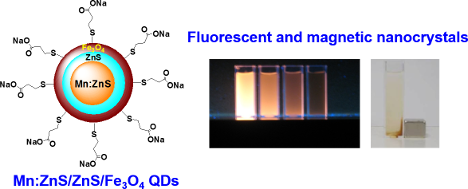
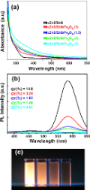
- , 54001 Nancy Cedex, France 10.3762/bjnano.6.178 Abstract Bifunctional magnetic and fluorescent core/shell/shell Mn:ZnS/ZnS/Fe3O4 nanocrystals were synthesized in a basic aqueous solution using 3-mercaptopropionic acid (MPA) as a capping ligand. The structural and optical properties of the
- diodes [6][7] or solar cells [8]. Conventional QDs systems have a core/shell architecture. The shell, generally constituted of a wide band gap material such as ZnS, prevents degradation and preserves the optical properties [3][4]. Magnetic nanoparticles have many advantages, especially for biological
- shell (CdSe or CdS) of thickness between 2–7 nm resulting in either spherical core/shell nanoparticles or heterodimers [20][21][22]. The PL QY of the resulting bifunctional nanoparticles is generally low (typically <5%) due to the quenching effect of the magnetic domain [20][21]. Herein, we describe a




Radiation losses in the microwave Ku band in magneto-electric nanocomposites
Beilstein J. Nanotechnol. 2015, 6, 1700–1707, doi:10.3762/bjnano.6.173
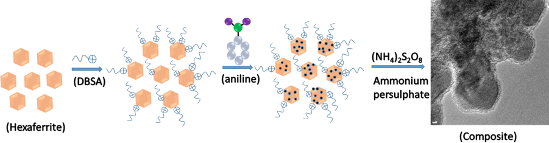
- range and their properties become different from those of the bulk material [38]. Surface features Transmission electron microscopy (TEM) has been used to determine the distribution and morphology of hexaferrite nanoparticles and polymer. A clear picture of a core–shell morphology can be seen in the TEM


Synthesis, characterization and in vitro biocompatibility study of Au/TMC/Fe3O4 nanocomposites as a promising, nontoxic system for biomedical applications
Beilstein J. Nanotechnol. 2015, 6, 1677–1689, doi:10.3762/bjnano.6.170
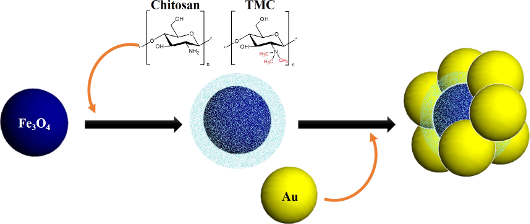
- synthesize and optimize a combined nanocomposite containing both. By using various polymers such as chitosan, some of the problems of classic core–shell structures (such as reduced saturation magnetization and thick coating) have been overcome. In the present study, chitosan and one of its well-known
- steps, it is possible to prepare Au nanoparticles of different sizes and shapes that will enhance their efficacy and usage in different applications [33]. It is expected that the nanocomposites developed herein will have advantages over other hybrid Fe3O4 and gold core–shell structures. This is
- derivatives, TMC. This system not only takes advantage of the combined useful properties of both Fe3O4 and Au nanoparticles, but also has promising characteristics that resolve many of the previously reported shortcomings of classic core–shell structures [34]. Fe3O4 nanoparticles as the magnetic core Among




Structural and magnetic properties of iron nanowires and iron nanoparticles fabricated through a reduction reaction
Beilstein J. Nanotechnol. 2015, 6, 1652–1660, doi:10.3762/bjnano.6.167
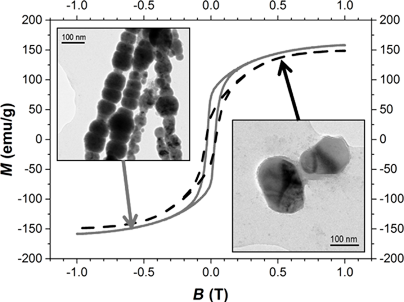
- nanoparticles reveal core–shell structures and they are composed of crystalline iron cores that are covered by amorphous or highly defected phases of iron and iron oxides. Magnetic properties have been measured using a vibrating sample magnetometer. The obtained values of coercivity, remanent magnetization
- . Both nanomaterials reveal core–shell structures and are constructed of crystalline α-Fe cores, which are covered by a layered structure composed of: amorphous iron, amorphous iron oxides and distorted iron oxides (the layer order from core to surface). Additionally, iron nanowires are built from the



Thermal treatment of magnetite nanoparticles
Beilstein J. Nanotechnol. 2015, 6, 1385–1396, doi:10.3762/bjnano.6.143
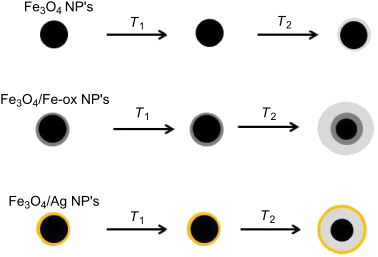
- and crystallinity, which in turn, was reflected in their thermal durability. The particles were obtained by coprecipitation from Fe chlorides and decomposition of an Fe(acac)3 complex with and without a core–shell structure. Three types of ferrite nanoparticles were produced and their thermal
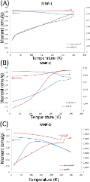
- analysis of the magnetite and core–shell nanoparticles was performed on a Mettler Toledo differential scanning calorimeter (DSC). A Quantum Design MPMS SQUID magnetometer was used for the magnetization measurements. Mössbauer spectra (MS) were obtained using a conventional spectrometer working in constant






The Kirkendall effect and nanoscience: hollow nanospheres and nanotubes
Beilstein J. Nanotechnol. 2015, 6, 1348–1361, doi:10.3762/bjnano.6.139
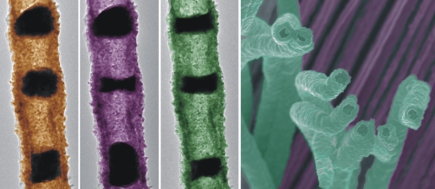
- , the oxidation process started with the formation of a thin layer of bismuth oxide on the outer skin of the bismuth nanoparticle (Figure 7a). An off-centered, single void was then formed at the bismuth/bismuth oxide core/shell interface. As the oxidation process proceeds in time, the void was found to
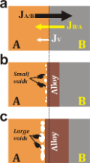
- a solid state reaction, occurring upon thermal annealing of core–shell ZnO/Al2O3 nanowires [23][62]. In such a process, the material forming the nanotube is defined by the two initial compounds constituting the core and the shell. As it can be seen in Figure 8, the formation of voids occurs at the
- on the outer skin of the metal nanowire resulting in the formation of a thin layer of metal oxide (Figure 9a). After the formation of a metal/metal oxide core/shell nanowire, the metal ions diffuse outward through the oxide layer until reaching the outer surface. Simultaneously, the oxygen adsorbed



Growth and morphological analysis of segmented AuAg alloy nanowires created by pulsed electrodeposition in ion-track etched membranes
Beilstein J. Nanotechnol. 2015, 6, 1272–1280, doi:10.3762/bjnano.6.131
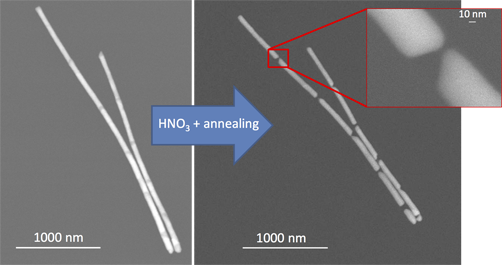
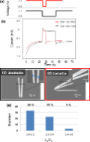
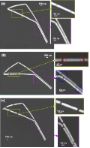
- currently being intensively investigated. It has become evident that the combination of several materials in one nanostructure gives rise to specific functionalities that are not exhibited by the individual single components [1][2][3][4]. Different types of heterostructures such as core–shell, axially
- enhanced sensing resolution compared to pure Au nanowires [35] while Au@Ag core shell nanorods allow to adjust the resonance frequency by varying the shell thickness [36]. Furthermore, optical applications include the readout of striping patterns in AuAg segmented nanowires via optical brightfield


Addition of Zn during the phosphine-based synthesis of indium phospide quantum dots: doping and surface passivation
Beilstein J. Nanotechnol. 2015, 6, 1237–1246, doi:10.3762/bjnano.6.127
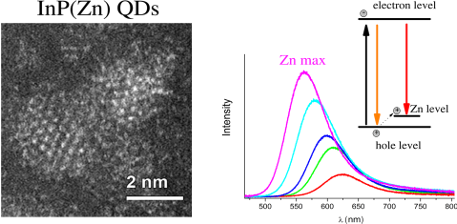
- luminescence quantum yield through the reduction of phosphorous dangling bonds. A scenario for the growth of the colloidal InP(Zn) QDs was proposed and discussed. Keywords: core–shell nanoparticles; doped semiconductor nanocrystals; InP(Zn) quantum dots; luminescence; zinc; Introduction Colloidal quantum
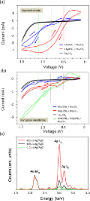
- . In the low-magnification HAADF-STEM image (Figure 4a), the size of the QDs is close to that of the bright-field TEM images (Figure 3). However, upon close inspection using high resolution HAADF-STEM (Figure 4b–g), the core–shell structure of Zn/InP QDs can be clearly distinguished and confirmed. The
- particles in Figure 4b–g definitely exhibit a core–shell structure with a core diameter approximately about 2 nm, with mainly {111}-type surface facets (Figure 4b,d,f). The shape of the majority of the NPs is almost spherical. However, some of the NPs exhibit an elongated shape (Figure 4e,g). The core of


Synthesis, characterization and in vitro effects of 7 nm alloyed silver–gold nanoparticles
Beilstein J. Nanotechnol. 2015, 6, 1212–1220, doi:10.3762/bjnano.6.124
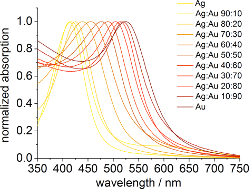
- resonance peak shows one maximum due to the distribution of the metals throughout the whole particle. Core–shell nanoparticles or individual silver or gold nanoparticles show two distinct plasmon resonance peaks [21][36][37]. As it is depicted in Figure 3, the absorption spectra show only one narrow peak
- obtained from the standard synthesis protocol are shown. The trend is almost linear, suggesting a good homogeneity of the alloyed metals, although some gradient in the composition within the nanoparticle cannot be ruled out. However, a core–shell structure with distinct, separate silver and gold regions


Magnetic properties of iron cluster/chromium matrix nanocomposites
Beilstein J. Nanotechnol. 2015, 6, 1158–1163, doi:10.3762/bjnano.6.117
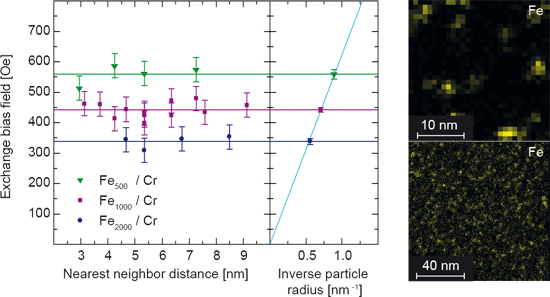
- shift of the hysteresis loops recorded after field cooling the samples from temperatures above the Néel temperature (TN) of CoO. Since its discovery the EB has been observed in numerous FM/AFM combinations such as core/shell clusters [5][6], thin film systems [7][8] and also cluster/matrix combinations
- ·nm−1. This straightforward relation between Heb and R of the embedded clusters has never been shown to that degree in any FM/AFM cluster/matrix system. As a comparison, one can look at the closely related core/shell nanoparticles featuring a FM core and an AFM shell. In that case a theoretical study


Interaction of electromagnetic radiation in the 20–200 GHz frequency range with arrays of carbon nanotubes with ferromagnetic nanoparticles
Beilstein J. Nanotechnol. 2015, 6, 1056–1064, doi:10.3762/bjnano.6.106
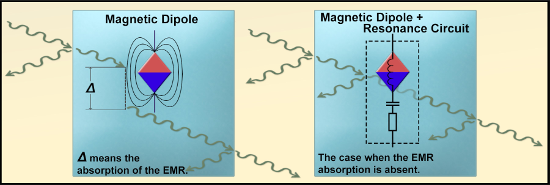
- (CNT) is considered within the model of distributed random nanoparticles with a core–shell morphology. The approach is based on a system composed of a CNT conducting resistive matrix, ferromagnetic inductive nanoparticles and the capacitive interface between the CNT matrix and the nanoparticles, which


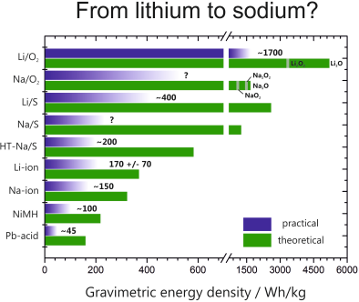
From lithium to sodium: cell chemistry of room temperature sodium–air and sodium–sulfur batteries
Beilstein J. Nanotechnol. 2015, 6, 1016–1055, doi:10.3762/bjnano.6.105


Structure and mechanism of the formation of core–shell nanoparticles obtained through a one-step gas-phase synthesis by electron beam evaporation
Beilstein J. Nanotechnol. 2015, 6, 874–880, doi:10.3762/bjnano.6.89
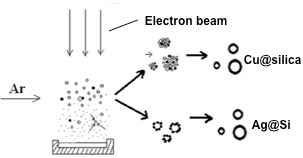
- University, Pirogova street 2, Novosibirsk, 630090, Russia 10.3762/bjnano.6.89 Abstract The structure of core–shell Cu@silica and Ag@Si nanoparticles obtained in one-step through evaporation of elemental precursors by a high-powered electron beam are investigated. The structure of the core and shell of the
- differences in the vapour concentration of the two components. Keywords: core–shell; electron beam evaporation; gas phase; mechanism of formation; one-step; Introduction Core–shell type nanoparticles are a type of biphasic materials which have an inner core structure and an outer shell made of different
- of the core material or to use an inexpensive core material to carry a thin, more-expensive shell material [1][2]. Thus, they have found wide applicability in fields such as biomedicine, electrical and semiconducting materials, and catalysts [1][2]. The majority of core–shell particles are


Combination of surface- and interference-enhanced Raman scattering by CuS nanocrystals on nanopatterned Au structures
Beilstein J. Nanotechnol. 2015, 6, 749–754, doi:10.3762/bjnano.6.77
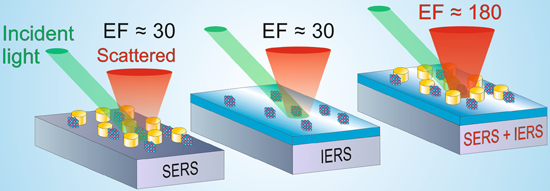
- observed in core–shell CdSe/ZnS NCs deposited on commercially available nanostructured Au substrates [3]. Later, the SERS effect by LO phonons in CdSe in CdSe/ZnS NCs was realized on non-ordered nanostructured Ag surfaces [4]. Very recently, Lee et al. [5] reported the observation of SERS by surface
- optical (SO) and LO phonon modes in a CdSe core and the transverse optical (TO) phonon mode in a ZnS shell of core–shell CdSe/ZnS NCs attached to the surface of a Au nanowire. The spectrum of optical and interface phonons was obtained from the analysis of SERS spectra of pure CdSe NCs, core–shell CdSe/CdS


Simple approach for the fabrication of PEDOT-coated Si nanowires
Beilstein J. Nanotechnol. 2015, 6, 640–650, doi:10.3762/bjnano.6.65
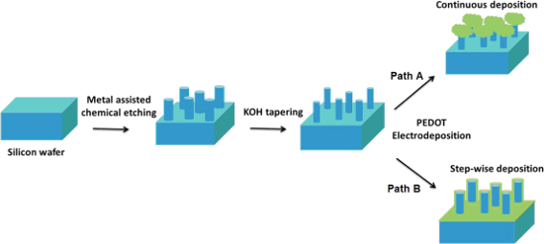
- electrochemical methods. Since the polymerization reaction is a very fast process with regards to monomer diffusion along the SiNW, the conformal deposition by classical, fixed potential deposition was not favored. Instead, the core–shell heterojunction structure was finally achieved by a pulsed deposition method
- . An extremely large shunt resistance was exhibited and determined to be related to the diffusion conditions occurring during polymerization. Keywords: conductive polymer; core–shell structure; electrodeposition; hybrid material; SiNW; Introduction Silicon nanowires (SiNWs) are a current, active
- visible spectrum can be achieved for SiNWs [8]. As far as the device fabrication is concerned, a core–shell arrangement of p–n junction forming materials is promising for the optimization of the electronic charge collection capability. This is due to the nature of the core–shell structure, which allows




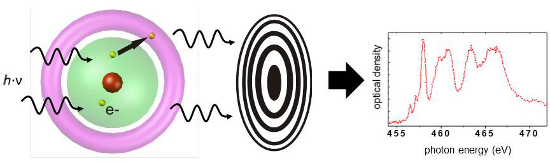
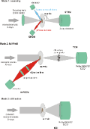
Overview of nanoscale NEXAFS performed with soft X-ray microscopes
Beilstein J. Nanotechnol. 2015, 6, 595–604, doi:10.3762/bjnano.6.61
- thin film devices (SrTiO3) could be demonstrated [64]. The change of resistance in a RRAM device could be assigned to a redox-process. The switching filament could be allocated to extended growth defects which are already present in the virgin films. Synthesis of anisotropic core-shell Fe3O4@Au


Silica micro/nanospheres for theranostics: from bimodal MRI and fluorescent imaging probes to cancer therapy
Beilstein J. Nanotechnol. 2015, 6, 546–558, doi:10.3762/bjnano.6.57

- . Similarly, Koole et al. [20] reported a procedure for the preparation of highly monodispersed silica particles with single core–shell–shell CdSe QDs incorporated into the center and paramagnetic Gd-DTPA-DSA [Gd-DTPA-bis(stearylamide)] in the lipid coating. The NPs were characterized by TEM, DLS and
- material composed of silica coated iron oxide NPs and Ru(bpy) complex for multimodal imaging. Such strategies were also followed by Hu et al. [30], Mi et al. [31] (Figure 4). Wu et al. [32] reported the synthesis of a hybrid nanocomposite material composed of Ru(bpy)-doped silica core–shell NPs and Pas
- followed by Chen et al. [36]. 2.6 Iron oxide as magnetic and QDs as fluorescent probe He et al. [37] reported a reverse microemulsion method for the synthesis of core–shell fluorescent magnetic silica-coated NPs. The Fe3O4 NPs were prepared by using FeCl3 and FeSO4 salts following co-precipitation method


Conformal SiO2 coating of sub-100 nm diameter channels of polycarbonate etched ion-track channels by atomic layer deposition
Beilstein J. Nanotechnol. 2015, 6, 472–479, doi:10.3762/bjnano.6.48
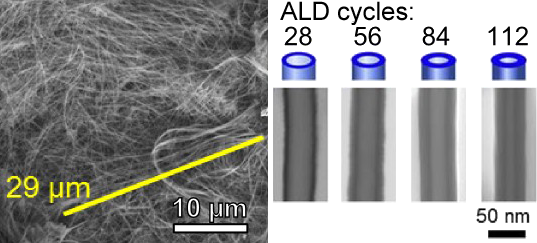
- the SAXS profiles with a cylindrical core–shell model for statistically distributed pores [35] allows us to deduce the inner and outer pore diameter and thus the thickness of the ALD-deposited SiO2 layer (Table 3). Additional parameters of the analysis are the polydispersity of the pores (6–8%), the


Influence of size, shape and core–shell interface on surface plasmon resonance in Ag and Ag@MgO nanoparticle films deposited on Si/SiOx
Beilstein J. Nanotechnol. 2015, 6, 404–413, doi:10.3762/bjnano.6.40
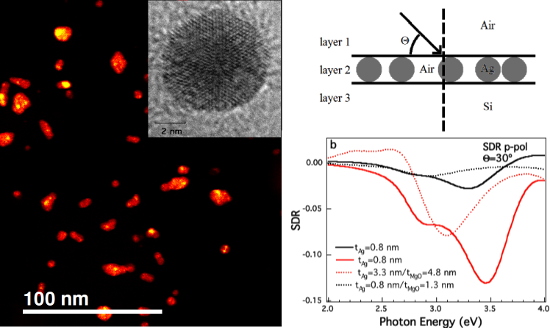
- of Electricity and Electronics, Faculty of Science and Technology, UPV/EHU, 48080 Bilbao, Spain Materials Physics Center CSIC-UPV/EHU and Donostia International Physics Center DIPC, Paseo Manuel Lardizabal 4, 20018 Donostia-San Sebastian, Spain 10.3762/bjnano.6.40 Abstract Ag and Ag@MgO core–shell
- classical electrodynamics simulations by treating the NP-containing layer as an effective Maxwell Garnett medium. The simulations gave results in agreement with the experiments when accounting for the experimentally observed aggregation. Keywords: Ag; core–shell nanoparticles; electron microscopy; MgO
- , resulting in a core–shell structure with independently controlled core size and shell thickness [19][23][24]. This method was also used to produce a non-native oxide shell and to study the evolution of the physical properties of the NP assemblies with increasing shell thickness, owing to a configuration




Biological responses to nanoscale particles
Beilstein J. Nanotechnol. 2015, 6, 380–382, doi:10.3762/bjnano.6.37

- conjugates of biomolecules, magnetism, radioactivity, Janus particles and core–shell particles were combined. In particular, the use of fluorescently labeled particles has become one of the preferred tools to track nanoparticles inside cells and tissue. When nanoparticles are exposed to biological fluids
Comparative evaluation of the impact on endothelial cells induced by different nanoparticle structures and functionalization
Beilstein J. Nanotechnol. 2015, 6, 300–312, doi:10.3762/bjnano.6.28
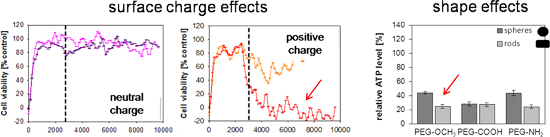
- further functionalization three different ligands for CdSe/4 ZnS core–shell QDs (d = 5.4 nm) were selected: 3-mercaptopropionic acid/MPA (COOH), cysteamine/CyA (NH2), D-penicillamine/DPA (NH2/COOH). These coatings represent neutral, positive or negative charge and provide the solubility in water. The
- Endothelial cells (SVEC4-10) were harvested from culture dishes and seeded in an 8-well electrode array at the density of 60.000 cells/well (equates confluency) at 37 °C in a humidified 5% CO2 environment. Exchange of culture medium with medium containing CdSe/4ZnS core-shell QDs (with CyA, MPA, DPA) was