


Search results
Search for "crystallinity" in Full Text gives 347 result(s) in Beilstein Journal of Nanotechnology. Showing first 200.
Influence of the thickness of an antiferromagnetic IrMn layer on the static and dynamic magnetization of weakly coupled CoFeB/IrMn/CoFeB trilayers
Beilstein J. Nanotechnol. 2018, 9, 2198–2208, doi:10.3762/bjnano.9.206
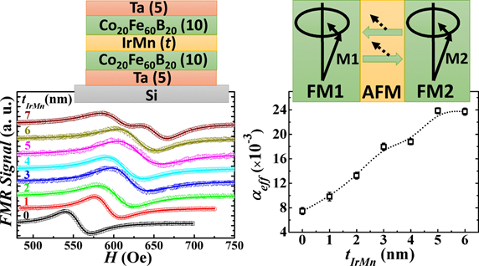
- the crystallinity and hence the increase in mean grain size of IrMn at higher thickness. The average interfacial roughness of the top and bottom CoFeB layers was ca. 0.6 nm, and that of the Ta seed and cap layers is below 0.5 nm for all the samples. The FMR measurements allow us to investigate the


Dumbbell gold nanoparticle dimer antennas with advanced optical properties
Beilstein J. Nanotechnol. 2018, 9, 2188–2197, doi:10.3762/bjnano.9.205
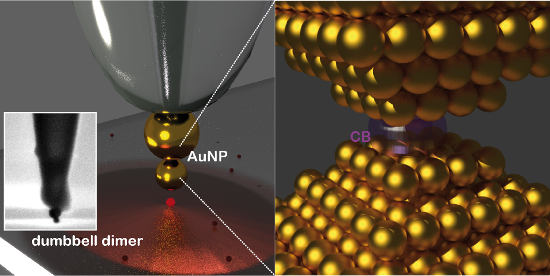
- interaction of linker molecules, which may be used for a directed assembly of individual antenna parts. Besides of the general discussion on methodologies, the effect of the crystallinity of the employed noble metals has attracted attention [45]. The versatility of colloidal chemistry provides nowadays a tool
- box of nanoparticles made of different materials, shapes and sizes. In addition, the crystallinity of these structures leads to the formation of facets, edges and corners. Using colloidal nanoparticles, their chemical assembly demands for certain properties of the specific linker molecules [46]. In




Electrospun one-dimensional nanostructures: a new horizon for gas sensing materials
Beilstein J. Nanotechnol. 2018, 9, 2128–2170, doi:10.3762/bjnano.9.202
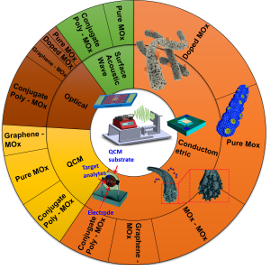
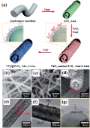
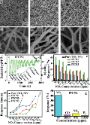
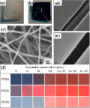
- 12.3/22.5 s to 2/6.9 s [145]. 4.1.2 Doped semiconducting metal oxide: The intrinsic response of pure metal oxide 1D nanostructures can be tuned by changing the crystallite size, crystallinity and surface area. In general, these material parameters are modified by controlling the precursor concentration






Recent highlights in nanoscale and mesoscale friction
Beilstein J. Nanotechnol. 2018, 9, 1995–2014, doi:10.3762/bjnano.9.190
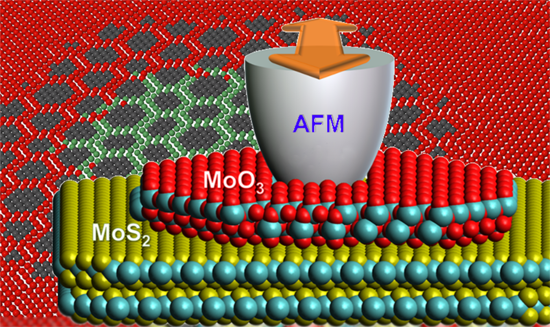
- experiments of gold and antimony nanoparticles on highly oriented pyrolithic graphite (HOPG) [46], where the precise value of γ was found to depend sensitively on the crystallinity of the particles. As predicted theoretically [66][67], γ = 0.5 was found for the case of amorphous Sb nanoparticles, whereas


Synthesis of a MnO2/Fe3O4/diatomite nanocomposite as an efficient heterogeneous Fenton-like catalyst for methylene blue degradation
Beilstein J. Nanotechnol. 2018, 9, 1940–1950, doi:10.3762/bjnano.9.185
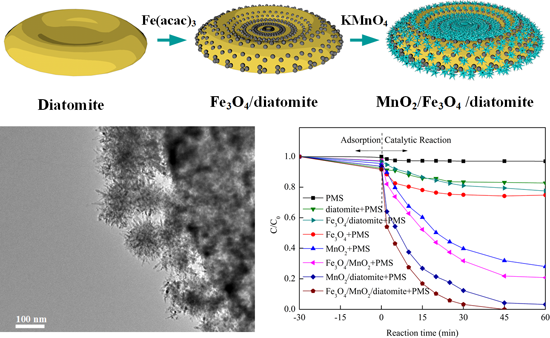
- . However, the original characteristic peaks of magnetite are weakened. This indicates that the nano-MnO2 covering on the Fe3O4/diatomite is of low crystallinity or amorphous. Figure 2 shows the FTIR spectra of purified diatomite, Fe3O4/diatomite and MnO2/Fe3O4/diatomite. The broad peaks at 3400 and 1630 cm
- poor crystallinity of MnO2, which is consistent with the XRD result. In some small parts of the area, however, typical spacings of 0.21 and 0.26 nm are measured, which corresponds to the (202) and (301) planes of MnO2 [30]. The morphology of pure MnO2 particles was also researched (Figure S2


Synthesis of rare-earth metal and rare-earth metal-fluoride nanoparticles in ionic liquids and propylene carbonate
Beilstein J. Nanotechnol. 2018, 9, 1881–1894, doi:10.3762/bjnano.9.180
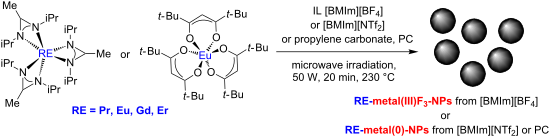
- small, nearly spherical and partially agglomerated particles. Close-up TEM images show interference patterns for EuF3 and ErF3, which indicate crystallinity of the REF3-NPs (Figure 1 middle, and Figure S5a, Supporting Information File 1). The crystallinity of the particles was confirmed and the crystal
- by TEM (Figure 6 and Figure S7a, Supporting Information File 1) to values of 1.0–2.5 nm for Gd (average diameter of 1.5 ± 0.5 nm) and 2.0–3.5 nm for Er (average diameter 3.0 ± 0.5 nm) (Table 1). A close-up of the TEM images shows interference patterns, indicating crystallinity of the RE-NPs. The
- crystallinity of the RE-NPs was confirmed by SAED and gave the expected reflections for elemental Gd and Er (Figure 7 and Figure S7b, Supporting Information File 1). Due to the very small size of the Gd and Er particles a meaningful PXRD pattern could not be obtained. Characterization by EDX (Figure 7 and


Uniform cobalt nanoparticles embedded in hexagonal mesoporous nanoplates as a magnetically separable, recyclable adsorbent
Beilstein J. Nanotechnol. 2018, 9, 1770–1781, doi:10.3762/bjnano.9.168
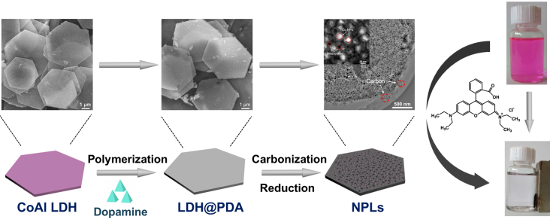
- concentrations of RhB in the solution, respectively; V (L) represents the volume of RhB solution; m (g) is the weight of the adsorbent used. Results and Discussion Characterization of the hexagonal magnetic mesoporous nanoplates The crystallinity of the samples was confirmed by XRD and the results are given in


Controllable one-pot synthesis of uniform colloidal TiO2 particles in a mixed solvent solution for photocatalysis
Beilstein J. Nanotechnol. 2018, 9, 1715–1727, doi:10.3762/bjnano.9.163
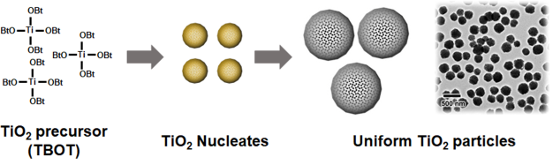
- process. Varying the ratio of solvent composition, the concentration of surfactant and TiO2 precursor was used to control the particle diameter, degree of monodispersity and morphology. The modification of the calcination temperature affected the crystallinity and crystalline phase of the colloidal TiO2
- particles. When uniform, amorphous TiO2 particles were calcined at an optimal temperature (500 °C), the final sample exhibited beneficial characteristics such as high anatase crystallinity with a mixed phase of anatase and rutile and relatively high surface area. The photocatalytic efficiency of the uniform
- TiO2 sample with high anatase crystallinity with mixed phase and high surface area was dramatically enhanced towards RhB degradation under UV–vis irradiation. We systemically discuss the relationship between the synthetic parameters in our synthesis and the properties of the final TiO2 products, as




Nanocomposites comprised of homogeneously dispersed magnetic iron-oxide nanoparticles and poly(methyl methacrylate)
Beilstein J. Nanotechnol. 2018, 9, 1613–1622, doi:10.3762/bjnano.9.153
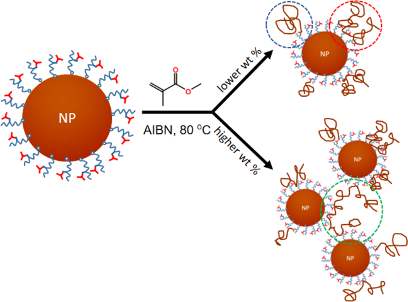
- dissolution of the Fe cations from the nanocomposite and the nanoparticles was tested with dissolution in the presence of citric acid at pH 1, where further details can be found in Supporting Information File 1. Characterization The particle size, crystallinity and dispersion over the nanocomposites were


Optical near-field mapping of plasmonic nanostructures prepared by nanosphere lithography
Beilstein J. Nanotechnol. 2018, 9, 1536–1543, doi:10.3762/bjnano.9.144
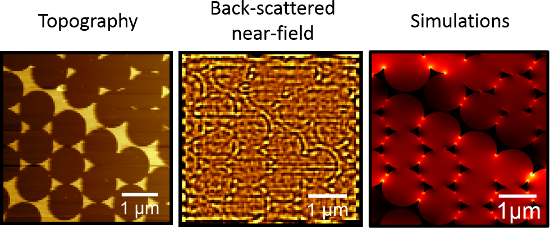
- , which is ascribed to different reasons: for one, the experimental radii of the apexes might be larger than in the numerical model, or the crystallinity of the gold composing the nanotriangles might be less than ideal thus causing dissipation. Also, the simulation assumes perfectly crystalline gold. In
- this study, the samples here were prepared by evaporation and have no defined crystallinity, unlike colloidal solutions composed of monocrystalline metallic particles which generally provide higher enhancements by several order of magnitude [21]. However, the enhancement of the optical near-field is




Single-crystalline FeCo nanoparticle-filled carbon nanotubes: synthesis, structural characterization and magnetic properties
Beilstein J. Nanotechnol. 2018, 9, 1024–1034, doi:10.3762/bjnano.9.95
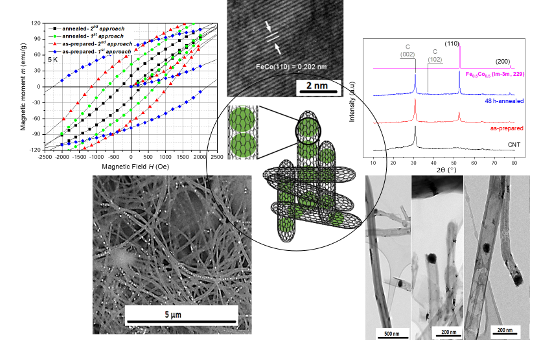
- nanoparticles of Fe50Co50@CNT was investigated by HRTEM measurements. Surprisingly, some particles in the as-prepared sample showed high crystallinity, even without annealing, as shown in Figure 3c. The crystallinity of the core material was confirmed by the appearance of the lattice fringes (marked by short
- crystallinity, an annealing step is necessary. The rather spherical geometry of the intermetallic nanoparticles inside CNTs was confirmed by TEM aspect ratio studies (i.e., the ratio of the particle’s long axis to its short axis). In the as-prepared sample (with nearly 140 investigated filling particles), 57
- crystallinity and thus a larger number of 110 planes. Higher filling is also confirmed by TGA data. (2) The reflection intensities in general increase with annealing, which means that more particles of the homogenous bcc phase of Fe50Co50 are formed. The intense reflections at 2θ = 30° and 37 ° correspond to


Comparative study of sculptured metallic thin films deposited by oblique angle deposition at different temperatures
Beilstein J. Nanotechnol. 2018, 9, 954–962, doi:10.3762/bjnano.9.89
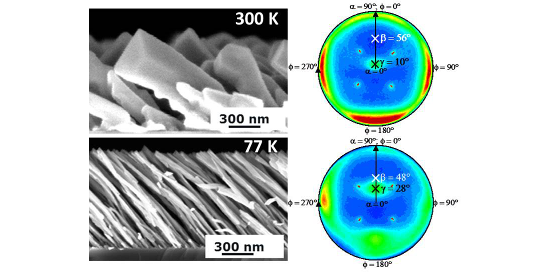
- incidence angle depends strongly on surface diffusion, but a consistent description remains challenging due to the complex interaction between surface diffusion, crystallinity and shadowing. Moreover, it has been demonstrated that the porosity of obliquely deposited metallic thin films can be increased



Effect of annealing treatments on CeO2 grown on TiN and Si substrates by atomic layer deposition
Beilstein J. Nanotechnol. 2018, 9, 890–899, doi:10.3762/bjnano.9.83
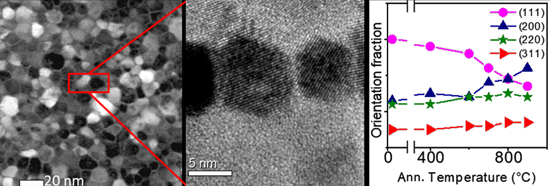
- annealing has been performed by using an Anton Paar tool mounted in the diffractometer. This allows us to collect the X-ray diffraction profile during annealing to monitor the evolution of crystallinity of the films during the thermal treatment. During the annealing the sample was kept in static N2


Heavy-metal detectors based on modified ferrite nanoparticles
Beilstein J. Nanotechnol. 2018, 9, 762–770, doi:10.3762/bjnano.9.69
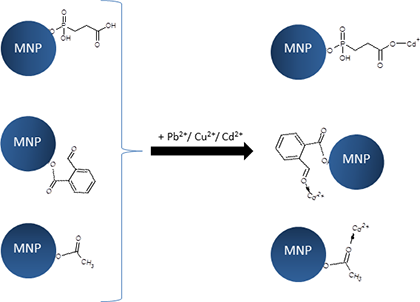
- diffraction The fabrication of nonstochiometric compounds affects crystal growth, which is reflected in the crystalization degree. Therefore, examination of the crystallinity of the ferrite nanoparticles was performed by X-ray diffraction. The presence of well-defined sharp patterns proves the incorporation


A review of carbon-based and non-carbon-based catalyst supports for the selective catalytic reduction of nitric oxide
Beilstein J. Nanotechnol. 2018, 9, 740–761, doi:10.3762/bjnano.9.68

Combined pulsed laser deposition and non-contact atomic force microscopy system for studies of insulator metal oxide thin films
Beilstein J. Nanotechnol. 2018, 9, 686–692, doi:10.3762/bjnano.9.63
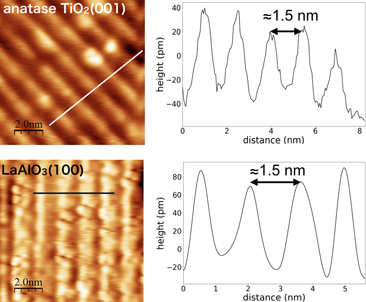
- for checking the crystal structure, orientation plane, and crystallinity of a thin film. Once a single-atomic layer step is confirmed, a new sample is prepared under the same PLD conditions and in situ NC-AFM (and also STM) measurements can then be performed in UHV. As an example, a process flow for


Perovskite-structured CaTiO3 coupled with g-C3N4 as a heterojunction photocatalyst for organic pollutant degradation
Beilstein J. Nanotechnol. 2018, 9, 671–685, doi:10.3762/bjnano.9.62
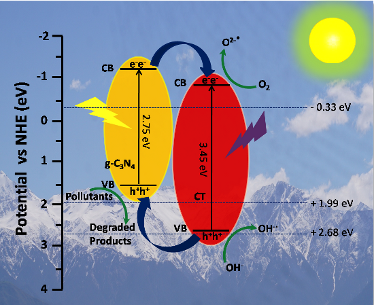
- heterojunction, which could be due to its poor crystallinity [46]. This interfacial contact favors the charge transfer between CT and g-C3N4, which suppress the recombination of photogenerated charge carriers and enhance the photocatalytic activity. Furthermore, the elemental mapping of g-C3N4, CT and CTCN was


Mechanistic insights into plasmonic photocatalysts in utilizing visible light
Beilstein J. Nanotechnol. 2018, 9, 628–648, doi:10.3762/bjnano.9.59
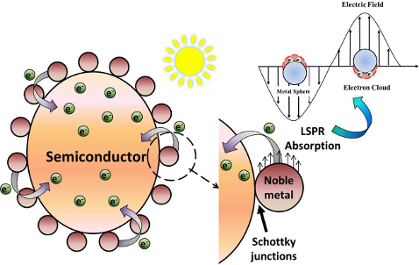
- visible and near infrared (NIR) spectrum. But in order to show enhanced plasmonic photocatalysis performance, the understanding of the material system plays a vital role. This includes the type of noble metal and semiconductor photocatalyst together with their morphology, porosity, crystallinity, contact





Facile phase transfer of gold nanorods and nanospheres stabilized with block copolymers
Beilstein J. Nanotechnol. 2018, 9, 616–627, doi:10.3762/bjnano.9.58
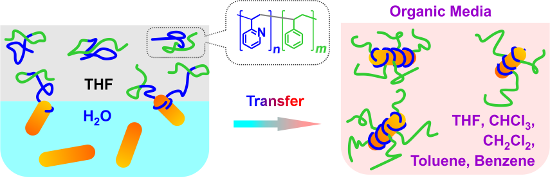
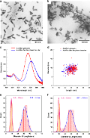
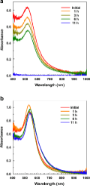
- patterns and dark field images were used to confirm the crystallinity of Au nanoparticles. The length and diameter distributions of the nanorods and nanospheres were measured by ImageJ 1.50b open source software (Wayne Rasband, NIH, USA). SEM images were obtained on a scanning electron microscope JSM 7401F


Facile synthesis of ZnFe2O4 photocatalysts for decolourization of organic dyes under solar irradiation
Beilstein J. Nanotechnol. 2018, 9, 436–446, doi:10.3762/bjnano.9.42
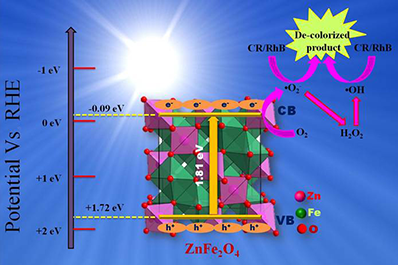
- characterization The phase composition, crystal structure and crystallinity were examined by a Rigaku Miniflex XRD instrument using Cu Kα radiation (λ = 1.54056 Å). The UV–vis diffused reflectance spectra were analysed by a UV–vis spectrophotometer (JASCO 750) using BaSO4 as the reflectance reference. The
- XRD is carried out to identify the crystal structure, phase purity and crystallinity of the materials. Figure 1 presents the XRD patterns of the ZnFe2O4 samples calcined at different temperatures. The material prepared at 400 °C did not ZnFe2O4 nanocrystals because the activation temperature is not
- temperature, the crystallinity of the prepared ZFO materials increases. The crystallite size has been calculated by using the Scherrer equation, D = Kλ/β cosθ (K is a constant having value 0.9, θ is the Bragg diffraction angle, λ is the wavelength of the X-rays used (1.5406 Å) and β is the full-width at half


Photocatalytic and adsorption properties of TiO2-pillared montmorillonite obtained by hydrothermally activated intercalation of titanium polyhydroxo complexes
Beilstein J. Nanotechnol. 2018, 9, 364–378, doi:10.3762/bjnano.9.36
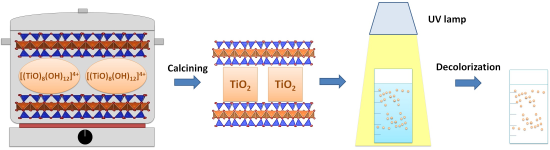
- crystallinity (nanocrystals) representing a mixture of anatase and rutile phases. The structures exhibit improved adsorption and photocatalytic activity as a result of hydrothermally activated intercalation of titanium polyhydroxo complexes (i.e., TiCl4 hydrolysis products) in a solution with a concentration
- of dispersion and crystallinity for TiO2 in the MM structure, thus enhancing photocatalytic activity. Ooka et al. [16] report some data demonstrating high efficiency of hydrothermal effects when using a TiO2 sol as an intercalating agent. They note that the advantage of the hydrothermal treatment
- using a solution of titanium polyhydroxo complexes. In this paper we propose and successfully apply a method for producing TiO2-pillared MM with a high degree of crystallinity for the TiO2 pillars and improved adsorption and photocatalytic activities by hydrothermally activated intercalation of titanium






Synthesis and characterization of electrospun molybdenum dioxide–carbon nanofibers as sulfur matrix additives for rechargeable lithium–sulfur battery applications
Beilstein J. Nanotechnol. 2018, 9, 262–270, doi:10.3762/bjnano.9.28
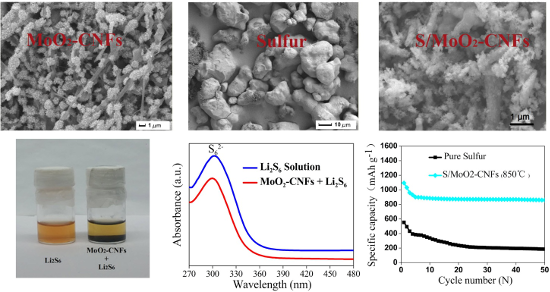
- (78-1072). As the calcination temperature was raised to 850 °C, the characteristic diffraction peaks of MoO2 became sharper and displayed higher intensities, indicating an increase in the crystallinity of MoO2 as shown in Table 1. Meanwhile, this was also reflected in the surface area, which decreased
- crystallinity of MoO2 associated with the rise of the calcination temperature. The obtained MoO2–CNFs were applied to a sulfur matrix for Li–S batteries and shown to exhibit high capacity when compared to electrodes with pure sulfur. The improved electrochemical performance could be attributed to the adsorption


Gas-assisted silver deposition with a focused electron beam
Beilstein J. Nanotechnol. 2018, 9, 224–232, doi:10.3762/bjnano.9.24
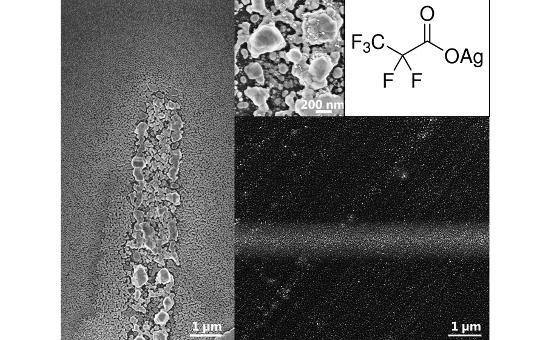
- approximately fits the edge of the respective areas of different crystallinity in both deposits, emphasizing the importance of varying electron flux within and outside the PE beam area. After confirming that the deposit consists of pure silver particles in a carbonaceous matrix its electrical properties were
- nanoparticles within the line. Visible lattice planes indicate crystallinity of the material. (d) Selected area electron diffraction pattern on the line deposit. The diffraction pattern clearly confirms crystallinity of the deposit. By comparing to the fcc silver diffraction pattern (green) the pure silver


Dopant-stimulated growth of GaN nanotube-like nanostructures on Si(111) by molecular beam epitaxy
Beilstein J. Nanotechnol. 2018, 9, 146–154, doi:10.3762/bjnano.9.17
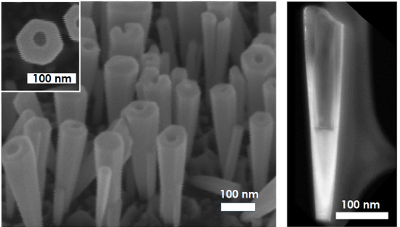
- of GaN NT-like nanostructures on Si(111) substrates covered with a thin AlN buffer layer. Analysis of the SEM and TEM images of the grown NTs show their high crystallinity. Additionally, we present a theoretical model explaining the obtained phenomena. Doped GaN nanostructures were investigated using


Co-reductive fabrication of carbon nanodots with high quantum yield for bioimaging of bacteria
Beilstein J. Nanotechnol. 2018, 9, 137–145, doi:10.3762/bjnano.9.16
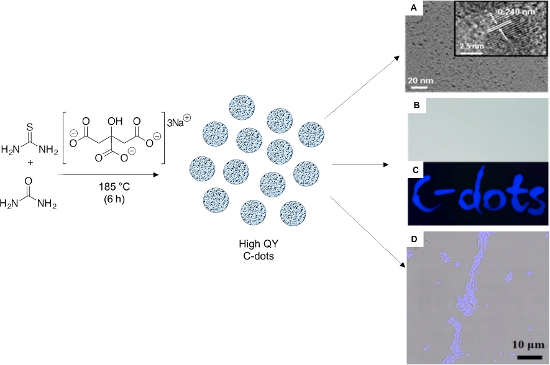
- diffraction (XRD) was used to investigate the crystallinity of Sa, Sb and Se. As shown in Figure S2 in Supporting Information File 1, sample Sa and Se display a broad diffraction peak centered at around 22.7°, which is similar to the (002) lattice spacing for graphitic (sp2) carbon [30][31][32][33]. However





