Search results
Search for "crystallization" in Full Text gives 213 result(s) in Beilstein Journal of Nanotechnology. Showing first 200.
Multifunctional layered magnetic composites
Beilstein J. Nanotechnol. 2015, 6, 134–148, doi:10.3762/bjnano.6.13
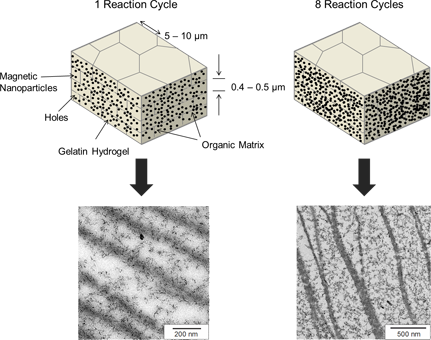
- biomineralization mechanisms are still not fully understood due to their complexity. Recent work underlines the importance of amorphous precursor phases [17] and also nonclassical crystallization mechanisms in biomineralization [18][19]. In this manuscript we report a synthesis method to combine the favorable
- gelatin powder were mixed with water and the gelatin granules were allowed to swell for 24 h at 6 °C. In order to obtain a homogeneous gel, the swollen mixture is heated for at least 2 h at 50 °C. 20 mL of the gelatin sol are filled into crystallization dishes and left at room temperature for gelation. In
- order to avoid bacterial growth, a 5 wt % solution of 4-chloro-m-cresol in methanol was added (0.15 mL per 1 g of gelatin granules). Infiltration of gelatin inside the insoluble nacre matrix The cut demineralized insoluble organic nacre pieces are put into crystallization dishes filled with 20 mL liquid





Anticancer efficacy of a supramolecular complex of a 2-diethylaminoethyl–dextran–MMA graft copolymer and paclitaxel used as an artificial enzyme
Beilstein J. Nanotechnol. 2014, 5, 2293–2307, doi:10.3762/bjnano.5.238
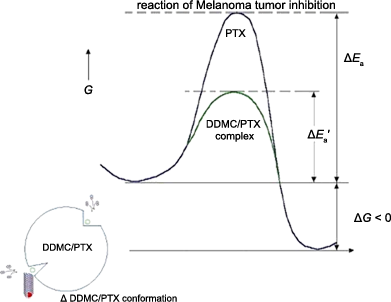
- , and NH–O is observed at approximately 3400 cm−1 for the DDMC/PTX complex and DDMC, whereas it is observed in the vicinity of 3500 cm−1 for PTX. Moreover, for the absorption of the disappearing crystallization water, the peaks of N–H and O–H for the DDMC/PTX complex have shifted to a higher energy than
- that of DDMC, the starting material. This means that the association with the hydrogen bond itself is weakened, which then reassembles the supramolecular complexes by a hydrophobic reaction between them. The escape of the crystallization water and the binding of DDMC to PTX decrease the entropy


Biopolymer colloids for controlling and templating inorganic synthesis
Beilstein J. Nanotechnol. 2014, 5, 2129–2138, doi:10.3762/bjnano.5.222
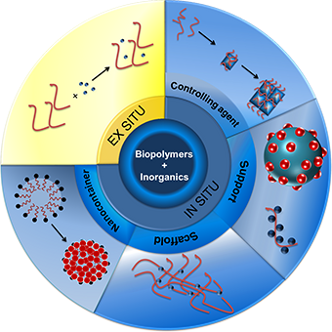
- biomineralization, biogenic macromolecules are not only present in the crystallization medium, but play a crucial role in the mineral formation. Biomacromolecules, (e.g., polysaccharides, proteins, and nucleic acids) can have thereby two main functions: (i) a controlling effect on nucleation and growth of the
- the polymer can occur simultaneously to the inorganic precipitation/crystallization. With these considerations in mind, and centering our attention on the formation of the inorganic materials and not of the biopolymer, we should distinguish two possibilities: Approaches in which the inorganic
- crystallization of inorganic materials, which is typically referred to as “polymer-assisted” or “polymer-controlled” formation and is intimately related to the (bio)mineralization field. B. Biopolymers as “supports” for precipitation/crystallization processes. We distinguish depending on whether the formation of


Towards bottom-up nanopatterning of Prussian blue analogues
Beilstein J. Nanotechnol. 2014, 5, 1933–1943, doi:10.3762/bjnano.5.204
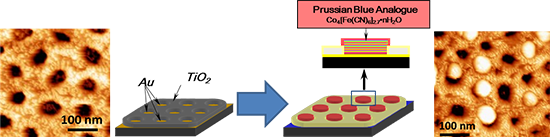
- treatment, which induces the decomposition of the organic part and the crystallization of the titanium dioxide leading to the nanoperforated layer. The fourth step is the selective functionalization of the surfaces to localize the PBA growth within the perforations while avoiding its formation outside. The
- under an IR-lamp at 450 °C over 5 min, which results in the decomposition of the organic part and the crystallization of the titanium dioxide leading to the nanoperforated layer (ca. 15 nm) with homogeneous and ordered holes (50 nm in diameter) giving access to the gold layer underneath (Scheme 1) [15


Silicon and germanium nanocrystals: properties and characterization
Beilstein J. Nanotechnol. 2014, 5, 1787–1794, doi:10.3762/bjnano.5.189
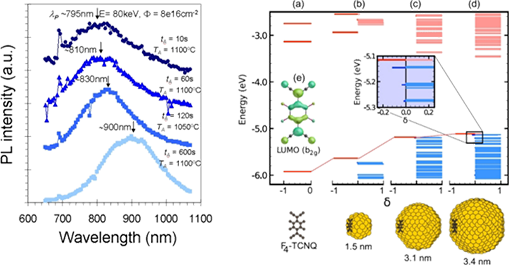
- communication with the underlying substrate, and therefore largely affect the electrical properties of such structures [24]. Passivation of deep levels caused by the interface is necessary before NC-based optoelectronic devices can become reality. Vacuum annealing, which is used for NC crystallization, is known
- in comparison with Si atoms, Ge NCs can be formed in samples annealed at significantly lower temperatures (600–900 °C). Martin-Sánchez et al. [26] have reported that a crystallization of as-deposited amorphous Ge NCs can be achieved by a short treatment at relatively low temperatures, which


On the structure of grain/interphase boundaries and interfaces
Beilstein J. Nanotechnol. 2014, 5, 1603–1615, doi:10.3762/bjnano.5.172
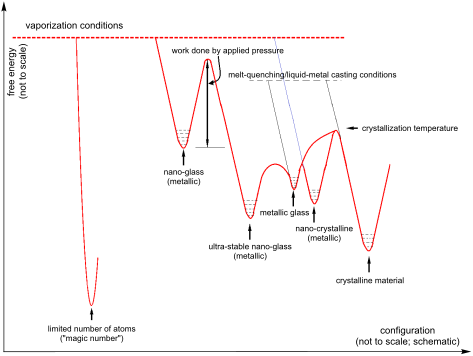
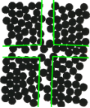
- melt-quenched variants) even at temperatures close to the crystallization temperature. To date, the width of the glass–glass boundaries has not increased by a factor of more than two even after annealing the specimens close to the glass transition temperature for several hours. (Usual molecular
- gets converted into a nano-crystalline or crystalline material above the crystallization temperature, when the required activation energy becomes available. Alternatively, crystalline materials can also be produced directly by casting. Within each state, depending on the experimental conditions, the


Formation of CuxAu1−x phases by cold homogenization of Au/Cu nanocrystalline thin films
Beilstein J. Nanotechnol. 2014, 5, 1491–1500, doi:10.3762/bjnano.5.162
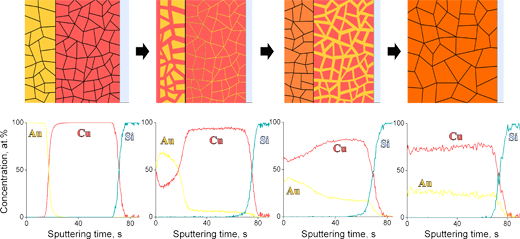
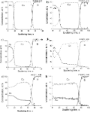
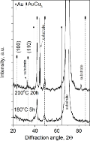
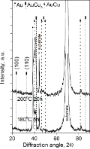
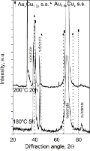
- diffusion-induced re-crystallization (DIR), and ii) grain boundary motion during usual re-crystallization [11][12]. In the latter the alloying is the consequence of the alloyed zones left behind by re-crystallization during diffusion intermixing and as a result of grain growth the grain size should be
- favor this interpretation in contrast to the grain boundary motion during usual re-crystallization [11][12]. In the latter case, a grain growth should be observed at the same time as the homogenization. But our results, both obtained from XRD and TEM investigations, show that the average grain size






Microstructural and plasmonic modifications in Ag–TiO2 and Au–TiO2 nanocomposites through ion beam irradiation
Beilstein J. Nanotechnol. 2014, 5, 1419–1431, doi:10.3762/bjnano.5.154
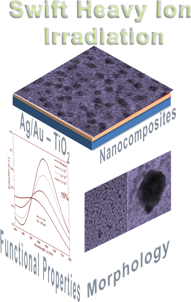
- area electron diffraction patterns of Figure 5b–d. In addition, reflections corresponding to the metrics from TiO [43][44] were observed along with large TiO crystals after ion beam irradiation (see below in Figure 8 and Figure 9). Several studies on SHI-induced crystallization of amorphous TiO2 thin
- films have been performed and it has been reported that under SHI irradiation, the crystallization evolves through the formation of TiO2 nanocrystals in rutile and anatase phases [37][45]. In a similar study an increase of the dielectric constant of the TiO2 film after 100 MeV Ag8+ ion irradiation has
- been reported. This is another evidence for the increasing crystallinity [35][46]. SHI-induced crystallization in nanocomposite films plays indeed a very strong role in the growth behavior of embedded metal nanoparticles in the nanocomposite film. The optical properties of pristine as well as



Magnesium batteries: Current state of the art, issues and future perspectives
Beilstein J. Nanotechnol. 2014, 5, 1291–1311, doi:10.3762/bjnano.5.143
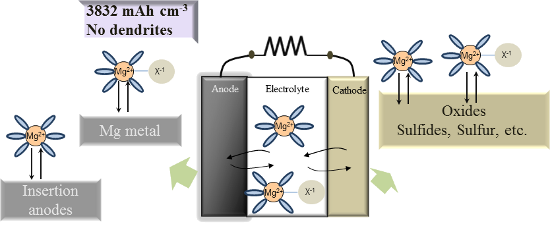
- electrolyte where the crystallized product had an oxidative stability of 3.2 V vs Mg on a platinum electrode (note that crystallization was necessary to achieve this performance). More recently, Zhao-Krager et. al [32], also motivated by the lower nucleophilicity of sterically hindered amides, used magnesium
- performances thereby eliminating the necessity of additional crystallization steps. 2.1.3 New design strategies for forming high stability electrolytes: As was described before, the high electrochemical oxidative stability of magnesium electrolytes has been primarily enabled by the formation of strong Al–C, Al


An insight into the mechanism of charge-transfer of hybrid polymer:ternary/quaternary chalcopyrite colloidal nanocrystals
Beilstein J. Nanotechnol. 2014, 5, 1235–1244, doi:10.3762/bjnano.5.137
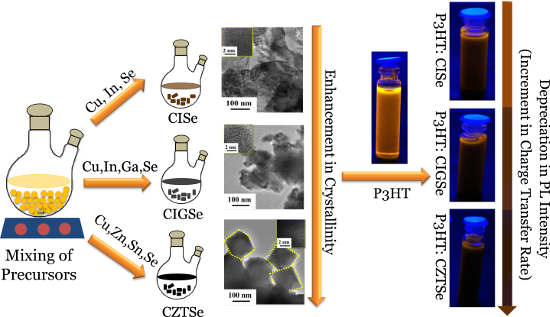
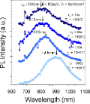
- –passivated chalcopyrite nanocrystals show evidence of PL quenching in their respective polymer-nanocomposites but with different rates depending upon their degree of crystallization. Due to their higher crystallinity CZTSe nanocrystals show a higher rate of PL quenching, which demonstrates an efficient


Characterization and photocatalytic study of tantalum oxide nanoparticles prepared by the hydrolysis of tantalum oxo-ethoxide Ta8(μ3-O)2(μ-O)8(μ-OEt)6(OEt)14
Beilstein J. Nanotechnol. 2014, 5, 1082–1090, doi:10.3762/bjnano.5.121
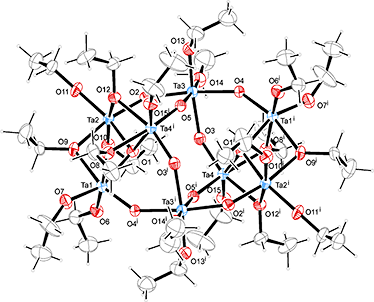
- crystallization to give compound 1 as white shiny crystals in two days. The formation of tantalum oxo-alkoxide can be described as a result of following reactions (Equation 3 and Equation 4). 1H NMR of compound 1 shows many sets for ethoxy groups suggesting the presence of different types of ethoxy groups such as
- rate of 30 bubbles/minute) was bubbled into the solution at ambient temperature. After 1 h, a white solid precipitated. The solid was separated, re-dissolved in toluene and kept at −30 °C for crystallization to yield compound 1 in 45% yield (35 mg). 1H NMR (25 °C) δ 1.33 (t, CH3), 1.41 (t, CH3), 1.49


Pyrite nanoparticles as a Fenton-like reagent for in situ remediation of organic pollutants
Beilstein J. Nanotechnol. 2014, 5, 855–864, doi:10.3762/bjnano.5.97
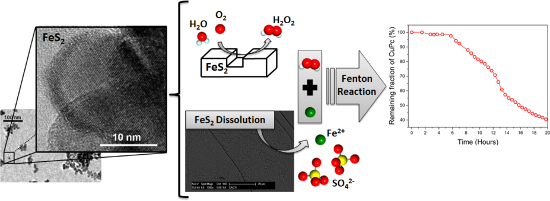
- crystallization progressed, some of the particles tended to reorganize, giving rise to single-crystal domains that extended to several particles. This feature is observable in the HR-TEM image (Figure 2c), in which two particles have self-assembled and their lattice fringes, corresponding to the (200) planes
- that crystallization had begun upon nucleation of an amorphous precursor and subsequently followed some type of structural reorganization associated with high-energy surfaces between adjacent particles [20][21][22]. Similar textures have been observed in other syntheses, especially when high


A visible-light-driven composite photocatalyst of TiO2 nanotube arrays and graphene quantum dots
Beilstein J. Nanotechnol. 2014, 5, 689–695, doi:10.3762/bjnano.5.81
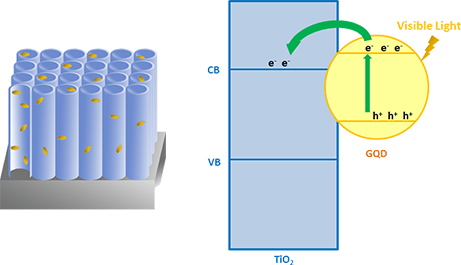
- for 1 h with a temperature increasing rate of 1 °C·min−1 in air was applied to improve crystallization. Synthesis of graphene quantum dots (GQDs): GQDs were synthesized from graphene oxide (GO) by heating with a solution of hydrogen peroxide and ammonia [44]. 20 mg of GO was dispersed into 5 mL of


Fabrication of carbon nanomembranes by helium ion beam lithography
Beilstein J. Nanotechnol. 2014, 5, 188–194, doi:10.3762/bjnano.5.20
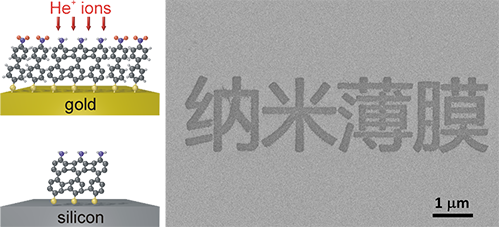
- been transferred onto a SiO2/Si substrate. Interestingly, the first step is the formation of circular shaped nuclei, which is analogous to the nucleation for thin films or polymer crystallization [23]. After a dose of 176 µC/cm2 (Figure 3a), the average diameter of the nuclei is 9.0 ± 1.7 nm, which


Controlled synthesis and tunable properties of ultrathin silica nanotubes through spontaneous polycondensation on polyamine fibrils
Beilstein J. Nanotechnol. 2013, 4, 793–804, doi:10.3762/bjnano.4.90
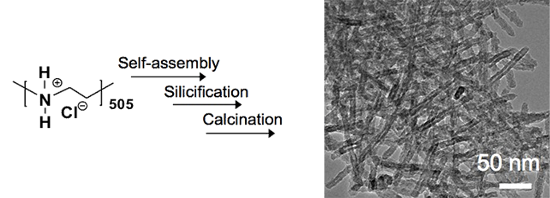
- chemistry is highly desirable. We are interested in the programmable construction of biomimetic silica nanomaterials by exploiting the crystallization-driven self-assembly of a simple synthetic polyamine, namely linear polyethyleneimine (LPEI) [31][32][33]. In contrast to branched PEI, LPEI is composed only
- crystallization. In contrast, the alkali-induced self-assembly of LPEI occurred rapidly because the deprotonation reaction is a fast process. Comparatively, the LPEI fibrils from rapid crystallization-driven self-assembly serve as templates that allow for a well-controlled silicification. The surface areas and
- formation from a higher molar ratio of [OH]/[EI] (0.8, Figure 1A–C), the decreased molar ratio of [OH]/[EI] induced the formation of nanofilms. This could be attributed to a slower crystallization rate of LPEI, because of insufficient neutralization of the protonated LPEI. On the other hand, when the molar


Controlling the near-field excitation of nano-antennas with phase-change materials
Beilstein J. Nanotechnol. 2013, 4, 632–637, doi:10.3762/bjnano.4.70
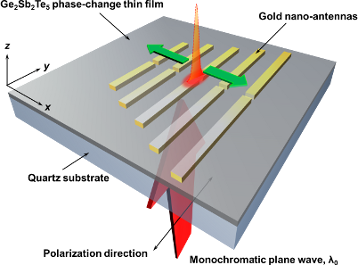
- conducted to estimate the amount of crystallized phase-change molecules. Since GST is known as a nucleation-dominated material, many small crystalline nuclei were formed first when the local temperature reaches the crystallization point of constituent phase-change molecules. Then numerous randomly
- sputtered GST phase-change thin film was performed by a homogeneous heating on a hot-plate with a crystallization temperature of 135 °C. This constant temperature was set to provide a slow phase transition rate, which facilitated a finer control of the crystalline proportions of samples. As the heating time
- spectra measurements (solid lines) and the simulated far-field transmission spectra (dashed lines) of a GST thin film switched at different intermediate phases. A good agreement in both spectral results suggests that a phase-change GST thin film can be well controlled at different crystallization levels



Photocatalytic antibacterial performance of TiO2 and Ag-doped TiO2 against S. aureus. P. aeruginosa and E. coli
Beilstein J. Nanotechnol. 2013, 4, 345–351, doi:10.3762/bjnano.4.40
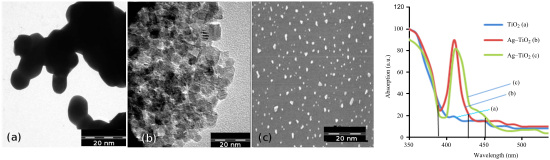
- investigated against Gram-positive Staphylococcus aureus (S. aureus), and Gram-negative Pseudomonas aeruginosa (P. aeruginosa) and Escherichia coli (E. coli) bacteria under visible light. Results and Discussion XRD of TiO2 and Ag-doped TiO2 The samples were annealed at 450 °C to achieve crystallization in TiO2


Nanoscopic surfactant behavior of the porin MspA in aqueous media
Beilstein J. Nanotechnol. 2013, 4, 278–284, doi:10.3762/bjnano.4.30
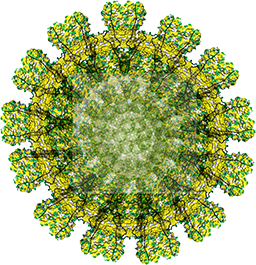
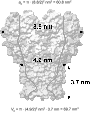
- hydrophilic vestibule (the “head” of the surfactant) can potentially be deformed when single MspA proteins aggregate. Protein deformation is often observed during crystallization [26]. The formation of a bilayer is evidence for attractive interactions between MspA units. Predicting the geometry of




Electrospinning preparation and electrical and biological properties of ferrocene/poly(vinylpyrrolidone) composite nanofibers
Beilstein J. Nanotechnol. 2013, 4, 189–197, doi:10.3762/bjnano.4.19

- , the degree of crystallization of Fc in the composite fibers is not good. This is because the solidification of fibers is a very fast process with the volatilization of the solvents and the time is too short for Fc to fully crystallize during the electrospinning process. The results indicate that the
- Fc in the PVP polymer is in the amorphous form with a poor degree of crystallization. The degradation process of products was investigated using thermogravimetric analysis (TGA) from 20 to 600 °C in nitrogen gas. Figure 3a represents the TG curve of the pure Fc. It was found that the TGA data of Fc


Low-dose patterning of platinum nanoclusters on carbon nanotubes by focused-electron-beam-induced deposition as studied by TEM
Beilstein J. Nanotechnol. 2013, 4, 77–86, doi:10.3762/bjnano.4.9
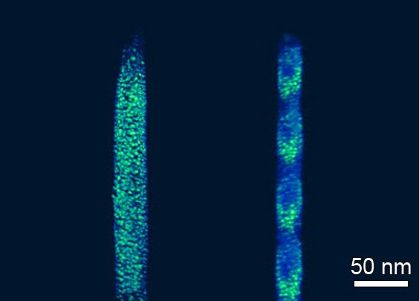
- of nanoparticles, which can be difficult to monitor and control. Our post-growth experiment through electron irradiation has shown that the crystallization of amorphous carbon can be performed in a controllable manner, where the growth of nanoparticles is seen to increase along with the electron dose
- reducing amorphous carbon using in-situ electron-beam irradiation in TEM at low kilovolt potentials (80 kV), where a simultaneous growth of a thin graphitic layer and Pt nanoclusters is achieved. The controllable crystallization of amorphous carboneous and Pt nanoclusters could be interesting for contact


Nanostructure-directed chemical sensing: The IHSAB principle and the dynamics of acid/base-interface interaction
Beilstein J. Nanotechnol. 2013, 4, 20–31, doi:10.3762/bjnano.4.3
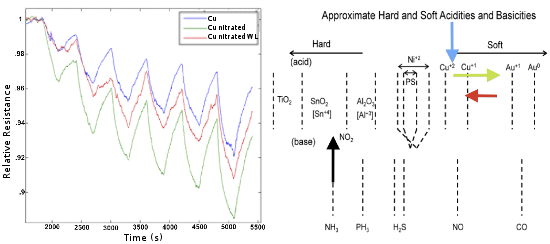
- envision their crystallization during the short deposition and subsequent surface cleaning process. After deposition, the decorated surfaces are cleaned for 120 s in DI and 120 s in methanol. Basic character is introduced to the nanostructured metal oxides by direct in situ treatment with triethylamine


Highly ordered ultralong magnetic nanowires wrapped in stacked graphene layers
Beilstein J. Nanotechnol. 2012, 3, 846–851, doi:10.3762/bjnano.3.95
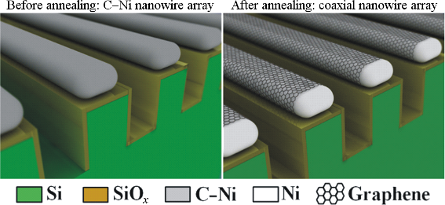
- (also known as metal-filled carbon nanotubes). Carbon-containing nickel nanowires are first grown on a nanograted surface by magnetron sputtering. Then, a post-annealing treatment favors the metal-catalyzed crystallization of carbon into stacked graphene layers rolled around the nickel cores. The
- the nickel-catalyzed crystallization of carbon by thermal annealing. During the post-annealing stage of the carbon-containing nickel nanowires, the carbon atoms diffuse and homogenously dissolve in the nickel phase [31][32]. As the limit of the solid solubility of carbon in the nickel phase is reached
- . Moreover, the metal-catalyzed crystallization of carbon by thermal annealing, which is the mechanism employed in this work, allows the synthesis of graphene sheets of a few layers with low defects [31][32][33]. Therefore, after an optimization of the materials and the processing conditions of the technique


Focused electron beam induced deposition: A perspective
Beilstein J. Nanotechnol. 2012, 3, 597–619, doi:10.3762/bjnano.3.70
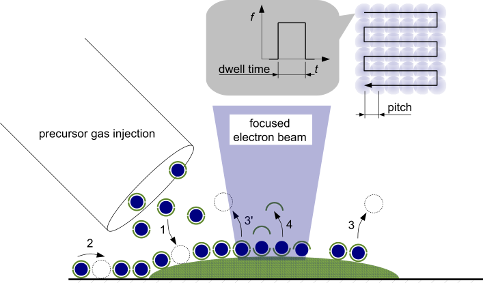
- special microstructural feature, such as re-entrant crystallization of the granules, has been observed. It thus remains an unresolved issue, whether the granular electronic density of states is indeed indicative of the formation of an amorphous precursor of the metastable, hexagonal and superconducting
- bias current. Future research will have to show whether this is the result of local crystallization towards the Pt2Si3-phase caused by the high dissipation levels under large current bias. For details concerning the electronic transport properties of nanogranular FEBID structures the reader is referred


Forming nanoparticles of water-soluble ionic molecules and embedding them into polymer and glass substrates
Beilstein J. Nanotechnol. 2012, 3, 267–276, doi:10.3762/bjnano.3.30
- inorganic salt are produced as a result of the influence of localized higher temperatures and pressures. According to Kordylla et al. [21] the nucleation work needed for crystallization is strongly reduced by the presence of a liquid–gas interface (the bubble surface), therefore the presence of the bubble