Search results
Search for "drug delivery" in Full Text gives 371 result(s) in Beilstein Journal of Nanotechnology. Showing first 200.
Microwave-induced electric discharges on metal particles for the synthesis of inorganic nanomaterials under solvent-free conditions
Beilstein J. Nanotechnol. 2020, 11, 1019–1025, doi:10.3762/bjnano.11.86
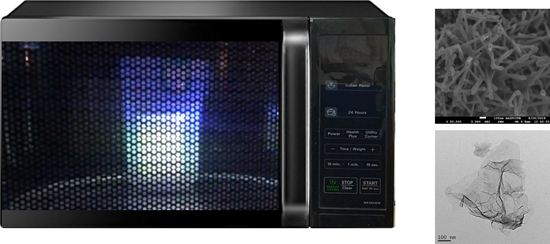
- carbon with an average size of 80 nm. The C–F bonds at the surface of the metallic nanoparticles could be further functionalized for different applications such as drug delivery [19]. A SEM image of Ni nanoparticles is shown in Figure S2 in Supporting Information File 1. Figure S3 in Supporting


Wet-spinning of magneto-responsive helical chitosan microfibers
Beilstein J. Nanotechnol. 2020, 11, 991–999, doi:10.3762/bjnano.11.83
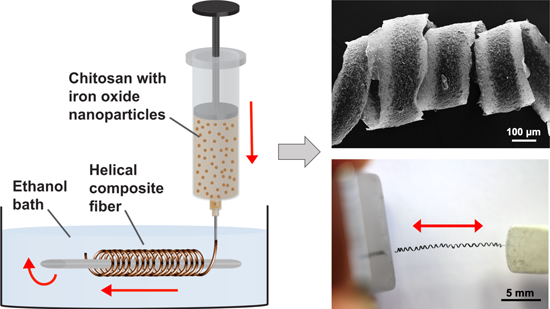
- engineering [40] or to facilitate 3D printing of magnetized chitosan solutions into helical microswimmers for drug delivery [11]. In the future, the incorporation of magnetic particles into biocompatible fibers might pave the way for the development of new soft biological motors, which can mechanically steer


Simulations of the 2D self-assembly of tripod-shaped building blocks
Beilstein J. Nanotechnol. 2020, 11, 884–890, doi:10.3762/bjnano.11.73
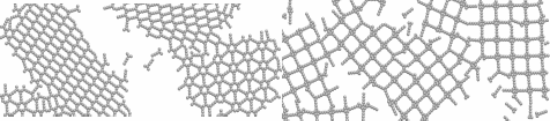
- problems in the chemical industry such as gas storage, chemical sensing, and drug delivery [1][2][3]. Thus, this field has very recently gained particular interest in both experimental and theoretical studies, which was followed by a vast amount of papers devoted to investigating these phenomena. Thanks to


Key for crossing the BBB with nanoparticles: the rational design
Beilstein J. Nanotechnol. 2020, 11, 866–883, doi:10.3762/bjnano.11.72
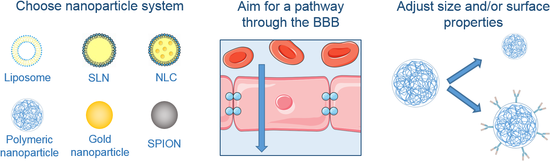
- , which at the same time acts as a bottleneck for drug delivery by preventing the vast majority of drugs to reach the brain. To overcome this obstacle, drugs can be loaded inside nanoparticles that can carry the drug through the BBB. However, not all particles are able to cross the BBB and a multitude of
- nanoparticles (AuNPs); blood–brain barrier (BBB); drug delivery; liposomes; nanomedicine; polymeric nanoparticles; solid lipid nanoparticles; superparamagnetic iron oxide nanoparticles (SPIONs); Introduction Neurological disorders and brain diseases are real burdens for modern societies and healthcare systems
- the drugs or to use prodrugs. One example of a prodrug is levodopa, a prodrug of dopamine used for the treatment of Parkinson’s disease. However, these options are not always possible depending on the structure of the molecule. Another possibility to increase drug delivery through the BBB is to


Silver-decorated gel-shell nanobeads: physicochemical characterization and evaluation of antibacterial properties
Beilstein J. Nanotechnol. 2020, 11, 620–630, doi:10.3762/bjnano.11.49
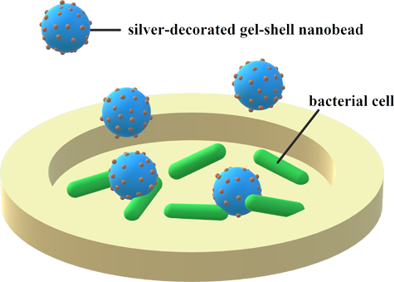
- [3][4], catalysis [5][6][7] and drug delivery [8][9]. The main advantages of such particles are large surface area and low density. The particles can be further modified to provide new properties to these materials. One modification is the incorporation of metal nanoparticles into the polymer beads


Soybean-derived blue photoluminescent carbon dots
Beilstein J. Nanotechnol. 2020, 11, 606–619, doi:10.3762/bjnano.11.48
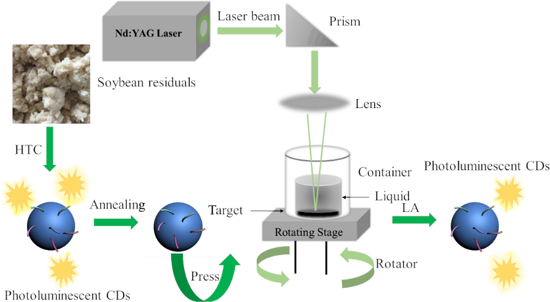
- wavelength [7], and low cost [8]. CDs have been considered as a group of important nanomaterials with potential applications in nanotechnology [9], electrocatalysis [10], metal-ion detection [2], thermal sensing [11], drug delivery [12], and biosensing and bioimaging [1]. Several methods are available for


Identification of physicochemical properties that modulate nanoparticle aggregation in blood
Beilstein J. Nanotechnol. 2020, 11, 550–567, doi:10.3762/bjnano.11.44
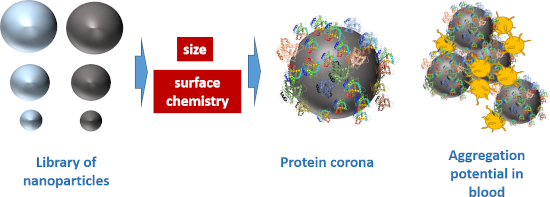
- targeted drug delivery, active pharmaceutical carriers and medical imaging. However, poor knowledge of the side effects related to their use is an obstacle to clinical translation. For the development of molecular drugs, the concept of safe-by-design has become an efficient pharmaceutical strategy with the




Multilayer capsules made of weak polyelectrolytes: a review on the preparation, functionalization and applications in drug delivery
Beilstein J. Nanotechnol. 2020, 11, 508–532, doi:10.3762/bjnano.11.41
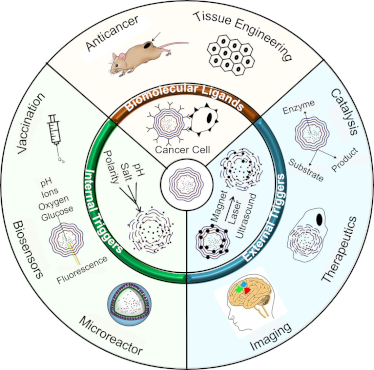
- Nanotechnology, SRM Institute of Science and Technology, Kattankulathur, Tamil Nadu 603203, India 10.3762/bjnano.11.41 Abstract Multilayer capsules have been of great interest for scientists and medical communities in multidisciplinary fields of research, such as drug delivery, sensing, biomedicine
- , theranostics and gene therapy. The most essential attributes of a drug delivery system are considered to be multi-functionality and stimuli responsiveness against a range of external and internal stimuli. Apart from the highly explored strong polyelectrolytes, weak polyelectrolytes offer great versatility with
- potential applications. Keywords: drug delivery; functionalization; multilayer capsules; synthesis; weak polyelectrolytes; Review Introduction In the last few decades, micrometer and nanometer-sized capsules made of polyelectrolytes (PEs) have been the subject of intensive research because of their



Preparation and in vivo evaluation of glyco-gold nanoparticles carrying synthetic mycobacterial hexaarabinofuranoside
Beilstein J. Nanotechnol. 2020, 11, 480–493, doi:10.3762/bjnano.11.39
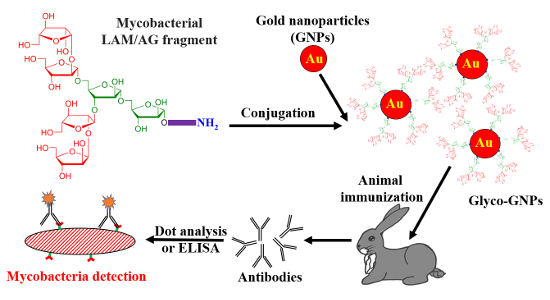
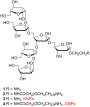
- ], which enables the exchange of citrate ligands with amines. The amine-capped GNPs are stable enough to be used as targeting agents for drug-delivery applications [75], as antigens for the generation of antibodies [77], or as antimicrobial agents [78]. These nanoconjugates are nontoxic, effectively


Brome mosaic virus-like particles as siRNA nanocarriers for biomedical purposes
Beilstein J. Nanotechnol. 2020, 11, 372–382, doi:10.3762/bjnano.11.28
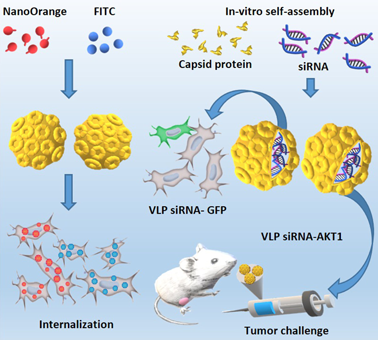
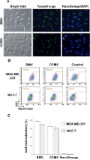
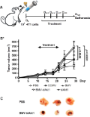
- , handling, and simple structure, plant viruses are attractive for some biomedical applications. Plant bromoviruses, such as the brome mosaic virus (BMV), are viral bionanoparticles that have been proposed as platforms for drug delivery in different therapies, and as diagnostic imaging agents in cancer [18


Interactions at the cell membrane and pathways of internalization of nano-sized materials for nanomedicine
Beilstein J. Nanotechnol. 2020, 11, 338–353, doi:10.3762/bjnano.11.25
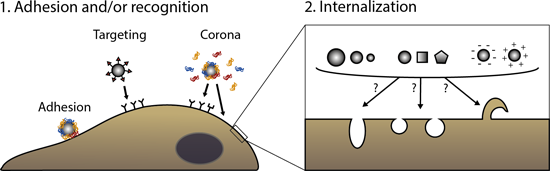
- exploit the cellular machinery to enter cells and be trafficked intracellularly, thus they can be used to overcome some of the cellular barriers to drug delivery. Nano-sized drug carriers of very different properties can be prepared, and their surface can be modified by the addition of targeting moieties
- to recognize specific cells. However, it is still difficult to understand how the material properties affect the subsequent interactions and outcomes at cellular level. As a consequence of this, designing targeted drugs remains a major challenge in drug delivery. Within this context, we discuss the
- crucial challenge for drug delivery and recently the debate on the success of nanomedicine for delivering drugs to their target has been very active [26][27][28]. Indeed, it is difficult to design nanoparticles that achieve specific targeting [7][9][29]. This is not only because a better understanding of


Understanding nanoparticle flow with a new in vitro experimental and computational approach using hydrogel channels
Beilstein J. Nanotechnol. 2020, 11, 296–309, doi:10.3762/bjnano.11.22
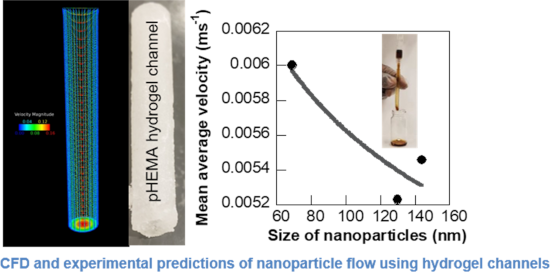
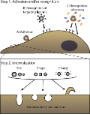
- , United States Department of Chemistry, Clark Atlanta University, Georgia 30314, United States 10.3762/bjnano.11.22 Abstract Nanoparticles (NPs) are considered as one of the most promising drug delivery vehicles and a next-generation solution for current medical challenges. In this context, variables
- related to flow of NPs such as the quantity of NPs lost during transport and flow trajectory greatly affect the clinical efficiency of NP drug delivery systems. Currently, there is little knowledge of the physical mechanisms dominating NP flow inside the human body due to the limitations of available
- experimental tools for mimicking complex physiological environments at the preclinical stage. Here, we report a coupled experimental and computational fluid dynamics (CFD)-based novel in vitro approach to predict the flow velocity and binding of NP drug delivery systems during transport through vasculature


Facile biogenic fabrication of hydroxyapatite nanorods using cuttlefish bone and their bactericidal and biocompatibility study
Beilstein J. Nanotechnol. 2020, 11, 285–295, doi:10.3762/bjnano.11.21
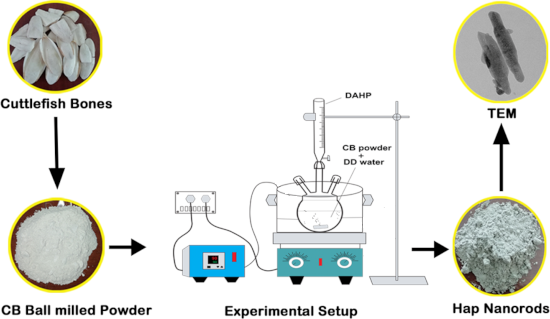
- increasing demand of biomaterials for hard tissue repair [6][7]. It is noteworthy that marine species, including corals, crabs, and fish bones, possess natural calcium phosphate and are currently being extracted and utilized as drug delivery carriers, tissue engineering scaffolds and dental cements in the
- loading capacity and slow drug release in drug delivery systems for progressive advancement in osteoporosis and bone tumor treatments [17]. Various studies have reported the synthesis procedure of Hap nanoparticles from annealed cuttlefish bone using a hydrothermal method, which yields calcium oxide (CaO


Phase inversion-based nanoemulsions of medium chain triglyceride as potential drug delivery system for parenteral applications
Beilstein J. Nanotechnol. 2020, 11, 213–224, doi:10.3762/bjnano.11.16
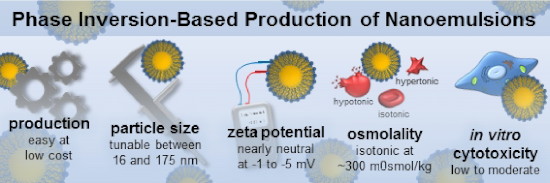
- Eike Folker Busmann Dailen Garcia Martinez Henrike Lucas Karsten Mader Institute of Pharmacy, Martin Luther University Halle-Wittenberg, Halle (Saale), Germany 10.3762/bjnano.11.16 Abstract Lipid nanoemulsions are attractive drug delivery systems for lipophilic drugs. To produce nanoemulsions
- drug delivery systems such as solid lipid or polymeric nanoparticles, nanocapsules, liquid nanoemulsions, liposomes and micelles can be used to carry poorly water soluble ingredients of pharmaceuticals for parenteral applications [1][2][3]. Thereby, the physical entrapment of the active ingredients
- water, very high surfactant concentrations could be avoided and the resulting MCT nanoemulsions might be suitable as potential drug delivery systems for intravenous applications. The presented phase inversion-based process offers a suitable alternative to the production of nanoemulsions based on high


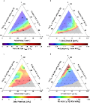


Rational design of block copolymer self-assemblies in photodynamic therapy
Beilstein J. Nanotechnol. 2020, 11, 180–212, doi:10.3762/bjnano.11.15
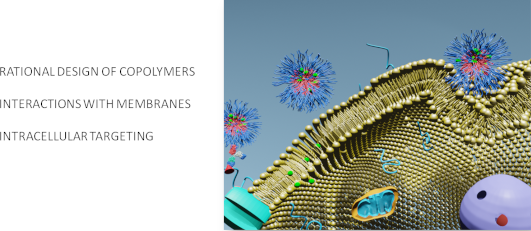
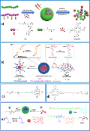
- use of irradiation to promote drug delivery (photochemical internalization). Block copolymers used for vectorization of photosensitizers Most of the used photosensitizers are highly hydrophobic and have the tendency to aggregate in aqueous environments, which is detrimental for their effectiveness in
- influencing the self-assembly behavior and, consequently, the photosensitizer loading ability. Typical endogenous triggers for pH- and redox-responsive drug delivery are i) acidic tumor tissues (pH 6.0–7.0), endosomes (pH 5.0–6.0) and lysosomes (pH 4.0–5.0) microenvironments, ii) high intracellular






Molecular architectonics of DNA for functional nanoarchitectures
Beilstein J. Nanotechnol. 2020, 11, 124–140, doi:10.3762/bjnano.11.11
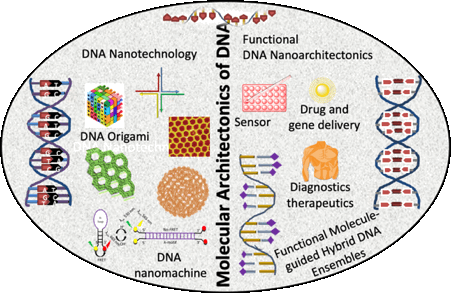
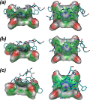
- , sensors, molecular or nanoelectronics, diagnostics, drug delivery, and biomedical sciences. The remarkable molecular fidelity and sequence-specific molecular recognition make DNA the ideal candidate in the scheme of molecular architectonics to design and construct functional DNA nanoarchitectures. In this
- delivery and nonimmunogenicity of the nanorobot made it a promising candidate for drug delivery in cancer therapeutics. The group of Krishnan reported the construction of a DNA nanodevice to quantitatively determine the activity and location of chloride ion channels and transport under pH stimuli [57]. In
- assembly systems points at potential drug delivery systems for small molecular and gene-based drugs. Mercury is one of the most toxic heavy metals, with a severe impact on human health already at ultralow concentrations [20][72][73][74]. Selective binding of Hg(II) with thymine is a highly feasible


Internalization mechanisms of cell-penetrating peptides
Beilstein J. Nanotechnol. 2020, 11, 101–123, doi:10.3762/bjnano.11.10
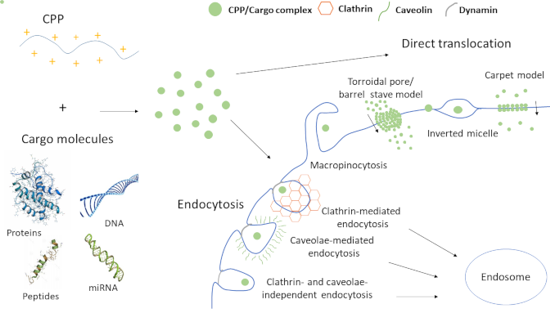
- influence the cellular uptake mechanism. Keywords: cell-penetrating peptides; direct translocation; drug delivery; endocytosis; internalization; Introduction The cell membrane is a semipermeable barrier, serving as a protective layer for the cells. It is an essential organelle for cell survival and
- provide enzymatic protection and stability for the drug, an improved distribution and target specificity, as well as a lack of toxicity [3]. Cell-penetrating peptides as drug delivery systems Having in mind the attention they have gained, cell-penetrating peptides (CPPs) have become a current hotspot in
- -1), the epidermal growth factor (EGF) and the platelet-derived growth factor or tumor-promoting factors [63]. However, this mechanism provides an effective path for drug delivery. It has been described as the pathway used to deliver arginine-rich CPPs such as octa-arginine and TAT peptides into


The effect of heat treatment on the morphology and mobility of Au nanoparticles
Beilstein J. Nanotechnol. 2020, 11, 61–67, doi:10.3762/bjnano.11.6
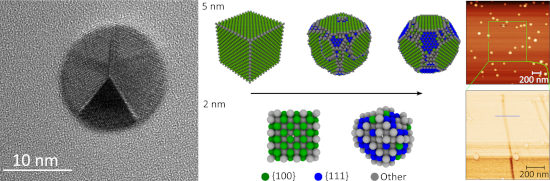
- materials used in studies related to nanostructures. The small size and the enhanced properties of Au nanoparticles (NPs) compared to bulk gold make them important for the development of novel applications, for example, in the field of drug delivery [1], sensor technology [2], printing [3] and catalysis [4


The different ways to chitosan/hyaluronic acid nanoparticles: templated vs direct complexation. Influence of particle preparation on morphology, cell uptake and silencing efficiency
Beilstein J. Nanotechnol. 2019, 10, 2594–2608, doi:10.3762/bjnano.10.250
- Arianna Gennari Julio M. Rios de la Rosa Erwin Hohn Maria Pelliccia Enrique Lallana Roberto Donno Annalisa Tirella Nicola Tirelli Laboratory of Polymers and Biomaterials, Fondazione Istituto Italiano di Tecnologia, 16163 Genova, Italy NorthWest Centre for Advanced Drug Delivery (NoWCADD), School
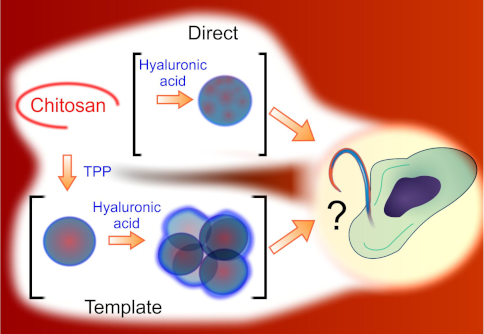
- performing better in macrophages and those with high-MW chitosan in HCT-116. Keywords: aggregation; chitosan; field flow fractionation; light scattering; targeted drug delivery; Introduction Chitosan is a linear copolymer of β-1,4-ᴅ-glucose-2-amine and N-acetyl-ᴅ-glucose-2-amine, and is commonly employed
- as the cationic component in polyplexes and other drug delivery vehicles [1][2][3]. In comparison to other polycations, its main advantages are the low toxicity and its biodegradability. Biodegradation can occur both enzymatically and oxidatively [4]. A number of methods can be employed to prepare

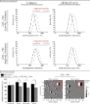


Fully amino acid-based hydrogel as potential scaffold for cell culturing and drug delivery
Beilstein J. Nanotechnol. 2019, 10, 2579–2593, doi:10.3762/bjnano.10.249
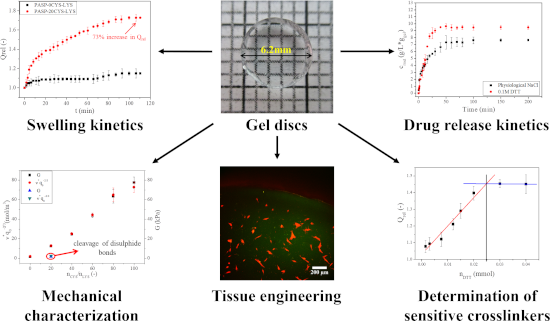
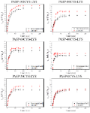
- , Nagyvarad square 4, Budapest, Hungary 10.3762/bjnano.10.249 Abstract Polymer hydrogels are ideal scaffolds for both tissue engineering and drug delivery. A great advantage of poly(amino acid)-based hydrogels is their high similarity to natural proteins. However, their expensive and complicated synthesis
- reductive conditions resulted in an increased drug release due to the cleavage of disulfide bridges in the hydrogels. Consequently, these hydrogels provide new possibilities in the fields of both tissue engineering and controlled drug delivery. Keywords: biocompatibility; cystamine; hydrogel; lysine; poly
- the changing environmental conditions. Therefore, hydrogels can be used as drug delivery systems [4], implants [5][6], coatings [7][8] or scaffolds for tissue engineering [2][3][9][10]. Besides these stimuli-responsive properties, the chemical and physical structure, the mechanical properties [10] as


Long-term stability and scale-up of noncovalently bound gold nanoparticle-siRNA suspensions
Beilstein J. Nanotechnol. 2019, 10, 2568–2578, doi:10.3762/bjnano.10.248
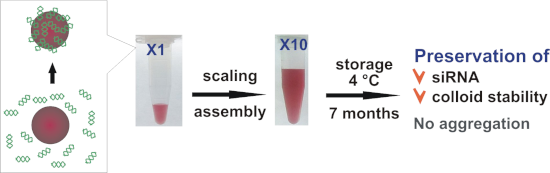
- of physicochemical characteristics and siRNA surface density for a long period. Keywords: colloidal stability; gold nanoparticles; scale-up; siRNA delivery; siRNA duplex stability; therapeutic nucleic acids; Introduction Drug delivery to cells is only one application of nanoparticles in biomedicine


Advanced hybrid nanomaterials
Beilstein J. Nanotechnol. 2019, 10, 2563–2567, doi:10.3762/bjnano.10.247

- nanoparticles [34]. The resulting gold–alendronate nanoplatform combines antitumor activity through drug delivery and photothermal therapy, as illustrated in vitro on the inhibition of prostate cancer cells. In the field of hybrid coordination networks, new lanthanide-based networks synthesized by a solvo
Bombesin receptor-targeted liposomes for enhanced delivery to lung cancer cells
Beilstein J. Nanotechnol. 2019, 10, 2553–2562, doi:10.3762/bjnano.10.246
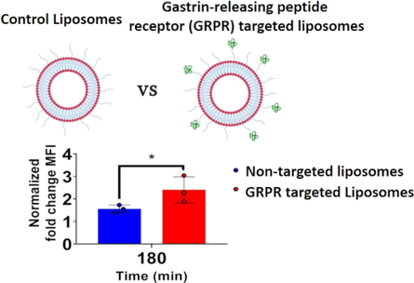
- new therapeutic approaches for targeted drug delivery to SCLC are desperately needed. SCLC belongs to a class known as neuroendocrine tumours in which malignant cells secrete hormones and growth factors – a trait inherited from the neuroendocrine cells of the bronchial epithelium that are transformed

Frontiers in pharmaceutical nanotechnology
Beilstein J. Nanotechnol. 2019, 10, 2538–2540, doi:10.3762/bjnano.10.244
- Matthias G. Wacker National University of Singapore, Faculty of Science, Department of Pharmacy, 6 Science Drive 2, 117546 Singapore 10.3762/bjnano.10.244 Keywords: drug delivery; nanocarriers; nanomedicines; nanotheranostics; pharmaceutical nanotechnology; Today, pharmaceutical nanotechnology
- is a very dynamic and evolving research area that integrates a wide variety of disciplines such as chemical, biological and biomedical science. At the frontier of knowledge, nanoparticles, exosomes and even more advanced drug delivery systems [1] blur the line between drug discovery and formulation
- active transport of nanoparticles into the central nervous system using the low-density lipoprotein receptor family [3][4][5][6], provided an entry route for the cytostatic drug doxorubicin into the brain. The drug delivery system has been tested in a phase II clinical trial and hopefully will make its
pH-Controlled fluorescence switching in water-dispersed polymer brushes grafted to modified boron nitride nanotubes for cellular imaging
Beilstein J. Nanotechnol. 2019, 10, 2428–2439, doi:10.3762/bjnano.10.233
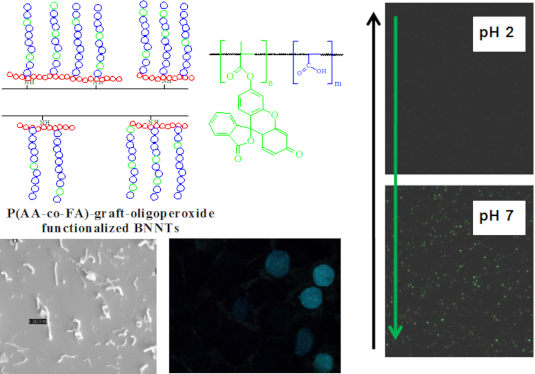
- fluorescent probes for a number of bio-responsive applications, ranging from drug delivery to genomics [29][30][31]. Similar to other nanotubes, the pristine BNNTs were not fluorescent, and a fluorophore (e.g., organic molecule or quantum dot) is added via surface modification to make them fluorescent [29][30