Search results
Search for "environmental" in Full Text gives 607 result(s) in Beilstein Journal of Nanotechnology. Showing first 200.
Overview of mechanism and consequences of endothelial leakiness caused by metal and polymeric nanoparticles
Beilstein J. Nanotechnol. 2023, 14, 329–338, doi:10.3762/bjnano.14.28
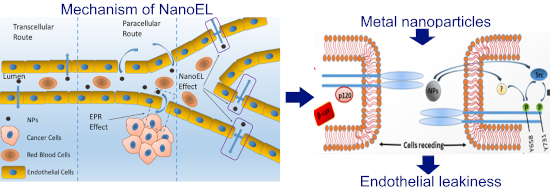
- vascular endothelial dysfunction include physiological processes (e.g., aging) or environmental factors such as a high-fat diet. These conditions are accompanied by an increased generation of reactive oxygen species (ROS), which, combined with impaired efficiency of antioxidant systems are one of the most


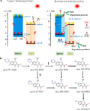
Bismuth-based nanostructured photocatalysts for the remediation of antibiotics and organic dyes
Beilstein J. Nanotechnol. 2023, 14, 291–321, doi:10.3762/bjnano.14.26
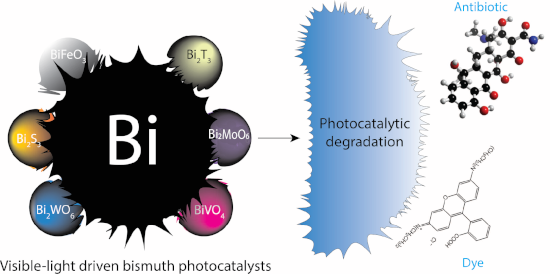
- geopolitical factors. Nevertheless, there is a growing need for the efficient removal of environmental pollutants and the proper treatment of industrial wastes to allowable discharge limits, which are crucial for preserving human life and protecting the environment. Numerous techniques have been employed to
- . Different materials based on bismuth have been developed and used for a range of environmental remediation applications. For instance, Mu et al. [46] synthesised a Bi2S3/Bi4O7 heterostructure via an in situ sulfidation approach and utilised it for the degradation of rhodamine B dye under visible-light
- [71], and environmental remediation via photocatalysis [25]. Bi-based semiconductors, in particular, are thought to be able to surpass the limitation of the solar light-harvesting capacity of TiO2-based photocatalytic materials because of their smaller bandgaps. Because of its highly anisotropic Fermi


Batch preparation of nanofibers containing nanoparticles by an electrospinning device with multiple air inlets
Beilstein J. Nanotechnol. 2023, 14, 141–150, doi:10.3762/bjnano.14.15
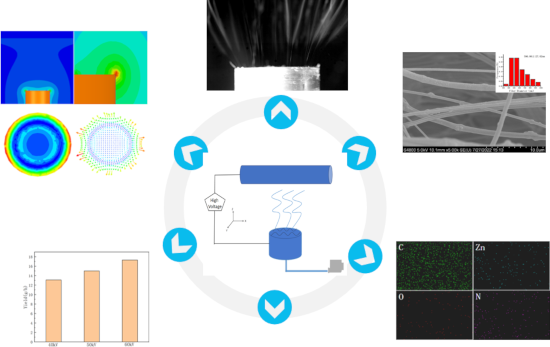
- the jet formed during the EMAI spinning process when ignoring air resistance and environmental interference. The spinning solution was assumed to be an incompressible ideal fluid [22]. According to previous studies [23], under a high voltage electric field, in point A there is the joint action of mass


Combining physical vapor deposition structuration with dealloying for the creation of a highly efficient SERS platform
Beilstein J. Nanotechnol. 2023, 14, 83–94, doi:10.3762/bjnano.14.10
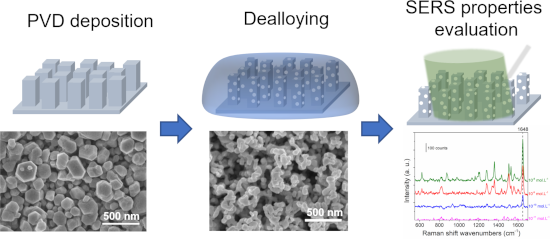
- sensors are promising for various applications in chemical (e.g., explosive [3] or chemical warfare agents [4]) or biological (e.g., lipid or protein [5]) sensing, environmental monitoring [6] as well as in food safety through the detection of pollutants such as phenol [3][7] or rhodamine [8]. The SERS


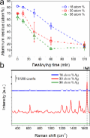


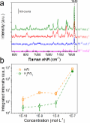
Non-stoichiometric magnetite as catalyst for the photocatalytic degradation of phenol and 2,6-dibromo-4-methylphenol – a new approach in water treatment
Beilstein J. Nanotechnol. 2022, 13, 1531–1540, doi:10.3762/bjnano.13.126
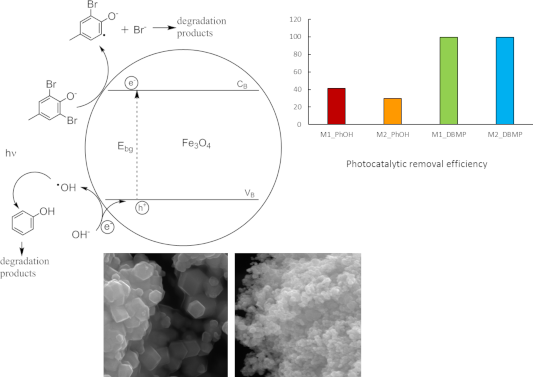
- ; Introduction Water is one of the most important natural resources on Earth. It helps to maintain environmental balance, but most of all, it is essential for human life and health. Although water covers more than 70% of our planet’s surface, only 2.5% is freshwater and less than 1% is accessible [1][2]. In the
- context of water consumption, there is an environmental indicator called the water footprint, which represents the sum of direct water consumption and virtual consumption (i.e., the amount of water needed to produce food and other consumer goods) [3]. Water consumption calculated in this way may amount to
- , BFRs), wood preservatives, and components in the polymer industry [4][5]. Bromophenols from various industries can cause severe contamination of soil, sediment, and water [6][7]. The United States Environmental Protection Agency (US EPA) has listed BPs as hazardous waste with strict environmental


A TiO2@MWCNTs nanocomposite photoanode for solar-driven water splitting
Beilstein J. Nanotechnol. 2022, 13, 1520–1530, doi:10.3762/bjnano.13.125
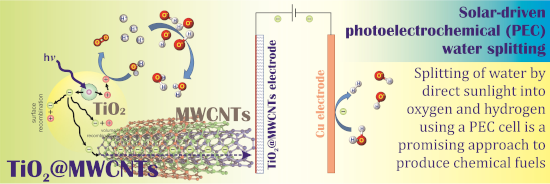
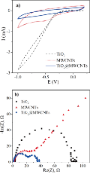
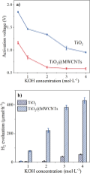
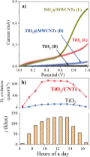
- under solar irradiation. Keywords: multi-wall carbon nanotubes (MWCNTs); nanomaterials; photoelectrochemical; TiO2; water splitting; Introduction TiO2 is an excellent photochemical catalyst for environmental and chemical applications due to its good activity regarding numerous reduction and oxidation



Double-layer symmetric gratings with bound states in the continuum for dual-band high-Q optical sensing
Beilstein J. Nanotechnol. 2022, 13, 1408–1417, doi:10.3762/bjnano.13.116
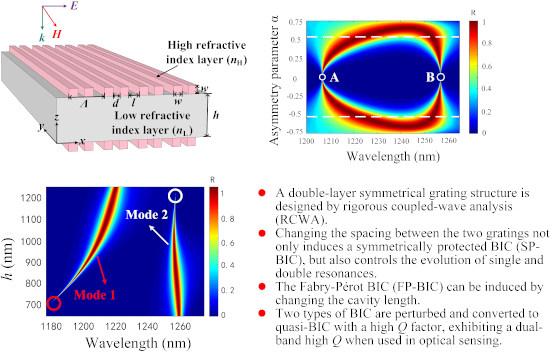
- ]. Particularly, the QBIC sensor enables highly accurate detection of environmental changes by reading variations in the spectrum. However, numerous research works have focused on the BIC mechanism of single-mode resonance [26][28], which may limit its application. In this work, we proposed a double-layer


LED-light-activated photocatalytic performance of metal-free carbon-modified hexagonal boron nitride towards degradation of methylene blue and phenol
Beilstein J. Nanotechnol. 2022, 13, 1380–1392, doi:10.3762/bjnano.13.114
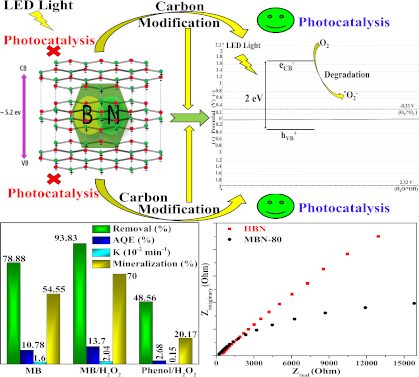
- Nirmalendu S. Mishra Pichiah Saravanan Environmental Nanotechnology Laboratory, Department of Environmental Science and Engineering, Indian Institute of Technology (ISM), Dhanbad-826004, Jharkhand, India 10.3762/bjnano.13.114 Abstract The present study outlines the transformation of non
- percentage of carbon introduced. This demonstrates the potential of HBN to be used as a photocatalytic material. However the studies in the sense of exploring its photocatalytic ablity intented for environmental applications is very limited [15][16][17]. This has motivated us to extend our study on the



Supramolecular assembly of pentamidine and polymeric cyclodextrin bimetallic core–shell nanoarchitectures
Beilstein J. Nanotechnol. 2022, 13, 1361–1369, doi:10.3762/bjnano.13.112
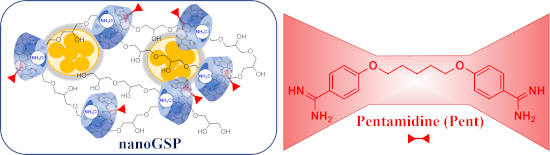
- University, T. Laurian Str. 42, 400271 Cluj-Napoca, Romania Department of Biomolecular Physics, Faculty of Physics, Babes-Bolyai University, M Kogalniceanu Str. 1, 400084 Cluj-Napoca, Romania Department of Chemical, Biological, Pharmaceutical and Environmental Sciences, University of Messina, V.le F. Stagno
- d'Alcontres 31, 98166 Messina, Italy National Council of Research, Institute for the Study of Nanostructured Materials (CNR-ISMN), URT of Messina c/o Department of Chemical, Biological, Pharmaceutical and Environmental Sciences, University of Messina, V.le F. Stagno d’Alcontres 31, 98166 Messina, Italy


Recent trends in Bi-based nanomaterials: challenges, fabrication, enhancement techniques, and environmental applications
Beilstein J. Nanotechnol. 2022, 13, 1316–1336, doi:10.3762/bjnano.13.109
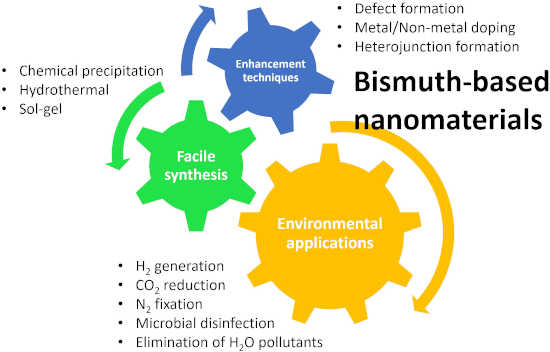
- environmental restoration and energy conversion is photocatalysis powered by solar light. Traditional photocatalysts have limited practical uses due to inadequate light absorption, charge separation, and unknown reaction mechanisms. Discovering new visible-light photocatalysts and investigating their
- photocatalysts, upgrading the photocatalytic ability, and understanding essential reactions of the photocatalytic process. This paper provides insights into the characteristics of Bi-based photocatalysts, making them a promising future nanomaterial for environmental remediation. The current review discusses the
- fabrication techniques and enhancement in Bi-based semiconductor photocatalysts. Various environmental applications, such as H2 generation and elimination of water pollutants, are also discussed in terms of semiconductor photocatalysis. Future developments will be guided by the uses, issues, and possibilities




Bending and punching characteristics of aluminum sheets using the quasi-continuum method
Beilstein J. Nanotechnol. 2022, 13, 1303–1315, doi:10.3762/bjnano.13.108
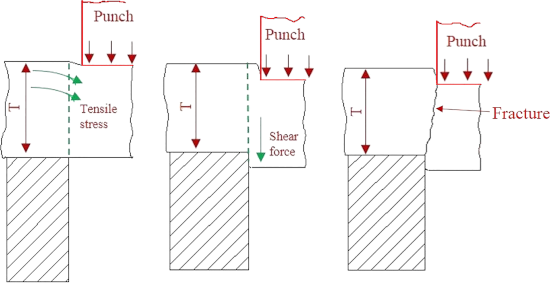
- , nanoelectromechanical systems (NEMS), environmental science, and semiconductors [1][2][3][4][5][6][7][8][9][10]. The increased requirements for advanced nanostructures simultaneously give rise to extensive researches in precision machining techniques, including nanoimprinting lithography (NIL) [11][12], mechanical nano





Laser-processed antiadhesive bionic combs for handling nanofibers inspired by nanostructures on the legs of cribellate spiders
Beilstein J. Nanotechnol. 2022, 13, 1268–1283, doi:10.3762/bjnano.13.105
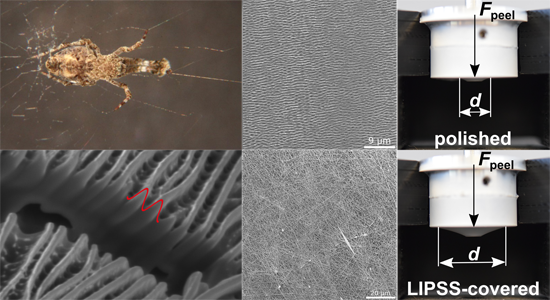
- of 0.6 up to 2.5 GPa, dependent on the treatment and the environmental conditions [32]. With our custom-made electrospinning setup, the typical diameters of the fibers are above 140 nm. Thus, from Equation 26, we can follow that adhesion is impaired if the modulation depth (double the amplitude) is







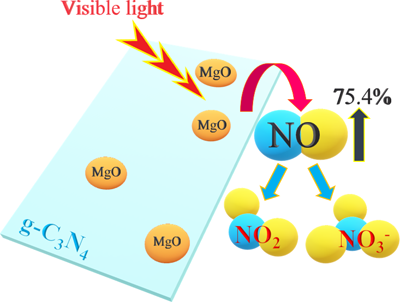
Rapid fabrication of MgO@g-C3N4 heterojunctions for photocatalytic nitric oxide removal
Beilstein J. Nanotechnol. 2022, 13, 1141–1154, doi:10.3762/bjnano.13.96
- Minh-Thuan Pham Duyen P. H. Tran Xuan-Thanh Bui Sheng-Jie You Department of Civil Engineering, Chung Yuan Christian University, Taoyuan 32023, Taiwan Department of Environmental Engineering, Chung Yuan Christian University, Taoyuan 32023, Taiwan Center for Environmental Risk Management, Chung Yuan
- simple way to synthesize photocatalytic heterojunction materials with high reusability and the potential of heterojunction photocatalysts in the field of environmental remediation. Keywords: g-C3N4; MgO; nitric oxide; photocatalyst; visible light; Introduction The rapid development of industrialization
- has been continuously increasing the combustion of fossil fuels, which leads to a large extent of nitrogen oxide emissions. This particular type of air pollutant leads to environmental damage (e.g., smog and acid) and health problems (e.g., COPD and cardiovascular diseases) [1][2][3]. Presently, there






Green synthesis of zinc oxide nanoparticles toward highly efficient photocatalysis and antibacterial application
Beilstein J. Nanotechnol. 2022, 13, 1108–1119, doi:10.3762/bjnano.13.94
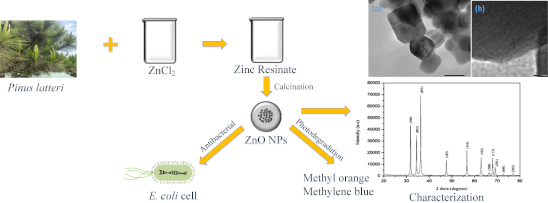
- physical routes have their own disadvantages, such as adverse environmental effects due to the use of environmentally unfriendly chemicals or to the release of heat into the environment [17]. Therefore, the development of green approaches is necessary. The biosynthetic process using plant extracts as an




Recent advances in green carbon dots (2015–2022): synthesis, metal ion sensing, and biological applications
Beilstein J. Nanotechnol. 2022, 13, 1068–1107, doi:10.3762/bjnano.13.93
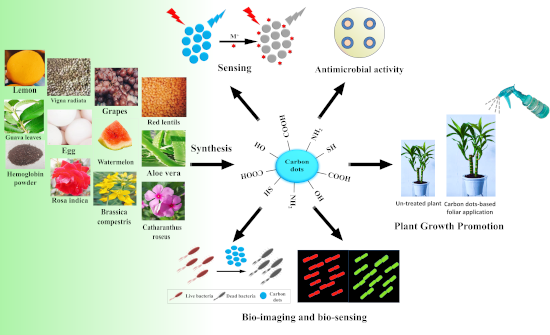
- materials for the production of CDs is congruous with the objectives of a sustainable development strategy. Owing to the recycling and re-use of organic waste products, environmental friendliness, and low-cost, green synthesis of CDs is preferred over other conventional methods. There are, in general, two
- , wheat straw, and rice straw by Ding et al. These CDs were utilized to detect Fe3+, which could be useful in areas of environmental remediation and medical diagnosis [77]. A hydrothermal technique employing near-critical water has been utilized recently to develop a simple, cost-effective, and




Spindle-like MIL101(Fe) decorated with Bi2O3 nanoparticles for enhanced degradation of chlortetracycline under visible-light irradiation
Beilstein J. Nanotechnol. 2022, 13, 1038–1050, doi:10.3762/bjnano.13.91
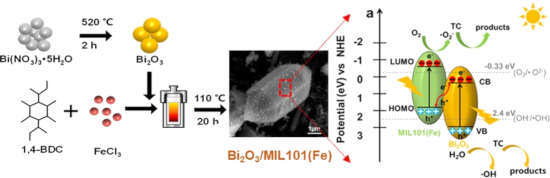
- Chen-chen Hao Fang-yan Chen Kun Bian Yu-bin Tang Wei-long Shi School of Environmental and Chemical Engineering, Jiangsu University of Science and Technology, Zhenjiang, 212100, PR China School of Materials Science and Engineering, Jiangsu University of Science and Technology, Zhenjiang, 212100, PR
- iron and bridged terephthalic acid molecules. It has high hydrothermal stability, low cost, good hydrophilicity, non-toxicity, and environmental friendliness [20][34]. Most importantly, MIL101(Fe) contains abundant iron-oxo (Fe-O) clusters, which makes it a photocatalyst with visible-light response [19


Design of a biomimetic, small-scale artificial leaf surface for the study of environmental interactions
Beilstein J. Nanotechnol. 2022, 13, 944–957, doi:10.3762/bjnano.13.83
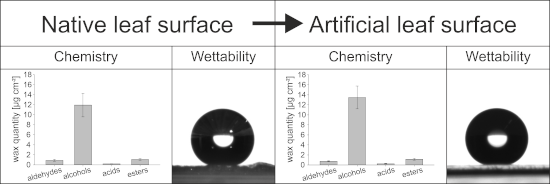
- artificial test system is independent of the environmental influences to which plants in a field are exposed. It can be developed in large numbers with little resources towards the detailed understanding of interfacial effects under laboratory conditions. Experimental Plant material Wheat plants (Triticum
- environmental factors. Thus, the wax extracts of plants growing outdoors or indoors can be used for the development of artificial leaf surfaces. Artificial surfaces To make sure that wax composition had not changed during the coating process, the wax layer of a coated artificial leaf surface was analyzed. By
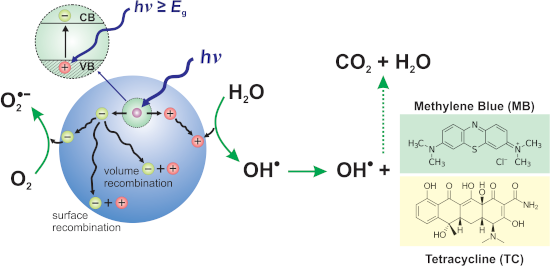
Solar-light-driven LaFexNi1−xO3 perovskite oxides for photocatalytic Fenton-like reaction to degrade organic pollutants
Beilstein J. Nanotechnol. 2022, 13, 882–895, doi:10.3762/bjnano.13.79
- Environmental Engineering, National Chung Hsing University, Taichung 402227, Taiwan Department of Chemical and Biological Engineering, University of Colorado Boulder, Boulder, Colorado 80309, United States Chettinad Hospital and Research Institute, Chettinad Academy of Research and Education (CARE
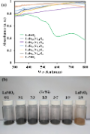
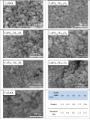
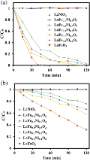
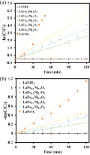
- related industries that consume water [4]. However, it leads to a severe environmental issue due to a large amount of discharged wastewater. For example, domestic wastewater mainly includes organic pollutants from excrement, clothing, cleaning lotion, etc. On the other hand, wastewater discharged from the
- chemical structure and high chromophore, it is not conducive to most biological and physical treatments. Thus, wastewater is regarded as a threat to the environment and health. As environmental awareness is gradually increasing, many countries are currently starting to control the use of harmful azo dyes



Micro-structures, nanomechanical properties and flight performance of three beetles with different folding ratios
Beilstein J. Nanotechnol. 2022, 13, 845–856, doi:10.3762/bjnano.13.75
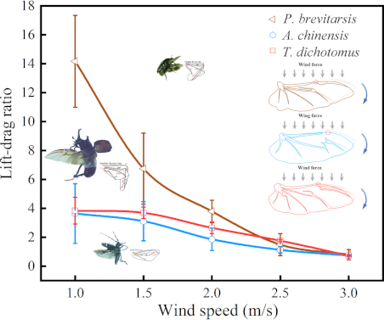
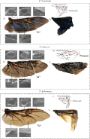
- ]. Also, the increase in flapping frequency improves the thrust of the flapping [53]. Research on the living environments and living habits of the three beetles found that P. brevitarsis mostly live in farmland and loose soil, and the environmental conditions are relatively humid. Adults come out at night




Temperature and chemical effects on the interfacial energy between a Ga–In–Sn eutectic liquid alloy and nanoscopic asperities
Beilstein J. Nanotechnol. 2022, 13, 817–827, doi:10.3762/bjnano.13.72
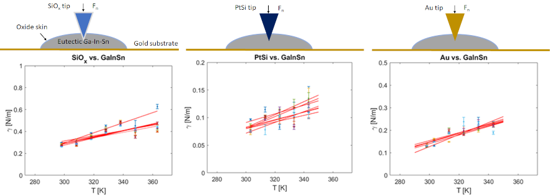
- absence of a suitable model and environmental effects. Alternatively, we determined the interfacial tension between AFM tips and the eutectic Ga–In–Sn melt from the approach part of force–distance curves recorded at different temperatures and approaching velocities. In this case, the tips penetrated the



Hierachical epicuticular wax coverage on leaves of Deschampsia antarctica as a possible adaptation to severe environmental conditions
Beilstein J. Nanotechnol. 2022, 13, 807–816, doi:10.3762/bjnano.13.71
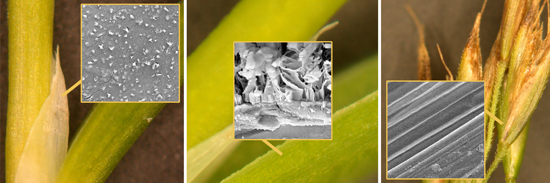
- surfaces might contribute to the plant adaptation to severe environmental conditions in Antarctica due to an increase of its resistance against cold temperatures, icing, harmful UV radiation, and dehydration. The presence of the epicuticular wax on the abaxial leaf side and the ligule as well as the
- severe environmental conditions that ensure this evolutionary success [2][3][4][6]. Structural studies that have been focused mainly on anatomical and ultrastructural characterization of leaves [4][7][8][9][10][11][12] did not reveal any qualitative traits allowing for a distinction of this plant from
- Poaceae species, the hierarchical, two-layered epicuticular wax coverage described here in D. antarctica is the first to be discovered in grasses. Epicuticular wax coverage as an adaptation to severe environmental conditions The Antarctic hair grass D. antarctica is a cushion-forming plant growing along


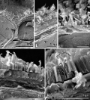


Recent advances in nanoarchitectures of monocrystalline coordination polymers through confined assembly
Beilstein J. Nanotechnol. 2022, 13, 763–777, doi:10.3762/bjnano.13.67

- discuss the properties of the coordination polymer single crystals as well as their performance in energy, environmental, and biomedical applications. Keywords: applications; assembly; coordination polymer; metal-organic frameworks; nanoarchitectonics; Introduction Coordination polymers are hybrid






A nonenzymatic reduced graphene oxide-based nanosensor for parathion
Beilstein J. Nanotechnol. 2022, 13, 730–744, doi:10.3762/bjnano.13.65
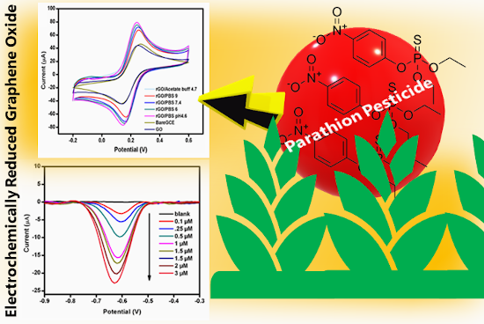
- the fabrication of a robust, nonenzymatic electrochemical-sensing electrode modified with electrochemically reduced graphene oxide (ERGO) to detect PT residues in environmental samples (e.g., soil, water) as well as in vegetables and cereals. The ERGO sensor shows a significantly affected
- performance of the nanosensor was validated by adding PT to natural samples and comparing the data via absorption spectroscopy. PT detection results encourage the design of easy-to-use nanosensor-based analytical tools for rapidly monitoring other environmental samples. Keywords: electrochemical nanosensor
- , selective, sensitive, and point-of-care (POC) analytical tools for monitoring environmental pollutants [2][11]. They can also detect residual OPs based on their electrocatalytic activity and affinity toward nanomaterials, such as nanoparticles, carbon nanomaterials, and metal oxides [11]. In a few reports


Sodium doping in brookite TiO2 enhances its photocatalytic activity
Beilstein J. Nanotechnol. 2022, 13, 599–609, doi:10.3762/bjnano.13.52
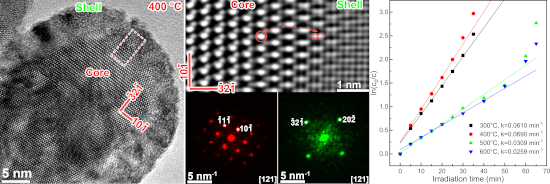
- ; Introduction Titanium dioxide (TiO2) has been extensively studied for many potential applications in the environmental and energy fields, such as treatment of polluted water [1][2], air purification [3][4], and water splitting [5][6]. In recent years, the interest in the brookite phase of TiO2 has been


Effects of substrate stiffness on the viscoelasticity and migration of prostate cancer cells examined by atomic force microscopy
Beilstein J. Nanotechnol. 2022, 13, 560–569, doi:10.3762/bjnano.13.47
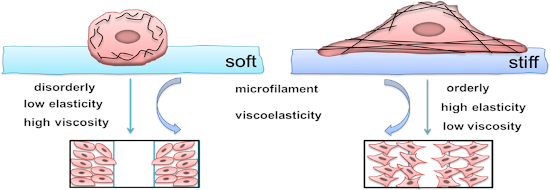
- unclear how mechanical properties regulate the cellular response to the environmental matrix. In this study, atomic force microscopy (AFM) and laser confocal imaging were used to qualitatively evaluate the relationship between substrate stiffness and migration of prostate cancer (PCa) cells. Cells