Search results
Search for "gap" in Full Text gives 760 result(s) in Beilstein Journal of Nanotechnology. Showing first 200.
On the stability of microwave-fabricated SERS substrates – chemical and morphological considerations
Beilstein J. Nanotechnol. 2021, 12, 541–551, doi:10.3762/bjnano.12.44
- on the substrates [8], the synthesis of complex nanoparticle structures with tunable interparticle gap sizes [9], the utilization of micro- and nanofabricated structures obtained by lithography techniques [10][11][12] comprising nanodisk arrays [13], nanoholes [14][15], nanocups [16][17
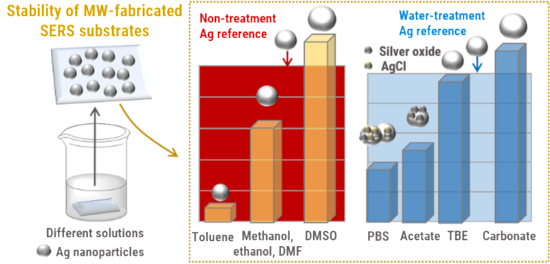
- enhancement and least obvious changes in particle morphology are observed for the sample treated with PBS at pH 11. The highest Raman enhancement could be potentially associated here to smaller gap sizes, which favor the formation of hot spots to enhance the Raman intensities due to electromagnetic field
- gap sizes. Since the carbonate buffer system provides a pH of 10, the previously observed beneficial effect of basic buffer systems can contribute to a better performance of the SERS substrates as the nanoparticles are apparently less prone to oxidation in buffer solutions with a high pH value [35


Simulation of gas sensing with a triboelectric nanogenerator
Beilstein J. Nanotechnol. 2021, 12, 507–516, doi:10.3762/bjnano.12.41
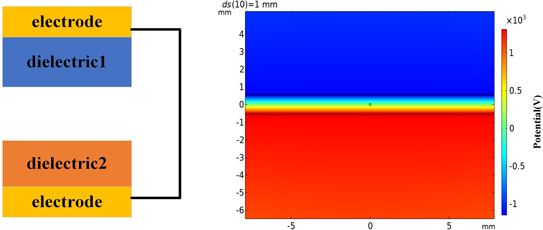
- area. Further, in order to eliminate the inevitable topological change during the actual movement of the TENG, an air gap was established in COMSOL to construct the two-dimensional model of the TENG. Based on the assumption that the surface charge density of the triboelectric nanogenerator is constant
- potential difference increases as ds increases. The potential of the hypotenuse of the right-angled triangle TENG is smaller than that of the right-angled side, but as the distance ds increases, the gap between the potentials of the two sides decreases until the potential of the hypotenuse is greater than
- materials approach or move away from each other, other substances, such as water vapor, carbon dioxide, and other gases, can pass through the gap. We present a simulation with water vapor under ideal conditions, that is, the surface charge density may be changed during the experiment. A simplified two



Interface interaction of transition metal phthalocyanines with strontium titanate (100)
Beilstein J. Nanotechnol. 2021, 12, 485–496, doi:10.3762/bjnano.12.39
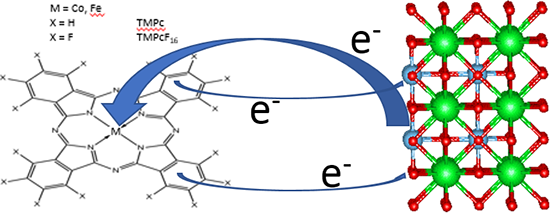
- theoretical approaches [6]. Possible applications of STO/organic interfaces include FETs [7][8], photodiodes [9], and organic spin valves[10]. Strontium titanate is a semiconductor with an indirect band gap of 3.25 eV [11] crystallizing in a perovskite structure with cubic unit cell. The conductivity can be
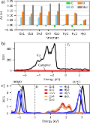
- slightly different position of the Fermi level in the gap of the STO semiconductor. Upon evaporation of the organic molecules, no changes of the peak shape can be detected, pointing to the absence of chemical interactions involving Ti atoms at the interface. However, we note that the surface sensitivity at


Intracranial recording in patients with aphasia using nanomaterial-based flexible electronics: promises and challenges
Beilstein J. Nanotechnol. 2021, 12, 330–342, doi:10.3762/bjnano.12.27
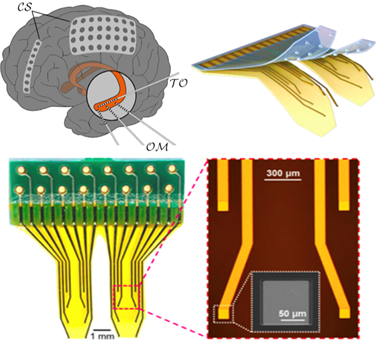
- more precise understanding of the neuronal mechanism of language processing. Sustained research progress in neuroimaging and nanomaterials will facilitate further investigation of brain functions. Ultimately, it is only a matter of time before the gap between research and clinical application is closed


The patterning toolbox FIB-o-mat: Exploiting the full potential of focused helium ions for nanofabrication
Beilstein J. Nanotechnol. 2021, 12, 304–318, doi:10.3762/bjnano.12.25
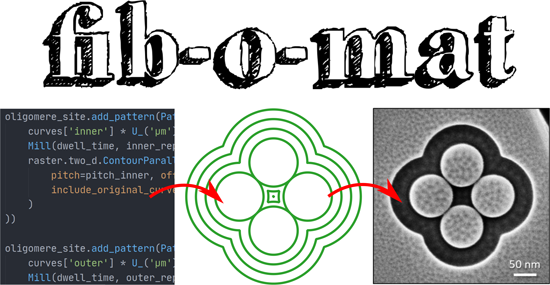
- by measuring the bright optical modes [59]. The target geometry for all fabrication techniques is a particle radius of 45 nm with a gap size of 35 nm. This is the geometry that can reliably fabricated by resist-based electron beam lithography on physically sputtered gold layers (cf. Figure 7a). Later
- , we will assess the ultimate resolution of He ion beam machining to minimize the gap sizes. The gold flakes of approx. 30 nm thickness were wet-chemically synthesized on glass [60] and transferred to the target substrate via a PMMA-mediated method. On the target glass substrate, a thin layer of gold
- decay of the plasmonic near field. Hence, a nanopatterning approach that is able to realize sub-10 nm gaps in a reproducible manner is highly desired. He ion beam milling already demonstrated these capabilities in the fabrication of strongly coupled dimers with gap distances of less than 6 nm [62][63


Differences in surface chemistry of iron oxide nanoparticles result in different routes of internalization
Beilstein J. Nanotechnol. 2021, 12, 270–281, doi:10.3762/bjnano.12.22
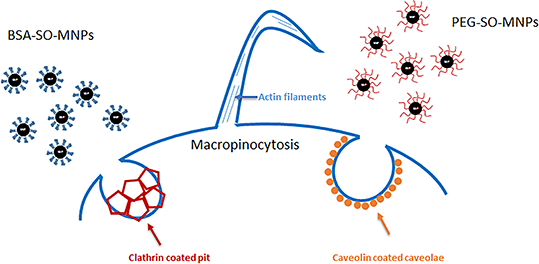
- of CME under different physiological conditions is poorly understood and other studies are required to bridge this gap in our knowledge. Conclusion MNPs coated with bovine serum albumin (BSA-SO-MNPs) and polyethylene glycol (PEG-SO-MNPs), were found to enter the cells by different routes of



The nanomorphology of cell surfaces of adhered osteoblasts
Beilstein J. Nanotechnol. 2021, 12, 242–256, doi:10.3762/bjnano.12.20
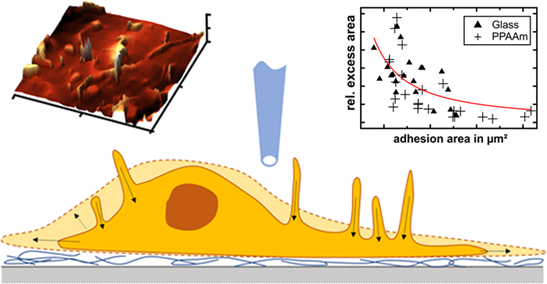
- step edge height not only incorporates the gap between cell and surface of the material but also the local height of the cell itself (Figure 9b). Both parameters may vary independently, and from the three-dimensional cell morphology we can only determine the sum of gap and cell height. At the higher
- edges (above 1 µm) the step edge slope is greater than 89° and there is hardly any curvature detectable on the cell before its height falls to the substrate level. This could mean that the cell has a pronouncedly undermined configuration, compatible with the gap distance rising at the rim of cells (see
- corresponds to less than 1/(10 nm) [49][50]. Sometimes we find rugged traces with only 60 nm height. We suspect that those may originate from protein secretions from the extracellular matrix left behind, material that was formerly present within the gap between cell and substrate. Either this protein becomes


Extended iron phthalocyanine islands self-assembled on a Ge(001):H surface
Beilstein J. Nanotechnol. 2021, 12, 232–241, doi:10.3762/bjnano.12.19
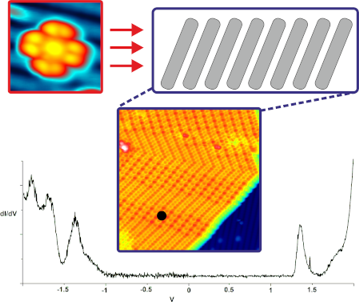
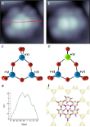
- ) phthalocyanine (FePc) molecules on a Ge(001):H surface results in monolayer islands extending over hundreds of nanometers and comprising upright-oriented entities. Scanning tunneling spectroscopy reveals a transport gap of 2.70 eV in agreement with other reports regarding isolated FePc molecules. Detailed
- van der Waals interactions [7], but the lack of a gap results in broadening and shifting of the molecular resonances. In recent years, it has been proposed to add a buffer layer between the metallic substrate and the molecules of interest [8][9]. This approach allows for the decoupling of the
- scanning tunneling spectroscopy (STS) measurements indicate that the FePc molecules stay intact upon adsorption on the Ge(001):H surface. The gap measured with STS matches well independently recorded data for weekly coupled FePc molecules. Also, it is in good agreement with optical measurements, indicating
Scanning transmission helium ion microscopy on carbon nanomembranes
Beilstein J. Nanotechnol. 2021, 12, 222–231, doi:10.3762/bjnano.12.18
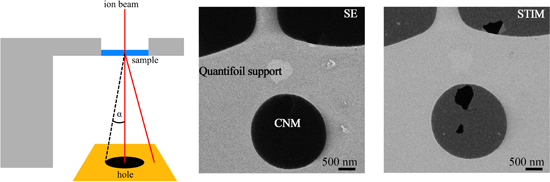
- with hole diameters from 100 μm to 3 mm lead to acceptance angles between 3 and 98 mrad. Two centering pins ensure that all aperture strips are always mounted at the identical position on the holder. The total size of the holder is limited by the dimensions of the load lock valve as well as by the gap


TiOx/Pt3Ti(111) surface-directed formation of electronically responsive supramolecular assemblies of tungsten oxide clusters
Beilstein J. Nanotechnol. 2021, 12, 203–212, doi:10.3762/bjnano.12.16
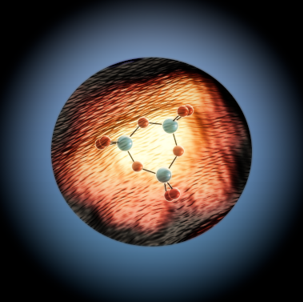
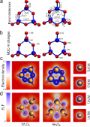
- atoms per each WVI center. As a result, tungsten ions are in tetrahedral coordination environments. W3O9 shows a large energy gap of 3.4 eV which nearly reaches the value of bulk WO3 exhibiting a direct band gap of 3.5 eV [12]. Overall, W3O9 can be seen as the smallest molecular model for bulk WO3



Paper-based triboelectric nanogenerators and their applications: a review
Beilstein J. Nanotechnol. 2021, 12, 151–171, doi:10.3762/bjnano.12.12
- plated with a metal electrode at the back surface of each layer. When the two dielectric films are vertically separated and periodically contacted due to the application of external forces, a small air gap is formed in the middle and a potential difference is induced between the two electrodes, which can




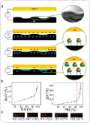


A review on the green and sustainable synthesis of silver nanoparticles and one-dimensional silver nanostructures
Beilstein J. Nanotechnol. 2021, 12, 102–136, doi:10.3762/bjnano.12.9
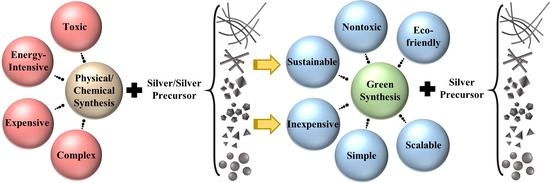


Bulk chemical composition contrast from attractive forces in AFM force spectroscopy
Beilstein J. Nanotechnol. 2021, 12, 58–71, doi:10.3762/bjnano.12.5
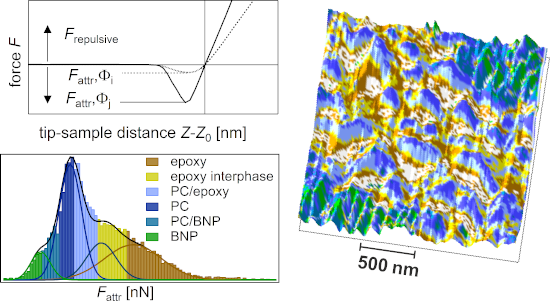
- Gaussian distributions (envelope function: black line) shows that the normal distribution of Fattr(PC) (blue line) and Fattr(epoxy) (brown line) do not overlap. Due to this gap, a third intermediate peak Fattr(int) (light blue line) can be unambiguously distinguished. However, the three distributions


ZnO and MXenes as electrode materials for supercapacitor devices
Beilstein J. Nanotechnol. 2021, 12, 49–57, doi:10.3762/bjnano.12.4
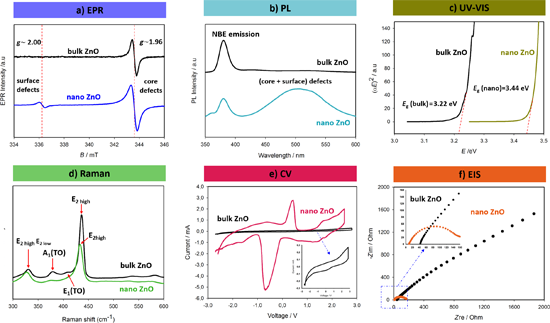
- band gap in semiconductors. However, this approach has major problems. It is semi-empiric and indirect via the Tauc formula [12]. Therefore, it contains highly erroneous data. Here, the approach is to measure the reflectance data and accordingly plot the Tauc formula as a function of the energy
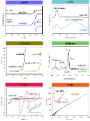
Effect of different silica coatings on the toxicity of upconversion nanoparticles on RAW 264.7 macrophage cells
Beilstein J. Nanotechnol. 2021, 12, 35–48, doi:10.3762/bjnano.12.3
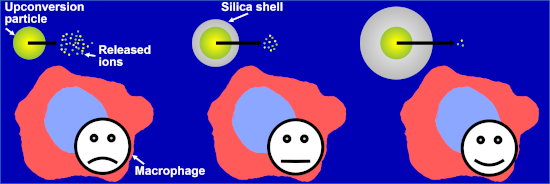
- -coated UCNPs on RAW 264.7 macrophages, an analysis of the cell cycle dynamics of UCNP@thin_NH2 and UCNP@thick_NH2 samples was carried out. The cell cycle consists of four parts: The rest phase (G0); the first gap phase (G1), in which the cells grow and produce enzymes necessary for cell division; the
- synthesis phase (S), in which the DNA is replicated; and the second gap phase (G2), in which the cell continues to grow further and to perform processes that are necessary for mitosis [74]. Both silica-coated samples show a significant increase in the G0/G1 phase compared to control cells (not treated with


Kondo effects in small-bandgap carbon nanotube quantum dots
Beilstein J. Nanotechnol. 2020, 11, 1873–1890, doi:10.3762/bjnano.11.169
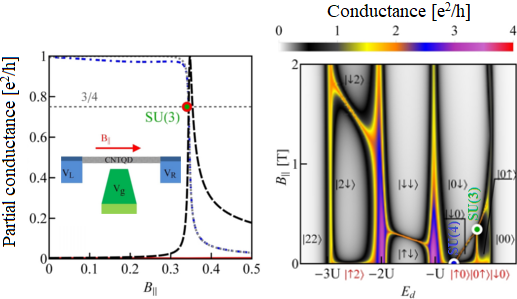
- prediction, one third of randomly selected nanotubes should be metallic. Experimentally, the fraction of nanotubes showing metallic behavior is very small (≤1% [41]). Even in nominally metallic tubes a narrow gap of the order of 10 meV is usually observed. These systems are sometimes called “nearly metallic
- equilibrium energy gap is 37 meV·nm2 [9][63]. ΔO and ΔZ stand for orbital and Zeeman parameters of spin–orbit coupling in the form: where sz is the spin component along the nanotube axis and lx is the Pauli matrix in the A–B graphene sublattice space. ΔZ = −δcos(3Θ)/D and ΔO = δ/D [63]. Various theoretical
- ⟩ degenerate in a magnetic field of Bo = |Δe|/μo ≈ 0.48 T. In small-bandgap nanotubes, the field dependencies of degeneracy lines are determined not only by spin–orbit parameters and orbital and spin magnetic moments, but also by the gap and the gate voltage. This is reflected in the nonlinear gate

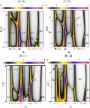
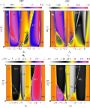


![[Graphic 37]](/bjnano/content/inline/2190-4286-11-169-i52.svg?max-width=637&scale=1.18182) as a functio...
as a functio...


Scanning transmission imaging in the helium ion microscope using a microchannel plate with a delay line detector
Beilstein J. Nanotechnol. 2020, 11, 1854–1864, doi:10.3762/bjnano.11.167
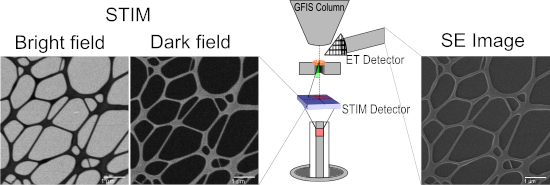
- future ToF applications. In the present form of the detector, we use two MCPs, each with a 50 mm by 50 mm square active area, stacked and rotated by 90° to each other with a gap of 100 μm between them. The first MCP has a magnesium oxide coating to increase the SE yield [37]. The MCP pores have a


Self-standing heterostructured NiCx-NiFe-NC/biochar as a highly efficient cathode for lithium–oxygen batteries
Beilstein J. Nanotechnol. 2020, 11, 1809–1821, doi:10.3762/bjnano.11.163
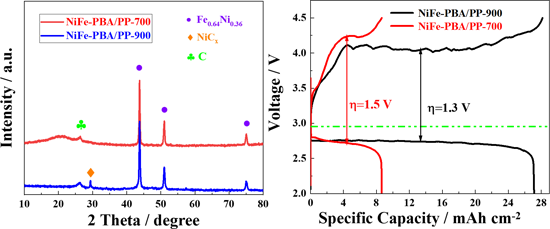
- that the overpotential of NiFe-PBA/PP-900 in the Li–O2 cell was comparable to data reported in the literature, as shown in Table 1. An ideal Li–O2 cell has a low charge voltage plateau and a high discharge voltage plateau. The gap between charge and discharge voltage plateaus of the Li–O2 battery with






High-responsivity hybrid α-Ag2S/Si photodetector prepared by pulsed laser ablation in liquid
Beilstein J. Nanotechnol. 2020, 11, 1596–1607, doi:10.3762/bjnano.11.142
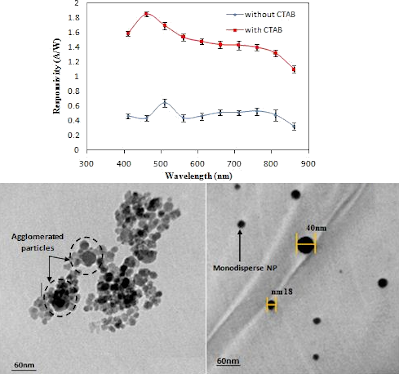
- (SEM), energy-dispersive X-ray spectroscopy (EDX), and UV–vis spectroscopy. The optical absorption decreased and the optical energy gap of α-Ag2S increased from 1.5 to 2 eV after the CTAB surfactant was added to the Tu solution. XRD studies revealed that the synthesized Ag2S NPs were polycrystalline
- narrow direct optical energy gap, which ranges from 0.96 to 1.1 eV at room temperature. Ag2S has good chemical stability, low toxicity, and high optical absorption [4]. According to the growth temperature, Ag2S has three phases: monoclinic α-Ag2S (acanthite), β-Ag2S (argentite), and the stable γ-Ag2S [5
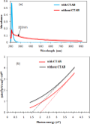
- with CTAB due to quantum size effects [31]. The absorption of the Ag2S NPs decreased sharply above λ = 302 nm for Ag2S prepared in pure Tu solution, while it decreased slowly for Ag2S prepared in Tu with CTAB, indicating different absorption edges. The optical band gap of the Ag2S NPs prepared in pure




Detecting stable adsorbates of (1S)-camphor on Cu(111) with Bayesian optimization
Beilstein J. Nanotechnol. 2020, 11, 1577–1589, doi:10.3762/bjnano.11.140
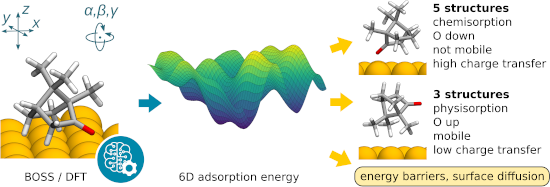
- resemble the HOMO and LUMO of an isolated camphor molecule and are at −1.0 and 2.9 eV, respectively, with an energy gap of 3.9 eV. This indicates physisorption between the molecule and the substrate in class Hy. Discussion With the low-dimensional studies of molecular translation (1D and 2D) and rotation


Fabrication of nano/microstructures for SERS substrates using an electrochemical method
Beilstein J. Nanotechnol. 2020, 11, 1568–1576, doi:10.3762/bjnano.11.139
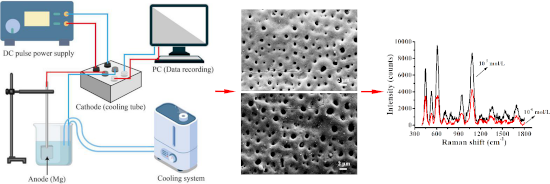
- factor of R6G molecules on the pyramid structure was about 105. Wu et al. [26] machined nanohole array structures using EBL and lift-off methods. The diameter of the nanoholes ranged from 90 to 585 nm, and the gap between adjacent nanoholes ranged from 125 to 585 nm. An enhancement factor of 8 × 10⁶ was
- ] manufactured graphene/Au nanodot array structures, which were used as SERS substrates. The diameter and gap distribution ranged from 30 to 42 nm and from 20 to 30 nm, respectively. In addition, a detection level of 10−9 mol·L−1 for R6G molecules was obtained using the aforementioned SERS substrates. Choi et al


Optically and electrically driven nanoantennas
Beilstein J. Nanotechnol. 2020, 11, 1542–1545, doi:10.3762/bjnano.11.136

- , Germany 10.3762/bjnano.11.136 Keywords: active plasmonics; electrically driven nanoantenna; gap antenna; nanoantenna; nanofabrication; nanospectroscopy; nano-photonics; optical antenna; second harmonic generation; sensing; scanning tip; surface-enhanced infrared absorption (SEIRA); surface-enhanced Raman
- frequencies to a traveling electromagnetic wave that can be observed in the far field. Optical antennas are key elements in nano-optics, bridging the gap between the dimension of an optical wavelength (several hundreds of nanometers) and the size of elementary quantum emitters such as single atoms, molecules
- integration, device-to-device communication, and bilateral transduction between electrons and photons [26]. An optical gap antenna typically consists of two nanostructures with a nanometer gap in between. Optical excitation induces a coupled plasmon oscillation along the two antenna parts, which can lead to
Design of V-shaped cantilevers for enhanced multifrequency AFM measurements
Beilstein J. Nanotechnol. 2020, 11, 1525–1541, doi:10.3762/bjnano.11.135
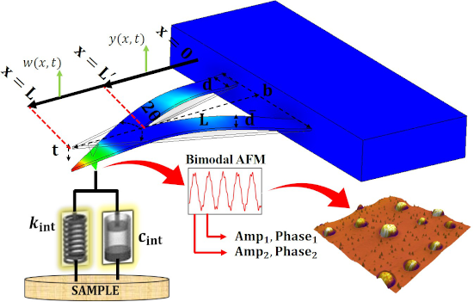
- carried out at a setpoint around 60%, the tip–sample gap has been always higher that than the intermolecular distance causing the net forces to be attractive. Different tip–sample gaps can change the energies of the cantilever in different eigenmodes for bimodal AFM imaging. This can consequently affect


![[Graphic 4]](/bjnano/content/inline/2190-4286-11-135-i26.svg?max-width=637&scale=1.18182) = 15 µm, bref = 8...
= 15 µm, bref = 8...


![[Graphic 17]](/bjnano/content/inline/2190-4286-11-135-i39.svg?max-width=637&scale=1.18182) ) of V-shaped cantilevers for...
) of V-shaped cantilevers for...


Helium ion microscope – secondary ion mass spectrometry for geological materials
Beilstein J. Nanotechnol. 2020, 11, 1504–1515, doi:10.3762/bjnano.11.133
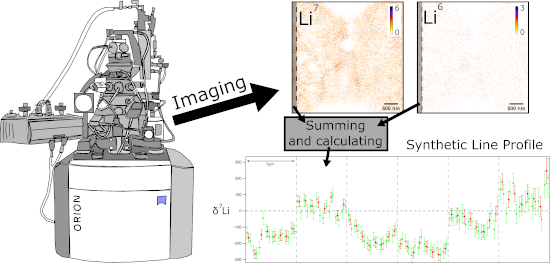
- fill a critical length-scale gap in the field of microanalysis, with resolutions second only to the atom probe, but with field of views of the order of micrometres, allowing for high resolution over a relatively large sample area. The HIM–SIMS is therefore a useful tool for a wide range of geological



Controlling the electronic and physical coupling on dielectric thin films
Beilstein J. Nanotechnol. 2020, 11, 1492–1503, doi:10.3762/bjnano.11.132
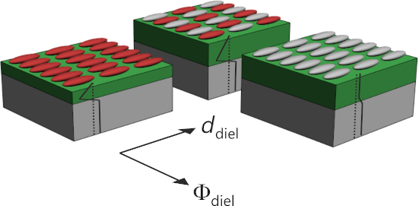
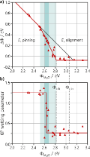
- and below the Fermi level, with a large gap between a singly occupied molecular orbital (SOMO) and a singly unoccupied molecular orbital (SUMO). In addition, PT confirms an integer charge transfer, which would be expected to result from tunneling [15]. However, using the ability to tune the MgO(100
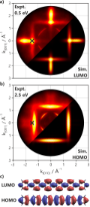
- results. On some preparations, no molecular emissions were observed in the MgO bandgap, whereas on others, distinctive features appeared in the gap at 0.5 and 2.5 eV below the Fermi level. The momentum maps of these molecular emissions (Figure 3) can be unambiguously assigned to the orbitals and the
- , indicated by the crosses in Figure 3, are displayed in Figure 4b. For ΦMgO greater than 2.8 eV, no significant orbital emissions are found in the gap, implying that no charged molecules are present on the surface. For ΦMgO below 2.8 eV, molecular emissions arise at 2.52 and 0.55 eV with respect to EF. Their