


Search results
Search for "hydrothermal" in Full Text gives 241 result(s) in Beilstein Journal of Nanotechnology. Showing first 200.
Carbon nanotube-wrapped Fe2O3 anode with improved performance for lithium-ion batteries
Beilstein J. Nanotechnol. 2017, 8, 649–656, doi:10.3762/bjnano.8.69
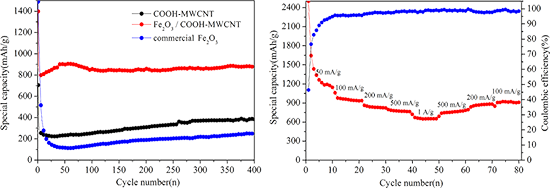
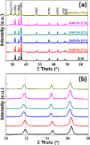
- precursor to prepare Fe2O3/COOH-MWCNT composites through a simple hydrothermal synthesis. When these composites were used as electrode material in lithium-ion batteries, a reversible capacity of 711.2 mAh·g−1 at a current density of 500 mA·g−1 after 400 cycles was obtained. The result indicated that Fe2O3
- /COOH-MWCNT composite is a potential anode material for lithium-ion batteries. Keywords: anode material; carbon nanotubes; hydrothermal synthesis method; lithium-ion batteries; Introduction The depletion of non-renewable energy resources such as coal, petrol and natural gas has led to the urgent need
- . Liang et al. [20] employed a simple and easy hydrothermal method for the synthesis of α-Fe2O3 microspheres by using sodium citrate as surfactant. A reversible discharge capacity of 489.5 mAh·g−1 was obtained at a current density of 100 mA·g−1 of up to 50 cycles. The specific capacity of the synthesized


The longstanding challenge of the nanocrystallization of 1,3,5-trinitroperhydro-1,3,5-triazine (RDX)
Beilstein J. Nanotechnol. 2017, 8, 452–466, doi:10.3762/bjnano.8.49
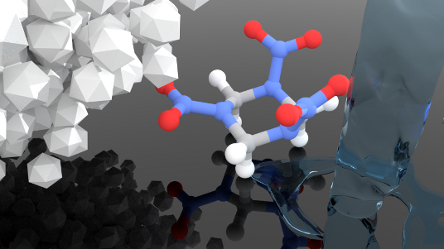
- binder for instance, or would be able to do concomitant or co-crystallization. The production of nanoparticles through wet techniques has become a common industrial chemical process. The European project, Sustainable Hydrothermal Manufacturing of Nanometerials (SHYMAN), aims to increase the production
- rate of a continuous hydrothermal process from 1–10 tons/year to 100 tons/year for inorganic nanomaterials [123]. Tsuzuki et al. [124] statistically studied which methods for inorganic nanosynthesis are mostly employed in industry: vapor (39% mainly chemical vapor deposition (CVD)) and liquid (45


Study of the surface properties of ZnO nanocolumns used for thin-film solar cells
Beilstein J. Nanotechnol. 2017, 8, 446–451, doi:10.3762/bjnano.8.48
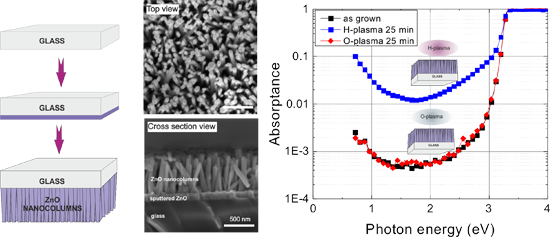
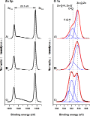
- Densely packed ZnO nanocolumns (NCs), perpendicularly oriented to the fused-silica substrates were directly grown under hydrothermal conditions at 90 °C, with a growth rate of around 0.2 μm/h. The morphology of the nanostructures was visualized and analyzed by scanning electron microscopy (SEM). The
- development of thin film solar cells based on ZnO NCs. Keywords: 3-dimensional solar cells; hydrothermal growth; optical spectroscopy; photothermal deflection spectroscopy; plasma treatment; X-ray photoelectron spectroscopy; ZnO nanocolumns; Introduction The widely accepted design of thin-film silicon (TF
- advantageously used for all other thin-film solar cells. So far, a wide diversity of methods have been used for the preparation of ZnO nanocolumns such as metal organic chemical vapor deposition (MOCVD) [11], electrochemical deposition [12], sputtering [13], reactive ion etching [5] and the hydrothermal method



Role of oxygen in wetting of copper nanoparticles on silicon surfaces at elevated temperature
Beilstein J. Nanotechnol. 2017, 8, 425–433, doi:10.3762/bjnano.8.45
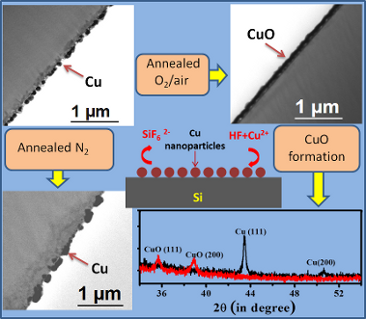
- synthesized following different processes such as hydrothermal, chemical precipitation, electrochemical as well as other methods [4][5][6][7][13]. In this context the combination of the galvanic displacement reaction and the rapid thermal annealing process provides a simple and quick route for the synthesis


Functionalized TiO2 nanoparticles by single-step hydrothermal synthesis: the role of the silane coupling agents
Beilstein J. Nanotechnol. 2017, 8, 304–312, doi:10.3762/bjnano.8.33
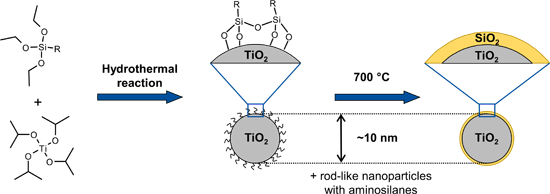
- versatile hydrothermal synthesis route to in situ functionalized TiO2 nanoparticles was developed using titanium(IV) isopropoxide as Ti-precursor and selected silane coupling agents (3-aminopropyltriethoxysilane (APTES), 3-(2-aminoethylamino)propyldimethoxymethylsilane (AEAPS), and n-decyltriethoxysilane
- 700 °C leads to the formation of a nanometric amorphous SiO2 layer, preventing growth and phase transition of the in situ functionalized nanoparticles. Keywords: core–shell nanoparticles; functionalized nanoparticles; hydrothermal synthesis; oriented attachment; silane coupling agent; Introduction
- synthesis often leads to poorly crystalline particles [22]. Hydrothermal synthesis [23] is simple and cost efficient [24] and allows for improved crystallinity compared to sol–gel methods [22] giving improved TiO2 characteristics for applications such as photocatalysis and solar cell applications [2][25][26



Nanocrystalline ZrO2 and Pt-doped ZrO2 catalysts for low-temperature CO oxidation
Beilstein J. Nanotechnol. 2017, 8, 264–271, doi:10.3762/bjnano.8.29
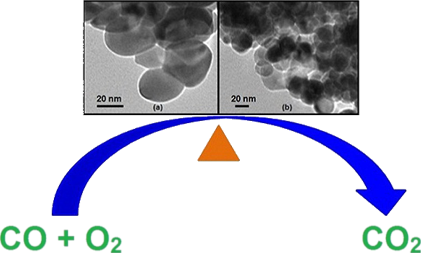
- nanoparticles such as sol–gel [21], precipitation [22], combustion [23], hydrothermal synthesis [24], solvothermal synthesis [25], reverse micelles [26], chemical vapor synthesis [27], aerosol pyrolysis [28], and sonochemical synthesis [29]. Dongare et al. [30] described the synthesis of ZrO2 by a sol–gel


From iron coordination compounds to metal oxide nanoparticles
Beilstein J. Nanotechnol. 2016, 7, 2074–2087, doi:10.3762/bjnano.7.198
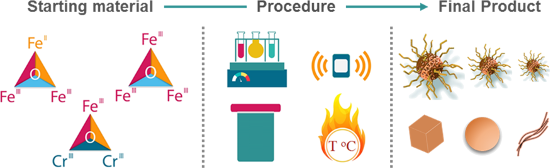
- characteristics and morphology is an important task for scientists. Iron oxide nanoparticles can be obtained using chemical, physical or biological methods. Among the best known chemical methods are coprecipitation, thermal decomposition, hydrothermal method, solvothermal method and others [5][12][13]. An
- iron oxide nanoparticles by solvothermal method (NPS series). For the preparation of samples NPS1–NPS9, reaction mixtures (as indicated in Table 2) were loaded into Teflon autoclaves, which were placed in the hydrothermal stove after sealing. The temperature program consisted of heating at 1 °C/min, up


Fundamental properties of high-quality carbon nanofoam: from low to high density
Beilstein J. Nanotechnol. 2016, 7, 2065–2073, doi:10.3762/bjnano.7.197
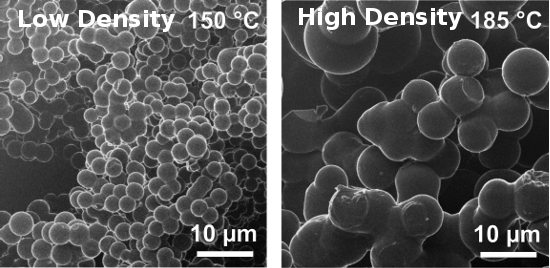
- Bielefeld, Germany 10.3762/bjnano.7.197 Abstract Highly uniform samples of carbon nanofoam from hydrothermal sucrose carbonization were studied by helium ion microscopy (HIM), X-ray photoelectron spectroscopy (XPS), and Raman spectroscopy. Foams with different densities were produced by changing the
- and a stronger sp3-type electronic contribution, related to the inclusion of sp3 connections in their surface network. Keywords: carbon nanofoam; helium ion microscopy; hydrothermal carbonization; nanocarbons; Introduction Nanofoams are of considerable current interest due to their unique structure
- [23] with potential application in high energy density electrochemical supercapacitors. A promising formation method for high-quality carbon nanofoam is the low-temperature hydrothermal carbonization of sucrose [24]. In order to produce advanced carbon nanomaterials, there is a need for further


Intercalation and structural aspects of macroRAFT agents into MgAl layered double hydroxides
Beilstein J. Nanotechnol. 2016, 7, 2000–2012, doi:10.3762/bjnano.7.191
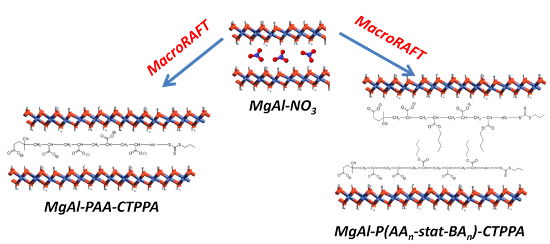
- PAA49-CTPPA, P(AA8.5-stat-BA8.5)-CTPPA, P(AA14.5-stat-BA14.5)-CTPPA and P(AA19.5-stat-BA19.5)-CTPPA, respectively. The hybrid LDH materials were prepared through anion exchange at room temperature from MgAl-NO3 LDH precursor obtained by fast precipitation followed by moderate hydrothermal treatment
- (CTPPA) was synthesized following a protocol reported in the literature [50]. Preparation of MgAl-NO3-LDH precursor. LDH containing magnesium(II) and aluminium(III) metal cations and nitrate interlayer anions were prepared by flash coprecipitation followed by hydrothermal treatment [44][51][52


Facile fabrication of luminescent organic dots by thermolysis of citric acid in urea melt, and their use for cell staining and polyelectrolyte microcapsule labelling
Beilstein J. Nanotechnol. 2016, 7, 1905–1917, doi:10.3762/bjnano.7.182
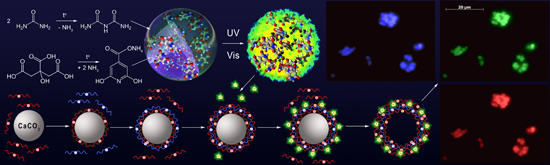
- Supporting Information File 1, Figure S1). Thus, the hydrothermal treatment of an equimolar mixture of citric acid and sodium hydroxide solutions in an autoclave at 160 °C for 4 h leads to the formation of O-dots having a quantum yield of about 22% [21]. Similarly, hydrothermal treatment of a solution of
- sodium citrate and ammonium bicarbonate at 180 °C for 4 h leads to the formation of O-dots with excellent photostability [22]. When a 0.328 M solution of ammonium citrate was subjected to hydrothermal treatment in an autoclave at 160 °C for 6 h, the resulting dots had a quantum yield of about 13.5% [23
- luminescent properties. A large number of studies have been devoted to the synthesis of citrate O-dots using urea as a nitrogen source [21][24][26][27][28][29][30]. For instance, highly luminescent O-dots were obtained by hydrothermal treatment of citric acid and urea or thiourea (molar ratio 1:3) solutions




Functionalized platinum nanoparticles with surface charge trigged by pH: synthesis, characterization and stability studies
Beilstein J. Nanotechnol. 2016, 7, 1822–1828, doi:10.3762/bjnano.7.175
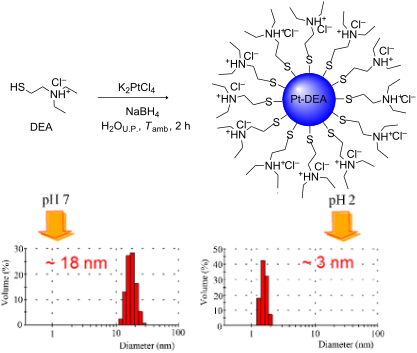
- colloidal stability; hydrophobic or hydrophilic thiol-based ligands have been deeply exploited [14][15]. Among others, 2-diethylaminoethanethiol hydrochloride (DEA) has been used as a stabilizing thiol for gold nanoparticles used for the immobilization of lipase [16]. Among others, hydrothermal and


In situ formation of reduced graphene oxide structures in ceria by combined sol–gel and solvothermal processing
Beilstein J. Nanotechnol. 2016, 7, 1815–1821, doi:10.3762/bjnano.7.174
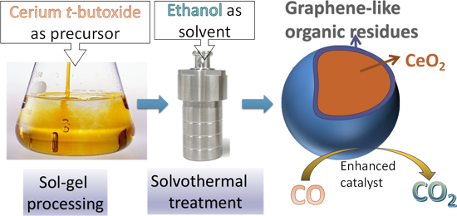
- oxidation activity than the hydrothermally treated samples. A weight loss of ca. 12% was observed in TGA after solvothermal treatment of the gels with ethanol. This was not the case after hydrothermal treatment (only ca. 4%). We interpreted the high weight loss in the former samples to the presence of




Prediction of the mechanical properties of zeolite pellets for aerospace molecular decontamination applications
Beilstein J. Nanotechnol. 2016, 7, 1761–1771, doi:10.3762/bjnano.7.169
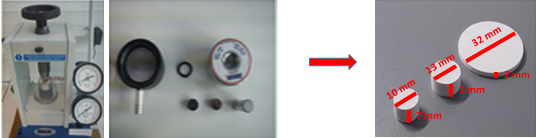
- protocol described below. The gel preparation and hydrothermal synthesis were performed using a polypropylene bottle. First, 1.5 g of hydrofluoric acid (Sigma-Aldrich, 40% in water) was poured on 11 g of tetraethylammonium hydroxide (Sigma-Aldrich, 40% in water) used as structure-directing agent. 0.12 g of


Nanostructured TiO2-based gas sensors with enhanced sensitivity to reducing gases
Beilstein J. Nanotechnol. 2016, 7, 1718–1726, doi:10.3762/bjnano.7.164
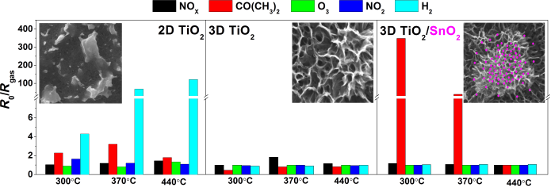
- stoichiometry of the oxygen-to-titanium content ratio play a major role in the electrical properties of TiO2 [17]. Different ways in which TiO2 can be prepared include sol–gel process [18][19][20], flame spray synthesis [21], hydrothermal process [22], electrospinning methods [23], chemical and physical vapor


Role of RGO support and irradiation source on the photocatalytic activity of CdS–ZnO semiconductor nanostructures
Beilstein J. Nanotechnol. 2016, 7, 1684–1697, doi:10.3762/bjnano.7.161
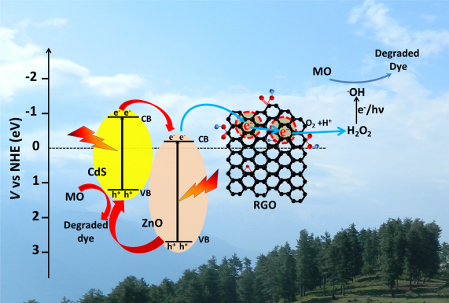
- the photocatalysts. In this work, we have investigated the role of reduced graphene oxide (RGO) support and the irradiation source on mixed metal chalcogenide semiconductor (CdS–ZnO) nanostructures. The photocatalyst material was synthesized using a facile hydrothermal method and thoroughly
- nanocomposite CdS–ZnO binary nanocomposite was prepared by employing a reported hydrothermal strategy [39]. In short, 0.2 M ZnCl2 was dispersed in 40 mL deionized water, followed by the addition of 0.5 M NaOH solution dropwise with continuous stirring. Aqueous ammonia was added to maintain the pH value around 8
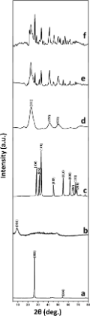
- of graphite and formation of GO with well-defined lamellar structure [42][43]. This interlayer distance weakens the van der Waal interactions between sheets and makes exfoliation possible [44]. Once GO is reduced to RGO during hydrothermal treatment, the (002) reflection peak of GO disappears. The


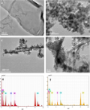


Influence of hydrothermal synthesis parameters on the properties of hydroxyapatite nanoparticles
Beilstein J. Nanotechnol. 2016, 7, 1586–1601, doi:10.3762/bjnano.7.153
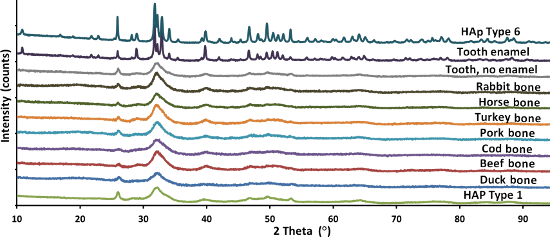
- Hydroxyapatite (HAp) nanoparticles of tunable diameter were obtained by the precipitation method at room temperature and by microwave hydrothermal synthesis (MHS). The following parameters of the obtained nanostructured HAp were determined: pycnometric density, specific surface area, phase purity, lattice
- found when comparing the properties of some types of nanostructured hydroxyapatite with natural occurring apatite found in animal bones and teeth. Keywords: hydroxyapatite; microwave hydrothermal synthesis; nanoparticle size control; physical properties of HAp NPs; room temperature synthesis
- chemistry techniques, such as direct precipitation from aqueous solutions, electrochemical deposition [23], sol–gel processes [24] and hydrothermal synthesis [25][26][27] (Table 1). In the majority of cases, the synthesized powder is a stoichiometric hydroxyapatite, and oftentimes contains additional phases


Microwave synthesis of high-quality and uniform 4 nm ZnFe2O4 nanocrystals for application in energy storage and nanomagnetics
Beilstein J. Nanotechnol. 2016, 7, 1350–1360, doi:10.3762/bjnano.7.126
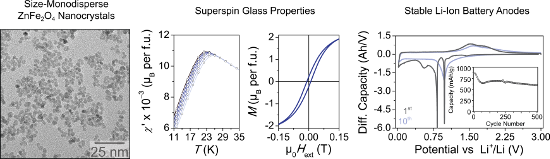
- reported in the literature, including hydrothermal, mechanochemical and sol–gel routes (to name but a few) [15][16][17][18][19], and in particular solution-phase approaches seem promising with respect to exercising control over size and shape [20][21]. As an example, the preparation of uniform 4–8 nm


High performance Ce-doped ZnO nanorods for sunlight-driven photocatalysis
Beilstein J. Nanotechnol. 2016, 7, 1338–1349, doi:10.3762/bjnano.7.125
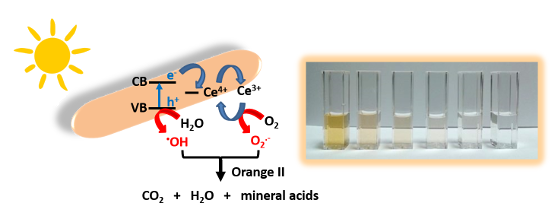
- (Figure 5a). Contrary to hydrothermal methods recently developed for the production of ZnO:Ce particles [32], the increase in Ce doping does not induce a change in morphology from rods to spheres. An increase in rods length was observed when increasing the Ce doping (ca. 175 nm for the 10% doping) and







Improved lithium-ion battery anode capacity with a network of easily fabricated spindle-like carbon nanofibers
Beilstein J. Nanotechnol. 2016, 7, 1289–1295, doi:10.3762/bjnano.7.120
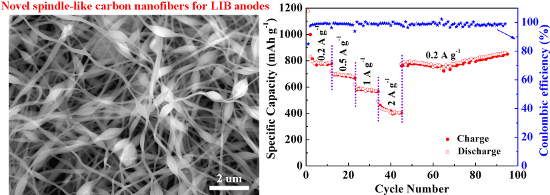
- have been synthesized for LIB electrodes to date [4][8][14][16][17][18][19][20][21]. However, most of the synthesis strategies were two-step routes, combing hydrothermal reaction and other post-treatments. Additionally, the nanostructures synthesized by hydrothermal processes are highly sensitive to


Fast diffusion of silver in TiO2 nanotube arrays
Beilstein J. Nanotechnol. 2016, 7, 1129–1140, doi:10.3762/bjnano.7.105
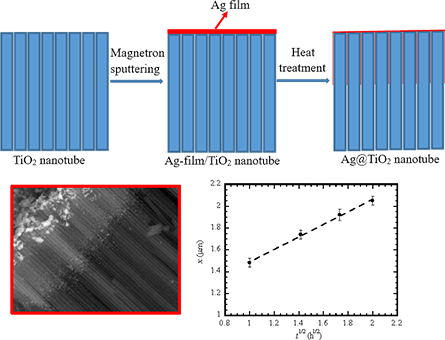
- structures, including nanotubes, nanoparticles, nanorods, mesoporous spheres, nanosheets, nanowires have been synthesized via anodic oxidation, template, and hydrothermal processing to increase the ratio of surface area to volume for the maximization of effective surface area [17]. Among the low-dimensional


Development of highly faceted reduced graphene oxide-coated copper oxide and copper nanoparticles on a copper foil surface
Beilstein J. Nanotechnol. 2016, 7, 1010–1017, doi:10.3762/bjnano.7.93
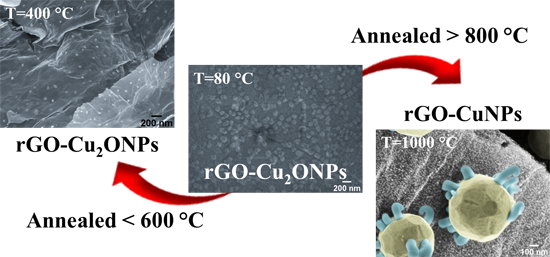
- or metal oxide nanoparticles [11]. In particular, rGO–Cu core–shell nanostructures have been synthesized by CVD [12][13], hydrothermal synthesis [14] and pyrolysis of an organocopper compound [15][16][17]. In a previous work, the authors reported the effective reduction of chemically exfoliated GO


Synthesis of cobalt nanowires in aqueous solution under an external magnetic field
Beilstein J. Nanotechnol. 2016, 7, 990–994, doi:10.3762/bjnano.7.91
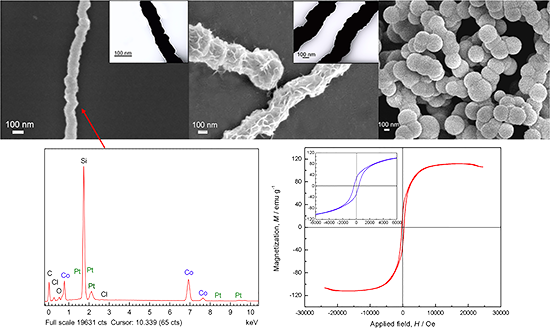
- high-density magnetic storage media [1][2], in immune magnetic separation [3], in gene delivery [4] and as targeted drug carrier [5]. Hydrothermal and solvothermal methods are well-developed approaches to fabricate cobalt nanowires [6][7][8][9][10]. However, such methods set high requirements for the


Selective photocatalytic reduction of CO2 to methanol in CuO-loaded NaTaO3 nanocubes in isopropanol
Beilstein J. Nanotechnol. 2016, 7, 776–783, doi:10.3762/bjnano.7.69
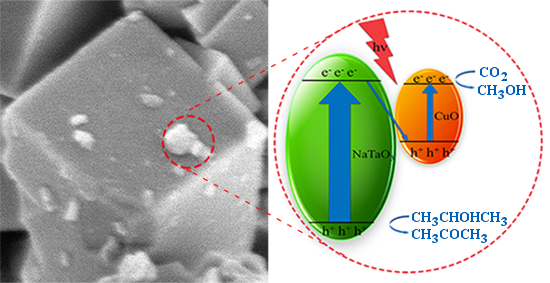
- Engineering, Tianjin University of Technology, Tianjin 300384, China 10.3762/bjnano.7.69 Abstract A series of NaTaO3 photocatalysts were prepared with Ta2O5 and NaOH via a hydrothermal method. CuO was loaded onto the surface of NaTaO3 as a cocatalyst by successive impregnation and calcination. The obtained
- surface of the InTaO4 material. In this paper, we report the photocatalytic reduction of CO2 to methanol using CuO-loaded NaTaO3 catalysts. NaTaO3 nanocubes were synthesized via a hydrothermal method using Ta2O5 and NaOH. CuO was loaded onto the surface of NaTaO3 by impregnation, where CuO acts as a
- NaTaO3 nanocubes were synthesized by a hydrothermal method as reported by Li et al. [31]. In a typical procedure, 0.442 g of Ta2O5 and a sufficient amount of NaOH were added into a Teflon-lined autoclave with a total volume of 50 mL, and deionized water was filled up to 40 mL. The autoclave temperature


Facile synthesis of water-soluble carbon nano-onions under alkaline conditions
Beilstein J. Nanotechnol. 2016, 7, 758–766, doi:10.3762/bjnano.7.67
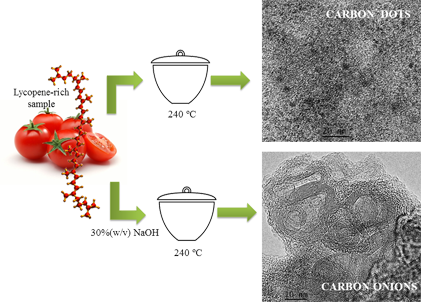
- . These C-dots were successfully employed for sensitive detecting 4-nitrophenol in water [7]. In another work, with the aim to provide surface boronic groups, we prepared C-dots by hydrothermal treatment of a mixture of 6-bromohexylboronic acid, polyethyleneglycol bis(3-aminopropyl)-terminated (PEGA) and


Microwave solvothermal synthesis and characterization of manganese-doped ZnO nanoparticles
Beilstein J. Nanotechnol. 2016, 7, 721–732, doi:10.3762/bjnano.7.64
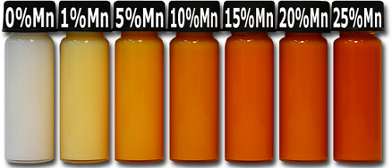
- hydrothermal and solvothermal synthesis [16][57]. The growing popularity of these methods is proved by the emergence of new types of reactors, e.g., microwave stop-flow and continuous-flow in supercritical water [57][58][59][60][61][62][63]. Microwave solvothermal synthesis (MSS) is quicker, purer, and more





