Search results
Search for "liquid" in Full Text gives 995 result(s) in Beilstein Journal of Nanotechnology. Showing first 200.
Interaction between honeybee mandibles and propolis
Beilstein J. Nanotechnol. 2022, 13, 958–974, doi:10.3762/bjnano.13.84
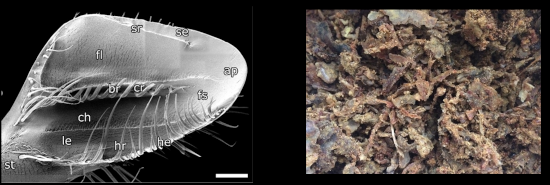
- [16]. When the bee processes propolis, it only comes into contact with the liquid on the mandible surface and as the contact is removed, cohesive failure occurs. Part of the fluid sticks to the propolis sample, while the rest remains on the epicuticle. When longer contact occurs between mandible and
- mandible tip through the groove on the stem of the mandible and then through the channel on the medial surface of the mandible tip. This groove was previously suggested to channel liquid to the mandible tip [6][19]. Bees possibly help the spreading of fluid across the mandible surface by moving and rubbing
- easily. In unstructured areas of the mandible, the layer was thinner. It has previously been described that structures facilitate the spreading of fluid [50]. For instance, structures on Nepenthes alata and lizard skin have been found to enhance unidirectional liquid transportation [51]. The contact area


Design of a biomimetic, small-scale artificial leaf surface for the study of environmental interactions
Beilstein J. Nanotechnol. 2022, 13, 944–957, doi:10.3762/bjnano.13.83
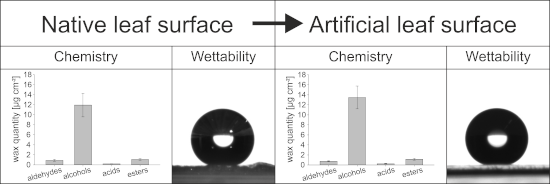
- formation of biofilms [25][26]. A measure of the degree of wetting is the contact angle θ (CA). It describes the angle between the liquid–vapor interface and the liquid–solid interface. According to the CA, surfaces can be classified as superhydrophilic (0° < θ < 10°), hydrophilic (10° ≤ θ < 90
- by several reviews [27][29][30][31]. Wetting states Young was the first to formulate a description of the wetting state in 1805. According to Young's equation, the CA depends on the three interfacial tensions liquid–solid, liquid–gas, and solid–gas [32]. He describes an ideal static CA on a
- homogeneous, smooth, non-deformable, and inert surface. Natural and technical surfaces hardly correspond to these ideal conditions. Wenzel [33] and Cassie and Baxter [34] studied CAs on rough surfaces, assuming that the liquid penetrates perfectly into the depressions of the surface (homogeneous wetting
Comparing the performance of single and multifrequency Kelvin probe force microscopy techniques in air and water
Beilstein J. Nanotechnol. 2022, 13, 922–943, doi:10.3762/bjnano.13.82
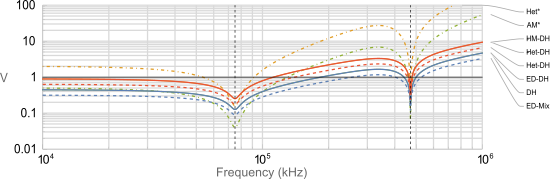
- that are most suitable for operation in liquid environments where bias application can lead to unwanted electrochemical reactions. We conclude that open-loop multifrequency KPFM modes operated with the first harmonic of the electrostatic response on the first eigenmode offer the best performance in
- liquid environments whilst needing the smallest AC bias for operation. Keywords: AFM; atomic force microscopy; closed loop; Kelvin probe force microscope; KPFM; open loop; performance; signal-to-noise ratio; Introduction Atomic force microscopy (AFM) is an enabling technique for the nanoscale mapping
- bias [28][29]. OL techniques are increasingly being adopted to enable the mapping of voltage-sensitive materials [30][31][32], to enable investigations of fast electrodynamic processes [11][12][13][14] and to enable measurements in liquid environments (where bias application could lead to stray
Micro-structures, nanomechanical properties and flight performance of three beetles with different folding ratios
Beilstein J. Nanotechnol. 2022, 13, 845–856, doi:10.3762/bjnano.13.75
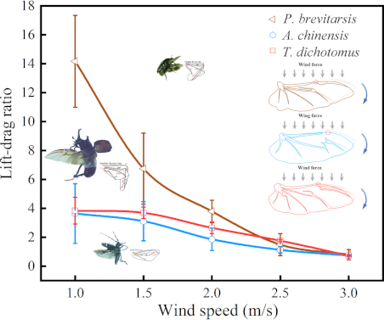
- was attached with AB glue (Epoxy Resin Liquid Adhesive Strong Adhesive, HOU-FC220) to the bracket, which was connected to the force balance (load cell) after adjustment. Flight behavior and body angles of each beetle were ensured to be the same in flight (Figure 1). The selected load cell (LH-SZ-02




Temperature and chemical effects on the interfacial energy between a Ga–In–Sn eutectic liquid alloy and nanoscopic asperities
Beilstein J. Nanotechnol. 2022, 13, 817–827, doi:10.3762/bjnano.13.72
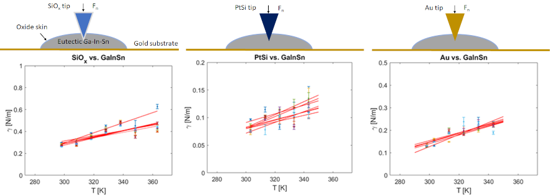
- interfacial energies between a eutectic Ga–In–Sn liquid alloy and single nanoscopic asperities of SiOx, Au, and PtSi have been determined in the temperature range between room temperature and 90 °C by atomic force spectroscopy. For all asperities used here, we find that the interfacial tension of the eutectic
- Ga–In–Sn liquid alloy is smaller than its free surface energy by a factor of two (for SiOx) to eight (for PtSi). Any significant oxide growth upon heating studied was not detected here, and the measured interfacial energies strongly depend on the chemistry of the asperities. We also observe a weak
- increase of the interfacial energy as a function of the temperature, which can be explained by the reactivity between SiOx and Ga and the occurrence of chemical segregation at the liquid alloy surface. Keywords: atomic force microscopy (AFM); interfacial energy; liquid alloy; Introduction Recently, room



Hierachical epicuticular wax coverage on leaves of Deschampsia antarctica as a possible adaptation to severe environmental conditions
Beilstein J. Nanotechnol. 2022, 13, 807–816, doi:10.3762/bjnano.13.71
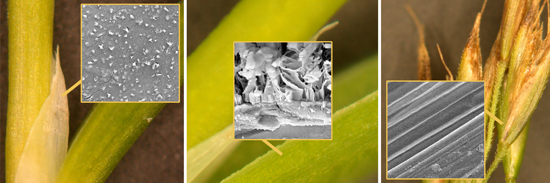
- other words, the liquid should be removed before it freezes to the surface. The superhydrophobicity of the surface might well contribute to such an effect, which has been previously suggested in the literature on bioinspired passive anti-icing and ice-phobic surfaces [36][45]. The present study on D




Efficient liquid exfoliation of KP15 nanowires aided by Hansen's empirical theory
Beilstein J. Nanotechnol. 2022, 13, 788–795, doi:10.3762/bjnano.13.69
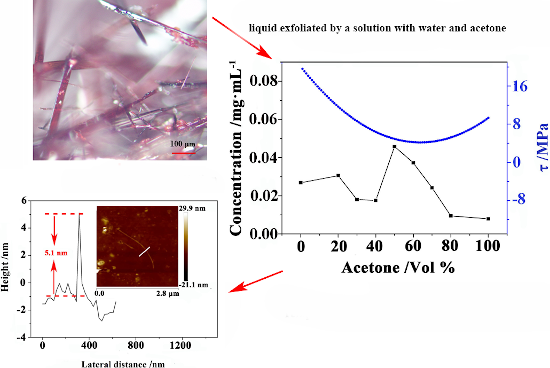
- were first obtained. Based on the Hansen's empirical theory, the concentration of liquid-exfoliated KP15 nanowires was improved to 0.0458 mg·mL−1 by a solution containing 50% water and 50% acetone. Approximately 79% of the KP15 nanowires had a thickness value below 50 nm and 60.9% of them had a width
- temperature measurements of KP15 nanodevices. Keywords: Hansen's empirical theory; KP15; liquid exfoliation; nanodevices; nanowires; Raman; semiconductors; Introduction Low-dimensional materials have drawn significant attention in recent years. So far, not only new composite materials with excellent
- is beneficial for the development of high-performance nanodevices. Searching effective synthesis routes for nanoscale KP15 has become an urgent issue. Liquid-phase exfoliation is one of the most straightforward methods to prepare low-dimensional materials at a low cost and with simple processes and


Gelatin nanoparticles with tunable mechanical properties: effect of crosslinking time and loading
Beilstein J. Nanotechnol. 2022, 13, 778–787, doi:10.3762/bjnano.13.68
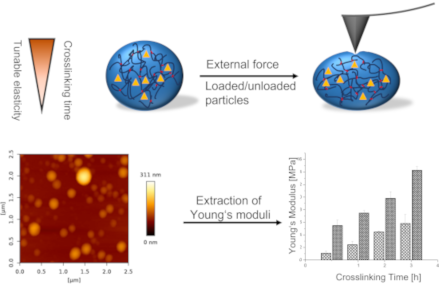
- extract the height image from the force–distance curves acquired at each pixel. Particles were well distributed on substrates showing no agglomeration and a narrow size distribution. GNPs occur with a smooth surface and are spherically shaped when measured under liquid conditions. Particles crosslinked
- for 0.5 h imaged under liquid conditions by AFM are shown in Figure 1. Incorporating lysozyme as a protein drug up to an initial loading of 3 mg per 20 mg gelatin resulted in particles with comparable size (242.67 ± 11.32 nm), size distribution (0.132 ± 0.04), and a negative zeta potential at neutral
- were kept in deionized water and used on the same day. GNPs were incubated for 1 min to allow for a sufficient nanoparticle deposition without overloading the substrate surface. The supernatant was washed away with deionized water, and the samples were subsequently kept in liquid and measured on the


Recent advances in nanoarchitectures of monocrystalline coordination polymers through confined assembly
Beilstein J. Nanotechnol. 2022, 13, 763–777, doi:10.3762/bjnano.13.67
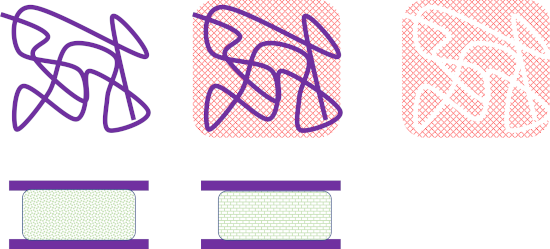
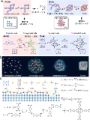
- first discuss the crystallization of coordination polymer single crystals inside confined liquid networks or on substrates through assembly of nodes and ligands. Then, we discuss assembly of preformed coordination polymer single crystals inside confined liquid networks or on substrates. In each part, we
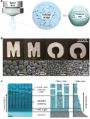
- environments, new opportunities arise for changing the properties of materials. Assembling ionic/molecular building blocks in a liquid that contains impurities generally does not change the intrinsic crystal structure of the obtained single crystals. However, the crystallization kinetics can be affected, which
- , such as confined liquid networks or substrates. Then, we will discuss the assembly of the preformed monocrystalline coordination polymers inside confined liquid networks or on substrates. In both parts, the change of the properties of the coordination polymers will be summarized. The performance of the




A nonenzymatic reduced graphene oxide-based nanosensor for parathion
Beilstein J. Nanotechnol. 2022, 13, 730–744, doi:10.3762/bjnano.13.65
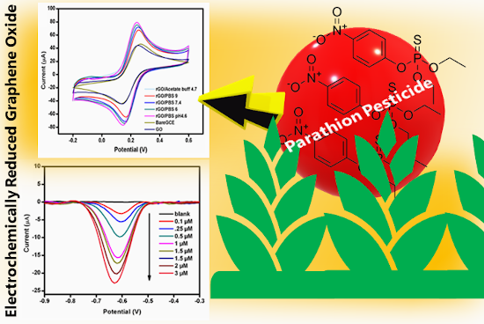
- , inhalation, or dermal penetration [3][4]. Due to its extreme toxicity, it is necessary that easy-to-use, cost-effective diagnostic kits for routine screening of pesticides in fruits and vegetables are developed. The high-throughput analytical methods such as chromatographic (gas, liquid) and spectroscopic
- and inorganic soil molecules in the liquid phase. Tomato as a sample vegetable was purchased from the local market in Kolkata, India, and washed with running water before preparing the sample. The tomato samples (30 g) were smashed with 30 mL of 50% ethanol, and the juice was collected for further


Nanoarchitectonics of the cathode to improve the reversibility of Li–O2 batteries
Beilstein J. Nanotechnol. 2022, 13, 689–698, doi:10.3762/bjnano.13.61
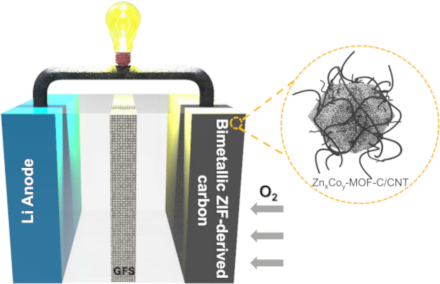
- (Thermal Analyzer, TGA Q5000 IR) with a scan rate of 5 °C·min−1 under Ar atmosphere. Electrochemical experiments The electrochemical performance of cathode materials was investigated using a coin-type LOB cell composed of a Li metal anode, a liquid electrolyte impregnated into a glass-fiber separator, and
- a cathode. The cells were assembled in an Ar-filled glove box, and 1 M of lithium bis(trifluoromethanesulfonyl)imide (LiTFSI) dissolved in tetraethylene glycol dimethyl ether (TEGDME) was used as the liquid electrolyte. For the cathode preparation, the ZnxCoy–C/CNT composite was dispersed in


Experimental and theoretical study of field-dependent spin splitting at ferromagnetic insulator–superconductor interfaces
Beilstein J. Nanotechnol. 2022, 13, 682–688, doi:10.3762/bjnano.13.60
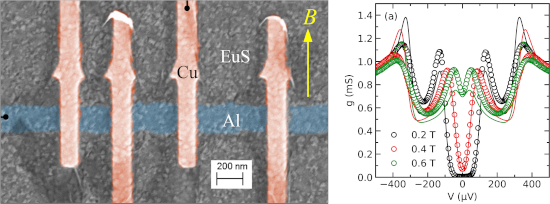
- deviation can be explained by Fermi-liquid renormalization of the effective spin splitting near the critical field [49][46], which is not included in our model. Conclusion Based on the general spin-dependent boundary condition [30][31] augmenting the spin-dependent circuit theory [38][50], we investigated

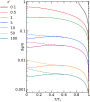


Tunable high-quality-factor absorption in a graphene monolayer based on quasi-bound states in the continuum
Beilstein J. Nanotechnol. 2022, 13, 675–681, doi:10.3762/bjnano.13.59
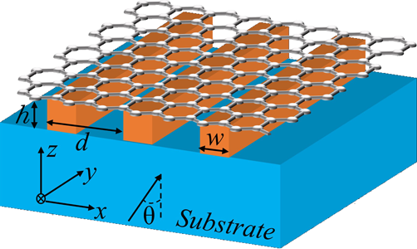
- energy conversion, while narrow-band absorbers [9][10][11][12] have great potential in sensing and monochromatic light detecting. An example is the application of narrow-band absorbers in refractive index sensing [13]. When the absorbers are surrounded by gas or liquid, the resonance wavelength will
- change the structural parameters and the other is to add tunable materials, such as phase change materials, graphene, or liquid crystals. Among them, graphene has attracted much attention in optics and optoelectronics [30][31][32][33][34]. As a single layer of carbon atoms arranged in a honeycomb


Reliable fabrication of transparent conducting films by cascade centrifugation and Langmuir–Blodgett deposition of electrochemically exfoliated graphene
Beilstein J. Nanotechnol. 2022, 13, 666–674, doi:10.3762/bjnano.13.58
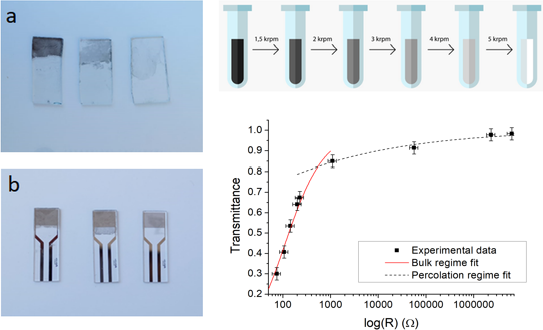
- Physics, University of Belgrade, Mike Petrovića Alasa 12–14, 11351 Belgrade, Serbia 10.3762/bjnano.13.58 Abstract Electrochemical exfoliation is an efficient and scalable method to obtain liquid-phase graphene. Graphene in solution, obtained through electrochemical exfoliation or other methods, is
- wavelength of 660 nm is obtained for these films, which is in agreement with earlier works on Langmuir–Blodgett assembled ultrasonic-assisted liquid-phase exfoliated graphene. Our work demonstrates that films that are in all respects on par with films of graphene obtained through other solution-based
- ) [3][4][5][6][7], epitaxial growth on different substrates [8][9], and the chemical reduction of graphene oxide (GO) [10][11]. In 2008, production of graphene by liquid-phase exfoliation (LPE) of graphite through sonication of graphite powder in N-methylpyrrolidone (NMP) was first proposed by Coleman


Antibacterial activity of a berberine nanoformulation
Beilstein J. Nanotechnol. 2022, 13, 641–652, doi:10.3762/bjnano.13.56
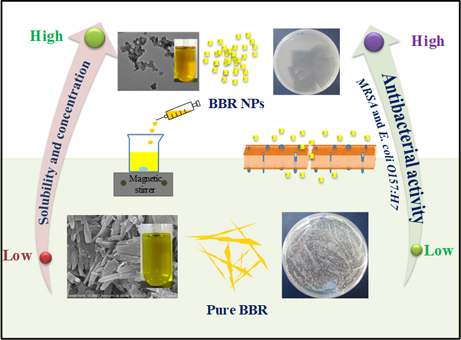
- BBR in a 2.0 mL Eppendorf tube containing 1.0 mL of distilled water. The tube was placed in an ultrasonic bath for 30 min at room temperature. Then, the BBR solution was centrifuged at a speed of 5000 rpm for 5 min. The supernatant liquid was withdrawn as saturated BBR solution. Physicochemical



Comparative molecular dynamics simulations of thermal conductivities of aqueous and hydrocarbon nanofluids
Beilstein J. Nanotechnol. 2022, 13, 620–628, doi:10.3762/bjnano.13.54
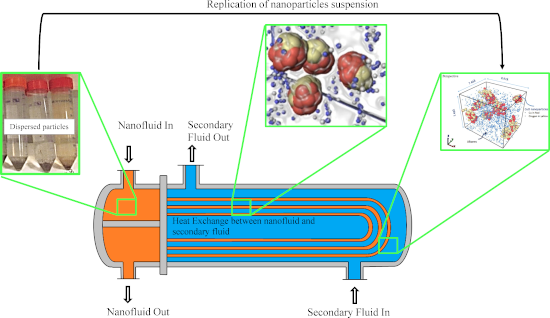
- ; Introduction The term nanofluids denotes solid nanoparticles (1 to 100 nanometres in size) homogenously suspended in a fluid to form a conjugate suspension liquid [1][2]. The use of nanoparticles in a fluidic suspension is not a new practise and can be traced back to over two decades ago [3]. Since the
- are: a) Brownian motion, b) liquid–liquid layering, c) particle–liquid layering, and d) thermal transfer [1][13]. Initially, it was suggested by several studies that the increased conductivity of nanofluids was due to the Brownian motion of nanoparticles in the fluid [14][15]. It was also proposed
- that a local micro-convection is induced in the base fluid due to the Brownian motion of nanoparticles, which increases both mixing and heat transport within the nanofluid [16][17]. Later, several studies demonstrated that interactions between liquid atoms and nanoparticles (i.e., a liquid adsorption


Revealing local structural properties of an atomically thin MoSe2 surface using optical microscopy
Beilstein J. Nanotechnol. 2022, 13, 572–581, doi:10.3762/bjnano.13.49
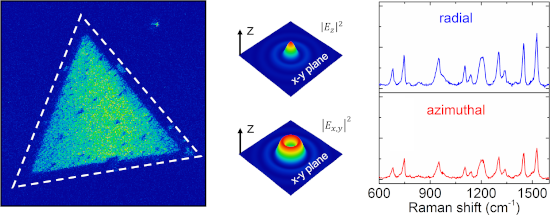
- filters. The Raman and photoluminescence signals are collected by an avalanche photodiode (APD, SPCM-AQR-14, Perkin Elmer) for optical imaging. A spectrometer coupled with a liquid nitrogen-cooled CCD camera (Acton Research, SpectraPro 300i, Perkin Elmer) is used to obtain optical spectra. Preparation and


Influence of thickness and morphology of MoS2 on the performance of counter electrodes in dye-sensitized solar cells
Beilstein J. Nanotechnol. 2022, 13, 528–537, doi:10.3762/bjnano.13.44
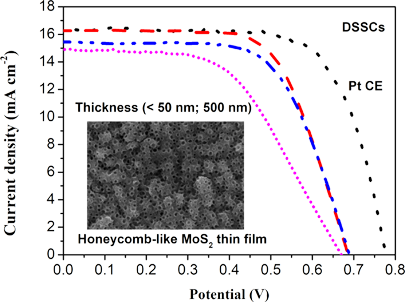
- allows for the direct deposition of MoS2 thin films from liquid precursors onto various conducting substrates with easily controlled thickness and morphology. Several reports have already been published that describe the control of structure and morphology of electrodeposited MoS2 to maximize its


Ciprofloxacin-loaded dissolving polymeric microneedles as a potential therapeutic for the treatment of S. aureus skin infections
Beilstein J. Nanotechnol. 2022, 13, 517–527, doi:10.3762/bjnano.13.43
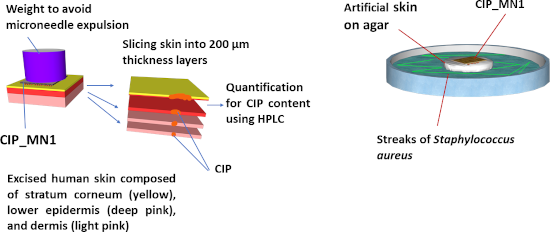
- CIP_MN1 and the tissue paper was frequently soaked with PBS to prevent the skin from drying out. At each predefined time point, CIP_MN1 were removed, the skin was placed on dental wax and 1 cm2 of skin was excised using a cork borer. The skin was then fully immersed in O.C.T media and frozen in liquid


Design and characterization of polymeric microneedles containing extracts of Brazilian green propolis
Beilstein J. Nanotechnol. 2022, 13, 503–516, doi:10.3762/bjnano.13.42
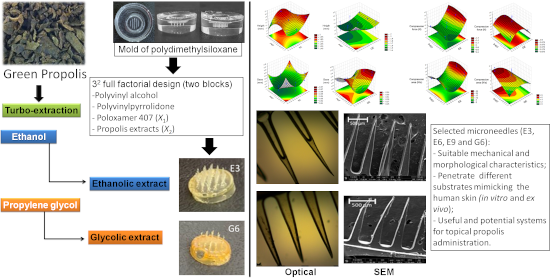
- . and showing several therapeutic properties (i.e., antibacterial, antiviral, antifungal, anti-inflammatory, healing, and immunomodulatory properties). The administration of PRP extracts by conventional routes has some disadvantages, such as running off over the skin in liquid or emulsion form. When
- sodium carbonate solution. The extracts were analyzed using a high-performance liquid chromatograph coupled to a UV–vis spectrophotometric detector. For the detection of polyphenols, chrysin and p-coumaric acid (analytical standard) at a wavelength (λ) of 310 nm were used as markers. At least three


Ethosomal (−)-epigallocatechin-3-gallate as a novel approach to enhance antioxidant, anti-collagenase and anti-elastase effects
Beilstein J. Nanotechnol. 2022, 13, 491–502, doi:10.3762/bjnano.13.41
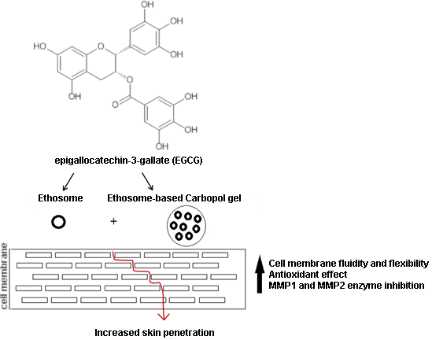
- liquid chromatography assay For the quantitative determination of EGCG, the optimal wavelength of 292 nm was used. The calibration curve obtained from high-performance liquid chromatography (HPLC) was linear between 15.625 to 1000 µg/mL with a high correlation coefficient (y = 1.0548x + 4.7737, r2



Investigation of electron-induced cross-linking of self-assembled monolayers by scanning tunneling microscopy
Beilstein J. Nanotechnol. 2022, 13, 462–471, doi:10.3762/bjnano.13.39
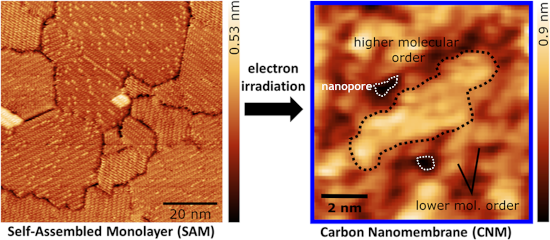
- general concept of self-assembly allows for the preparation of SAMs from the liquid or gas phase. Highly ordered TPT SAMs spontaneously form on Au(111) due to the formation of bonds between sulfur and gold atoms, which is accompanied by van der Waals interactions between the aromatic rings. The TPT SAMs


The role of sulfonate groups and hydrogen bonding in the proton conductivity of two coordination networks
Beilstein J. Nanotechnol. 2022, 13, 437–443, doi:10.3762/bjnano.13.36
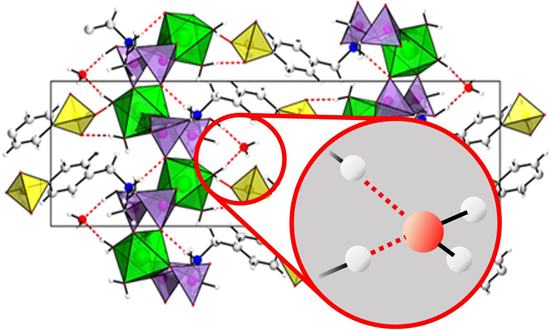
- of covalent bonds and hydrogen bonds between adjacent molecules, without mass transport [25]. For bulk liquid water, this is known as the Grotthuß mechanism, with reported activation energy values of 0.10–0.11 eV [26][27]. In the materials studied here, proton hopping can occur between H2O/H3O+ and
- /or deprotonated/protonated sulfonate groups (–SO3−/–SO3H) within the crystals. Spatial confinement may hinder proton hopping to some extent, which is why activation energies larger than in bulk liquid water are frequently observed in such materials (up to 0.4 eV) [25]. In contrast, when proton
- with our above assumption that this additional conduction occurs within interparticle water adsorbate layers; these liquid-like layers may facilitate molecular diffusion to some extent. To explain the differences in proton conductivity between the (activated) Mg-CP and Pb-MOF materials, the respective


A broadband detector based on series YBCO grain boundary Josephson junctions
Beilstein J. Nanotechnol. 2022, 13, 325–333, doi:10.3762/bjnano.13.27
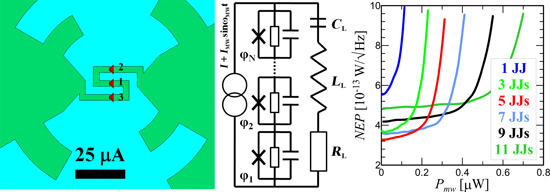
- ], sensitive detectors or mixers [3][4], and voltage standards [5][6][7]. Recent impressive developments in this area make this possible [8][9][10]. The advantage of HTSCs lies not only in the ability to operate at liquid-nitrogen temperature, but also in a wide temperature range. For instance, an YBaCuO



Interfacial nanoarchitectonics for ZIF-8 membranes with enhanced gas separation
Beilstein J. Nanotechnol. 2022, 13, 313–324, doi:10.3762/bjnano.13.26
- ]. Given these structural properties, MOFs are widely applied to gas storage [18], gas/liquid separation [18][19][20], energy storage [21][22][23], sensing [24], catalysis [25], electrochemistry [26], and bio-related fields [27]. Zeolitic imidazolate frameworks (ZIFs), a subclass of MOFs, comprise
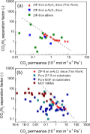
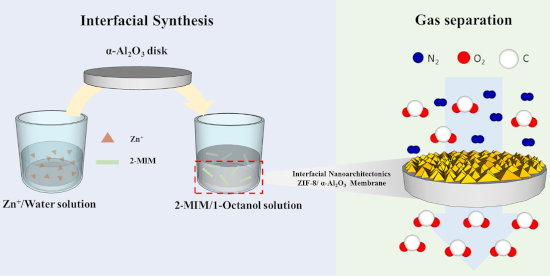
- -octanol solution was added dropwise to the zinc nitrate solution. The mixture was kept at 80 °C in an oil bath for 12 h to form a ZIF-8 free-standing thin film on the liquid–liquid interface. After the reaction, fragments of the ZIF-8 thin film were dispersed in methanol to remove solvents and unreacted
- decreased to 2 μm when the reaction temperature increased to 120 °C (Figure 3f). The thinner membrane thickness can also be attributed to the disturbed liquid–liquid interface during synthesis. The growth of ZIF-8 crystals was also investigated regarding different reaction times. The SEM images showed that