Search results
Search for "mesoporous" in Full Text gives 209 result(s) in Beilstein Journal of Nanotechnology. Showing first 200.
Photocatalysis
Beilstein J. Nanotechnol. 2014, 5, 1071–1072, doi:10.3762/bjnano.5.119

- bismuth vanadium oxide cluster exemplifies these characteristics. Besides solar fuel production, photocatalysis has a long history in water treatment. In this Thematic Series, there is also a report on the latest development in the utilization of mesoporous cerium oxide for visible light-driven dye
Functionalized nanostructures for enhanced photocatalytic performance under solar light
Beilstein J. Nanotechnol. 2014, 5, 994–1004, doi:10.3762/bjnano.5.113
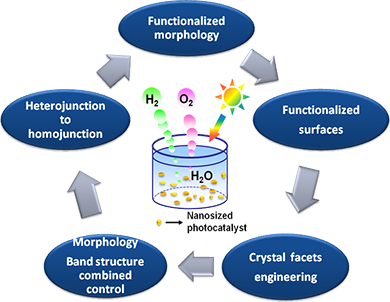
- first reports on mesoporous silica MCM-41 [9], inorganic oxides with controlled porosity have been extensively investigated. It is known that mesoporous photocatalysts usually exhibit high specific surface areas that can provide more surface reactive sites. The nanoscale channel walls of mesoporous
- semiconductor nanocrystals are dispersed in the mesoporous substrate, greatly enhanced photocatalytic properties can also be achieved. For example, dispersing TiO2 nanoclusters in MCM-41 [13] and MCM-48 [14] resulted in much higher photocatalytic activities than that of bulk TiO2 under UV light irradiation. Our
- work was carried out on Ni modified mesoporous TiO2 photocatalysts [15]. It was found that Ni ions were highly dispersed in the framework of mesoporous TiO2 resulting in enhanced hydrogen production in methanol aqueous solution compared to Ni-doped particulate TiO2. The photocatalytic activity was


Optical modeling-assisted characterization of dye-sensitized solar cells using TiO2 nanotube arrays as photoanodes
Beilstein J. Nanotechnol. 2014, 5, 895–902, doi:10.3762/bjnano.5.102
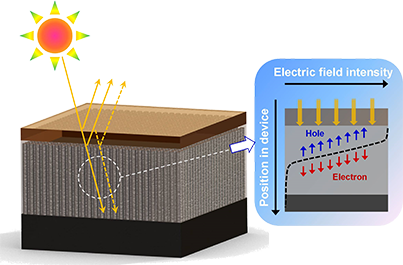
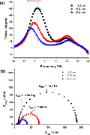
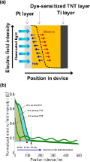
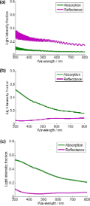
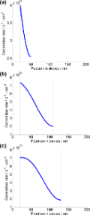
- structures and morphologies such as mesoporous TiO2, nanorods, nanotubes, nanosheets and hollow spheres have, therefore, been investigated to improve the performance of DSSCs by using various synthetic and modification methods [4][5][6][10][11]. Compared to the conventional DSSCs, which employ mesoporous


Nanostructure sensitization of transition metal oxides for visible-light photocatalysis
Beilstein J. Nanotechnol. 2014, 5, 696–710, doi:10.3762/bjnano.5.82
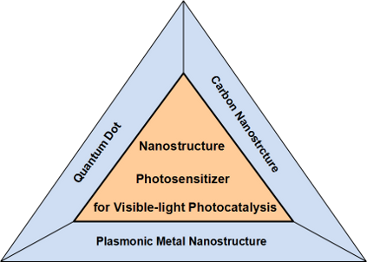
- water splitting in order to produce hydrogen [35][38][39][41][45] and the photocatalytic reduction of CO2 were reported [51]. In addition to the applications in photocatalysis, quantum dots are often used as photosensitizer to sensitize the mesoporous TiO2 photoelectrode as the photoanode in quantum




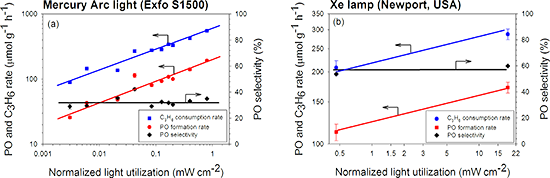
Artificial sunlight and ultraviolet light induced photo-epoxidation of propylene over V-Ti/MCM-41 photocatalyst
Beilstein J. Nanotechnol. 2014, 5, 566–576, doi:10.3762/bjnano.5.67
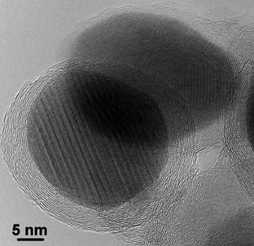
- photocatalyst. The XRD pattern indicates a mesoporous hexagonal lattice with a clear feature of (100). The (110) and (200) peaks are not well-separated, maybe due to the high calcination temperature of 823 K [33]. The HRTEM image of V-Ti/MCM-41 in Figure 3 reveals a uniform hexagonal structure, which is a


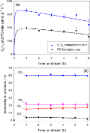


Mesoporous cerium oxide nanospheres for the visible-light driven photocatalytic degradation of dyes
Beilstein J. Nanotechnol. 2014, 5, 517–523, doi:10.3762/bjnano.5.60
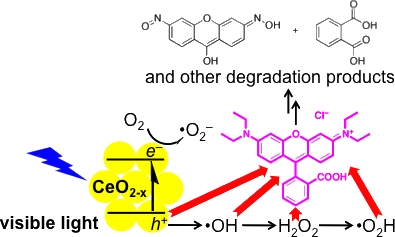
- , Singapore 138632 Energy Research Institute @ NTU (ERI@N), 1 CleanTech Loop, Singapore 637141 Singapore-Berkeley Research Initiative for Sustainable Energy (SinBeRISE), 1 Create Way, Singapore 138602 10.3762/bjnano.5.60 Abstract A facile, solvothermal synthesis of mesoporous cerium oxide nanospheres is
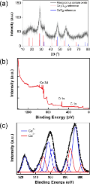
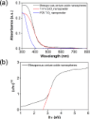
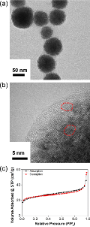
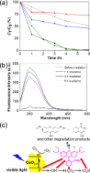
- photoelectron and UV–vis spectroscopy, and transmission electron microscopy. Together with N2 sorption experiments, the data confirms that the new cerium oxide material is mesoporous and absorbs visible light. The photocatalytic degradation of rhodamin B is investigated with a series of radical scavengers
- , suggesting that the mechanism of photocatalytic activity under visible-light irradiation involves predominantly hydroxyl radicals as the active species. Keywords: cerium oxide; dye degradation; mesoporous; photocatalysis; visible light; Introduction The degradation of organic pollutants by affordable and

A catechol biosensor based on electrospun carbon nanofibers
Beilstein J. Nanotechnol. 2014, 5, 346–354, doi:10.3762/bjnano.5.39
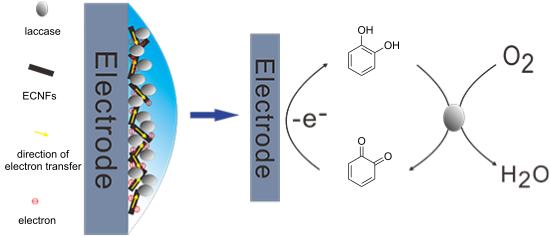
- water samples. Keywords: biosensor; carbon nanofibers; catechol; electrospinning; laccase; Introduction Nowadays, carbon nanomaterials attract a great deal of attention due to their high surface area, excellent electronic conduction and biocompatibility. Among these, mesoporous carbon [1][2][3][4][5


Thermal stability and reduction of iron oxide nanowires at moderate temperatures
Beilstein J. Nanotechnol. 2014, 5, 323–328, doi:10.3762/bjnano.5.36
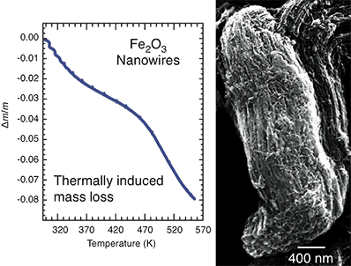
- mesoporous silica (SBA-15) synthesized through the sol–gel method. In order to embed the iron oxide nanowires, 0.01 M Fe(NO3)3·9H2O was dissolved in 50 mL of ethanol and added to 1 g of SBA-15. This solution was mixed at room temperature, dried at 310 K for 1 week, and the resulting powder was sintered at


Modeling and optimization of atomic layer deposition processes on vertically aligned carbon nanotubes
Beilstein J. Nanotechnol. 2014, 5, 234–244, doi:10.3762/bjnano.5.25
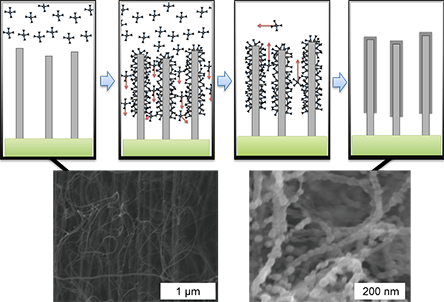
- guidelines; titania, TiO2; Introduction Recent advances in the synthesis and processing of carbon nanotubes (CNTs) have enabled the prospect of their integration into existing technologies that exploit the high surface area of mesoporous ceramic films [1]. Over the last 10 years, ceramic coated CNTs have


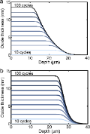

Study of mesoporous CdS-quantum-dot-sensitized TiO2 films by using X-ray photoelectron spectroscopy and AFM
Beilstein J. Nanotechnol. 2014, 5, 68–76, doi:10.3762/bjnano.5.6
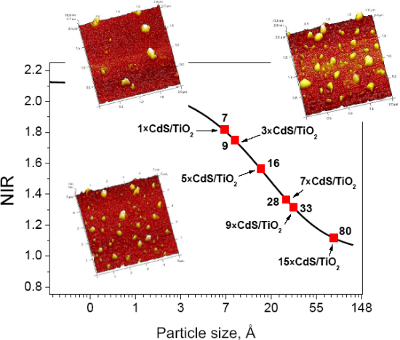
- Bruxelles 61 - 5000 Namur, Belgique Institute of Chemistry, University of Sao Paulo, USP, São Paulo, 05508-000, SP, Brazil 10.3762/bjnano.5.6 Abstract CdS quantum dots were grown on mesoporous TiO2 films by successive ionic layer adsorption and reaction processes in order to obtain CdS particles of various
- effects [9][11][12][13]. In this study, X-ray photoelectron spectroscopy (XPS) was used for the first time, to the best of our knowledge, to estimate the particle size of QDs-CdS grown on a mesoporous TiO2 film. The successive ionic layer adsorption and reaction processes, which are defined as deposition
- preparation Mesoporous TiO2 films were prepared following the procedure reported elsewhere [14]. An adequate amount of titanium(IV) tetraethoxide (TEOT, Ti(OC2H5)4, 95% Aldrich) was dissolved under vigourous stirring (20 min) in concentrated hydrochloric acid (37%) at room temperature. In parallel, the hybrid


Design criteria for stable Pt/C fuel cell catalysts
Beilstein J. Nanotechnol. 2014, 5, 44–67, doi:10.3762/bjnano.5.5
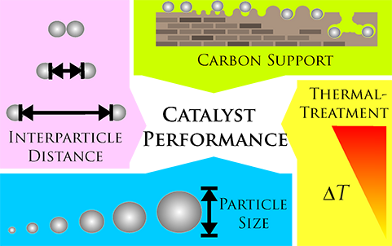
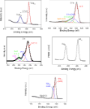
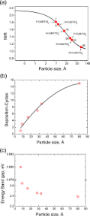
- ], nanohorns [29], ordered mesoporous carbons (OMCs) [30][31], carbon aerogels [32], carbon shells [33][34][35][36], colloid-imprinted carbon supports (CIC) [37] and even boron-doped diamond structures [38][39]. Alternatively, certain non-carbon materials (e.g., oxides, carbides and nitrides of metals such as
- and support structure on the underlying degradation mechanisms. The hollow graphitic spheres (HGS) provide a mesoporous, three-dimensional interconnected support structure with a high degree of graphitization and a high BET surface area (ca. 1200 m2·g−1) at the same time. The synthesis was described
- 360 nm with an average shell thickness of approximately 50 nm. The mesoporous network is intended to provide a good separation and encapsulation of the particles without losing accessibility to the Pt particles. The access is also facilitated by the short diffusion pathways through the shell, which





Controlled synthesis and tunable properties of ultrathin silica nanotubes through spontaneous polycondensation on polyamine fibrils
Beilstein J. Nanotechnol. 2013, 4, 793–804, doi:10.3762/bjnano.4.90
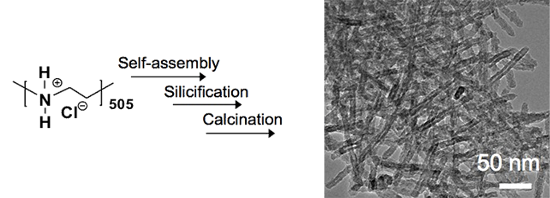
- , which are indicative of the mesoporous nature of nanotubes and nanoribbons. The BET specific surface areas of the silica nanotubes and nanoribbons were calculated to be 307 m2/g (run 1 in Table 1) and 404 m2/g (run 2 in Table 1), respectively. Barrett–Joyner–Halenda (BJH) calculations derived from the
- 3.5 nm, which corresponds to the hollow inner of nanotube (Figure 2B) [38][39], which is in good agreement with the TEM observations (Figure 1C). This BET result indicates that our silica nanotubes have an excellent thermal stability compared to the conventional mesoporous silica (i.e., M41S), which


A facile synthesis of a carbon-encapsulated Fe3O4 nanocomposite and its performance as anode in lithium-ion batteries
Beilstein J. Nanotechnol. 2013, 4, 699–704, doi:10.3762/bjnano.4.79
- an H3-type hysteresis loop (Figure 3), which indicates a mesoporous (pore width < 50 nm) nature of the material [21]. In addition, a sharp increase of the adsorbed gas at very low relative-pressures suggesting the presence of micropores (pore width < 2 nm). The micro- and mesoporous volumes were


Site-selective growth of surface-anchored metal-organic frameworks on self-assembled monolayer patterns prepared by AFM nanografting
Beilstein J. Nanotechnol. 2013, 4, 638–648, doi:10.3762/bjnano.4.71
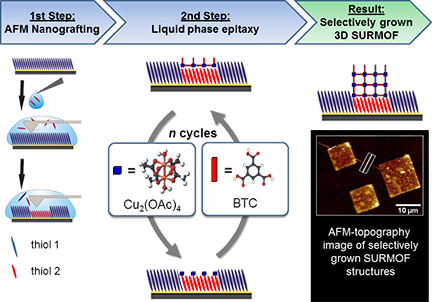
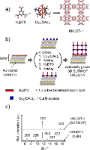
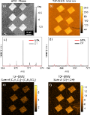
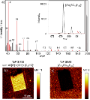
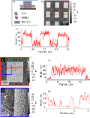
- -dimensional micro- and mesoporous materials that consist of metal ions or metal-oxo units (serving as nodes) interconnected by organic linkers. In conventional synthesis the MOFs are formed in a solvothermal process, and the reaction products precipitate in the form of crystalline powders [1][2]. One of the





AFM as an analysis tool for high-capacity sulfur cathodes for Li–S batteries
Beilstein J. Nanotechnol. 2013, 4, 611–624, doi:10.3762/bjnano.4.68
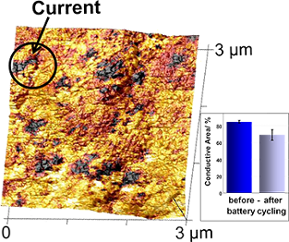
- use of highly ordered mesoporous carbon with a bimodal pore structure with a high specific area and a large pore volume is beneficial. It traps a part of the polysulfides for a certain time before release, thereby reduces the electrochemical irreversibility and can lead to a very high and stable



A nano-graphite cold cathode for an energy-efficient cathodoluminescent light source
Beilstein J. Nanotechnol. 2013, 4, 493–500, doi:10.3762/bjnano.4.58
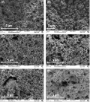
- stability of the FE process is stems from the weak interaction between these atomic layers, which lead to their splitting and detachment under the action of the strong electric field. This problem is essentially eliminated in mesoporous nano-graphite film (NGF) material obtained by chemical vapor deposition
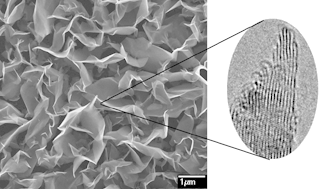
- lamps were manufactured by using cold nano-graphite cathodes. NGF films produced by plasma enhanced CVD consist of a mesoporous graphite flaky material. Each flake is a well ordered graphite crystallite of nanometer thickness, composed of graphene atomic layers, oriented predominantly in the direction
- tip. Typical SEM images of NGF material taken with different magnifications: overview of the mesoporous structure of the film (A) and a fragment of a flake transparent for secondary electrons taken with a higher resolution (B). HRTEM image of the top-edge fragment of the graphite flake extracted from


Photoelectrochemical and Raman characterization of In2O3 mesoporous films sensitized by CdS nanoparticles
Beilstein J. Nanotechnol. 2013, 4, 255–261, doi:10.3762/bjnano.4.27
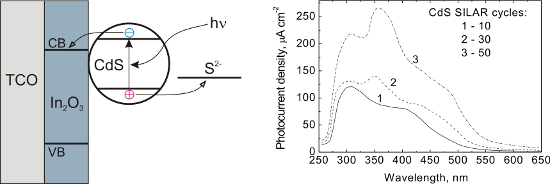
- , Minsk 220072, Belarus 10.3762/bjnano.4.27 Abstract The method of successive ion layer adsorption and reaction was applied for the deposition of CdS nanoparticles onto a mesoporous In2O3 substrate. The filling of the nanopores in In2O3 films with CdS particles mainly occurs during the first 30 cycles of
- , Ag2S, Bi2S3 and others) immobilized onto the surface of mesoporous films of wide-bandgap oxides (TiO2, ZnO, SnO2, Nb2O5, Ta2O5, WO3, In2O3) are used as the sensitizing components [2][3][4][5]. It is considered that the best technique for the in situ deposition of such nanoparticles is the successive
- -induced charge-carriers at the sensitizer, (b) a wide-bandgap oxide interface that is mainly determined by the difference ELUMO − Ec, as well as (c) on the further transport of the charge carriers through the mesoporous oxide matrix to the substrate. Previous investigations have demonstrated that, in


Functionalization of vertically aligned carbon nanotubes
Beilstein J. Nanotechnol. 2013, 4, 129–152, doi:10.3762/bjnano.4.14
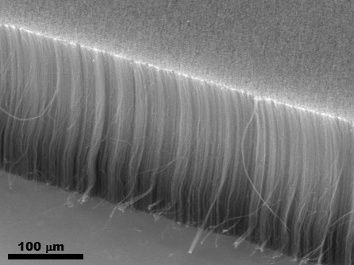
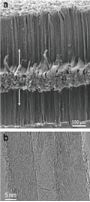
- aligned CNTs from acetylene chemical vapor deposition (CVD) catalyzed by iron nanoparticles embedded in mesoporous silica. In that work, the growth direction of not very straight, entangled-CNTs was related to the direction of the pores in the silica substrate, being perpendicular to the substrate surface








Catalytic activity of nanostructured Au: Scale effects versus bimetallic/bifunctional effects in low-temperature CO oxidation on nanoporous Au
Beilstein J. Nanotechnol. 2013, 4, 111–128, doi:10.3762/bjnano.4.13
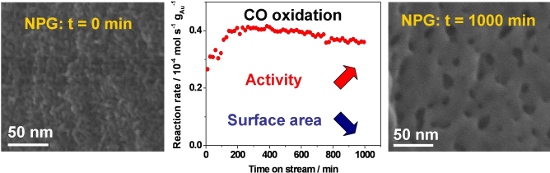
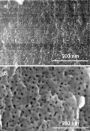
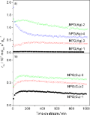
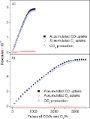
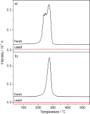
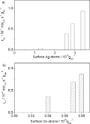
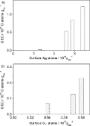
- with earlier proposals for Ag-contaminated submicron-size Au nanoparticles [34] and highly active mesoporous oxide-supported AuAg catalysts [35][36]. From calculations based on density functional theory, Moskaleva et al. found a significant reduction of the barrier for O2 dissociation in the vicinity


Physics, chemistry and biology of functional nanostructures
Beilstein J. Nanotechnol. 2012, 3, 843–845, doi:10.3762/bjnano.3.94
- , in turn, stands alongside previous series. Of special interest appear those reports dealing with self-assembly on solid surfaces, micro- and mesoporous solids, electrical transport through nanostructures, nanooptical aspects, organic–inorganic hybrids and properties of magnetic nanoparticles. A much
A facile approach to nanoarchitectured three-dimensional graphene-based Li–Mn–O composite as high-power cathodes for Li-ion batteries
Beilstein J. Nanotechnol. 2012, 3, 513–523, doi:10.3762/bjnano.3.59
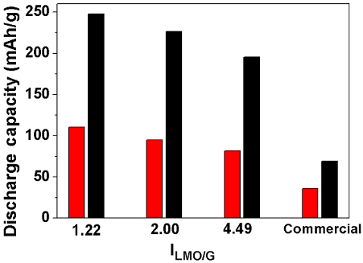
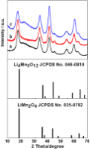
- the practical capacity of the material. On the other hand, promising progress in the modification of micro/nanostructures of LMO has been made [10][11][12][13]. Ordered mesoporous LMO, created by using silica templates, favors rapid kinetics for both lithium ions and electron transport, which show




FTIR nanobiosensors for Escherichia coli detection
Beilstein J. Nanotechnol. 2012, 3, 485–492, doi:10.3762/bjnano.3.55
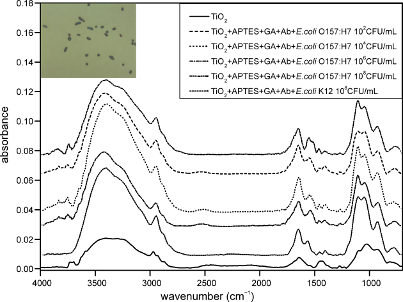
- necessary to improve the safety of our food supply chain. In this work we report on mesoporous titania thin-film substrates as sensors to detect E. coli O157:H7. Titania films treated with APTES ((3-aminopropyl)triethoxysilane) and GA (glutaraldehyde) were functionalized with specific antibodies and the
- −1. The final calcination process to remove the organic template of these stabilized coatings was conducted at 350 °C for 3.5 h in air under static conditions at a heating rate of 10 °C·min−1. In this way mesoporous titania thin films were obtained and characterized as described in a previous work of
- films were collected. Some tests with E. coli K12 were carried out to monitor the selectivity of the device. Film characterization Mesoporous titania thin films were characterized with a Nicolet Nexus FTIR spectrophotometer equipped with a KBr–DTGS detector and a KBr beam splitter. The measurements were


Distribution of functional groups in periodic mesoporous organosilica materials studied by small-angle neutron scattering with in situ adsorption of nitrogen
Beilstein J. Nanotechnol. 2012, 3, 428–437, doi:10.3762/bjnano.3.49
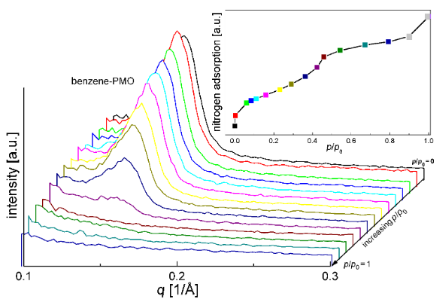
- Center (BENSC), Helmholtz-Zentrum Berlin für Materialien und Energie GmbH, Hahn-Meitner-Platz 1, D-14109 Berlin, Germany 10.3762/bjnano.3.49 Abstract Periodic mesoporous materials of the type (R′O)3Si-R-Si(OR′)3 with benzene as an organic bridge and a crystal-like periodicity within the pore walls were
- employed, from the loss of the mesoporous structure due to a lack of optimum micelle formation with the increase in the organic/functional loadings [4]. In addition the wide application of grafting for the modification of Si-MCM-41 materials is hindered due to the lack of reactive centers apart from the OH
- -groups (silanol groups) present on the inner surface [3]. Therefore periodic mesoporous organosilicas (PMOs) have attracted much attention in scientific and technological research since their discovery in 1999 by three independent groups [5][6][7]. PMO materials directly form hybrid organic–inorganic


Reduced electron recombination of dye-sensitized solar cells based on TiO2 spheres consisting of ultrathin nanosheets with [001] facet exposed
Beilstein J. Nanotechnol. 2012, 3, 378–387, doi:10.3762/bjnano.3.44
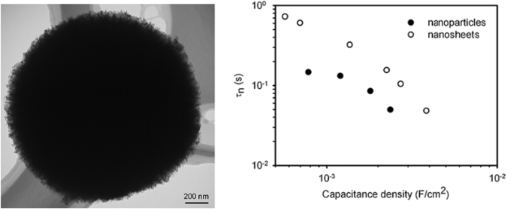
- mesoporous structure. The average thickness of the TiO2 film was 13 μm. TiCl4 post-treatment of the TiO2 film was carried out by immersing the sintered film in TiCl4 aqueous solution (40 mM) at 70 °C for 30 min. The film was washed with distilled water thoroughly and blow dried with N2 gas. The film was then
- process between electrons at the Pt electrode and I3− ions of the electrolyte, RPt. Zw is the Warburg resistance arising from the ion transport in the electrolyte and Ztl is a distribution line describing the electron transport and recombination in the mesoporous TiO2 film [13][16]. A typical EIS spectrum
- ]. The charge distribution, g(E), in a mesoporous TiO2 film is described by [18][19]: where nEF is the quasi Fermi level of TiO2, Ec the conduction band of TiO2, EF,redox the potential energy of the redox couple, Nt,0 the total density of the trapped electrons, kB is the Boltzmann constant and T0 the


Mesoporous MgTa2O6 thin films with enhanced photocatalytic activity: On the interplay between crystallinity and mesostructure
Beilstein J. Nanotechnol. 2012, 3, 123–133, doi:10.3762/bjnano.3.13
- -35392 Giessen, Germany 10.3762/bjnano.3.13 Abstract Ordered mesoporous, crystalline MgTa2O6 thin films with a mesoscopic nanoarchitecture were synthesized by evaporation-induced self-assembly (EISA) in combination with a sol–gel procedure. Utilization of novel templates, namely the block copolymers KLE
- (poly(ethylene-co-butylene)-b-poly(ethylene oxide)) and PIB6000 (CH3C(CH3)2(CH2C(CH3)2)107CH2C(CH3)2C6H4O(CH2CH2O)100H), was the key to achieving a stable ordered mesoporous structure even upon crystallization of MgTa2O6 within the mesopore walls. The effect of the calcination temperature on the ability
- of the mesoporous films to assist the photodegradation of rhodamine B in water was studied. As a result, two maxima in the photocatalytic activity were identified in the calcination temperature range of 550–850 °C, peaking at 700 °C and 790 °C, and the origin of this was investigated by using