Search results
Search for "pressure" in Full Text gives 1097 result(s) in Beilstein Journal of Nanotechnology. Showing first 200.
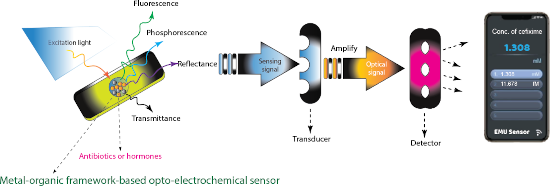
Metal-organic framework-based nanomaterials as opto-electrochemical sensors for the detection of antibiotics and hormones: A review
Beilstein J. Nanotechnol. 2023, 14, 631–673, doi:10.3762/bjnano.14.52


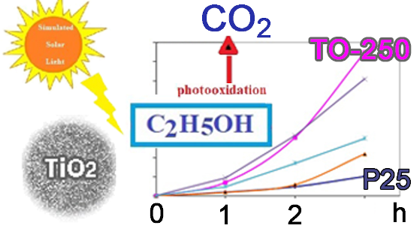
Titania nanoparticles for photocatalytic degradation of ethanol under simulated solar light
Beilstein J. Nanotechnol. 2023, 14, 616–630, doi:10.3762/bjnano.14.51
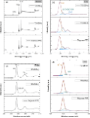
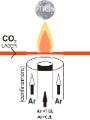
- transmission electron microscopy. Also, specific surface area and photoluminescence with optical absorbance were evaluated. By varying the synthesis parameters (especially the working pressure), different TiO2 nanopowders were obtained, whose photodegradation properties were tested compared to a commercial
- nanoparticles with dimensions of 40–80 nm, whose number increases with increasing the working pressure. The photocatalytic properties have been investigated regarding the photodegradation of ethanol vapors in Ar with 0.3% O2 using P25 powder as reference under simulated solar light. During the irradiation H2
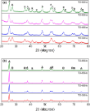
- from Spurr and Myers [38], and the medium crystallite diameter has been calculated via the Scherrer equation [39]. Both parameters are presented in Table 2. The anatase crystal structure is dominant for the sample TO-450-a, and this dominance decreases with increasing synthesis pressure. An exception




SERS performance of GaN/Ag substrates fabricated by Ag coating of GaN platforms
Beilstein J. Nanotechnol. 2023, 14, 552–564, doi:10.3762/bjnano.14.46
- Magdalena A. Zajac Boguslaw Budner Malwina Liszewska Bartosz Bartosewicz Lukasz Gutowski Jan L. Weyher Bartlomiej J. Jankiewicz Institute of High-Pressure Physics, Polish Academy of Sciences, Sokołowska 29/37, 01-142 Warsaw, Poland Faculty of Advanced Technologies and Chemistry, Military
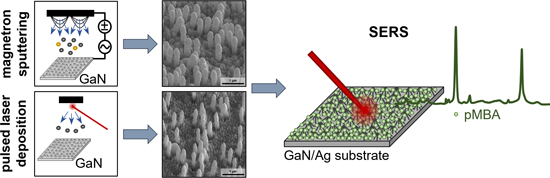
- substrates fabricated using MS and PLD under various conditions. The nanostructured GaN platforms and GaN platforms with MS-deposited Ag layers were fabricated at the Institute of High-Pressure Physics of the Polish Academy of Sciences following a procedure described previously [30][31]. In the first step
- τ =15–25 ns. The deposition was carried out in a vacuum chamber equipped with an oil-free pumping system enabling a pressure of 10−5 mbar. Constant pressure conditions (4.60 ± 0.65 × 10⁻⁵ mbar), the same laser repetition rate (5 Hz), and a constant energy of the laser pulses (265 ± 3 mJ) were used


Carbon nanotube-cellulose ink for rapid solvent identification
Beilstein J. Nanotechnol. 2023, 14, 535–543, doi:10.3762/bjnano.14.44
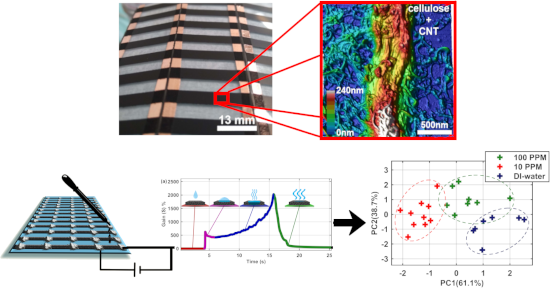
- two important properties of the liquids, namely dielectric constant and vapor pressure, on the transduction of the MFC-MWCNT sensors. These results were corroborated by independent heat flow measurements (thermogravimetric analysis). The proposed MFC-MWCNT sensor platform may help paving the way to
- mechanism of polymer composites with physicochemical characteristics such as dielectric constant, specific heat, and vapor pressure [25][56][57]. Our ink-based devices could extract those characteristics even from unknown samples and mixtures. Finally, test analysis using principal component analysis (PCA
- ) with physicochemical properties of the organic solvents (vapor pressure and dielectric constant) [63][64]. Guided by previous studies that show the electrical response is due to the swelling of CPCs [25][56][57], we found that the maximum value in the Gain curve (max) is proportional to the dielectric


Evaluation of electrosynthesized reduced graphene oxide–Ni/Fe/Co-based (oxy)hydroxide catalysts towards the oxygen evolution reaction
Beilstein J. Nanotechnol. 2023, 14, 420–433, doi:10.3762/bjnano.14.34
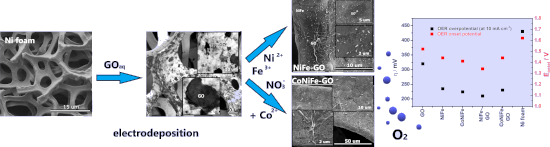
- obtained on an ultrahigh vacuum spectrophotometer at a pressure below 1.1 × 10⁻⁸ mbar at room temperature (Omicron NanoTechnology). Photoelectrons were detected by a spectrophotometer equipped with a 128-channel collector. The X-ray anode was operated at 15 keV and 300 W. The chemical composition




Plasmonic nanotechnology for photothermal applications – an evaluation
Beilstein J. Nanotechnol. 2023, 14, 380–419, doi:10.3762/bjnano.14.33
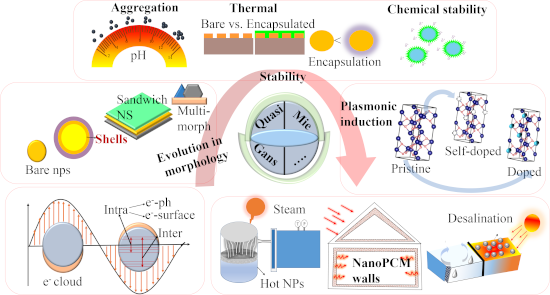
- properties by phonons can thus be effectively realized by lattice tuning of the pristine materials, that is, by defect tailoring, doping, or by providing external stimuli such as pressure. While considering the actual increases in temperature of the nanoparticle possible due to plasmonic heating, the


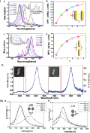


Quercetin- and caffeic acid-functionalized chitosan-capped colloidal silver nanoparticles: one-pot synthesis, characterization, and anticancer and antibacterial activities
Beilstein J. Nanotechnol. 2023, 14, 362–376, doi:10.3762/bjnano.14.31
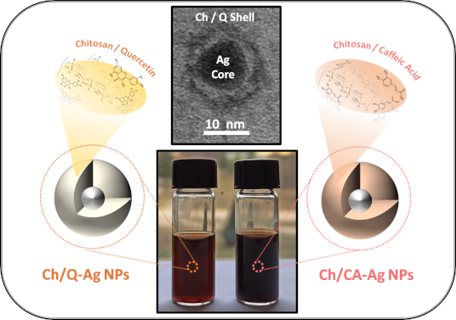
- /v) penicillin/streptomycin (Gibco; Thermo Scientific, USA) containing high-glucose DMEM (Gibco; Thermo Scientific, USA) in an incubator at 37 °C with 5% CO2 pressure. Cell viability assay (XTT) The cells were planted at approximately 10,000/100 µL per well in 96-well plates. To reveal the dose–time


The steep road to nonviral nanomedicines: Frequent challenges and culprits in designing nanoparticles for gene therapy
Beilstein J. Nanotechnol. 2023, 14, 351–361, doi:10.3762/bjnano.14.30

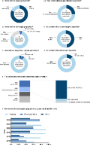
- ultracentrifugation provide ensemble detection of size distributions with their own issues and complexities (e.g., gradient-induced aggregation and pressure-induced particle reconfiguration) [65]. Determination of size on a per-particle basis, such as that obtained from NTA or the aforementioned cryo-TEM/solution AFM

Polymer nanoparticles from low-energy nanoemulsions for biomedical applications
Beilstein J. Nanotechnol. 2023, 14, 339–350, doi:10.3762/bjnano.14.29
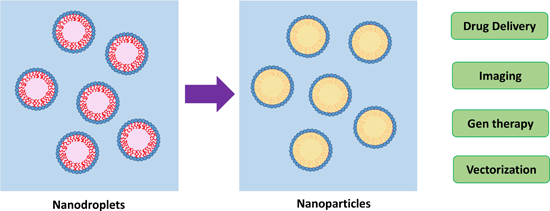
- -called high-energy methods (also called work-based methods [5]), this energy is supplied by external mechanical means, such as in high-pressure homogenizers or from ultrasound devices, with high dissipation (mostly in the form of heat) and, therefore, low energy efficiencies. In contrast, the so-called




Overview of mechanism and consequences of endothelial leakiness caused by metal and polymeric nanoparticles
Beilstein J. Nanotechnol. 2023, 14, 329–338, doi:10.3762/bjnano.14.28
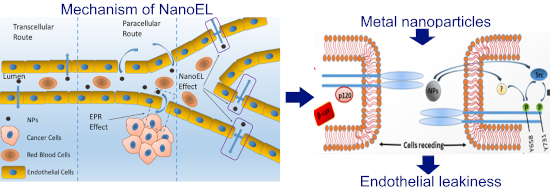
- vasoconstrictions factors (e.g., thromboxane, prostaglandin, and endothelin-1), regulating vessel tension and, thus, blood flow and pressure [4][5][6][7][8]. The endothelium also produces mediators involved in angiogenic processes (e.g., vascular endothelial growth factor (VEGF) and fibroblast growth factor (FGF


Cyclodextrins as eminent constituents in nanoarchitectonics for drug delivery systems
Beilstein J. Nanotechnol. 2023, 14, 218–232, doi:10.3762/bjnano.14.21
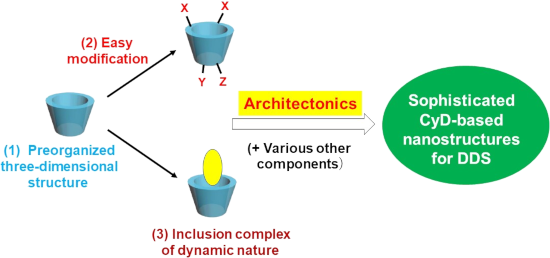
- pressure regulation (Asp-Arg-Val-Tyr-Ile-His-Pro-Phe) was precisely recognized by a molecularly imprinted β-CyD polymer [113]. Surprisingly, a difference of only one amino acid is clearly differentiated. Apparently, the solution conformation of the oligopeptide, rather than its primary structure, is


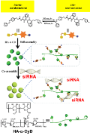


A novel approach to pulsed laser deposition of platinum catalyst on carbon particles for use in polymer electrolyte membrane fuel cells
Beilstein J. Nanotechnol. 2023, 14, 190–204, doi:10.3762/bjnano.14.19
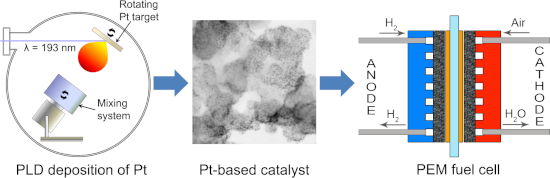
- the highly graphitized carbon material was carried out using a method similar to the methods described in detail in earlier works [34][35]. The synthesis of carbon material was carried out in a high-pressure stainless steel reactor with an internal volume of 1 dm3. It was initiated under 1 bar
- (absolute) pressure in an argon atmosphere. After thermal ignition, a mixture of magnesium and calcium formate powders (mixed with a 6:1 molar ratio) reacted vigorously in a self-propagating high-temperature regime, giving rise to MgO/CaO and carbon as the main solid-state products. After the reaction, a
- support Platinum was deposited on the synthesized carbon material C-11 and Vulcan XC-72R, one of the most popular materials used as catalyst support in the anode and cathode electrodes of PEMFCs. The platinum deposition was performed in vacuum at a pressure of around (4.6 ± 0.8) × 10−5 mbar. The PLD
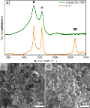

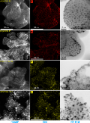
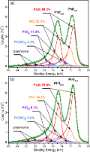


Formation of nanoflowers: Au and Ni silicide cores surrounded by SiOx branches
Beilstein J. Nanotechnol. 2023, 14, 133–140, doi:10.3762/bjnano.14.14
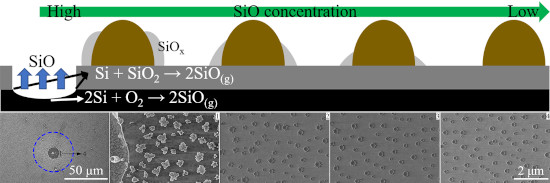
- . It has been reported after the annealing of Au thin films deposited on SiO2/Si substrates with different thicknesses of the SiO2 layer [3][4][36]. The active oxidation of Si also occurs once the Si substrate is exposed [2][3][37], which can be proved by the calculated oxygen partial pressure
- small pieces were ready for thin film deposition. Metallic bilayers of Au and Ni of three different thickness ratios and a total thickness of 20 nm were deposited onto the SiO2/Si substrate by electron beam evaporation (CS400ES, VON ARDENNE) at a working pressure of 1 × 10⁻⁶ mbar. The Au layer was


Antimicrobial and mechanical properties of functionalized textile by nanoarchitectured photoinduced Ag@polymer coating
Beilstein J. Nanotechnol. 2023, 14, 95–109, doi:10.3762/bjnano.14.11
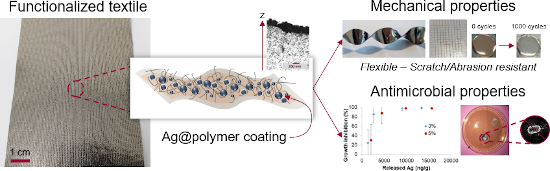
- , the use of the PEG600DA/PETIA polymer matrix leads to an increase in rigidity, linked to the trifunctional monomer architecture, which favors polymer chain cross-linking. As such, the Ag@PEG600DA/PETIA coatings are rendered more sensitive to this type of deformation, when pressure is applied to the



Combining physical vapor deposition structuration with dealloying for the creation of a highly efficient SERS platform
Beilstein J. Nanotechnol. 2023, 14, 83–94, doi:10.3762/bjnano.14.10
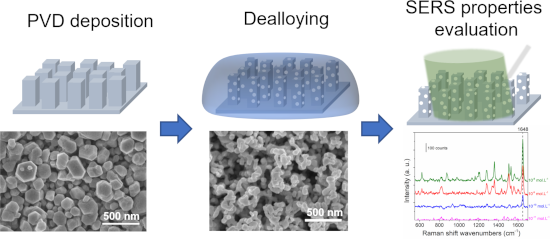
- was tuned to 25, 50, and 75 W to create thin films with 18, 30, and 36 atom % of silver, respectively. The deposition was performed over a substrate rotating at 1.6 rpm. For all depositions the base pressure was less than 5 × 10⁻⁶ Torr and the deposition pressure was fixed to 5 × 10⁻³ Torr. The




Upper critical magnetic field in NbRe and NbReN micrometric strips
Beilstein J. Nanotechnol. 2023, 14, 45–51, doi:10.3762/bjnano.14.5
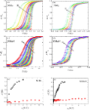
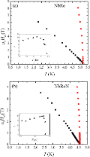
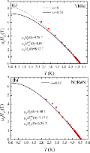
- Hc2⟂. We have not observed a positive curvature of Hc2⟂(T) near Tc as it was in the case of two-band superconductivity [44] or proximity-coupled superconducting systems [45][46]. Experimental NbRe and NbReN films were sputtered on oxidized Si substrates in a UHV dc magnetron system with base pressure
- of 1 × 10⁻⁸ mbar. The films were deposited at room temperature from a stoichiometric NbRe (Nb0.18Re0.82) 99.95% pure target of 5 cm diameter at a power of 350 W. NbRe films, 8 nm thick, were grown at a Ar pressure of 4 μbar, which resulted in a deposition rate of 0.3 nm/s. NbReN films, 10 nm thick
- , were reactively sputtered in a mixture of inert Ar (85%) and reactive N2 (15%) gas at a total pressure of 3.5 μbar at a rate of 0.36 nm/s. NbRe films were patterned by standard optical lithography and lift-off procedures to realize a Hall bar geometry of width w = 10 μm and a distance between the

Atmospheric water harvesting using functionalized carbon nanocones
Beilstein J. Nanotechnol. 2023, 14, 1–10, doi:10.3762/bjnano.14.1
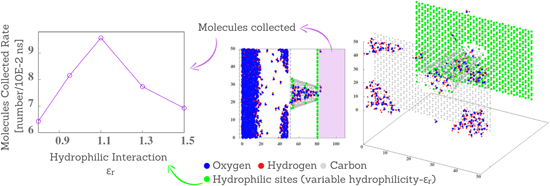
- addition to the hydrophobicity described above. The phenomena of density increasing with temperature at constant pressure and diffusion coefficients increasing with density at constant temperature were observed in experiments and simulations in bulk water [22][23][24]. Water presents both super flow and
- super flow in nanostructures has been explored in processes of separating water from salt or from other contaminants. This high mobility of water under nanoconfinement requires huge pressure and, consequently, a lot of energy [27][28]. In order to help water entrance and decrease the amount of required
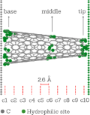
- pressure, nanotubes have been functionalized with hydrophilic groups [29][30]. The addition of hydrophilic regions in small diameter environments, however, decreases the velocity of water molecules [31]. The high flow of water in nanostructures is also useful for capturing water from the atmosphere




Electrical and optical enhancement of ITO/Mo bilayer thin films via laser annealing
Beilstein J. Nanotechnol. 2022, 13, 1589–1595, doi:10.3762/bjnano.13.133
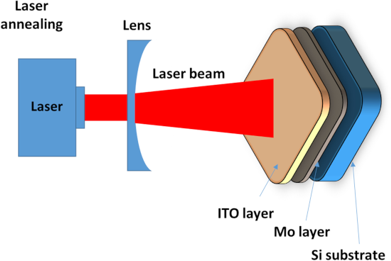
- (Quorum Q300T D) at 10−4 mbar pressure. The magnetron sputter contains a double target with high purity (approx. 99.99%). The first target is for sputtering ITO (90 wt % In2O3 and 10 wt % SnO2), and the second target is for sputtering Mo. Before deposition, the Si and the glass samples were cut into


Induced electric conductivity in organic polymers
Beilstein J. Nanotechnol. 2022, 13, 1551–1557, doi:10.3762/bjnano.13.128
- thermosensors were calibrated by the 4He vapor pressure and by the reference points of superconducting transitions in pure bulk superconductors (Al, In, Sn, Pb). The resulting absolute error in determining the temperature was ≈10 mK, while the relative error was less than 1 mK. Repeated measurements of Tc of



Frequency-dependent nanomechanical profiling for medical diagnosis
Beilstein J. Nanotechnol. 2022, 13, 1483–1489, doi:10.3762/bjnano.13.122
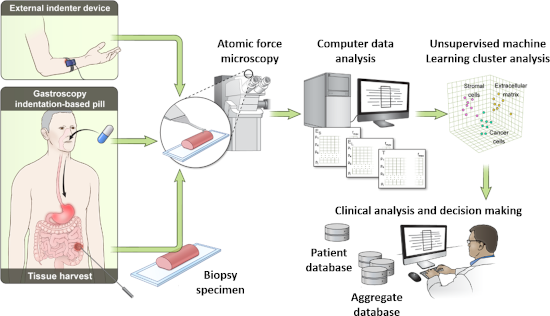
- property approximations, for example in the study of arterial degeneration [34][35]. Besides the above frequency-dependent representation, other important measurements can be recorded, such as general topography and morphology, cell or tissue adhesive properties, internal hydrostatic pressure, and surface


Structural studies and selected physical investigations of LiCoO2 obtained by combustion synthesis
Beilstein J. Nanotechnol. 2022, 13, 1473–1482, doi:10.3762/bjnano.13.121
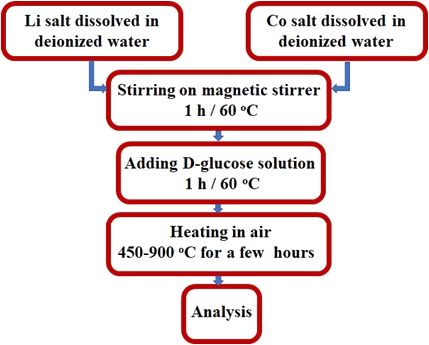
- impurities from the surface of the tested material. Adsorption measurements were performed with nitrogen at 77 K. For each sample, an analysis was performed at 15 measurement points in the range of 0.05–0.3 P/P0 (relative pressure). This is the range of the SSA study. Above this range, the trend line bends
- with Mn were studied using impedance spectroscopy. For conductivity measurements, pellets of ca. 1.5 mm thickness and 5.15 mm in diameter were prepared from the synthesized material. The powder was pressed at 20 MPa pressure for 1 min at room temperature. The round surfaces of the samples were covered




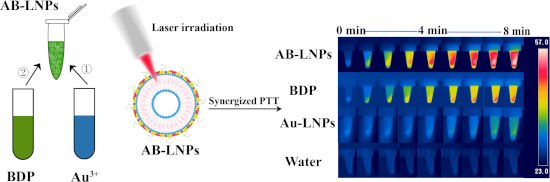
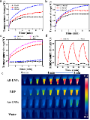
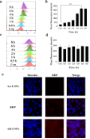
Facile preparation of Au- and BODIPY-grafted lipid nanoparticles for synergized photothermal therapy
Beilstein J. Nanotechnol. 2022, 13, 1432–1444, doi:10.3762/bjnano.13.118
- etherate (BF3·OEt2) and 2,4-dimethylpyrrole were freshly purified by distillation under reduced pressure. Synthesis and characterization of BDP All chemical reagents were obtained from commercial suppliers and used without further purification. 1H nuclear magnetic resonance (NMR) and 13C NMR spectra were
- over anhydrous Na2SO4, filtered, and concentrated under reduced pressure to afford the crude product. The crude product was purified via silica gel column chromatography using DCM/PE = 1:1 as eluent to obtain a green solid. 1H NMR (500 MHz, CDCl3) δ 8.06 (d, J = 16.5 Hz, 2H), 7.54 (d, J = 8.7 Hz, 4H




Dry under water: air retaining properties of large-scale elastomer foils covered with mushroom-shaped surface microstructures
Beilstein J. Nanotechnol. 2022, 13, 1370–1379, doi:10.3762/bjnano.13.113
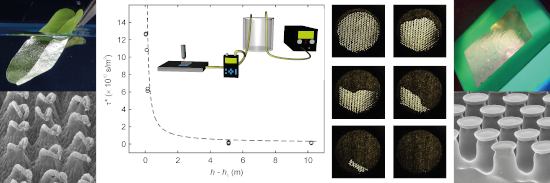
- air layer under water for more than two weeks. Further, the stability of the air layer under pressure was investigated and these results are compared with the predicted theoretical values for air retention of microstructured surfaces. Here, we could show that they fit to the theoretical predictions
- , i.e., for immersion depth below hmax the air layer is persistent and does not vanish, above it will disappear in time τ. All following calculations were performed for a temperature of 20 °C and an atmospheric pressure patm = 1 bar. The maximum persistence depth is given by whereas σ = 72.75 mN/m is
- immersion depth much deeper than hmax In order to simulate even greater immersion depth of the order of several meters the air layer kept by the microstructured elastomer foil was analyzed within a home-build pressure chamber. The setup is shown in Figure 4. The pressure chamber was connected to a


Straight roads into nowhere – obvious and not-so-obvious biological models for ferrophobic surfaces
Beilstein J. Nanotechnol. 2022, 13, 1345–1360, doi:10.3762/bjnano.13.111
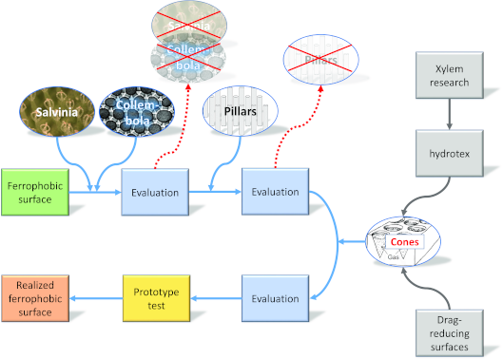
- of the air/water interface are the peculiar combination of the superhydrophobic surface of the hairs with the hydrophilic tip of the “eggbeater” structure [5] and the circumstance that, upon perturbation, for example, upon pressure changes, they allow for an “air spring” effect within the trapped air
- soil or water bodies that contain a high concentration of organic liquids that are, for instance, the product of decay processes and may reduce considerably the surface tension of water. In addition, the plastron is able to withstand external pressure exceeding 0.4 MPa. The air, which is not able to
- escape from the pockets formed by the honeycombs, is compressed but expands again as soon as the pressure is released, reestablishing the plastron [21][22]. The straight pathway does not provide a solution Transfer problems with the biological models. As fascinating as the air-holding hair cover of


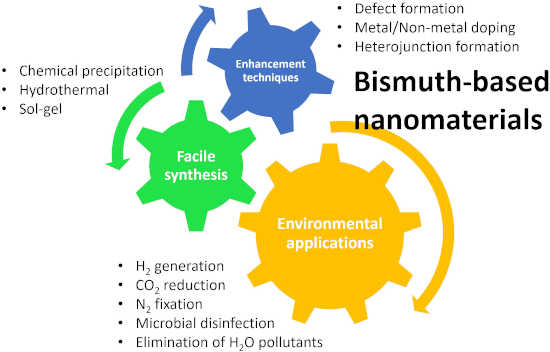
Recent trends in Bi-based nanomaterials: challenges, fabrication, enhancement techniques, and environmental applications
Beilstein J. Nanotechnol. 2022, 13, 1316–1336, doi:10.3762/bjnano.13.109