


Search results
Search for "quartz" in Full Text gives 415 result(s) in Beilstein Journal of Nanotechnology. Showing first 200.
Two-dimensional photonic crystals increasing vertical light emission from Si nanocrystal-rich thin layers
Beilstein J. Nanotechnol. 2018, 9, 2287–2296, doi:10.3762/bjnano.9.213
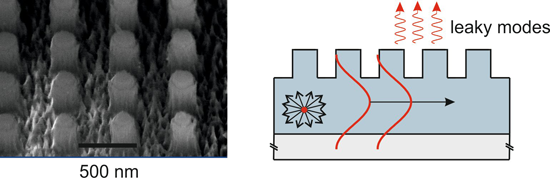
- contrast between the SiNC-rich layer and the quartz substrate has to be relatively low. As it will be shown later, this leads in a real sample to spectral overlap of the two modes due to spectral broadening and enables to reach high extraction efficiencies. The low refractive-index contrast will also

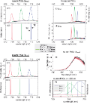


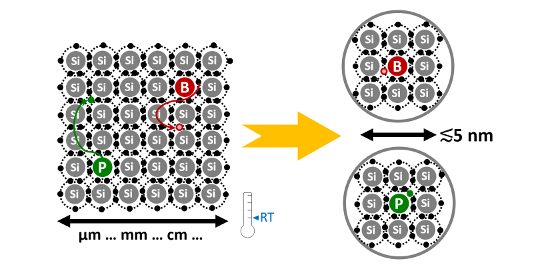
Intrinsic ultrasmall nanoscale silicon turns n-/p-type with SiO2/Si3N4-coating
Beilstein J. Nanotechnol. 2018, 9, 2255–2264, doi:10.3762/bjnano.9.210
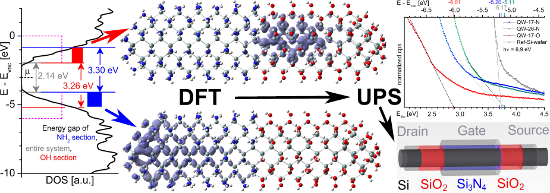
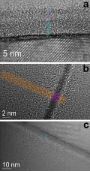
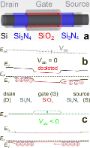
- -type Si wafers (Sb doping, 5 to 15 × 10−3 Ω cm) of (111)-surface orientation underwent wet-chemical cleaning. After deposition the wafers were annealed in a quartz tube furnace for 1 min at 1100 °C in pure N2 ambient to induce Si crystallization. Subsequently, the samples were H2-passivated at 450 °C





Dumbbell gold nanoparticle dimer antennas with advanced optical properties
Beilstein J. Nanotechnol. 2018, 9, 2188–2197, doi:10.3762/bjnano.9.205
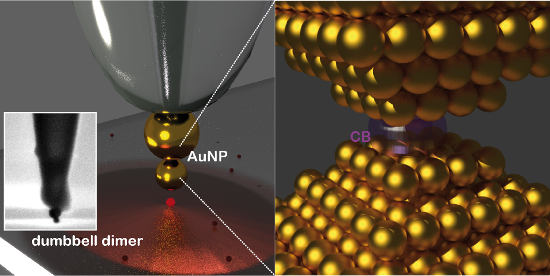
- advantage of AFM manipulation methods, CB[n] is ideally suited to mediate sub-nanometer gap formation. For this, a sharply pointed glass tip is glued to a piezoelectric quartz tuning fork (Figure 1C), which enables to control the tip position with respect to AuNPs deposited on a glass surface with sub
- formed of spherical AuNPs attached to a sharply pointed glass tip. Inset: Magnification to the gap region showing the aligned CB[n]s on the NP surfaces, which results in a sub-nanometer gap distance. (C) Macroscale picture of a glass tip attached to a piezoelectric quartz tuning fork acting as a force




Filling nanopipettes with apertures smaller than 50 nm: dynamic microdistillation
Beilstein J. Nanotechnol. 2018, 9, 2181–2187, doi:10.3762/bjnano.9.204
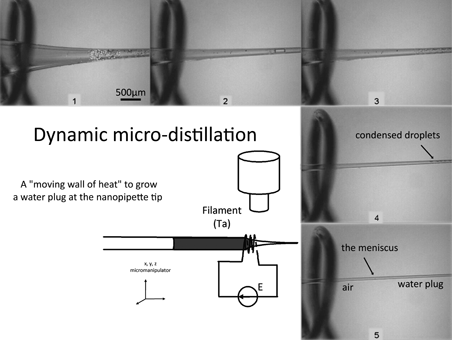
- . Results and Discussion Quartz capillaries, being of pure silica, have certain intrinsic properties (low dielectric constant, low loss factor, high volume resistivity, strength and chemical purity) that make them appropriate for the reproducible electrical measurements described below. Notably, they
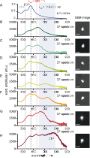
- that fills 100% of nanopipettes. This dynamic microdistillation process can be applied to fill any nanopipette, whatever its shape or tip hole. The process is as follows: Due to the heating involved, a quartz nanopipette is recommended. A wall of heat is moved along the nanopipette. Deionized water
- nanopipette reliably usable in any experimental application. Experimental Nanopipette fabrication The capillaries used are pure silica tubes (quartz tubes) from Sutter (HERAEUS HSQ300) with 1 mm outer diameter and inner diameters of 300, 500 or 700 µm. Due to their high melting temperature, they are pulled


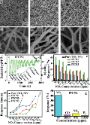
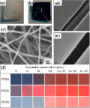
Electrospun one-dimensional nanostructures: a new horizon for gas sensing materials
Beilstein J. Nanotechnol. 2018, 9, 2128–2170, doi:10.3762/bjnano.9.202






Localized photodeposition of catalysts using nanophotonic resonances in silicon photocathodes
Beilstein J. Nanotechnol. 2018, 9, 2097–2105, doi:10.3762/bjnano.9.198
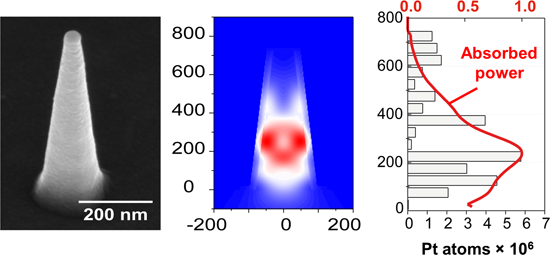
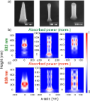
- the electrolyte, which was illuminated through a quartz window. The electrolyte consisted of an aqueous solution of chloroplatinic acid (4 mM) and Na2SO4 (0.1 M), with the pH value adjusted to 11 with 2 M NaOH. The back contact of the sample consisted of 4 nm of chromium and 50 nm of gold deposited


Nanoconjugates of a calixresorcinarene derivative with methoxy poly(ethylene glycol) fragments for drug encapsulation
Beilstein J. Nanotechnol. 2018, 9, 2057–2070, doi:10.3762/bjnano.9.195
- . Fluorescence spectra were recorded on a Varian CaryEclipse spectrofluorimeter equipped with a Cary Temperature Controller. Absorbance measurements were performed in a Lambda 35 UV–vis spectrometer (Perkin Elmer Instruments) in quartz cells. Absorbance measurements at different temperatures were carried out
- using a Specord 50 plus instrument of Analytic Jena AG in quartz cells of 1 cm path length. The hemolytic activity of C11-mPEG against human red blood cells (hRBC) was tested by the method reported in [39]. Small-angle X-ray scattering (SAXS) data for samples were collected with the Bruker AXS Nanostar
- 2.5 nm, 1 cm quartz cuvettes were employed at 25 °C. The ratio of first (372 nm) and third (381 nm) emission band for every spectrum was estimated and the cac values were determined from the dependence of I/III on the concentration of macrocycle or mPEG-550. Preparation of micelles of 3 for DLS and


Recent highlights in nanoscale and mesoscale friction
Beilstein J. Nanotechnol. 2018, 9, 1995–2014, doi:10.3762/bjnano.9.190
- , surface-force apparatus (SFA), and quartz-crystal microbalance (QCM) experiments measure the system frictional response in terms of crucial, but averaged, physical quantities, colloidal friction provides an unprecedented real-time insight into the dynamical mechanisms at play in 2D contacts, excitingly


Self-assembled quasi-hexagonal arrays of gold nanoparticles with small gaps for surface-enhanced Raman spectroscopy
Beilstein J. Nanotechnol. 2018, 9, 1977–1985, doi:10.3762/bjnano.9.188
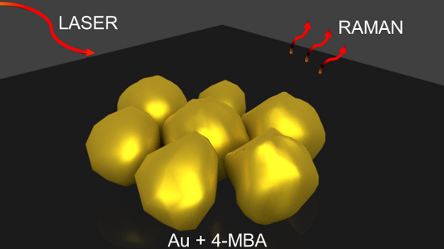
- /mL and stirred for 2 days. The micelles were loaded with chlorauric acid (HAuCl4, loading parameter (L = 0.5), Sigma-Aldrich) and stirred again for 2 days. Spin-coating was applied to cover the substrate with a monolayer of the gold-loaded micelles (30 s at 2000 rpm). Electroless deposition A quartz
- with a quartz glass slide (Figure 1b). In a third step the nanoparticles are enlarged by electroless deposition (Figure 1c), and finally the polymer is removed by an oxygen plasma treatment (Figure 1d). SEM images of the primary distribution of the gold precursor particles without any size increase by
- silicon substrate: (a) Gold nanoparticles with block copolymer micelles after spin-coating. (b) Deep UV illumination with water and a quartz glass on top of the substrate. (c) Electroless deposition. (d) Substrate after oxygen plasma, which removes the organic components. SEM images of the gold precursor



Synthesis of carbon nanowalls from a single-source metal-organic precursor
Beilstein J. Nanotechnol. 2018, 9, 1895–1905, doi:10.3762/bjnano.9.181
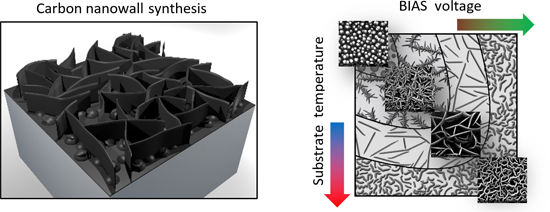
- points of the CNWs synthesized on stainless steel (Figure 8a), aluminium (Figure 8b) and silicon (Figure 8d) show a similar slope compared to the data from Kurita et al. (quartz substrates with different catalytic layers, 532 nm, 0.5–3.0 µm), while the data points for the CNWs on nickel as substrate show


SO2 gas adsorption on carbon nanomaterials: a comparative study
Beilstein J. Nanotechnol. 2018, 9, 1782–1792, doi:10.3762/bjnano.9.169

- with a total length of 5–20 μm. SWNTs have a diameter of ca. 1.5 nm, a length of 1–5 µm and were produced by using CVD with a purity of >95%. Vertically aligned carbon nanotubes (VACNTs) were synthesized in our lab over a Si/SiO2 (600 nm) substrate in a quartz furnace using water-assisted chemical


Preparation of micro/nanopatterned gelatins crosslinked with genipin for biocompatible dental implants
Beilstein J. Nanotechnol. 2018, 9, 1735–1754, doi:10.3762/bjnano.9.165
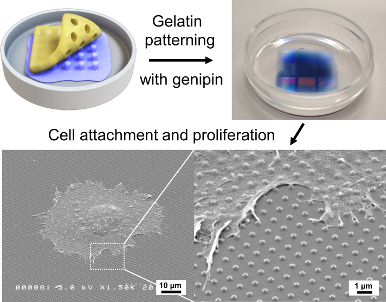
- rubber replica molds were prepared according to methods previously reported [11][12][14]. Quartz and silicon master molds were purchased from Kyodo International, Inc. (Kawasaki, Japan). An area of 5 × 5 mm2 was patterned as follows: Grooves/ridges, holes, pillars with width or diameter of 2 µm, 1 µm, or








Toward the use of CVD-grown MoS2 nanosheets as field-emission source
Beilstein J. Nanotechnol. 2018, 9, 1686–1694, doi:10.3762/bjnano.9.160
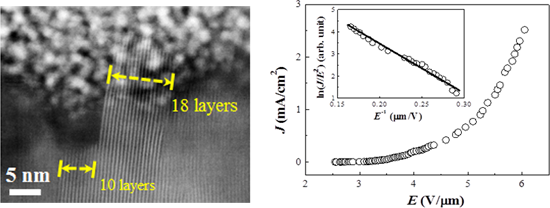
- on the NSs transferred onto a conducting fluorine-tin-oxide (FTO) substrate. Experimental Sample preparation The NSs were grown on SiO2/Si substrates via double sulfurization of a sputter-deposited 50 nm Mo film using an ambient-pressure CVD technique. Flushing of the quartz tube using Ar gas stream
- placed at the 40 °C temperature zone and the 850 °C temperature zone (total 440 g) along with the Mo film sample placed at the 850 °C temperature zone in the downstream of the Ar flow in the quartz tube reactor. In the first sulfurization step of 30 min the S powder was placed at the 800 °C zone. The
- optimized second sulfurization step was performed by inserting the quartz tube in the hot zone of the furnace, such that the S powder placed at 40 °C reaches the 400 °C temperature zone. The sample remained at 850 °C as the quartz reactor was moved over a few centimeters. Wet chemical transfer A polymer



Closed polymer containers based on phenylboronic esters of resorcinarenes
Beilstein J. Nanotechnol. 2018, 9, 1594–1601, doi:10.3762/bjnano.9.151
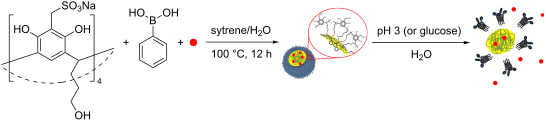
- spectrophotometer. A quartz cell of 1 cm path length was used for all fluorescence measurements. Fl, Py and PTS were excited at 461, 337 and 360 nm, respectively. Chemicals Resorcinol, Na2SO3, paraldehyde, St, BA, Fl, Py and PTS were purchased from Sigma-Aldrich and Acros Organics. All materials were used as


Evaluation of replicas manufactured in a 3D-printed nanoimprint unit
Beilstein J. Nanotechnol. 2018, 9, 1573–1581, doi:10.3762/bjnano.9.149
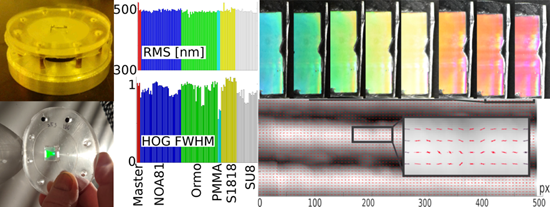
- microelectronics, optics, photonic integrated circuits, plasmonics or microfluidics [3]. NIL is customarily split into three categories, “hard”, “soft” and “hybrid” NIL [4], depending on the kind of mold employed in the transfer. Hard NIL uses molds made of quartz or silicon, and allows for the transfer of


Photoluminescence of CdSe/ZnS quantum dots in nematic liquid crystals in electric fields
Beilstein J. Nanotechnol. 2018, 9, 1544–1549, doi:10.3762/bjnano.9.145
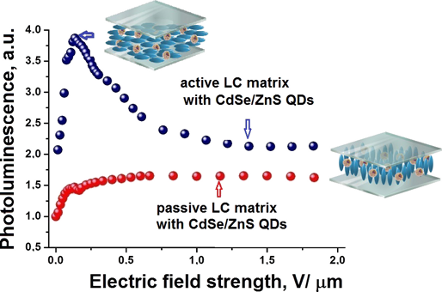
- of two quartz substrates with a fixed gap of about 33 μm. Both substrates were coated by cathode sputtering with transparent conductive electrodes based on indium tin oxide. Orienting layers of rubbed polyimide and chromolane were used to obtain a planar or vertical orientation of the LC molecules
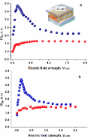
- I/I0 (a) and decay times t/t0 (b) of the QD photoluminescence as functions of the electric field strength applied to LC cells with a planar (blue circles) and vertical (red circles) alignment. The insert shows the structure of a LC cell: 1 - quartz substrates, 2 - ITO electrode, 3 - orienting layer


Absence of free carriers in silicon nanocrystals grown from phosphorus- and boron-doped silicon-rich oxide and oxynitride
Beilstein J. Nanotechnol. 2018, 9, 1501–1511, doi:10.3762/bjnano.9.141
- SRO, or respectively, SRON were deposited on Si and quartz glass substrates by PECVD using processes described in [16][17]. Small amounts of 1% PH3/Ar, or respectively, 10% B2H6/SiH4 were added to the Si-rich layers (both SRO and SRON) whereas in all cases the SiO2 barrier layers remained undoped. All
- samples were annealed for 1 h in ultra-pure N2 in a quartz tube furnace at 1100 °C (SRO) and 1150 °C (SRON). The thicknesses of the Si-rich oxide layers determine the mean size of the Si NCs to be of approximately the size of the initial layer thickness. Samples dedicated to luminescence and electrical


Electrostatically actuated encased cantilevers
Beilstein J. Nanotechnol. 2018, 9, 1381–1389, doi:10.3762/bjnano.9.130
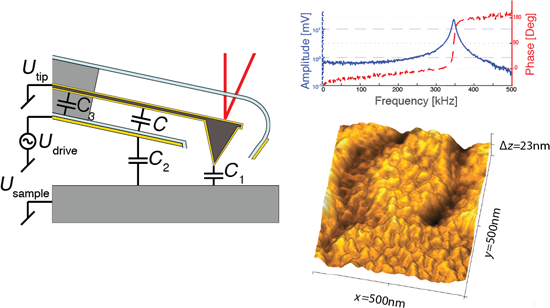
- peaks include adding damping elements [5][6] or using alternative excitation methods such as resistive thermal [7][8], piezoelectric [9], electrostriction [10], or quartz-crystal tuning forks [11][12] that all solely excite the cantilever without inducing motion of the entire chip or the surrounding




Review on nanoparticles and nanostructured materials: history, sources, toxicity and regulations
Beilstein J. Nanotechnol. 2018, 9, 1050–1074, doi:10.3762/bjnano.9.98

- process to synthesize ≈5 nm diameter PbS NPs for hair dye [23]. Similarly, “Egyptian blue” was the first synthetic pigment which was prepared and used by Egyptians using a sintered mixture nanometer-sized glass and quartz around 3rd century BC [24]. Egyptian blue represents a multifaceted mixture of
- CaCuSi4O10 and SiO2 (both glass and quartz). In ancient geographical regions of the Roman Empire, including countries such as Egypt, Mesopotamia, and Greece, the extensive use of Egyptian blue for decorative purposes has been observed during archaeological explorations. The synthesis of metallic NPs via


Enzymatically promoted release of organic molecules linked to magnetic nanoparticles
Beilstein J. Nanotechnol. 2018, 9, 986–999, doi:10.3762/bjnano.9.92
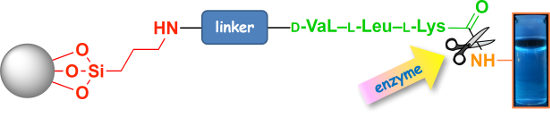
- equal to 10 °C/min. The fluorescence spectra were acquired between 350 and 500 nm (λex = 345 nm) at 25 °C at a concentration of NPs of 0.16 mg/mL. A Fluorolog spectrofluorometer (Horiba Jobin-Yvon, Edison, NJ) and 10 mm path length quartz cells were used. DC magnetization was performed in a dc




Electro-optical interfacial effects on a graphene/π-conjugated organic semiconductor hybrid system
Beilstein J. Nanotechnol. 2018, 9, 963–974, doi:10.3762/bjnano.9.90
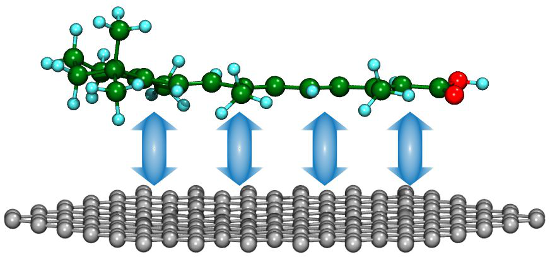
- microns in lateral size and tens, or hundreds, of graphene layers in thickness [62][63], which is exactly the substrate we used for SPM and PL measurements. Monolayer graphene flakes, necessary for achieving the highest sensitivity in Raman experiments [47][48], were deposited on Si oxide or quartz




Comparative study of sculptured metallic thin films deposited by oblique angle deposition at different temperatures
Beilstein J. Nanotechnol. 2018, 9, 954–962, doi:10.3762/bjnano.9.89
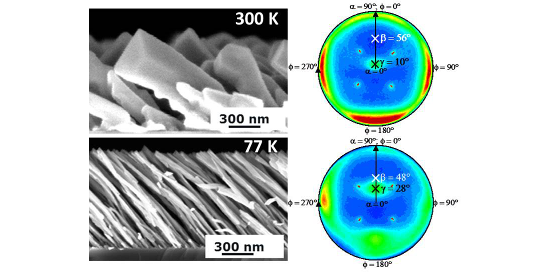
- constant at 0.5 nm/s. The deposition rate and the deposited film thickness were controlled by a crystal quartz micro balance. The distance between crucible and LN2-sample holder was 35 cm, while this distance was 30 cm for the sample holder with the heating system. The samples were analyzed by scanning



Optical orientation of nematic liquid crystal droplets via photoisomerization of an azodendrimer dopant
Beilstein J. Nanotechnol. 2018, 9, 870–879, doi:10.3762/bjnano.9.81
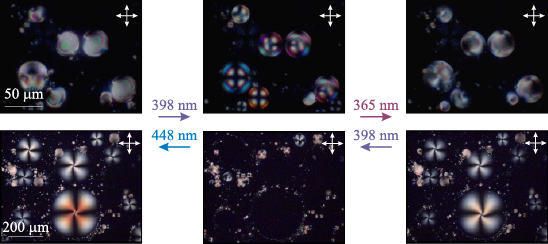
- concentrations, NLC-6816 doped with 0.1 wt % of G5 dendrimer and NLC-6816 doped with 0.1 wt % of monomer M [39], which is identical to the dendrimer terminal moieties, were investigated. These mixtures were placed into 100 μm-thick quartz cells. A planar orientation of the NLCs was reached by coating the cell


Comparative study of antibacterial properties of polystyrene films with TiOx and Cu nanoparticles fabricated using cluster beam technique
Beilstein J. Nanotechnol. 2018, 9, 861–869, doi:10.3762/bjnano.9.80
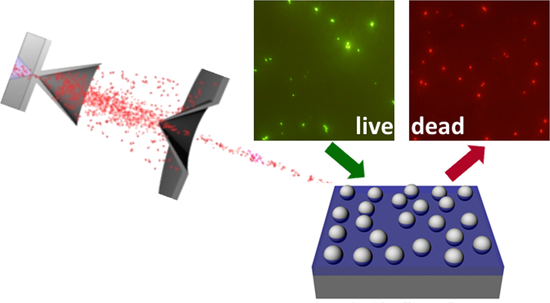
- toluene. Thin films are coated on silicon and quartz substrates of 10 × 10 mm2 and annealed at 110 °C (above the glass transition temperature). The thickness of PS films was measured by ellipsometry and found to be 50 ± 5 nm. Ti clusters are produced by magnetron sputtering in a cluster source similar to




Perfusion double-channel micropipette probes for oxygen flux mapping with single-cell resolution
Beilstein J. Nanotechnol. 2018, 9, 850–860, doi:10.3762/bjnano.9.79
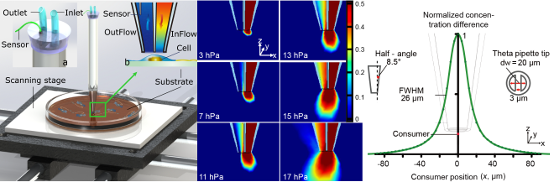
- the flow velocity field calculated from the previous study, R is the reaction rate, and is the flux, respectively. For hydrodynamic confinement verification, a 400 μm long quartz theta pipette was built at the top center in a water-filled rectangular computational region of (500 × 400 × 400 μm3). The





