


Search results
Search for "semiconductors" in Full Text gives 357 result(s) in Beilstein Journal of Nanotechnology. Showing first 200.
Cr(VI) remediation from aqueous environment through modified-TiO2-mediated photocatalytic reduction
Beilstein J. Nanotechnol. 2018, 9, 1448–1470, doi:10.3762/bjnano.9.137
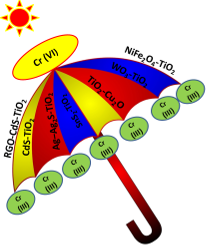
- for degradation of pollutants was first applied by Frank and Bard in 1977 to reduce CN− in water [57][58]. Thereafter, significant research on photocatalytic degradation of hazardous organic compounds and reduction of toxic heavy metal ions (Cr(VI)) was carried out over various semiconductors upon
- friendly nature [69][70][71][72]. Moreover, photoexcited TiO2 surfaces possess super hydrophilic properties which are evident from their excellent anti-fogging and self-cleaning abilities [73]. The unique feature of TiO2 among other semiconductors is that the reduction of Cr(VI) occurs at its CB since the
- semiconductors as they have good electron collector and transporter properties. These materials suppress the recombination of charge carriers by effectively transporting the photoinduced electrons of the semiconductor, resulting in high photocatalytic activity [111][112][113][114][115][116]. In addition to this


Robust midgap states in band-inverted junctions under electric and magnetic fields
Beilstein J. Nanotechnol. 2018, 9, 1405–1413, doi:10.3762/bjnano.9.133
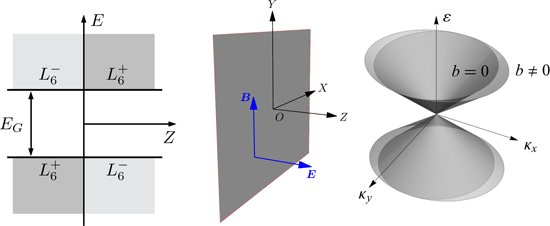
- spin Hall effect [5]. However, no clear signatures of conductance quantization have been observed yet [6][7]. Besides II–VI compound semiconductors, such as HgTe, IV–VI semiconductors support non-trivial edges states as well [8]. In this regard, Dziawa et al. reported evidence of topological
- field is applied along the growth direction, parallel to the electric field, will also be briefly discussed for comparison. Theoretical model We consider heterojunctions of IV–VI compound semiconductors, such as Pb1−xSnxTe and Pb1−xSnxSe. The latter are known to shift from being semiconductors to
- the results [28]. In the absence of external fields, it is well known that band-inverted junctions support topologically protected states located at the interface. Their energy lies within the common gap of the two semiconductors and the dispersion relation is a Dirac cone [13][15][16][20]. The Dirac

![[Graphic 1]](/bjnano/content/inline/2190-4286-9-133-i26.svg?max-width=637&scale=1.18182) and
and ![[Graphic 2]](/bjnano/content/inline/2190-4286-9-133-i27.svg?max-width=637&scale=1.18182) band-edge profile of an abrupt band-inverted junction with aligned and same-sized gaps, l...
band-edge profile of an abrupt band-inverted junction with aligned and same-sized gaps, l...


![[Graphic 35]](/bjnano/content/inline/2190-4286-9-133-i60.svg?max-width=637&scale=1.18182) and b = 0.5 as a function of the electric field. It is important...
and b = 0.5 as a function of the electric field. It is important...

Ag2WO4 nanorods decorated with AgI nanoparticles: Novel and efficient visible-light-driven photocatalysts for the degradation of water pollutants
Beilstein J. Nanotechnol. 2018, 9, 1308–1316, doi:10.3762/bjnano.9.123
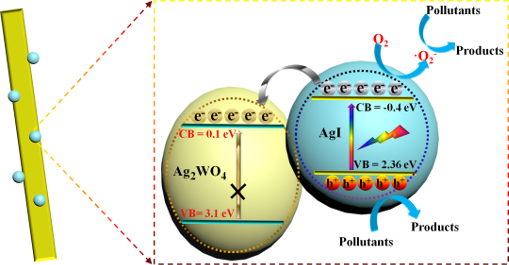
- these disadvantages [38][39][40][41][42]. The integration of VLD components with wide bandgap semiconductors having well-matched energy bands has provided a new opportunity for the development of VLD photocatalysts [12]. As a consequence, some Ag2WO4-based composites containing VLD components such as




Artifacts in time-resolved Kelvin probe force microscopy
Beilstein J. Nanotechnol. 2018, 9, 1272–1281, doi:10.3762/bjnano.9.119
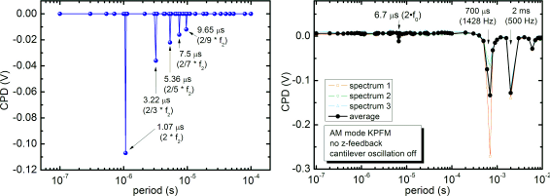
- 10.3762/bjnano.9.119 Abstract Kelvin probe force microscopy (KPFM) has been used for the characterization of metals, insulators, and semiconducting materials on the nanometer scale. Especially in semiconductors, the charge dynamics are of high interest. Recently, several techniques for time-resolved
- function [3][4][5]. (ii) The CPD can reflect spatial variations in the charge density [6][7][8], individual localized charges [9], or even partial charge densities within a single molecule [10][11]. Finally, (iii) doping type and charge-carrier concentration in semiconductors will control the position of
- sample) to compensate the electrostatic forces between tip and sample, where the time constant of the KPFM controller is typically in the range of milliseconds. However, especially in semiconductors, and in view of points (ii) and (iii), the charge dynamics are of high interest in materials and device


Computational exploration of two-dimensional silicon diarsenide and germanium arsenide for photovoltaic applications
Beilstein J. Nanotechnol. 2018, 9, 1247–1253, doi:10.3762/bjnano.9.116
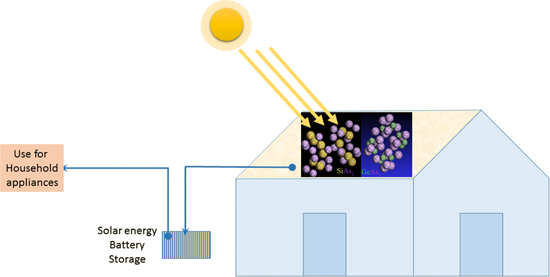
- . Furthermore, band-gap tuning is also possible by application of tensile strain. Our results highlight a new family of 2D materials with great potential for solar cell applications. Keywords: density functional theory (DFT); photovoltaic applications; solar cell; two-dimensional semiconductors; Introduction
- ]. However, they did not report the band structure or the band gap values of these materials. Later, Wu et al. performed theoretical studies on silicon and germanium arsenides [9] to predict and reaffirm that m-SiAs/GeAs and o-SiAs2/GeAs2 are indeed semiconductors. The studies were based on band-structure
- (Figure 3a–d) are semiconductors with indirect band gaps (the VBM and CBM locations are marked). The bandgaps are given in Table 2. These results are consistent with previously reported calculated values for both bulk and monolayers of GeAs2 with values of 0.99 and 1.64 eV, respectively [10]. The decrease


P3HT:PCBM blend films phase diagram on the base of variable-temperature spectroscopic ellipsometry
Beilstein J. Nanotechnol. 2018, 9, 1108–1115, doi:10.3762/bjnano.9.102
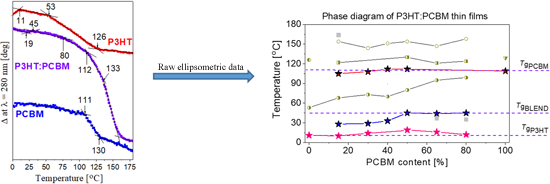
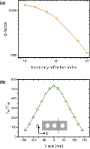
- temperature changes. Characteristic temperatures determined from the slope changes of the Δ(T) plot appeared to be very good guess values for the phase transition temperatures. Keywords: non-linear optics; organic semiconductors; spectroscopic ellipsometry; theoretical modeling; thin films; Introduction The


Room-temperature single-photon emitters in titanium dioxide optical defects
Beilstein J. Nanotechnol. 2018, 9, 1085–1094, doi:10.3762/bjnano.9.100
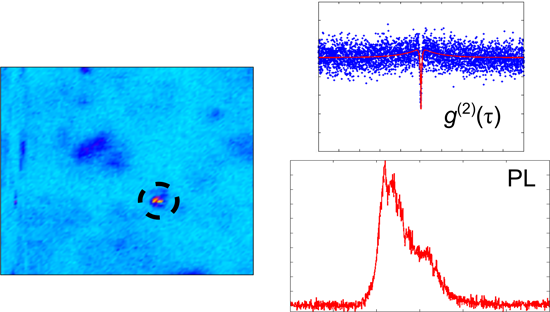
- types of single-photon emitters that include molecules [3], trapped atoms [4], quantum dots [5] and defects in diamond [6]. More recently point defects of wide-bandgap semiconductors, such as zinc oxide (ZnO) [7][8][9] and silicon carbide [10], were shown to exhibit room-temperature single-photon


Review on nanoparticles and nanostructured materials: history, sources, toxicity and regulations
Beilstein J. Nanotechnol. 2018, 9, 1050–1074, doi:10.3762/bjnano.9.98

- production methods for these carbon-based materials fabrication (except carbon black) [8]. (ii) Inorganic-based nanomaterials: These NMs include metal and metal oxide NPs and NSMs. These NMs can be synthesized into metals such as Au or Ag NPs, metal oxides such as TiO2 and ZnO NPs, and semiconductors such as


Non-equilibrium electron transport induced by terahertz radiation in the topological and trivial phases of Hg1−xCdxTe
Beilstein J. Nanotechnol. 2018, 9, 1035–1039, doi:10.3762/bjnano.9.96
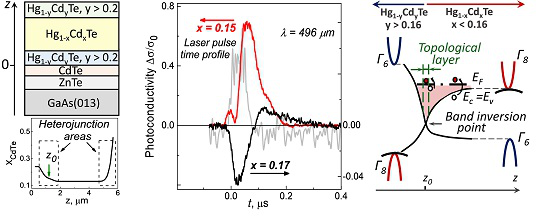
- carrier transport. Laser terahertz probing is known to be a powerful tool that may provide an insight into the electron dynamics in semiconductors, particularly, in topological insulators [9][10][11]. Study of non-equilibrium processes in Hg1−xCdxTe in the terahertz spectral range is additionally


Electro-optical interfacial effects on a graphene/π-conjugated organic semiconductor hybrid system
Beilstein J. Nanotechnol. 2018, 9, 963–974, doi:10.3762/bjnano.9.90
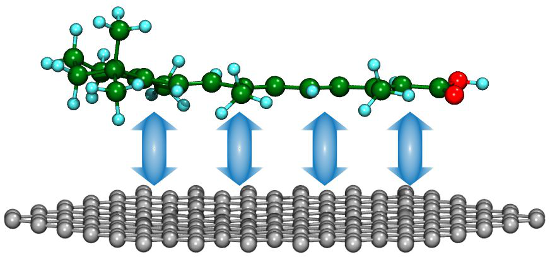
- surface potential changes on the hybrid system. In summary, interface-induced organized structures atop 2D materials may have an important impact on both design and operation of π-conjugated nanomaterial-based hybrid systems. Keywords: DFT calculations; graphene; organic semiconductors; scanning probe
- microscopy; self-assembly; Introduction Organic semiconductors offer a wide range of possible applications, from thin-film transistors to sensors and solar cells [1][2][3][4][5][6]. Their optical and electronic properties are strongly linked to intermolecular interaction parameters associated with molecular
- ] and, thus, its optical properties are key to the successful development of devices. Since molecular packing and ordering influence optical properties of organic semiconductors [7][8][9][10][11][12][13], it is important to investigate whether the graphene-induced ordering affected the optical





Noble metal-modified titania with visible-light activity for the decomposition of microorganisms
Beilstein J. Nanotechnol. 2018, 9, 829–841, doi:10.3762/bjnano.9.77
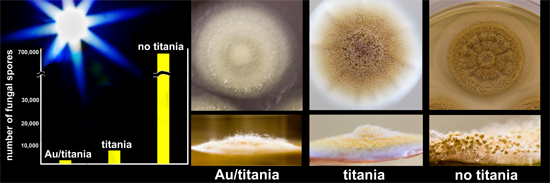
- , by morphology design [22][23][24][25][26], surface modification [27][28][29][30][31][32], doping [33][34][35][36], or the formation of heterojunctions with other semiconductors [37][38][39][40]. Modification with noble metals seems the most promising as it is well known that under UV irradiation


Facile synthesis of a ZnO–BiOI p–n nano-heterojunction with excellent visible-light photocatalytic activity
Beilstein J. Nanotechnol. 2018, 9, 789–800, doi:10.3762/bjnano.9.72
- semiconductor’s band gap. Bismuth(III)-containing semiconductors (such as bismuth oxide [17], bismuth vanadate [18][19], bismuth tungstate [20], bismuth perovskite [21], bismuth molybdate [22], etc.) have been extensively researched as a broad hybrid orbital composed of Bi 6s in the field of photocatalysis
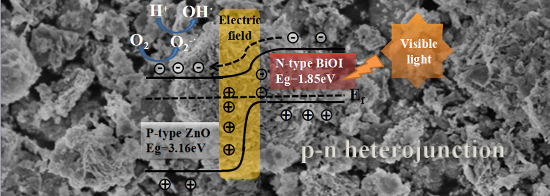
- heterojunctions could promote increased photocatalytic activity efficiency. Once the p–n junction has been formed, the inner electric field between the inner surface of two semiconductors will promote the separation efficiency of photoinduced electron–hole pairs [30][31]. Consequently, coupling an n-type metal


Surface-plasmon-enhanced ultraviolet emission of Au-decorated ZnO structures for gas sensing and photocatalytic devices
Beilstein J. Nanotechnol. 2018, 9, 771–779, doi:10.3762/bjnano.9.70
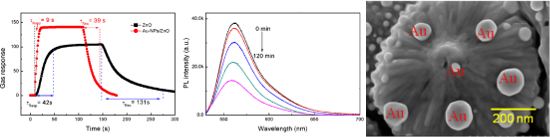
- -oxide semiconductors are still of significant consideration. In this work, we propose a simple photochemical approach to synthesize Au NPs directly deposited on the surface of pre-synthesized ZnO nanostructures synthesized by chemical bath deposition on glass substrates. Morphological evaluation





Mechanistic insights into plasmonic photocatalysts in utilizing visible light
Beilstein J. Nanotechnol. 2018, 9, 628–648, doi:10.3762/bjnano.9.59
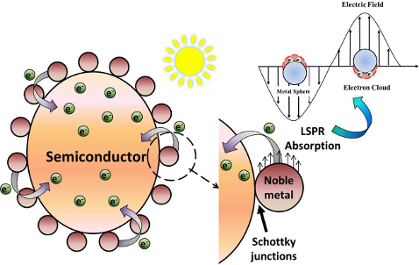
- , another distinguishing characteristic of plasmonic photocatalysts is that they also behave as an electron trap. The incorporation of a noble metal with semiconductors in the formation of Schottky junctions contributes to this behaviour [5]. This barrier formation prevents the recombination of electrons
- itself has the ability to extend the absorption of visible light [37][38][39][40][41][42][43][44]. Moreover, future studies on other semiconductors such as metal chalcogenides and metal phosphides could lead to further developments for plasmonic photocatalysts to address current environmental and energy
- of nanoparticle formation and deposition using an sustainable approach is illustrated in Figure 6. Interaction of noble metals with semiconductor materials Most of the literature claims that the incorporation of plasmonic nanoparticles with semiconductors can extend light absorption towards the





Fabrication and photoactivity of ionic liquid–TiO2 structures for efficient visible-light-induced photocatalytic decomposition of organic pollutants in aqueous phase
Beilstein J. Nanotechnol. 2018, 9, 580–590, doi:10.3762/bjnano.9.54
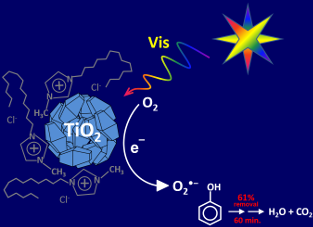
- titanium dioxide spheres results in a red-shift of absorption edge for the IL–TiO2 semiconductors. In this regard, the direct increase of the photoactivity of IL–TiO2 in comparison to pristine TiO2 was observed. The active species trapping experiments indicated that O2•− is the main active species, created
- pollutants in aqueous and gas phases requires visible-light responsive, stable materials and a basic understanding of these materials [1][2][3][4]. Although various semiconductors are considered for environmental pollution abatement, titanium dioxide (TiO2) is still the most promising due to its stability
- hindrance created by [ODMIM][Cl] at the TiO2 surface, hence a probably less firmly packed organic protection layer. Additionally, the XPS analysis also confirmed that C, N and Cl atoms are located solely on the surface of the semiconductors. Hereby, the possible mechanism of the TiO2 photoactivity




Sugarcane juice derived carbon dot–graphitic carbon nitride composites for bisphenol A degradation under sunlight irradiation
Beilstein J. Nanotechnol. 2018, 9, 353–363, doi:10.3762/bjnano.9.35
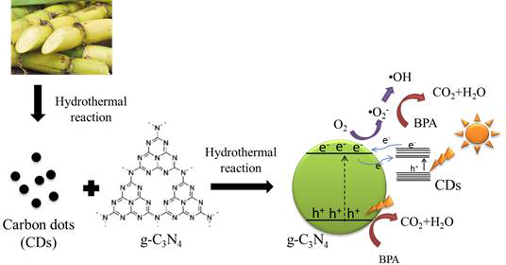
- of the positive results, the self-modification consumes concentrated alkali and acid, which is harmful to our environment and health. It has been accepted that the coupling of nanocarbon materials with other semiconductors [21] could induce synergetic effects like photosensitization, electron


Review: Electrostatically actuated nanobeam-based nanoelectromechanical switches – materials solutions and operational conditions
Beilstein J. Nanotechnol. 2018, 9, 271–300, doi:10.3762/bjnano.9.29
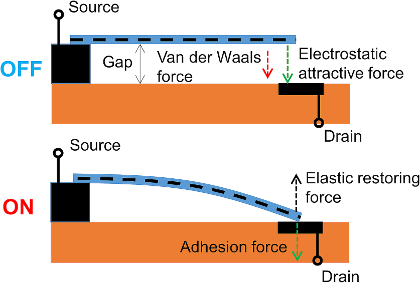
- nanostructures (e.g., thin films [5][6][7], nanobundles [8], nanowires [9][10][11][12][13][14], nanotubes [15][16]) fabricated from different materials (e.g., metals [17][18][19], semiconductors [9][10][20][21][22][23], carbon allotropes, including graphene [24][25][26][27][28][29][30][31] and carbon nanotubes
- if the Fermi level of the metal falls in between the valence and conduction bands of the semiconductor. The type of the contact (ohmic or Schottky) between two semiconductors is determined by the Fermi energies of contacting materials. The presence of a nonconductive oxide layer between the
- . Semiconductors Silicon and germanium: Both Si and Ge have a long history as semiconductor device materials. Comparable relatively high Young’s moduli (Si, 130–188 GPa [129] and Ge, 103–150 GPa) [130][131] make these materials useful for applications in NEM devices. Due to the possibility of anisotropic etching


Al2O3/TiO2 inverse opals from electrosprayed self-assembled templates
Beilstein J. Nanotechnol. 2018, 9, 216–223, doi:10.3762/bjnano.9.23
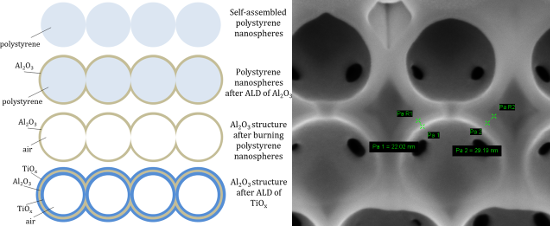
- issues with structure definition [25]. Inverse opals can be created using colloidal crystals (CCs) as templates to build close packed assemblies of air spheres. Several materials have been used as templates, for example, metal oxides [26][27][28][29], semiconductors [30] or silicon [31][32][33][34


Bombyx mori silk/titania/gold hybrid materials for photocatalytic water splitting: combining renewable raw materials with clean fuels
Beilstein J. Nanotechnol. 2018, 9, 187–204, doi:10.3762/bjnano.9.21
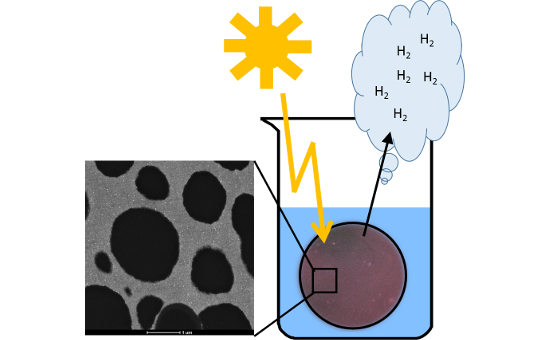
- bandgap of the TiO2 semiconductors [21]. Gallo et al. used amorphous TiO2 doped with Au and/or platinum (Pt) NPs to split water under ultraviolet (UV)-A light and simulated sunlight. Best results with 1.6 mmol/(h·g) of H2 production were obtained with Au0.5Pt0.5/TiO2 catalysts [22]. Chen et al. used




Design of photonic microcavities in hexagonal boron nitride
Beilstein J. Nanotechnol. 2018, 9, 102–108, doi:10.3762/bjnano.9.12
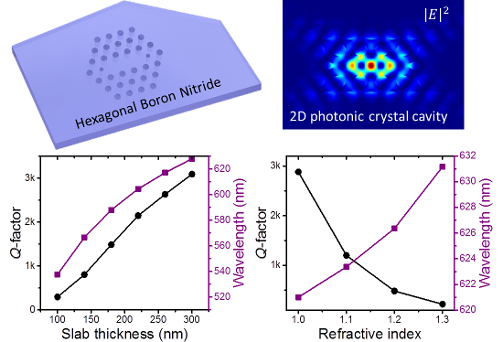
- in higher Q-factors. We also modelled the effect of the refractive index of an underlying substrate, as is shown in Figure 2c. Because the refractive index of hBN is relatively low compared to that of typical semiconductors, the increase in substrate index greatly degrades the Q-factor of the L11


Review on optofluidic microreactors for artificial photosynthesis
Beilstein J. Nanotechnol. 2018, 9, 30–41, doi:10.3762/bjnano.9.5
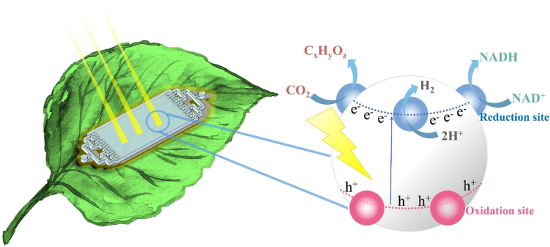
- . developed a hybrid approach that combined highly efficient light harvesting of inorganic semiconductors with biocatalysts [79]. As shown in Figure 7, they induced a non-photosynthetic bacterium with biologically precipitated CdS nanoparticles, enabling the photosynthesis of acetic acid from CO2. The CdS


Gas-sensing behaviour of ZnO/diamond nanostructures
Beilstein J. Nanotechnol. 2018, 9, 22–29, doi:10.3762/bjnano.9.4
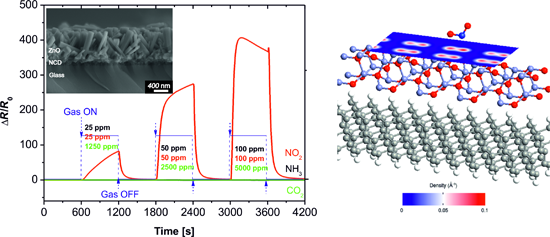
- oxides or noble metals [14][15][16][17]. Aside from n-type semiconductors, p-type semiconductor materials have also been extensively used for the detection of toxic gases [3][18][19]. Recently, nanocrystalline diamond (NCD) films have been utilized for advanced electronic devices because of their
- ), the electric resistance decreases for p-type H-terminated NCD (Figure 2b); on the contrary, with n-type ZnO the resistance increases (Figure 2d). In general, this response behaviour is in concordance with the typical gas sensing mechanism of p- and n-type semiconductors [22][31]. The gas sensing


Facile synthesis of silver/silver thiocyanate (Ag@AgSCN) plasmonic nanostructures with enhanced photocatalytic performance
Beilstein J. Nanotechnol. 2017, 8, 2781–2789, doi:10.3762/bjnano.8.277
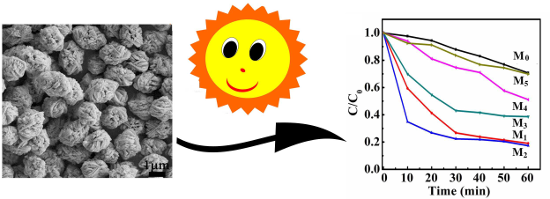
- -based semiconductors are well known due to their excellent visible-light catalytic properties, but their easy inactivation limits their utilization in practice. Aimed at this problem, a series of methods, such as doping, surface sensitization, heterojunctions and noble-metal plasma, have been adopted to
- the metal from the Fermi level directly transfer to the conduction band of AgSCN, and the vacancies remain on the surface of the Ag particles. A dipole-based resonance energy can directly excite semiconductors to produce photogenerated electron–hole pairs that can improve the visible-light catalytic
- vacancies were left on the surface of the Ag particles. The dipole-based resonance energy can directly excite semiconductors to produce photogenerated electron–hole pairs. The presence of Ag nanoparticles can not only improve the photocatalytic efficiency, but also can trap photogenerated electrons, slow


CdSe nanorod/TiO2 nanoparticle heterojunctions with enhanced solar- and visible-light photocatalytic activity
Beilstein J. Nanotechnol. 2017, 8, 2741–2752, doi:10.3762/bjnano.8.273
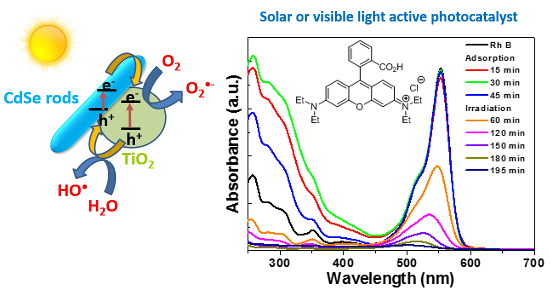
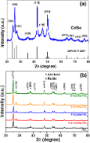
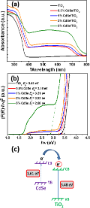
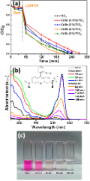
- Fakher Laatar Hatem Moussa Halima Alem Lavinia Balan Emilien Girot Ghouti Medjahdi Hatem Ezzaouia Raphael Schneider Laboratory of Semiconductors, Nanostructures and Advanced Technology (LSNTA), Center for Research and Technology Energy, Tourist Route Soliman, BP 95, 2050 Hammam-Lif, Tunisia rue
- recombination of photogenerated charge carriers (electrons and holes). To address these problems, a number of studies have been devoted to the improvement of light absorption and charge separation by hybridizing TiO2 with narrow bandgap semiconductors, doping with metal or nonmetal elements, association with
- separation. The interfacial electron transfer between two semiconductors has gained significant interest because the heterojunction improves both the optical absorption in the visible range and the charge separation yield and thus the charge carrier lifetime [3][4][5][6][7][8]. The photocatalytic activity is






Ab initio study of adsorption and diffusion of lithium on transition metal dichalcogenide monolayers
Beilstein J. Nanotechnol. 2017, 8, 2711–2718, doi:10.3762/bjnano.8.270
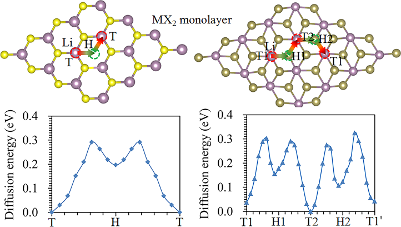
- in the 1T or 1T' phase, but only a few of them were stable in both 2H/1T or 2H/1T' phases. The results show that lithium is energetically favourable for adsorption on MX2 monolayers, which can be semiconductors with a narrow bandgap and metallic materials. Lithium cannot be adsorbed onto 2H-WS2 and
- diffusion of lithium on the stable MX2 phase were also investigated. The results show that lithium is energetically able to adsorb on MX2 monolayers, which are semiconductors with a narrow bandgap, and on metallic materials. Lithium cannot be adsorbed on 2H-WS2 and 2H-WSe2, which have a large bandgap of





