


Search results
Search for "step" in Full Text gives 1538 result(s) in Beilstein Journal of Nanotechnology. Showing first 200.
Exfoliation of titanium nitride using a non-thermal plasma process
Beilstein J. Nanotechnol. 2024, 15, 631–637, doi:10.3762/bjnano.15.53
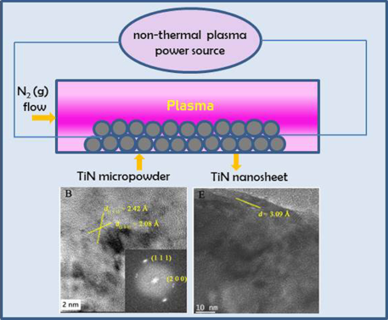
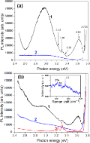
- nitride as the initial material. In addition to using fewer reagents compared to conventional methods involving acidic baths, oxidizers, ultrasound, multiple reaction steps, exfoliation, and washes, the presented method operates in a single step [18][19]. In this study, we explore the exfoliation of TiN



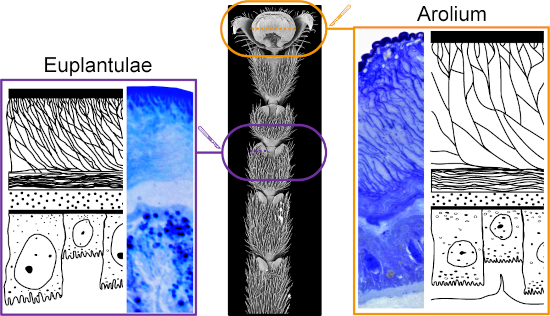
Comparative analysis of the ultrastructure and adhesive secretion pathways of different smooth attachment pads of the stick insect Medauroidea extradentata (Phasmatodea)
Beilstein J. Nanotechnol. 2024, 15, 612–630, doi:10.3762/bjnano.15.52
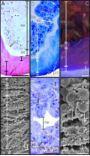
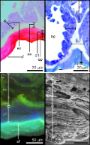
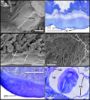
- series from 30% to 100% (each step for 20 min). All steps were performed on a shaker and at 4 °C. For the last step, the samples were embedded in Epon 812 (Glycidether 100; Carl Roth GmbH, Karlsruhe, Germany) and polymerized at 60 °C for 48 h. The embedded samples were cut into semi-thin sections of 0.2
- PBS for 30 min and two times with double-distilled water for 30 min each. Afterwards, the samples were dehydrated in an ascending ethanol series. Each step was performed on ice (4 °C) and on a shaker. Afterwards, the samples were critical point dried (Leica EM CPD300, Leica, Wetzlar, Germany). Then
- step, 10 frames averaging, and 10 random movements), reconstructed in Nrecon®1.0.7.4 (Bruker micro‐CT, Billerica, MA, USA), segmented with Amira®6.2 (Thermo Fisher Scientific, Waltham, MA, USA), and visualized with the open-source 3D creation software Blender 2.82a (Blender Foundation, Amsterdam



AFM-IR investigation of thin PECVD SiOx films on a polypropylene substrate in the surface-sensitive mode
Beilstein J. Nanotechnol. 2024, 15, 603–611, doi:10.3762/bjnano.15.51
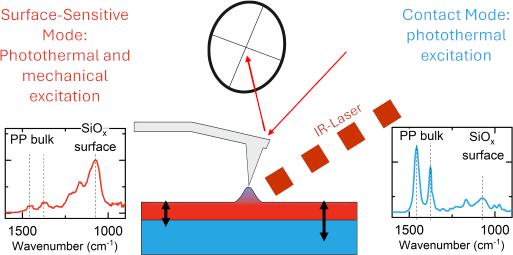
- between 0.2 and 0.5 mbar. As the gas mixture, argon, oxygen, and HMDSO (98.5% purity, Sigma-Aldrich) were used in different ratios. First, the surface was pretreated for five seconds with an oxygen-rich plasma. For this step, the argon-to-oxygen ratio was set to 1:2. For the deposition of silicon oxide


Radiofrequency enhances drug release from responsive nanoflowers for hepatocellular carcinoma therapy
Beilstein J. Nanotechnol. 2024, 15, 569–579, doi:10.3762/bjnano.15.49
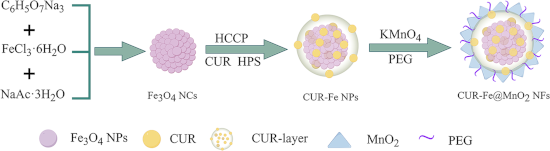
- -Fe NPs were subsequently collected by magnetic separation and stored for the next step. In addition, the content of CUR in the supernatant was detected by a microplate reader (SPECTRAMAX190, Molecular Devices, USA) at 426 nm. DLE and DEE were calculated according to the following equations: where


Directed growth of quinacridone chains on the vicinal Ag(35 1 1) surface
Beilstein J. Nanotechnol. 2024, 15, 556–568, doi:10.3762/bjnano.15.48
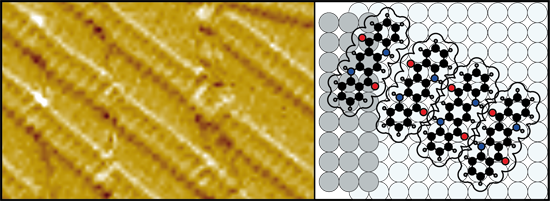
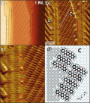
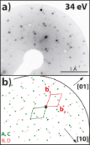
- –24873]. The vicinal surface leads to one additional chain orientation, which is parallel to the Ag step edges. However, most chains nucleate on the Ag terraces between steps with four distinct azimuthal orientations that are identical to those on Ag(100), and which are determined by the interactions
- with the (100) surface. At 300 K, the chains grow across the Ag steps, which do not break the azimuthal chain orientations. In contrast, during the deposition at sample temperatures of 400 and 500 K, the nucleation of the chains takes place at the Ag step edges. Hence, these have a strong influence on
- step edges. Keywords: Ag(100); intermolecular hydrogen bonds; one-dimensional aggregates; organic nanostructures; quinacridone; step-molecule interactions; vicinal surface; Introduction A versatile and powerful method to create nanostructures on surfaces is the self-assembly of atoms and molecules


On the additive artificial intelligence-based discovery of nanoparticle neurodegenerative disease drug delivery systems
Beilstein J. Nanotechnol. 2024, 15, 535–555, doi:10.3762/bjnano.15.47
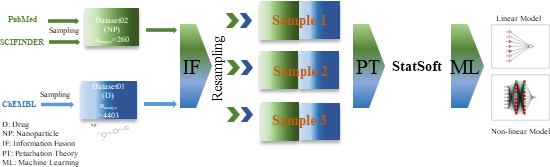
- data to be explored. As a result, N2D3S development by the additive approach requires an AI/ML technique to achieve multioutput and multilabel classification [21][22][23][24]. In addition, the AI/ML technique includes a pre-processing step to perform information fusion (IF) of the preclinical NDD assay
- preclinical assays for NPs. To achieve this, we conducted the IF of AD and NP databases, curated the data, combined the objective and reference functions, and calculated the PTO. NDDs ChEMBL dataset First, we collected the data of preclinical assays for NDDs from the ChEMBL dataset (see step 2.1. in Figure 1
- information of this dataset is given in Supporting Information File 1 (datasheet “ChEMBL”). NP cytotoxicity dataset Simultaneously, we downloaded the data of preclinical assays for the cytotoxicity of NPs from different sources (see step 2.2. in Figure 1). We selected 62 papers from the scientific literature



Electron-induced deposition using Fe(CO)4MA and Fe(CO)5 – effect of MA ligand and process conditions
Beilstein J. Nanotechnol. 2024, 15, 500–516, doi:10.3762/bjnano.15.45
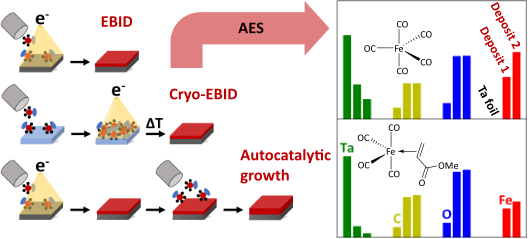
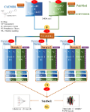
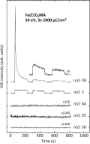
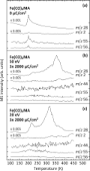
- -step process becomes visible. In a first step, CO accumulates near the surface of the adsorbed precursor layer before it desorbs in the second step. CO can be delivered to the surface either by electron-induced fragmentation of the MA ligand or by diffusion of CO ligands cleaved from the precursor at
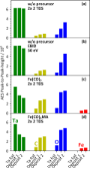
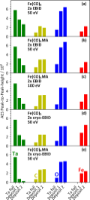
- , bottom). This is ascribed to surface reactions with residual gases such as CO and H2O (see below). After a deposition step, CKLL and even more OKLL electrons from these impurities at the interface between the Ta substrate and the deposit can contribute to the total signal within and even beyond the
- ]. In the case of the thin layers deposited in the present experiment, the actual composition is, thus, also likely to vary from the first to the second deposition step. We recall, however, that in a situation near scenario A, AES probes the entire deposit. Therefore, again, trends between different



Aero-ZnS prepared by physical vapor transport on three-dimensional networks of sacrificial ZnO microtetrapods
Beilstein J. Nanotechnol. 2024, 15, 490–499, doi:10.3762/bjnano.15.44
- oxide nanotube networks, by atomic layer deposition [20]. Another aeromaterial, so called aerographite, has been produced by a one-step chemical vapor deposition process with a simultaneous and complete removal of the template material consisting of highly porous 3D networks built from interconnected



Fabrication of nanocrystal forms of ᴅ-cycloserine and their application for transdermal and enteric drug delivery systems
Beilstein J. Nanotechnol. 2024, 15, 465–474, doi:10.3762/bjnano.15.42
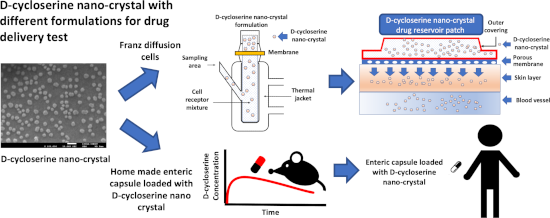
- nanocrystals were scanned in continuous mode from 5–40° (2θ) with a step size of 0.02° on a spinning stage at 40 kV and 40 mA with Cu Kα radiation. The incident beam path was equipped with a 0.2 mm divergence slit and a 0.02 mm air scattering screen. The diffracted beam was equipped with Ni-filter. The
- dissolves and is loaded into the blood reaching systemic circulation. Notably, the first step is the key barrier for an efficient drug delivery. In this study, the application of Franz diffusion cells, a standard procedure of transdermal in vitro testing in the USP-NF<725>, helps us to test the penetration


Sidewall angle tuning in focused electron beam-induced processing
Beilstein J. Nanotechnol. 2024, 15, 447–456, doi:10.3762/bjnano.15.40
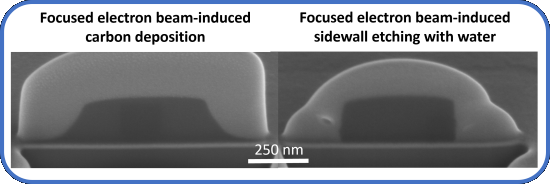
- then moved closer to the deposit, and the process was repeated until a sharp highlighting of the edges was observed, suggesting the formation of nearly vertical walls. A cleaning step was then performed, using a large area etch (as in [25]), to remove carbon from all around the deposit up to a few
- MeCpMe3Pt precursor. Simulated etching by FEBIE of a planar FEBID surface (a) and the evolution of the sloped sidewalls in seven consecutive etching steps (b). The etching strength in (a) was chosen to be smaller than in (b). With each etching step the sidewalls become steeper, indicated by the seven
- image and (b) FIB cross section of an as-deposited FEBID structure. (a) Top view SE image after etching of the sidewall and (b) after the cleaning step. (c) FIB cross section of deposit after sidewall etching clearly demonstrating the creation of vertical sidewalls. Supporting Information The




Heat-induced morphological changes in silver nanowires deposited on a patterned silicon substrate
Beilstein J. Nanotechnol. 2024, 15, 435–446, doi:10.3762/bjnano.15.39
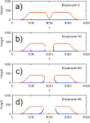
- temperature. The temperature of the first cycle was 100 °C and in each following step, it was increased by 50 °C until 200 °C, and then by 25 °C increments until reaching 450 °C. In the scheme 2 (Figure 2), freshly made samples were heated in a single step for 10 min at a target temperature chosen based on
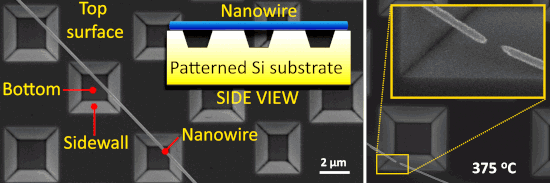
- Tool (OVITO) [42]. The system time step was 10 fs. More technical details can be found in Supporting Information File 1. Results and Discussion Heat treatment First heating scheme No significant changes in the morphology of Ag NWs were detected for heat-treatment temperatures up to 275 °C. Starting
- one image. : Necking and splitting of Ag NWs in the heating scheme 1 after treatment at 375 °C. SEM images of Ag NWs after a single-step heat treatment (heating scheme 2) at 400 °C. Fragmentation of NWs happened almost exclusively in the adhered parts. Average values of splits per length unit in


Unveiling the nature of atomic defects in graphene on a metal surface
Beilstein J. Nanotechnol. 2024, 15, 416–425, doi:10.3762/bjnano.15.37
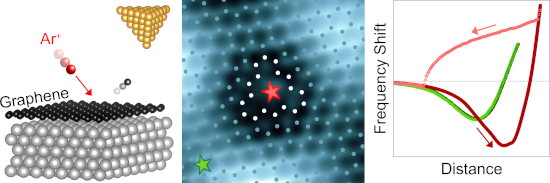
- an Ar+-induced Ir(111) surface defect [57]. In a next step, AFM imaging of the defects at different tip–surface distances was complemented by spatially resolved Δf(Δz) measurements (Figure 4). Figure 4a shows the evolution of the total vertical force recorded along the path across a type-1 defect


Modulated critical currents of spin-transfer torque-induced resistance changes in NiCu/Cu multilayered nanowires
Beilstein J. Nanotechnol. 2024, 15, 360–366, doi:10.3762/bjnano.15.32
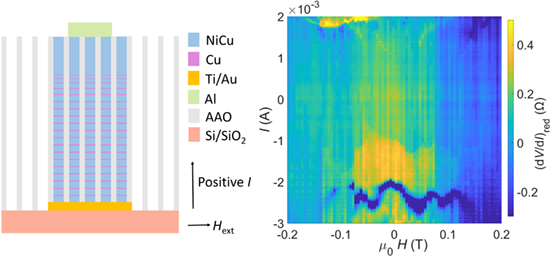
- steps were necessary to define the contact area and to obtain a small contact array, which complicates the fabrication process [18][19]. Compared with these works, our process does not need any additional etching step to either define the contact area of the nanowire or electrodes for the top contact


Nanomedicines against Chagas disease: a critical review
Beilstein J. Nanotechnol. 2024, 15, 333–349, doi:10.3762/bjnano.15.30
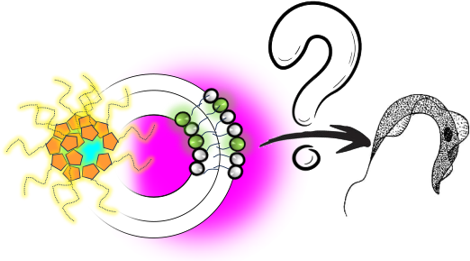
- hydroxylamine intermediates in a two-step, two-electron transfer reaction, culminating in 4,5-dihydro-4,5-dihydroxyimidazole, whose breakdown releases the reactive dialdehyde glyoxal, which, in the presence of guanosine, generates guanosine–glyoxal adducts. These reactive metabolites are toxic to the parasite
- large industrial volumes is the most challenging step in nanomedicine product development [112]. Slight structural changes induced during the industrial-scale production may modify pharmacokinetics, biodistribution, and pharmacodynamics of nanomedicines and alter their therapeutic properties and toxic

Comparative electron microscopy particle sizing of TiO2 pigments: sample preparation and measurement
Beilstein J. Nanotechnol. 2024, 15, 317–332, doi:10.3762/bjnano.15.29
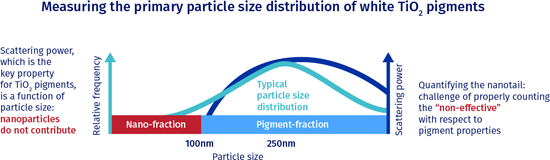
- results were obtained for the other samples. The first peak corresponds to the primary particles and the second peak to the aggregates and agglomerates of the primary particles. The percentage of agglomerates should be higher if shaking by hand is the only re-dispersion step, and this is indeed observed
- sonication for 1 min at 80 W input. Following re-dispersion at Agilent, the dilution for spICP-MS was carried out in three steps. Considering the method’s sensitivity to dilution, during the initial dilution step, the sample was kept under continuous stirring. In subsequent steps, the sample was taken


Investigating structural and electronic properties of neutral zinc clusters: a G0W0 and G0W0Г0(1) benchmark
Beilstein J. Nanotechnol. 2024, 15, 310–316, doi:10.3762/bjnano.15.28
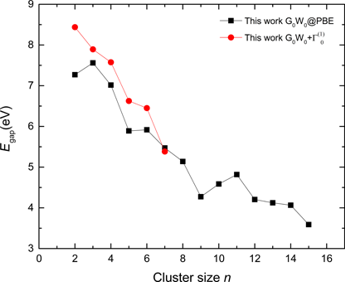
- reliably predict new systems and properties. The next step was to perform the G0W0 calculations using the FHI-aims all-electron package [23][24], which was further used to assess the electronic properties of the Zn clusters. We used the pre-relaxed structures to obtain the energy gaps and IPs of the Zn


![[Graphic 14]](/bjnano/content/inline/2190-4286-15-28-i15.svg?max-width=637&scale=1.18182)
Ultrasensitive and ultrastretchable metal crack strain sensor based on helical polydimethylsiloxane
Beilstein J. Nanotechnol. 2024, 15, 270–278, doi:10.3762/bjnano.15.25
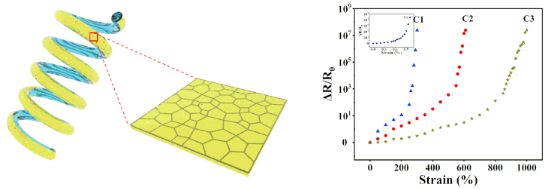
- remarkable stability and favorable recoverability. Figure 2d illustrates the response time of the helical sensor when subjected to a quasi-transient step strain of 10%. Notably, the response time was approximately 158 ms, while the relaxation time was approximately 243 ms, indicating a strong response to
- applied strain with helix indices of 1, 2, and 3. Insets: relative resistance change as a function of the applied strain in the flat gold film. (b) The linearity between the relative resistance changes and strain. (c) Change in resistance for a step strain from 0 to 200%. (d) Response time of the strain


Design, fabrication, and characterization of kinetic-inductive force sensors for scanning probe applications
Beilstein J. Nanotechnol. 2024, 15, 242–255, doi:10.3762/bjnano.15.23
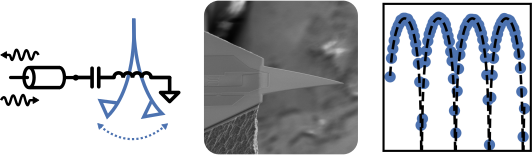
- (maN1407), baking at 100 °C on a hotplate for 60 s. We expose the pattern with a dose of 450 mJ/cm2, aligning to the markers on the front, and we develop in maD533s for roughly 45 s. A subsequent short soft-ashing step in a Plasmalab 80 ICP65 from Oxford Instruments removes residual resist and improves the
- the same CF4/O2 RIE process as in step (d). In our design, we vary the widths (w = 75, 100, and 200 nm) of the nanowires across the wafer, adjusting the total number of squares (total inductance) and the capacitor to obtain a resonant frequency ωc/2π ∼ 4.5 GHz, see Figure 1d–f. (f) Cantilever pattern
- 60 s. With the front side of the wafer protected, we flip over the wafer and etch through the Si-N using the same CHF3/SF6 process as in step (f) and the etch mask defined in step (c). We then use a Bosch process to etch through most of the Si substrate (approximately 450 μm deep) with an etch rate



Multiscale modelling of biomolecular corona formation on metallic surfaces
Beilstein J. Nanotechnol. 2024, 15, 215–229, doi:10.3762/bjnano.15.21
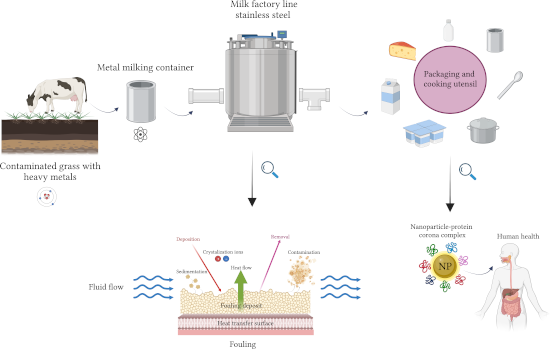
- orientation of each individual protein, a primary coarse-graining step was performed. In this part, we use the UA model to predict the protein–NP binding energies. This model takes into account various factors, such as the material’s chemical composition, size, shape, surface roughness, charge
- step, we predicted the composition of the milk protein layer at the aluminum surfaces. For this analysis, we consider the Al surface as a spherical NP with the protein layer uniformly adsorbed on its entire surface, forming the protein corona. Competitive adsorption and biomolecular corona Kinetic




Graphene removal by water-assisted focused electron-beam-induced etching – unveiling the dose and dwell time impact on the etch profile and topographical changes in SiO2 substrates
Beilstein J. Nanotechnol. 2024, 15, 190–198, doi:10.3762/bjnano.15.18
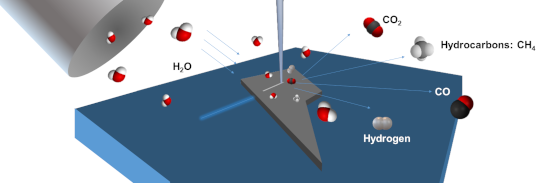
- processes using the so-called focused electron-beam-induced etching (FEBIE), with a spatial resolution of ten nanometers. Nanopatterning graphene with such a method in one single step and without using a physical mask or resist is a very appealing approach. During the process, on top of graphene
- an electron beam. In the blue spectra, additional peaks (D’ and 2D’) are visible, and the intensity of the D peak is more pronounced. The Raman spectra were collected at each spot over the area containing the flake and the surrounding substrate. In the next step, based on the characteristic D/G
- microscopes, leading to enhanced quality signals. The equipment has an automatic motorized sample positioner in the x-, y- and z-directions that allows 2D and 3D mapping. For our study, we performed 2D mapping with a lateral step size of 1 µm. The WITec software was used to process these spectra selecting


Ferromagnetic resonance spectra of linear magnetosome chains
Beilstein J. Nanotechnol. 2024, 15, 157–167, doi:10.3762/bjnano.15.15
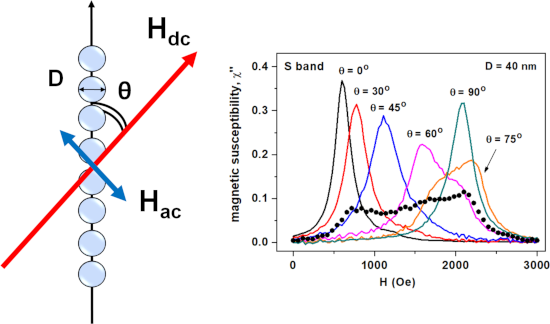
- stochastic Landau–Lifshitz equation, the numerical time step is kept to be 1/30 of the characteristic precession period of the unit magnetization vectors of the particles, τH ~ 1/γ1Hef. Such a small time step is necessary to accurately describe the precession of unit magnetization vectors in the chain. In
- chains as a function of the angle θ of the external magnetic field with respect to the orientation axis of the chains. The spectra of randomly oriented assemblies of chains were then calculated by the angle averaging of partial FMR spectra calculated with a fairly small step Δθ ~ 5–7.5°. Further, we
- thickness is Ten = 5 nm, and the magnetic damping constant is κ = 0.1. To obtain FMR spectra of randomly oriented chain assemblies, partial FMR spectra were averaged with a step width of Δθ = 5°. As Figure 4a shows, with an increase in the tilt angle of the magnetizing field θ from 0° to 75°, the peak of


Enhanced feedback performance in off-resonance AFM modes through pulse train sampling
Beilstein J. Nanotechnol. 2024, 15, 134–143, doi:10.3762/bjnano.15.13
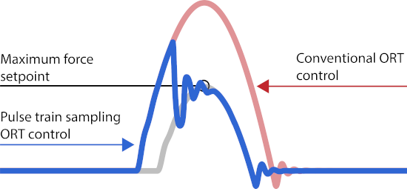
- force (setpoint) is the process variable that the feedback controller uses to calculate the error (Figure 1D). Figure 1E shows that a step-up in sample topography (Figure 1E-i.) gives rise to an increase in the maximum force value (Figure 1E-ii.). The feedback controller within the traditional control
- faster feedback iterations compared to the conventional ORT controller that only samples once per interaction period. Figure 2B illustrates the operation principle of the proposed method for a step-up in the sample topography (i.). The feedback controller samples all the deflection values within the
- ORT cycle, this method provides faster and more accurate topography tracking. Deciding the Tw width of the reference interaction window is a critical step while using the proposed method. When imaging a sample made of a single material, an interaction window covering the full positive force gradient


In situ optical sub-wavelength thickness control of porous anodic aluminum oxide
Beilstein J. Nanotechnol. 2024, 15, 126–133, doi:10.3762/bjnano.15.12
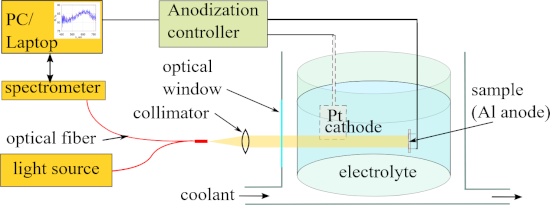
- ) converter and digitized using an analog-to-digital converter (ADS1115, Texas Instruments). The electronics design files (KiCAD) and microcontroller software source code are accessible on GitHub [43]. The two-step anodization procedure in 0.3 M oxalic acid electrolyte at 40 V potential has been described in


Development and characterization of potential larvicidal nanoemulsions against Aedes aegypti
Beilstein J. Nanotechnol. 2024, 15, 104–114, doi:10.3762/bjnano.15.10
- techniques [16][17]. Griffin established the hydrophile–lipophile balance (HLB) as a tool for classifying and selecting non-ionic emulsifiers [18]. The determination of the required HLB (rHLB) of essential oils appears as a critical step for the development of stable emulsions [19]. Determining the required
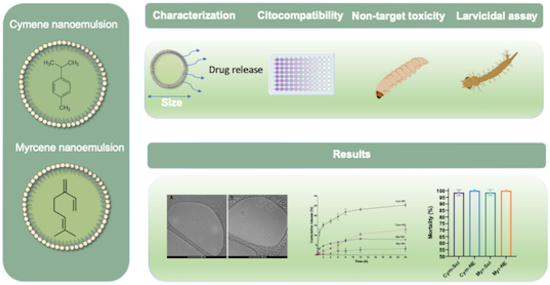
- against Aedes aegypti mosquito larvae. Results and Discussion Preparation and characterization of the nanoemulsions The determination of the required HLB (rHLB) is an important step in the development of NEs containing volatile oils [19][25]. From the determination of the rHLB, it is possible to determine
- evaluation of the biocompatibility in human cells is an important step in the development and commercialization of any drug [46]. Here, the toxicity of the terpene-based formulations was evaluated in the HaCAT cell line (Table 6). The results show that the IC50 values of the free terpenes were lower those of


Study of the reusability and stability of nylon nanofibres as an antibody immobilisation surface
Beilstein J. Nanotechnol. 2024, 15, 83–94, doi:10.3762/bjnano.15.8
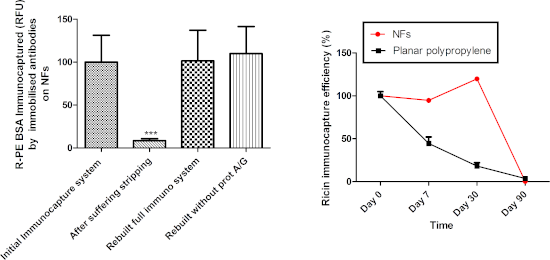
- microplate, previously blocked with PBS–casein. In order to achieve a well-oriented antibody immobilisation, protein A/G (10 μL 100 μg/mL in PBS) was added to each NF sample and incubated overnight at 4 °C, followed by a blocking step with PBS–casein. Then, a FITC-labelled antibody against BSA was
- immobilized on the surface of the NFs containing protein A/G through 1 h of incubation. Then, RPE-labelled BSA (10 µL 100 µg/mL in blocking buffer) was immunocaptured by the anchored antibodies over a period of 1 h. Washing steps were carried out between each step in order to remove non-linked excess reagents
- surface and incubated over night at 4 °C, followed by a blocking step with PBS–casein. The control planar surface group was incubated with protein A/G overnight and then blocked with PBS–casein. Since only the immunocapture capability was measured in this study, nonlabelled in-house antibody (10 µL 500 µg





