


Search results
Search for "surfaces" in Full Text gives 1303 result(s) in Beilstein Journal of Nanotechnology. Showing first 200.
N-Heterocyclic carbene-based gold etchants
Beilstein J. Nanotechnol. 2023, 14, 865–871, doi:10.3762/bjnano.14.71
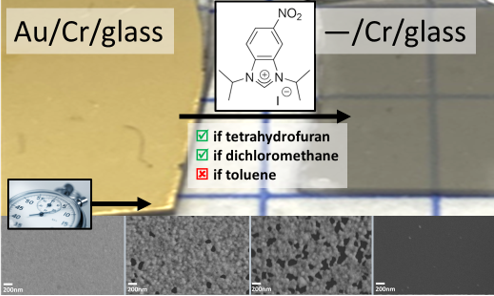
- , an NHC-based monolayer has even been shown to protect against thiol displacement on gold surfaces [13]. Thus, in spite of the challenges that can be presented by NHC synthesis [17], they offer appeal even in light of the more general commercial availability of a wide range of thiols. The covalent
- formation of molecular monolayers on gold surfaces supports a wide range of fundamental science and technological applications. While thiol-containing species continue to dominate monolayer formation, the pursuit and characterization of monolayer precursors with superior performance has been ongoing. NHCs



Industrial perspectives for personalized microneedles
Beilstein J. Nanotechnol. 2023, 14, 857–864, doi:10.3762/bjnano.14.70
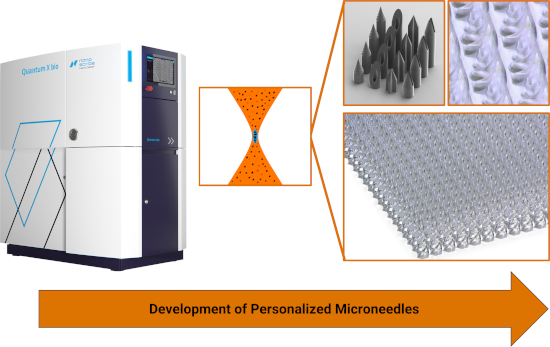
- microneedle development and clinical translation. Despite SLA and DLP being cost-effective entry points for fabricating bio-inspired microneedles, both techniques often suffer from rough surfaces and poor shape accuracy. Specifically, SLA and DLP 3D printers suffer from the staircase effect, which is an
- miniaturization, shape accuracy, smooth surfaces, and high aspect ratios [51][52][53][54]. In the last decade, 2PP instruments have evolved from slow (albeit versatile) microfabrication instruments (e.g., the first generation 2008–2012 Photonic Professional) suitable for proofs of concept to industrialized 3D
- microoptic fabrication, grayscale lithography offers a solution to mitigate the staircase effect. Grayscale lithography is a novel approach in photolithography for 2.5D patterning (x,y,z) with ultrasmooth surfaces that exhibits improved shape accuracy [57][58]. In 2019, Nanoscribe GmbH & Co launched the


Biomimetics on the micro- and nanoscale – The 25th anniversary of the lotus effect
Beilstein J. Nanotechnol. 2023, 14, 850–856, doi:10.3762/bjnano.14.69

- Zoology, Christian-Albrechts-University of Kiel, Am Botanischen Garten 1–9, D-24118 Kiel, Germany 10.3762/bjnano.14.69 Keywords: biomimetic surfaces; hydrophobicity; lotus effect; Salvinia effect; superhydrophobicity; wettability; In 1997, Wilhelm Barthlott and Christoph Neinhuis published the paper
- “Purity of the sacred lotus” [1] in which they described the superhydrophobic surfaces and the self-cleaning ability of some plants (the so-called “lotus effect”, see Figure 1). This paper led to a paradigm shift in surface sciences. It generated a lot of interest at the time and continues today to
- inspire numerous publications and technical developments [2]. Although the phenomenon of the outstanding water repellence of some plant surfaces had been known for over 2000 years, the functional principle behind it and the detailed physicochemistry of superhydrophobic biological surfaces had remained


Silver-based SERS substrates fabricated using a 3D printed microfluidic device
Beilstein J. Nanotechnol. 2023, 14, 793–803, doi:10.3762/bjnano.14.65
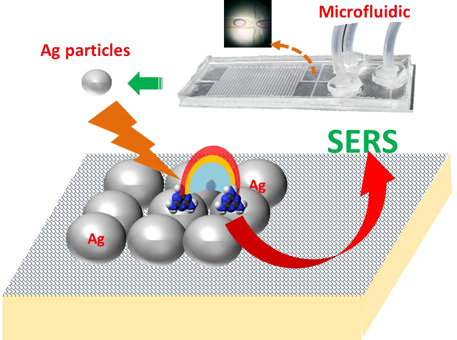
- is more cost-effective, straightforward, and accessible. The chemical treatment of PDMS and the glass plate aims to decorate their surfaces with silanol groups (Si–OH), enabling the two surfaces to bond chemically at the atomic level [49]. To determine the droplet size, we used two dye solutions and



Carboxylic acids and light interact to affect nanoceria stability and dissolution in acidic aqueous environments
Beilstein J. Nanotechnol. 2023, 14, 762–780, doi:10.3762/bjnano.14.63
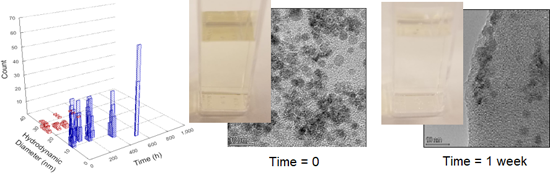
- Matthew L. Hancock Eric A. Grulke Robert A. Yokel Chemical and Materials Engineering, University of Kentucky, Lexington, KY 40506-0046, United States Pharmaceutical Sciences, University of Kentucky, Lexington, KY 40536-0596, United States 10.3762/bjnano.14.63 Abstract Cerium atoms on the surfaces
- during its synthesis; in fact, a carboxylic acid, namely citric acid, is used in many synthesis protocols. Citric acid adsorbs onto nanoceria surfaces, limiting particle formation and creating stable dispersions with extended shelf life. To better understand factors influencing the fate of nanoceria, its
- potential to inhibit cancerous tumor growth [5], reduce radiation-induced damage [6], and heal wounds [7], among many other effects [8][9] cited in the introduction of [10]. Cerium atoms on nanoceria surfaces can store or release oxygen, cycling between Ce3+ and Ce4+; therefore, they can relieve oxidative
A graphene quantum dots–glassy carbon electrode-based electrochemical sensor for monitoring malathion
Beilstein J. Nanotechnol. 2023, 14, 701–710, doi:10.3762/bjnano.14.56
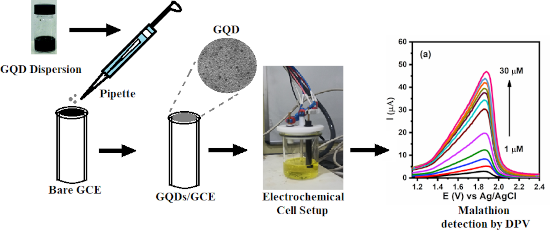
- Brillouin zone, while the G band arises from vibrations in rings of sp2-hybridized atoms inside the GQDs. Electrochemical studies Electrochemical impedance spectroscopy In order to investigate the charge transfer on the electrode surfaces, electrochemical impedance spectroscopy (EIS) was used with the redox
- working electrode has an increased surface area to volume ratio due to the small size of GQDs. In addition, the different functional groups present on the GQDs surfaces provide additional active sites, which increase sensitivity and lower the limit of detection. Interference study The selectivity of the


Humidity-dependent electrical performance of CuO nanowire networks studied by electrochemical impedance spectroscopy
Beilstein J. Nanotechnol. 2023, 14, 683–691, doi:10.3762/bjnano.14.54
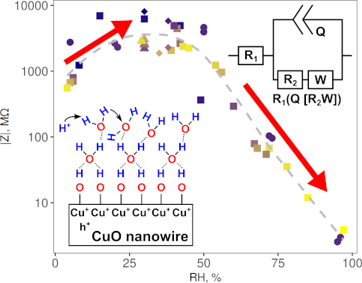
- compositions aligned by DEP [25]. In some of these works, electrochemical impedance spectroscopy (EIS) was used as an effective tool to study the effects of chemical and physical absorption of water on the nanostructured surfaces of active CuO elements of the systems [23][24]. To the best of our knowledge, the
- chemisorption on the surface of a p-type nanowire can have a dual effect on the electrical conductivity, this may explain the scatter of impedances measured at the RH below 50% (Figure 3a). This hypothesis on the processes on the surfaces of the CuO nanowires is supported by the Bode plot data. The linear
- and phase angle ϕ vs log f. (a) Impedance magnitude |Z| vs relative humidity RH (dashed line is a guide to the eyes) at various T; (b) |Z| vs T at various RH. (c–e) Schematics of the processes induced by water chemisorption and physisorption on the CuO nanowire surfaces: (c) formation of a (Cu+–OH


Investigations on the optical forces from three mainstream optical resonances in all-dielectric nanostructure arrays
Beilstein J. Nanotechnol. 2023, 14, 674–682, doi:10.3762/bjnano.14.53
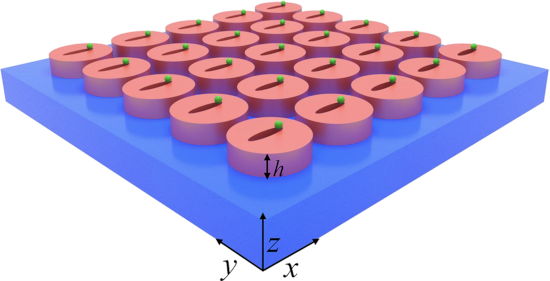
- , respectively. In this work, we use a small virtual cube to accommodate a small object (i.e., the PS sphere) and all surfaces of the cube are in water. The electromagnetic fields at the six surfaces of the virtual cube are used to calculate the optical force according to Equation 2. With numerical calculations


Metal-organic framework-based nanomaterials as opto-electrochemical sensors for the detection of antibiotics and hormones: A review
Beilstein J. Nanotechnol. 2023, 14, 631–673, doi:10.3762/bjnano.14.52
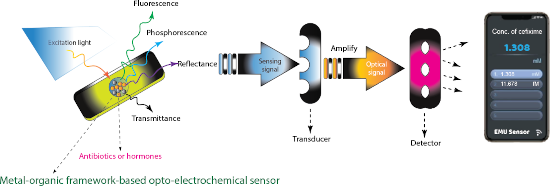
- , environmental, food safety, and health analyses. They have exceptional physico-chemical and opto-electronic properties, a high surface area-to-volume ratio, and their surfaces are easy to functionalize. Additionally, compared to their bulk counterparts, nanomaterials are particularly sensitive to changes in


Titania nanoparticles for photocatalytic degradation of ethanol under simulated solar light
Beilstein J. Nanotechnol. 2023, 14, 616–630, doi:10.3762/bjnano.14.51
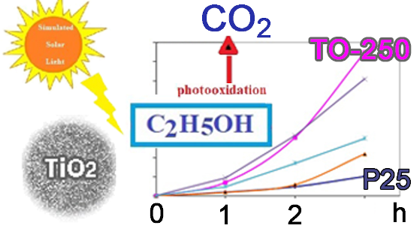
- indicate changes regarding the variation of the nanoparticle surfaces according to the value of the working pressure. Since XPS analysis is a surface measurement and the samples were calcined in air, the possibility to identify the presence of Ti3+ species and oxygen vacancies is small, but we do not




Suspension feeding in Copepoda (Crustacea) – a numerical model of setae acting in concert
Beilstein J. Nanotechnol. 2023, 14, 603–615, doi:10.3762/bjnano.14.50
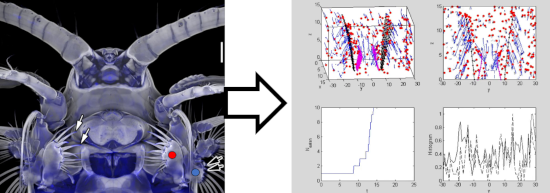
- determined by a combination of the external flow vext and perturbations caused by the motion of the setae. For simplicity and to increase calculation efficiency, instead of solving the huge complete set of dynamic and hydrodynamic equations for particles of complex form with rough surfaces, we separated the


Thermal transport in kinked nanowires through simulation
Beilstein J. Nanotechnol. 2023, 14, 586–602, doi:10.3762/bjnano.14.49
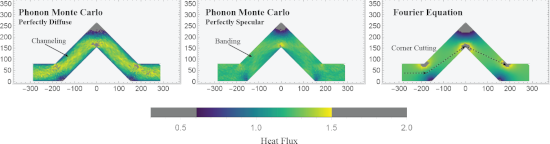
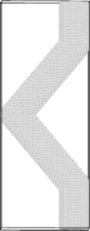
- . Systems where such transport is important are said to have significant ballistic transport compared to the classical scenario, that is, diffusive transport. Ballistic transport can be impacted by features of the system, such as surfaces, edges, defects, and inclusions [7][8][9]. Consequently, the effect
- of system design on nanoscale transport is particularly intriguing and has lead to the investigation of unique structures [10][11] in an attempt to better understand and develop manufactured devices. The introduction of additional surfaces and the reduction of direct paths through a system can force
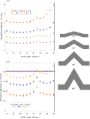
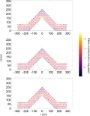
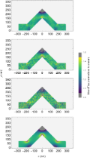
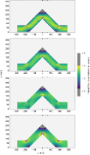
- °. After this point, the conductance begins to increase again. As this is not due to lattice orientation, this effect must be due to the interactions of travelling phonons with the surfaces of the wire due to the kink angle. In the PMC simulation, phonons are reflected from a surface after collision based




ZnO-decorated SiC@C hybrids with strong electromagnetic absorption
Beilstein J. Nanotechnol. 2023, 14, 565–573, doi:10.3762/bjnano.14.47
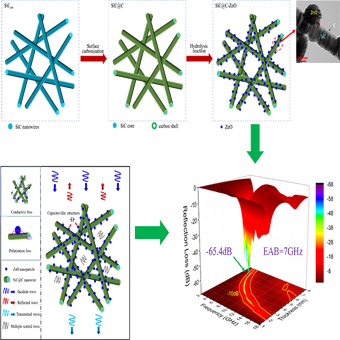
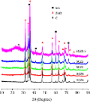
- , which has been rarely investigated before. Herein, we describe a new strategy for preparing ternary hybrids (SiC@C-ZnO, SCZ) by growing ZnO particles on carbon surfaces derived from SiC nanowires. The influence of ZnO precursor (ZnNO3·6H2O) dosage on composition, microstructure and electromagnetic
- results. In contrast, the relative intensities of the Si 2p and C 1s peaks gradually decrease at the same time. The peaks at 100 and 103.5 eV are related to Si 2p1/2 and Si 2p3/2, respectively. Table 1 provides the elemental compositions (atom %) on the SCZ sample surfaces as determined by XPS. The


SERS performance of GaN/Ag substrates fabricated by Ag coating of GaN platforms
Beilstein J. Nanotechnol. 2023, 14, 552–564, doi:10.3762/bjnano.14.46
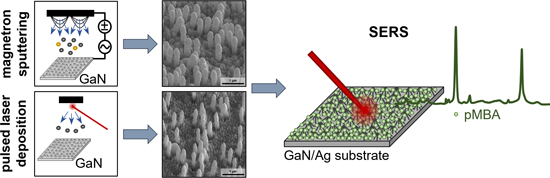
- method have regions characterized by very high and very low Raman signal enhancements. Therefore, these SERS substrates can be characterized by a lower density of hot spots on their surfaces than PLD-made substrates (Figure 7 and Figure 8). The EF calculated for the 1078 cm−1 peak has similar values in


Carbon nanotube-cellulose ink for rapid solvent identification
Beilstein J. Nanotechnol. 2023, 14, 535–543, doi:10.3762/bjnano.14.44
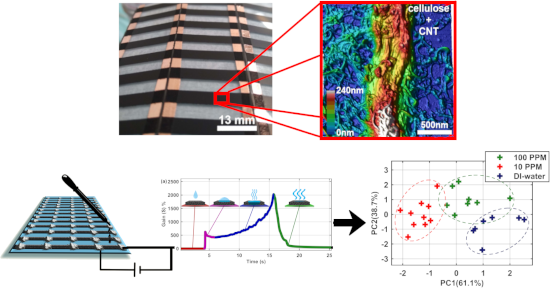
- ][18]. Additionally, the Internet of Things (IoT) also requires devices to be integrated into a variety of systems and different surfaces of our daily life, which demands the low-cost, reliable, and large-scale production of sensors [12][13][19]. Yet, the lack of such reproducible large-scale


Nanoarchitectonics to entrap living cells in silica-based systems: encapsulations with yolk–shell and sepiolite nanomaterials
Beilstein J. Nanotechnol. 2023, 14, 522–534, doi:10.3762/bjnano.14.43
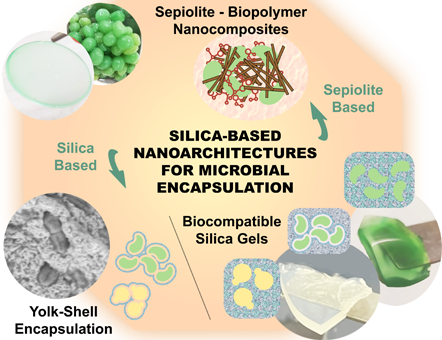
- observations of the yeast–G57-4 nanohybrid system (Figure 2B), isolated yeast cells can be observed. Only in certain regions, there are some yeast groups growing in a protofilamentous fashion. Interestingly, this type of yeast growth is mostly present around smooth surfaces of the inorganic matrix or in places


The origin of black and white coloration of the Asian tiger mosquito Aedes albopictus (Diptera: Culicidae)
Beilstein J. Nanotechnol. 2023, 14, 496–508, doi:10.3762/bjnano.14.41
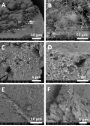
- black (Figure 4e–h) portions reveal that series of four to five convex scales overlap each other (Figure 4a,b,e,f). The scales are very thin (about 0.2 µm thick). Their lower and the upper surfaces are closely juxtaposed, even if some empty spaces (nanovoids) are occasionally visible between them
- . Cross sections of the tarsi in their white (a–d) and black (e–h) portions. In (a) and (e) note the series of overlapping four to five convex scales around the tarsus (T). The lower (LS) and the upper (US) surfaces are closely juxtaposed even if some empty spaces representing nanovoids, originating from




Conjugated photothermal materials and structure design for solar steam generation
Beilstein J. Nanotechnol. 2023, 14, 454–466, doi:10.3762/bjnano.14.36
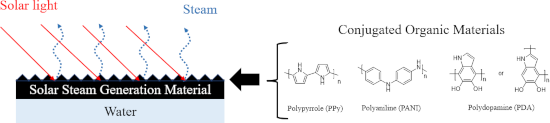
- applied on top of the PS insulator without the need for an additional water transport layer. Membranes Janus structural membranes with hydrophilic and hydrophobic surfaces are key structures for highly efficient SSGs. Such Janus membranes can be easily produced by filtering or coating hydrophilic
- @PDA-based photothermal sponge as light absorber. (b) Evaporation rates depending on the sponge thickness. (c) Average temperatures of the top and sidewall surfaces of the photothermal sponges with different heights under solar spectral irradiance (AM1.5G). (d) IR images of the photothermal sponges
- with the average temperatures of the sidewall surfaces under solar spectral irradiance (AM1.5G). Figure 11 was adapted with permission of The Royal Society of Chemistry from [49] (“Stackable nickel–cobalt@polydopamine nanosheet based photothermal sponges for highly efficient solar steam generation” by


Molecular nanoarchitectonics: unification of nanotechnology and molecular/materials science
Beilstein J. Nanotechnol. 2023, 14, 434–453, doi:10.3762/bjnano.14.35
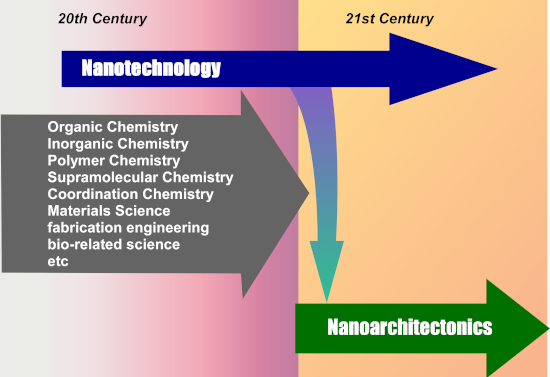
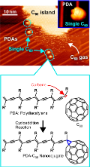
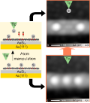
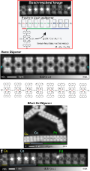
- organic chemistry and nanotechnology. For example, organic synthesis using probe microscope tips, a tool of nanotechnology, is now being realized [109][110]. Organic chemistry for single molecules on surfaces is being developed, which is different from the conventional organic synthesis in solution
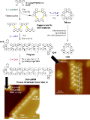
- substrate. This process resulted in the formation of heterowires in which the polymer initially formed on the substrate was linked to another type of thiophene polymer that was growing. In this way, nanoarchitectonics of conjugated polymers can be obtained on metal surfaces by multistep electrochemical
- extended π-carbon systems is an important process for spintronics applications. On-surface synthetic nanoarchitectonics Besides manipulating molecules and atoms with a tip, in situ observation of specific chemical reactions occurring on surfaces with a probe microscope is a very significant approach to





Plasmonic nanotechnology for photothermal applications – an evaluation
Beilstein J. Nanotechnol. 2023, 14, 380–419, doi:10.3762/bjnano.14.33




New trends in nanobiotechnology
Beilstein J. Nanotechnol. 2023, 14, 377–379, doi:10.3762/bjnano.14.32
- bioconstructs, and from functional nanostructured surfaces to smart materials and nanofluidics. In all these applications, it is important to consider the nanotoxicological and possible harmful impact of nanomaterials on living organisms [2]. In fact, the evaluation of the safety of a novel nanodevice is a
Quercetin- and caffeic acid-functionalized chitosan-capped colloidal silver nanoparticles: one-pot synthesis, characterization, and anticancer and antibacterial activities
Beilstein J. Nanotechnol. 2023, 14, 362–376, doi:10.3762/bjnano.14.31
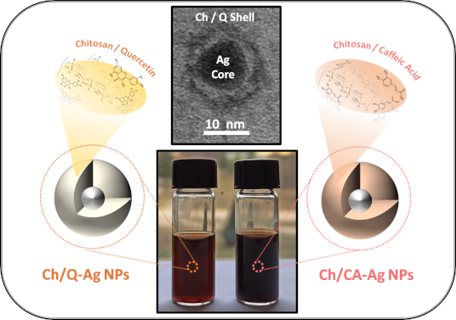
- biggest problems in the development of new drugs [3]. One of the approaches to overcome these problems is nanoparticle carriers. These carriers are advantageous because their high surface area and good adhesion to biological surfaces increase solubility and dissolution rate [4]. The Gram-positive


Polymer nanoparticles from low-energy nanoemulsions for biomedical applications
Beilstein J. Nanotechnol. 2023, 14, 339–350, doi:10.3762/bjnano.14.29
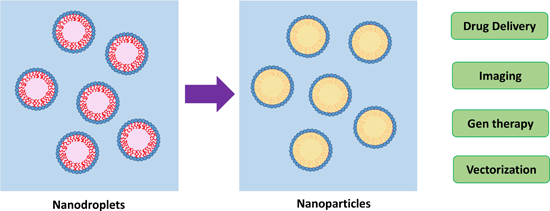
- , nanocarriers need to be engineered to add functionalities, both in their cores and at their surfaces. This includes therapeutic drugs and genes, targeting moieties, performance enhancers (e.g., for barrier penetration and to avoid opsonization), and imaging agents [2][3]. Core and matrix of the nanoparticles
- cellulose nanoparticles obtained from nanoemulsions with an O/S (ethyl acetate/poly(oxyethylene)(10) oleyl ether) ratio of 70/30 and 90 wt % of water. The ethyl acetate phase contained 4 wt % of ethyl cellulose. Figure 2 was reprinted from [43], Colloids and Surfaces B: Biointerfaces, vol. 145, by G




Biocatalytic synthesis and ordered self-assembly of silica nanoparticles via a silica-binding peptide
Beilstein J. Nanotechnol. 2023, 14, 280–290, doi:10.3762/bjnano.14.25
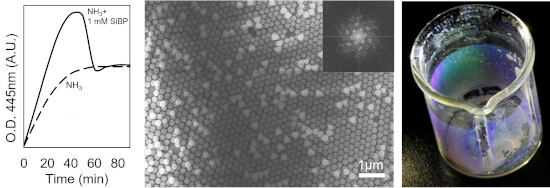
- molecular crowding-like effects, preventing efficient assembly of the particles. Therefore, tailoring intermolecular interactions between nanoparticles by modifying the particle surfaces or through external influences such as temperature, pH value, templates, and magnetic or flow fields, is important to
- utility of a silica-binding peptide (SiBP) in the single-step synthesis and self-assembly of SiO2 nanoparticles into ordered 3D structures. The SiBP is a member of the “solid-binding peptides” family. Solid-binding peptides are designed to have strong and often specific binding affinity to solid surfaces
- [17][18]. Because of their interactions with solid surfaces, these peptides have been shown to be able to functionalize nanostructures, catalyze the formation of nanostructures, and modify the nucleation, growth and self-assembly processes [19][20][21][22][23][24]. For this study, we have selected a




Recent progress in cancer cell membrane-based nanoparticles for biomedical applications
Beilstein J. Nanotechnol. 2023, 14, 262–279, doi:10.3762/bjnano.14.24

- immunotherapy can trigger antitumor-specific immune responses and establish long-term immune memory [118]. Cancer cell membranes have become a unique method for the preparation of biomimetic nanovaccines due to the numerous tumor-specific antigens carried on their surfaces [118]. A type of microneedle





