


Search results
Search for "thin film" in Full Text gives 521 result(s) in Beilstein Journal of Nanotechnology. Showing first 200.
CuInSe2 quantum dots grown by molecular beam epitaxy on amorphous SiO2 surfaces
Beilstein J. Nanotechnol. 2019, 10, 1103–1111, doi:10.3762/bjnano.10.110
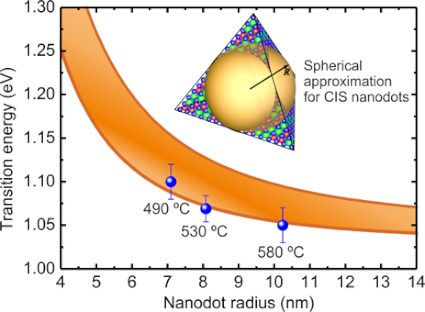
- with the average size of the nanodots. Keywords: copper indium gallium selenide (CuInSe2); quantum dots; Introduction The chalcopyrite compound Cu(In,Ga)Se2 (CIGS) is used as the light absorber layer in thin film solar cells that typically consist of a glass substrate, a Mo back contact, the CIGS
- these solar cells is a thin film commonly prepared by co-evaporation in vacuum [3]. This technique consists of the simultaneous thermal evaporation of several elements under vacuum conditions and the provision of a thermal budget to the substrate [4]. Due to the excellent optoelectronic properties of
- solution-based processes [18][19][20][21][22][23][24][25][26]. However, for thin film solar cells prepared by non-vacuum methods the resulting devices usually yield a significantly lower electrical performance compared with vacuum-prepared solar cells [27][28]. This difference between the electrical


Concurrent nanoscale surface etching and SnO2 loading of carbon fibers for vanadium ion redox enhancement
Beilstein J. Nanotechnol. 2019, 10, 985–992, doi:10.3762/bjnano.10.99
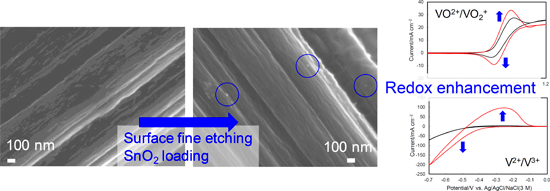
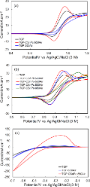
- redox flow batteries (VRFBs), which are in the most advanced stage of research and development: Nanoscale surface etching was attained by coating the surface with a carbonaceous thin film derived from cobalt(II) phthalocyanine (CoPc) and subsequent thermal oxidation followed by acid washing. The
- carbonaceous thin film was formed by sublimation, deposition, and pyrolysis of CoPc on the carbon fiber surface during a single heat-treatment step using a conventional crucible. The treatment substantially enriched edge planes and produced an enhanced activity for the positive and negative electrode reactions
- -oxide nanoparticles to further enhance the activity and found that through the thermal oxidation of the carbonaceous thin film derived from SnPc both types of enhancement can be concurrently achieved. The formed metal oxide, SnO2, is one of the candidates for a durable catalyst support used in an acidic



Direct growth of few-layer graphene on AlN-based resonators for high-sensitivity gravimetric biosensors
Beilstein J. Nanotechnol. 2019, 10, 975–984, doi:10.3762/bjnano.10.98
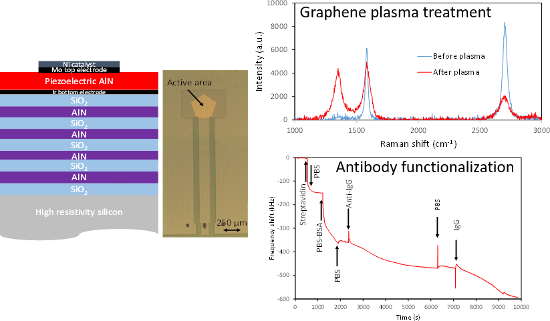
- quartz crystal microbalances (QCMs), and can be configured in sensor arrays and integrated (on-wafer or in-package) along with their driving electronics and microfluidic arrangements, offering compact and inexpensive measurement systems [5][6]. Among the wide variety of thin-film resonators exploiting
- of their characteristics and then functionalized to manufacture gravimetric biosensors, which eliminates the need to use complex transfer methods. Defect-free few-layer graphene was selectively grown through a low-temperature (650 °C) CVD process on Ni [16] thin-film catalysts previously evaporated


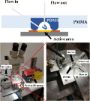
Novel reversibly switchable wettability of superhydrophobic–superhydrophilic surfaces induced by charge injection and heating
Beilstein J. Nanotechnol. 2019, 10, 840–847, doi:10.3762/bjnano.10.84
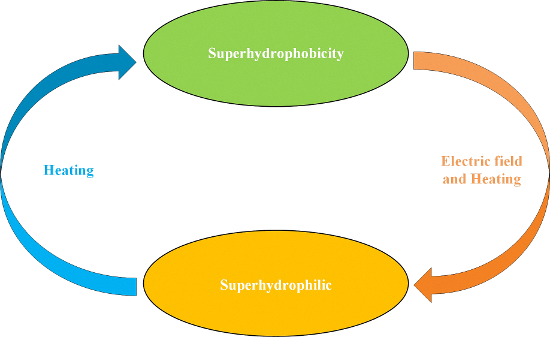
- between superhydrophobicity and superhydrophilicity using a folded graphene coating that was prepared by ethanol drying and prewetting. The wettability of droplets on electrodes coated with an insulator thin film can be changed by applying direct or alternating-current potentials. This phenomenon is


Capillary force-induced superlattice variation atop a nanometer-wide graphene flake and its moiré origin studied by STM
Beilstein J. Nanotechnol. 2019, 10, 804–810, doi:10.3762/bjnano.10.80
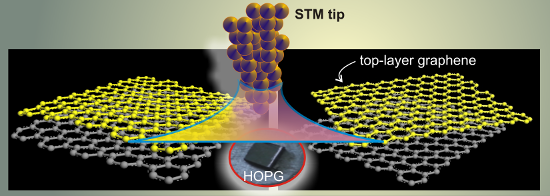
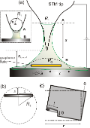
- plane interacting with a sphere with an effective radius R*. It can be imagined that the thin film of liquid on the surface acts like an object that supports the meniscus with a curvature, R2. That is the spread (x) that contributes is only the volume of the liquid forming a curved meniscus, and not the


An iridescent film of porous anodic aluminum oxide with alternatingly electrodeposited Cu and SiO2 nanoparticles
Beilstein J. Nanotechnol. 2019, 10, 735–745, doi:10.3762/bjnano.10.73
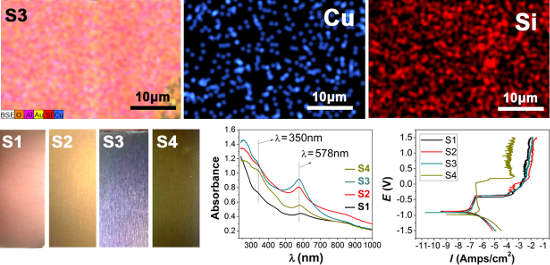
- and optical properties of a series of the electrodeposited AAO-based thin film were investigated. The Cu and SiO2 NPs were found to be uniformly deposited into the porous structure of the AAO film, and the alternating electrodeposition repeating twice led to the formation of the optimal AAO-based thin
- film that exhibited a rainbow effect and superior anti-corrosion performance. Keywords: aluminum alloys; anodic aluminum oxidation; interference-enabled color production; rainbow effect; structural color; Introduction Due to the low cost, high mechanical strength and ductility, and well-developed


Review of time-resolved non-contact electrostatic force microscopy techniques with applications to ionic transport measurements
Beilstein J. Nanotechnol. 2019, 10, 617–633, doi:10.3762/bjnano.10.62
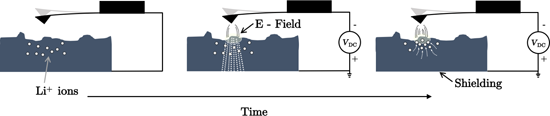
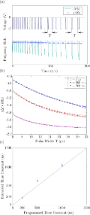
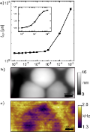
- times of an organic photovoltaic thin film (MDMO-PPV:PCBM), shown in Figure 7, and demonstrated the ability of the technique to spatially resolve heterogeneities. Due to the difficulty in quantitatively extracting τ from the measured τFP, spatially resolved measurements are limited to relative charging





Direct observation of the CVD growth of monolayer MoS2 using in situ optical spectroscopy
Beilstein J. Nanotechnol. 2019, 10, 557–564, doi:10.3762/bjnano.10.57
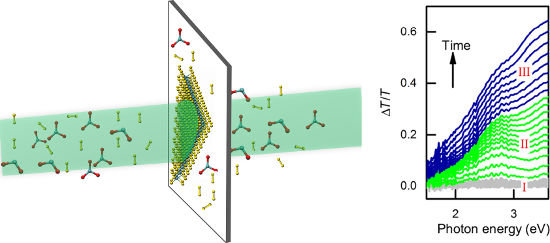
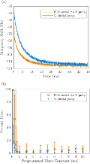
- furnace, it can be seen that the DT spectrum remains unchanged during the first 33 min, although the temperature measured at the position related of sulfur, MoO3, and the substrate increased. This observation shows that no thin film was deposited during this period. The second section (section II
- contrast, the features associated with MoS2 vanish. The decrease of the transmittance (the increase of DTS) over the low-energy range could be attributed to the increase of the scattering of the MoO3 thin film deposited on the quartz window. In order to understand the observed evolution of the DT


Nanocomposite–parylene C thin films with high dielectric constant and low losses for future organic electronic devices
Beilstein J. Nanotechnol. 2019, 10, 428–441, doi:10.3762/bjnano.10.42
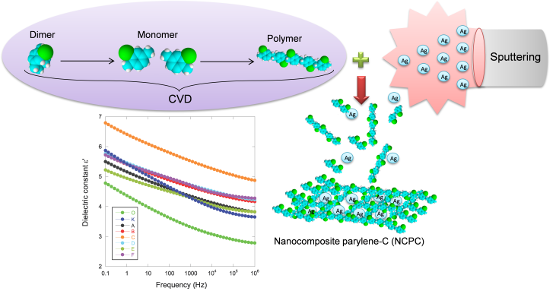
- ; Introduction Increasing the dielectric constant of gate dielectrics for oxide thin-film transistors (TFTs) improves the performance of such devices. Challenges are in the processing of these high-k dielectrics and various approaches were tested over time. Among them, low-cost and innovative methods were




Biocompatible organic–inorganic hybrid materials based on nucleobases and titanium developed by molecular layer deposition
Beilstein J. Nanotechnol. 2019, 10, 399–411, doi:10.3762/bjnano.10.39
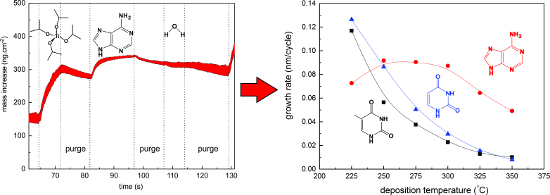
- enables control of cell–surface interactions, which plays a major role in controlling the bioactivity of solid surfaces. Biocompatibility can be enhanced by coating the surface using various thin film deposition techniques such as chemical vapor deposition (CVD), physical vapor deposition (PVD) or atomic
- the films was measured by a Bruker AXS D8 advance film diffractometer equipped with a LynxEye strip detector. The thin film diffractometer had a Göbel mirror and a Ge(220) four bounce monochromater for XRR measurements. X-ray photoelectron spectroscopy (XPS) was performed using a Thermo Scientific




Integration of LaMnO3+δ films on platinized silicon substrates for resistive switching applications by PI-MOCVD
Beilstein J. Nanotechnol. 2019, 10, 389–398, doi:10.3762/bjnano.10.38
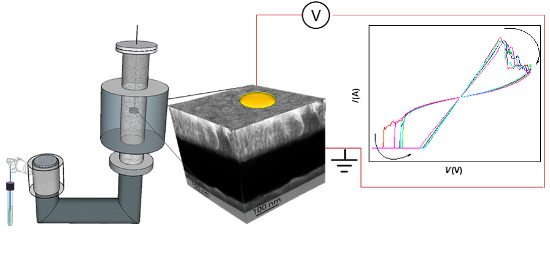
- -based devices fabricated using optimized growth strategies. Keywords: manganite; metal organic chemical vapour deposition (MOCVD); resistive switching; thin film; valence-change memory; Introduction Resistive switching (RS) denotes the phenomena occurring in capacitor-like heterostructures (metal




Geometrical optimisation of core–shell nanowire arrays for enhanced absorption in thin crystalline silicon heterojunction solar cells
Beilstein J. Nanotechnol. 2019, 10, 322–331, doi:10.3762/bjnano.10.31
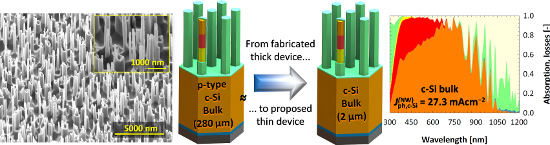
- Thin Film Electronic Laboratory (PV-Lab), Rue de la Maladière 71b, 2002 Neuchâtel, Switzerland 10.3762/bjnano.10.31 Abstract Background: Elongated nanostructures, such as nanowires, have attracted significant attention for application in silicon-based solar cells. The high aspect ratio and
- from the surface. Plasma-enhanced chemical vapour deposition (PECVD) was used for growing thin-film silicon and silicon alloys layers, to implement surface passivation and front surface field. Intrinsic hydrogenated amorphous silicon (a-Si(i):H), with a thickness equivalent to 30 nm on a flat substrate
- Simulator” (HFSS) was employed [44], which allows for the modelling of thin-film optoelectronic devices with arbitrarily complex geometries [45][46][47][48][49][50][51][52]. To ensure accuracy, accurately measured optical properties (refractive index n and extinction coefficient κ) of each material of the


A Ni(OH)2 nanopetals network for high-performance supercapacitors synthesized by immersing Ni nanofoam in water
Beilstein J. Nanotechnol. 2019, 10, 281–293, doi:10.3762/bjnano.10.27
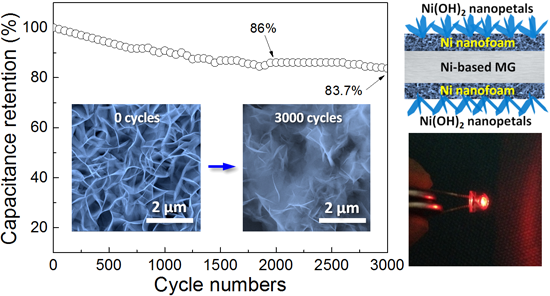
- energy density is approximately three times larger than that of a thin-film lithium ion battery (1–12 mW h/cm3, 4 V/500 μAh) [52] and far exceeds that of a MnO2-Ni(OH)2/AB//active carbon asymmetric supercapacitor (3.62 mWh/cm3 at 11 mW/cm3) [39] and a NiCo-LDH//AC asymmetric capacitor (7.4 mWh/cm3 at 103




Site-specific growth of oriented ZnO nanocrystal arrays
Beilstein J. Nanotechnol. 2019, 10, 274–280, doi:10.3762/bjnano.10.26
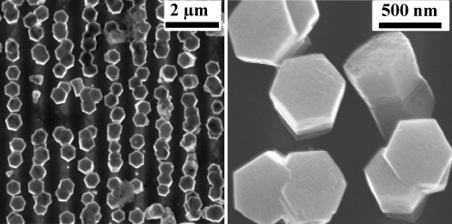
- Rekha Bai Dinesh K. Pandya Sujeet Chaudhary Veer Dhaka Vladislav Khayrudinov Jori Lemettinen Christoffer Kauppinen Harri Lipsanen Thin Film Laboratory, Physics Department, Indian Institute of Technology Delhi, New Delhi 110016, India Department of Electronics and Nanoengineering, Micronova, Aalto


Raman study of flash-lamp annealed aqueous Cu2ZnSnS4 nanocrystals
Beilstein J. Nanotechnol. 2019, 10, 222–227, doi:10.3762/bjnano.10.20
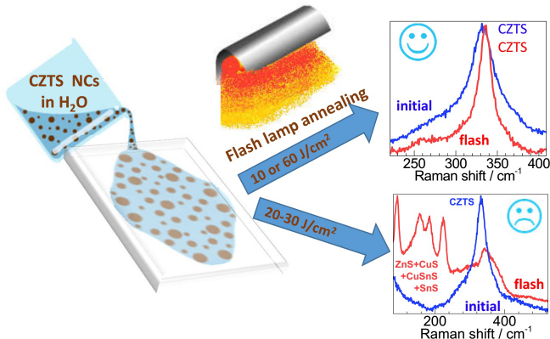
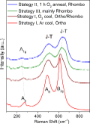
- as stabilizers. We establish the range of FLA conditions providing an efficient re-crystallization in the thin film of NCs, while preserving their kesterite structure and improving their crystallinity remarkably. The formation of secondary phases at higher FLA power densities, as well as the
- ]. Here, we focus on the effect of flash-lamp annealing on the structural evolution of CZTS films, as probed by Raman spectroscopy. The FLA setup, based on a xenon lamp emitting in the range of 300 to 800 nm, was customized by Dresden Thin Film (DTF) Technology GmbH [33] in a glove box system with


Uniform Sb2S3 optical coatings by chemical spray method
Beilstein J. Nanotechnol. 2019, 10, 198–210, doi:10.3762/bjnano.10.18
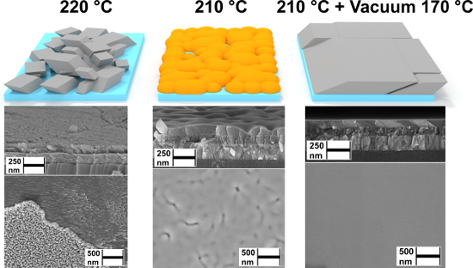
- Jako S. Eensalu Atanas Katerski Erki Karber Ilona Oja Acik Arvo Mere Malle Krunks Laboratory of Thin Film Chemical Technologies, Department of Materials and Environmental Technology, Tallinn University of Technology, Ehitajate tee 5, Tallinn 19086, Estonia 10.3762/bjnano.10.18 Abstract Antimony
- thickness of 100 nm derived from SEM images (Table 3). The absorption coefficient α was determined as where d is the layer thickness, R is the total reflectance, included to compensate for thin film interference, and T is the total transmittance. The band gap of Sb2S3 layers was determined by plotting (αhν
- )1/r vs hν, where h is the Planck constant, ν is the frequency and r = 1/2 is the exponent corresponding to the assumed direct optical transition [57]. Extrapolating the linear region of this curve to the hν-axis yields the optical band gap. Thin film interference could not be completely removed by




Nanoporous water oxidation electrodes with a low loading of laser-deposited Ru/C exhibit enhanced corrosion stability
Beilstein J. Nanotechnol. 2019, 10, 157–167, doi:10.3762/bjnano.10.15
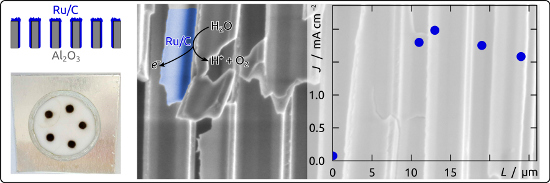
- Sandra Haschke Dmitrii Pankin Vladimir Mikhailovskii Maissa K. S. Barr Adriana Both-Engel Alina Manshina Julien Bachmann Friedrich-Alexander University Erlangen-Nürnberg, Department of Chemistry and Pharmacy, Chair of Chemistry of thin film materials, Egerlandstrasse 3a, 91058 Erlangen, Germany




Scanning probe microscopy for energy-related materials
Beilstein J. Nanotechnol. 2019, 10, 132–134, doi:10.3762/bjnano.10.12

- beyond the scope of solar cells. Katherine Atamanuk and co-workers impressively demonstrate that SPM methods can also be used to perform tomography [7]. They apply photoconducting scanning force microscopy for mapping the open-circuit voltage of cadmium telluride (CdTe) polycrystalline thin film solar
Wet chemistry route for the decoration of carbon nanotubes with iron oxide nanoparticles for gas sensing
Beilstein J. Nanotechnol. 2019, 10, 105–118, doi:10.3762/bjnano.10.10
- sensor [6]. In order to check if the deposition method (drop-coating thick film or airbrushing thin film) has an influence on the sensor behavior, an additional sensor using CNTs corresponding to sample B was prepared by air brushing. Differences in morphologies between the two approaches followed for




Pull-off and friction forces of micropatterned elastomers on soft substrates: the effects of pattern length scale and stiffness
Beilstein J. Nanotechnol. 2019, 10, 79–94, doi:10.3762/bjnano.10.8
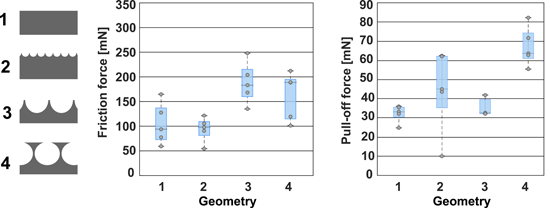
- -shaped micropillars detaches via a local thin-film peeling mechanism, multiple peeling fronts are present throughout the micropattern [14]. This splitting-up of the peeling front in multiple smaller fronts results in a drastic increase in peeling line length, and therefore in high pull-off and friction
- terminal-layer geometries on hard substrates, are not involved on the tested PDMS-PVA configurations. As Heepe et al. already reasoned for a (simplified) representation of a discoidal adhesive element [6], the advantageous effect of a thin film micropattern on pull-off force is lost when the substrate is
- ]. This deformation effect of the terminal layer on pull-off force is supported by the findings by Shahsavan et al., who reported that with thin film-terminated micropillars higher compliance and pull-off forces can be realized when the terminal layer has viscoelastic material properties [41]. For


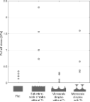

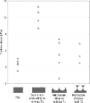


Contact splitting in dry adhesion and friction: reducing the influence of roughness
Beilstein J. Nanotechnol. 2019, 10, 1–8, doi:10.3762/bjnano.10.1
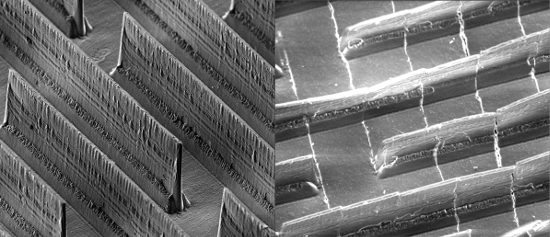
- been performed so far for thin-film-based adhesives. To this end, we report on the behavior of original and split, wall-shaped adhesive microstructures on different surfaces ranging across four orders of magnitude in roughness. Our results clearly demonstrate that the adhesion- and friction-driven
- adhesion; surfaces; tribology; Introduction Biological attachment systems based on thin-film adhesion have drawn significant interest during the last two decades because of their ability to operate on nearly any surface, their efficient control of detachment and their high resistance to contamination [1
- biological thin-film-based contact elements [7][8][9][10][11][12][13][14]. These artificial structures perform reasonably well on smooth substrates, which makes them suitable for industrial applications such as silicon wafer or display panel handling [15][16][17]. Because the ultimate goal of mimicking


Femtosecond laser-assisted fabrication of chalcopyrite micro-concentrator photovoltaics
Beilstein J. Nanotechnol. 2018, 9, 3025–3038, doi:10.3762/bjnano.9.281
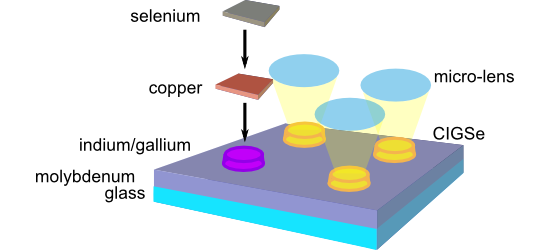
- fabrication methods for microabsorbers. In thin-film photovoltaics, Cu(In,Ga)Se2 (CIGSe) solar cells with an efficiency record of 22.9% for planar cells [2] and 19.2% for sub-modules [3] are among the leading technologies. Figure 1 shows the structure of a planar CIGSe solar cell representing the current


Electrostatic force microscopy for the accurate characterization of interphases in nanocomposites
Beilstein J. Nanotechnol. 2018, 9, 2999–3012, doi:10.3762/bjnano.9.279
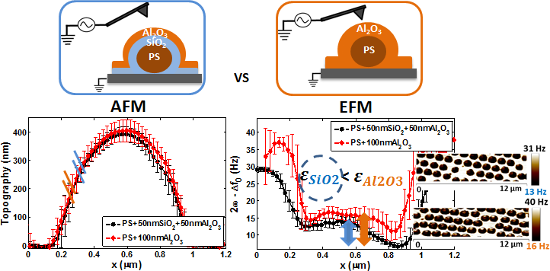
- [54]. Shells Alumina thin layers: atomic layer deposition (ALD). The ALD method was used to grow Al2O3 layers on the nanoparticles [55][56]. ALD is a thin film deposition technique where the film thickness is precisely controlled at the atomic level [57]. The deposition is based on sequential chemical
- ) and stirred with a magnetic stirrer until no particulate was visible (around 30 min). The spinning program used for thin film deposition was: a) 100 rpm for 15 s, b) 500 rpm for 15 s, and c) 2000 rpm for 60 s, all with a ramp of 2000 rpm. Silicon dioxide thin films: plasma sputter deposition (PSD




Size limits of magnetic-domain engineering in continuous in-plane exchange-bias prototype films
Beilstein J. Nanotechnol. 2018, 9, 2968–2979, doi:10.3762/bjnano.9.276
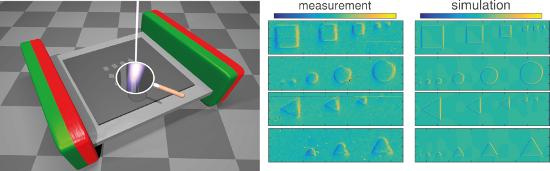
- with a spatial resolution significantly smaller than the domain wall width. Results: We demonstrate the application of a helium ion microscope with a beam diameter of 8 nm as a mask-less method for local domain patterning of magnetic thin-film systems. For a prototypical in-plane exchange-bias system
- engineering in an in-plane exchange-bias thin film as a prototypical system. For two-dimensional domains the limit depends on the domain geometry. The relative orientation between domain wall and anisotropy axes is a crucial parameter and therefore influences the achievable minimum domain size dramatically
- . Keywords: exchange bias; helium ion microscopy; ion bombardment induced magnetic patterning; magnetic domains; magnetic nanostructures; Introduction Engineered magnetic domains with deliberately set magnetic properties and designed shapes in thin-film systems have proven to be useful in memory [1][2] and




![[Graphic 63]](/bjnano/content/inline/2190-4286-9-276-i63.svg?max-width=637&scale=1.18182) .
. ![[Graphic 64]](/bjnano/content/inline/2190-4286-9-276-i64.svg?max-width=637&scale=1.18182) is the angle between the domain wall (DW) normal vector
is the angle between the domain wall (DW) normal vector ![[Graphic 65]](/bjnano/content/inline/2190-4286-9-276-i65.svg?max-width=637&scale=1.18182) and the local unidirectio...
and the local unidirectio...
Ternary nanocomposites of reduced graphene oxide, polyaniline and hexaniobate: hierarchical architecture and high polaron formation
Beilstein J. Nanotechnol. 2018, 9, 2936–2946, doi:10.3762/bjnano.9.272
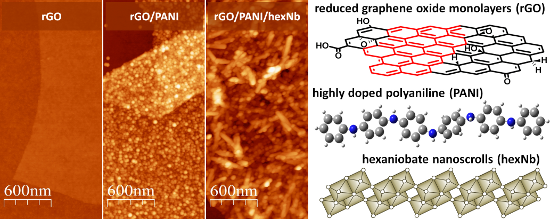
- ][49][65]. Although this result does not stimulate studies focusing on the application of rGO/PANI/hexNb in energy-storage devices, the thin film obtained by dropcasting has potential to be explored for other purposes since the amount of charge carriers is increased in the ternary nanocomposite





