Search results
Search for "thin films" in Full Text gives 477 result(s) in Beilstein Journal of Nanotechnology. Showing first 200.
Direct observation of the CVD growth of monolayer MoS2 using in situ optical spectroscopy
Beilstein J. Nanotechnol. 2019, 10, 557–564, doi:10.3762/bjnano.10.57
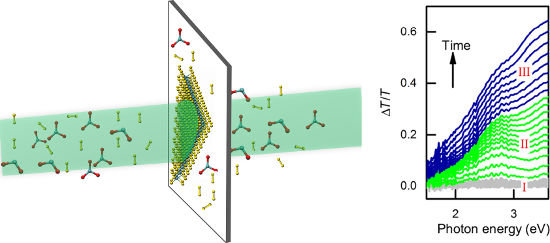
- synthesizing large-area 2D TMDCs have been reported, including mechanical exfoliation, sulphurization of metal thin films, mass transport, molecular beam epitaxy (MBE) and chemical vapor deposition (CVD) [6][7]. In particular, CVD is considered to be an attractive and very promising approach for large-scale
- reflectance spectroscopy (DRS), which measures the normalized difference between the reflectance of the bare surface and the surface covered by thin films, possesses an enhanced sensitivity to the surface modification and ultrathin film growth [25][26]. This technique has been successfully applied to reveal
- the MoO3 thin films were formed on the substrate surfaces. Actually, we attribute the observed DTS signal to the absorption of the MoO3 thin films which were deposited on the inner surface of the quartz window at the end of the furnace tube. Since the quartz was maintained close to room temperature


Nanocomposite–parylene C thin films with high dielectric constant and low losses for future organic electronic devices
Beilstein J. Nanotechnol. 2019, 10, 428–441, doi:10.3762/bjnano.10.42
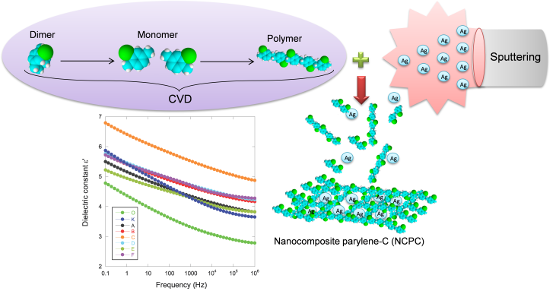
- Nazionale di Fisica Nucleare, Laboratori Nazionali di Legnaro, Viale dell’Università 2, 35020 Legnaro (PD), Italy 10.3762/bjnano.10.42 Abstract Nanocomposite–parylene C (NCPC) thin films were deposited with a new technique based on the combination of chemical vapor deposition (CVD) for parylene C
- understood. This dielectric analysis showed that an increase in the dielectric constant accompanied by a decrease of dissipation factor tan δ is possible when silver-oxide particles are embedded in a parylene C matrix. Thus, for OFET applications, NCPC thin films could constitute a new interesting route as
- incorporated in the polymer matrix. Under these conditions, we have prepared uniform nanocomposite thin films with thicknesses from 1 to 3 µm, as measured by a Tencor AlphaStep 200 profilometer. In order to obtain several, nominally identical samples for each deposition run, the substrates were put on a




Biocompatible organic–inorganic hybrid materials based on nucleobases and titanium developed by molecular layer deposition
Beilstein J. Nanotechnol. 2019, 10, 399–411, doi:10.3762/bjnano.10.39
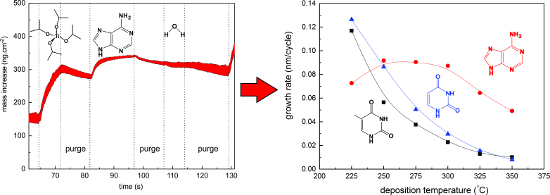
- Leva Momtazi Henrik H. Sonsteby Ola Nilsen Centre for Materials Science and Nanotechnology (SMN), Department of Chemistry, University of Oslo, P.O. Box 1033 Blindern, N-0315 Oslo, Norway 10.3762/bjnano.10.39 Abstract We have constructed thin films of organic–inorganic hybrid character by
- anticancer complexes for better metallo-pharmaceutical activity and toxicity reduction [8]. This work describes the growth of films based on such organic nucleotides as complexes with the biocompatible metal titanium. As thin films, such materials can be better applied as coatings on scaffolds or implants
- gas phase. ALD was initially developed for production of thin films of zinc sulphide [10], and since its introduction in the 1970s, it has expanded to include a wide range of materials, including organic–inorganic hybrid compounds. In both ALD and MLD, the precursors are introduced onto the surface of




Integration of LaMnO3+δ films on platinized silicon substrates for resistive switching applications by PI-MOCVD
Beilstein J. Nanotechnol. 2019, 10, 389–398, doi:10.3762/bjnano.10.38
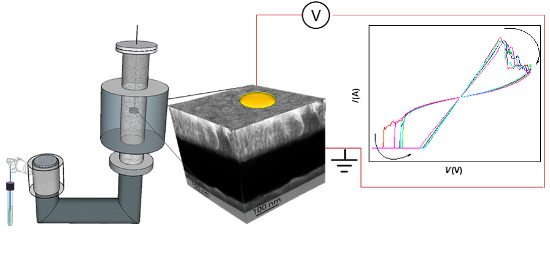
- ] have been used for the deposition of epitaxial and polycrystalline LMO and doped LMO thin films enabling the control of the oxygen and cation stoichiometry. Since the precursor solution is simply prepared by dissolution of metalorganic species, the stoichiometry of the film is easily tuneable by
- , by modifying a number of controlled parameters on the process, such as pulse frequency, oxygen partial pressure and temperature, the structure of the LMO thin films can be tuned during growth. In memristors, the electrodes play a crucial role in the RS response. For example, in electrochemical
- , these substrates undergo dewetting when exposed to high temperatures for long times. The high temperatures required to grow perovskite thin films by techniques such as PI-MOCVD or PLD are a drawback because the continuity of the Pt bottom electrode can be lost [25]. In this work, we explore a number of




Geometrical optimisation of core–shell nanowire arrays for enhanced absorption in thin crystalline silicon heterojunction solar cells
Beilstein J. Nanotechnol. 2019, 10, 322–331, doi:10.3762/bjnano.10.31
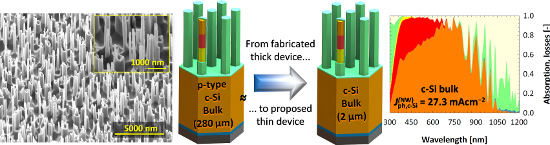
- , a 100 nm thick transparent tin-doped indium oxide (In2O3:Sn, ITO) was deposited at low power and low temperature, using radio-frequency (RF) magnetron sputtering. The cell area was defined as 5 mm × 5 mm, using a mask during ITO deposition. The reported equivalent thickness values of thin films on


Removal of toxic heavy metals from river water samples using a porous silica surface modified with a new β-ketoenolic host
Beilstein J. Nanotechnol. 2019, 10, 262–273, doi:10.3762/bjnano.10.25
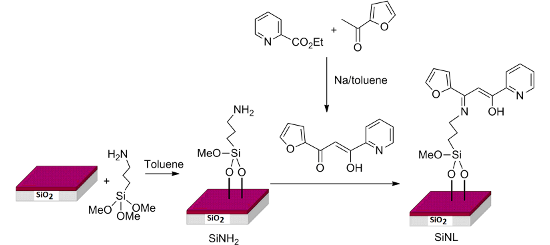
- coordination complexes with most transition metals [41][42]. The incorporation at the surface silica of a β-ketoenol group thus affords these hybrids the capacity to retain heavy metal ions. The group of C. Sanchez has prepared some mesoporous thin films functionalized with silylated β-ketoenol compounds as


Interaction of Te and Se interlayers with Ag or Au nanofilms in sandwich structures
Beilstein J. Nanotechnol. 2019, 10, 238–246, doi:10.3762/bjnano.10.22
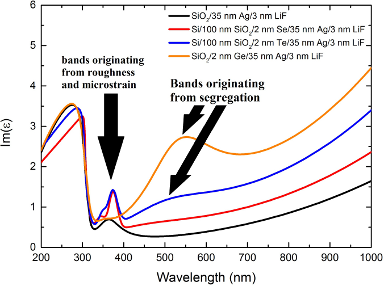
- the surface of Au layer were detected. This indicates the occurrence of grain boundary segregation or diffusion of these semiconductors in the plasmonic thin films. The curve shape of the Te concentration in the Ag layer suggests the dominant role of segregation. The study of the electron energy loss


Raman study of flash-lamp annealed aqueous Cu2ZnSnS4 nanocrystals
Beilstein J. Nanotechnol. 2019, 10, 222–227, doi:10.3762/bjnano.10.20
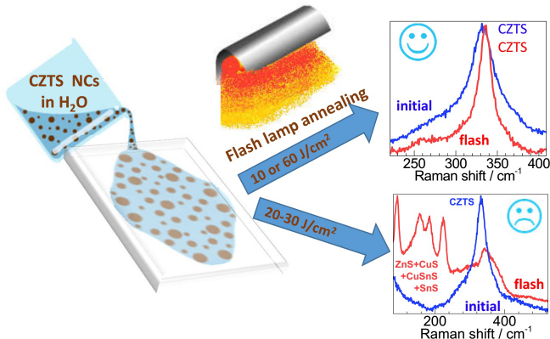
- University of Technology, 09107 Chemnitz, Germany L. V. Pysarzhevsky Institute of Physical Chemistry, National Academy of Sciences of Ukraine, Kyiv, 03028, Ukraine 10.3762/bjnano.10.20 Abstract The effect of flash-lamp annealing (FLA) on the re-crystallization of thin films made of colloidal Cu2ZnSnS4
- dependence of the formation on the film thickness are also investigated. Importantly, no inert atmosphere for the FLA treatment of the NCs is required, which makes this technology even more suitable for mass production, in particular for printed thin films on flexible substrates. Keywords: copper zinc tin
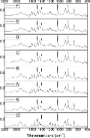
- the thickness of the film. Thus, in the case of annealing of thin films with high energies, the Raman spectra show the presence of all possible secondary phases and the absence of the source material, indicating a complete decay of CZTS. When thicker films are annealed, even with maximum energy, the


Uniform Sb2S3 optical coatings by chemical spray method
Beilstein J. Nanotechnol. 2019, 10, 198–210, doi:10.3762/bjnano.10.18
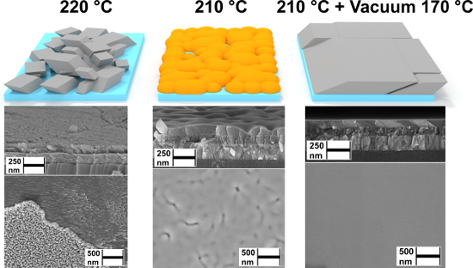
- controllable in-air growth of continuous, uniform, polycrystalline Sb2S3 absorber layers has not yet been accomplished. This could be achieved with chemical spray pyrolysis, a robust chemical method for deposition of thin films. We applied a two-stage process to produce continuous Sb2S3 optical coatings with
- pyrolysis in air by tuning of the deposition temperature, the Sb/S precursor molar ratio in the spray solution, and the post-deposition treatment temperature. Keywords: antimony sulfide; thin films; ultrasonic spray; vacuum annealing; Volmer–Weber growth; Introduction Antimony sulfide (Sb2S3) is an
- structured solar cells [8]. Planar ≈1.7 eV absorber layers can be applied in semitransparent solar cells as well as in tandem solar cells. Chemical spray pyrolysis (CSP) is a robust and industrially scalable chemical method for rapid deposition of thin films [9]. Our research group first investigated spray




Nanoporous water oxidation electrodes with a low loading of laser-deposited Ru/C exhibit enhanced corrosion stability
Beilstein J. Nanotechnol. 2019, 10, 157–167, doi:10.3762/bjnano.10.15
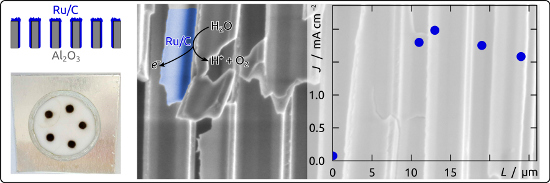
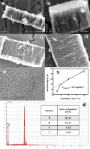
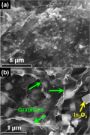
- Ru3(CO)12 solutions. SEM images of planar samples coated with laser-induced Ru/C films in cross-section (a) and top-view (b). Laser-irradiation of Ru3(CO)12 solutions results in continuous and rough thin films deposited on ITO. Preparation of nanostructured Ru/C electrodes. (a) Anodization of Al in 1




Sputtering of silicon nanopowders by an argon cluster ion beam
Beilstein J. Nanotechnol. 2019, 10, 135–143, doi:10.3762/bjnano.10.13
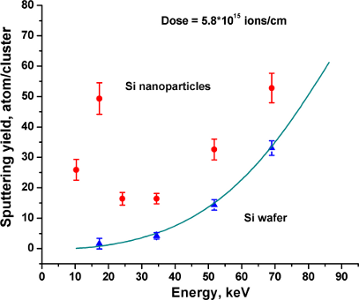
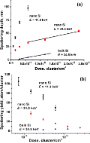
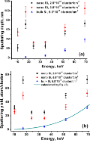
- 98.8 nm particles and thin films, the yield was 96 and 129, respectively. In this study, we combine two of the above-mentioned approaches to further increase the sputtering yield, i.e., employing heavy cluster projectiles to irradiate finite size targets. The feasibility of such an increase in the





Zn/F-doped tin oxide nanoparticles synthesized by laser pyrolysis: structural and optical properties
Beilstein J. Nanotechnol. 2019, 10, 9–21, doi:10.3762/bjnano.10.2
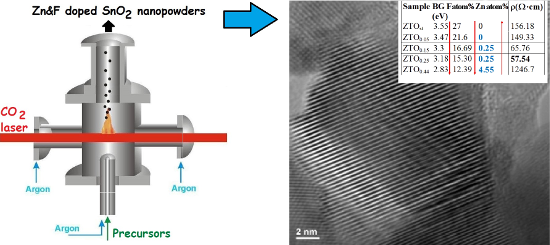
- the visible range [5][6]. For the case of tin oxide, a comparative study using halogen anions (F, Cl, Br, I) as dopants shows that the fluorine anion induces the formation of thin films and exhibits the best performance in terms of transparency and conductivity [7]. Today, the most used material for
- were obtained. To the best of our knowledge, Zn/F-doped tin oxide nanoparticles with low Zn and high F content have been prepared for the first time. Related fluorine-doped zinc tin oxide (FZTO) thin films with higher zinc concentration (from 5.5 to 35.5 atom %) and lower fluorine content (0.62 to 3.49
- measurements can help in engineering so that Zn/F-doped SnO2 can be considered as a typical transparent conducting oxide (TCO) suitable for solar cell applications. Thin films were prepared from the as-synthesized powders using spin-coating and found to have an apparent density of around 0.8 g/cm3. The



Contact splitting in dry adhesion and friction: reducing the influence of roughness
Beilstein J. Nanotechnol. 2019, 10, 1–8, doi:10.3762/bjnano.10.1
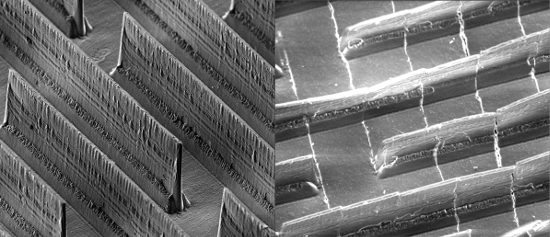
- biological adhesives is to achieve efficient and easily controllable adhesion on any surface, it is important to understand how to overcome the negative effects of roughness on attachment of thin films. It was shown that gecko adhesion is lower if the substrate waviness wavelength is comparable to the
- , while the force needed to start sliding is affected less. Conclusion Based on the results presented in this work, we can conclude the following. First, because thin films can adapt to wavy but not to rough surfaces, the adhesion- and friction-driven attachment of the wall-shaped microstructure degrades


Hydrogen-induced plasticity in nanoporous palladium
Beilstein J. Nanotechnol. 2018, 9, 3013–3024, doi:10.3762/bjnano.9.280
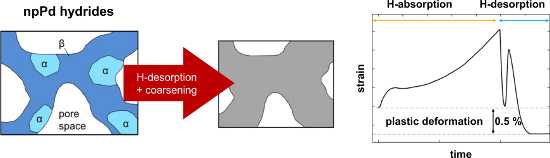
- depletion of PdHα at a value below −0.99 V is consistent with values reported for palladium thin films [31][32]. The threshold values for the palladium hydride β-phase formation (−0.96 V) and the potential of α-phase depletion (−0.99 V) can be used for a phase distinction in current-controlled experiments
- order to maintain surface–shell–core coherency during the α-to-β transition [34]. A study on phase transitions in PdH thin films concluded that coherent transitions are possible up to a critical film thickness of 22 nm [36]. As ligament sizes in npPd produced by dealloying in our work are in the order


Electrostatic force microscopy for the accurate characterization of interphases in nanocomposites
Beilstein J. Nanotechnol. 2018, 9, 2999–3012, doi:10.3762/bjnano.9.279
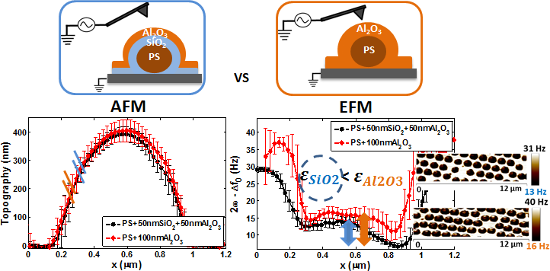
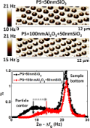
- ]. In fact, as our samples were highly rough owing to the sub-micrometer PS spheres, spin-coating could not produce uniformly thin films [37]. However, this did not affect our study because the EFM results were compared at the center of the particles. Concerning the EFM signals, the average values
- ) and stirred with a magnetic stirrer until no particulate was visible (around 30 min). The spinning program used for thin film deposition was: a) 100 rpm for 15 s, b) 500 rpm for 15 s, and c) 2000 rpm for 60 s, all with a ramp of 2000 rpm. Silicon dioxide thin films: plasma sputter deposition (PSD




Co-intercalated layered double hydroxides as thermal and photo-oxidation stabilizers for polypropylene
Beilstein J. Nanotechnol. 2018, 9, 2980–2988, doi:10.3762/bjnano.9.277
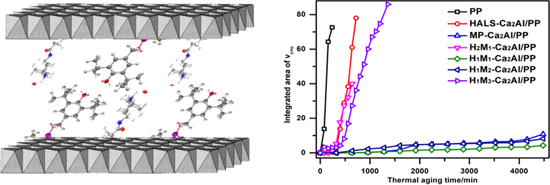
- diffractometer with a wavelength of 0.154 nm at 40 kV and 30 mA in a 2θ range of 3–70° at 10°·min−1. Fourier-transform infrared (FTIR) spectra were recorded on a Bruker Vector 22 infrared spectrophotometer with KBr pellets (sample/KBr of 1:100 by weight) or thin films. Thermogravimetry and differential thermal


Size limits of magnetic-domain engineering in continuous in-plane exchange-bias prototype films
Beilstein J. Nanotechnol. 2018, 9, 2968–2979, doi:10.3762/bjnano.9.276
- Institute “Electronic Properties”, Forschungszentrum Jülich, 52425 Jülich, Germany Advanced Light Source, Lawrence Berkeley National Laboratory, Berkeley, CA, USA Faculty of Physics, Thin Films and Physics of Nanostructures, University of Bielefeld, 33501 Bielefeld, Germany 10.3762/bjnano.9.276 Abstract
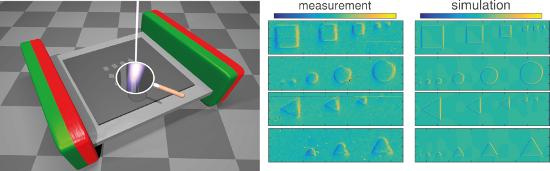
- patterning by Ga ions in a FIB (suffering from destruction of the thin films due to high sputter yields) [32][33], available patterning methods do not achieve the necessary resolution. Currently, the smallest engineered domains in films with in-plane anisotropy are 300 nm wide stripes produced by thermally
- nanometers [25]. Local magnetic property modifications in thin films by narrow beams of light ions, in contrast, do not suffer from this drawback due to more localized energy deposition [35]. Currently patterning by kiloelectronvolt light ion bombardment is performed using shadow masks where the lateral


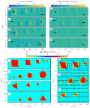


![[Graphic 63]](/bjnano/content/inline/2190-4286-9-276-i63.svg?max-width=637&scale=1.18182) .
. ![[Graphic 64]](/bjnano/content/inline/2190-4286-9-276-i64.svg?max-width=637&scale=1.18182) is the angle between the domain wall (DW) normal vector
is the angle between the domain wall (DW) normal vector ![[Graphic 65]](/bjnano/content/inline/2190-4286-9-276-i65.svg?max-width=637&scale=1.18182) and the local unidirectio...
and the local unidirectio...
Charged particle single nanometre manufacturing
Beilstein J. Nanotechnol. 2018, 9, 2855–2882, doi:10.3762/bjnano.9.266
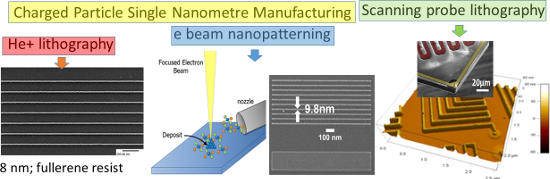
- observed while imaging in the SEM, this process was exploited to deposit insulating thin films [53] and sub-micrometre patterns [54] of a range of materials in a controlled manner by scanning the electron beam. The high resolution of this technique was demonstrated as early as 1976 by Broers et al. [55
- and spaces on bulk silicon. Figure 11 shows schematically the evolution of EBID into a controlled nanopatterning technique since the first demonstration of its high resolution, followed by simulations and experiments on thin films to study the ultimate resolution achievable. This has ultimately
- literature including EUV mask repair [89], cutting of nanotubes [90] and etching of holes in thin films. In this review we enumerate the major contributions in high-resolution EBIE which, although relatively few in number, clearly demonstrate the potential of the technique. The fabrication of nanopores, for


Nanostructure-induced performance degradation of WO3·nH2O for energy conversion and storage devices
Beilstein J. Nanotechnol. 2018, 9, 2845–2854, doi:10.3762/bjnano.9.265
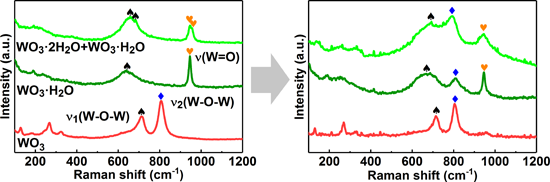
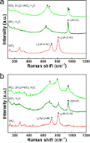
- thin films displayed a maximum response of 80% for 1% of hydrogen gas at 250 °C [36]. 2D WO3·2H2O films developed by a facile dipping process exhibited a significantly improved response time as electrochromic electrodes compared to WO3 thin films [37]. The acidic precipitation reaction was also adopted


Graphene-enhanced metal oxide gas sensors at room temperature: a review
Beilstein J. Nanotechnol. 2018, 9, 2832–2844, doi:10.3762/bjnano.9.264
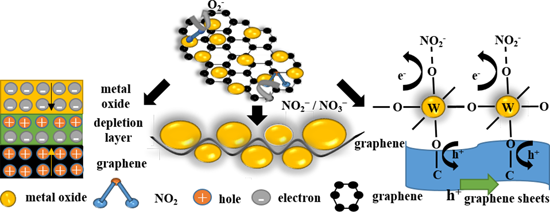
- sensors based on rGO/metal oxides, which exhibit enhanced sensing performance mainly due to the formation of heterojunctions. Tai et al. [46] deposited ZnO nanoparticles and GO thin films on gold interdigital electrodes (IDEs) through a simple spray process and thermally reduced the deposits to ZnO–rGO



Controlling surface morphology and sensitivity of granular and porous silver films for surface-enhanced Raman scattering, SERS
Beilstein J. Nanotechnol. 2018, 9, 2813–2831, doi:10.3762/bjnano.9.263
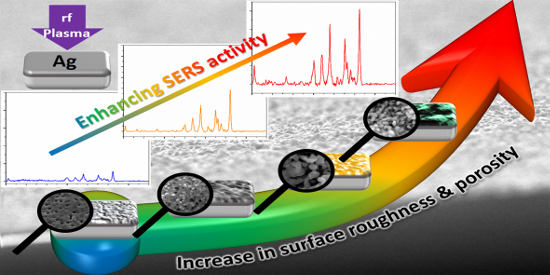
- . Altogether this work shows for the first time the effectiveness of a plasma treatment for surface roughening of silver thin films and its profound influence on the interface-controlled SERS enhancement effect. The method can be used for low-cost, large-scale production of SERS substrates. Keywords: plasma
- first systematic investigation in that direction. Experimental Preparation of sputtered silver films Thin films of silver were sputtered on glass substrates cleaned with acetone. Different thicknesses of silver were sputtered using a benchtop Cressington 208HR sputter coater in which the thickness of






Oriented zinc oxide nanorods: A novel saturable absorber for lasers in the near-infrared
Beilstein J. Nanotechnol. 2018, 9, 2730–2740, doi:10.3762/bjnano.9.255
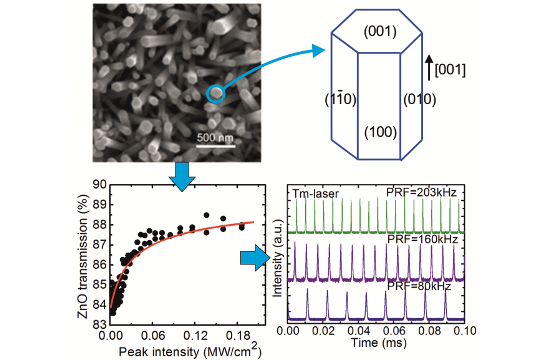
- under ns-laser excitation [23]. This effect was ascribed to the defects promoted by the Mn2+ doping. Some studies revealed reverse saturable absorption (optical limiting) in ZnO thin films and NRs [24]. Zhu et al. studied ultrafast saturable absorption of multiwalled carbon nanotubes (MWCNTs) on quartz



Optimization of Mo/Cr bilayer back contacts for thin-film solar cells
Beilstein J. Nanotechnol. 2018, 9, 2700–2707, doi:10.3762/bjnano.9.252
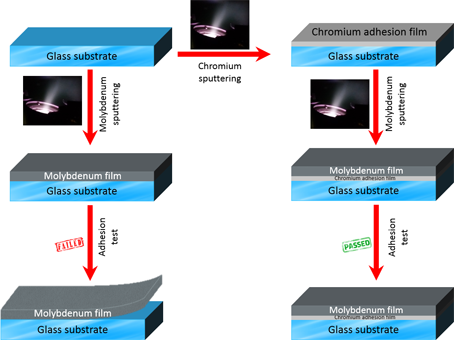
- ; bilayer; chromium; DC sputtering; molybdenum; optical reflectance; Introduction Molybdenum (Mo) thin films are widely used as a back contact for photovoltaic devices such as Cu(In1−xGax)S2 (CIGS) and Cu2ZnSnS4 (CZTS) thin-film solar cells. The back contact is the first layer to be deposited and its
- . Conclusion A bilayer of Mo/Cr thin films with robust adhesion and desired electro-optical properties as a back contact in thin-film solar cells was successfully deposited on SLG substrates using DC sputtering. The bottom 10–15 nm thick Cr layer was used to increase the adhesion of the top Mo layer to the


Silicene, germanene and other group IV 2D materials
Beilstein J. Nanotechnol. 2018, 9, 2665–2667, doi:10.3762/bjnano.9.248

- beam epitaxy (MBE) [1][2] and at around the same time on zirconium diboride thin films grown on Si(111) substrates by Si segregation through the film [3]. The synthesis of silicene further launched an intensive search for other 2D elemental materials synthesized under ultrahigh vacuum by MBE-like

Impact of the anodization time on the photocatalytic activity of TiO2 nanotubes
Beilstein J. Nanotechnol. 2018, 9, 2628–2643, doi:10.3762/bjnano.9.244
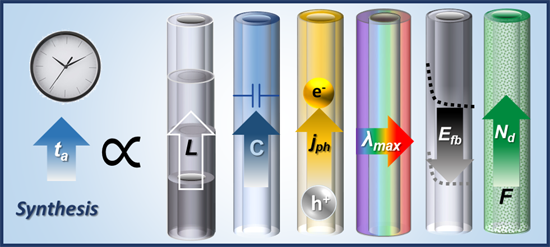
- sections. XRD The structure and crystallinity of the samples were studied by means of XRD and the diffractograms are presented in Figure 3. The Bragg–Brentano geometry was preferred for our work with thin films. After being thermally treated, all the samples exhibited the typical Bragg positions of anatase