


Search results
Search for "transition metal" in Full Text gives 244 result(s) in Beilstein Journal of Nanotechnology. Showing first 200.
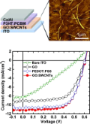
Synthesis of graphene–transition metal oxide hybrid nanoparticles and their application in various fields
Beilstein J. Nanotechnol. 2017, 8, 688–714, doi:10.3762/bjnano.8.74
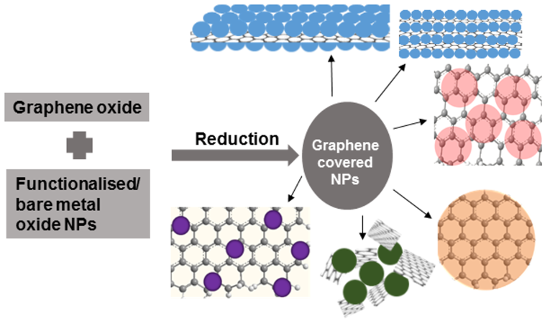
- ) and therefore offers the possibility to fabricate a large variety of graphene–transition metal oxide (TMO) NP hybrids. These hybrid materials are promising alternatives to reduce the drawbacks of using only TMO NPs in various applications, such as anode materials in lithium ion batteries (LIBs
- perspectives to improve the properties of the hybrid materials in view of applications are outlined. Keywords: graphene; hybrid; nanoparticle; reduced graphene oxide; transition metal oxide; Review Introduction Graphene consists of a single layer of carbon in a two-dimensional (2D) lattice. It is a densely
- its susceptibility to oxidative environments. In the last few decades, the synthesis of transition metal oxide (TMO) NPs has attracted much attention, providing the advantages of controlled shape, size, crystallinity and functionality, as well as being ecologically benign, corrosion resistance, easily






Carbon nanotube-wrapped Fe2O3 anode with improved performance for lithium-ion batteries
Beilstein J. Nanotechnol. 2017, 8, 649–656, doi:10.3762/bjnano.8.69
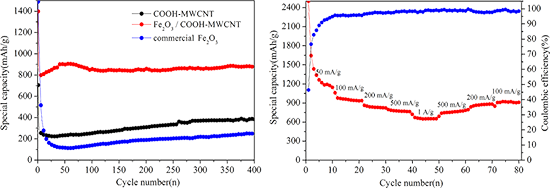
- /COOH-MWCNT composite. This is a common phenomenon in transition metal oxide anode materials. It can be ascribed to the penetration of the electrolyte and gradual exposure of the active sites [38][39][40]. The discharge capacity of the Fe2O3/COOH-MWCNT composite stabilized at 711.2 mAh·g−1 at a current


Graphene functionalised by laser-ablated V2O5 for a highly sensitive NH3 sensor
Beilstein J. Nanotechnol. 2017, 8, 571–578, doi:10.3762/bjnano.8.61
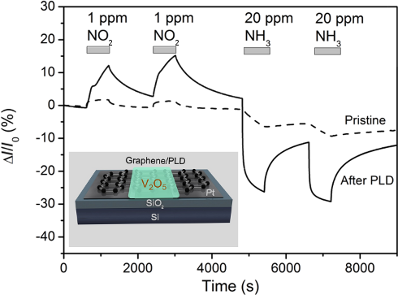
- precious metal [4] or metal oxide nanoparticles [5]. Also, introduction of suitable defects was shown to have a positive effect on gas adsorption and sensor properties of graphene [6]. Transition metal oxides constitute an important class of catalysts and photosensitizers. Apart from the very first and


Role of oxygen in wetting of copper nanoparticles on silicon surfaces at elevated temperature
Beilstein J. Nanotechnol. 2017, 8, 425–433, doi:10.3762/bjnano.8.45
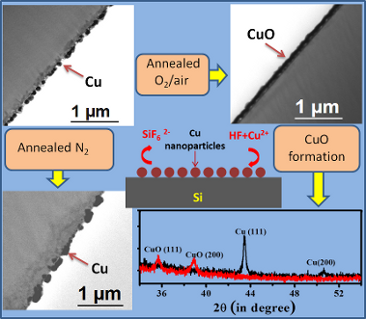
- . Keywords: copper; cupric oxide; electron diffraction; galvanic displacement reaction; oxidation; surface wetting; transmission electron microscopy; Introduction The transition metal oxide cupric oxide (CuO) is a stable oxide of copper, and due to its diverse applications, immense research on CuO


In-situ monitoring by Raman spectroscopy of the thermal doping of graphene and MoS2 in O2-controlled atmosphere
Beilstein J. Nanotechnol. 2017, 8, 418–424, doi:10.3762/bjnano.8.44
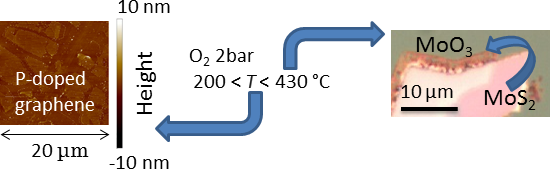
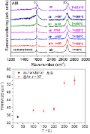
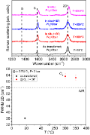
- in oxygen at temperatures below 400 °C. It has also been shown that the effect of doping is sensitive to the ambient atmosphere. In particular, water molecules affect the doping stability [20][21]. Alongside Gr, the transition metal dichalcogenide MoS2 is one of the stable 2D materials of interest [1
- clearly seen. This finding suggests that the observed erosion of the flakes is driven by the formation of oxidized regions at the borders of the MoS2 flakes that gradually convert them to MoO3, before completely destroying them. Similar effects have been suggested for other transition metal


Impact of contact resistance on the electrical properties of MoS2 transistors at practical operating temperatures
Beilstein J. Nanotechnol. 2017, 8, 254–263, doi:10.3762/bjnano.8.28
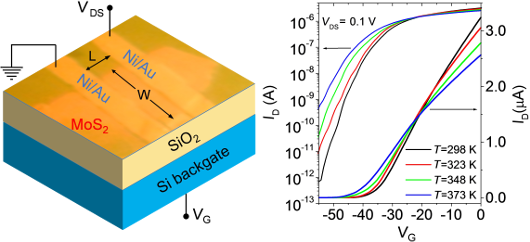
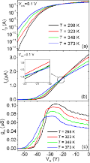
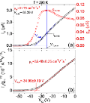
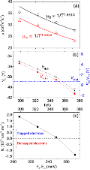
- 373 K, which was explained in terms of electron trapping at MoS2/SiO2 interface states. Keywords: contact resistance; mobility; MoS2; temperature dependence; threshold voltage; Introduction Transition metal dichalcogenides (TMDs) are compound materials formed by the Van der Waals stacking of MX2
- layers (where M = Mo, W, etc., i.e., a transition metal, and X = S, Se, Te, i.e., a chalcogen atom). Among the large number of existing layered materials [1], TMDs are currently attracting increasing scientific interest due to some distinct properties, such as the presence of a sizable bandgap in their




Phosphorus-doped silicon nanorod anodes for high power lithium-ion batteries
Beilstein J. Nanotechnol. 2017, 8, 222–228, doi:10.3762/bjnano.8.24
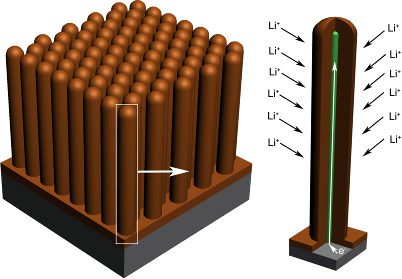
- -based anodes. To match the practical use of Si-based anodes, sulfur (1675 mAh/g) and/or transition-metal-sulphides might be the potential candidates for the state-of-the-art commercial cathodes [15]. In addition, the rate performance of the resulting Si anode was tested and the result is illustrated as


Cubic chemically ordered FeRh and FeCo nanomagnets prepared by mass-selected low-energy cluster-beam deposition: a comparative study
Beilstein J. Nanotechnol. 2016, 7, 1850–1860, doi:10.3762/bjnano.7.177
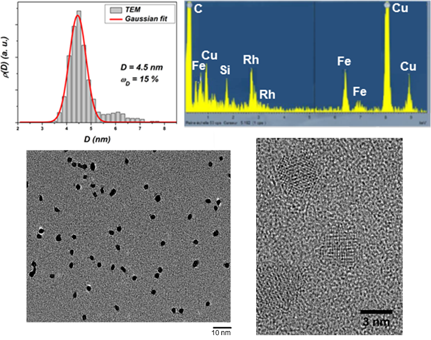
- what is expected for free 3D transition metal clusters [33] the magnetic signal of FeCo clusters increases with size for as-prepared and annealed FeCo clusters embedded in a carbon matrix. Moreover, the reduced magnetic moments in the FeCo nanoparticles, which could be due to the formation of a non


In situ formation of reduced graphene oxide structures in ceria by combined sol–gel and solvothermal processing
Beilstein J. Nanotechnol. 2016, 7, 1815–1821, doi:10.3762/bjnano.7.174
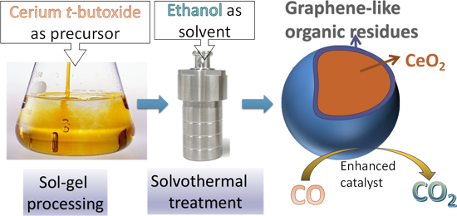
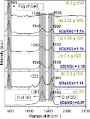
- capacity. It is mostly used together with other components, such as noble metals or transition metal oxides, such as NiO or Co3O4, because synergistic effects improve the catalytic properties. Graphene-modified CeO2 greatly enhances the performance in electrochemical devices (supercapacitors, fuel cells or





High performance Ce-doped ZnO nanorods for sunlight-driven photocatalysis
Beilstein J. Nanotechnol. 2016, 7, 1338–1349, doi:10.3762/bjnano.7.125
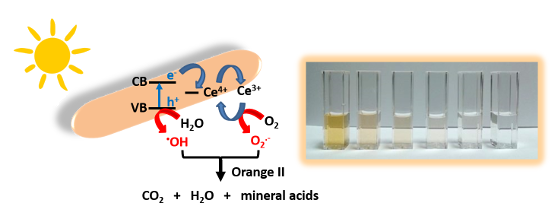
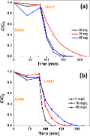
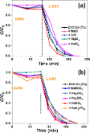
- photocatalyst is only weakly sensitive to salts commonly present in wastewater. Noteworthy is also that the Cl− and SO42− anions, which are well-known to be •OH radicals scavengers, have no detrimental effect on the photocatalytic activity. Transition metal salts used at 100 µM concentration like ZnCl2 or FeCl3
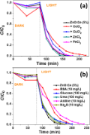
- rods used under solar light irradiation (Volume of solution, 30 mL; Orange II concentration, 10 mg/L; mass of catalyst, 30 mg). Effects of (a) transition metal salts and (b) of organic compounds and Na2S on the photocatalytic efficiency of the ZnO:Ce rods used under solar light irradiation (Volume of







Improved lithium-ion battery anode capacity with a network of easily fabricated spindle-like carbon nanofibers
Beilstein J. Nanotechnol. 2016, 7, 1289–1295, doi:10.3762/bjnano.7.120
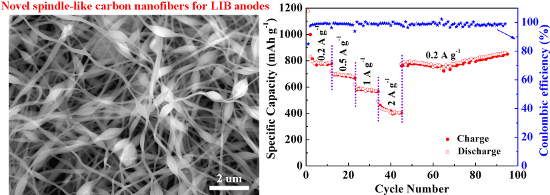
- , transition metal oxides are the focus of intensive efforts for LIB anode materials due to their remarkable specific capacity, low cost and environmental compatibility [6][7][8][9][10][11]. Manganese oxide (MnO) is a particularly good choice owing to its high theoretical specific capacity of 755 mAh g−1, low
- the high theoretical capacity and enhanced reaction kinetics of MnO, the improved conductivity of carbon anchored with N, and the robust structural endurance, effectively alleviating the problem of volume change. The work provides another credible work supporting that the transition metal oxide based


Microscopic characterization of Fe nanoparticles formed on SrTiO3(001) and SrTiO3(110) surfaces
Beilstein J. Nanotechnol. 2016, 7, 817–824, doi:10.3762/bjnano.7.73
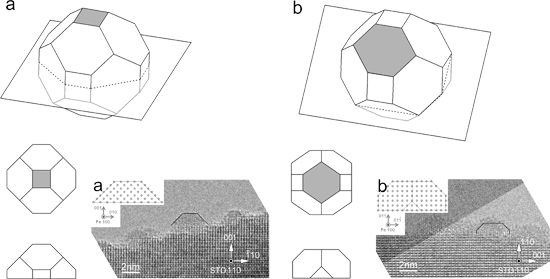
- transition metal on an oxide substrate [53][54][55]. As mentioned above, there are nanoparticles with ideal interfaces. These nanoparticles may well be assumed to have nearly thermodynamically stable shapes, since surface self-diffusion lengths of iron atoms on both Fe(100) and (110) surfaces are reported to


Microwave solvothermal synthesis and characterization of manganese-doped ZnO nanoparticles
Beilstein J. Nanotechnol. 2016, 7, 721–732, doi:10.3762/bjnano.7.64
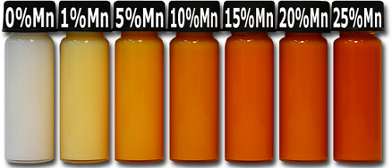
- confirms the growing interest in Mn2+-doped zinc oxide (Figure 1). It is generally known that selective doping enables controlling the semiconductor properties of ZnO, such as forbidden band or conductivity. The diversity of ZnO modifications by doping with various transition metal ions (e.g., Co, Mn, Ni


First-principles study of the structure of water layers on flat and stepped Pb electrodes
Beilstein J. Nanotechnol. 2016, 7, 533–543, doi:10.3762/bjnano.7.47
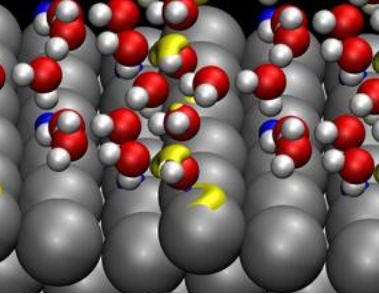
- Pb(100), the energetically most favorable water structures differ from those on the corresponding transition metal surfaces because of the much larger lattice constant of Pb. On the stepped surfaces, water forms flat layers that are pinned to the Pb step atoms but very weakly interacting with the


Case studies on the formation of chalcogenide self-assembled monolayers on surfaces and dissociative processes
Beilstein J. Nanotechnol. 2016, 7, 263–277, doi:10.3762/bjnano.7.24
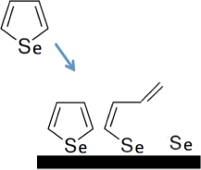
- transition metal surfaces [44][45]. A few years ago, the research groups of Nuzzo [46], Whitesides [46] and others [48] noted that for alkane thiol SAMs, the initial desulfurization occurs via S–C bond scission. This leads to the formation of a sulfidic interface layer, upon which a more or less ordered


Synthesis and applications of carbon nanomaterials for energy generation and storage
Beilstein J. Nanotechnol. 2016, 7, 149–196, doi:10.3762/bjnano.7.17
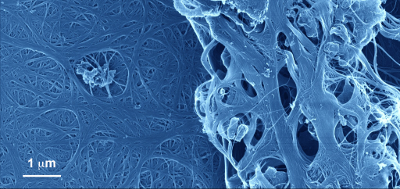
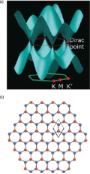
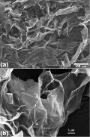
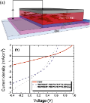
- flow of a hydrocarbon gas over a catalyst in a tube furnace. The catalyst is typically transition metal nanoparticles on a support such as alumina. Materials grown on the catalyst are collected after cooling the furnace to room temperature. The key process parameters are the hydrocarbon and catalyst

















Single-molecule magnet behavior in 2,2’-bipyrimidine-bridged dilanthanide complexes
Beilstein J. Nanotechnol. 2016, 7, 126–137, doi:10.3762/bjnano.7.15
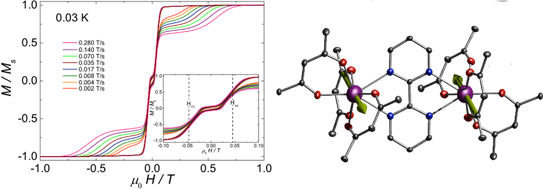
- date, the largest anisotropy barrier observed in a transition metal SMM is 226 cm−1 in the Fe(II) complex [Fe(C(SiMe3)3)2]− [10]. Recently, molecular compounds employing lanthanide ions led to a considerable increase in strength of molecular magnets due to the observation of the SMM character at the
- ligand that provides a communication pathway between the lanthanide ions. The 2,2’-bipyrimidine (bpm) ligand has been selected for many transition metal complexes to bridge metal ions and it acts as a connector to influence emission and magnetic properties [18][19][20][21]. An adsorption-site-dependent
- zero-bias (Kondo) resonance was clearly observed in the dinuclear transition metal complexes with the bpm bridging ligand [20]. In the same molecular architecture, the substitution of Ising-like spins, such as lanthanides, can offer a weak exchange coupling to study their possible implementation as


Green and energy-efficient methods for the production of metallic nanoparticles
Beilstein J. Nanotechnol. 2015, 6, 2354–2376, doi:10.3762/bjnano.6.243
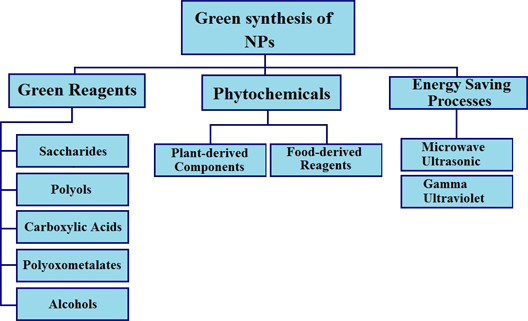
- and prism-like NPs [22]. Polyoxometalates Polyoxometalates (POMs) are anionic structures with transition metal atoms in their highest oxidation state. These materials can exhibit tremendous structural variety and interesting properties such as reversible electron exchange behavior that make them ideal


Distribution of Pd clusters on ultrathin, epitaxial TiOx films on Pt3Ti(111)
Beilstein J. Nanotechnol. 2015, 6, 2007–2014, doi:10.3762/bjnano.6.204
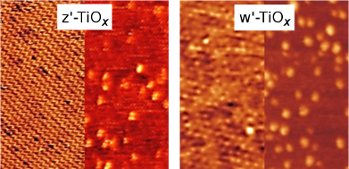
- describes the influence of a transition metal oxide support on noble metal clusters yielding novel catalytic properties [1][2][3][4][5][6][7]. In order to understand this effect, well-defined model systems are needed. “Well-defined” refers to both the clusters and the supporting substrate, as exemplified in


Paramagnetism of cobalt-doped ZnO nanoparticles obtained by microwave solvothermal synthesis
Beilstein J. Nanotechnol. 2015, 6, 1957–1969, doi:10.3762/bjnano.6.200
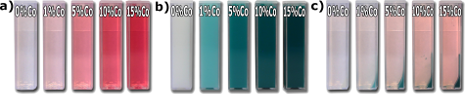
- [22] and drug delivery [23]. Recently, zinc oxide doped with Mn, Co and Ni has been under investigation for potential application as a spintronic material [24][25][26][27][28][29][30][31]. Many experimental and theoretical studies of ZnO doped with transition metal (TM) elements suggest good prospects




Metal hydrides: an innovative and challenging conversion reaction anode for lithium-ion batteries
Beilstein J. Nanotechnol. 2015, 6, 1821–1839, doi:10.3762/bjnano.6.186
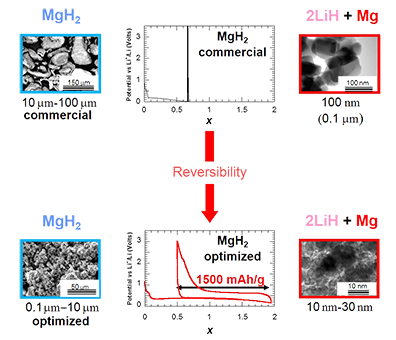
- addition to the MgH2 carbon composite The improvement of the sorption kinetics of MgH2 through catalyst addition (i.e., transition metals [37][38] transition metal oxides [39][40][41] and halides [42]) has been widely studied in the literature. Nb2O5 is one of the most efficient catalysts [43] enabling










A facile method for the preparation of bifunctional Mn:ZnS/ZnS/Fe3O4 magnetic and fluorescent nanocrystals
Beilstein J. Nanotechnol. 2015, 6, 1743–1751, doi:10.3762/bjnano.6.178
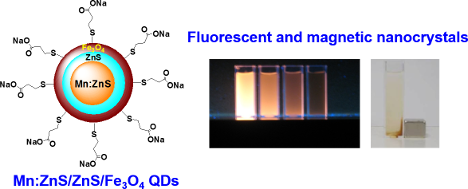
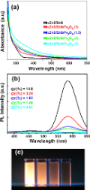
- the last decades, different strategies have been developed toward this goal such as epitaxial heterocrystalline growth, co-encapsulation of preformed QDs and magnetic particles in silica beads, doping of QDs with transition metal ions, conjugation between magnetic chelates or magnetic nanocrystals




Transformations of PTCDA structures on rutile TiO2 induced by thermal annealing and intermolecular forces
Beilstein J. Nanotechnol. 2015, 6, 1498–1507, doi:10.3762/bjnano.6.155
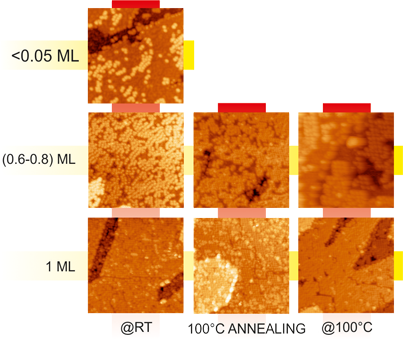
- analyse structures composed of PTCDA molecules with various experimental techniques [19][20][27]. With respect to the substrate of interest, the (110) face of the rutile titania is the most often studied surface of TiO2 [14][15][16]. Thus, it is quite often recognized as the exemplary transition metal


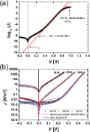
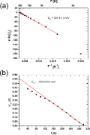
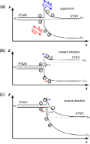
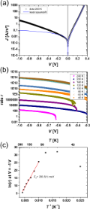
Current–voltage characteristics of manganite–titanite perovskite junctions
Beilstein J. Nanotechnol. 2015, 6, 1467–1484, doi:10.3762/bjnano.6.152
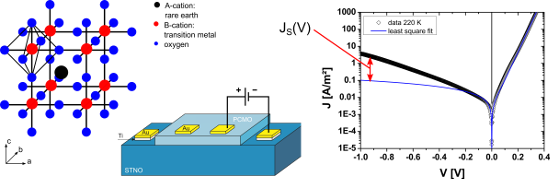
- conduction bands in transition metal perovskite oxides. Because of the small electronic overlap between transition metal 3d and oxygen 2p states, the width of the unnormalized conduction band in the manganite Pr1−xCaxMnO3 is of the order 1 eV [34], in contrast to Si with a bandwidth of ≈20 eV. The





From lithium to sodium: cell chemistry of room temperature sodium–air and sodium–sulfur batteries
Beilstein J. Nanotechnol. 2015, 6, 1016–1055, doi:10.3762/bjnano.6.105
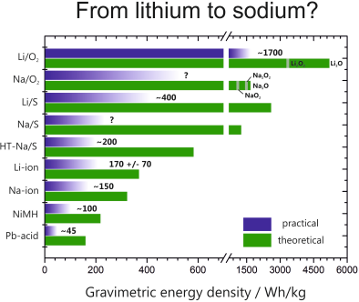
- one-electron transfer per formula unit. In this process, the de-/intercalation of one Li-ion is linked to a change in the transition metal oxidation state by one (Co3+/4+, Fe2+/3+, Mn3+/4+, etc.), as illustrated in Figure 2a. However, since the positive electrode materials often suffer from stability
- using electrode reactions such as multielectron transfer and/or lighter elements. A broad range of so-called conversion reactions has been studied which are based on the full reduction of the transition metal [2]. The general electrode reaction can be written as: where M is either a transition metal (Cu
- cycling. In intercalation compounds, the redox centers (transition metal cations) are immobile as they are pinned to the fixed positions of the crystal lattice and are, therefore, spatially diluted. However, due to the poor conductivity of sulfur, Li2S and Li2O2, the non-metal redox materials also require





