


Search results
Search for "transmission electron microscopy" in Full Text gives 699 result(s) in Beilstein Journal of Nanotechnology. Showing first 200.
Unravelling the interfacial interaction in mesoporous SiO2@nickel phyllosilicate/TiO2 core–shell nanostructures for photocatalytic activity
Beilstein J. Nanotechnol. 2020, 11, 1834–1846, doi:10.3762/bjnano.11.165
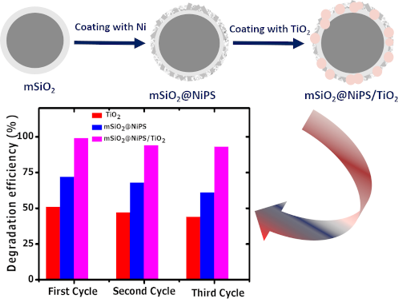
- . Therefore, in this study we report on the growth of mesoporous SiO2@NiPS and titania-coated mSiO2@NiPS (mSiO2@NiPS/TiO2) core–shell nanostructures using a simple deposition-precipitation method. Transmission electron microscopy (TEM), N2 physisorption analysis, diffuse reflectance UV–visible spectroscopy
- mixture for 1 h at room temperature. The solution was then centrifuged at 10000 rpm for 10 min and the resulting solid was dried at 80 °C for 12 h. Characterization The morphology of the obtained samples was elucidated using transmission electron microscopy (FEI Technai G2 spirit electron microscope


Nanocasting synthesis of BiFeO3 nanoparticles with enhanced visible-light photocatalytic activity
Beilstein J. Nanotechnol. 2020, 11, 1822–1833, doi:10.3762/bjnano.11.164
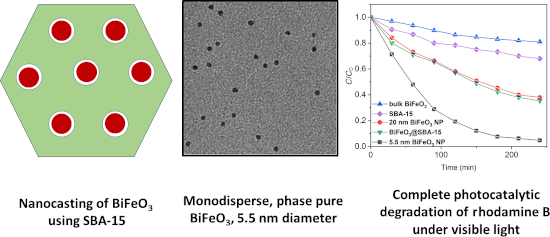
- -fabricated metal carboxylates as metal precursors. To the best of our knowledge, the synthesized particles are the smallest BiFeO3 particles ever prepared by any method. The samples were characterized by X-ray powder diffraction, transmission electron microscopy and UV–vis diffuse reflectance spectroscopy
- analyze the BiFeO3 nanomaterial are powder X-ray diffraction (XRD), transmission electron microscopy (TEM) and UV–visible reflectance spectroscopy. Furthermore, we investigated the photocatalytic efficiency of this nanomaterial under visible light in the degradation of rhodamine B (RhB) as a model




Self-standing heterostructured NiCx-NiFe-NC/biochar as a highly efficient cathode for lithium–oxygen batteries
Beilstein J. Nanotechnol. 2020, 11, 1809–1821, doi:10.3762/bjnano.11.163
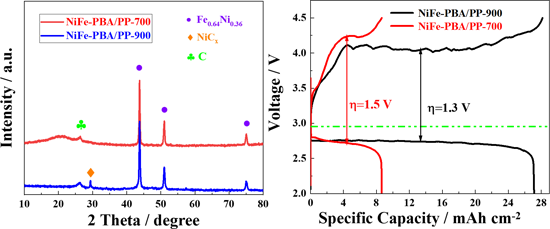
- PANalytical B.V. Empyean X-ray diffractometer with Cu Kα radiation (λ = 1.5406 Å). The surface morphology of the film catalyst was studied via scanning electron microscopy (SEM) on a Carl Zeiss Ultra Plus scanning electron microscope. Transmission electron microscopy (TEM), high-resolution TEM (HR-TEM), and






Molecular dynamics modeling of the influence forming process parameters on the structure and morphology of a superconducting spin valve
Beilstein J. Nanotechnol. 2020, 11, 1776–1788, doi:10.3762/bjnano.11.160
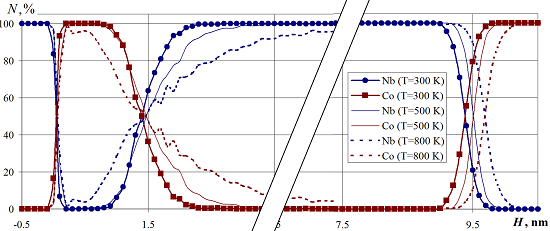
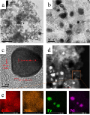
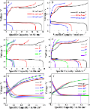
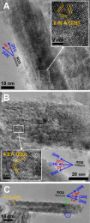
- whole. The results presented in this work can be used as a tool to support future experimental investigations and for adjusting and optimizing technological processes related to the production of multilayer nanosystems and devices for spintronics. Transmission electron microscopy (TEM) image of a
- layered nanostructure consisting of Nb, CuNi, CoOx and Co layers, prepared by magnetron sputtering. High-resolution transmission electron microscopy (HR-TEM) image of a layered Co, CoOx and CuNi nanostructure prepared by magnetron sputtering. Sketch of a Nb/Co spin-valve nanosystem. The numbers next to


Direct observation of the Si(110)-(16×2) surface reconstruction by atomic force microscopy
Beilstein J. Nanotechnol. 2020, 11, 1750–1756, doi:10.3762/bjnano.11.157
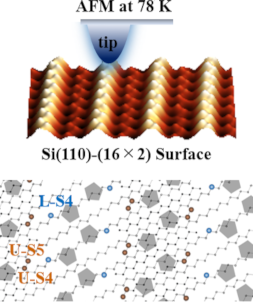
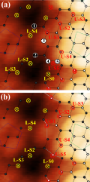
- ], scanning tunneling microscopy (STM) [15][16][17][18][19][20][21][22][23][24], scanning transmission electron microscopy (STEM) [25], and photoelectron spectroscopy (PES) [22][26][27]. The 16×2 reconstruction has a striped structure with upper and lower terraces and with boundaries of monatomic steps. In



PEG/PEI-functionalized single-walled carbon nanotubes as delivery carriers for doxorubicin: synthesis, characterization, and in vitro evaluation
Beilstein J. Nanotechnol. 2020, 11, 1728–1741, doi:10.3762/bjnano.11.155
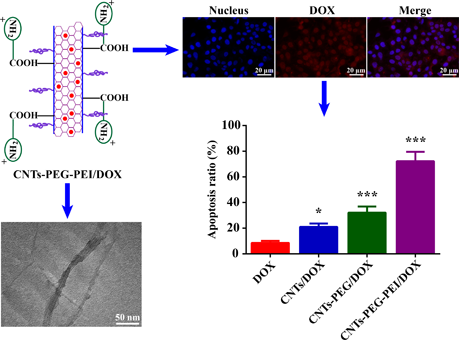
- transmission electron microscopy (TEM, JEM-200CX). To determine particle size and zeta potential, a sample of 200 μL (with a concentration of 50 μg·mL−1) was dispersed in deionized water to a final volume of 3 mL. Particle size and zeta potential were measured using laser particle analysis (Malvern Zetasizer




Cardiomyocyte uptake mechanism of a hydroxyapatite nanoparticle mediated gene delivery system
Beilstein J. Nanotechnol. 2020, 11, 1685–1692, doi:10.3762/bjnano.11.150
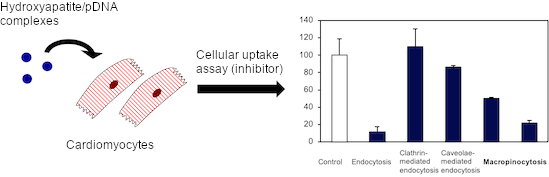
- HAp nanoparticles were prepared using the water-in-oil (W/O) emulsion method. The characterization of the prepared HAp nanoparticles was carried out using transmission electron microscopy (TEM), X-ray diffraction (XRD), and Fourier-transform infrared spectroscopy (FTIR). TEM provided insight into the


Amorphized length and variability in phase-change memory line cells
Beilstein J. Nanotechnol. 2020, 11, 1644–1654, doi:10.3762/bjnano.11.147
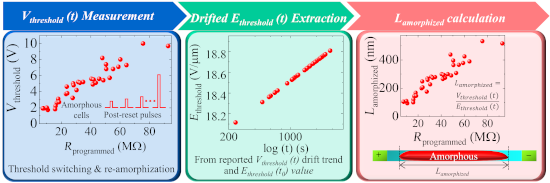
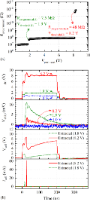
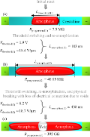
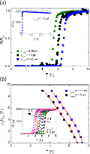
- essential physical parameter that contributes to the programming variability is the random location and dimensions of different phases formed in the cell. The amorphous and crystalline regions in PCM devices can be distinguished by transmission electron microscopy (TEM) imaging [8]. However, this is a




Oxidation of Au/Ag films by oxygen plasma: phase separation and generation of nanoporosity
Beilstein J. Nanotechnol. 2020, 11, 1608–1614, doi:10.3762/bjnano.11.143
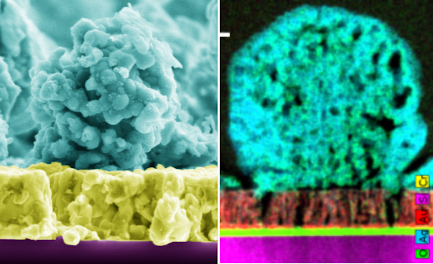
- metal/silver oxide interface. Based on the scanning transmission electron microscopy analysis coupled with energy dispersive X-ray mapping a mechanism was proposed based on solid-state diffusion and the Kirkendall effect to explain the different steps occurring during the oxidation process. Keywords
- formation of unique features, consisting of silver oxide nanoporous microspheres (Figure 1). Our observation was supported by various characterization techniques, including scanning electron microscopy (SEM), transmission electron microscopy (TEM) and X-ray diffraction spectroscopy (XRD). We conducted our
- presented previously. The nanoporosity in the microspheres was further confirmed by cross-sectional scanning transmission electron microscopy (STEM) imaging performed on a sample oxidized for 30 min (Figure 5). STEM-EDS analysis showed that the microspheres were comprised of silver and oxygen, and it


High-responsivity hybrid α-Ag2S/Si photodetector prepared by pulsed laser ablation in liquid
Beilstein J. Nanotechnol. 2020, 11, 1596–1607, doi:10.3762/bjnano.11.142
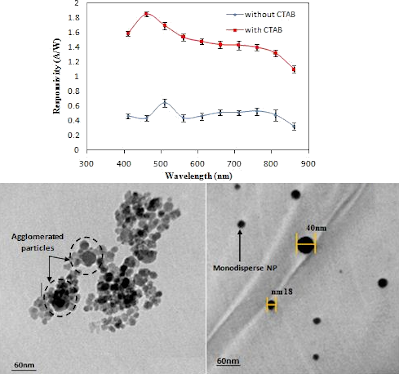
- ) mixed with cationic cetyltrimethylammonium bromide (CTAB) as surfactant. The effect of the CTAB surfactant on the structural, morphological, optical, and elemental composition of Ag2S NPs was evaluated using X-ray diffraction (XRD), transmission electron microscopy (TEM), scanning electron microscopy
- , Shimadzu) was employed to estimate the chemical composition of the Ag2S NPs. The morphology and size of the nanocrystals were examined via transmission electron microscopy (TEM; EM208, Philips). Raman spectroscopy was performed on colloidal Ag2S and thiourea solution using a Raman spectrometer (Bruker




Cu2O nanoparticles for the degradation of methyl parathion
Beilstein J. Nanotechnol. 2020, 11, 1546–1555, doi:10.3762/bjnano.11.137
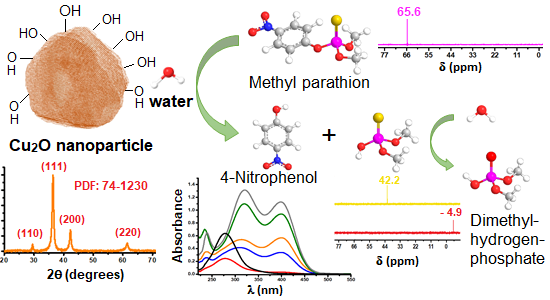
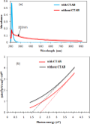
- different NPs sizes (16, 29 and 45 nm), determined with X-ray diffraction (XRD) and high-resolution transmission electron microscopy (HRTEM), were synthesized using a modified Benedict’s reagent. 1H nuclear magnetic resonance (NMR) results show that the hydrolytic degradation of MP leads to the formation of
- mm, a step width of 0.01407°, and 0.5 s time per step were used. Qualitative analysis was performed with the DiffracPlus Eva software package (Bruker AXS, Germany) using the PDF-2 database. High-resolution transmission electron microscopy (HRTEM) images were obtained in a JEOL 2010F microscope
- and a HSA of 50 eV pass energy. Results and Discussion Characterization of Cu2O NPs with powder XRD and HRTEM The structural and morphological characterization of Cu2O NPs was carried out using powder X-ray diffraction and high-resolution transmission electron microscopy. Copper(I) oxide is


Transient coating of γ-Fe2O3 nanoparticles with glutamate for its delivery to and removal from brain nerve terminals
Beilstein J. Nanotechnol. 2020, 11, 1381–1393, doi:10.3762/bjnano.11.122
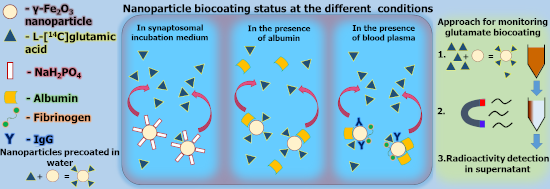
- particles was performed as described above and was also finished with 5 min of sonification. The resulting maghemite colloid of was filtered through sterile Millex syringe filters. Particle characterization by transmission electron microscopy Morphology and size distribution of the particles were
- investigated by transmission electron microscopy (TEM; JEOL JEM 200 CX). The number-average diameter (Dn) was calculated by the measurement of at least 800 particles from different microphotographs of the same sample using the IMAGEJ program. Dn = ΣNiDi/ΣNi, where Ni is the number of particles with the


Analysis of catalyst surface wetting: the early stage of epitaxial germanium nanowire growth
Beilstein J. Nanotechnol. 2020, 11, 1371–1380, doi:10.3762/bjnano.11.121
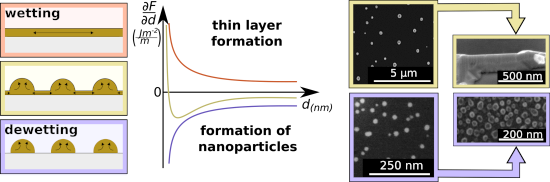
- electron microscopy (TEM) images of gold particles formed on a silicon substrate at room temperature. Small gold clusters (<10 nm) are also seen between the droplets. Growth of germanium nanowires Figure 4 shows images of the resulting gold droplets on various substrates and the results after deposition of
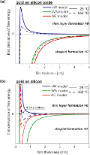
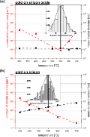
- the results for gold droplet formation on Si(111). A decrease in droplet number and an increase in droplet diameter with increasing temperature can be visualized. The droplet diameter distribution is described by a LSW distribution. Figure 3 shows scanning electron microscopy (SEM) and transmission


Structure and electrochemical performance of electrospun-ordered porous carbon/graphene composite nanofibers
Beilstein J. Nanotechnol. 2020, 11, 1280–1290, doi:10.3762/bjnano.11.112
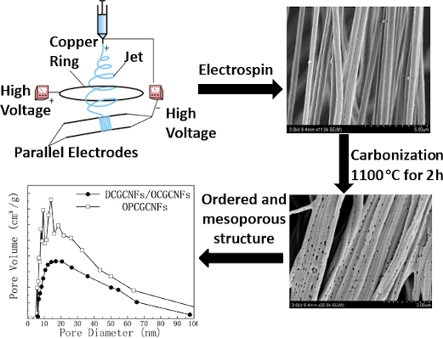
- electron microscopy (SEM) under a field-emission scanning electron microscope (FE-SEM) (Hitachi, S4800, Japan). The structural characteristics of the CNFs were observed via transmission electron microscopy (TEM) (FEI, Tecnai G20, Japan). The diameter values of the CNFs were measured using ImageJ software


Magnetic-field-assisted synthesis of anisotropic iron oxide particles: Effect of pH
Beilstein J. Nanotechnol. 2020, 11, 1230–1241, doi:10.3762/bjnano.11.107
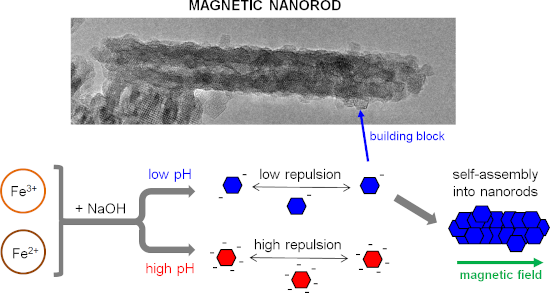
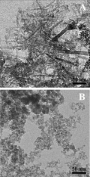
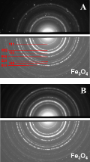
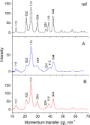
- synthesized material were investigated using electron diffraction, Raman spectroscopy, and transmission electron microscopy. It was shown that the morphology of the reaction product strongly depends on the amount of OH− ions in the reaction mixture, varying from Fe3O4 nanorods to spherical Fe3O4 nanoparticles
- . Fe3O4 nanorods were examined using high-resolution transmission electron microscopy proving that they are single-crystalline and do not have any preferred crystallographic orientation along the axis of the rods. According to the data obtained a growth mechanism was proposed for the rods that consists of
- stabilizers, which is important for further modification of their surfaces and/or incorporation of the nanoparticles into different media. Keywords: anisotropic nanoparticles; magnetic nanoparticles; magnetite; nanorods; transmission electron microscopy; Introduction The research field dedicated to the





3D superconducting hollow nanowires with tailored diameters grown by focused He+ beam direct writing
Beilstein J. Nanotechnol. 2020, 11, 1198–1206, doi:10.3762/bjnano.11.104
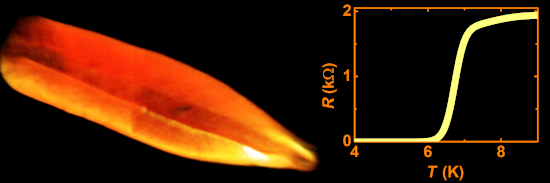
- to 8.9 µm. Transmission electron microscopy experiments indicate that the nanowires have a microstructure of large grains with a crystalline structure compatible with the face-centered cubic WC1−x phase. In addition, 3D electron tomographic reconstructions show that the hollow center of the nanowires
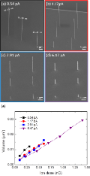
- from the substrate to the top of the pillar [36][37]. This shows the need for future systematic experiments varying the dwell time in pulsed growth or varying the flux of precursor gas. (High-resolution) scanning transmission electron microscopy Dependence of NW inner diameter on the ion beam current
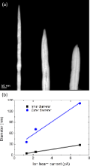
- To investigate the dependence of the NW inner diameter on the ion beam current, scanning transmission electron microscopy (STEM) experiments were performed. We found that inner diameter of the hollow NWs changes from 5 to 28 nm, whereas the outer diameter changes from 36 to 143 nm upon increasing the



Revealing the local crystallinity of single silicon core–shell nanowires using tip-enhanced Raman spectroscopy
Beilstein J. Nanotechnol. 2020, 11, 1147–1156, doi:10.3762/bjnano.11.99
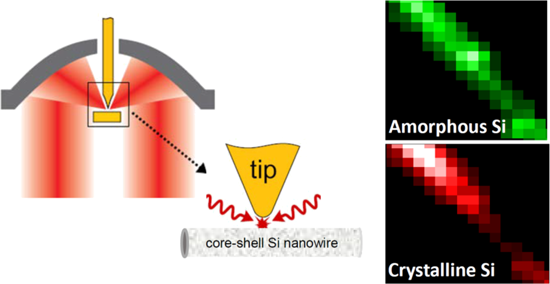
- growth. However, it is worth mentioning that other mechanisms of Pt-catalyzed growth of nanowires were also previously observed [29]. The overall morphology of the SiNWs was investigated by transmission electron microscopy (TEM). The high-resolution TEM investigation of the core area indicates that the
- original growth substrate by ultra-sonicating the growth substrate in purified water. For Raman and TERS investigations, nanowires are deposited on gold-coated silicon wafers as carrier substrates. For transmission electron microscopy (TEM), nanowires are deposited on copper TEM grids with lacey carbon
- of the Raman peaks of crystalline Si and amorphous Si by applying tip-enhanced Raman spectroscopy, at sample positions being 8 nm apart. The local crystallinity revealed using confocal Raman spectroscopy and tip-enhanced Raman spectroscopy agrees well with the high-resolution transmission electron


Straightforward synthesis of gold nanoparticles by adding water to an engineered small dendrimer
Beilstein J. Nanotechnol. 2020, 11, 1110–1118, doi:10.3762/bjnano.11.95
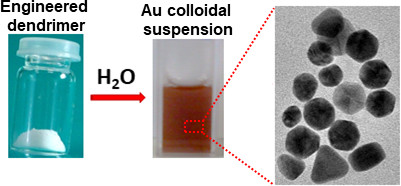
- when the powdered form of this dendrimer was dissolved in water, as shown by transmission electron microscopy (TEM) and energy dispersive X-ray spectroscopy (EDX) analyses. The dendrimers acted simultaneously as mild reducers and as nanoreactors, favoring the self-assembly of gold atoms and promoting
- the absorption maximum toward the red wavelength region, suggesting that the approximate diameter of the gold nanoparticles should be smaller than 50 nm. Characterization of gold nanoparticles by transmission electron microscopy To confirm the spontaneous formation of the gold NPs, transmission
- electron microscopy (TEM) images were obtained from a drop of a colloidal suspension of compound 4 in water (Figure 3). Figure 3A displays images of the NPs with diameters ranging from 20 to 50 nm (mean value is 28 nm, Figure 3F). It can be seen from Figure 3B that these nanoparticles have a variety of


A few-layer graphene/chlorin e6 hybrid nanomaterial and its application in photodynamic therapy against Candida albicans
Beilstein J. Nanotechnol. 2020, 11, 1054–1061, doi:10.3762/bjnano.11.90
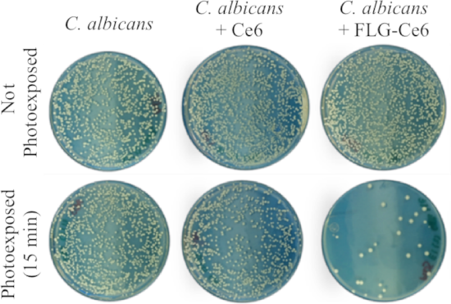
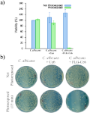
- concentration of Ce6 in FLG-Ce6, the absorption of FLG at 407 nm, under the same experimental conditions, is subtracted from the absorption obtained from the solution of FLG-Ce6 and finally matched with the calibration curve of Ce6. Figure 1a shows transmission electron microscopy (TEM) images of FLG-Ce6


Microwave-induced electric discharges on metal particles for the synthesis of inorganic nanomaterials under solvent-free conditions
Beilstein J. Nanotechnol. 2020, 11, 1019–1025, doi:10.3762/bjnano.11.86
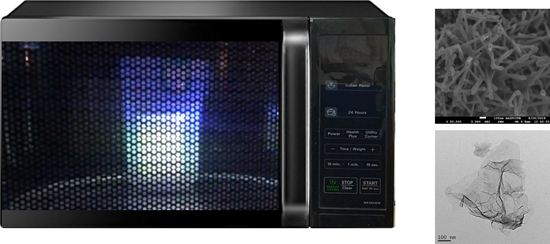
- the phase purity of ZnF2. Figure S6 in Supporting Information File 1 shows the SEM and transmission electron microscopy (TEM) images of ZnF2 nanorods produced in the presence of sulfur. The SEM images indicate the high yield of ZnF2 nanorods. The high-resolution TEM (HRTEM) image in Figure S6d
- nanoparticles of Cu and Ni and one-dimensional nanorods of CuS, ZnF2, and NiF2 protected with fluorinated amorphous carbon. We have also synthesized reduced graphene oxide and partially rolled graphene by this method. Keywords: electric discharges; microwave synthesis; nanomaterials; transmission electron
- electron microscopy (JEOL JEM 2100F) and X-ray photoelectron spectroscopy XPS (Thermo VG Scientific MultiLab, ESCA). (a) XRD patterns of commercially available Cu powder and Cu powder after treatment with 0.5 M HNO3. (b) SEM images of pure Cu powder and (c) acid-treated Cu powder. (a) Schematic of the


Uniform Fe3O4/Gd2O3-DHCA nanocubes for dual-mode magnetic resonance imaging
Beilstein J. Nanotechnol. 2020, 11, 1000–1009, doi:10.3762/bjnano.11.84
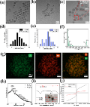
- iron and gadolinium distribute uniformly across the FGDA nanocubes (Figure 2f,g). In addition, the high-resolution transmission electron microscopy (HRTEM) image (Figure 2c, inset in red) shows that the interplanar spacing within the nanocubes is 0.296 ± 0.02 nm, which corresponds to the (220) crystal



Atomic layer deposition for efficient oxygen evolution reaction at Pt/Ir catalyst layers
Beilstein J. Nanotechnol. 2020, 11, 952–959, doi:10.3762/bjnano.11.79
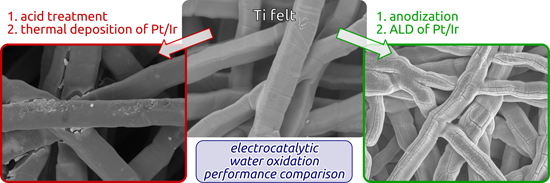
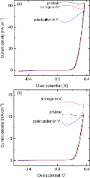
- particular, we have determined particle sizes by transmission electron microscopy (TEM), investigated the homogeneously mixed nature of the Pt/Ir catalyst by X-ray diffraction (XRD), selected-area electron diffraction (SAED), and X-ray photoelectron spectroscopy (XPS). We have also examined various ALD
- nature of the surfaces have also been demonstrated in recent publications by X-ray diffraction, selected-area electron diffraction and transmission electron microscopy [22][23]. Herein, we investigate two different catalyst loadings: (1) IrALD25PtALD10, i.e., 25 ALD cycles Ir followed by 10 ALD cycles Pt


Nickel nanoparticles supported on a covalent triazine framework as electrocatalyst for oxygen evolution reaction and oxygen reduction reactions
Beilstein J. Nanotechnol. 2020, 11, 770–781, doi:10.3762/bjnano.11.62
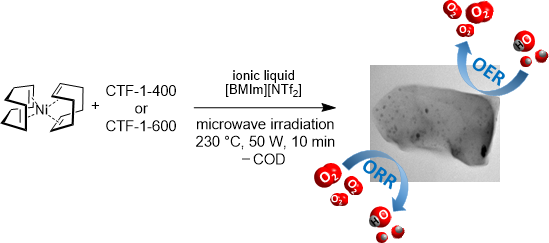
- wt %), the characteristic broad reflections for amorphous CTF could also be seen. Size and morphology of the synthesized Ni NPs on CTFs were characterized by transmission electron microscopy (TEM) and SEM. Figure 2 shows TEM images of Ni/CTF-1-600-22 recorded at different magnifications. Ni
- electron microscope with a LaB6 cathode at 5–20 keV and a Bruker Xflash 410 silicon drift detector for energy-dispersive X-ray spectrometric (EDX) elemental composition analysis. M/CTF-IL suspension samples for transmission electron microscopy (TEM) were dripped on a carbon-coated copper grid and excess IL
- was washed off three times with acetonitrile and left to dry. Images were recorded on a FEI Tecnai G2 F20 electron microscope operated at 200 kV accelerating voltage equipped with a Gatan UltraScan 1000P detector [68]. Scanning transmission electron microscopy (STEM) images and EDX elemental mapping


Hexagonal boron nitride: a review of the emerging material platform for single-photon sources and the spin–photon interface
Beilstein J. Nanotechnol. 2020, 11, 740–769, doi:10.3762/bjnano.11.61
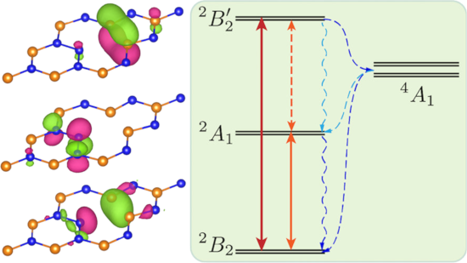
- -luminescence and optical spectroscopy in deep ultraviolet [91][93][94] were used for the characterization of stacking faults and point defects. More recently an aberration-corrected high-resolution transmission electron microscopy technique has been used to resolve atomic defects in a freestanding single layer
- transmission electron microscopy (STEM) and CL. ZPLs in PL and CL were observed ranging from 540–720 nm. Four distinct defect classes were attributed to the observed emission range. One defect class with ZPL emission centered at 580 nm had PL and CL matching with spectral variability due to strain. This is




Quantitative determination of the interaction potential between two surfaces using frequency-modulated atomic force microscopy
Beilstein J. Nanotechnol. 2020, 11, 729–739, doi:10.3762/bjnano.11.60
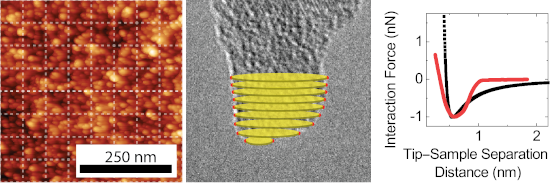
- spectroscopy measurements in an ultrahigh vacuum (UHV) environment. The tip geometry, which is initially unknown and potentially irregularly shaped, is determined using transmission electron microscopy (TEM) imaging. It is then used to generate theoretical interaction force–displacement relations, which are
- generated using the 6-12 LJ pair potential form and experimental tip apex geometry, which was extracted from two-dimensional transmission electron microscopy (TEM) images. In prior works, the shapes of AFM probes have been determined using field ion microscopy (FIM) [39], atom probe tomography (APT) [40
- ] and transmission electron microscopy (TEM) [35]. Each technique has strengths and weaknesses: FIM has can resolve the exact atomic structure of the tip apex, but only for conductive tips; APT combines FIM with atom identification, but is a destructive technique; and TEM has less restrictions on the





