Search results
Search for "visible light" in Full Text gives 240 result(s) in Beilstein Journal of Nanotechnology. Showing first 200.
Selective photocatalytic reduction of CO2 to methanol in CuO-loaded NaTaO3 nanocubes in isopropanol
Beilstein J. Nanotechnol. 2016, 7, 776–783, doi:10.3762/bjnano.7.69
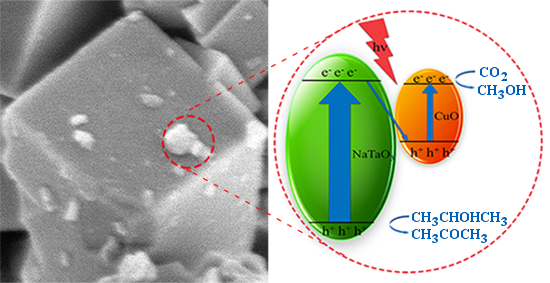
- shown in Figure 6. With a large energy gap, it can be found that pure NaTaO3 had low light absorbance in the visible region. After CuO was loaded, the absorbance of the CuO–NaTaO3 catalysts in the visible light region (λ > 400 nm) became much stronger with the increase of CuO loading. The increase in
- visible light absorbance correlates with the formation rate and increase in electrons and holes on the photocatalyst surface [35]. Energy-dispersive X-ray spectroscopy (EDS) and X-ray photoelectron spectroscopy (XPS) were carried out to confirm that CuO was loaded onto the surface of NaTaO3 nanocubes


Microwave solvothermal synthesis and characterization of manganese-doped ZnO nanoparticles
Beilstein J. Nanotechnol. 2016, 7, 721–732, doi:10.3762/bjnano.7.64
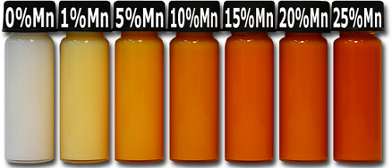
- composition analysis The chemical composition analysis was carried out by using visible-light spectrophotometry (DR 3900, Hach Lange, Germany). The analysis of the content of Zn2+ ions was carried out by using the Zincon method No. 8009 (Hach Lange). The analysis of the content of Mn2+ ions was carried out by


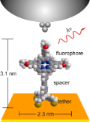
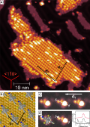
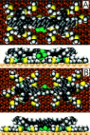
Rigid multipodal platforms for metal surfaces
Beilstein J. Nanotechnol. 2016, 7, 374–405, doi:10.3762/bjnano.7.34











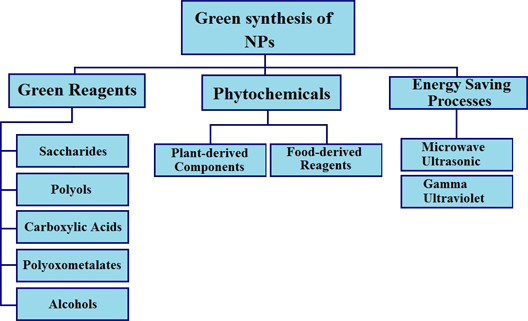
Green and energy-efficient methods for the production of metallic nanoparticles
Beilstein J. Nanotechnol. 2015, 6, 2354–2376, doi:10.3762/bjnano.6.243


Silica-coated upconversion lanthanide nanoparticles: The effect of crystal design on morphology, structure and optical properties
Beilstein J. Nanotechnol. 2015, 6, 2290–2299, doi:10.3762/bjnano.6.235
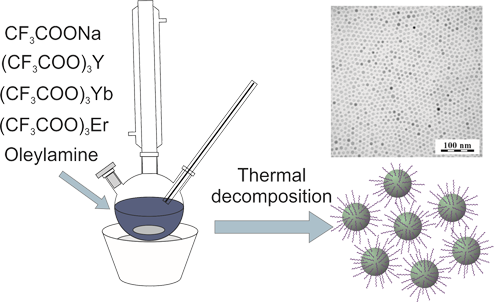
- tracking [8], bioimaging [9] and photodynamic therapy [10]. Lanthanide-doped upconversion nanoparticles emit visible light upon excitation by near-IR light (NIR). Compared with organic dyes and semiconductor quantum dots, upconversion nanoparticles have attractive chemical and optical properties, as well
- . Consequently, three different Er3+ transitions were induced by NIR photons leading to the visible light emission [37]. Hence, the NaYF4:Yb3+/Er3+ nanocrystals exhibited three bands of green (520 and 545 nm) and red (660 nm) upconversion emissions corresponding to 2H11/2 and 4S3/2 → 4I15/2 and 4F9/2 → 4I15/2






Au nanoparticle-based sensor for apomorphine detection in plasma
Beilstein J. Nanotechnol. 2015, 6, 2224–2232, doi:10.3762/bjnano.6.228
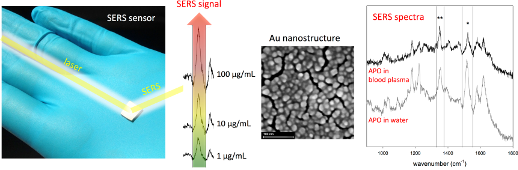
- 1A show typical average sizes of such inter-island channels. SERS hinges on the strong interaction between noble metal NPs and visible light through the resonant collective excitation of NP conduction electrons. The resulting surface plasmon resonance peak [28] displays a maximum at about 780 nm


A single-source precursor route to anisotropic halogen-doped zinc oxide particles as a promising candidate for new transparent conducting oxide materials
Beilstein J. Nanotechnol. 2015, 6, 2161–2172, doi:10.3762/bjnano.6.222
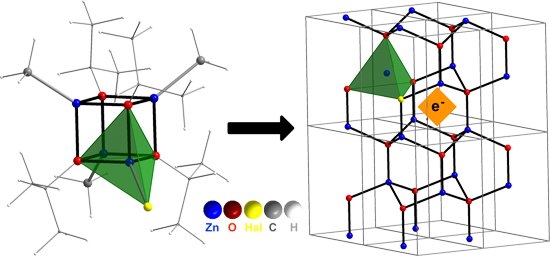
- transparency over the entire visible light range. A solid solution of indium oxide and substantial amounts of tin oxide for electronic doping (ITO) is currently the most prominent example for the class of so-called TCOs (transparent conducting oxides). Due to the limited, natural occurrence of indium and its



Mapping bound plasmon propagation on a nanoscale stripe waveguide using quantum dots: influence of spacer layer thickness
Beilstein J. Nanotechnol. 2015, 6, 2046–2051, doi:10.3762/bjnano.6.208
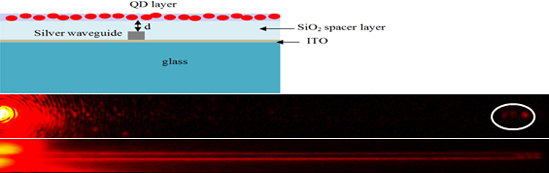
- ). LRSPPs have been shown to have large propagation lengths in the visible light range, greater than 10 µm [6]. When quantum dots (QDs) are placed in the vicinity of propagating plasmons, QDs can be locally excited by the plasmon if the plasmon frequency lies within the absorption spectral range of the QDs




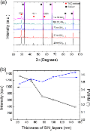
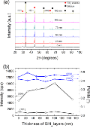
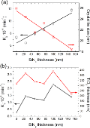
Effect of SiNx diffusion barrier thickness on the structural properties and photocatalytic activity of TiO2 films obtained by sol–gel dip coating and reactive magnetron sputtering
Beilstein J. Nanotechnol. 2015, 6, 2039–2045, doi:10.3762/bjnano.6.207
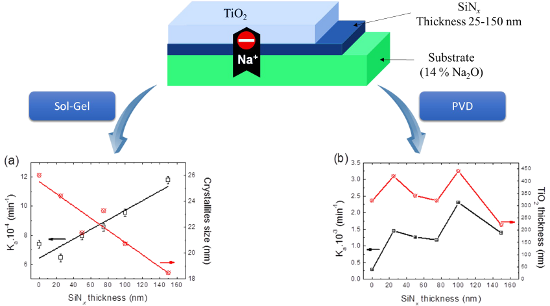
- the adsorption/bleaching of the azo molecule [18]. This means that even the dye molecule OII could absorb visible light to produce the excited singlet and/or triplet state of the OII molecule [19], the OII may be able to sensitize the TiO2 photocatalyst. However, the degradation of the OII dye via the
High photocatalytic activity of V-doped SrTiO3 porous nanofibers produced from a combined electrospinning and thermal diffusion process
Beilstein J. Nanotechnol. 2015, 6, 1281–1286, doi:10.3762/bjnano.6.132
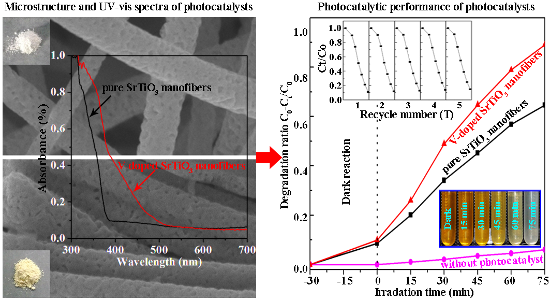
- the two photocatalysts absorb the MO fluorescence well. Figure 3c presents the UV–vis spectra of pure and V-doped SrTiO3 photocatalyst, revealing that pure SrTiO3 responds to UV light with absorption edge at about 388 nm but V-doped SrTiO3 nanofibers have a shifted absorption edge towards visible
- light. This means that V5+ ion doping improves the impurity level and narrows the band gap of SrTiO3, leading to the enhanced light absorption. Additionally, based on earlier research regarding 3d ion doping for SrTiO3, V5+ doping may also improve the conductivity of SrTiO3. Hence, the higher


Polymer blend lithography for metal films: large-area patterning with over 1 billion holes/inch2
Beilstein J. Nanotechnol. 2015, 6, 1205–1211, doi:10.3762/bjnano.6.123
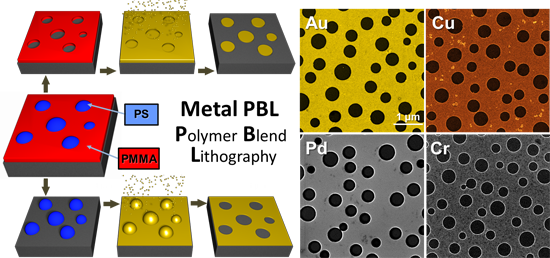
- perforated Al films The size of the holes in the fabricated perforated metal films is in the range of the wavelength of visible light. Therefore it is interesting to investigate their optical transmission properties. It has been published in 2003 by Barnes et al. that ordered hole arrays fabricated by e-beam


Patterning technique for gold nanoparticles on substrates using a focused electron beam
Beilstein J. Nanotechnol. 2015, 6, 1010–1015, doi:10.3762/bjnano.6.104
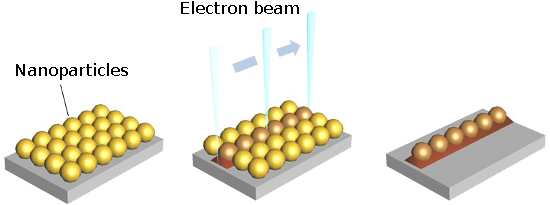
- or through rows of particles due to the LSPR effect. Gold and silver nanowires or particles can be used for such waveguides, as these materials interact with visible light. Plasmon propagation through nanowires has been experimentally investigated. Sanders et al. [3] showed the propagation of




Characterization of nanostructured ZnO thin films deposited through vacuum evaporation
Beilstein J. Nanotechnol. 2015, 6, 971–975, doi:10.3762/bjnano.6.100
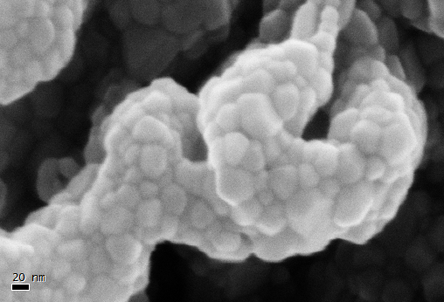
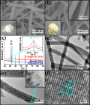
- can check that the emission is in the blue and the red part of the visible light, due to the contribution of the VO, VZn and VZn− defects. XRD pattern of nanostructured thin films on a glass substrate. HRSEM micrographs of the thin films a) un-annealed, b) 200, c) 400, d) 600, e) 800 and f) 1000 °C


Effects of swift heavy ion irradiation on structural, optical and photocatalytic properties of ZnO–CuO nanocomposites prepared by carbothermal evaporation method
Beilstein J. Nanotechnol. 2015, 6, 928–937, doi:10.3762/bjnano.6.96
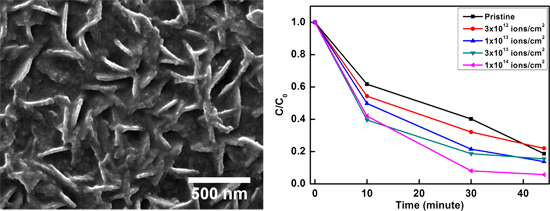
- formation of hydroxyl radicals (•OH) and superoxide radicals (•O2−) during visible-light-induced photocatalytic degradation of acid orange and 4-nitrophenol. The formation of hydroxyl radicals (•OH) was detected by photoluminescence studies using terephthalic acid as a probe molecule, while 1,4-benzoquinone
- visible-light-induced photocatalytic degradation. In our study, it can be clearly seen that all the irradiated ZnO–CuO nanocomposites show enhanced photocatalytic activity during the sun light driven degradation of MB and MO dyes. Our results show that swift heavy ion irradiation leads to significant



Transformation of hydrogen titanate nanoribbons to TiO2 nanoribbons and the influence of the transformation strategies on the photocatalytic performance
Beilstein J. Nanotechnol. 2015, 6, 831–844, doi:10.3762/bjnano.6.86
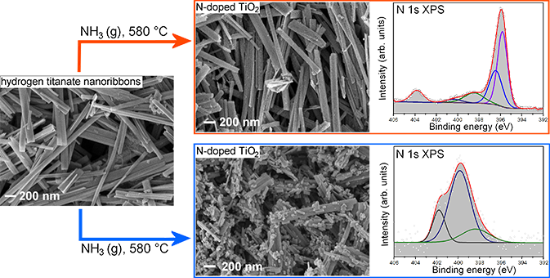
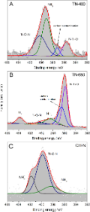
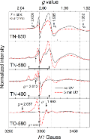
- TiO2 [22] in which the nitrogen atoms occupy substitutional and interstitial sites in the TiO2 and thus affect the photocatalytic activity of titania for reactions performed under visible-light irradiation [3][5][23][24]. On the other hand, transformation under wet-chemical or hydrothermal conditions
- increasing calcination temperature (Figure 2). The observed effect is in agreement with the findings reported by Irie et al. [36], and Miyauchi et al. [45]. In a similar system, i.e., the photo-oxidation of iPrOH, they noticed that with an increasing N content, longer exposure times to UV and visible light
- concentration began to rise. The system was kept at a temperature of 25 ± 3 °C and a relative humidity of 22 ± 3%. The light source was a 300 W Xe lamp (Newport Oriel Instrument, USA). The lamp imitates the solar spectrum and emits both ultraviolet (UV) and visible light (vis). The radiance intensity on the




Simple approach for the fabrication of PEDOT-coated Si nanowires
Beilstein J. Nanotechnol. 2015, 6, 640–650, doi:10.3762/bjnano.6.65
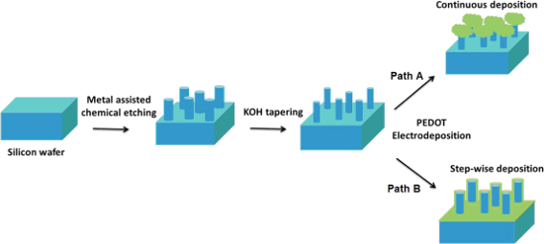
- research topic for many applications such as photovoltaics [1], lithium batteries [2], hydrogen storage [3] and optoelectronic devices [4] due to their unique properties with respect to visible light management [5][6][7]. Using an electroless etching method, a reflectivity as low as 1.3% over the entire




Novel ZnO:Ag nanocomposites induce significant oxidative stress in human fibroblast malignant melanoma (Ht144) cells
Beilstein J. Nanotechnol. 2015, 6, 570–582, doi:10.3762/bjnano.6.59
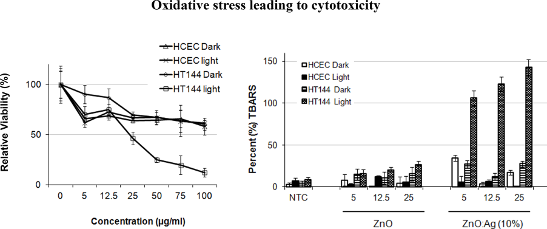
- significantly improves the activity of ZnO nanoparticles in visible light range thus avoiding the use of UV or infrared light. Our findings suggest that the major mechanism by which ZnO:Ag nanocomposites mediate cell death is generation of ROS and induction of oxidative stress. ROS are involved in the




Palladium nanoparticles anchored to anatase TiO2 for enhanced surface plasmon resonance-stimulated, visible-light-driven photocatalytic activity
Beilstein J. Nanotechnol. 2015, 6, 428–437, doi:10.3762/bjnano.6.43
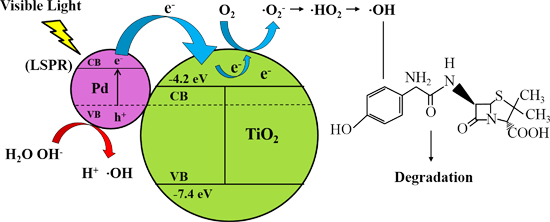
- evaluated by degrading the endocrine disrupting compound (EDC) amoxicillin (AMX) excited under an artificial visible light source. In the preliminary run, almost complete degradation (97.5%) was achieved in 5 h with 0.5 wt % Pd loading and the degradation followed pseudo-first-order kinetics. The
- reusability trend proved the photostability of the prepared photocatalysts. Hence, the study provides a new insight about the modification of TiO2 with noble metals in order to enhance the absorption in the visible-light region for superior photocatalytic performance. Keywords: endocrine disrupting compound
- most promising strategy to defeat the limitations of TiO2. This is due to the characteristics of noble metals, which can drastically enhance the absorption of visible light through localized surface plasmon resonance effects (LSPRs) [23][24]. The LSPR absorption in noble metal NPs arise from the


Overview about the localization of nanoparticles in tissue and cellular context by different imaging techniques
Beilstein J. Nanotechnol. 2015, 6, 263–280, doi:10.3762/bjnano.6.25
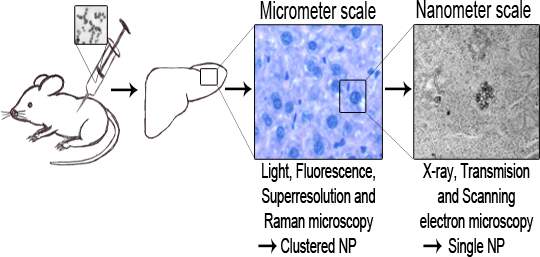
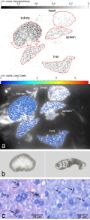
- magnification. Thus, only NP that cluster or form aggregates of more than 200 nm in size in the tissue of interest can be visualized directly. In addition, these aggregates have to be able to attenuate visible light to be detectable by using light microscopy. For example, carbon nanotubes (CNT) used in medical




Interaction of dermatologically relevant nanoparticles with skin cells and skin
Beilstein J. Nanotechnol. 2014, 5, 2363–2373, doi:10.3762/bjnano.5.245
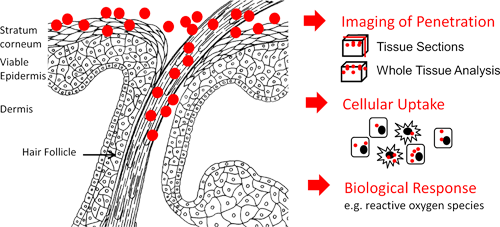
- DNA damage and apoptosis were detected in human skin epidermal cells after exposure to nickel nanoparticles [42]. Phototoxicity of zinc oxide nanoparticles induced the generation of oxidative DNA damage during UVA and visible light irradiation in keratinocytes [43]. Oxidative stress and skin cell


Inorganic Janus particles for biomedical applications
Beilstein J. Nanotechnol. 2014, 5, 2346–2362, doi:10.3762/bjnano.5.244
- conjugation to Ag nanoparticles when combined to form Ag@Fe3O4 dumbbell-like hetero-nanoparticles [47]. Moreover, plasmonic photocatalysts combine two prominent features: a Schottky junction enhancing charge separation and surface plasmon resonance, which is responsible for strong absorption of visible light
- nanoparticles is shifted to more negative potentials, thus, enabling the engineering of the Fermi level of photocatalysts dependent on the size of the conjugated metal domain [49]. Recently, Au@TiO2 Janus particles were proven useful for visible-light hydrogen generation due to the strong coupling of plasmons
- -light irradiation [50]. b) Volume of hydrogen generated (VH2) under visible-light irradiation from a tungsten halogen lamp using Janus and core-shell Au50nm@TiO2 nanostructures, as well as amorphous TiO2 and bare gold particles [50]. c) Schematic illustration of plasmonic dye-sensitized solar cells






Photodetectors based on carbon nanotubes deposited by using a spray technique on semi-insulating gallium arsenide
Beilstein J. Nanotechnol. 2014, 5, 1999–2006, doi:10.3762/bjnano.5.208
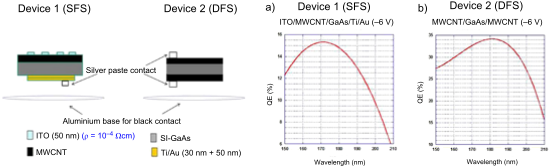
- deposition technique for depositing CNTs on silicon, starting from a powder, at low temperatures, without catalyst and an intermediate layer [7]. By using this spray technique, CNT films on silicon-based photodetectors were prepared, achieving quantum efficiency (QE) values in the visible light range
- . Specifically, a Thorlabs OSL1 white light source with optical fiber and a focusing lens were used to obtain a light spot on the photodetector while single wavelengths (400, 500, 600 and 700 nm) in the visible light range were selected by means of a filter set. For the UV characterization in the spectral range
- reported for SFS and DFS in Figure 5 and Figure 6 for the visible and the UV range, respectively. The higher QE of SFS with respect to DFS at lower wavelengths in the visible light range (Figure 5) can be attributed to the contribution to the photo-generated charges from the near-band-gap light absorption


A reproducible number-based sizing method for pigment-grade titanium dioxide
Beilstein J. Nanotechnol. 2014, 5, 1815–1822, doi:10.3762/bjnano.5.192
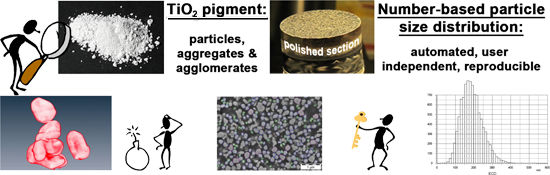
- , the size (distribution) of the final products is optimised for the optical pigment properties, which are described by using Mie's theory. Mie's theory states that the optimum particle size for refracting light is just about half the wavelength it is meant to interact with. Speaking of visible light, a


Controlling the optical and structural properties of ZnS–AgInS2 nanocrystals by using a photo-induced process
Beilstein J. Nanotechnol. 2014, 5, 1767–1773, doi:10.3762/bjnano.5.187
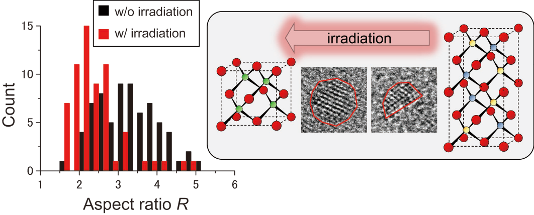
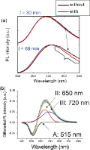
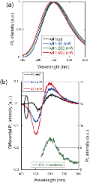
- during synthesis. Detailed analysis of transmission electron microscope images confirmed that the photo-induced synthesis yielded a high crystallinity of the ZAIS nanocrystals with small variations in size and content. Keywords: low toxicity; self-assembly; visible-light-emitting nanocrystals; ZnS




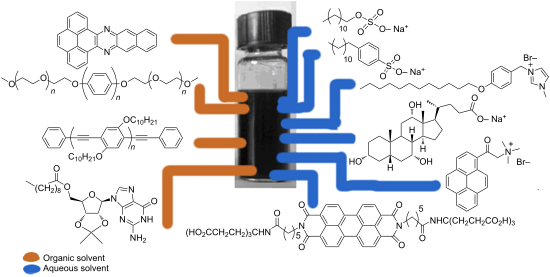
Non-covalent and reversible functionalization of carbon nanotubes
Beilstein J. Nanotechnol. 2014, 5, 1675–1690, doi:10.3762/bjnano.5.178
- aggregation of nanotubes controlled by simple irradiating the sample under UV–visible light. Chen et al. pointed out that the UV photoirradiation of well-dispersed SWCNTs coated with a poly(ethylene glycol)-terminated malachite green derivative is responsible for the CNTs reaggregation [97]. Indeed, UV light