


Search results
Search for "absorption coefficient" in Full Text gives 114 result(s) in Beilstein Journal of Nanotechnology.
Synthesis and characterization of RF-sputtered ZnTe/Cu2−xTe thin films for solar cell applications
Beilstein J. Nanotechnol. 2026, 17, 1016–1027, doi:10.3762/bjnano.17.69
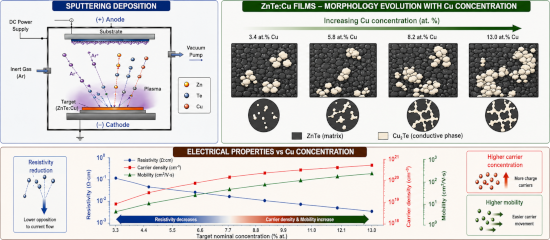
- : back contact materials; Cu2−xTe phases; phase segregation; RF magnetron sputtering; ZnTe thin films; Introduction CdTe solar cells remain one of the leading thin-film photovoltaic technologies due to the near-optimal direct bandgap of CdTe (≈1.45 eV) and its high absorption coefficient (>104 cm−1



Environmental applications of silver nanoparticles: state-of-the-art review and emerging trends
Beilstein J. Nanotechnol. 2026, 17, 697–736, doi:10.3762/bjnano.17.49
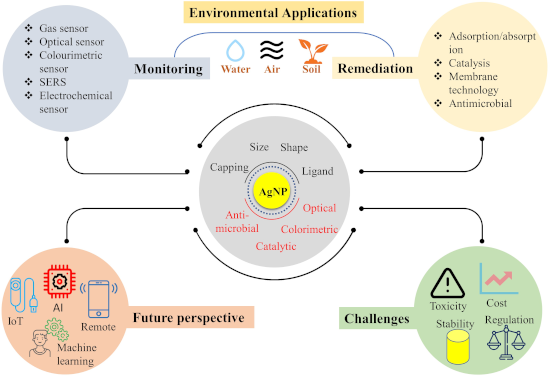
- surface functionalization with molecules of interest. However, two separate cuvettes were used for the measurement, and the absorption coefficient (k = 3.99) and refractive index (n = 0.135) of AgNPs need to be added. In addition, a similar principle was employed by the nanoparticle tracking analyser


Two-step laser synthesis of Ag@TiO2 nanomaterials for the photocatalytic degradation of rhodamine B
Beilstein J. Nanotechnol. 2026, 17, 622–634, doi:10.3762/bjnano.17.43
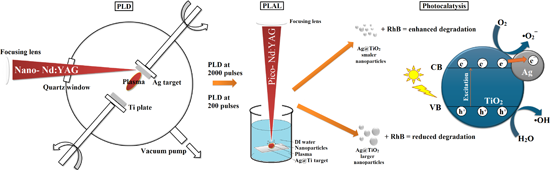
- . These absorption spectra showed that, in contrast to TiO2, Ag@TiO2 samples showed broadening of the absorption peak due to the addition of Ag. The optical bandgap energy of the prepared samples was calculated with the Tauc model, according to Equation 1: where α is the absorption coefficient, hν is the


Biomimetic nanoparticles in cancer photodynamic therapy: a review of targeted delivery systems and therapeutic outcomes
Beilstein J. Nanotechnol. 2026, 17, 396–422, doi:10.3762/bjnano.17.27
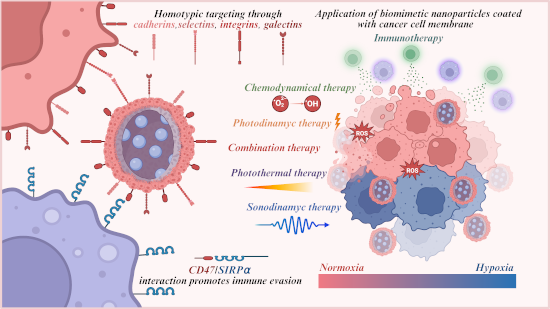
- one ROS type frequently triggers cascades leading to others, making the distinction primarily about the predominant mechanism rather than exclusivity. Efficacy and safety of PDT are largely determined by the PS’s properties [20]. An ideal PS must exhibit a high absorption coefficient in the near


Influence of laser beam profile on morphology and optical properties of silicon nanoparticles formed by laser ablation in liquid
Beilstein J. Nanotechnol. 2025, 16, 1533–1544, doi:10.3762/bjnano.16.108
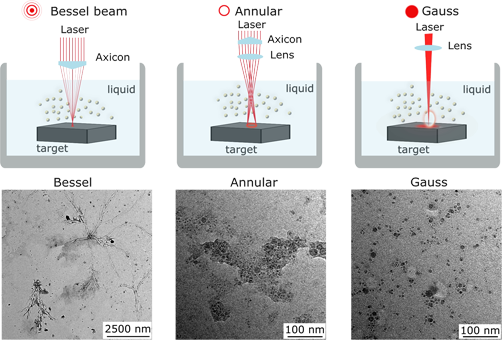
- , provides the information about the bandgap energies of the prepared Si NPs. Here, α, h, and ν are absorption coefficient, Planck constant, and frequency, respectively; n depends on the type of bandgap and can be 2 for indirect or 1/2 for direct bandgaps, respectively (Figure 6b). For silicon, indirect


Cross-reactivities in conjugation reactions involving iron oxide nanoparticles
Beilstein J. Nanotechnol. 2025, 16, 1504–1521, doi:10.3762/bjnano.16.106
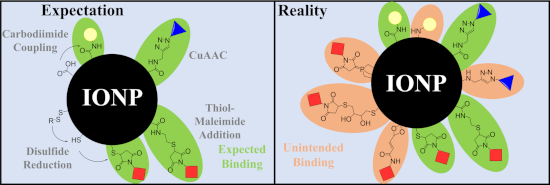
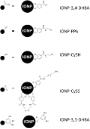
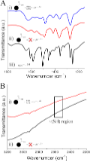
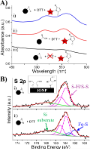
- significantly contribute to the binding of Cy3-maleimide to the IONP surface. The loading of Cy3-maleimide on IONP-CySH (Figure 9A.i) is observed to be much less than that of Cy5-azide on IONP-PPA (Figure 3B.i), even when the higher absorption coefficient of Cy5 (271,000 cm−1·M−1) relative to Cy3 (162,000 cm−1







Wavelength-dependent correlation of LIPSS periodicity and laser penetration depth in stainless steel
Beilstein J. Nanotechnol. 2025, 16, 1302–1315, doi:10.3762/bjnano.16.95
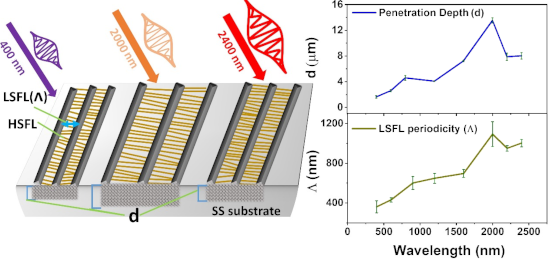
- geometry. It can also depend on the optical properties of the material, such as the refractive index, absorption coefficient, reflectivity, and laser parameters, such as the wavelength, pulse duration, fluence, incidence angle, and polarization [64]. Generally, penetration depth increases with increasing




Enhancing the photoelectrochemical performance of BiOI-derived BiVO4 films by controlled-intensity current electrodeposition
Beilstein J. Nanotechnol. 2025, 16, 1289–1301, doi:10.3762/bjnano.16.94
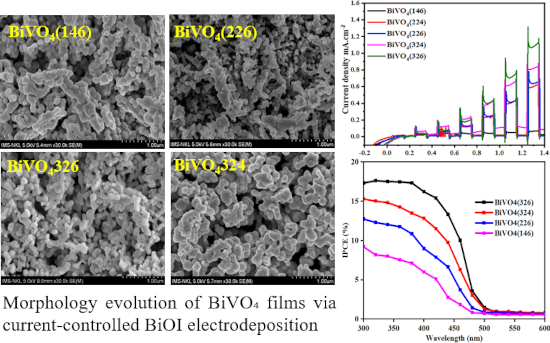
- ). Bandgap values were determined using Tauc plots for indirect allowed transitions, based on (αhν)2 ∝ (hν – Eg), where α is the absorption coefficient, h is Planck’s constant, ν is the frequency, and Eg is the bandgap energy. The (αhν)2 values plotted against the photon energy determined Eg at the



Electronic and optical properties of chloropicrin adsorbed ZnS nanotubes: first principle analysis
Beilstein J. Nanotechnol. 2025, 16, 1184–1196, doi:10.3762/bjnano.16.87
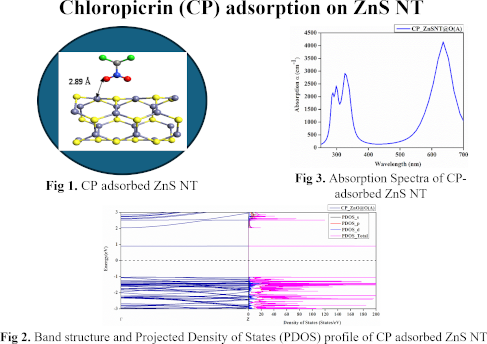
- optical properties of the ZnS NT without and with molecular adsorption, we calculated the absorption coefficient (α) and optical conductivity σ, which can be obtained by the following formulas [21]: where ω is the angular frequency of light, ε1 and ε2 are real and imaginary parts of the complex
- , a high recovery time of 3.5 μs at room temperature supported by the weak van-der-Waals-based physisorption phenomenon and significant red shift in the absorption coefficient and optical conductivity peaks. The results underscore the potential of ZnS NT as a sensor material for CP and the suitability


Towards a quantitative theory for transmission X-ray microscopy
Beilstein J. Nanotechnol. 2025, 16, 1113–1128, doi:10.3762/bjnano.16.82
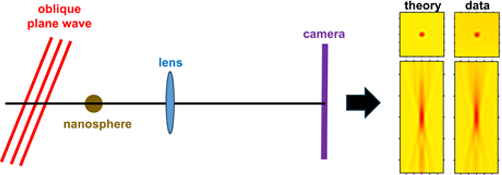
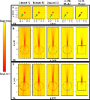
- model for the intensity Icam at the camera can be written as: where (r, z) are cylindrical coordinates, M the microscope magnification, and µ the linear absorption coefficient defined for a nanosphere of radius a by: Note that within the gold nanosphere, the linear absorption coefficient µ(r, z) is a



Influence of ion beam current on the structural, optical, and mechanical properties of TiO2 coatings: ion beam-assisted vs conventional electron beam evaporation
Beilstein J. Nanotechnol. 2025, 16, 1097–1112, doi:10.3762/bjnano.16.81
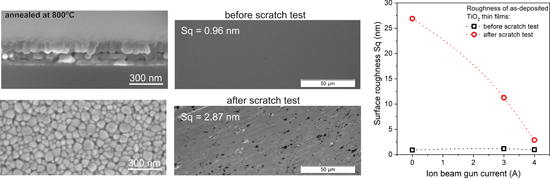
- energy of the thin film coatings strongly depends on the conditions and deposition methods. To complete analysis of the bandgap structure, the Urbach energy was evaluated based on the logarithmic plot of the absorption coefficient vs photon energy (Figure 5d–f). The slope of the linear dependence of ln α


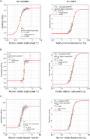


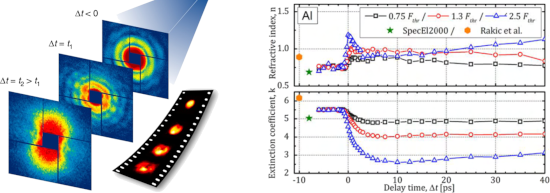
Time-resolved probing of laser-induced nanostructuring processes in liquids
Beilstein J. Nanotechnol. 2025, 16, 968–1002, doi:10.3762/bjnano.16.74


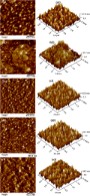
Ar+ implantation-induced tailoring of RF-sputtered ZnO films: structural, morphological, and optical properties
Beilstein J. Nanotechnol. 2025, 16, 872–886, doi:10.3762/bjnano.16.66
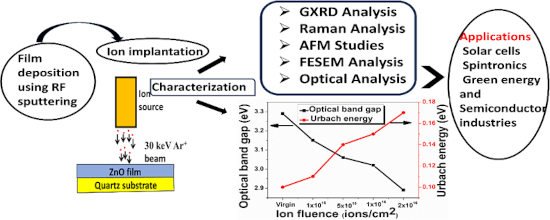
- defects as described in GXRD and Raman studies. The optical bandgap (Eg) values of samples have been estimated employing Tauc’s relation [45]: where α and hν are absorption coefficient and photon energy, respectively, C represents constant, and n elucidates the transition type (n is 2/3 for forbidden
- , the absorption coefficient varies exponentially with photon energy [45]: Here, α0 represents a constant, α is the absorption coefficient, and E0 stands for the Urbach energy, which is calculated by taking the inverse of the slope of the plot between ln(α(λ)) and photon energy (E = hν). Since α is






Morphology and properties of pyrite nanoparticles obtained by pulsed laser ablation in liquid and thin films for photodetection
Beilstein J. Nanotechnol. 2025, 16, 785–805, doi:10.3762/bjnano.16.60
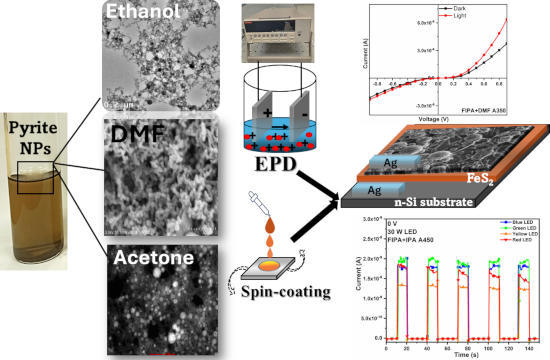
- a narrow bandgap (0.95 eV), high light absorption coefficient (≈105 cm−1), excellent properties in photoelectric conversion, and has enormous potential as an efficient photodetector system and in lithium batteries [1][2]. The prevalent forms of FeS2 are cubic-system pyrite and the orthorhombic
- its ability to absorb UV wavelengths [32]. This concept was used to fabricate photodetectors (PDs) using pyrite NPs on Si substrate as it inherently has the advantages of exceptional photo-absorption, high mobility, and high absorption coefficient as initially mentioned. Self-powering PDs have a






Efficiency of single-pulse laser fragmentation of organic nutraceutical dispersions in a circular jet flow-through reactor
Beilstein J. Nanotechnol. 2025, 16, 711–727, doi:10.3762/bjnano.16.55
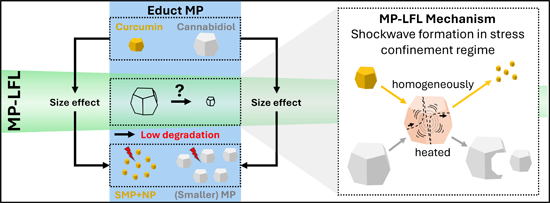
- -dependent difference. In the material systems examined here, this difference can be attributed either to the absorption coefficient of the bulk material or the diameter of the educt particles, a correlation more closely examined in the consecutive section. Proposed MP-LFL mechanism While both commercially


Engineered PEG–PCL nanoparticles enable sensitive and selective detection of sodium dodecyl sulfate: a qualitative and quantitative analysis
Beilstein J. Nanotechnol. 2025, 16, 385–396, doi:10.3762/bjnano.16.29
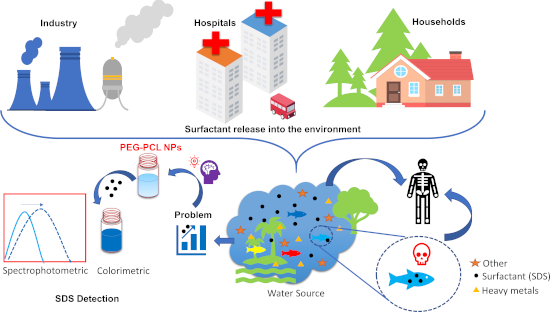
- . Polystyrene latex absorption coefficient and refractive index were used to measure synthesized nanoparticles, prefilled in the software with values of 0.01 and 1.59, respectively. All measurements were performed at 25 °C. The surface morphology of PEG–PCL nanoparticles was analyzed using scanning electron


Pulsed laser in liquid grafting of gold nanoparticle–carbon support composites
Beilstein J. Nanotechnol. 2025, 16, 349–361, doi:10.3762/bjnano.16.26
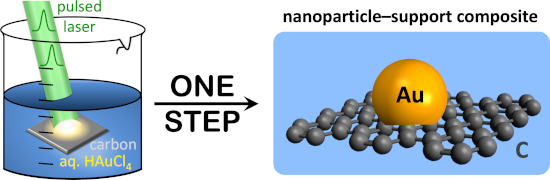
- nanosecond pulses, graphite has an effective absorption coefficient of 5 µm−1 [26], resulting in an ablation threshold fluence of 0.7 J·cm−2 [27]; thus, our chosen fluence was well below this ablation threshold. The critical melting fluence of graphite has been reported to be 0.13 J·cm−2 [28], suggesting


Tailoring of physical properties of RF-sputtered ZnTe films: role of substrate temperature
Beilstein J. Nanotechnol. 2025, 16, 333–348, doi:10.3762/bjnano.16.25
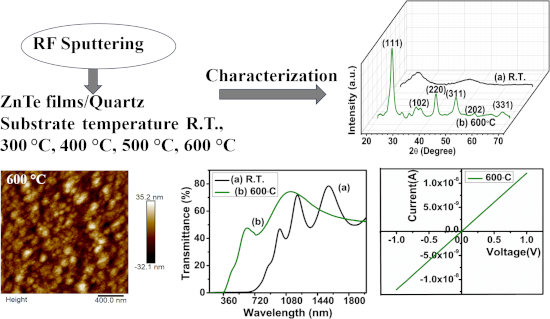
- , 400 °C, 500 °C, and 600 °C, respectively. Figure 5C shows the absorption coefficient as a function of the wavelength for ZnTe/Qz films at different substrate temperatures. From Figure 5C, it is observed that α has very low values at higher wavelengths (≥600 nm). The absorption coefficient increases
- very slowly in this region. In contrast, a sharp increase in α is observed in the lower-wavelength (≤600 nm) region. This type of variation in absorption coefficient points toward the existence of both direct and indirect bandgaps in a material. ZnTe films exhibit both direct and indirect transitions
- [35][36]. Therefore, in this study we have determined both direct and indirect bandgaps. The Tauc relation was used to determine the optical bandgaps (Eg) of ZnTe/Qz films [34] where h represents the Planck constant, ν is the frequency of the incident light, α is the absorption coefficient, and C is




TiO2 immobilized on 2D mordenite: effect of hydrolysis conditions on structural, textural, and optical characteristics of the nanocomposites
Beilstein J. Nanotechnol. 2025, 16, 128–140, doi:10.3762/bjnano.16.12
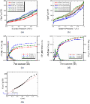
- diffuse reflectance spectra. In this method, it is assumed that the energy-dependent absorption coefficient α can be written as where h is the Planck constant, hν is the photon energy, and B is a constant. The factor n depends on the nature of the electron transition, that is, n = 1/2 for direct and n = 2


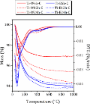

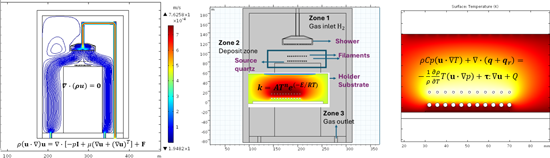
Heterogeneous reactions in a HFCVD reactor: simulation using a 2D model
Beilstein J. Nanotechnol. 2024, 15, 1627–1638, doi:10.3762/bjnano.15.128
- ratio x = [O]/[Si], which is determined by controlling key parameters in the deposition process [2]. This ratio determines optical and electrical properties such as bandgap energy, absorption coefficient, photoluminescence, refractive index, and electrical conductivity [3]. SiOx cannot only be obtained


Quantum-to-classical modeling of monolayer Ge2Se2 and its application in photovoltaic devices
Beilstein J. Nanotechnol. 2024, 15, 1153–1169, doi:10.3762/bjnano.15.94
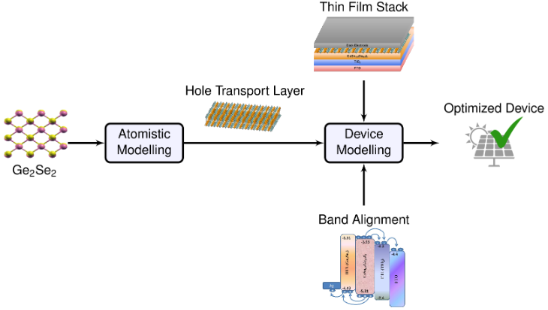
- successfully synthesized [28][29][30][31]. Its remarkable features, such as low cost, abundance, environmental friendliness, and many interesting physical properties, indicate a broad range of possible applications in sustainable electronics and photonics [32]. Notably, a high absorption coefficient has been
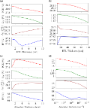
- investigated structure exhibits strongly anisotropic optical properties for which the parametric values depend on the direction of the chosen plane. Dielectric function and absorption coefficient The static dielectric constants (real part of εr at ω = 0), along the in-plane (XX) and out-of-plane (ZZ) direction
- , which further leads to higher transition possibilities. The absorption coefficient elucidates the rate at which light intensity diminishes while entering the material. It primarily depends upon the imaginary part of the refractive index k(λ) = Im{n(λ)} and the wavelength of the incident light λ, as per




Bolometric IR photoresponse based on a 3D micro-nano integrated CNT architecture
Beilstein J. Nanotechnol. 2024, 15, 1030–1040, doi:10.3762/bjnano.15.84
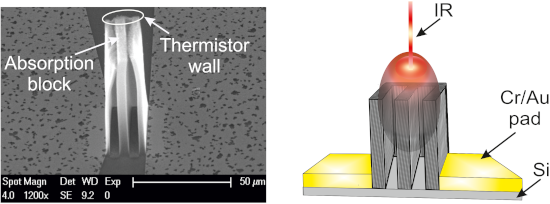
- [8], the effective reflection from the forest decreased very rapidly. MWCNTs have also been used as absorbers in the infrared region (2–20 μm) with an optical absorption coefficient above 90% [10]. Similar values were achieved for different synthesis temperatures (500–700 °C) with different CNT


Controllable physicochemical properties of WOx thin films grown under glancing angle
Beilstein J. Nanotechnol. 2024, 15, 350–359, doi:10.3762/bjnano.15.31
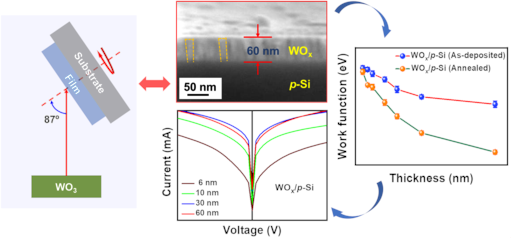
- fascinating optical and electrical properties [1]. WOx is a wide-bandgap oxide semiconductor with a large excitonic binding energy of 0.15 eV and a high optical absorption coefficient (≥104 cm−1 in the UV region) [2]. These, in conjunction with decent carrier mobility (12 cm2·V−1·s−1), make this material an
- -WOx films. The value of Eg is estimated by employing the well-known Tauc’s equation [34]: where hv is the energy of the incident photons (in eV), α is the optical absorption coefficient, k is a constant, and n is a constant whose value depends on the type of transition (n = 2 for direct and n = 1/2


Fluorescent bioinspired albumin/polydopamine nanoparticles and their interactions with Escherichia coli cells
Beilstein J. Nanotechnol. 2023, 14, 1208–1224, doi:10.3762/bjnano.14.100
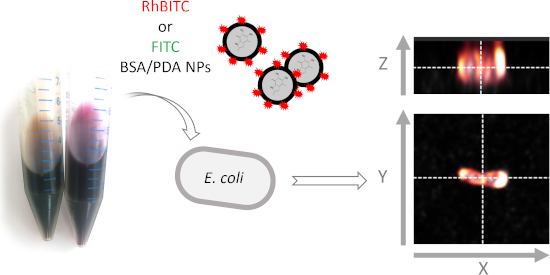
- measured by dynamic light scattering (DLS) using a Zetasizer Nano ZS from Malvern Panalytical (Malvern, UK). Measurements were performed while taking into account a refractive index of 1.73 − 0.02i for PDA (the imaginary part corresponds to the absorption coefficient) at a wavelength of 589 nm, that is



Nanoarchitectonics of photothermal materials to enhance the sensitivity of lateral flow assays
Beilstein J. Nanotechnol. 2023, 14, 988–1003, doi:10.3762/bjnano.14.82
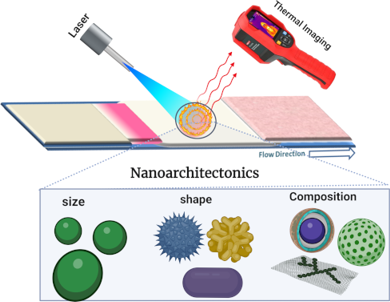
- nanomaterials become larger, they deflect more light than they absorb, resulting in reduced photothermal conversion [53]. This is because the ratio between absorption coefficient (µa) and scattering coefficient (µs) is higher for smaller particles. Compared to the 80 nm gold nanoparticles (µa = 67.88 µm−1), 40





