Search results
Search for "binding energies" in Full Text gives 185 result(s) in Beilstein Journal of Nanotechnology.
Tuning the electronic properties of defect-rich MoS2
Beilstein J. Nanotechnol. 2026, 17, 796–805, doi:10.3762/bjnano.17.56
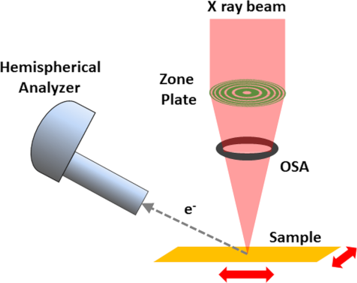
- GmbH) and a hemispherical analyzer (Phoibos 150, SPECS). The energy was calibrated to the binding energies of Au 4f7/2 (84.00 eV), Ag 3d5/2 (368.21 eV) and Cu 2p3/2 (932.63 eV) using Ar-ion sputtered foils of Au, Ag, and Cu (Goodfellow Cambridge Ltd.). At the LowDosePES endstation the samples were
- less clear. For 1 keV Ne+ bombardment, Lince et al. [20] reported slight shifts of the Mo 3d core levels towards lower binding energies and more intense shifts towards higher binding energies for the S 2p signals, precluding any conclusions on possible doping. Further results in the context include the
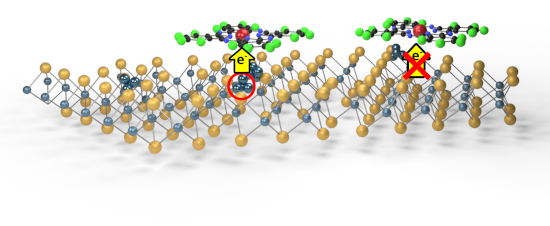
- lower binding energies between the free molecule, indicated by the thicker film (blue line), and the interface (red line) can be mostly attributed to commonly observed screening of the photohole at the interface [9][10][43]. For details on the fitting procedure underlying this conclusion, refer to


Electrochemical determination of ciprofloxacin using a MIL-101/reduced graphene oxide-modified electrode
Beilstein J. Nanotechnol. 2026, 17, 541–554, doi:10.3762/bjnano.17.35
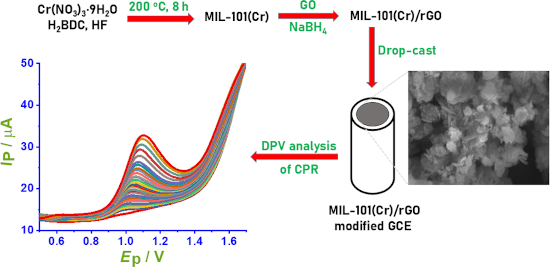
- , respectively. The energy gap between these peaks (≈11.1 eV) is typical of Cr3+ species coordinated with oxygen in the Cr–O clusters of the MIL-101 framework [25]. Importantly, no signals related to Cr6+ species (usually observed at higher binding energies) are detected, confirming that chromium remains mainly


Upcycling agroindustrial waste into graphene oxide supports for gold nanoparticles: toward sustainable nanomaterials
Beilstein J. Nanotechnol. 2026, 17, 489–504, doi:10.3762/bjnano.17.32
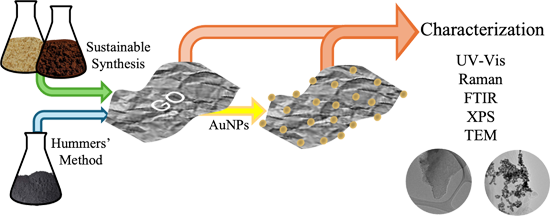
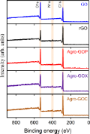
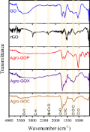
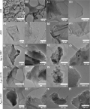
- = 1486.6 eV). The pass energy was set to 10 eV for high-resolution scans and to 40 eV for survey spectra. All binding energies were referenced to the C=C peak at 284.4 eV. Transmission electron microscopy (TEM) was carried using a JEOL JEM-2100 microscope operating at an accelerating voltage of 200 kV. TEM
- not be clearly resolved in the C 1s spectra due to their binding energies being considerably close to those of oxygenated species. As a result, nitrogen-related contributions were not deconvoluted separately. However, their presence is supported by survey spectra, which indicate that some nitrogen



Defects and defect-mediated engineering of two-dimensional materials: challenges and open questions
Beilstein J. Nanotechnol. 2026, 17, 454–488, doi:10.3762/bjnano.17.31
- range, still allowing for a moderate degree of ionization [133]. However, if the 2D material is surrounded by vacuum, the reduced screening is expected to increase the ionization energy to the 0.5–1.0 eV range. This is comparable to the experimentally extracted exciton binding energies, a correspondence
- , promise to further enhance defect characterization and accelerate the development of high-performance materials for various applications. The fundamental principle of XPS lies in its ability to probe the binding energies of core electrons, which are influenced by the local electronic environment
- surrounding the atoms [167][168][169][170][171]. Essentially, by analyzing shifts in binding energies and changes in peak intensities, XPS can identify various defect types, including vacancies, interstitials, and substitutional defects [172][173][174][175][176][177][178]. In the context of 2D materials





Interconnection morphology effects on the radio frequency response of carbon nanotube sponges
Beilstein J. Nanotechnol. 2026, 17, 343–351, doi:10.3762/bjnano.17.23
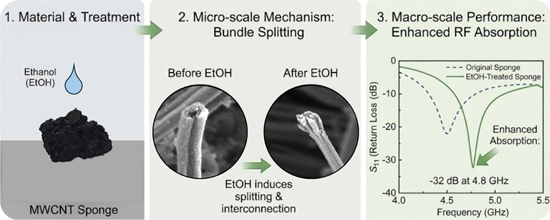
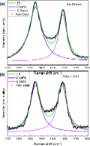
- . The quality of the fit was evaluated using a χ2 minimisation test. All binding energies were referenced to C 1s at around 284.4 eV, and the estimated errors in peak positions are of about ±0.1 eV. The performance of the CNT sponges and the CNT film as RF antennas was evaluated by measuring their



Gold nanoparticle-decorated reduced graphene oxide as a highly effective catalyst for the selective α,β-dehydrogenation of N-alkyl-4-piperidones
Beilstein J. Nanotechnol. 2026, 17, 218–238, doi:10.3762/bjnano.17.15
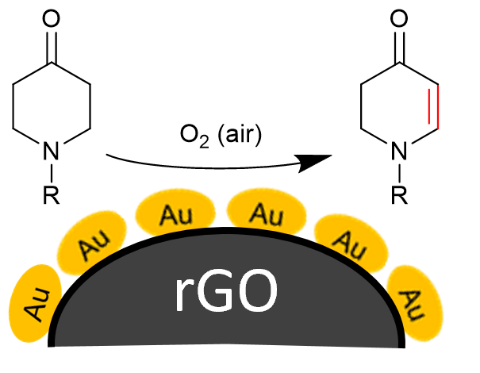
- dehydrogenation (ODH) reactions. A minor component at slightly higher binding energies (88.2 and 84.7 eV) is attributed to Au+ species resulting from surface interaction with oxygenated groups of rGO. The predominance of Au0 demonstrates that the active sites mainly consist of metallic gold nanoparticles. The C
- 530.8 and 533.5 eV, corresponding to [SiW9O34]10− lattice oxygen and rGO surface oxygenated groups. The broadness of the higher-energy peak suggests contributions from C–O and O=C–OH groups at lower binding energies, C=O and C–OH groups at higher binding energies, and minor contributions from W–O and Si


Ambient pressure XPS at MAX IV
Beilstein J. Nanotechnol. 2025, 16, 1677–1694, doi:10.3762/bjnano.16.118

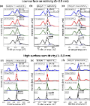
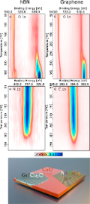
- = 660 eV) core levels corresponding to the same conditions as in (a); red vertical lines indicate the binding energies obtained for the optimized O2H–H2O complex on CoTPyP/GR from ab initio DFT calculations for different O 1s core levels, as labeled in (e): 1 − physisorbed/ wetting water, 2 − OOH, 3





Photocatalytic degradation of ofloxacin in water assisted by TiO2 nanowires on carbon cloth: contributions of H2O2 addition and substrate absorbability
Beilstein J. Nanotechnol. 2025, 16, 1567–1579, doi:10.3762/bjnano.16.111
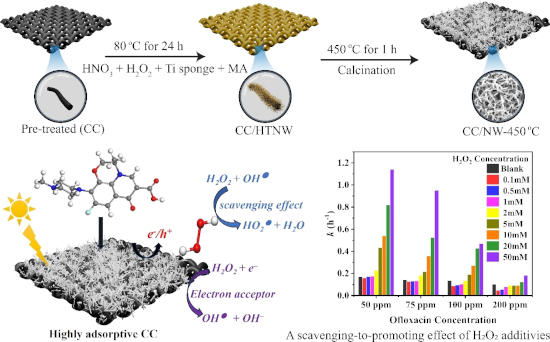
- Ultura DLD system (Kratos, UK), and the binding energies were calibrated to C 1s = 284.8 eV. The specific surface area and pore size were analyzed using low-temperature N2 adsorption–desorption measurements conducted with an ASAP 2460 (USA). The absorption spectrum of the sample was acquired through UV
- . The C 1s spectrum shows a peak at 284.8 eV, corresponding to adventitious carbon, which was used as the reference for binding energy calibration. Additional peaks at higher binding energies (286–288 eV) are attributed to oxygen-containing functional groups (C–O and C=O), indicating partial oxidation


Enhancing the photoelectrochemical performance of BiOI-derived BiVO4 films by controlled-intensity current electrodeposition
Beilstein J. Nanotechnol. 2025, 16, 1289–1301, doi:10.3762/bjnano.16.94
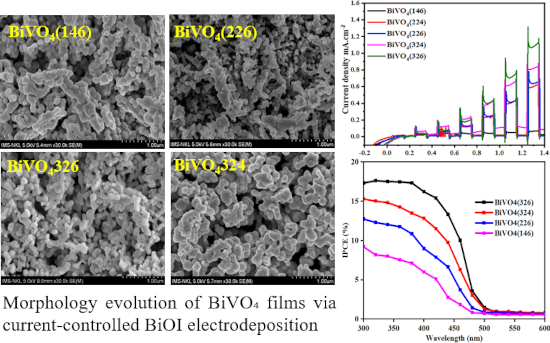
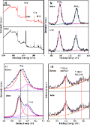
- on the optimized BiVO4(326) sample. The survey spectrum (Figure 7a) confirmed the presence of Bi, V, and O, which is consistent with the BiVO4 structure. High-resolution Bi 4f spectra (Figure 7b) show a characteristic doublet at binding energies of 159.0 eV (Bi 4f7/2) and 164.2 eV (Bi 4f5/2



Crystalline and amorphous structure selectivity of ignoble high-entropy alloy nanoparticles during laser ablation in organic liquids is set by pulse duration
Beilstein J. Nanotechnol. 2025, 16, 1141–1159, doi:10.3762/bjnano.16.84
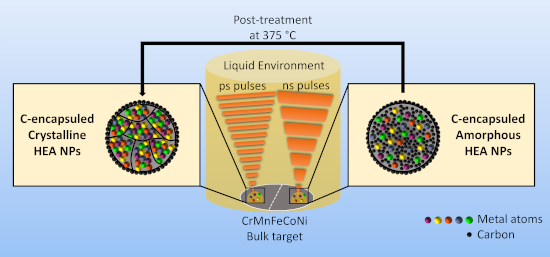
- on density functional theory calculations of binding energies and machine learning algorithms for an efficient catalyst design [15][17][19]. The synthesis of HEA NPs has been realized by many methods, including carbothermal shock synthesis (CTS) [20][21], chemical reduction [22][23], fast-moving bed


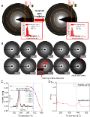


Single-layer graphene oxide film grown on α-Al2O3(0001) for use as an adsorbent
Beilstein J. Nanotechnol. 2025, 16, 1082–1087, doi:10.3762/bjnano.16.79
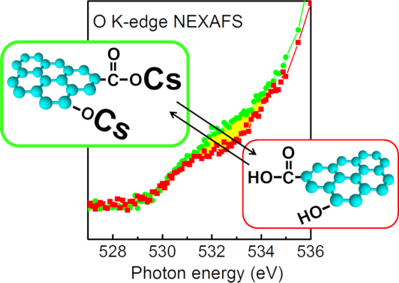
- XPS spectra of SLG/α-Al2O3(0001) is shifted to the lower binding energies by 1.0 eV compared with that of graphite (284.4 eV) [23]. This is due to p-type doping of SLG associated with a strong electrostatic interaction between SLG and the α-Al2O3(0001) at the interface [18]. In SLGO, on the other hand


Synthesis of biowaste-derived carbon-dot-mediated silver nanoparticles and the evaluation of electrochemical properties for supercapacitor electrodes
Beilstein J. Nanotechnol. 2025, 16, 933–943, doi:10.3762/bjnano.16.71
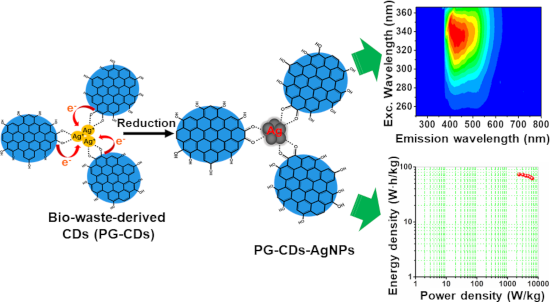
- energies of 285 and 368 eV, respectively. The high-resolution individual elemental XPS spectra of C 1s and Ag 3d are exhibited in Figure 2c–d. As shown in Figure 2d, the C 1s spectrum of the PG-CDs-AgNPs composite exhibited four primary peaks at binding energies of 282.9, 285.3, 287.1, and 288.5 eV. These
- peaks could be ascribed to the C–C (sp3)/C=C (sp2), C–O, C=O, and O–C=O groups, respectively [31]. In addition, the Ag 3d spectra (Figure 2c) of PG-CDs-AgNPs exhibited two characteristic peaks at binding energies of 368.7 and 374.6 eV equivalent to Ag 3d5/2 and Ag 3d3/2, respectively [32]. It has been
- analysis was implemented to study the elemental composition of PG-CDs-AgNPs and the corresponding chemical interaction between PG-CDs and AgNPs, as depicted in Figure 2b–d. As illustrated in Figure 2b, XPS total survey profile of the PG-CDs-AgNPs is composed of carbon and silver elements, with binding


Insights into the electronic and atomic structures of cerium oxide-based ultrathin films and nanostructures using high-brilliance light sources
Beilstein J. Nanotechnol. 2025, 16, 860–871, doi:10.3762/bjnano.16.65

- 150 K, using a photon energy of 410 eV. At low exposure, the most intense peaks at 285.1 eV (1) and at 286.2 eV (2) on CeO2(111) and at 286.3 eV (1) and at 287.6 eV (2) on CeO2−x(111) are ascribed to methyl and alkoxy groups of adsorbed ethoxy species, respectively. The slightly different binding
- energies on the two surfaces are ascribed to the different Ce3+ concentrations in the two ceria films. The different intensity ratios between the methyl- and alkoxy-related peaks on the two surfaces are assigned to different adsorption and dissociation pathways for ethanol on a stoichiometric and a non


Synchrotron X-ray photoelectron spectroscopy study of sodium adsorption on vertically arranged MoS2 layers coated with pyrolytic carbon
Beilstein J. Nanotechnol. 2025, 16, 847–859, doi:10.3762/bjnano.16.64
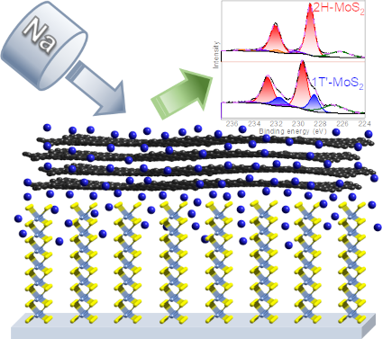
- to the Mo4+ state in 2H-MoS2 [47]. In addition to the main peak, there are two weak doublets with Mo 3d5/2 binding energies of 230.1–230.3 eV and 231.6–231.9 eV, which belong to the oxidized forms of molybdenum in the Mo5+ and Mo6+ sates, respectively [48]. The XPS S 2p spectra of the initial MoS2
- that the PyC films transferred onto the surface of the SiO2/Si substrate and the MoS2 film have the same structure. After sodium deposition on the PyC film for 10 min and then 20 min, the sp2 peak shifts by 0.5 and 0.6 eV, respectively, towards higher binding energies. This shift is due to the charge


Changes of structural, magnetic and spectroscopic properties of microencapsulated iron sucrose nanoparticles in saline
Beilstein J. Nanotechnol. 2025, 16, 762–784, doi:10.3762/bjnano.16.59
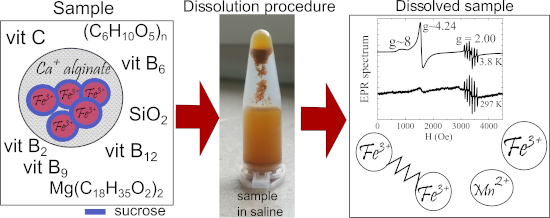
- investigated samples in a wide range of binding energies, where the domination of the O 1s line is indisputable. The discrepancies in the percent atomic composition estimated according to these results are collected in Table 2. In the case of FS0, the majority are O 1s states; next in terms of quantity are C
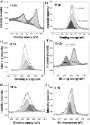
- XPS spectra of the Fe 2p multiplet structure for the FS0 and FST samples exhibit two main peaks with very similar binding energies around 710 eV and 723 eV (see Figure 12a) assigned as Fe 2p3/2 and Fe 2p1/2 core lines with the spin–orbit splitting of about ΔE ≈ 13 eV [87][88][89]. To the experimental
- data (grey squares in Figure 12), the fitting procedure was applied, after which the Fe 2p core-level spectra for both samples were deconvoluted into six peaks whose parameters are gathered in Table 3. It is clearly seen that the binding energies of the obtained components under the Fe 2p3/2 and Fe 2p1





Thickness dependent oxidation in CrCl3: a scanning X-ray photoemission and Kelvin probe microscopies study
Beilstein J. Nanotechnol. 2025, 16, 749–761, doi:10.3762/bjnano.16.58
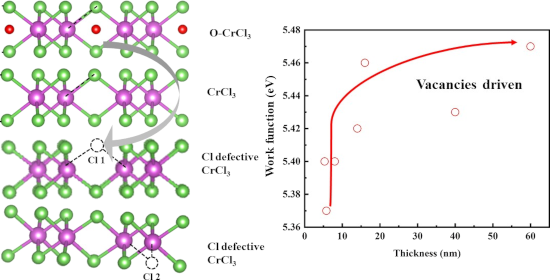
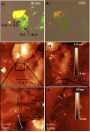
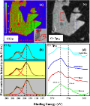
- and spectrum) and Cr 2p3/2 (c, d) (map and spectrum) core level maps at binding energies of about 200 and 576 eV, respectively. SPEM spectra from thick (T) and lean (L) areas on ITO. (a) SPEM image to verify the area of interest. (b) Cr 2p3/2 core level spectra. (c) O 1s core level spectra. CrCl3 on





Nanostructured materials characterized by scanning photoelectron spectromicroscopy
Beilstein J. Nanotechnol. 2025, 16, 700–710, doi:10.3762/bjnano.16.54
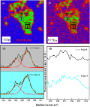
- the electrodes is attenuated. The apparently larger length of the nanowire in the In and P maps as compared to the Au map is due to the finite width of the X-ray beam, and demonstrates the convolution of nanowire shape and beam shape in the resulting image. The binding energies of the In 4d and P 2p
- resulting height profile (bottom) of a nanowire with its catalytic Au particle at the top. b) SPEM images of a nanowire deposited with both ends on separately contacted Au/Ti electrodes with a trench in between, obtained around binding energies of 129 eV (P 2p, left), 17.5 eV (In 4d, middle), and 83.5 eV


Water in nanoporous hexagonal boron nitride nanosheets: a first-principles study
Beilstein J. Nanotechnol. 2025, 16, 510–519, doi:10.3762/bjnano.16.39
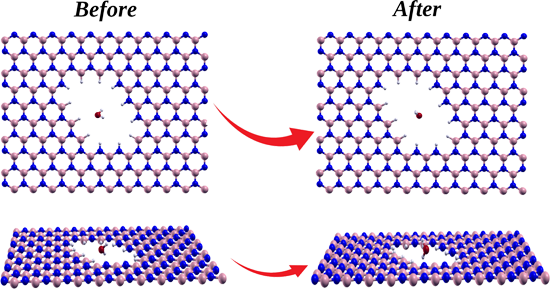
- the high binding energy observed between water and porous h-BN, despite Mulliken analysis indicating no significant charge transfer. The calculated O–-H bond lengths suggest the presence of hydrogen bonding, and a comparison of binding energies obtained using PBE and BH functionals indicates that van




Quantification of lead through rod-shaped silver-doped zinc oxide nanoparticles using an electrochemical approach
Beilstein J. Nanotechnol. 2025, 16, 422–434, doi:10.3762/bjnano.16.33
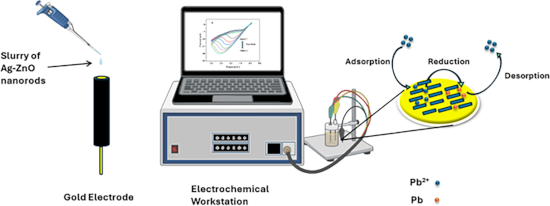
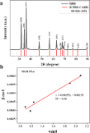
- . The 23 eV gap between two binding energies suggests that the Zn element is in a +2 oxidation state. The 1s orbital spectra of oxygen in Ag–ZnO samples are shown in Figure 7c, revealing a peak with a binding energy of 528 eV. The oxygen peak can be resolved into two distinct peaks, which indicates two





Engineered PEG–PCL nanoparticles enable sensitive and selective detection of sodium dodecyl sulfate: a qualitative and quantitative analysis
Beilstein J. Nanotechnol. 2025, 16, 385–396, doi:10.3762/bjnano.16.29
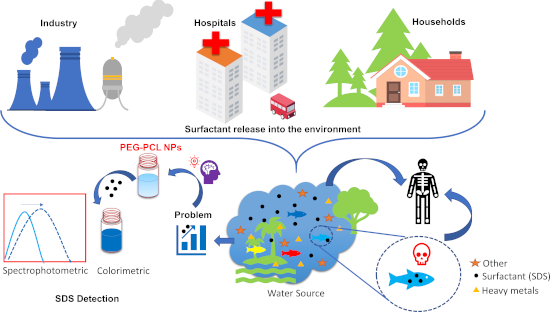
- information about the elemental composition, chemical states, and electronic states of the elements present in the nanoparticles. The XPS spectra of the PEG–PCL nanoparticles (Figure 2e) showed prominent peaks at binding energies of 284.8, 532.7, and 486.7 eV, corresponding to carbon, oxygen, and tin


Pulsed laser in liquid grafting of gold nanoparticle–carbon support composites
Beilstein J. Nanotechnol. 2025, 16, 349–361, doi:10.3762/bjnano.16.26
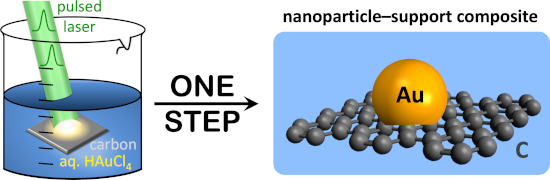
- ][56][57][58]. Two peaks were needed to fit the high-resolution O 1s region spectra with central binding energies of (532.0 ± 0.5) eV, consistent with C=O functional groups, and (533.5 ± 0.5) eV, assigned to C–O species [52][53][54][55], in keeping with prior data for hydrophilic carbon fiber paper [22


A review of metal-organic frameworks and polymers in mixed matrix membranes for CO2 capture
Beilstein J. Nanotechnol. 2025, 16, 155–186, doi:10.3762/bjnano.16.14
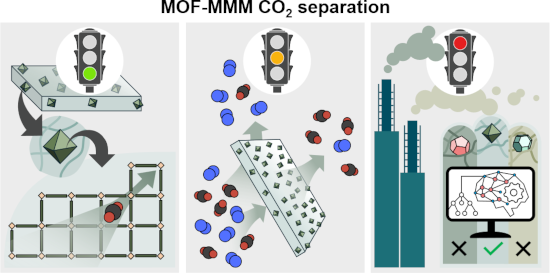
- integration of MOFs in the polymeric membrane [113][137][143][146][147]. XPS is commonly used for obtaining spectra of the chemical composition of the outermost 10 nm of a surface. Specifically, XPS provides a spectral representation of binding energies on the surface, which can be referenced to specific




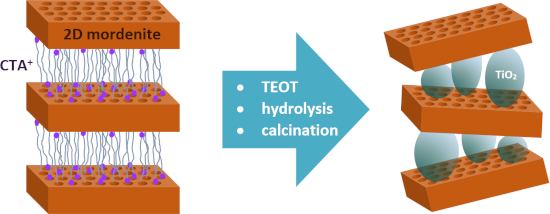
TiO2 immobilized on 2D mordenite: effect of hydrolysis conditions on structural, textural, and optical characteristics of the nanocomposites
Beilstein J. Nanotechnol. 2025, 16, 128–140, doi:10.3762/bjnano.16.12
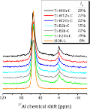
- shifted towards lower binding energies (74.6–74.8 eV), and a shoulder appears at 77.5–76.9 and 76.8–76.4 eV for Ti-WNh-C and Ti-ENh-C, respectively. An exemplary decomposition of the Al 2p XPS spectrum for Ti-W24h-C is shown in the inset of Figure 4a. For the Ti-WNh-C series, the position of the



Ion-induced surface reactions and deposition from Pt(CO)2Cl2 and Pt(CO)2Br2
Beilstein J. Nanotechnol. 2024, 15, 1427–1439, doi:10.3762/bjnano.15.115

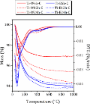
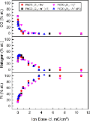
- with the Pt species produced as a result of ion irradiation (red). The solid and dashed purple lines indicate the binding energies for the Pt 4f7/2 peaks associated with the Pt(II) and Pt(0) parent and product species, respectively. A comparison of the CO loss (left) and Pt(II) reduction (right) from



A biomimetic approach towards a universal slippery liquid infused surface coating
Beilstein J. Nanotechnol. 2024, 15, 1376–1389, doi:10.3762/bjnano.15.111
- spectra (Figure 3b,d,f) yield peak envelopes made up of four distinct peaks. These four peaks from high to low binding energies, correspond to C–C/C–H bonds (285 eV), C=O bonds (288 eV), and two peaks related to fluorinated species (CF2 at 290.6 eV and CF3 at 293 eV) [28][42]. The C–C and C=O peaks likely