


Search results
Search for "chemistry" in Full Text gives 1177 result(s) in Beilstein Journal of Nanotechnology. Showing first 200.
Nanoglasses: a trail towards uncharted regions of vitreous materials and their properties?
Beilstein J. Nanotechnol. 2026, 17, 1047–1062, doi:10.3762/bjnano.17.72

- of interface density and chemistry may enable tailoring of mechanical, diffusion, and functional properties, including enhanced plasticity, altered transport behaviour, and tuneable optical or electronic responses. Finally, open questions regarding interfacial structure, thermodynamic driving forces


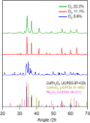
Influence of an external electric field on the catalytic CO oxidation of nanoscaled CeO2 and its La3+ and Gd3+ congeners
Beilstein J. Nanotechnol. 2026, 17, 1028–1038, doi:10.3762/bjnano.17.70
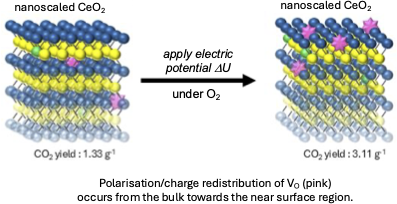
- , particularly near surfaces and electrode/oxide interfaces [16][27][28][29][30]. In ceria, these processes are closely connected to the Ce4+/Ce3+ redox couple and VO defect chemistry. A small polaron in nCeO2 can be described as a localized electron associated with a Ce3+ 4f state, and electronic charge
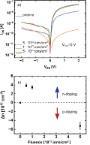
- phenomenological. The present data support a correlation between dopant-dependent defect chemistry, lattice distortion, and bias-assisted CO oxidation behaviour, but they do not directly quantify oxygen-vacancy migration or small-polaron hopping during the reaction. Further systematic studies, such as voltage
- catalysts can provide a promising strategy for influencing heterogeneous oxidation reactions, even in the absence of precious metal active phases. Conclusion An external electric field can substantially boost room-temperature CO oxidation on nanoscaled ceria by tuning its interfacial defect/redox chemistry


Ultrasonic irradiation in the synthesis of nanohydroxyapatite: a chemically friendly technique for improving hemocompatibility and antibiofilm applications
Beilstein J. Nanotechnol. 2026, 17, 991–1015, doi:10.3762/bjnano.17.68
- Nanostructured Materials Laboratory, Center for Materials Engineering and Nanotechnology, Venezuelan Institute for Scientific Research (IVIC). Miranda State, Venezuela Department of Chemistry, B5ida Group, Simón Bolívar University, Caracas, Venezuela Bionanotechnology Laboratory, Center for Materials Engineering
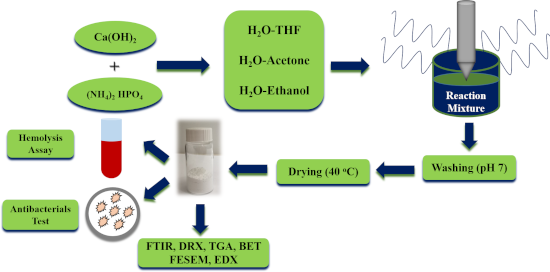
- 10.3762/bjnano.17.68 Abstract This study explores the synthesis of nanohydroxyapatite (nHA) using high-frequency ultrasonic irradiation (UI), a chemically friendly technique aligned with green chemistry principles. Synthesis was achieved by varying the UI time (15, 30, 45, and 60 min) and the reaction
- simplicity of the reaction medium, low energy consumption, and short processing times required to obtain the products, nHA synthesis carried out with ultrasonic irradiation complies with the precepts of green chemistry. Specifically, this method operates at low temperatures and atmospheric pressure




Materials challenges in solid-state sensors for continuous monitoring of ions in water
Beilstein J. Nanotechnol. 2026, 17, 935–973, doi:10.3762/bjnano.17.66
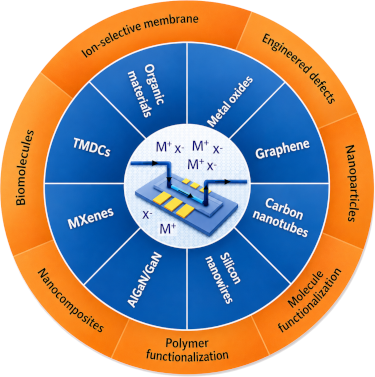
- Maryam Darestani-Farahani Peter Kruse Department of Chemistry and Chemical Biology, McMaster University, 1280 Main Street West, Hamilton, Ontario L8S 4M1, Canada 10.3762/bjnano.17.66 Abstract Accurate detection of ions in aqueous environments, ranging from trace to high concentrations, is
- , or changes in source water chemistry, enabling rapid management responses. Recent developments in sensing technologies have made real-time and in situ measurements of these ions increasingly feasible, advancing toward integrated, data-driven water quality management [14][25][31]. Nutrients Continuous
- , influencing both their detectability and their appearance or operational impacts in water systems. These distinctions are critical for sensor design because the target oxidation state determines the required detection chemistry and redox environment. Their online monitoring is essential in drinking water



Nanocarrier strategies to overcome P-glycoprotein-mediated drug resistance in cancer therapy
Beilstein J. Nanotechnol. 2026, 17, 882–921, doi:10.3762/bjnano.17.64
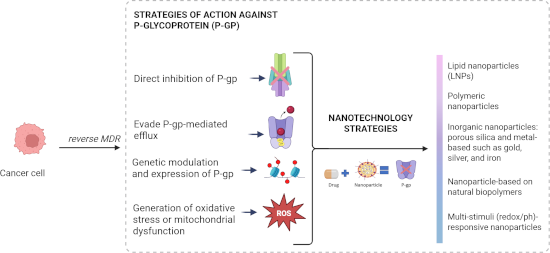
- nanocapsules provide structural stability and sustained release, advances in polymer chemistry have enabled the design of stimuli-responsive and multifunctional polymeric nanocarriers capable of engaging tumor-specific triggers and actively reversing P-gp-mediated drug resistance. Polymeric nanoparticles can


Supramolecular one-dimensional conducting nanofibers from a C3-symmetric tetrathiafulvalene derivative
Beilstein J. Nanotechnol. 2026, 17, 872–881, doi:10.3762/bjnano.17.63
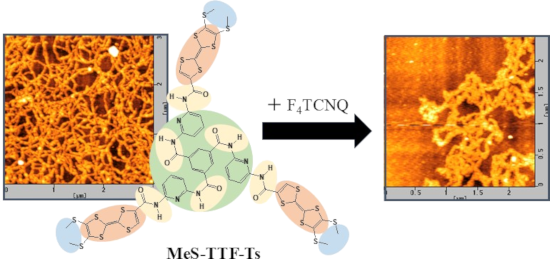
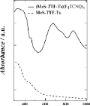
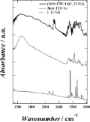
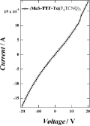
- Yoko Tatewaki Fumiya Hirose Sadafumi Nishihara Tomoyuki Akutagawa Takayoshi Nakamura Tsuyoshi Minami Department of Applied Chemistry, Tokyo University of Agriculture and Technology, 2-24-16 Nakacho, Koganei-shi, Tokyo, 184-8588 Japan Graduate School of Advanced Science and Engineering, Hiroshima


He+ FIBID-fabricated 3D AFM tip architectures: an exploratory study of hollow pillars, helices, and spirals
Beilstein J. Nanotechnol. 2026, 17, 863–871, doi:10.3762/bjnano.17.62
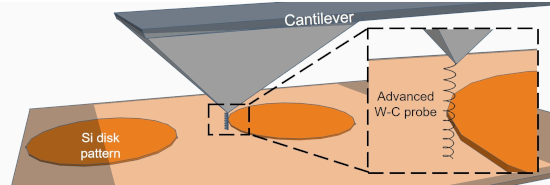
- Waals, electrostatic, and short-range repulsive forces. Owing to its minimal sample preparation requirements and broad operational flexibility, AFM has become a widely used tool across chemistry, physics, materials science, nanotechnology, and the life sciences [2]. The continued diversification of AFM


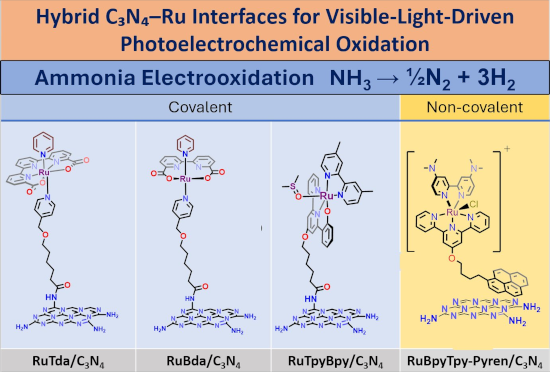
Light-driven ammonia electrooxidation via carbon nitride–ruthenium molecular interfaces
Beilstein J. Nanotechnol. 2026, 17, 854–862, doi:10.3762/bjnano.17.61
- Jan Holub Pablo Jimenez-Calvo Group of Coordination Chemistry, University of Chemistry and Technology, Prague (UCT, Prague); Department of Inorganic Chemistry, Technická 5, 166 28, Prague, Czech Republic Chemistry of Thin Film Materials, Materials Chemistry Section, Friedrich-Alexander-Universität
- Erlangen-Nürnberg, Cauerstraße 3, IZNF, Erlangen 91058, Germany Friedrich-Alexander-Universität Erlangen-Nürnberg, Profile Center Solar (FAU Solar), Freyeslebenstraße 1, 91058 Erlangen, Germany Department of Colloid Chemistry, Max-Planck-Institute of Colloids and Interfaces, Am Mühlenberg 1, 14476 Potsdam
- : C3N4 absorbs visible light, separates charge carriers, and provides a structurally tunable aromatic surface, while the metal complexes, e.g., RuBda, RuTda, or RuTpyBpy, accept photogenerated holes and drive the demanding six-electron oxidation of ammonia through well-defined coordination chemistry. Two


Nanoparticle delivery systems for HIV pre-exposure prophylaxis (PrEP): advances and challenges
Beilstein J. Nanotechnol. 2026, 17, 839–853, doi:10.3762/bjnano.17.60
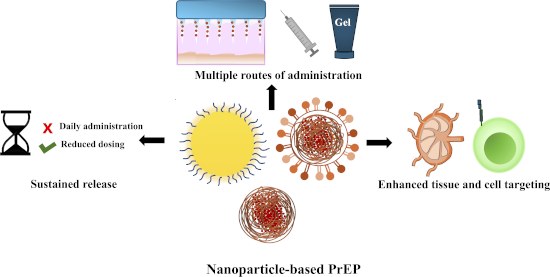
- Sonia Zahara Bjorn M. Reinhard Dept. of Chemistry and The Photonics Center, Boston University, Boston, MA 02215, United States 10.3762/bjnano.17.60 Abstract HIV pre-exposure prophylaxis (PrEP) encompasses antiviral drugs or formulations that aim to prevent the establishment of a permanent


Cross-scale design of chemosensor arrays: from molecular self-assembly in water to paper-based devices for metal ion detection
Beilstein J. Nanotechnol. 2026, 17, 828–838, doi:10.3762/bjnano.17.59
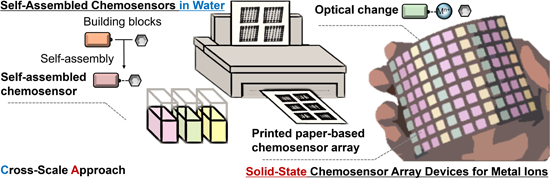
- have been widely applied to metal ion detection [6][7][8][9][10][11]. The detection principle of chemosensors relies on ion and molecular recognition chemistry [3]. Target metal ions have various sizes and valencies; thus, simultaneous detection of multiple metal ions is desired [1][2]. In this regard
- , chemosensors provide multivalent interactions toward analytes, which allow the simultaneous detection of metal ions based on pattern recognition [12][13][14][15][16]. Chemosensor design relies on molecular-recognition chemistry, dye chemistry, and photochemistry [3]. Conventional chemosensors based on covalent
- bond chemistry require organic synthetic approaches in the chemosensor preparations [6][7][8][9]. Meanwhile, molecular self-assembly serves as a driving force for easy-to-obtain chemosensors through spontaneous preparation without a synthetic burden [17]. Moreover, the optical properties of


Sustainable fabrication of 2D-based devices through reuse of substrates with microfabricated electrodes
Beilstein J. Nanotechnol. 2026, 17, 818–827, doi:10.3762/bjnano.17.58
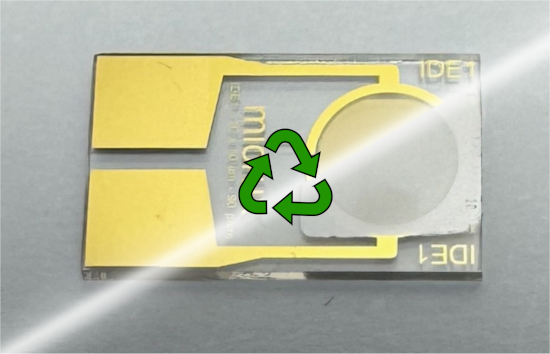
- , Spain Department of Inorganic Chemistry, University of Chemistry and Technology, Prague, Prague, Czech Republic School of Advanced Materials and Nanotechnology, Xidian University, 710071 Xi’an, China 10.3762/bjnano.17.58 Abstract Fabricating microelectronic devices for two-dimensional (2D) materials


Restorative potential of laser-synthesized silver nanoparticles with Salvia officinalis for periodontal disease treatment: an in vitro study
Beilstein J. Nanotechnol. 2026, 17, 781–795, doi:10.3762/bjnano.17.55
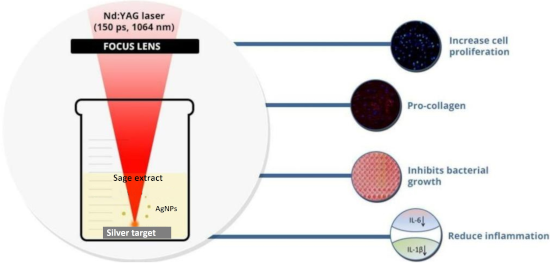
- Jelena Filipovic Trickovic Sanja Zivkovic Bojana Ilic Milos Tosic Jelena Marinkovic Ana Valenta Sobot Milos Momcilovic Department of Physical chemistry, „VINČA” Institute of Nuclear Sciences - National Institute of thе Republic of Serbia, University of Belgrade, Mike Petrovića Alasa 12-14, 11351




Oxidative atmosphere-driven formation of single-phase spinel CuRh2O4 nanofibers for alkaline water oxidation
Beilstein J. Nanotechnol. 2026, 17, 737–743, doi:10.3762/bjnano.17.50
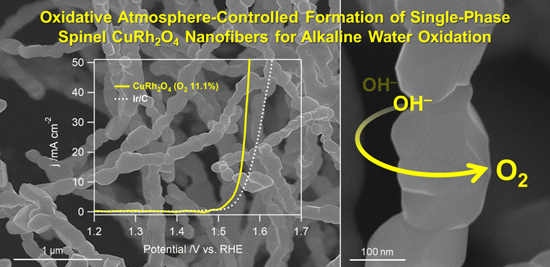
- Namhee Kim Sumin Ko Sohyeon Choi Seoyoon Jang Myung Hwa Kim Dasol Jin Department of Chemistry and Nanoscience, Ewha Womans University, Seoul 03760, Republic of Korea Department of Chemistry, Jeonbuk National University, Jeonju 54896, Republic of Korea Institute of Multiscale Matter and System
- . gratefully acknowledges support from Department of Chemistry, College of Natural Science at Jeonbuk National University. Funding This work was financially supported by the National Research Foundation of Korea (NRF) funded by the Ministry of Science and ICT or by the Ministry of Education (NRF-RS-2018




Environmental applications of silver nanoparticles: state-of-the-art review and emerging trends
Beilstein J. Nanotechnol. 2026, 17, 697–736, doi:10.3762/bjnano.17.49
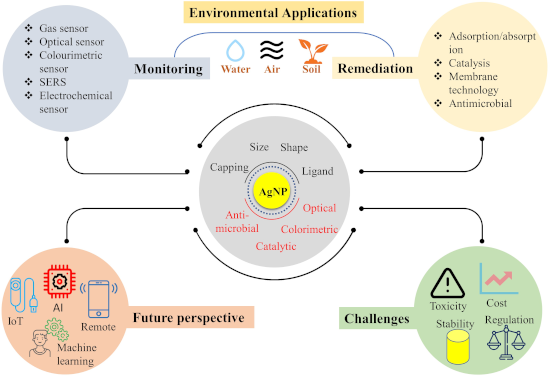
- pseudo-first-order reaction kinetics [25]. The addition of AgNPs to a matrix may improve their efficiency in removing various contaminants via adsorption mechanisms, which can be ionic or covalent, depending on the nanocomposite surface chemistry [26]. In a study, Ag-decorated reduced graphene oxide was
- critical factor influencing the behaviour and toxicity of AgNPs in ecological systems [64]. Surface charge affects the electrostatic interactions between nanoparticles and other charged species in the environment, influencing their aggregation behaviour and mobility. The surface chemistry of silver


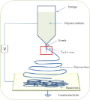
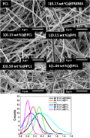
Decontamination from water pollutants and pathogens by electrospun nanofibers doped with heavy-atom-free borafluorene-BODIPY photosensitizers
Beilstein J. Nanotechnol. 2026, 17, 668–682, doi:10.3762/bjnano.17.46
- Sciences, Pawińskiego 5b St., 02-106 Warsaw, Poland Faculty of Chemistry, Warsaw University of Technology, Noakowskiego 3, 00-664 Warsaw, Poland Department of Nanobiotechnology, Institute of Biology, Warsaw University of Life Sciences (WULS-SGGW), 02-787 Warsaw, Poland Faculty of Chemistry, Silesian



Cellulose as a photocatalyst support material: extraction, structural features, and environmental applications
Beilstein J. Nanotechnol. 2026, 17, 635–652, doi:10.3762/bjnano.17.44
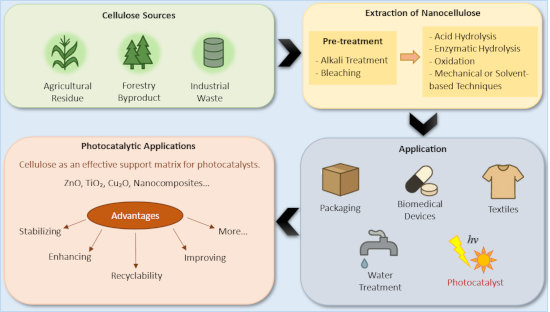
- Yee Teng Lim Nur Farhana Jaafar Azizul Hakim Lahuri Endang Tri Wahyuni School of Chemical Sciences, Universiti Sains Malaysia, 11800 USM Penang, Malaysia Department of Science and Technology, Universiti Putra Malaysia Bintulu Campus, Bintulu, Malaysia Chemistry Department, Faculty of Mathematic


Recent progress in enhancing built-in electric fields of perovskite solar cells via junction engineering
Beilstein J. Nanotechnol. 2026, 17, 602–621, doi:10.3762/bjnano.17.42
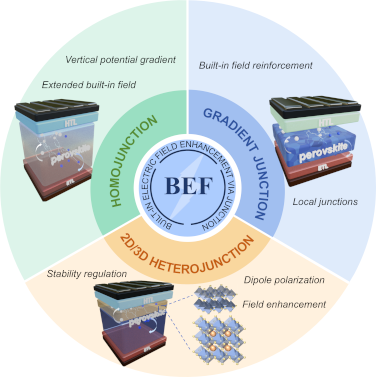
- extent, into the bulk. Liu et al. [33] demonstrated this by inserting perfluorinated copper phthalocyanine (F16CuPc) between the NiOx/Me-2PACz layer and perovskite, thereby shifting the locus of energy-level modulation to the buried interface. Through interfacial chemistry, a controllable potential




Laser–material interactions in liquids for the synthesis of nanomaterials: current status and perspectives
Beilstein J. Nanotechnol. 2026, 17, 571–575, doi:10.3762/bjnano.17.38
- ]. Alternatively, employing organic solvents instead of water provides opportunities to produce carbon-encapsulated core−shell nanostructures [49] and enables control over oxidation [50], surface chemistry [51], and transferability between solvents [52]. The versatility of LSPC in terms of materials, solvents, and
Probing internal continua and atomic ultrafast charge transfer within size-controlled nanoparticles by post-collision interaction in core-hole clock spectroscopy
Beilstein J. Nanotechnol. 2026, 17, 505–514, doi:10.3762/bjnano.17.33
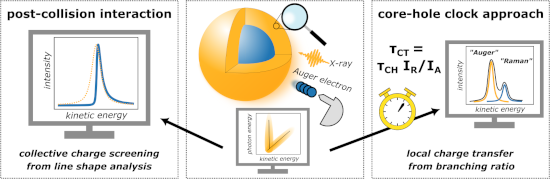
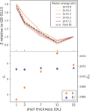
- photoluminescence quantum yield or RedOx chemistry, depend on a complex interplay of local and collective electronic structure aspects [10]. For example, quantum efficiency is strongly influenced by surface structure [11], the fabrication of core–shell and core–multishell architectures [12][13], and the choice of
- granting access to its chemistry and sample characterization laboratory. We want to thank Katarzyna Siewierska for support during experimental work and participation in the beamtime.



Upcycling agroindustrial waste into graphene oxide supports for gold nanoparticles: toward sustainable nanomaterials
Beilstein J. Nanotechnol. 2026, 17, 489–504, doi:10.3762/bjnano.17.32
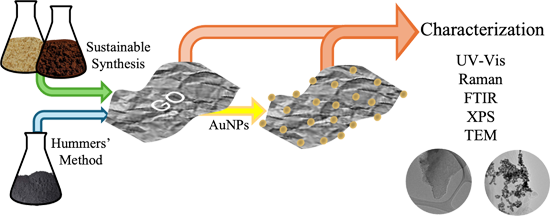
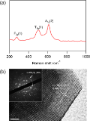
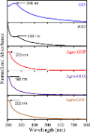
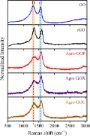
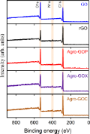
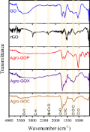
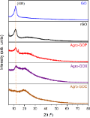
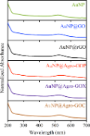
- UV–vis, ATR-FTIR, XPS, XRD, and Raman measurements, complemented by TGA and TEM to assess optical properties, surface chemistry, and structural and morphological features. Additionally, gold nanoparticles (AuNPs) were photochemically deposited onto Agro-GO to evaluate its potential for nanotechnology
- as substrates for AuNP photodeposition to evaluate how their surface chemistry governs nanoparticle nucleation and dispersion. Agro-GO@AuNPs composites demonstrate a green, circular-economy approach with promising potential for applications in sensing, diagnostics, energy storage, and separation
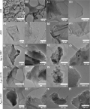
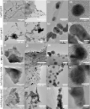
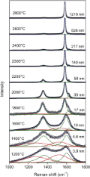
- hydroxy-rich surface chemistry and high defect density. Notably, a band near 2300 cm−1 appears in rGO and the Agro-GO samples, which can be attributed to nitrogen-containing groups such as N=C=O or C≡N, in agreement with the nitrogen detected by XPS [51]. Figure 6 shows TEM images of GO, rGO, and Agro-GO



Defects and defect-mediated engineering of two-dimensional materials: challenges and open questions
Beilstein J. Nanotechnol. 2026, 17, 454–488, doi:10.3762/bjnano.17.31
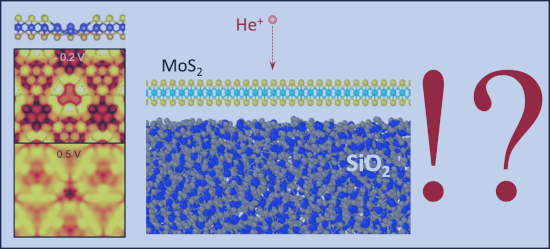
- under impacts of energetic particles, such as ions and electrons. At the same time, many concepts of defect production under irradiation in bulk systems are not applicable for 2D materials or require substantial modifications. Various aspects of the physics and chemistry of defects in 2D materials have
- concepts of defect production under irradiation in bulk systems are not applicable for 2D materials or require substantial modifications. Various aspects of the physics and chemistry of defects in 2D materials have been addressed; based on the results of these investigations, hundreds, if not thousands, of
- MoSe2 on a gold substrate to the Janus MoSeS structure [77]. Also, a facile low-temperature thiol chemistry route was suggested to remove sulfur vacancies in 2D MoS2 [78], which resulted in a significant drop in the number of the charged impurities and traps and increased the mobility. Qualitatively





Nanoinformatics: spanning scales, systems and solutions
Beilstein J. Nanotechnol. 2026, 17, 423–427, doi:10.3762/bjnano.17.28
- : artificial intelligence; in silico approaches; machine learning; nanoinformatics; nanomaterials functionality; nanotoxicity; sustainability; Nanoinformatics (as an offshoot of chemoinformatics) refers to the combination of physical chemistry and materials theory with in silico approaches to address key

Polycatecholamine nanocoatings on stainless steel: the effect on attachment of human fibroblasts and platelets
Beilstein J. Nanotechnol. 2026, 17, 365–380, doi:10.3762/bjnano.17.25
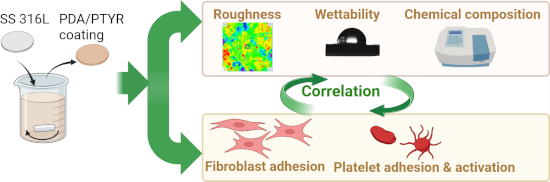
- less explored PTYR under identical conditions, we aim to elucidate how the differences in polycatecholamine chemistry and nanostructure translate into cell–surface interactions on stainless steel implants. Results Wettability of the coatings Polished SS 316L discs were coated with PDA (reaction times
- nanoparticulate morphology, improved nanostructural stability, and were more repellent for platelets. This is an important finding in terms of searching for robust and versatile hemocompatible coatings, as platelet–surface interactions are strongly influenced by nanoscale chemistry and topography. PTYR




Beam shaping techniques for pulsed laser ablation in liquids: Unlocking tunable control of nanoparticle synthesis in liquids
Beilstein J. Nanotechnol. 2026, 17, 309–342, doi:10.3762/bjnano.17.22
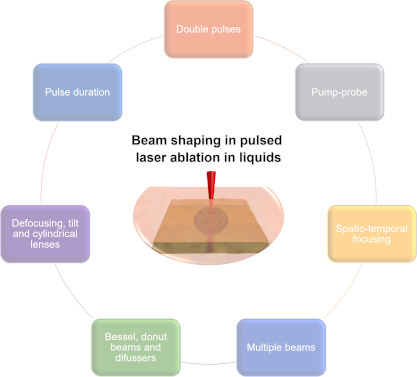
- gas aggregation are highly scalable and productive, though they typically require high temperatures or vacuum systems and may offer limited control over surface chemistry. Compared with these approaches, PLAL provides high-purity colloids with reduced impurities and byproducts, even allowing for







Advancing nanolithography: a comprehensive review of materials for local anodic oxidation with AFM
Beilstein J. Nanotechnol. 2026, 17, 275–291, doi:10.3762/bjnano.17.19
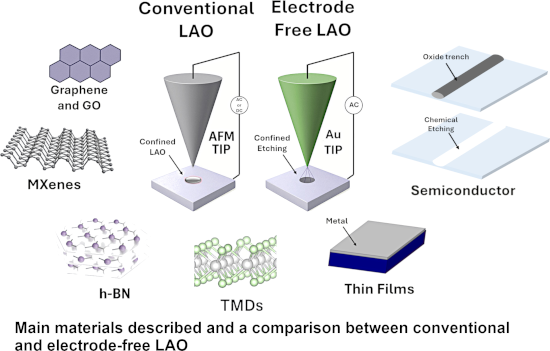
- the meniscus and broadens oxide lines. Conversely, lower humidity reduces meniscus volume and enables narrower, better-defined features. Although RH of 35–55% is widely used for Si and other common substrates, the optimal range can shift depending on the substrate surface chemistry, hydrophilicity





