Search results
Search for "electrochemical analysis" in Full Text gives 18 result(s) in Beilstein Journal of Nanotechnology.
Electrochemical determination of ciprofloxacin using a MIL-101/reduced graphene oxide-modified electrode
Beilstein J. Nanotechnol. 2026, 17, 541–554, doi:10.3762/bjnano.17.35
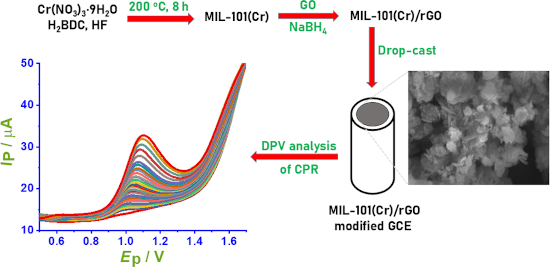
- , yielding acceptable recoveries. These results indicate that the MIL-101/rGO-modified electrode provides a promising and efficient platform for the electrochemical sensing of CPR in pharmaceutical and environmental analysis. Keywords: ciprofloxacin; electrochemical analysis; MIL-101; reduced graphene oxide
- excipients and properly diluted with BR buffer (pH 4) before electrochemical analysis. The CPR content in the pharmaceutical samples was measured using the standard addition method. Data analysis All electrochemical measurements were performed in triplicate. Calibration curves were constructed from DPV peak


Synthesis of biowaste-derived carbon-dot-mediated silver nanoparticles and the evaluation of electrochemical properties for supercapacitor electrodes
Beilstein J. Nanotechnol. 2025, 16, 933–943, doi:10.3762/bjnano.16.71
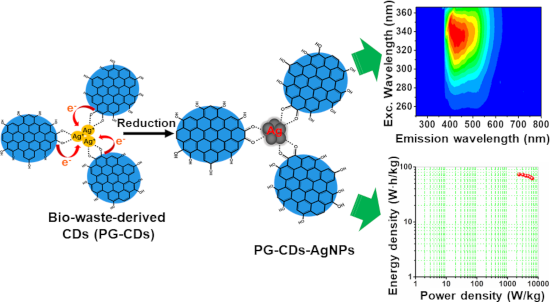
- discharge time. Electrochemical analysis of the asymmetric supercapacitor device in a 1 M TEABF4/DMSO organic electrolyte Electrochemical evaluations attributed that in the three-electrode configuration, the PG-CDs-AgNPs electrode possessed superior electrochemical activity. Thus, utilizing carbon black (CB
- . Formation and stabilization of PG-CDs-AgNPs. TEM images (a–c) of PG-CDs-AgNPs; (d) HRTEM image of PG-CDs-AgNPs, (e) average particle size distribution histogram, and (f) SEAD patterns PG-CDs-AgNPs. Electrochemical analysis of PG-CDs-AgNPs in 1 M aq. KCl using a three-electrode set-up: (a) CV plots of PG-CDs


Characterization of ZnO nanoparticles synthesized using probiotic Lactiplantibacillus plantarum GP258
Beilstein J. Nanotechnol. 2025, 16, 78–89, doi:10.3762/bjnano.16.8
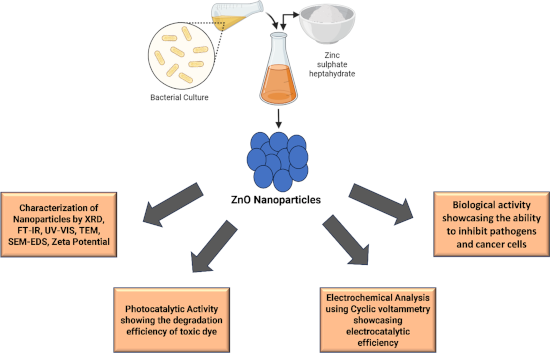
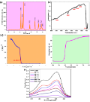
- characterization using UV–vis spectroscopy, Fourier-transform infrared spectroscopy, X-ray diffraction measurements, energy-dispersive X-ray spectroscopy, scanning and transmission electron microscopy, photocatalytic studies, electrochemical analysis, and determination of antibacterial and anticancer activity. The
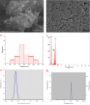
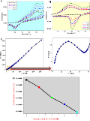
- colloidal system. Our biosynthesized nanoparticles showed a zeta potential of −60 mV. It is considered that a NP colloid with a zeta potential of more than ±30 mV shows good stability against aggregation. The zeta average size was found to be 99 nm (Figure 4e,f). Electrochemical analysis Cyclic voltammetry



Simultaneous electrochemical determination of uric acid and hypoxanthine at a TiO2/graphene quantum dot-modified electrode
Beilstein J. Nanotechnol. 2024, 15, 719–732, doi:10.3762/bjnano.15.60
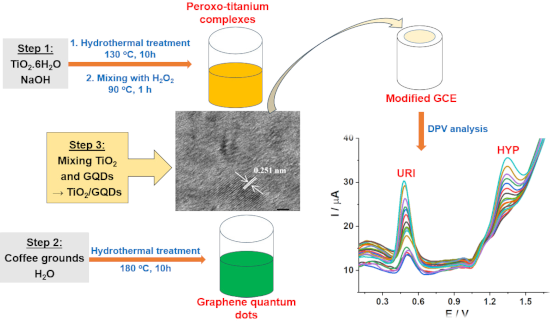
- electrodes used in electrochemical analysis. To the best of our knowledge, there are only few reports on TiO2/GQDs for electrochemical analysis. In the present work, TiO2/GQDs were prepared from coffee grounds and peroxo titanium complexes by a hydrothermal process. The simultaneous determination of URI and


Influence of conductive carbon and MnCo2O4 on morphological and electrical properties of hydrogels for electrochemical energy conversion
Beilstein J. Nanotechnol. 2024, 15, 57–70, doi:10.3762/bjnano.15.6
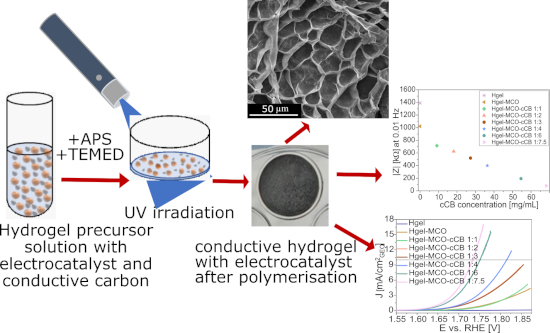
- 0.01 Hz – 10 kHz and at an amplitude of 10 mV. The data was analysed by the ZView software. Electrode preparation and electrochemical measurements For the electrochemical analysis, 5 µL of the hydrogel precursor solution was dropped on a rotating glassy carbon (GC) electrode with a working area of


Rapid and sensitive detection of box turtles using an electrochemical DNA biosensor based on a gold/graphene nanocomposite
Beilstein J. Nanotechnol. 2022, 13, 1458–1472, doi:10.3762/bjnano.13.120
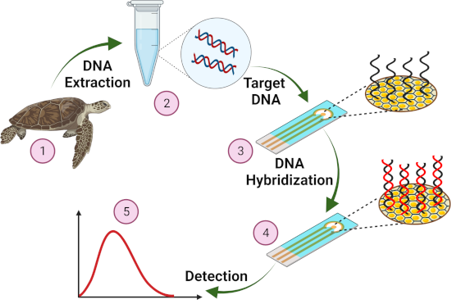
- surfaces were 31.55, 26.36, and 26.21 mA, respectively. This finding proves that the AuNPs/Gr nanocomposite is suitable for electrochemical analysis and enhances the electrocatalytic activity by facilitating electron transfer in the redox process [54]. Bare SPCE and modified SPCE surfaces were examined



LED-light-activated photocatalytic performance of metal-free carbon-modified hexagonal boron nitride towards degradation of methylene blue and phenol
Beilstein J. Nanotechnol. 2022, 13, 1380–1392, doi:10.3762/bjnano.13.114
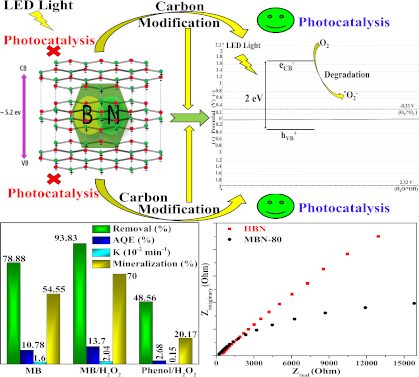
- reflectance for the specified materials, respectively. It was observed that the MBN had an enhanced LHE (90%) in comparison to that of HBN with zero activity in the visible range, 85% (MBN-50), and 70% (MBN-25). Electrochemical analysis The EIS analysis provides further evidence on the enhanced performance of



A nonenzymatic reduced graphene oxide-based nanosensor for parathion
Beilstein J. Nanotechnol. 2022, 13, 730–744, doi:10.3762/bjnano.13.65
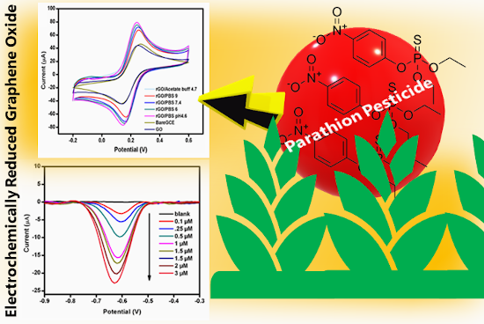
- filtration. Boiled rice (20 g) was also smashed with 20 mL of 50% ethanol. All the samples were stored at 4 °C after filtration (pore size = 0.45 micron) to remove all the solid impurities. Actual samples were spiked with different concentrations of PT during electrochemical analysis. Each concentration of


Atomic layer deposited films of Al2O3 on fluorine-doped tin oxide electrodes: stability and barrier properties
Beilstein J. Nanotechnol. 2021, 12, 24–34, doi:10.3762/bjnano.12.2
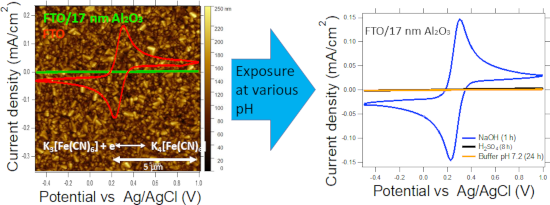
- compact. The AFM line analysis (Figure 5b) shows a height difference of 12 nm between the area exposed for 1 h and the unexposed area. The electrochemical analysis of blocking behaviour showed that Al2O3 films were completely dissolved after 1 h of exposure. Therefore, the effective thickness of the film


High-performance asymmetric supercapacitor made of NiMoO4 nanorods@Co3O4 on a cellulose-based carbon aerogel
Beilstein J. Nanotechnol. 2020, 11, 240–251, doi:10.3762/bjnano.11.18
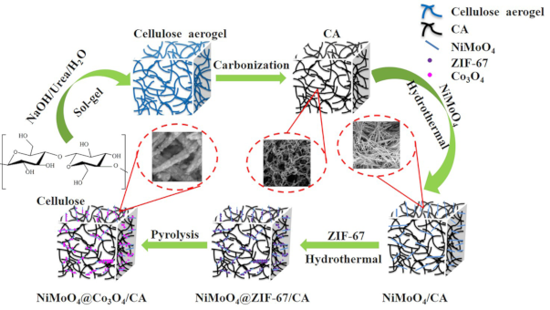
- of the NiMoO4@Co3O4/CA electrode in a potential supercapacitor. The synthesized samples were used as working electrodes for electrochemical analysis. The electrochemical experiments were conducted by using a three-electrode testing system in a 2.0 M KOH solution. The reference electrode and the




Flexible freestanding MoS2-based composite paper for energy conversion and storage
Beilstein J. Nanotechnol. 2019, 10, 1488–1496, doi:10.3762/bjnano.10.147
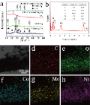
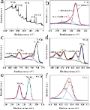
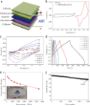
- MoS2-based composite paper obtained by chronoamperometry in 1M KCl solution using different current densities. Electrochemical analysis of the freestanding MoS2-based composite paper. (a) CV curves at a scan rate of 0.1 V·s−1, (b) discharge/charge voltage profiles at 0.2 A·g−1, (c) reversible


A porous 3D-RGO@MWCNT hybrid material as Li–S battery cathode
Beilstein J. Nanotechnol. 2019, 10, 514–521, doi:10.3762/bjnano.10.52
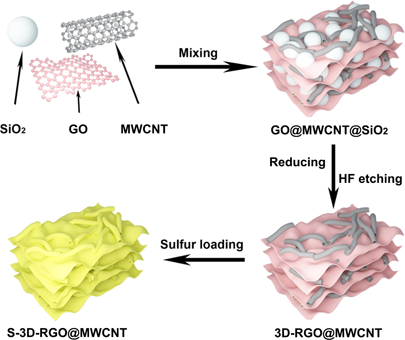
- discussed later in the electrochemical analysis. Figure 4a presents the XRD patterns for pure S, 3D-RGO@MWCNT and the S-3D-RGO@MWCNT composite. The XRD pattern of 3D-RGO@MWCNT exhibits two broad characteristic peaks of RGO at around 22° and 43°. Moreover, a diffraction peak around 26° for 3D-RGO@MWCNT



Nitrogen-doped carbon nanotubes coated with zinc oxide nanoparticles as sulfur encapsulator for high-performance lithium/sulfur batteries
Beilstein J. Nanotechnol. 2018, 9, 1677–1685, doi:10.3762/bjnano.9.159
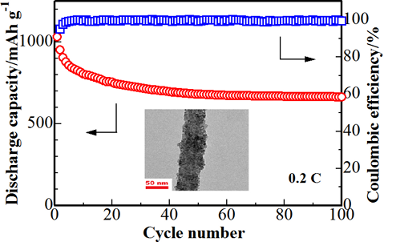
- composite S/ZnO@NCNT cathode exhibiting stable performance and its structural and electrochemical analysis and evaluation. Results and Discussion Figure 1 shows the XRD patterns of sulfur, ZnO@NCNT and S/ZnO@NCNT composite. It can be seen that S is successfully incorporated into the composite. The ZnO


Colloidal solution of silver nanoparticles for label-free colorimetric sensing of ammonia in aqueous solutions
Beilstein J. Nanotechnol. 2018, 9, 499–507, doi:10.3762/bjnano.9.48
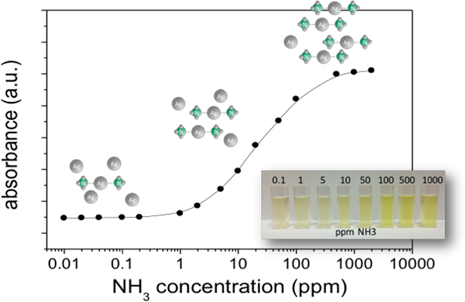
- fluid can be efficiently solved by developing methods for the detection of chemical species in the fluid itself. This approach has several advantages, including minimal fluid management and therefore greater reliability of the result. There are many analytical methods to detect ammonia. Electrochemical
- analysis [8], gas chromatography [9], immunoassays [10], thin-layer chromatography [11], high-performance liquid chromatography (HPLC) [12] are the main methods used so far for a reliable determination of NH3 levels. However, the above-mentioned techniques have difficulties and disadvantages, such as the



Facile synthesis of ZnFe2O4 photocatalysts for decolourization of organic dyes under solar irradiation
Beilstein J. Nanotechnol. 2018, 9, 436–446, doi:10.3762/bjnano.9.42
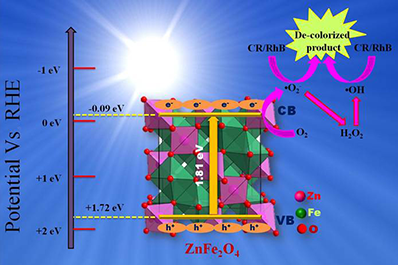
- microstructure of the prepared catalysts were investigated by a TEM-JEOL-2010 200 kV instrument. The electrochemical analysis was carried out using an Ivium potentiostat. Photoelectrochemical (PEC) measurements were performed in a Pyrex electrochemical set up, which includes ZFO samples (deposited on FTO) as


Characterization of 10,12-pentacosadiynoic acid Langmuir–Blodgett monolayers and their use in metal–insulator–metal tunnel devices
Beilstein J. Nanotechnol. 2014, 5, 2240–2247, doi:10.3762/bjnano.5.233
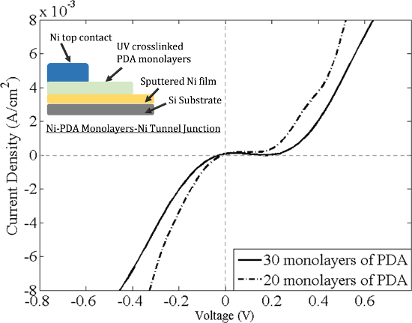
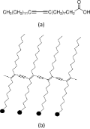
- , indium tin oxide (ITO) glass, quartz and nickel substrates for optical spectroscopy, cyclic voltammetry and electrical measurements [12][13][14][15]. The optical and electrochemical properties of the films were investigated using FTIR and cyclic voltammetric studies, respectively. The electrochemical
- analysis of PDA has proved useful in understanding the chemical activity, such as the oxidation–reduction reactions, as well as their reversibility. Cyclic voltammetry was performed on PDA films deposited onto ITO-coated glass substrates in order to gain qualitative information about the electrochemical


Nano-rings with a handle – Synthesis of substituted cycloparaphenylenes
Beilstein J. Nanotechnol. 2014, 5, 1320–1333, doi:10.3762/bjnano.5.145
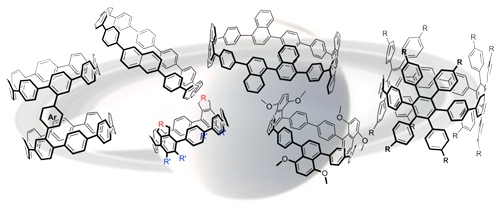
- and coworkers also reported the synthesis of a [4]cyclo-2,7-pyrenylene ([4]CPY) by using their method with a square-like tetra-Pt-complex [53]. DFT-calculations as well as electrochemical analysis revealed a strong resemblance with [8]CPP. During the evolution of larger π-extended nanobelts, Itami


Electron-beam patterned self-assembled monolayers as templates for Cu electrodeposition and lift-off
Beilstein J. Nanotechnol. 2012, 3, 101–113, doi:10.3762/bjnano.3.11
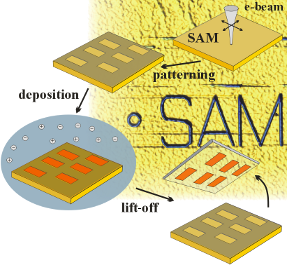
- ; lithography; metallic nanostructures; self-assembled monolayers; thiols; Introduction Covering the range from tens of micrometers down to nanometers, the scope of applications of metal structures in electronics [1][2], sensing [3][4][5][6][7], electrochemical analysis [8], optics and imaging [9][10][11][12