Search results
Search for "light absorption" in Full Text gives 168 result(s) in Beilstein Journal of Nanotechnology.
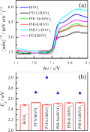
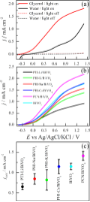
Glycerol photoelectrochemical oxidation reaction at carbon nitrides/BiVO4 materials
Beilstein J. Nanotechnol. 2026, 17, 806–817, doi:10.3762/bjnano.17.57
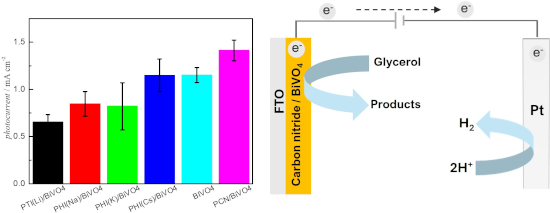
- lattice. Meanwhile, PTI consists of triazine units, forming a rigid and highly stable framework. This structural arrangement significantly improves charge mobility and light absorption, both of which are critical for catalytic activity [15]. Additionally, PHI and PTI possess an intrinsic ionic nature




Environmental applications of silver nanoparticles: state-of-the-art review and emerging trends
Beilstein J. Nanotechnol. 2026, 17, 697–736, doi:10.3762/bjnano.17.49
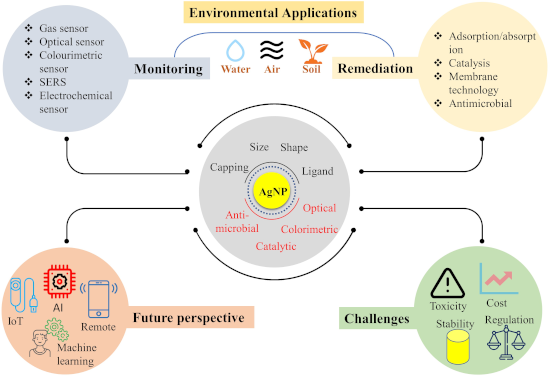
- mechanism includes strong light absorption, a lower bandgap energy, and the generation of UV-induced electron–hole pairs [118]. The role of persulfate-conjugated Ag+ in removing the carboxylic PFAS perfluorooctanoic acid was demonstrated through Fenton oxidation at 20 °C, where fluorine was released along


Decontamination from water pollutants and pathogens by electrospun nanofibers doped with heavy-atom-free borafluorene-BODIPY photosensitizers
Beilstein J. Nanotechnol. 2026, 17, 668–682, doi:10.3762/bjnano.17.46
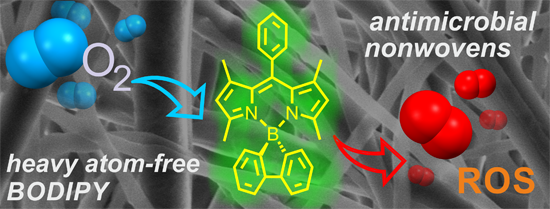
- -indacene and its derivatives) [7][8][9][10][11][12][13] have attracted considerable interest due to their advantageous properties, including strong light absorption, facile synthesis, and high structural tunability [14][15][16]. Yet, the main design strategy for photosensitizing BODIPYs is to incorporate



Cellulose as a photocatalyst support material: extraction, structural features, and environmental applications
Beilstein J. Nanotechnol. 2026, 17, 635–652, doi:10.3762/bjnano.17.44
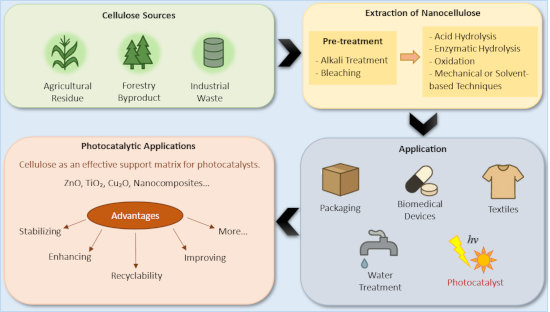
- enhancing photocatalytic performance by promoting charge separation, supporting surface functionalization, and improving light absorption, while one of its most valuable contributions lies in reducing the recombination of photogenerated electron–hole pairs. Its large surface area further helps stabilize
- significantly reduces its effectiveness under visible light, which represents nearly 45% of the solar spectrum. To address these challenges, researchers have developed a variety of modification strategies and hybrid approaches aimed at enhancing the visible light absorption of TiO2 and suppressing electron–hole


Two-step laser synthesis of Ag@TiO2 nanomaterials for the photocatalytic degradation of rhodamine B
Beilstein J. Nanotechnol. 2026, 17, 622–634, doi:10.3762/bjnano.17.43
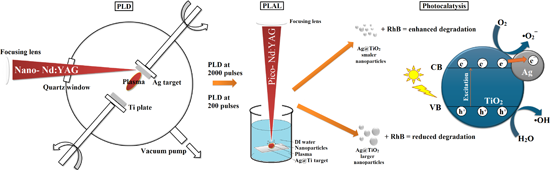
- resonance effects and facilitates the formation of Schottky barriers at the metal–semiconductor interface, both of which contribute to an extended light absorption range and enhanced charge carrier separation. The improved activity is primarily attributed to the narrowing of TiO2’s effective bandgap and the
- , extending light absorption toward the visible region [12] and enabling efficient activity under visible light. In sum, laser-synthesized Ag@TiO2 nanoparticles uniquely combine structural purity and optical enhancement, positioning them as superior candidates for solar-assisted photocatalytic applications
- photon energy, Eg is the bandgap energy, A is a constant, and n corresponds to the nature of the transition (i.e., direct or indirect) [23]. A decrease in bandgap energy results in a small redshift in light absorption, as presented in Figure 7b. This resulted in a reduction in the bandgap energy for all


Recent progress in enhancing built-in electric fields of perovskite solar cells via junction engineering
Beilstein J. Nanotechnol. 2026, 17, 602–621, doi:10.3762/bjnano.17.42
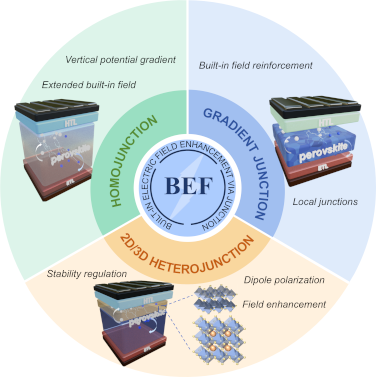
- , establish or extend the BEF via interfacial defect passivation and energy-level cascading, and, on the other hand, retain the high carrier mobility and strong light absorption of the 3D bulk, which has made this approach a research focus in recent years [59][60]. However, the effectiveness of this strategy



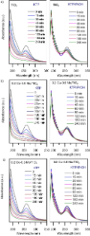
Synthesis of Cu–Mo/TiO2 and Co–Mo/TiO2 photocatalysts for the efficient degradation of organic pollutants in water
Beilstein J. Nanotechnol. 2026, 17, 559–570, doi:10.3762/bjnano.17.37
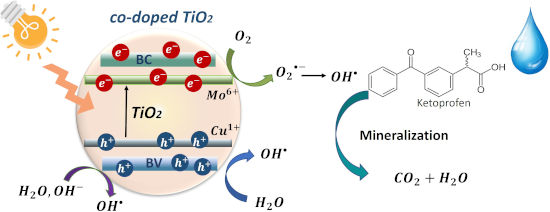
- the optical bandgap, broaden the light absorption range, and enhance the quantum efficiency [4]. However, the partially occupied impurity states generated can act as recombination centers for photoexcited carriers, leading to band-to-band recombination [3]. To prevent charge recombination effects, the
- into the semiconductor matrix. The incorporation of co-dopants results in the formation of heterostructures with different electronic structures compared to the TiO2 structure, which promotes charge separation and visible light absorption [6]. The incorporation of two types of cations into the TiO2
- can improve light absorption and photocatalytic activity of the material through the generation of oxygen vacancies, which act as electron traps [12]. The Mo6+ ion has a radius similar to that of Ti4+; thus, it is ideal for introduction into the TiO2 lattice without causing significant disturbances



Biomimetic nanoparticles in cancer photodynamic therapy: a review of targeted delivery systems and therapeutic outcomes
Beilstein J. Nanotechnol. 2026, 17, 396–422, doi:10.3762/bjnano.17.27


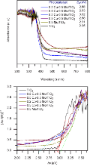
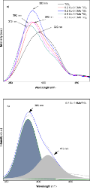
Structure-dependent thermochromism of PAZO thin films: theory and experiment
Beilstein J. Nanotechnol. 2026, 17, 186–199, doi:10.3762/bjnano.17.12
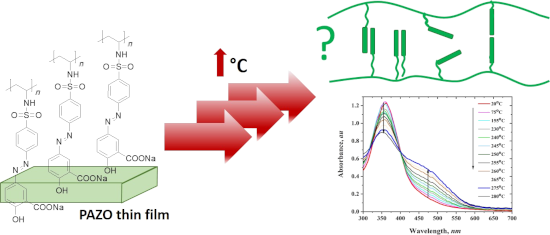
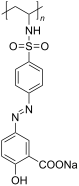
- thickness, and thermal treatment conditions. The observed changes in optical properties suggest that this response is governed by temperature-induced modulation of molecular ordering and aggregation state, which in turn alters the electronic transitions responsible for light absorption. Theoretical


From shield to spear: Charge-reversible nanocarriers in overcoming cancer therapy barriers
Beilstein J. Nanotechnol. 2026, 17, 159–175, doi:10.3762/bjnano.17.10
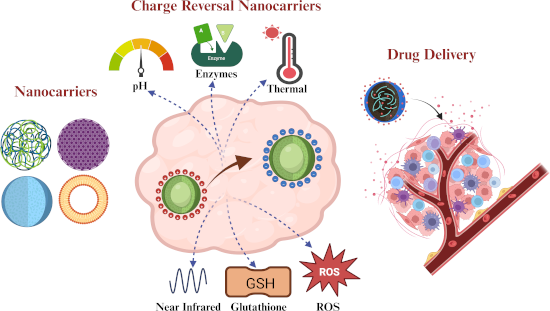
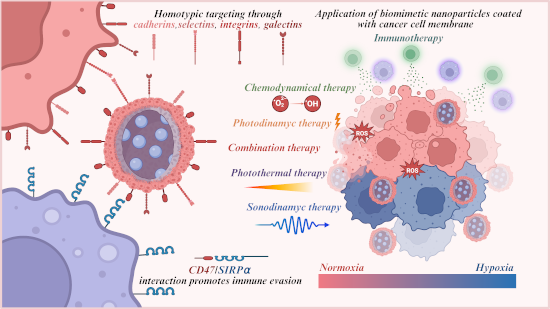
- tumour photodynamic therapy. The study highlights the excellent light absorption and ROS generation capacity of the material, allowing targeted tumour cell damage while sparing healthy tissues [56]. Similarly, a study reports thermo-responsive gold nanorod vesicles (USGRV-17-AAG) integrate NIR-II


Chiral plasmonic nanostructures fabricated with circularly polarized light
Beilstein J. Nanotechnol. 2025, 16, 2245–2264, doi:10.3762/bjnano.16.154
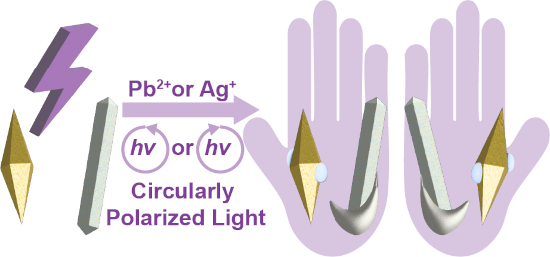
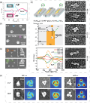
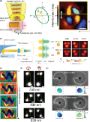
- lengths are usually required to obtain reliable experimental results. These challenges can be addressed using chiral plasmonic nanostructures (cPNSs). cPNSs enhance the intensity of the electromagnetic near field of circularly polarized light (CPL), which accelerates light absorption by molecules
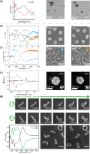
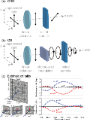
- solutions by sonicating the substrates in an aqueous solution of surfactant. 2.4 Plasmon-mediated polymer motions and polymerization using CPL The enhanced EM field under CPL of achiral PNSs can result in a spatially dissymmetric distribution of light absorption by chromophores. As depicted in Figure 5a





Optical bio/chemical sensors for vitamin B12 analysis in food and pharmaceuticals: state of the art, challenges, and future outlooks
Beilstein J. Nanotechnol. 2025, 16, 2207–2244, doi:10.3762/bjnano.16.153
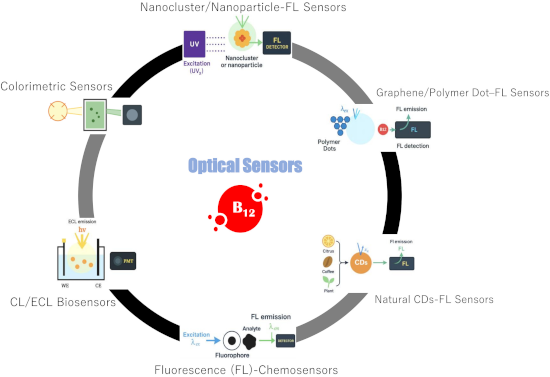
- AuNP suspensions is substantially influenced by their particle size and dispersion speed. 10–20 nm AuNPs with a narrow size distribution tend to absorb light from the blue-green spectrum and reflect red light. In contrast, their aggregation leads to a light absorption shift to longer wavelengths
- charge densities), (iii) SPPs produce a decaying electric field that extends into the surrounding medium; (iv) the evanescent field is highly sensitive to changes in the medium’s refractive index; and (v) during resonance, incident light absorption at a specific angle or wavelength results in a signal


Microplastic pollution in Himalayan lakes: assessment, risks, and sustainable remediation strategies
Beilstein J. Nanotechnol. 2025, 16, 2144–2167, doi:10.3762/bjnano.16.148
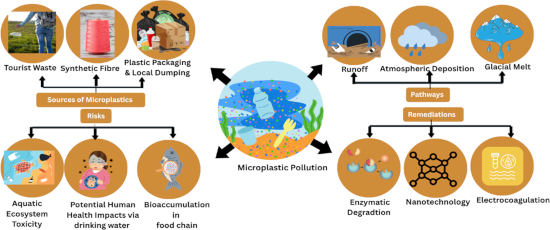
- simultaneously utilizing the abundant UV radiation [75]. It has been demonstrated that the light absorption of ZnO and TiO2 is improved by defect engineering, such as the introduction of oxygen vacancies. According to Kim and Youn, these defects trap light energy, which lowers charge carrier recombination rates


Electrical, photocatalytic, and sensory properties of graphene oxide and polyimide implanted with low- and medium-energy silver ions
Beilstein J. Nanotechnol. 2025, 16, 1794–1811, doi:10.3762/bjnano.16.123
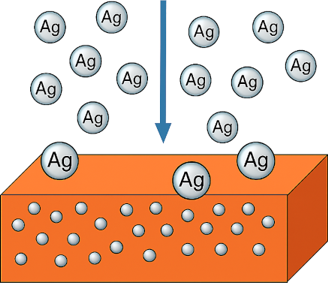
- spectral range, enhancing light absorption and enabling the utilization of a broader portion of the solar spectrum [19]. These combined effects result in a significantly higher photocatalytic efficiency of implanted samples compared to their non-implanted samples, both in terms of reaction rate and quantum


Photocatalytic degradation of ofloxacin in water assisted by TiO2 nanowires on carbon cloth: contributions of H2O2 addition and substrate absorbability
Beilstein J. Nanotechnol. 2025, 16, 1567–1579, doi:10.3762/bjnano.16.111
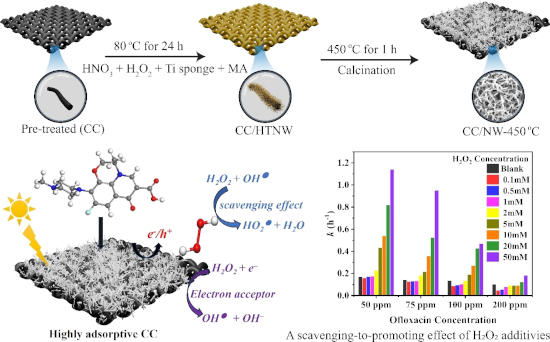
- on porous materials, such as carbon-based adsorbents. These innovations help to slow down electron–hole recombination, broaden light absorption, and enhance surface adsorption sites [11]. Cao et al. synthesized TiO2 nanowires on reduced graphene oxide (rGO) through a solvothermal method, which


Laser processing in liquids: insights into nanocolloid generation and thin film integration for energy, photonic, and sensing applications
Beilstein J. Nanotechnol. 2025, 16, 1428–1498, doi:10.3762/bjnano.16.104
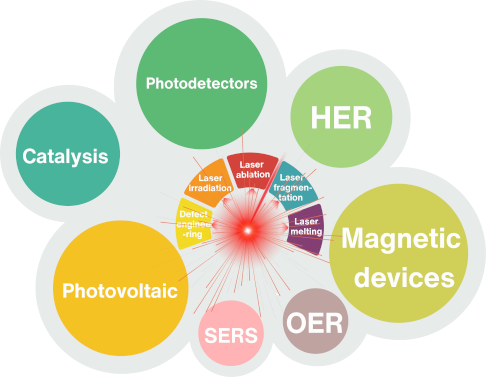
- surrounding solvent, owing to the efficient light absorption capability of the NPs and their limited thermal transfer to the solvent. [35][63][72][73][74]. LIL also leads to phase transitions and morphological changes (Figure 7a–d) depending on the laser fluence and irradiation time [42]. Schematic






Enhancing the therapeutical potential of metalloantibiotics using nano-based delivery systems
Beilstein J. Nanotechnol. 2025, 16, 1350–1366, doi:10.3762/bjnano.16.98
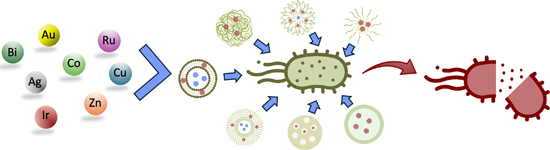
- higher light absorption, and greater photoemission output, resulting in enhanced bactericidal activity against S. aureus (Figure 7). The Ir-complex liposomes interact efficiently with 450 nm LED light, leading to ROS generation and subsequent bacterial inactivation at the site of an infected chronic skin


Enhancing the photoelectrochemical performance of BiOI-derived BiVO4 films by controlled-intensity current electrodeposition
Beilstein J. Nanotechnol. 2025, 16, 1289–1301, doi:10.3762/bjnano.16.94
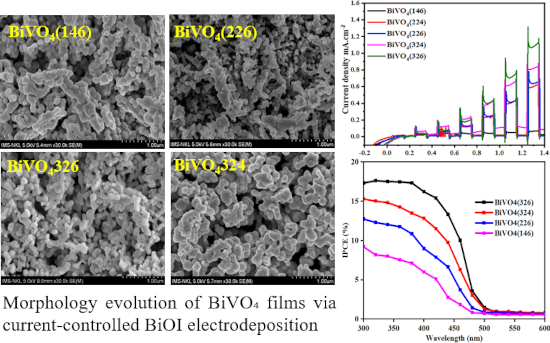
- limited by material challenges, including insufficient light absorption, high electron–hole recombination rates, and poor stability under operating conditions [5][6]. Among various semiconductor materials, bismuth vanadate (BiVO4) has attracted considerable interest due to its strong visible light
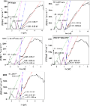
- suggests an optimal concentration of oxygen vacancies that broadens light absorption while avoiding excessive recombination of the charge carriers. In contrast, BiVO4(146) has a clear absorption edge and very little tailing, indicating that it has fewer defects but does not absorb light well beyond 520 nm
- . These findings match other studies that connect oxygen vacancies to the spread of light absorption and smaller optical bandgaps in BiVO4 [26]. Vibrational properties (Raman) The Raman spectra (Figure 4) corroborated the XRD findings, displaying characteristic peaks of monoclinic BiVO4 at 219, 329, 370



Investigation of the solubility of protoporphyrin IX in aqueous and hydroalcoholic solvent systems
Beilstein J. Nanotechnol. 2025, 16, 1209–1215, doi:10.3762/bjnano.16.89
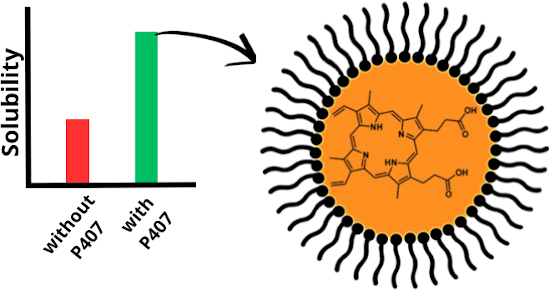
- its bioavailability and light absorption capacity will be increased [5]. To overcome this problem, the development of drug delivery systems, such as poloxamer-based ones, has played an important role on the delivery of dyes for PDT [8][9][10]. Poloxamers are triblock copolymers with thermosensitive


Electronic and optical properties of chloropicrin adsorbed ZnS nanotubes: first principle analysis
Beilstein J. Nanotechnol. 2025, 16, 1184–1196, doi:10.3762/bjnano.16.87
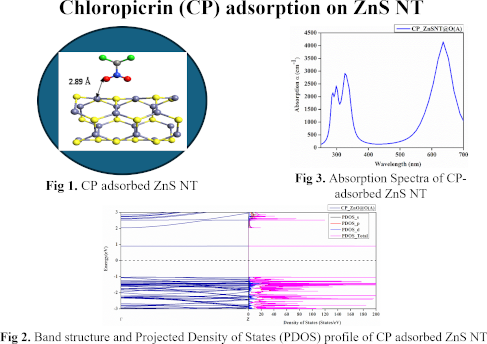
- permittivity, n is the refractive index of the materials, and c is the speed of light. The fundamental part of the optical conductivity is related to light absorption, while the imaginary part is associated with the dispersion. Results and Discussion Structural analysis The optimized geometry of the armchair
- pronounced bandgap narrowing and enhanced visible light absorption. This anisotropic behavior is consistent with theoretical and experimental studies on nanotube systems, where adsorption-induced optical changes are highly dependent on molecular orientation and the local electronic environment [74]. The
- ) and σ2(ω), reflecting bandgap narrowing. Orientation A shows the most significant redshift (σ1(ω)) peak at ≈630 nm, attributed to mid-gap state formation due to strong charge transfer, enhancing visible light absorption for sensing applications. Orientation B exhibits a smaller redshift (≈410 nm


Towards a quantitative theory for transmission X-ray microscopy
Beilstein J. Nanotechnol. 2025, 16, 1113–1128, doi:10.3762/bjnano.16.82
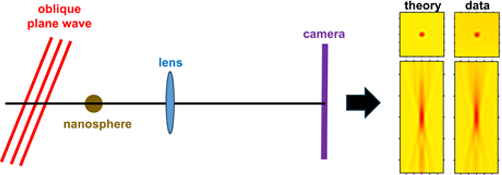
- that the amount of light absorption at any point in the nanosphere is convolved with the point-spread function h(r, z) of the objective. As in both our pc-Mie model and the pc-PWE model, the objective zone plate is also approximated by a lens. Given the radial symmetry of the nanosphere, the inc-BL



Influence of ion beam current on the structural, optical, and mechanical properties of TiO2 coatings: ion beam-assisted vs conventional electron beam evaporation
Beilstein J. Nanotechnol. 2025, 16, 1097–1112, doi:10.3762/bjnano.16.81
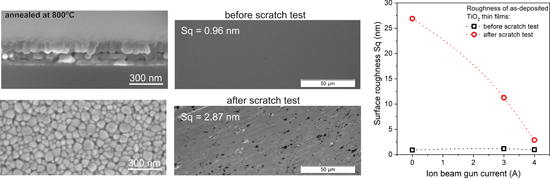
- thin film coatings (Figure 4) and was proven in Figure 6a. The low value of the imaginary part of the refractive index, also known as extinction coefficient (Figure 6b), ranging from 2.12·10−3 to 4.64·10−3, indicates low light absorption in the studied thin films [58]. According to [6], TiO2 films
- in an increase in the refractive index. In addition, the low values of the extinction coefficient (from 2.12·10−3 to 4.64·10−3) indicated minimal light absorption in the tested films. The results of the nanoindentation studies showed that the hardness of thin films deposited by the conventional EBE




Ar+ implantation-induced tailoring of RF-sputtered ZnO films: structural, morphological, and optical properties
Beilstein J. Nanotechnol. 2025, 16, 872–886, doi:10.3762/bjnano.16.66
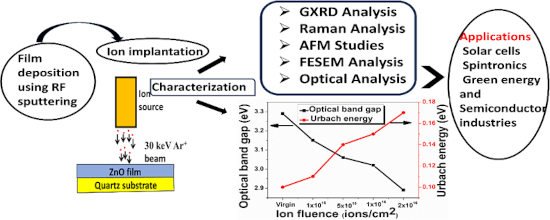
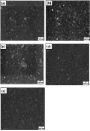
- in implanted films are ascribed to oxygen vacancies and zinc interstitials, respectively. The film implanted at the highest fluence exhibits the smoothest surface and lowest grain size, which boosts light absorption and lower reflection. The optical bandgap values of ZnO films declined from 3.29 to






Supramolecular hydration structure of graphene-based hydrogels: density functional theory, green chemistry and interface application
Beilstein J. Nanotechnol. 2025, 16, 806–822, doi:10.3762/bjnano.16.61
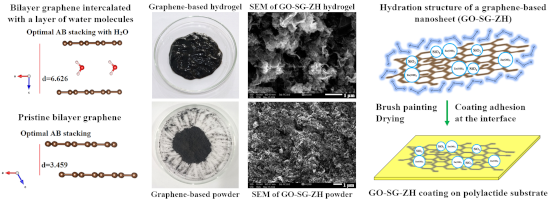
- of GO-SG-ZH hydrogel present light absorption in the ultraviolet range (200–400 nm) that was proportional to the colloidal concentrations (50, 40, 30, and 20 ppm). Small absorption peaks at 340 and 360 nm correspond to nanosilica and zinc hydroxide nanoparticles, respectively [21][43]. In addition


Morphology and properties of pyrite nanoparticles obtained by pulsed laser ablation in liquid and thin films for photodetection
Beilstein J. Nanotechnol. 2025, 16, 785–805, doi:10.3762/bjnano.16.60
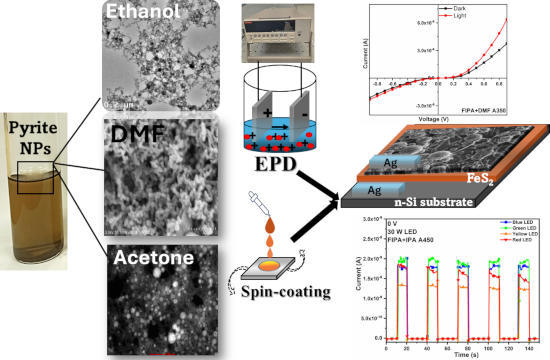
- a narrow bandgap (0.95 eV), high light absorption coefficient (≈105 cm−1), excellent properties in photoelectric conversion, and has enormous potential as an efficient photodetector system and in lithium batteries [1][2]. The prevalent forms of FeS2 are cubic-system pyrite and the orthorhombic