


Search results
Search for "magnetic properties" in Full Text gives 245 result(s) in Beilstein Journal of Nanotechnology. Showing first 200.
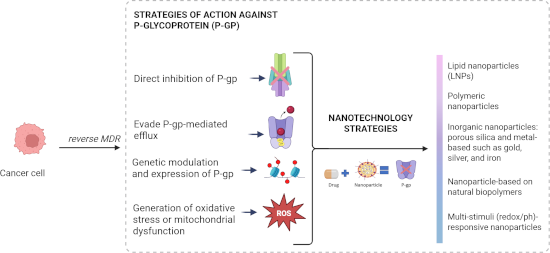
Nanocarrier strategies to overcome P-glycoprotein-mediated drug resistance in cancer therapy
Beilstein J. Nanotechnol. 2026, 17, 882–921, doi:10.3762/bjnano.17.64


Superconducting artificial neural networks and quantum circuits
Beilstein J. Nanotechnol. 2026, 17, 744–747, doi:10.3762/bjnano.17.51

- predict unique magnetic properties of thin cobalt-based layers widely used in hybrid superconductor–ferromagnet structures for superconducting spintronics [18][19]. New elements of quantum circuits based on transmon “superconducting atoms” demonstrate rapid qubit control in real superconducting systems
Advances in nanotechnology applied to natural products
Beilstein J. Nanotechnol. 2026, 17, 555–558, doi:10.3762/bjnano.17.36
- nanomaterials, particularly metallic nanoparticles. Metallic nanoparticles, typically defined as structures with diameters between 1 and 100 nm, exhibit distinctive electrical, optical, and magnetic properties that support a broad range of applications [26]. They can be obtained via green synthesis using
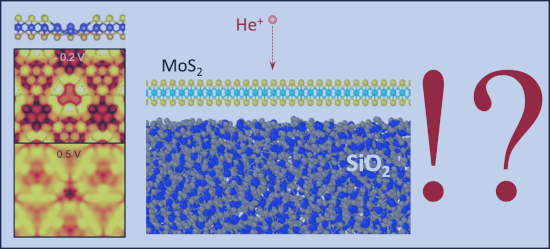
Defects and defect-mediated engineering of two-dimensional materials: challenges and open questions
Beilstein J. Nanotechnol. 2026, 17, 454–488, doi:10.3762/bjnano.17.31





Improving magnetic properties of Mn- and Zn-doped core–shell iron oxide nanoparticles by tuning their size
Beilstein J. Nanotechnol. 2025, 16, 2285–2295, doi:10.3762/bjnano.16.157
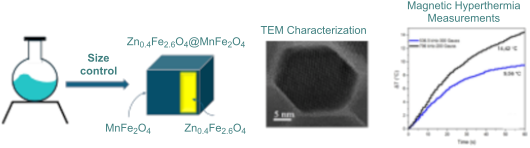
- , we report on the synthesis of polyhedral core–shell SPIONs. Their size was tuned to improve their magnetic properties. Furthermore, by hybridizing into a core–shell inorganic/inorganic structure, the nanoparticles can achieve significantly improved magnetic-to-thermal energy conversion efficiency (at
- Mössbauer analysis, and the magnetic properties were studied to select the ideal size for magnetic hyperthermia application. Keywords: core–shell nanoparticles; magnetic hyperthermia; magnetic properties; Introduction Magnetic nanoparticles have emerged as a versatile class of materials due to their
- unique magnetic properties, small size, and biocompatibility, which enable them to be used in a wide range of biomedical applications. These applications include magnetic resonance imaging, magnetic separation, targeted drug delivery, and hyperthermia [1][2]. Magnetic hyperthermia has been extensively



Current status of using adsorbent nanomaterials for removing microplastics from water supply systems: a mini review
Beilstein J. Nanotechnol. 2025, 16, 1837–1850, doi:10.3762/bjnano.16.127
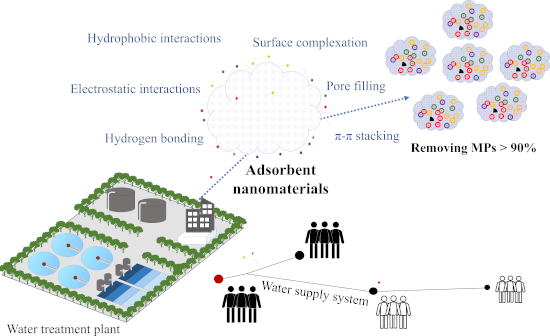
- . Fabricated FeNi12-CNTs-800 samples achieved 100% removal of PVC after 20 min of treatment, with the mechanisms attributed to the hydrophobic surface and magnetic properties of the material [57]. In a water treatment plant, by applying granular activated carbon (GAC), Arenas et al. reached 90% of MP removal


Modeling magnetic properties of cobalt nanofilms used as a component of spin hybrid superconductor–ferromagnetic structures
Beilstein J. Nanotechnol. 2025, 16, 1557–1566, doi:10.3762/bjnano.16.110
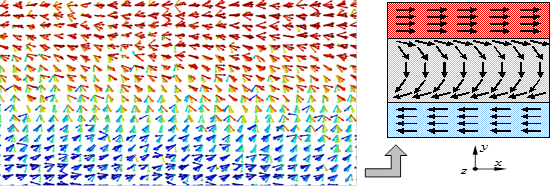
- magnetic heads for recording and reading information, memory cells, and other devices [11] which utilize magnetic properties of materials. Magnetic properties of nanofilms [12][13], in particular cobalt nanofilms, represent an important subject of research in both theoretical and practical fields of
- materials science. These properties depend not only on the composition, but also on factors such as film thickness, which in turn affects their application in microelectronics, spintronics, and other high-tech fields. The aim of this article is to model the magnetic properties of cobalt nanofilms of
- different thicknesses and to reveal the main interdependence mechanisms of dimensional, structural, and magnetic subsystems. The proposed modeling methodology and the conducted studies make it possible to analyze the regularities determining the magnetic properties of thin films, which will further make it


Cross-reactivities in conjugation reactions involving iron oxide nanoparticles
Beilstein J. Nanotechnol. 2025, 16, 1504–1521, doi:10.3762/bjnano.16.106
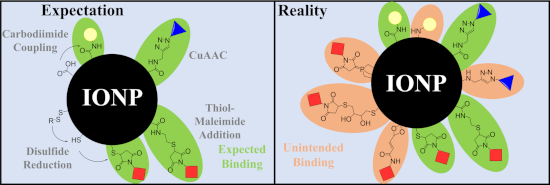
- Michael addition; Introduction Iron oxide nanoparticles (IONPs) have been the subject of an immense body of research in the field of biomedicine, where their magnetic properties are appealing for such applications as MRI contrast agents [1], tumor hyperthermia [2], and magnetic drug delivery [3
- targeting and drug payload delivery. The ability to chemically modify the ligand layer of IONPs, while maintaining their morphology and magnetic properties, is thus paramount to the preparation of functional IONPs. The use of highly selective conjugation reactions such as 1-ethyl-3-(3-dimethylaminopropyl
- advantage of the solution-exposed carboxylate group of 3,4-DHBA to produce IONPs that are amenable to further functionalization using EDC coupling, without sacrificing the small particle size, which is critical for maintaining their magnetic properties [50] and increasing their half-life in the bloodstream





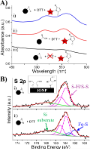


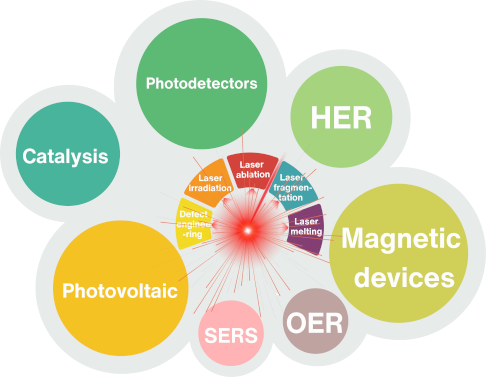
Laser processing in liquids: insights into nanocolloid generation and thin film integration for energy, photonic, and sensing applications
Beilstein J. Nanotechnol. 2025, 16, 1428–1498, doi:10.3762/bjnano.16.104






Structural and magnetic properties of microwave-synthesized reduced graphene oxide/VO2/Fe2O3 nanocomposite
Beilstein J. Nanotechnol. 2025, 16, 921–932, doi:10.3762/bjnano.16.70
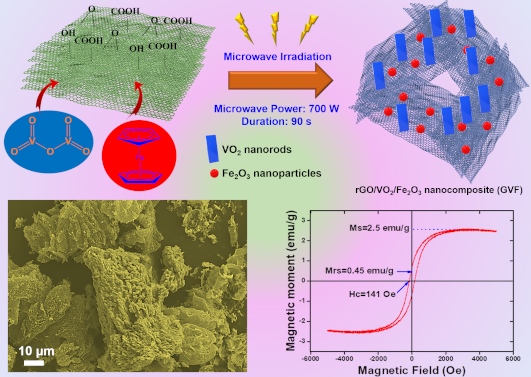
- Fe2O3 nanoparticles and VO2 nanorods on the 2D rGO surface. Notably, the ternary composite displayed good magnetic properties for its potential biomedical applications. Overall, this work explores an efficient and cost-effective synthetic approach for developing graphene-based magnetic nanocomposites
- , the approach was also able to convert V2O5 to form VO2 and synthesize Fe2O3 from ferrocene. The structure and properties of the NC were examined through various characterization techniques. Lastly, the magnetic properties of Fe-containing ternary NCs were also evaluated for their possible biomedical
- F20). Furthermore, the magnetic properties of the NCs were evaluated using a vibrating-sample magnetometer (VSM, LakeShore (8604)). Microwave synthesis of reduced graphene oxide Following a previous report, graphite powder was initially oxidized to form graphite oxide to synthesize rGO through MW



Synthesis and magnetic transitions of rare-earth-free Fe–Mn–Ni–Si-based compositionally complex alloys at bulk and nanoscale
Beilstein J. Nanotechnol. 2025, 16, 823–836, doi:10.3762/bjnano.16.62
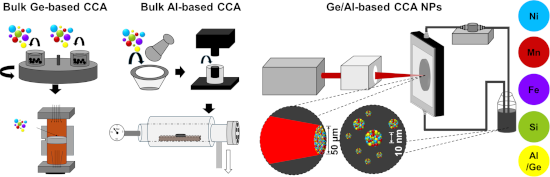
- magnetocaloric refrigeration, magnetic sensors, and actuators, but the reliance on costly, scarce rare-earth materials limits sustainability. Developing affordable, rare-earth-free materials with tunable magnetic properties and scalable miniaturization methods is vital for advancing technology. We present a
- ablation in liquid; rare-earth free; Introduction Magnetic phase transitions are characterized by changes in the material’s magnetic properties in response to varying conditions such as applied magnetic or electric fields, temperature, and/or pressure. In particular, the magnetic phase transition at the
- temperature ranges, such as room-temperature cooling and cryogenic systems [3][4]. The magnetic transition also plays a critical role in the development of temperature-sensitive magnetic sensors and actuators [5][6]. These devices harness the abrupt change in magnetic properties at Tc to detect temperature


Changes of structural, magnetic and spectroscopic properties of microencapsulated iron sucrose nanoparticles in saline
Beilstein J. Nanotechnol. 2025, 16, 762–784, doi:10.3762/bjnano.16.59
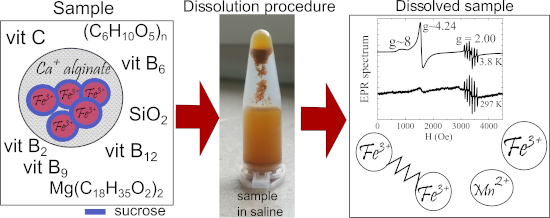
- completely dissolved sample. Keywords: calcium alginate; dissolution; iron oxyhydroxide nanoparticles; magnetic properties; saline; spectroscopy; Introduction Hematinic are substances such as iron, vitamin B12, and folic acid that are essential in the production of blood [1]. Iron deficiency drugs, which
- size of the drug for easier swallowing. Simultaneously, all these compounds due to the iron content should exhibit magnetic properties that may potentially turn out to be interesting. Moreover, since all iron deficiency agents are commercial products and are mass produced, their properties can be
- in [6][7][8][13][15]). Generally, it can be assumed that the iron sucrose core is composed of iron oxyhydroxide (FeO(OH)), and it is very likely that the structure is amorphous rather than crystalline [15]. Regarding the magnetic properties of FeO(OH), it exhibits an antiferromagnetic arrangement





Focused ion and electron beams for synthesis and characterization of nanomaterials
Beilstein J. Nanotechnol. 2025, 16, 613–616, doi:10.3762/bjnano.16.47
- tailored 3D architectures [4]. Focused beams not only allow the characterization of atomic structures but also enable precise local modification of material properties through ion milling and the creation of novel structures with tunable mechanical, electrical, and magnetic properties using gas-assisted

Quantification of lead through rod-shaped silver-doped zinc oxide nanoparticles using an electrochemical approach
Beilstein J. Nanotechnol. 2025, 16, 422–434, doi:10.3762/bjnano.16.33
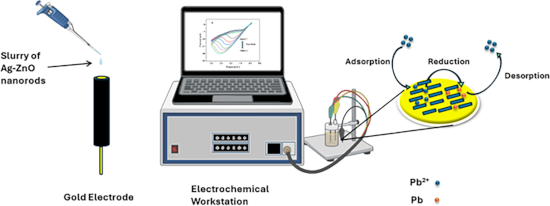
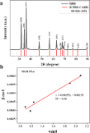
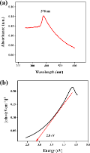
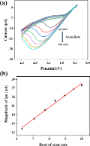
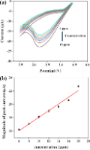
- activity, and semiconductor properties. By doping ZnO nanoparticles with transition metals, we can alter their electrical, optical, and magnetic properties by introducing new electronic states into the band structure. Herein, Ag is added to ZnO nanostructures to improve their optical properties to detect





Theoretical study of the electronic and optical properties of a composite formed by the zeolite NaA and a magnetite cluster
Beilstein J. Nanotechnol. 2025, 16, 44–53, doi:10.3762/bjnano.16.5
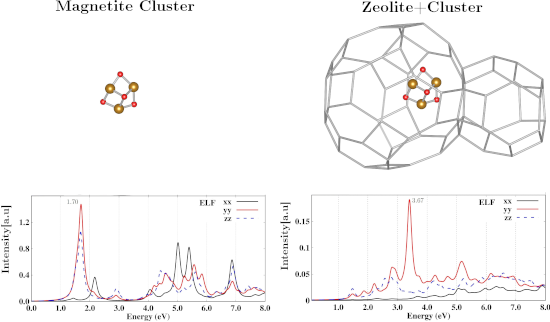
- that the composite exhibits magnetic properties of a half-semiconductor and a strong optical response within the visible and ultraviolet regions of the spectrum. Keywords: magnetic cluster; NaA zeolite; optical properties; Introduction Zeolites are crystalline materials made up of aluminosilicates
- introduction of magnetic nanoparticles into zeolite crystals so that the resulting composite can respond to an external magnetic field [33]. By imparting magnetic properties to such composites, they can be efficiently recovered after capturing contaminants such as heavy metals [34][35][36][37] and dyes [38][39
- ][40] in bodies of water, addressing a pressing environmental concern. Also, iron-modified zeolites have shown variations in both electric and magnetic properties that allow one to generate catalysts based on zeolites [41]. Among these types of composites consisting of zeolites modified with magnetic




Green synthesis of silver nanoparticles derived from algae and their larvicidal properties to control Aedes aegypti
Beilstein J. Nanotechnol. 2024, 15, 1566–1575, doi:10.3762/bjnano.15.123
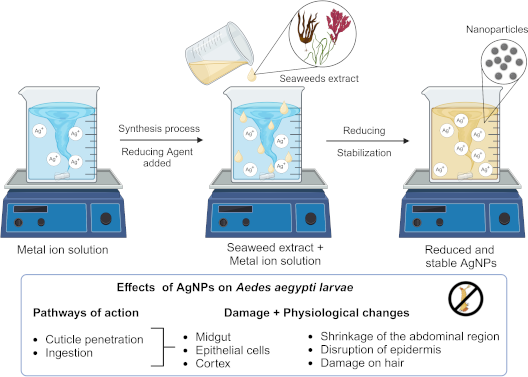
- electrical, optical, and magnetic properties for a wide range of applications [22][23]. They can be synthesized by different procedures based on “top-down” or “bottom-up” approaches [24] (Figure 1). Top-down synthesized silver nanoparticles can be obtained by lithography, attrition, milling, and other


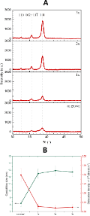
The role of a tantalum interlayer in enhancing the properties of Fe3O4 thin films
Beilstein J. Nanotechnol. 2024, 15, 1253–1259, doi:10.3762/bjnano.15.101

- morphological, structural, and magnetic properties of the deposited samples were characterized with atomic force microscopy, X-ray diffractometry, and vibrating sample magnetometry. The polycrystalline Fe3O4 film grown on MgO/Ta/SiO2/Si(100) presented very interesting morphology and structure characteristics
- for MgO with Ta buffer layer. The microstructural properties are summarized in Table 2. To characterize the effect of microstructure and morphology on the magnetic properties of Fe3O4 thin films, VSM measurements were conducted in an external field from −10 kOe to 10 kOe at room temperature. Figure 3
- samples are summarized in Table 3. Morphology, microstructure, and anisotropy mechanisms significantly impact the magnetic properties of ferrite materials [38]. It is known that antiphase boundaries (APBs) and grain size in Fe3O4 thin films, which are strongly influenced by substrate or buffer layer, can


A review on the structural characterization of nanomaterials for nano-QSAR models
Beilstein J. Nanotechnol. 2024, 15, 854–866, doi:10.3762/bjnano.15.71
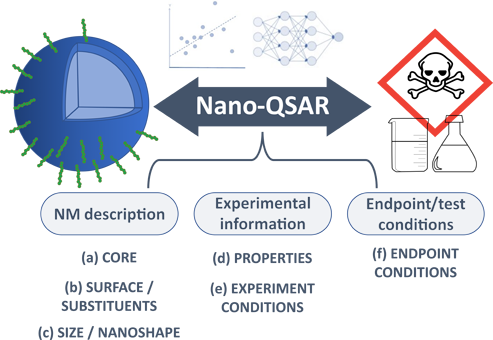
- group the data into categories [60]. Related measures are the isoelectric point, which corresponds to the pH at which a nanoparticle suspension has zero zeta potential [15][17], the surface charge [31][36][63], the conductivity [77], and the electrophoretic mobility [77]. Magnetic properties are also


Electron-induced ligand loss from iron tetracarbonyl methyl acrylate
Beilstein J. Nanotechnol. 2024, 15, 797–807, doi:10.3762/bjnano.15.66
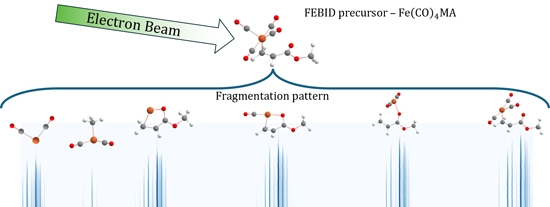
- represents perhaps the “cleanest” approach since it probes the reaction of one precursor molecule with at most one electron, without environmental influences (e.g., precursor–precursor or precursor–substrate effects). The possibility of making iron nanostructures is important mainly because of their magnetic
- properties, which could be used in nanosensing applications [9]. Common FEBID precursors for iron are Fe(CO)5, Fe2(CO)9, Fe3(CO)12, and Fe(C5H5)2. The first one, iron pentacarbonyl, has attracted perhaps the highest amount of attention from the point of view of the elementary reaction with electrons. The



Exploring surface charge dynamics: implications for AFM height measurements in 2D materials
Beilstein J. Nanotechnol. 2024, 15, 767–780, doi:10.3762/bjnano.15.64
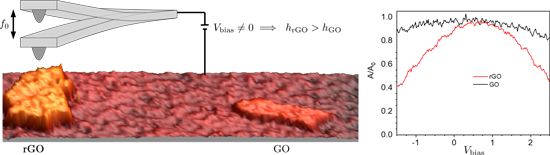
- microscopy (AFM) techniques emerge as ideal tools to investigate them [26][27]. Depending on the operation mode and under controlled environmental conditions, AFM offers the possibility to record morphology along with relevant electronic, mechanical, or magnetic properties with nanoscale resolution. In


Effect of repeating hydrothermal growth processes and rapid thermal annealing on CuO thin film properties
Beilstein J. Nanotechnol. 2024, 15, 743–754, doi:10.3762/bjnano.15.62
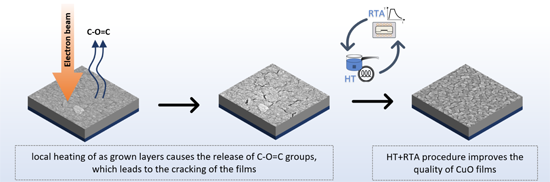
- devices. Keywords: CuO; hydrothermal method; rapid thermal annealing; thin films; Introduction Copper(II) oxide is a p-type semiconductor possessing a narrow bandgap, along with many beneficial electrical, optical, and magnetic properties. Particularly at the nanoscale, these properties set themselves




Radiofrequency enhances drug release from responsive nanoflowers for hepatocellular carcinoma therapy
Beilstein J. Nanotechnol. 2024, 15, 569–579, doi:10.3762/bjnano.15.49
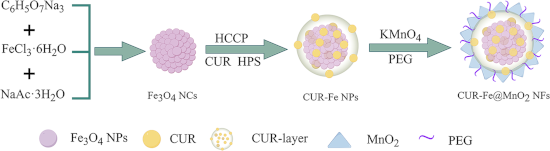
- of a layer on CUR-Fe NPs and CUR-Fe@MnO2 NFs. Furthermore, the three new diffraction peaks at 28.7°, 37.34°, and 64.8° confirmed the presence of MnO2. The magnetic properties of the NFs were verified by magnetic hysteresis loops. Figure 2h shows that Fe3O4 NCs and CUR-Fe@MnO2 NFs were
- Clara, USA). The magnetic properties were evaluated on a Quantum Design PPMS-9T vibrating magnetometer at 300 K in a magnetic field from −3.0 T to 3.0 T (PPMS-9T, Quantum Design, San Diego, USA). Longitudinal (T1) and transversal (T2) relaxation times were measured on a 3.0 T MR scanner (MAGNETOM Skyra


Electron-induced deposition using Fe(CO)4MA and Fe(CO)5 – effect of MA ligand and process conditions
Beilstein J. Nanotechnol. 2024, 15, 500–516, doi:10.3762/bjnano.15.45
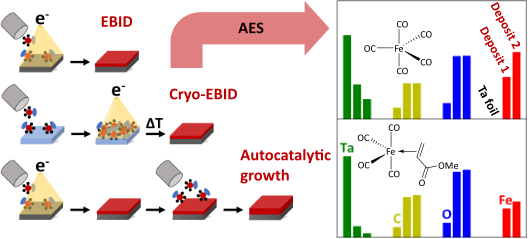
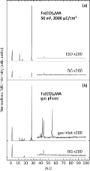
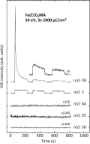
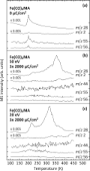
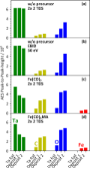
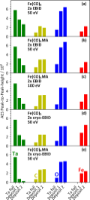
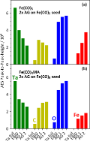
- atom to be deposited is surrounded by suitable ligands. In an ideal case, these ligands are converted to volatile species upon fragmentation of the precursor during electron irradiation and desorb from the surface while the desired element is deposited. Owing to their magnetic properties, iron
- interesting magnetic properties [9][14][15]. However, considering that Fe is by orders of magnitude more abundant than Co, the further development of FEBID processes based on Fe precursors is appealing. Although there were early attempts to use triiron dodecacarbonyl (Fe3(CO)12) or ferrocene (Fe(C5H5)2) for



Photocatalytic degradation of methylene blue under visible light by cobalt ferrite nanoparticles/graphene quantum dots
Beilstein J. Nanotechnol. 2024, 15, 475–489, doi:10.3762/bjnano.15.43
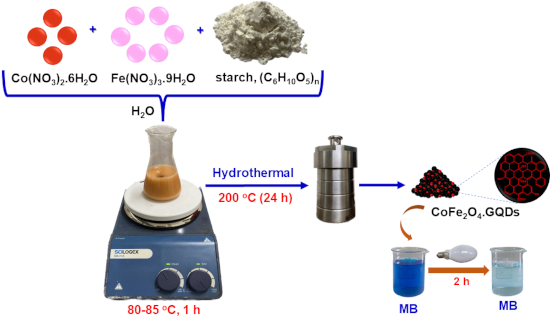
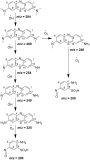
- /GQDs nanoparticles. Magnetic properties, morphology, structure, and fluorescence of the nanocomposites were studied, and the photocatalytic degradation of methylene blue as a dye model and the mechanism of methylene degradation were also addressed. Experimental Materials Cobalt(II) nitrate hexahydrate
- Tristar-3030 system (Micromeritics, USA). The magnetic properties were measured on a Micro Sense vibrating-sample magnetometer (VSM) at room temperature. Scanning electron microscopy (SEM) observations and energy-dispersive X-ray elemental mapping (EDX mapping) were carried out on a Hitachi S-4800 FESEM




Modulated critical currents of spin-transfer torque-induced resistance changes in NiCu/Cu multilayered nanowires
Beilstein J. Nanotechnol. 2024, 15, 360–366, doi:10.3762/bjnano.15.32
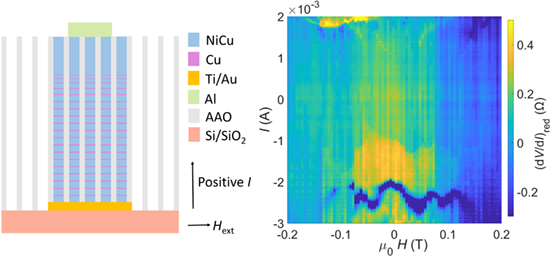
- aluminum oxide (AAO) template-assisted electrodeposition has attracted wide interest because of its low cost as well as high flexibility on tailoring the magnetic properties of magnetic systems and thus STT effects [8][9][10][11][12]. Moreover, it enables a larger number of free layers, whose magnetization





