Search results
Search for "materials science" in Full Text gives 384 result(s) in Beilstein Journal of Nanotechnology. Showing first 200.
Nanoglasses: a trail towards uncharted regions of vitreous materials and their properties?
Beilstein J. Nanotechnol. 2026, 17, 1047–1062, doi:10.3762/bjnano.17.72

- Gerhard Wilde Horst Hahn University of Münster, Institute of Materials Physics, 48149 Münster, Germany Herbert Gleiter International Institute, Liaoning Academy of Materials, Shenyang 110167, P. R. China Department of Materials Science and Engineering, University of Arizona, 1235 James E. Rogers
- at the nanometre-level and even at the atomic scale. Despite these widespread concepts of modification of materials, materials science has traditionally focused on crystalline materials, particularly in the context of microstructure and defect engineering, including the manipulation of defects such


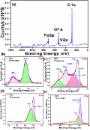
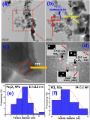
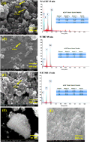
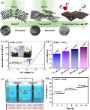
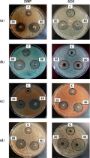
Ultrasonic irradiation in the synthesis of nanohydroxyapatite: a chemically friendly technique for improving hemocompatibility and antibiofilm applications
Beilstein J. Nanotechnol. 2026, 17, 991–1015, doi:10.3762/bjnano.17.68
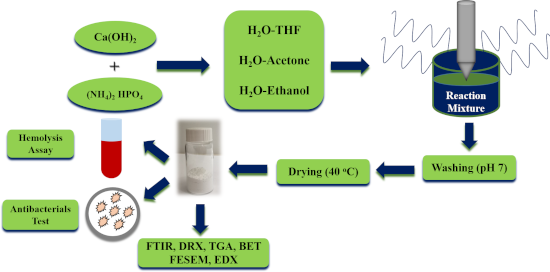
- Juan Mendoza Turmero Cristina Parra Pantoja Marcos Sabino Gutierrez Milagro Fernandez-Delgado Claudia Alvarado-Castillo Damarys Soto Gil Maria E. Gomes Gomes Yony Gutierrez Barrios Daniel Suarez Arteaga Department of Materials Science, Simón Bolívar University, Caracas, Venezuela Functional




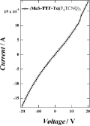
Supramolecular one-dimensional conducting nanofibers from a C3-symmetric tetrathiafulvalene derivative
Beilstein J. Nanotechnol. 2026, 17, 872–881, doi:10.3762/bjnano.17.63
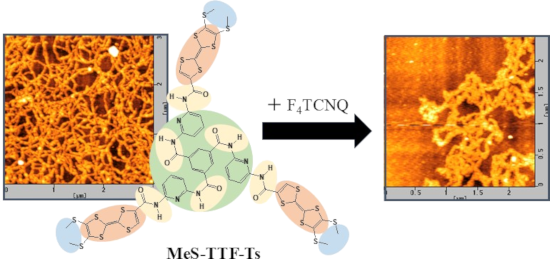
- considerable attention in the fields of materials science and nanotechnology because of their diverse functionalities, including luminescence, sensing, charge transport, and drug delivery [3][4][5][6]. Supramolecular gels are formed through bottom-up self-assembly driven by weak intermolecular interactions
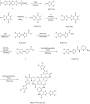


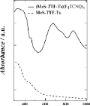
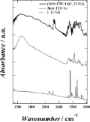
He+ FIBID-fabricated 3D AFM tip architectures: an exploratory study of hollow pillars, helices, and spirals
Beilstein J. Nanotechnol. 2026, 17, 863–871, doi:10.3762/bjnano.17.62
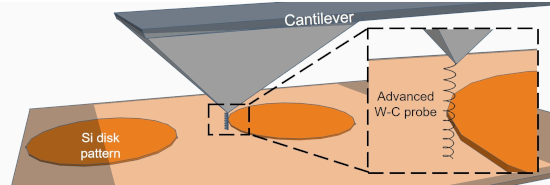
- Waals, electrostatic, and short-range repulsive forces. Owing to its minimal sample preparation requirements and broad operational flexibility, AFM has become a widely used tool across chemistry, physics, materials science, nanotechnology, and the life sciences [2]. The continued diversification of AFM


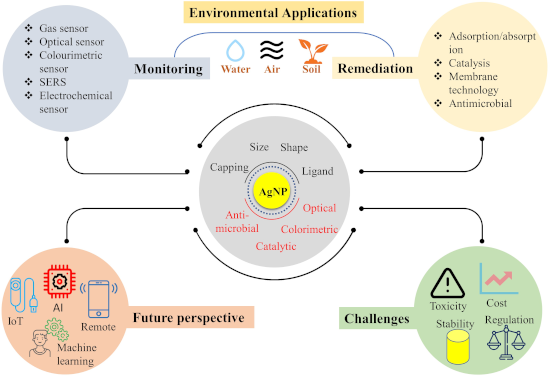
Environmental applications of silver nanoparticles: state-of-the-art review and emerging trends
Beilstein J. Nanotechnol. 2026, 17, 697–736, doi:10.3762/bjnano.17.49


Laser–material interactions in liquids for the synthesis of nanomaterials: current status and perspectives
Beilstein J. Nanotechnol. 2026, 17, 571–575, doi:10.3762/bjnano.17.38
- Carlos Donate Buendia Bilal Gokce Leonid V. Zhigilei GROC·UJI, Institute of New Imaging Technologies, University Jaume I, Av. de Vicent Sos Baynat, s/n, 12071 Castellón, Spain Chair of Materials Science and Additive Manufacturing, School of Mechanical Engineering and Safety Engineering, University
- of Wuppertal, 42119 Wuppertal, Germany Department of Materials Science and Engineering, University of Virginia, 395 McCormick Road, Charlottesville, Virginia 22904-4745, USA 10.3762/bjnano.17.38 Keywords: colloidal nanoparticles; green synthesis of nanoparticles; laser ablation in liquids; laser
- –matter interactions; laser processing in liquids; In the ever-evolving landscape of materials science and nanotechnology, laser synthesis and processing of colloids (LSPC) has emerged [1] as a powerful and versatile technique for producing high-purity, surfactant-free nanoparticles from a wide range of
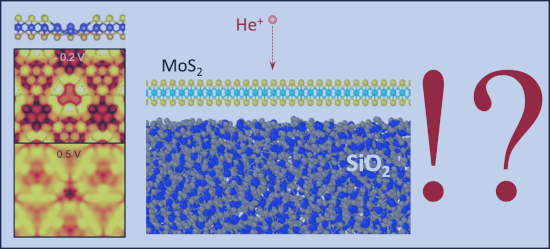
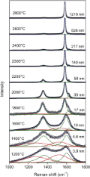
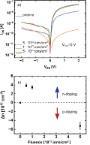
Defects and defect-mediated engineering of two-dimensional materials: challenges and open questions
Beilstein J. Nanotechnol. 2026, 17, 454–488, doi:10.3762/bjnano.17.31





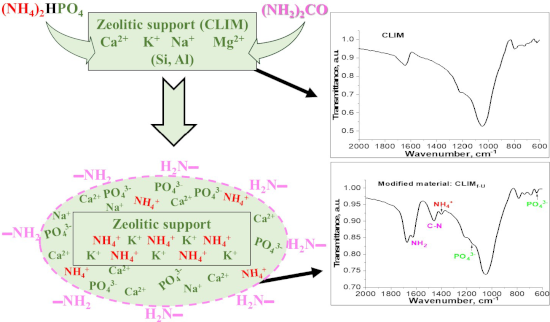
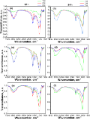
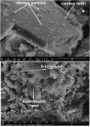
Eco-efficient materials for agricultural crops based on a mineral rich in MOR- and HEU-type zeolites
Beilstein J. Nanotechnol. 2026, 17, 381–395, doi:10.3762/bjnano.17.26
- Materials Science and Technology (IMRE) – University of Havana for the characterization of the samples.




Calculation of the dynamic stiffness of a cantilever under torsional oscillation
Beilstein J. Nanotechnol. 2026, 17, 303–308, doi:10.3762/bjnano.17.21
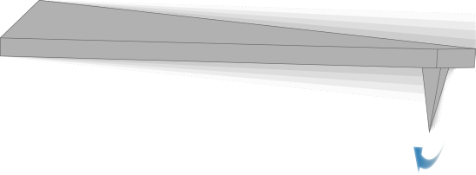
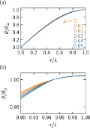
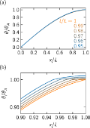
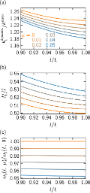
- Keita Nishida Yuuki Yasui Yoshiaki Sugimoto Department of Advanced Materials Science, The University of Tokyo, Chiba 277-8561, Japan 10.3762/bjnano.17.21 Abstract Atomic force microscopy using Si cantilevers provides an effective means for investigating both conservative and dissipative

Micro- and nanoscale effects in biological and bioinspired materials and surfaces
Beilstein J. Nanotechnol. 2026, 17, 214–217, doi:10.3762/bjnano.17.14
- hierarchical structures aids in understanding the principles of biological design and inspires advances in biomimetics, mechanical engineering, and materials science. Biomimetics seeks to obtain knowledge on how these structural and material property adaptations affect surface performance and to draw
- bioinspired surfaces and their tribological characteristics (friction, wear resistance, and adhesion), as well as self-cleaning and optical properties, underscoring the overarching aim of the symposium to integrate biological phenomena and materials science towards biomimetic approaches. The fruitful
Safe and sustainable by design with ML/AI: A transformative approach to advancing nanotechnology
Beilstein J. Nanotechnol. 2026, 17, 176–185, doi:10.3762/bjnano.17.11
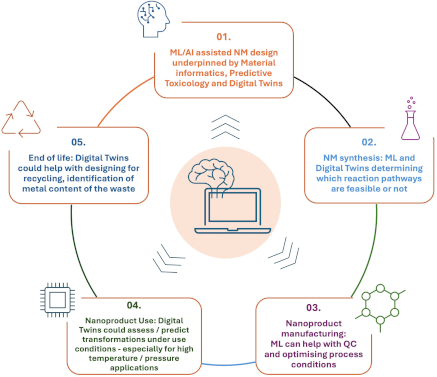
- opportunities, and the path forward for integrating ML/AI-driven SSbD frameworks into regulatory and industrial practices. Keywords: digital twins; machine learning; materials informatics; safe and sustainable by design; Introduction Nanotechnology has fundamentally changed the landscape of materials science


Quantitative estimation of nanoparticle/substrate adhesion by atomic force microscopy
Beilstein J. Nanotechnol. 2026, 17, 1–14, doi:10.3762/bjnano.17.1

- Aydan Cicek Markus Kratzer Christian Teichert Christian Mitterer Department of Materials Science, Montanuniversität Leoben, Franz-Josef-Straße 18, 8700 Leoben, Austria Chair of Physics, Department Physics, Mechanics and Electrical Engineering, Montanuniversität Leoben, Franz-Josef-Straße 18, 8700



Optical bio/chemical sensors for vitamin B12 analysis in food and pharmaceuticals: state of the art, challenges, and future outlooks
Beilstein J. Nanotechnol. 2025, 16, 2207–2244, doi:10.3762/bjnano.16.153
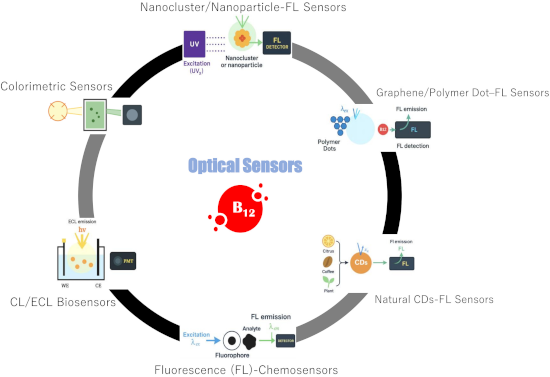
- Seyed Mohammad Taghi Gharibzahedi Zeynep Altintas Division of Bioinspired Materials and Biosensor Technologies, Institute of Materials Science, Faculty of Engineering, Kiel University, 24143, Kiel, Germany Kiel Nano, Surface and Interface Science (KiNSIS), Kiel University, 24118, Kiel, Germany


Missing links in nanomaterials research impacting productivity and perceptions
Beilstein J. Nanotechnol. 2025, 16, 2168–2176, doi:10.3762/bjnano.16.149
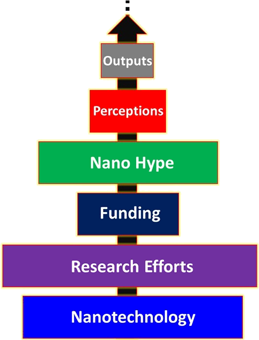
- working extensively in various aspects of nanotechnology, we find that the majority come from chemistry, physics, materials science, and metallurgy. Very few come from other fields such as mechanical, energy, electronics, biomedical engineering, and mathematics. The experts belonging to chemistry, physics
- notably less than the often-cited (and inflated) $1 trillion figure [13][14][15]. This funding has primarily supported fundamental research across materials science, chemistry, physics, and bioengineering. These efforts have led to major scientific advances, mainly in nanoelectronics, nanomedicine
Toward clinical translation of carbon nanomaterials in anticancer drug delivery: the need for standardisation
Beilstein J. Nanotechnol. 2025, 16, 2092–2104, doi:10.3762/bjnano.16.144
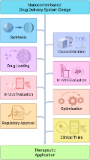
- treated. Perspective The development of a novel CNM-based drug delivery system for targeted anticancer therapeutic delivery is a complex and multistep process that involves several key milestones (Figure 3), each of which requires distinct expertise in materials science, chemistry, biology, and regulatory



Molecular and mechanical insights into gecko seta adhesion: multiscale simulations combining molecular dynamics and the finite element method
Beilstein J. Nanotechnol. 2025, 16, 2055–2076, doi:10.3762/bjnano.16.141
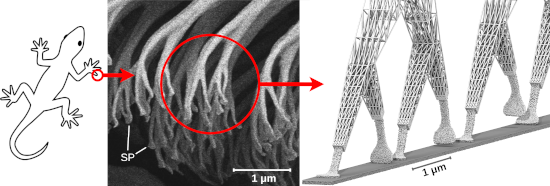
- structures on their feet [1][2]. This bioadhesion mechanism has been studied extensively, especially for biomimetic adhesive applications [3][4][5][6][7][8][9]. Understanding these interactions presents a formidable challenge in biophysics and materials science due to the extremely small length and time







On the road to sustainability – application of metallic nanoparticles obtained by green synthesis in dentistry: a scoping review
Beilstein J. Nanotechnol. 2025, 16, 1851–1862, doi:10.3762/bjnano.16.128
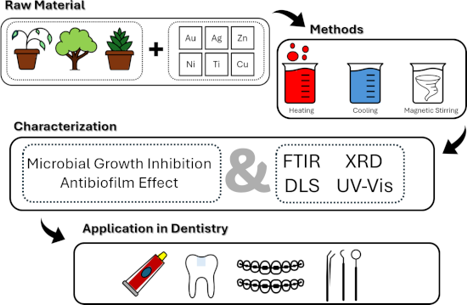
- biosynthetic routes; context (C): dental applications (e.g., oral microbiology, materials science, cariology, periodontology, endodontics). Thus, we used a combination of Boolean expressions that correspond to the PCC (Table 2). Eligibility criteria Inclusion criteria were original research articles evaluating


Photocatalytic degradation of ofloxacin in water assisted by TiO2 nanowires on carbon cloth: contributions of H2O2 addition and substrate absorbability
Beilstein J. Nanotechnol. 2025, 16, 1567–1579, doi:10.3762/bjnano.16.111
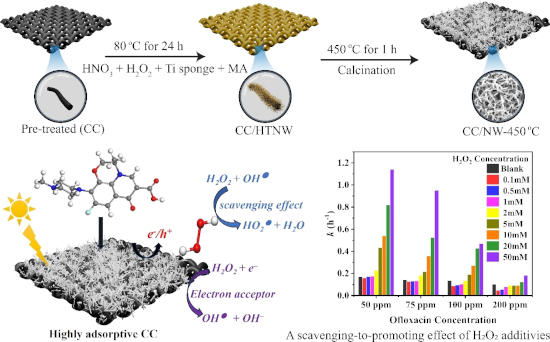
- Iram Hussain Lisha Zhang Zhizhen Ye Jin-Ming Wu State Key Laboratory of Silicon and Advanced Semiconductor Materials, School of Materials Science and Engineering, Zhejiang University, Hangzhou, 310027, P. R. China Zhejiang Provincial Engineering Research Center of Oxide Semiconductors for


Modeling magnetic properties of cobalt nanofilms used as a component of spin hybrid superconductor–ferromagnetic structures
Beilstein J. Nanotechnol. 2025, 16, 1557–1566, doi:10.3762/bjnano.16.110
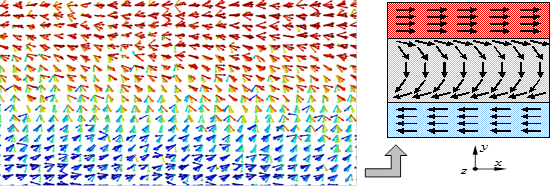
- materials science. These properties depend not only on the composition, but also on factors such as film thickness, which in turn affects their application in microelectronics, spintronics, and other high-tech fields. The aim of this article is to model the magnetic properties of cobalt nanofilms of


Transient electronics for sustainability: Emerging technologies and future directions
Beilstein J. Nanotechnol. 2025, 16, 1545–1556, doi:10.3762/bjnano.16.109
- Jae-Young Bae Myung-Kyun Choi Seung-Kyun Kang Department of Materials Science and Engineering, Seoul National University, Seoul, 08826 Republic of Korea Research Institute of Advanced Materials (RIAM), Seoul National University, Seoul, 08826 Republic of Korea Nano Systems Institute SOFT Foundry
- subsequently degrading harmlessly within the body. Collectively, these trends reflect a transition in materials science from an emphasis on durability to a growing emphasis on controllable disappearance tailored to specific clinical needs. Concurrently, the rapid advancement of soft and stretchable thin-film
- electronic systems seamlessly interact with their environment, fulfill their intended functions, and then disappear without residue or retrieval. As the field matures, the convergence of materials science, device engineering, and systems integration will be essential to unlock the full potential of these


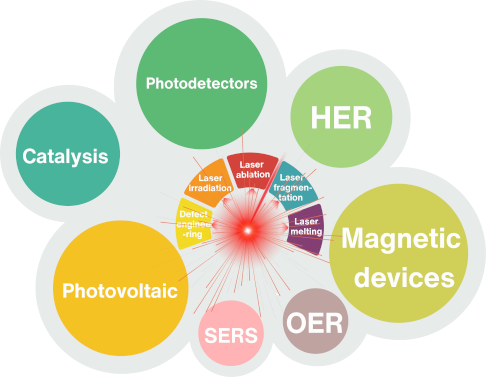
Laser processing in liquids: insights into nanocolloid generation and thin film integration for energy, photonic, and sensing applications
Beilstein J. Nanotechnol. 2025, 16, 1428–1498, doi:10.3762/bjnano.16.104






Parylene-coated platinum nanowire electrodes for biomolecular sensing applications
Beilstein J. Nanotechnol. 2025, 16, 1392–1400, doi:10.3762/bjnano.16.101
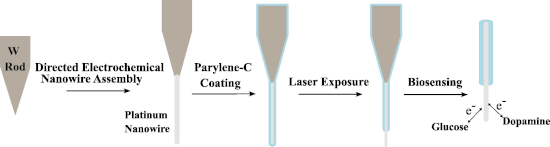
- and components [3]. Advancements in materials science over the past two decades have driven significant progress in the development of nanoscale electrodes. Their high surface-to-volume ratio and nanoscale dimensions offer inherent advantages, including improved response time, improved sensitivity


Towards a quantitative theory for transmission X-ray microscopy
Beilstein J. Nanotechnol. 2025, 16, 1113–1128, doi:10.3762/bjnano.16.82
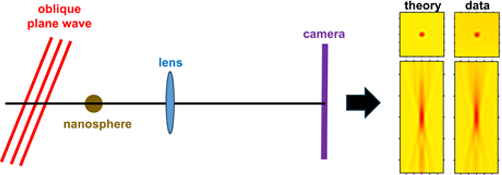
- ; transmission X-ray microscope; Introduction Transmission X-ray microscopes (TXMs) operating in the soft and tender X-ray energy range are valuable tools for structural analysis in both biomedical and materials science research [1][2][3][4]. These microscopes yield images at a lateral resolution approaching 25
- nm, from which quantitative data are often extracted. For example, in materials science applications, nanoscale spectromicroscopy [5][6][7][8] is used to examine a sample around its absorption edges, which provides insights into its electronic structure. In biomedical applications [9][10][11][12



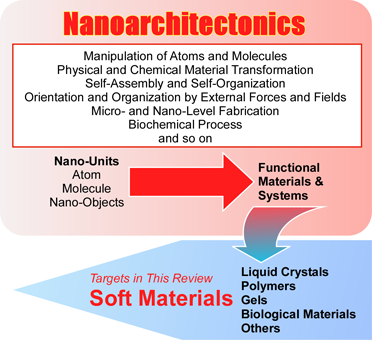
Soft materials nanoarchitectonics: liquid crystals, polymers, gels, biomaterials, and others
Beilstein J. Nanotechnol. 2025, 16, 1025–1067, doi:10.3762/bjnano.16.77
- Katsuhiko Ariga Research Center for Materials Nanoarchitectonics, National Institute for Materials Science (NIMS), 1-1 Namiki, Tsukuba 305-0044, Japan Graduate School of Frontier Sciences, The University of Tokyo, 5-1-5 Kashiwa-no-ha Kashiwa 277-8561, Japan 10.3762/bjnano.16.77 Abstract The
- materials, collectively known as “soft materials” [1][2][3][4][5], may be indicative of the significant advancements made in materials science. In the past, materials that were robust, rigid, and durable were esteemed. Nevertheless, the significance of materials endowed with intelligent capabilities that
- materials systems. It can be reasonably proposed that the mastery of materials science in the context of soft functional materials will facilitate the development of advanced functional systems that emulate the characteristics of living organisms. This concept is not limited to applications in biology, such






Structural and magnetic properties of microwave-synthesized reduced graphene oxide/VO2/Fe2O3 nanocomposite
Beilstein J. Nanotechnol. 2025, 16, 921–932, doi:10.3762/bjnano.16.70
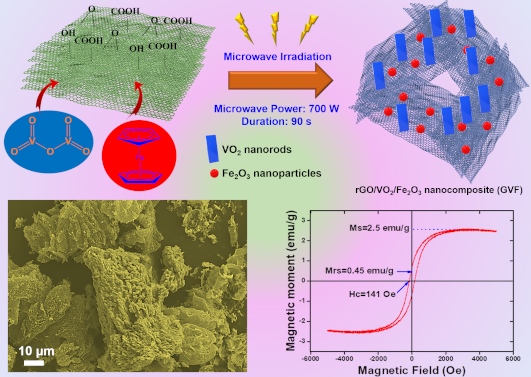
- . Keywords: Fe2O3; magnetism; microwave irradiation; reduced graphene oxide; VO2; Introduction Graphene-based materials have been significantly explored in various fields of materials science due to their unique physical and chemical characteristics [1][2][3][4]. The special arrangement of carbon materials
- unlocked a new era in the field of materials science. The synthetic approaches of graphene materials including graphene quantum dots, graphene oxide, and reduced graphene oxide (rGO) can be categorized into two classes: top-down and bottom-up processes. The top-down approaches are found to be comparatively