


Search results
Search for "mobility" in Full Text gives 473 result(s) in Beilstein Journal of Nanotechnology. Showing first 200.
Nanoglasses: a trail towards uncharted regions of vitreous materials and their properties?
Beilstein J. Nanotechnol. 2026, 17, 1047–1062, doi:10.3762/bjnano.17.72

- discussing “final” states after sufficient relaxation, we assume for this conceptual treatment that the interfaces between GGIs and glass grains are sharp. For real-world nanoglasses, gradients of structure and/or composition might form, due to limited atomic mobility under the conditions of synthesis and
- mobility. For the glass–glass interfaces in nanoglasses, high diffusivities along the interface phase together with low perpendicular mobility could occur due to kinetic constraints stemming from compositional and structural differences of the two glass phases. Additionally, a thermodynamic contribution
- harvesting, or surface protection are in perspective, where the enhanced atomic mobility in the glass–glass interfaces is of specific benefit for the underlying transport processes. Moreover, important fundamental questions concerning the glass state and concerning the range of properties accessible to


Influence of an external electric field on the catalytic CO oxidation of nanoscaled CeO2 and its La3+ and Gd3+ congeners
Beilstein J. Nanotechnol. 2026, 17, 1028–1038, doi:10.3762/bjnano.17.70
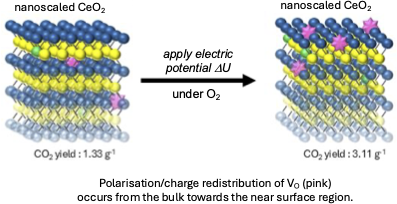
- external electrical field modulates the catalytic activity of nanoscale ceria (nCeO2) towards CO oxidation. Gd3+ and La3+ were doped into the nCeO2 lattice. Such doping influences the concentration and mobility of oxygen vacancies, which are promoting CO oxidation to CO2. When applying an electric
- activity of undoped nCeO2 and 5% Gd3+-doped nCeO2; however, it causes no significant change in CO oxidation capability in 2.5% Gd3+-doped and La3+-doped samples. These findings can be understood considering the applied potential and its influence on the polaron mobility and VO arrangement, which are
- . It induces interfacial polarization in ceria based catalysts and boosts CO oxidation under noble-metal-free conditions. The magnitude of the enhancement depends critically on dopant-controlled defect interactions, ion mobility, and electronic polaron transport mechanisms. Undoped nCeO2 shows the


Synthesis and characterization of RF-sputtered ZnTe/Cu2−xTe thin films for solar cell applications
Beilstein J. Nanotechnol. 2026, 17, 1016–1027, doi:10.3762/bjnano.17.69
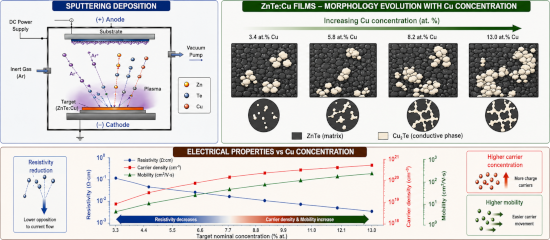
- to 10−3 Ω·cm for films grown at 350 °C. Simultaneously, the carrier concentration increased from approximately 1017 to 1021 cm−3 and the mobility from 10−1 to 101 cm2·V−1·s−1. These results indicate that structural, optical, and electrical properties of ZnTe are primarily influenced by Cu
- and avoid structural modifications during measurement. Normal-incidence transmittance spectra were recorded in the wavelength range of 400–2500 nm using a Cary 5000 spectrophotometer (Agilent Technologies). Finally, the charge transport parameters (carrier concentration, mobility, and resistivity
- mobility during growth, which facilitates nucleation and growth of the secondary phase. Therefore, the structural evolution observed in Figure 3 indicates a transition from predominantly substitutional incorporation at low dopant concentrations to phase segregation and Cu7Te5 formation at higher contents



Materials challenges in solid-state sensors for continuous monitoring of ions in water
Beilstein J. Nanotechnol. 2026, 17, 935–973, doi:10.3762/bjnano.17.66
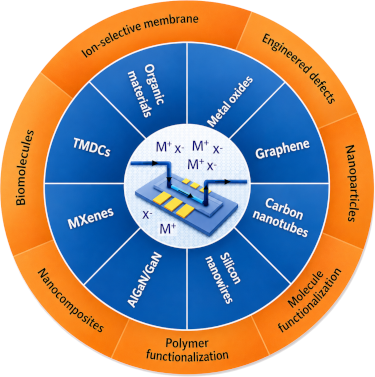
- higher oxidation states, notably chromium(VI) and manganese(VII), which form chromate (or dichromate) and permanganate [4][42][66][67]. Because toxicity, mobility, and regulatory relevance of many metals depend strongly on their oxidation state, it is essential to distinguish these species explicitly in
- both discussion and tabulated summaries. For example, Cr6+ is a carcinogenic ion with high mobility and strong oxidizing character, whereas Cr3+ is far less toxic, less mobile, and even an essential micronutrient at trace levels. A similar contrast exists for arsenic, where As3+ is more toxic, more
- regulatory limits [110]. Because metal-oxide thin films typically exhibit lower conductivity, carrier mobility, and surface area than 2D materials such as graphene or CNTs, integrating them with a highly conductive 2D component allows the hybrid structure to leverage the superior electronic and interfacial


Enhanced erosion resistance and radiation stability of WC–WO3 nanocomposite films under 100 keV Kr+ ion irradiation
Beilstein J. Nanotechnol. 2026, 17, 922–934, doi:10.3762/bjnano.17.65
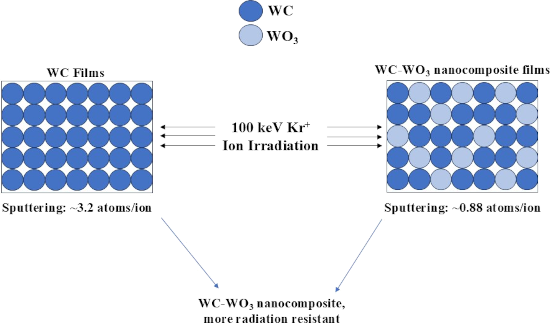
- data is consistent with the clustering behaviour observed in SEM micrographs, implying that atomic displacements and defect accumulation during ion bombardment promote local atomic mobility, enabling the reorganization of nanocrystalline domains. Furthermore, the absence of amorphization and the



Nanocarrier strategies to overcome P-glycoprotein-mediated drug resistance in cancer therapy
Beilstein J. Nanotechnol. 2026, 17, 882–921, doi:10.3762/bjnano.17.64


Light-driven ammonia electrooxidation via carbon nitride–ruthenium molecular interfaces
Beilstein J. Nanotechnol. 2026, 17, 854–862, doi:10.3762/bjnano.17.61
- is not a single material but a rich structural landscape (Figure 2c). Polymeric C3N4 (Table 1), the most widely studied form, is semicrystalline, with moderate charge carrier mobility and a bandgap tunable between 2.6 and 2.8 eV, depending on synthesis conditions [12][18]. Poly(heptazine imide) (PHI
- , Table 1), synthesised in eutectic salt melts, is a highly crystalline ionic variant in which negatively charged nitrogen bridges compensate intercalated metal cations, yielding superior charge carrier mobility, reduced defect density, and extended exciton lifetimes that are of relevance to


Sustainable fabrication of 2D-based devices through reuse of substrates with microfabricated electrodes
Beilstein J. Nanotechnol. 2026, 17, 818–827, doi:10.3762/bjnano.17.58
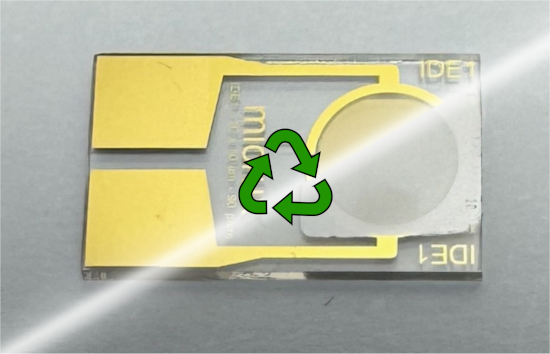
- station [42]. Figure 5a (bottom) presents representative output and transfer characteristics of the single-layer MoS2 FET, displaying an on/off current ratio of 3.4 × 10⁶ and a field-effect mobility of 43.2 cm2·V−1·s−1. Following characterization, the device underwent the deep cleaning protocol. The
- 5c), with an on/off current ratio of 8.5 × 10⁵ and a field-effect mobility of 22.0 cm2·V−1·s−1. Finally, the device underwent an additional cleaning cycle, restoring the substrate for further reuse (Figure 5d), thus completing the full reusability cycle. Conclusion The reuse of microelectronic


Glycerol photoelectrochemical oxidation reaction at carbon nitrides/BiVO4 materials
Beilstein J. Nanotechnol. 2026, 17, 806–817, doi:10.3762/bjnano.17.57
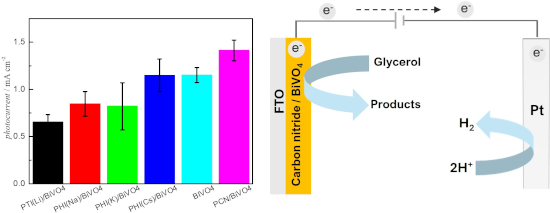
- lattice. Meanwhile, PTI consists of triazine units, forming a rigid and highly stable framework. This structural arrangement significantly improves charge mobility and light absorption, both of which are critical for catalytic activity [15]. Additionally, PHI and PTI possess an intrinsic ionic nature




Substrate-dependent pore formation in molybdenum disulfide monolayers under ion irradiation
Beilstein J. Nanotechnol. 2026, 17, 769–780, doi:10.3762/bjnano.17.54
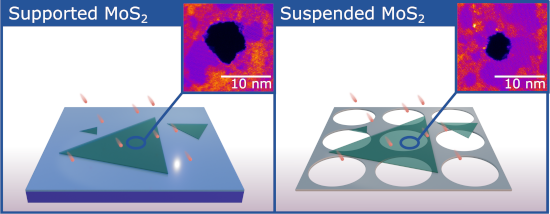
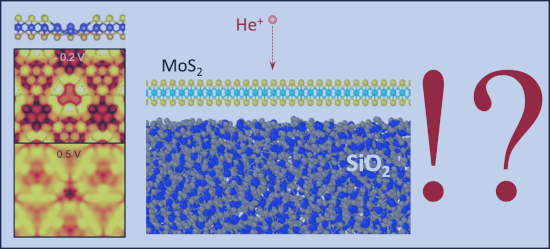
- formation in graphene that centers around the target’s charge carrier mobility. They argue that the high electron mobility of graphene leads to a fast charge dissipation in the 2D material, effectively suppressing pore formation. As a consequence, HCI irradiation does not create pores in graphene (with a
- typical mobility of μ ≥ 60000 cm2·V−1·s−1 for suspended graphene [45]), but is very likely to do so in MoS2, which has a significantly lower electron mobility (typically μ ≈ 1–10 cm2·V−1·s−1 for suspended MoS2 [46][47]). Building on the model introduced by Grossek et al., in which charge carrier mobility
- -induced disorder and charge trapping are expected to increase carrier scattering, thereby limiting lateral spreading of the non-equilibrium electronic excitation. This is known from several studies [48][49] on charge transport in MoS2 that report higher carrier mobility in suspended monolayers than in


Environmental applications of silver nanoparticles: state-of-the-art review and emerging trends
Beilstein J. Nanotechnol. 2026, 17, 697–736, doi:10.3762/bjnano.17.49
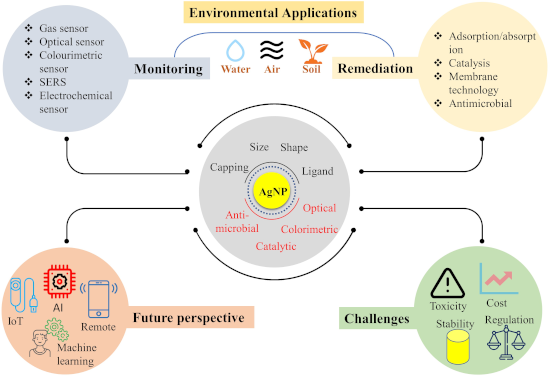
- critical factor influencing the behaviour and toxicity of AgNPs in ecological systems [64]. Surface charge affects the electrostatic interactions between nanoparticles and other charged species in the environment, influencing their aggregation behaviour and mobility. The surface chemistry of silver


Two-step laser synthesis of Ag@TiO2 nanomaterials for the photocatalytic degradation of rhodamine B
Beilstein J. Nanotechnol. 2026, 17, 622–634, doi:10.3762/bjnano.17.43
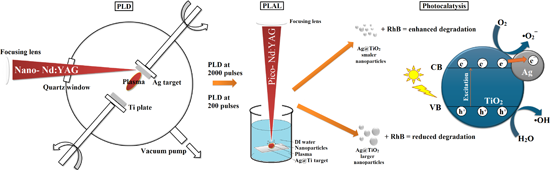
- electrophoretic mobility Hydrodynamic size distribution and zeta potential of the nanoparticles were measured using a Zetasizer Ultra (Malvern Panalytical, Malvern, Worcestershire, UK). Disposable plastic cuvettes were employed for size distribution analysis, while capillary cells were used for zeta potential and
- electrophoretic mobility measurements. Before sample analysis, the nanoparticle colloid solutions were ultrasonicated. This way, all possible agglomerates were broken down into smaller and more uniform particles. Samples were analyzed at the native pH value. Structure of rhodamine B. SEM micrograph with
- electrophoretic mobility of Ag@TiO2 200p and Ag@TiO2 2000p NPs at pH 2.4. Estimated values of bandgap and conduction and valence band potentials for TiO2, Ag@TiO2 200p, and Ag@TiO2 2000p. Values of the pseudo-first and pseudo-second order rate constants and the corresponding correlation coefficients for the


Recent progress in enhancing built-in electric fields of perovskite solar cells via junction engineering
Beilstein J. Nanotechnol. 2026, 17, 602–621, doi:10.3762/bjnano.17.42
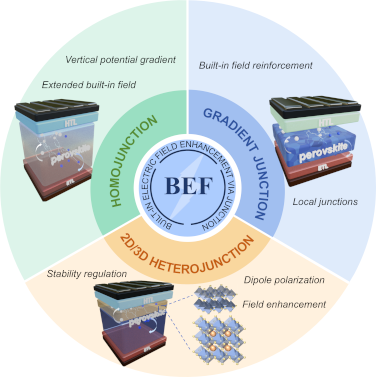
- bending and creating a localized BEF within the HTL (as illustrated in Figure 1, showing the p/p+ homojunction and the directional built-in electric field for hole transport). This BEF provides a directional driving force for hole transport, enhancing carrier mobility and suppressing recombination
- –p homojunction strategy, which approximately doubled carrier lifetime and mobility (about 17.2 cm2·V−1·s−1), and reduced the trap density by half, using transient photocurrent and transient photovoltage spectroscopy, and TRPL. BEF enhances directional transport through the n–p homojunction and
- NSs, owing to their high hole mobility and elevated work function, induce a p-type region at the surface and spontaneously form n/p homojunctions with the preexisting n-type regions in the bulk, effectively creating a continuous energy-level staircase within the absorber. This structure extends the



Defects and defect-mediated engineering of two-dimensional materials: challenges and open questions
Beilstein J. Nanotechnol. 2026, 17, 454–488, doi:10.3762/bjnano.17.31
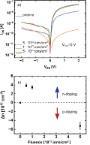
- MoSe2 on a gold substrate to the Janus MoSeS structure [77]. Also, a facile low-temperature thiol chemistry route was suggested to remove sulfur vacancies in 2D MoS2 [78], which resulted in a significant drop in the number of the charged impurities and traps and increased the mobility. Qualitatively





Nanocarrier-integrated multilayer films produced by 3D printing for improved skin adhesion and curcumin photostability
Beilstein J. Nanotechnol. 2026, 17, 440–453, doi:10.3762/bjnano.17.30
- hydrophilic membrane, Millipore®), corresponding to a 500-fold dilution, as shown in Equation 1. The zeta potential was determined by measuring electrophoretic mobility at 25 °C using the same instrument (Zetasizer® Nano ZS, ZEN 3600, Malvern Instruments, USA). Prior to analysis, the samples were diluted 500
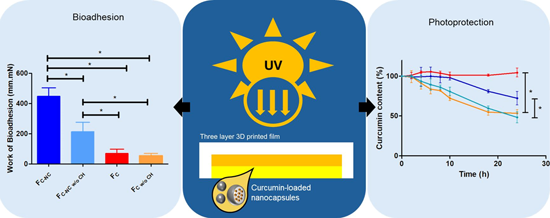
- restricting molecular mobility and reducing direct light exposure within the matrix. However, the most pronounced protective effect was clearly associated with the presence of the TiO2-containing layer, indicating that spatial separation of functions enabled by multilayer 3D printing is critical for achieving
- nanoparticle aggregation. In addition, the hydrogel network acts as a steric barrier that limits nanoparticle mobility and reduces particle–particle contact during printing and drying. Previous studies have demonstrated the compatibility of SSE 3D printing with nanocarrier systems without significant loss of


Eco-efficient materials for agricultural crops based on a mineral rich in MOR- and HEU-type zeolites
Beilstein J. Nanotechnol. 2026, 17, 381–395, doi:10.3762/bjnano.17.26
- studies and FTIR spectroscopy measurements, respectively. Funding This work was partially supported through grants of the Graduate Mobility Program of the Macro-University Network of Latin America and the Caribbean-2017 and ERASMUS+ KA107-2020, as well as by the LUCES laboratory of the Institute of




Advancing nanolithography: a comprehensive review of materials for local anodic oxidation with AFM
Beilstein J. Nanotechnol. 2026, 17, 275–291, doi:10.3762/bjnano.17.19
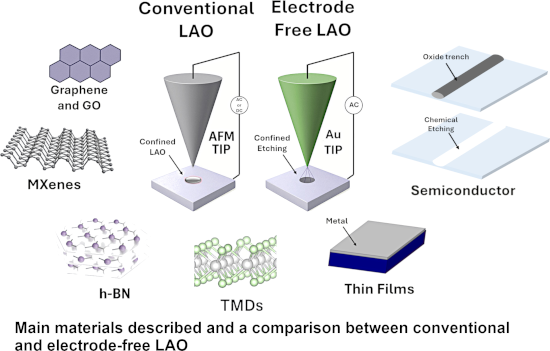
- conductivity and mobility. Reversing the bias in a standard LAO setup enables the restoration of conductivity in GO layers or flakes through a localized reduction reaction [87][103] or a localized catalytic reaction [104]. In Figure 5a,b, we show a conductive AFM image of a single restored rGO feature [87
- , and carrier mobility. As a result, precise control over oxidation depth and lateral diffusion during processing may require the use of lower voltages and carefully optimized humidity conditions. Hybrid approaches, which combine LAO with complementary techniques such as chemical vapor deposition or


Safe and sustainable by design with ML/AI: A transformative approach to advancing nanotechnology
Beilstein J. Nanotechnol. 2026, 17, 176–185, doi:10.3762/bjnano.17.11
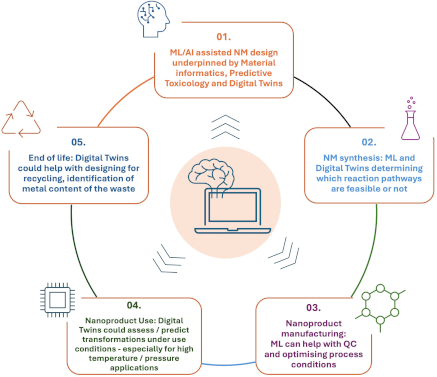
- , high-strength materials for advanced armour systems and protective gear. For example, nanostructured ceramics and nanocomposites enhance ballistic protection while reducing weight, improving mobility for soldiers [7]. Additionally, nanosensors can detect chemical and biological threats in real time


Influence of surface characteristics on the in vitro stability and cell uptake of nanoliposomes for brain delivery
Beilstein J. Nanotechnol. 2026, 17, 139–158, doi:10.3762/bjnano.17.9
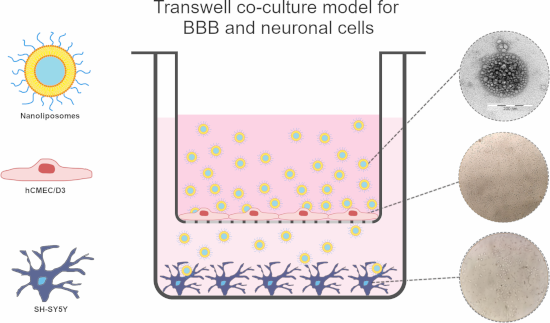
- study, this reverse trend is probably a result of the reduced NL electrophoretic mobility due to the hydrodynamic resistance given by the presence of PEG. This also contributes for masking the predominant negative charge of the structural phospholipids present in the NLs [18]. Stability studies of




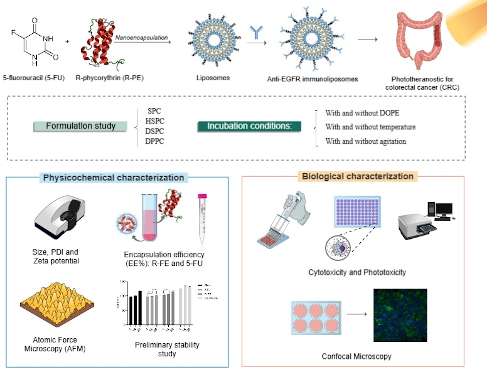
Development and in vitro evaluation of liposomes and immunoliposomes containing 5-fluorouracil and R-phycoerythrin as a potential phototheranostic system for colorectal cancer
Beilstein J. Nanotechnol. 2026, 17, 97–121, doi:10.3762/bjnano.17.7
- reduced molecular mobility within the lipid bilayer [67]. Specifically for 5-FU, Ezekiel et al. (2021) [66] confirmed the preservation of its characteristic bands after encapsulation in soybean lecithin liposomes, reinforcing that the presence of these peaks in our formulations indicates successful



Electron transport through nanoscale multilayer graphene and hexagonal boron nitride junctions
Beilstein J. Nanotechnol. 2025, 16, 2132–2143, doi:10.3762/bjnano.16.147
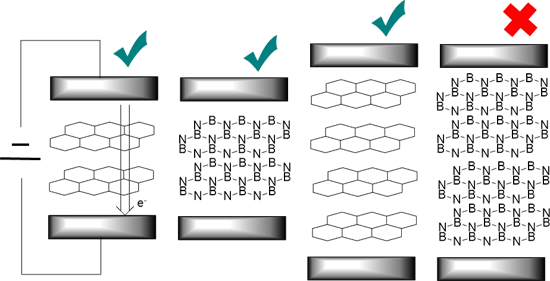
- -dimensional lattice curvature [6]. The in-plane electron transport is a result of the high charge carrier mobility in the two-dimensional π-conjugated electron system. Deviation from the perfect hexagonal lattice by the insertion of heteroatoms, structural defects, or local disorder, creates electron trapping
- sites and hinders the electron mobility [7]. In addition, zigzag and armchair edges in graphene nanoribbons will open the bandgap and create trapping sites. Thus, small graphene nanoribbons will show higher electrical resistance compared to larger nanoribbons and infinite two-dimensional sheets. The in


Stereodiscrimination of guests in chiral organosilica aerogels studied by ESR spectroscopy
Beilstein J. Nanotechnol. 2025, 16, 2034–2054, doi:10.3762/bjnano.16.140
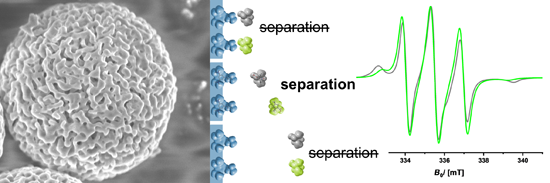
- necessary to reach separation is an important point. We have employed the two enantiomers of a chiral, nitroxide-based spin probe as guests in organo-modified macroporous host materials and applied ESR spectroscopy as a tool to investigate their rotational mobility. Using a well-established and commercially
- material. In essence, one sees here the interplay of all processes contributing to transport. Gathering information about the phenomena at short(er) distances and short(er) timescales and about the correlation between the mobility of guest species and intermolecular interactions with functionalized




Phytol-loaded soybean oil nanoemulsion as a promising alternative against Leishmania amazonensis
Beilstein J. Nanotechnol. 2025, 16, 1826–1836, doi:10.3762/bjnano.16.126

- using a Zetasizer Nano ZS instrument (Malvern Instruments, UK) at 25 ± 2 °C, with a detection wavelength of 633 nm and a backscattering angle of 173°. The zeta potential was assessed via electrophoretic mobility measurements using the same equipment under identical temperature conditions. For both


Piezoelectricity of layered double hydroxides: perspectives regarding piezocatalysis and nanogenerators
Beilstein J. Nanotechnol. 2025, 16, 1812–1817, doi:10.3762/bjnano.16.124

- , calibrated PFM mapping, and macroscopic tests) alongside application metrics (rate constants and degradation efficiency); (2) systematically including control experiments to isolate different contributions; (3) evaluating phase purity and interlayer chemistry, given their influence on charge mobility and

Exploring the potential of polymers: advancements in oral nanocarrier technology
Beilstein J. Nanotechnol. 2025, 16, 1751–1793, doi:10.3762/bjnano.16.122
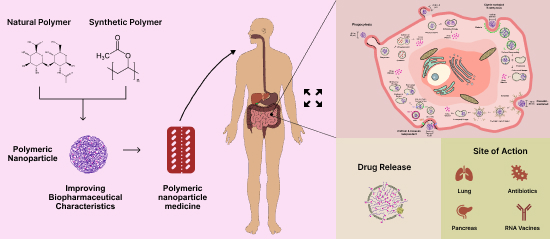
- properties is its Tg, which determines the point at which the polymer transitions from a rigid, glassy state to a more flexible, rubbery state as the mobility of the polymer chains increases with rising temperature. Above Tg, the polymer becomes rubbery, leading to increased rates of water and drug mass
- transfer throughout the entire polymer matrix. However, in NPs, a balance between amorphous and crystalline states is necessary to optimize mechanical strength and drug release rates. The glass transition temperature reflects the polymer chain’s permeability and mobility, influencing its susceptibility to
- triggers hydrolysis, producing acids that catalyze degradation, thus enlarging the pores, a phenomenon known as swelling, which is particularly relevant in systems based on hydrophilic polymers. The mobility of the polymer chains, which is influenced by their Tg (decreasing as the polymer molecular weight





