Search results
Search for "noise" in Full Text gives 490 result(s) in Beilstein Journal of Nanotechnology. Showing first 200.
Room-temperature NO2 sensing performance of ZnO/Ti3C2Tx heterojunctions
Beilstein J. Nanotechnol. 2026, 17, 1159–1169, doi:10.3762/bjnano.17.79
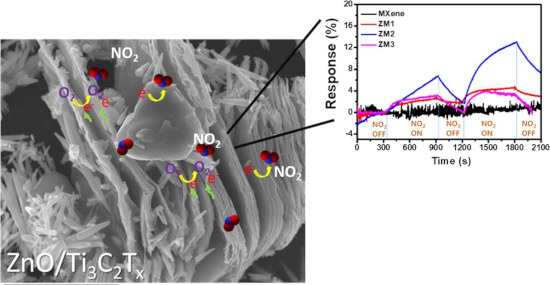
- , achieved through the selective etching of Ti3AlC2 using LiF and HCl, marked a pivotal milestone in the exploration of MXene-based gas sensors [16][17]. Ti3C2Tx MXene has exhibited commendable sensor performance at ambient temperatures, characterized by a low signal-to-noise ratio and high electron





Vibration-induced dynamic structural superlubricity on MoS2/Au(111) under ultrahigh vacuum
Beilstein J. Nanotechnol. 2026, 17, 1039–1046, doi:10.3762/bjnano.17.71
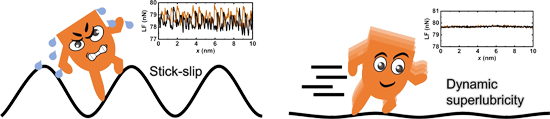
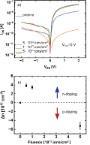
- further evidenced by the individual friction loops shown in the insets. While the lateral force fluctuations are prominent in the unexcited state, they decrease to the noise level when the vibration is active. Quantitatively, the root-mean-square of the lateral force is reduced from 0.5 to 0.06 nN
- traces almost overlap, and the friction is reduced to the noise floor. This frequency-selective behavior suggests that the suppression of stick–slip is a resonance-driven process, involving the mechanical eigenmodes of the sliding contact. To clarify the physical origin of the observed friction reduction
- , the frequency-dependent friction was compared with the thermal noise spectra of the cantilever. Figure 3a shows the mean friction force (black) alongside the flexural (gray) and torsional (brown) thermal noise power spectral densities. For comparison, the thermal noise spectra of the free cantilever


Materials challenges in solid-state sensors for continuous monitoring of ions in water
Beilstein J. Nanotechnol. 2026, 17, 935–973, doi:10.3762/bjnano.17.66
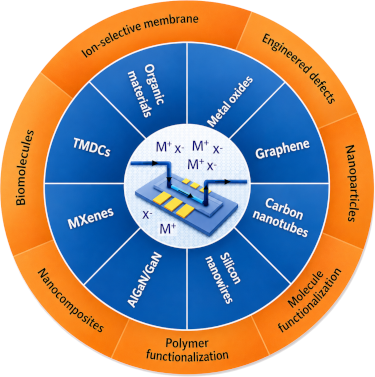
- parasitic capacitance and higher noise levels due to additional wiring, and the design is not well suited for nanoscale integration [95]. All ion-sensing FET devices inherently require a gate electrode, which is implemented as a reference electrode in many geometries to provide a stable and well-defined
- noise and hysteresis through clean and defect-controlled interfaces, and must maintain stable electronic properties over time so that any electrical signal change reflects only the analyte concentration, not material instability. Third, the material’s surface must allow for functionalization, enabling
- increasing contact resistance, noise, and hysteresis. The FET device can be designed in a way that mitigates these issues, but at the cost of increased complexity. Nonetheless, detection of trace concentrations of heavy-metal ions in real water has already been practically demonstrated by metal-oxide-based


He+ FIBID-fabricated 3D AFM tip architectures: an exploratory study of hollow pillars, helices, and spirals
Beilstein J. Nanotechnol. 2026, 17, 863–871, doi:10.3762/bjnano.17.62
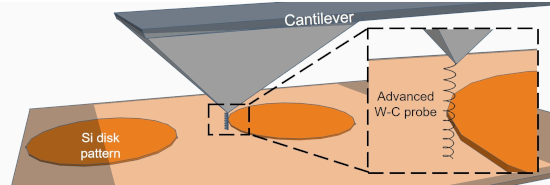
- . With effective tip radii of approximately 15–23 nm and a calibration surface that is essentially flat between the patterned features, any roughness values extracted from these topographs would primarily reflect tip–sample convolution, instrument noise, and drift rather than true surface texture. A


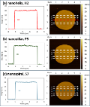
Fractional shot noise of an SU(N) Kondo system
Beilstein J. Nanotechnol. 2026, 17, 515–540, doi:10.3762/bjnano.17.34
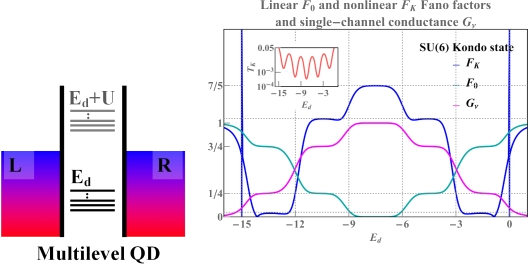
- dot (N-QD) in the Kondo regime. Using the Kotliar–Ruckentein slave boson approach (SBMFA) for an N-level Anderson model, we define effectively noninteracting quasiparticles of the SU(N) Kondo system (N = 2, 3, 4, 5, 6). Kondo resonance transmission coefficients determine linear noise describing
- quasiparticle partitioning. To discuss nonlinear conductance, susceptibilities, and shot noise in the strong coupling regime, we apply Fermi liquid theory with parameters expressed by susceptibilities of pseudofermions determined within SBMFA. Nonlinear shot noise is dominated by two-quasiparticle scattering
- . However, we demonstrate that for occupation regions distant from the electron–hole symmetry point, the role of three-body correlations must be considered. Keywords: Fermi liquid; Kondo effect; quantum dots; shot noise; Introduction Quantum dot (QD) structures are being intensively investigated regarding


![[Graphic 127]](/bjnano/content/inline/2190-4286-17-34-i187.svg?max-width=637&scale=1.18182)

Upcycling agroindustrial waste into graphene oxide supports for gold nanoparticles: toward sustainable nanomaterials
Beilstein J. Nanotechnol. 2026, 17, 489–504, doi:10.3762/bjnano.17.32
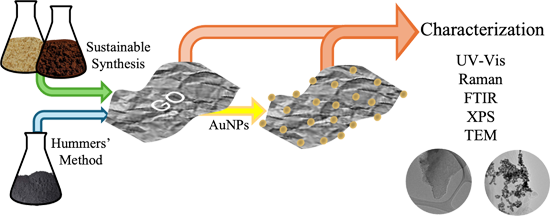
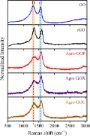
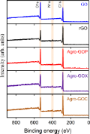
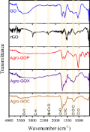
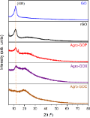
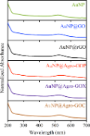
- network. The loss of C–O, C=O, and –COOH species reduces the number and intensity of IR-active vibrational modes, resulting in lower overall absorbance and a lower signal-to-noise ratio. The Agro-GO samples, however, display more heterogeneous and precursor-dependent profiles: Agro-GOP is dominated by



Defects and defect-mediated engineering of two-dimensional materials: challenges and open questions
Beilstein J. Nanotechnol. 2026, 17, 454–488, doi:10.3762/bjnano.17.31
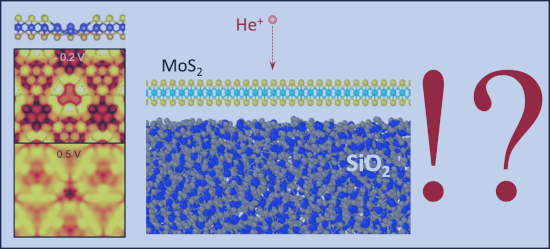
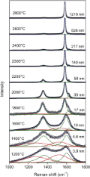
- can, in principle, emerge due to defects [90][91], in practice they are rarely observed owing to the low concentration of defects and low signal-to-noise ratio, which becomes particularly pertinent with 2D materials due the small volume for scattering. In most cases, one observes changes in the Raman





Multilayered hyperbolic Au/TiO2 nanostructures for enhancing the nonlinear response around the epsilon-near-zero point
Beilstein J. Nanotechnol. 2026, 17, 251–261, doi:10.3762/bjnano.17.17
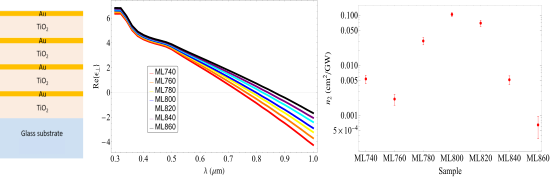
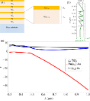
- both gold and titanium dioxide, we could not see a signal. This could mean that our system lacks the power output to excite the nonlinear response or that, even at our highest irradiance, the response was below the signal-to-noise ratio. Considering that, for 800 nm, our system has a minimum resolution


Gold nanoparticle-decorated reduced graphene oxide as a highly effective catalyst for the selective α,β-dehydrogenation of N-alkyl-4-piperidones
Beilstein J. Nanotechnol. 2026, 17, 218–238, doi:10.3762/bjnano.17.15
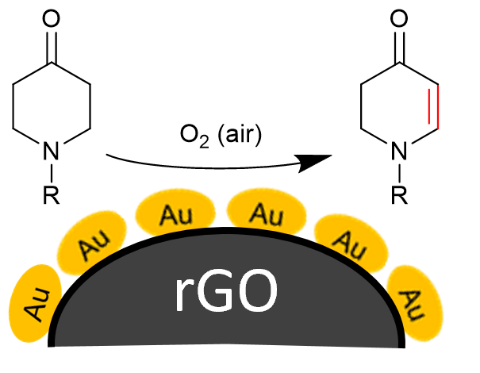
- complexity of signal–sample interactions, and background noise [41]. As a result, it can be challenging to distinguish peak broadening caused specifically by crystallite size from that induced by other contributing factors [42][43]. Nevertheless, the Scherrer equation remains a valuable tool for estimating


Time of flight secondary ion mass spectrometry imaging of contaminant species in chemical vapour deposited graphene on copper
Beilstein J. Nanotechnol. 2026, 17, 200–213, doi:10.3762/bjnano.17.13
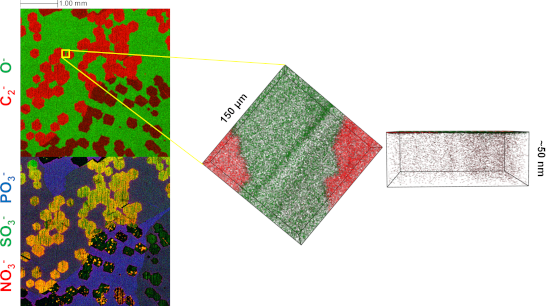
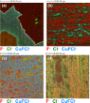
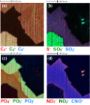
- 6 (using the same graphene-covered areas from Figure 3). This reveals that the F− and Cl− signals appear primarily at the surface of the sample. The PO3− signal appears in all samples but is only observed to decrease to the background noise level in the BO sample and remains detectable in the other





Development and in vitro evaluation of liposomes and immunoliposomes containing 5-fluorouracil and R-phycoerythrin as a potential phototheranostic system for colorectal cancer
Beilstein J. Nanotechnol. 2026, 17, 97–121, doi:10.3762/bjnano.17.7
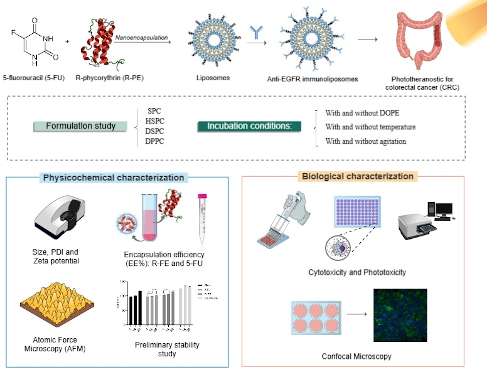
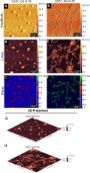
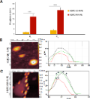
- nonfunctionalized liposomes (HSPC-50-R-PE) and immunoliposomes (HSPC-IM-R-PE), as shown in Figure 3 and Figure 4. It is worth noting the good quality of the AFM images by analyzing amplitude (Figure 3A and Figure 3D), which presented no noticeable noise artifacts, providing pseudo-3D contrast in both samples. In



Internal 3D temperature mapping in biological systems using ratiometric light-sheet imaging and lipid-coated upconversion nanothermometers
Beilstein J. Nanotechnol. 2025, 16, 2306–2316, doi:10.3762/bjnano.16.159
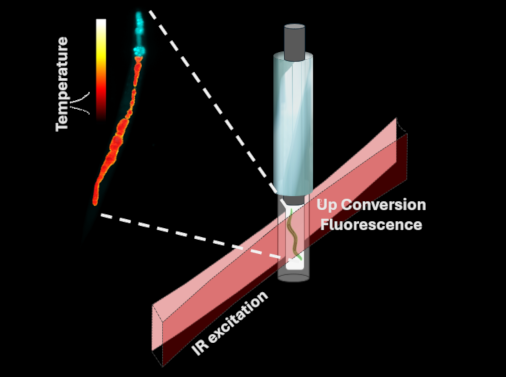
- degeneracy of the coupled energy levels, emission frequencies, and spontaneous radiation transition rates [43]. The FIR-based technique has been widely used for optical thermometry given its inherent advantages, including noise cancellation capabilities, real-time temperature sensing, and high sensitivity


Terahertz-range on-chip local oscillator based on Josephson junction arrays for superconducting quantum-limited receivers
Beilstein J. Nanotechnol. 2025, 16, 2296–2305, doi:10.3762/bjnano.16.158
- local oscillator (LO) [4]. This effect together with the operation at cryogenic temperatures and the quantum nature of the mixer itself allow for the development of receivers with the noise temperature Tn only a few times higher than the quantum limit ≈hf/kB, where h and kB are the Planck and Boltzmann
- at the peak to the total radiated power, including noise and parasitic modes) in the PLL mode should exceed 90%. In this paper we will show that newly fabricated samples meet these criteria. The paper is divided into four sections. In the first section we briefly review the topology and the
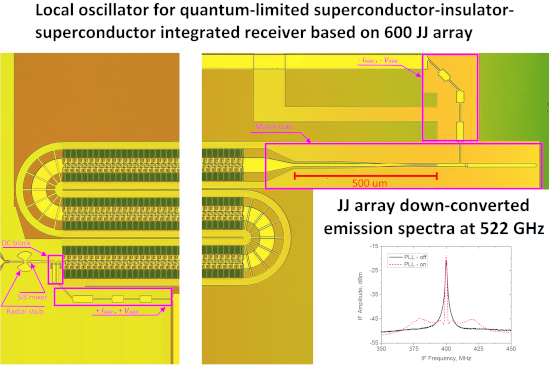
- -locking to the external stable synthesizer is crucial [16]. Figure 9 shows the radiation IF spectrum of the JJ array at a frequency of 522 GHz. The linewidth of the free-running array is less than 0.5 MHz, while the signal-to-noise ratio is approx. 30 dB. The calculation using the Rogovin–Scalapino [40


Improving magnetic properties of Mn- and Zn-doped core–shell iron oxide nanoparticles by tuning their size
Beilstein J. Nanotechnol. 2025, 16, 2285–2295, doi:10.3762/bjnano.16.157
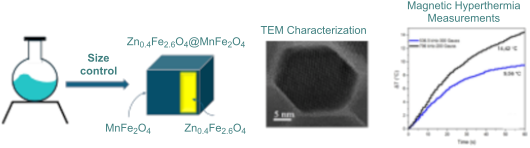
- spectra were acquired from 400 to 4000 cm−1 with a spectral resolution of 4 cm−1. Reference spectra were acquired before each measurement to determine the absorption spectra under ambient conditions. Each measurement was averaged over 200 scans in continuous mode to improve the signal-to-noise ratio



Visualizing nanostructures in supramolecular hydrogels: a correlative study using confocal and cryogenic scanning electron microscopy
Beilstein J. Nanotechnol. 2025, 16, 2274–2284, doi:10.3762/bjnano.16.156
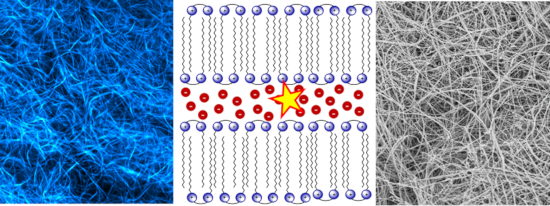
- even then, excitation laser intensities had to be operated at or near their maximum fluence to obtain images with good signal-to-noise ratio. This elevated laser power then contributed to a certain extent of fluorophore bleaching, making effective imaging even more challenging. Despite these measures
- only necessitated the application of high excitation powers but also required physical compression of the gel sample to reduce path length and thus improve the signal-to-noise ratio. However, this approach introduced the evident result of mechanical artefacts, such as gel network disruption or the
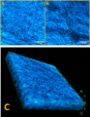
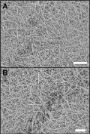
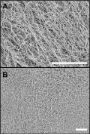
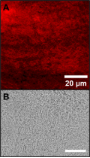
- architecture and continuity throughout the bulk of the gel (Figure 3C). Such datasets were difficult or impossible to obtain in the case of ZnPc@Gel, where low signal-to-noise ratios and heterogeneous emission limited the depth and clarity of CLSM imaging. Cryo-SEM imaging ZnPc@Gel and DPP-BC@Gel Whereas CLSM



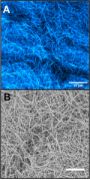
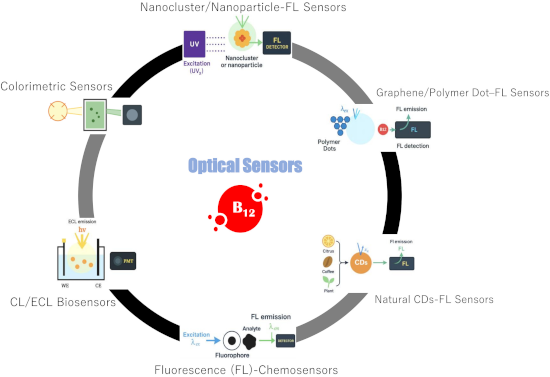
Optical bio/chemical sensors for vitamin B12 analysis in food and pharmaceuticals: state of the art, challenges, and future outlooks
Beilstein J. Nanotechnol. 2025, 16, 2207–2244, doi:10.3762/bjnano.16.153


Electromagnetic study of a split-ring resonator metamaterial with cold-electron bolometers
Beilstein J. Nanotechnol. 2025, 16, 2199–2206, doi:10.3762/bjnano.16.152
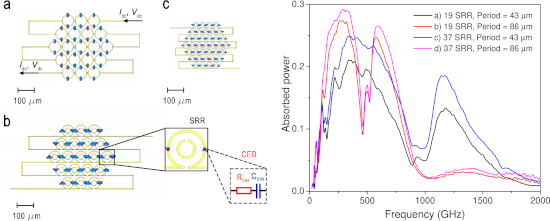
- resistance of the structure at the operating point and increases the current noise contribution of the readout amplifier [17][22]. Furthermore, a larger number of elements increases the fabrication complexity. Crucially, nearly doubling the number of elements (from 19 to 37) does not produce a proportional
- the dynamic range and complicating the optimization of noise-equivalent power (NEP). There have been proposals to integrate multiple sensing elements directly into the structure of a log-periodic antenna [28][29][30]. While promising, such designs face significant challenges in implementation. The
- achieve an optimal balance between power load, responsivity, and total noise [17][22]. This capability is particularly critical for applications like cosmic microwave background polarimetry or high-resolution spectroscopy, where the detector must operate photon-noise-limited under a specific background


Ultrathin water layers on mannosylated gold nanoparticles
Beilstein J. Nanotechnol. 2025, 16, 2183–2198, doi:10.3762/bjnano.16.151
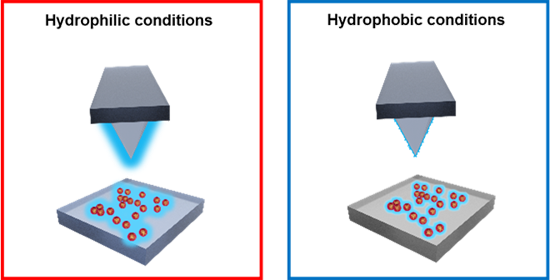
- . In other words, the nanoparticle has a non-centrosymmetric environment, which can simply be the presence of the gold surface. The noise-like feature at ~3400 cm−1 is assigned to hydrogen-bonded water as features above 3600 cm−1 should indicate non-hydrogen-bonded water. This is proof that water is


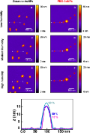

Multifrequency AFM integrating PeakForce tapping and higher eigenmodes for heterogeneous surface characterization
Beilstein J. Nanotechnol. 2025, 16, 2077–2085, doi:10.3762/bjnano.16.142
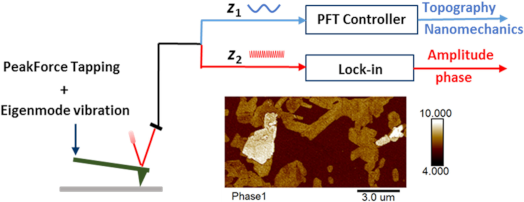
- factor (Q) cantilever dynamics amplify noise and demand meticulous parameter tuning [18]. To overcome these limitations, PeakForce tapping mode (PFT) was developed. It employs vertical probe oscillations at subresonant frequencies (0.5–8 kHz) to establish quasi-static tip–sample contact [18][19]. Unlike
- -frequency noise and baseline drift, ensuring stable force feedback for accurate topography and quantitative mechanical mapping. These processing routines are factory-implemented and operate transparently to the user [23]. The unfiltered signal branch of the high-eigenmode detection path is routed directly


Mechanical property measurements enabled by short-term Fourier-transform of atomic force microscopy thermal deflection analysis
Beilstein J. Nanotechnol. 2025, 16, 1952–1962, doi:10.3762/bjnano.16.136
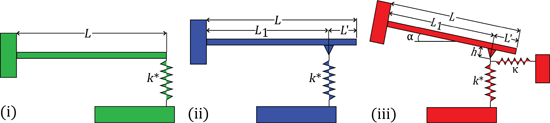
- dimensions in the determination of the Sader spring constant or other calculations of the normal spring constant are important. Finally, it has been demonstrated that the Sader method can consistently show a difference compared with the thermal noise method used above, particularly for soft cantilevers as
- the softer cantilevers. At this time, the base noise of our AFM system and electronic sampling of the deflection signal is too large to automate the fitting of the resonance peak with reasonable successful fits, limiting the application of our method to cantilevers having a lower spring constant. With




Quantum circuits with SINIS structures
Beilstein J. Nanotechnol. 2025, 16, 1931–1941, doi:10.3762/bjnano.16.134
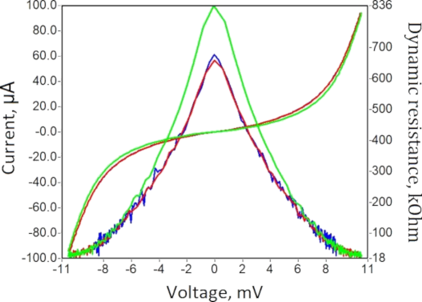
- were obtained with a black body radiation source and series of band-pass filters. The specially designed SINIS arrays are intended to detect 90 GHz radiation at the “Big Telescope Alt-azimuthal” (romanized Russian: “Bolshoi Teleskop Alt-azimutalnyi”, BTA) with noise equivalent power of less than 10−16
- junction; superconducting tunnel junctions; Introduction Modern superconducting electronics is moving towards lower temperatures, lower noise levels, and higher sensitivity, which can be achieved at sub-Kelvin temperatures using aluminum-based tunnel junctions. One group of devices, such as
- in sorption 3He cryostat at 0.33 K, Figure 2b. The relatively low value of the resistance ratio (Rd/Rn – dynamic resistance/normal resistance) is associated with the high sensitivity of the interferometer to external noise. NIS thermometers The I–V characteristic and dynamic resistance of the NIS


Low-temperature AFM with a microwave cavity optomechanical transducer
Beilstein J. Nanotechnol. 2025, 16, 1873–1882, doi:10.3762/bjnano.16.130
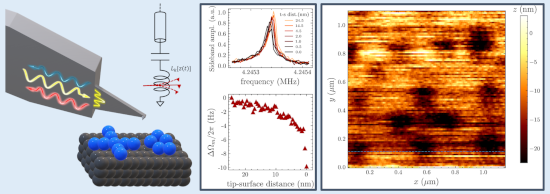
- noise, pointing to its crucial role in the context of force sensitivity. Through analysis of noise measurements we determine the effective temperature of the cantilever eigenmode and we determine the region of detector operation in which the sensor is thermal-noise-limited. Our analysis shows that the
- fulfills the specific requirements of the application. The latter is indeed the case for force sensing in atomic force microscopy (AFM). Force transduction at maximum sensitivity requires detecting the position of a “test mass”, while minimizing the added noise introduced by the detection itself [14][15
- determined by all sources of noise. The total noise can be expressed as the sum of the power spectral densities (PSDs) of uncorrelated contributions such as the thermal fluctuations in cantilever deflection (Ω) [m2/Hz] at the effective mode temperature T, measurement back action noise , and the frequency


Beyond the bilayer: multilayered hygroscopic actuation in pine cone scales
Beilstein J. Nanotechnol. 2025, 16, 1695–1710, doi:10.3762/bjnano.16.119
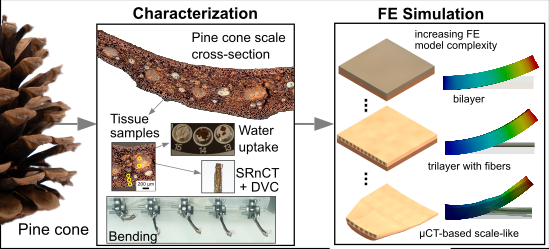
- due to an intra-tissue gradient. In contrast, the longitudinal shrinkage measured in the abaxial and adaxial sides of the sclereid layer was more uniform, with about 0.7 percentage points higher values for the adaxial side, likely being within the measurement noise. The brown tissue exhibited lower


Ambient pressure XPS at MAX IV
Beilstein J. Nanotechnol. 2025, 16, 1677–1694, doi:10.3762/bjnano.16.118
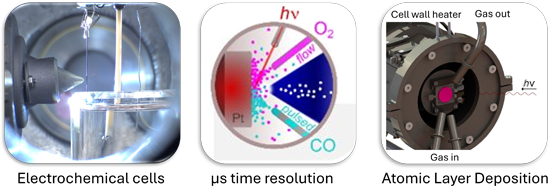
- near ambient pressure. Fourth-generation synchrotron light sources, characterized by their unprecedented photon flux, provide a key advantage for APXPS, enabling rapid data acquisition with low signal-to-noise ratio and facilitating the study of transient phenomena. This capability is essential for





Nanotechnology-based approaches for the removal of microplastics from wastewater: a comprehensive review
Beilstein J. Nanotechnol. 2025, 16, 1607–1632, doi:10.3762/bjnano.16.114
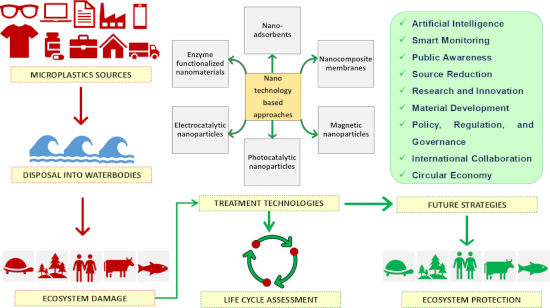
- -noise ratio and is affected by surface fluorescence from the samples, making careful sample preparation essential before analysis [134]. In recent years, advancements in MPs research have led to the development of innovative analytical tools for their detection, such as digital holography, scanning