Search results
Search for "size distribution" in Full Text gives 598 result(s) in Beilstein Journal of Nanotechnology. Showing first 200.
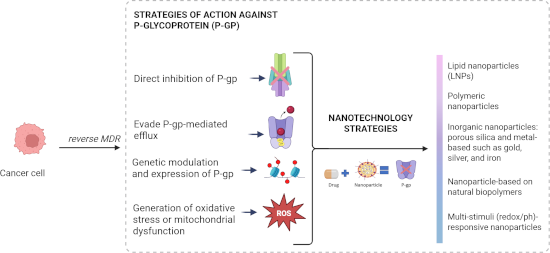
Nanocarrier strategies to overcome P-glycoprotein-mediated drug resistance in cancer therapy
Beilstein J. Nanotechnol. 2026, 17, 882–921, doi:10.3762/bjnano.17.64


Restorative potential of laser-synthesized silver nanoparticles with Salvia officinalis for periodontal disease treatment: an in vitro study
Beilstein J. Nanotechnol. 2026, 17, 781–795, doi:10.3762/bjnano.17.55
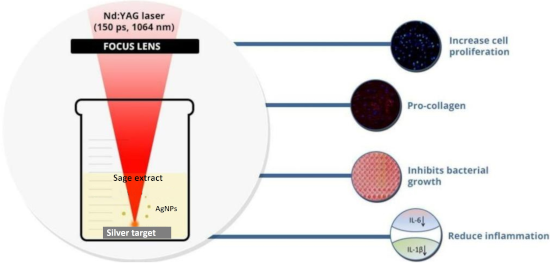
- sage extract using two different laser pulse energies (2 and 6 mJ) (Table 1). The reported values represent the total silver concentration in the colloidal solution and do not directly reflect nanoparticle number concentration due to differences in particle size distribution. Although the applied pulse
- possesses several biological benefits. While the higher concentration provides greater local therapeutic doses, the smaller particle size allows for greater cellular internalization by endocytosis [34]. The narrow size distribution of SageAgNPs6mJ could also contribute to the consistent biological outcomes
- keV with an X-FEG source and point-to-point resolution below 0.24 nm, was used to analyze nanoparticles after periods of two days and one month after synthesis. The photomicrographs were captured in the conventional mode and recorded on the CCD camera with a resolution of 4096 × 4096 pixels. The size



Substrate-dependent pore formation in molybdenum disulfide monolayers under ion irradiation
Beilstein J. Nanotechnol. 2026, 17, 769–780, doi:10.3762/bjnano.17.54
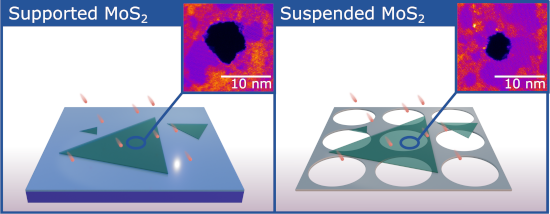
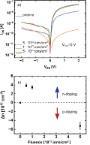
- are comparable in size to those on SiO2, while the 0.4 MeV/u Ar6+ irradiation of MoS2 on Au yields on average the largest pores. The pores on Au additionally exhibit a broad size distribution and an unusual morphology (see Supporting Information File 1, Figure S6 and Figure S7), with many showing
- not follow this expected trend with deposited energy. In addition, pores formed on Au show unusual morphologies and a broad size distribution. Despite the presumably larger deposited energy in (b) than in (a), the pore formation efficiency on Au is strongly reduced. Note that all displayed samples


Tailoring Ag–Pt nanoalloys through solid-state dewetting: structural and optical insights
Beilstein J. Nanotechnol. 2026, 17, 748–759, doi:10.3762/bjnano.17.52

- determined the size distribution of the formed structures, which is presented in Figure 4. It can be observed that annealing the 4 nm Ag/4 nm Pt bilayer at 650 °C for 15 min results in the relatively small average nanostructure size and the well uniform size distribution. This observation prompted the




Environmental applications of silver nanoparticles: state-of-the-art review and emerging trends
Beilstein J. Nanotechnol. 2026, 17, 697–736, doi:10.3762/bjnano.17.49
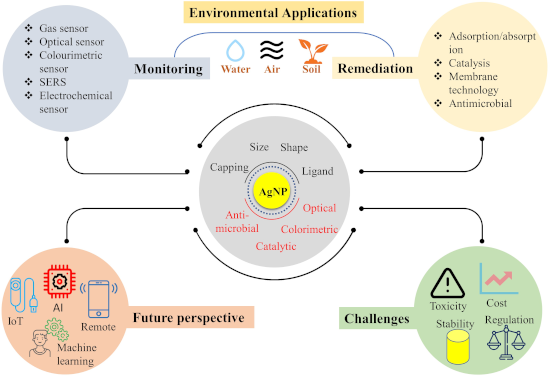
- surface charge in a colloidal solution [49]. DLS measures the size distribution and stability of AgNPs in solution, providing valuable information on their tendency to aggregate or agglomerate [51]. DLS measurements are suitable for isotropic particles and help elucidate the surface properties of AgNPs
- , which calculated the AgNP concentration as particles per millilitre [53]. Microscopic techniques, such as transmission electron microscopy, provide high-resolution images of individual nanoparticles, confirming morphology, size distribution, and elemental composition when coupled with energy-dispersive


Molecular engineering of individual dye-based nanoparticle photostability for ultrabright two-photon fluorescence
Beilstein J. Nanotechnol. 2026, 17, 688–696, doi:10.3762/bjnano.17.48
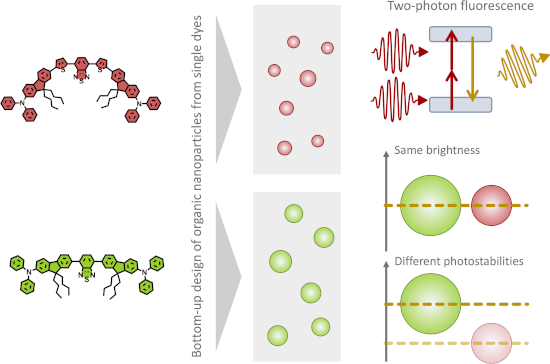
- solution was added on the dFONs-loaded grid for 3 min. Afterward, the excess of liquid was again removed by capillarity. The size distribution was determined using ImageJ software. Coverslip preparation A 10 µL droplet of individual nanoparticles was deposited onto a glass coverslip, which was then heated
- ) Transmission electron microscopy (TEM) and size distribution of dFONs(1), data reused from [20]. (d) TEM and size distribution of dFONs(2). (e) Normalized absorption spectra of dFONs(1) (green) and dFONs(2) (red). (f) Normalized emission spectra of dFONs(1) (green) and dFONs(2) (red). (g) Two-photon absorption


Two-step laser synthesis of Ag@TiO2 nanomaterials for the photocatalytic degradation of rhodamine B
Beilstein J. Nanotechnol. 2026, 17, 622–634, doi:10.3762/bjnano.17.43
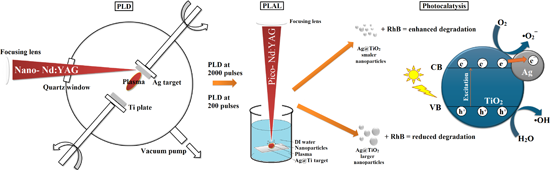
- photocatalyst (Ag@TiO2 200p or Ag@TiO2 2000p) was deposited onto a carbon-coated copper grid and left to dry under ambient conditions. ImageJ software, version 1.54 g, was used for image analysis and interplanar distance computations. Measurements of particle size distribution, zeta potential, and
- electrophoretic mobility Hydrodynamic size distribution and zeta potential of the nanoparticles were measured using a Zetasizer Ultra (Malvern Panalytical, Malvern, Worcestershire, UK). Disposable plastic cuvettes were employed for size distribution analysis, while capillary cells were used for zeta potential and
- ) Cross-sectional TEM micrographs, (b, e) HRTEM images, and (c, f) SAED diffraction patterns of, respectively, Ag@TiO2 200p and Ag@TiO2 2000p NPs. STEM-HAADF images and STEM-EDS compositional maps of titanium, oxygen, and silver of synthesized (a) Ag@TiO2 200p and (b) Ag@TiO2 2000p NPs. Particle size


Laser–material interactions in liquids for the synthesis of nanomaterials: current status and perspectives
Beilstein J. Nanotechnol. 2026, 17, 571–575, doi:10.3762/bjnano.17.38

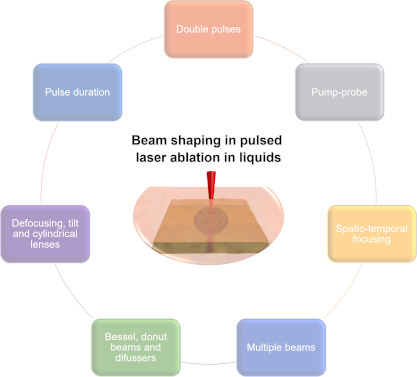
- broadly, beam shaping techniques are gaining attention as a means to improve process control and efficiency [24]. For example, non-Gaussian beam profiles, such as donut-shaped beams, have been shown to modify the nanoparticle size distribution [71]. The balance between implementation complexity, cost
Probing internal continua and atomic ultrafast charge transfer within size-controlled nanoparticles by post-collision interaction in core-hole clock spectroscopy
Beilstein J. Nanotechnol. 2026, 17, 505–514, doi:10.3762/bjnano.17.33
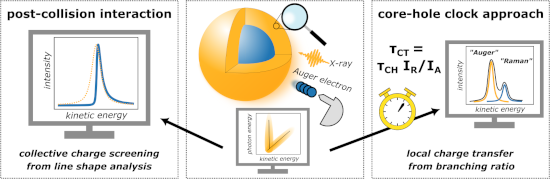
- nanoparticles via a line-shape analysis revealing post-collision interaction (PCI) effects within the conduction band continuum. We investigate CdSe/ZnS core–shell nanoparticles with a constant CdSe core size of 3.5 nm and varying shell thicknesses of ZnS that allow for atomic layer control with narrow size
- distribution. As indicated below in Figure 1, resonant Auger electron spectra are used to determine atomic charge transfer times based on the branching into localized and delocalized final states during the core-hole lifetime. We observe a significant reduction of charge transfer times within the ZnS shell for



Upcycling agroindustrial waste into graphene oxide supports for gold nanoparticles: toward sustainable nanomaterials
Beilstein J. Nanotechnol. 2026, 17, 489–504, doi:10.3762/bjnano.17.32
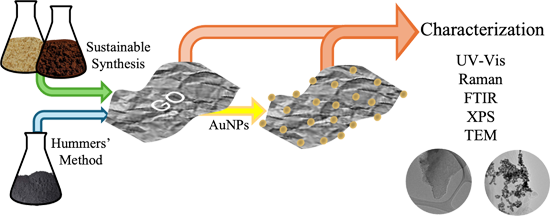
- uniform size distribution before pyrolysis. Synthesis of graphene oxide GO was synthesized using the Hummers' method as modified by Marcano and coworkers [9]. Briefly, 3 g of graphite were added to a flask containing a H2SO4/H3PO4 mixture, followed by the gradual addition of 18 g of KMnO4. The reaction
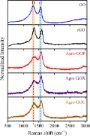
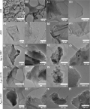
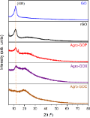
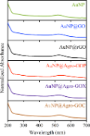
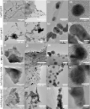
- sites, resulting in the sparse, agglomerated AuNPs observed in Agro-GOC. The final panel of each row shows high-magnification views of spherical AuNPs with diameters ranging from 6.9 to 10.9 nm, consistent with the particle-size distribution analysis. The average particle sizes were 6.9 ± 2.2 nm (AuNP
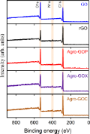
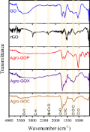
- -based materials. Each row represents a hybrid: (a–d) AuNPs@GO, (e–h) AuNPs@rGO, (i–l) AuNPs@Agro-GOP, (m–p) AuNPs@Agro-GOX, and (q–t) AuNPs@Agro-GOC. Columns show increasing magnifications of each sample. Particle size distribution histograms of AuNPs deposited on GO platforms. Relative atomic



Defects and defect-mediated engineering of two-dimensional materials: challenges and open questions
Beilstein J. Nanotechnol. 2026, 17, 454–488, doi:10.3762/bjnano.17.31
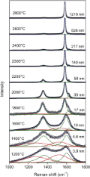
- host vacancy clusters. The clusters are also size-limited, as clusters growing too large and into the bright areas would force Gr bonds to detach from the substrate. Therefore, vacancies diffusing around avoid attachment to large clusters and prefer to attach to smaller ones, making the size
- distribution rather uniform. The average vacancy cluster size in Figure 9a is twelve vacancies. A similar mechanism of vacancy cluster self-organization applies to the moiré of h-BN with Ir(111) [157]. Figure 9d displays the pristine h-BN moiré with pronounced bright spots. Upon 500 eV He+ ion irradiation at





Nanocarrier-integrated multilayer films produced by 3D printing for improved skin adhesion and curcumin photostability
Beilstein J. Nanotechnol. 2026, 17, 440–453, doi:10.3762/bjnano.17.30
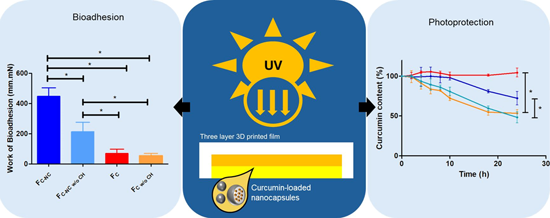
- effective photostabilization. Discussion Based on the observed physicochemical properties (Table 2), the formulations developed in the present study exhibited a low polydispersity index and a z-average particle size below 240 nm, indicating a narrow nanometric size distribution. All tested formulations
- conditioning. Furthermore, morphological assessment was performed at both the nano- and the macroscale, using particle size distribution, polydispersity index, and zeta potential as indirect indicators of nanocapsule structural organization, while the morphology and integrity of the multilayer 3D-printed films


Beam shaping techniques for pulsed laser ablation in liquids: Unlocking tunable control of nanoparticle synthesis in liquids
Beilstein J. Nanotechnol. 2026, 17, 309–342, doi:10.3762/bjnano.17.22
- size distribution is also affected by the fluence, obtaining smaller NPs for low fluences of 0.5–4.0 J·cm−2 [130][131][132]. The NP composition is also affected by the fluence. An increase of the laser energy leads to a higher concentration of gas, for example oxygen atoms, that increase O content in
- laser beam has been shown to allow for better control of NP size and to offer an advantage in terms of alignment and reproducibility due to the long length of the central lobe of the Bessel beam [142]. A narrow size distribution of Ag NPs obtained by femtosecond Bessel beam irradiation of a silver
- significantly reduced NP size, narrowed size distribution, and improved sphericity. The NPs’ size distribution shows only weak dependence on pulse energy. No significant variation of the Au NP size distribution was observed using 85 and 217 µJ pulses [158]. Instead, the observed effects are linked to the







Gold nanoparticle-decorated reduced graphene oxide as a highly effective catalyst for the selective α,β-dehydrogenation of N-alkyl-4-piperidones
Beilstein J. Nanotechnol. 2026, 17, 218–238, doi:10.3762/bjnano.17.15
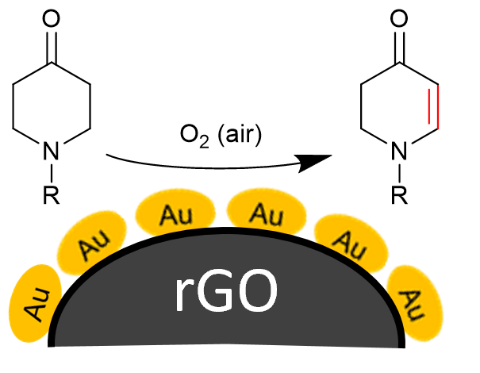
- scattering (DLS) measurements was 12 nm (Figure 4b). Transmission electron microscopy (TEM) analysis showed spherical and well-dispersed nanoparticles and their particle size distribution (Figure 4c), based on the measurements of approximately 200 nanoparticles, yielded an average diameter of 12 nm with a


Safe and sustainable by design with ML/AI: A transformative approach to advancing nanotechnology
Beilstein J. Nanotechnol. 2026, 17, 176–185, doi:10.3762/bjnano.17.11

- and sustainability considerations into nanomaterial development. Need for harmonized testing protocols Establishing standardized and reproducible methodologies for characterizing nanomaterial properties – such as size distribution, surface chemistry, and toxicity profiles – is essential. A unified


Influence of surface characteristics on the in vitro stability and cell uptake of nanoliposomes for brain delivery
Beilstein J. Nanotechnol. 2026, 17, 139–158, doi:10.3762/bjnano.17.9
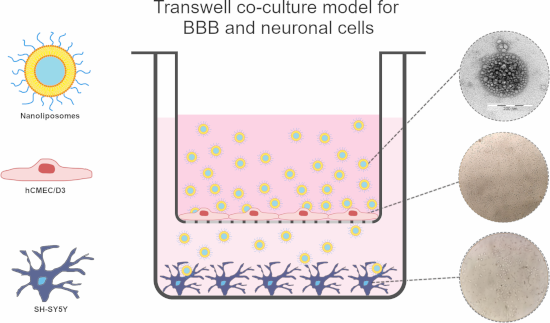
- qualitatively confirmed by spectrophotometry (e.g., by the absence of fluorescence in the supernatant obtained in the last washing cycle), ensuring that the fluorescence signal in subsequent experiments originates exclusively from liposome-associated dye. Particle size, particle size distribution and z
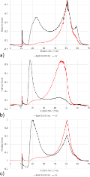
- highlight the dominant independent variables that have a significant effect in the model, the VIP score was used. Results and Discussion Particle size, particle size distribution and z-potential of the nanoliposomes Several studies have reported that despite the composition and the other surface properties
- ranged from 115–130 nm with PDI < 0.3 (Table 1), which indicates a narrow unimodal size distribution of the NLs in all formulations. According to the literature data, liposomal nanovesicles from 100 to 140 nm exhibit longer half-life in blood circulation and avoid of PC formation when compared those of




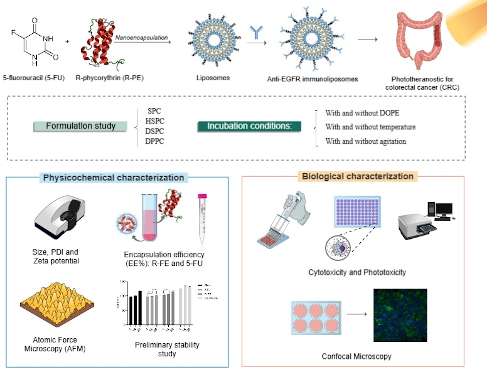
Development and in vitro evaluation of liposomes and immunoliposomes containing 5-fluorouracil and R-phycoerythrin as a potential phototheranostic system for colorectal cancer
Beilstein J. Nanotechnol. 2026, 17, 97–121, doi:10.3762/bjnano.17.7
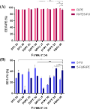
- bilayers [38][43][44]. The vesicle size distribution graphs obtained by DLS show that the presence of bimodal peaks in the liposome formulations is associated with higher PDI values. For example, the blank formulation of DPPC 50 exhibited a PDI of 0.31, with two distinct populations: one with an average



Quantitative estimation of nanoparticle/substrate adhesion by atomic force microscopy
Beilstein J. Nanotechnol. 2026, 17, 1–14, doi:10.3762/bjnano.17.1

- . Since it is assumed that NPs are single-charged [5], the QMF can, on the one hand, be used for scanning the NP mass distribution and, under the common assumption of spherical shape and the theoretical density of Cu, the size distribution. On the other hand, the QMF can be also be employed for filtering



Internal 3D temperature mapping in biological systems using ratiometric light-sheet imaging and lipid-coated upconversion nanothermometers
Beilstein J. Nanotechnol. 2025, 16, 2306–2316, doi:10.3762/bjnano.16.159
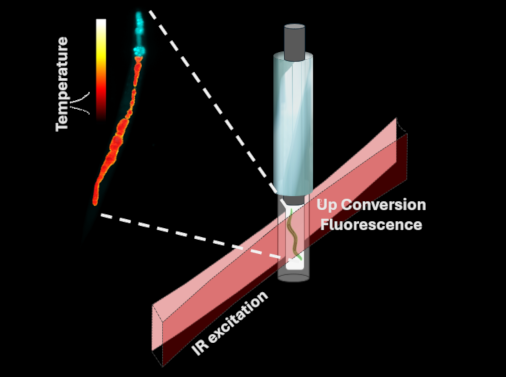
- thin-film hydration method based on Rojas-Gutierrez’s procedure [52]. Based on the size distribution and concentration of the nanoparticles (10 mg·mL−1), a lipid layer was formed with DOPS, cholesterol, and DMPC at a molar ratio of 64:29:7. The three lipids were dispersed in chloroform and mixed with
- with the lipid-functionalized UCNPs (inset), revealing a size distribution of approximately 15–20 nm. Because the lipid shell is an ultrathin organic layer (2–3 nm) with low electron contrast, no distinct morphological differences are expected between coated and uncoated nanoparticles in TEM images


Improving magnetic properties of Mn- and Zn-doped core–shell iron oxide nanoparticles by tuning their size
Beilstein J. Nanotechnol. 2025, 16, 2285–2295, doi:10.3762/bjnano.16.157
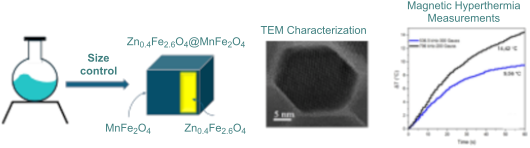
- average size of approximately 40 nm. The size distribution histogram (Figure 1b) confirms the uniformity of particle sizes, while a magnified image (Figure 1c) highlights the polyhedral morphology. The selected-area electron diffraction pattern (Figure 1d) exhibits distinct diffraction spots that can be
- –shell spinel ferrites for magnetic hyperthermia and related biomedical applications. (a) TEM images (bright field) of Zn0.4Fe2.6O4 NPs (40 nm). (b) Size distribution histogram of Zn0.4Fe2.6O4 NPs. (c) Zoom on the framed part in yellow (a). (d) HRTEM image of Zn0.4Fe2.6O4 NPs. (e) Diffraction pattern of



Optical bio/chemical sensors for vitamin B12 analysis in food and pharmaceuticals: state of the art, challenges, and future outlooks
Beilstein J. Nanotechnol. 2025, 16, 2207–2244, doi:10.3762/bjnano.16.153
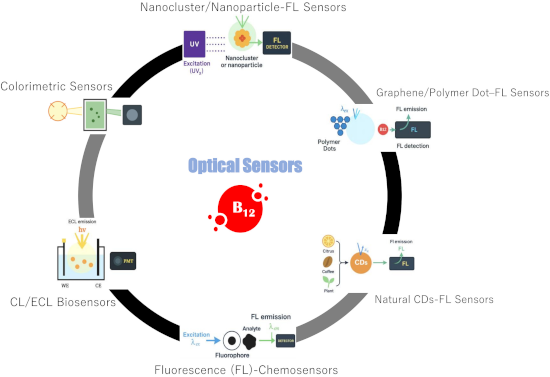
- AuNP suspensions is substantially influenced by their particle size and dispersion speed. 10–20 nm AuNPs with a narrow size distribution tend to absorb light from the blue-green spectrum and reflect red light. In contrast, their aggregation leads to a light absorption shift to longer wavelengths


Ultrathin water layers on mannosylated gold nanoparticles
Beilstein J. Nanotechnol. 2025, 16, 2183–2198, doi:10.3762/bjnano.16.151
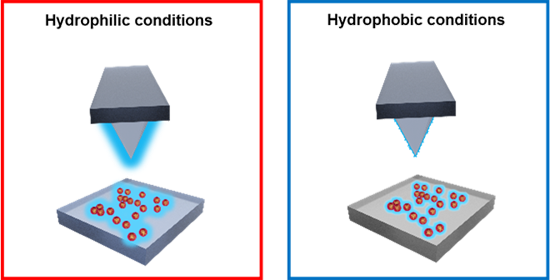
- , while size and morphology under completely dry conditions were measured by electron microscopy. DLS yields a hydrodynamic diameter of the PEG AuNPs of 67.7 ± 9.4 nm and a polydispersity index (PDI) of 0.35. However, the size distribution (Figure 2) reaches a maximum at 41.1 ± 4.2 nm. In contrast, the
- concentration of carboxylate) exhibit a lower ZP (approx. −45 mV) at the same pH [1]. To obtain a clearer view of the size distribution, we used SEM to evaluate particle sizes and morphologies in high vacuum (i.e., for completely dried samples). By adjusting a Gaussian fit to the histograms (Figure 3), the



Quality by design optimization of microemulsions for topical delivery of Passiflora setacea seed oil
Beilstein J. Nanotechnol. 2025, 16, 2116–2131, doi:10.3762/bjnano.16.146
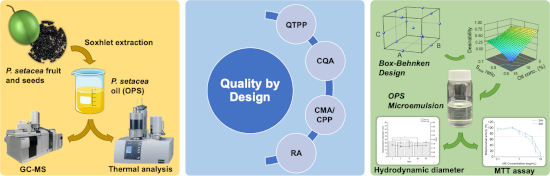
- accurately reflect the true droplet size distribution in the MEgel. This phenomenon is evident from the apparent increase in mean hydrodynamic diameter to 45.1 nm and PdI to 0.27, which is attributed to NaCMC matrix scattering rather than actual droplet growth [40]. A comparison of the hydrodynamic diameter


Rapid synthesis of highly monodisperse AgSbS2 nanocrystals: unveiling multifaceted activities in cancer therapy, antibacterial strategies, and antioxidant defense
Beilstein J. Nanotechnol. 2025, 16, 2105–2115, doi:10.3762/bjnano.16.145
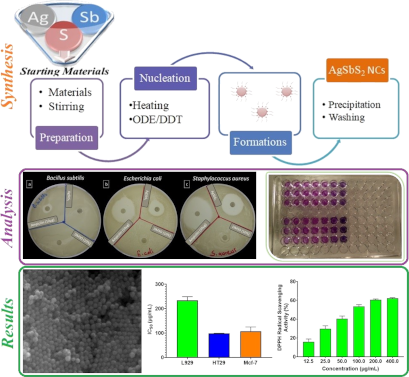
- , indicating robust crystallization. Moreover, the presence of prominent peaks aligning with (220), (311), (420), and (511) planes confirmed alignment with XRD results. Furthermore, utilizing particle size distribution analysis, the crystallite size of average particles was estimated, as illustrated in the
- inset in Figure 2c. The particle size distribution graphs in this image unequivocally affirmed the successful attainment of the desired homogeneity. Biological applications Antibacterial activity of AgSbS2 NCs Disc diffusion. The antimicrobial activity of AgSbS2 NCs at a concentration of 10 mg/mL


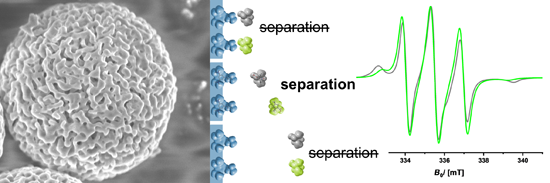
Stereodiscrimination of guests in chiral organosilica aerogels studied by ESR spectroscopy
Beilstein J. Nanotechnol. 2025, 16, 2034–2054, doi:10.3762/bjnano.16.140