


Search results
Search for "soft materials" in Full Text gives 44 result(s) in Beilstein Journal of Nanotechnology.
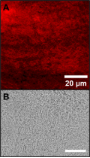
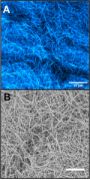
Visualizing nanostructures in supramolecular hydrogels: a correlative study using confocal and cryogenic scanning electron microscopy
Beilstein J. Nanotechnol. 2025, 16, 2274–2284, doi:10.3762/bjnano.16.156
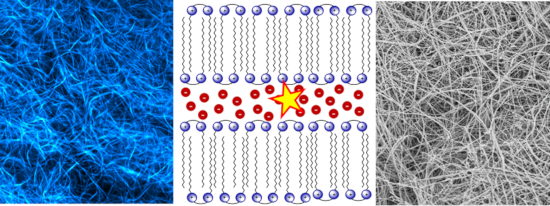
- , sublimation, and sputter coating) can introduce artefacts if not carefully optimized [15]. Refining cryo-SEM protocols to mitigate freezing artefacts and capture near-native hydrogel features has been carried out to counter these potential anomalies [16]. Complementary studies of soft materials using various
- exist [37][38]) for the morphological analysis of soft materials, particularly where fluorophore properties or sample preparation requirements might obscure key features in a single modality. Moreover, the results stress the importance of fluorophore selection in CLSM studies of supramolecular systems
- This manuscript is partially based on Shaun M. Smith’s doctoral thesis (“Preparation and Characterisation of Photoactive Supramolecular Soft Materials”, University of Nottingham, 2023). Funding We are grateful to the University of Nottingham through the Propulsion Futures Beacon of Excellence, we thank



Mechanical property measurements enabled by short-term Fourier-transform of atomic force microscopy thermal deflection analysis
Beilstein J. Nanotechnol. 2025, 16, 1952–1962, doi:10.3762/bjnano.16.136
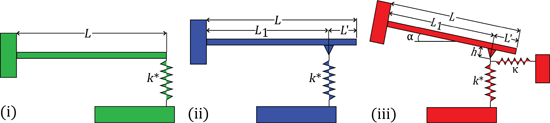
- data obtained from all material combinations evaluated in this study in each of the models. For example, Figure 4 shows that for soft materials, such as the Si–PDMS combination (silicon cantilever and PDMS substrate), all three models can be used to translate the oscillation frequency variation into a




Deep learning for enhancement of low-resolution and noisy scanning probe microscopy images
Beilstein J. Nanotechnol. 2025, 16, 1129–1140, doi:10.3762/bjnano.16.83
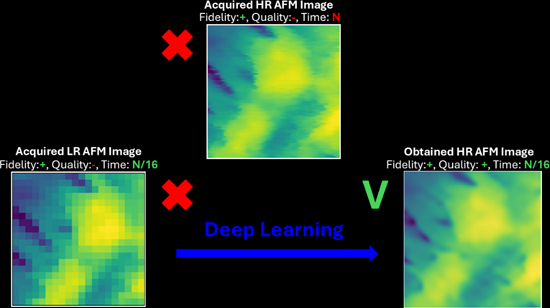
- , an important outcome of this work, besides resolution enhancement of low-resolution images with the SR deep learning models was the elimination of artifacts in the resulting AFM images. This can serve as a non-destructive method to obtain high-quality SR images of sensitive and soft materials


Soft materials nanoarchitectonics: liquid crystals, polymers, gels, biomaterials, and others
Beilstein J. Nanotechnol. 2025, 16, 1025–1067, doi:10.3762/bjnano.16.77
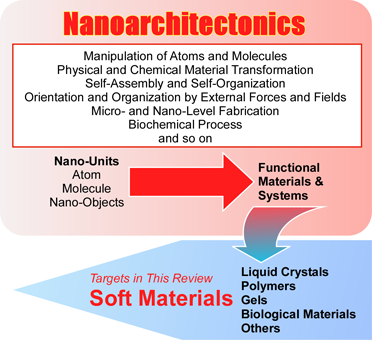
- concept of nanoarchitecture, as a post-nanotechnology methodology, can be defined as the construction of functional materials from nanometer-sized units using a variety of materials processes. It is believed to be particularly well suited to the assembly of soft materials that exhibit flexible and diverse
- structures and properties. To demonstrate its effectiveness, this review takes typical soft materials, including liquid crystals, polymers, gels, and biological materials, as examples. The aims are to extract the properties that emerge from them and to highlight the challenges that lie ahead. The examples
- for diabetic bone defects, and bactericidal materials. As can be seen from these examples, soft materials nanoarchitectonics offers a wide range of material designs, specific functions, and potential applications. In addition, this review examines the current state and future of soft materials






A low-kiloelectronvolt focused ion beam strategy for processing low-thermal-conductance materials with nanoampere currents
Beilstein J. Nanotechnol. 2024, 15, 1197–1207, doi:10.3762/bjnano.15.97

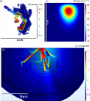
- in the picoampere beam current range. The simulation results suggest that using lower ion energies such as 5 keV would allow one to FIB-process many biological as well as soft materials with beam currents from the picoampere to the nanoampere ion beam current range. Proposed model to estimate changes



Beyond biomimicry – next generation applications of bioinspired adhesives from microfluidics to composites
Beilstein J. Nanotechnol. 2024, 15, 965–976, doi:10.3762/bjnano.15.79
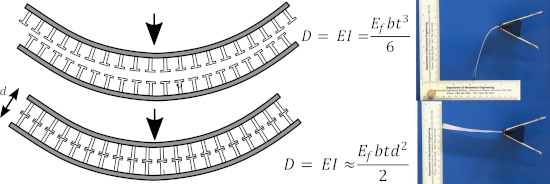
- academic topic that has gained much popularity since approximately 2010 [13] and involves using very deformable materials like elastomers to build robotic sensors, actuators, and even simple logic circuits [14] that use nearly exclusively or primarily soft materials. Soft robotics can be, in theory, very


Gold nanomakura: nanoarchitectonics and their photothermal response in association with carrageenan hydrogels
Beilstein J. Nanotechnol. 2024, 15, 678–693, doi:10.3762/bjnano.15.56

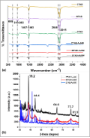
- biomedical soft materials [21]. Similarly, a very recent introduction of kappa-carrageenan (k-CG) into the field of nanotechnology has shown immense potential in the synthesis of plasmonic metal nanoparticles [22]. K-carrageenan is well known and is being used in several biomedical applications due to its
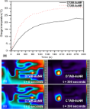
- compared to AuNRs in exhibiting photothermal response within k-CG hydrogel beads show a possible use of the designed nanostructures for biomedical soft materials operating within the 600–700 nm window. However, a future study of the usage of these materials in biological systems is needed for exploiting






Elasticity, an often-overseen parameter in the development of nanoscale drug delivery systems
Beilstein J. Nanotechnol. 2023, 14, 1149–1156, doi:10.3762/bjnano.14.95
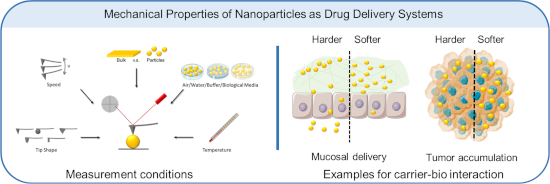
- soft and deformable objects [25]. Dealing with hard materials might require to apply the Derjaguin–Muller–Toporov (DMT) theory [26]. Garcia gives a comprehensive overview about different models and contact theories for mechanical measurements of soft materials using AFM [27]. Further options are the


Self-assembly of Eucalyptus gunnii wax tubules and pure ß-diketone on HOPG and glass
Beilstein J. Nanotechnol. 2021, 12, 939–949, doi:10.3762/bjnano.12.70
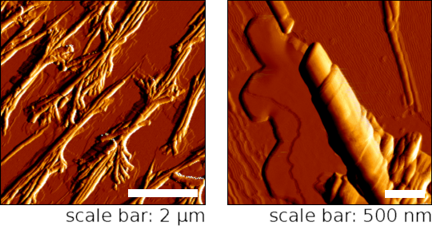
- . This clearly shows that the crystallization process is determined by crystal-forming molecules and by the underlying substrate. It was demonstrated that AFM is a suitable tool to study dynamic processes, even in soft materials such as natural wax. With this technique it was possible to record the




Recent progress in actuation technologies of micro/nanorobots
Beilstein J. Nanotechnol. 2021, 12, 756–765, doi:10.3762/bjnano.12.59
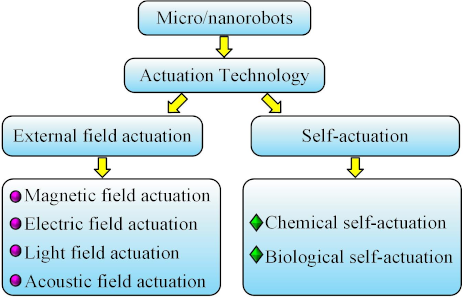
- the speed of the nanoswimmer can be adjusted by the light intensity. Under a laser intensity of 5 W·cm−2, the nanoswimmer can reach a speed of 31.22 μm/s. The potential of this nanoswimmer in biomedical applications and active soft materials provides support for future research. Sato et al. [32


The nanomorphology of cell surfaces of adhered osteoblasts
Beilstein J. Nanotechnol. 2021, 12, 242–256, doi:10.3762/bjnano.12.20
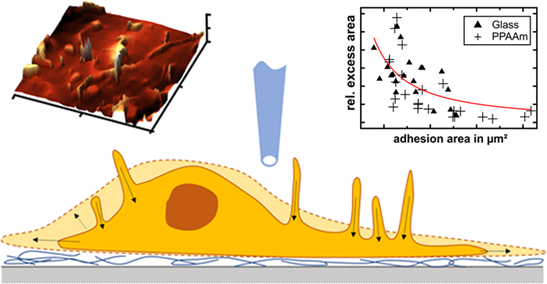
- setpoint and actual current at the time the approach is stopped is higher on hard materials than on soft materials (see, e.g., the white area on the right side of Figure 3b, corresponding to glass). The reason is the different slope of the current–distance curves [38]. Because of this, the delay between
- current sensing and motion termination results in a larger error signal on hard materials than on soft materials. Thus, the comparison between ion current error images of living and fixed cells can provide insight into the protein content in the ruffle volume, because fixation leads to crosslinking of


Determination of elastic moduli of elastic–plastic microspherical materials using nanoindentation simulation without mechanical polishing
Beilstein J. Nanotechnol. 2021, 12, 213–221, doi:10.3762/bjnano.12.17
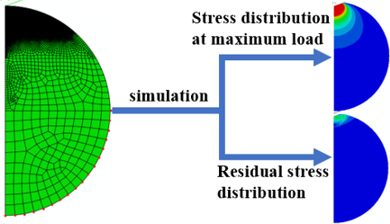
- greater in materials with larger E/σy ratios, such as soft materials. Hard materials and most polymers, ceramics, and glasses have small E/σy ratios. As E/σy decreases, corresponding to increases in the yield stress and decreases in hf/hmax, the size of the plastic zone decreases until, at some point, the


Impact of fluorination on interface energetics and growth of pentacene on Ag(111)
Beilstein J. Nanotechnol. 2020, 11, 1361–1370, doi:10.3762/bjnano.11.120
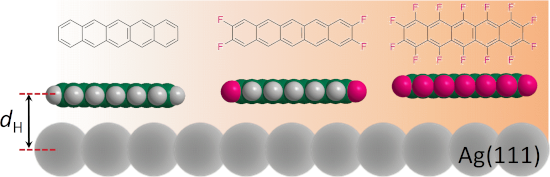
- Qi Wang Meng-Ting Chen Antoni Franco-Canellas Bin Shen Thomas Geiger Holger F. Bettinger Frank Schreiber Ingo Salzmann Alexander Gerlach Steffen Duhm Institut für Angewandte Physik, Universität Tübingen, Auf der Morgenstelle 10, 72076 Tübingen, Germany Institute of Functional Nano & Soft Materials


Gold and silver dichroic nanocomposite in the quest for 3D printing the Lycurgus cup
Beilstein J. Nanotechnol. 2020, 11, 16–23, doi:10.3762/bjnano.11.2
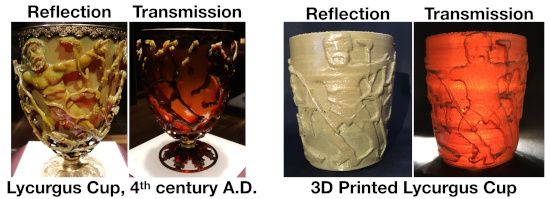
- ]. This fabrication cannot be applied to soft materials, thus could not be 3D printed. In 2014, Tanabe’s group synthesised dichroic AgNP by photochemical reaction using different “white” light sources [11]. The most stunning green/red effect which the group presented was obtained by synthesising AgNP by


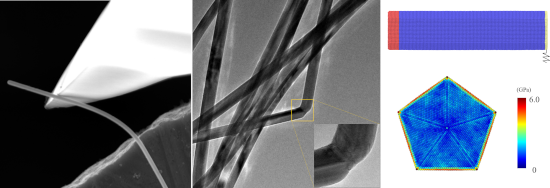
Abrupt elastic-to-plastic transition in pentagonal nanowires under bending
Beilstein J. Nanotechnol. 2019, 10, 2468–2476, doi:10.3762/bjnano.10.237
- by Russian Science Foundation project grant 18-19-00645 “Adhesion of polymer-based soft materials: from liquid to solid”; mechanical testing and FEM simulations were supported by Estonian Research Council projects PUT1689 and PUT1372.



Atomic force acoustic microscopy reveals the influence of substrate stiffness and topography on cell behavior
Beilstein J. Nanotechnol. 2019, 10, 2329–2337, doi:10.3762/bjnano.10.223
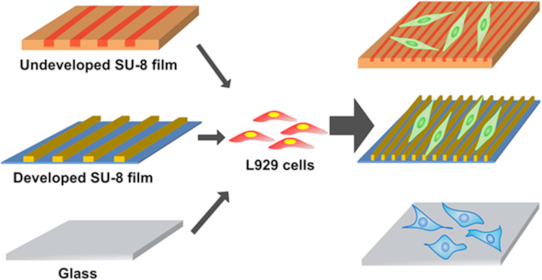
- an effective tool to measure soft materials such as biomedical tissues and polymers [18]. A number of research groups have reported that the AFAM method can characterize mechanical properties of buried structures. For example, the influence of the thickness on the elastic properties of porous


High-tolerance crystalline hydrogels formed from self-assembling cyclic dipeptide
Beilstein J. Nanotechnol. 2019, 10, 1894–1901, doi:10.3762/bjnano.10.184
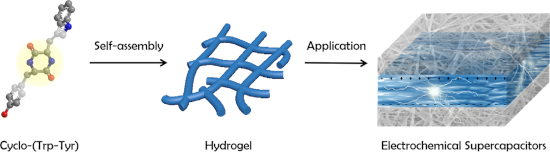
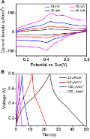
- . Gels prepared by CDP self-assembly integrate the advantages of low molecular weight gels, including the multiple functionalities, adjustable performance, and dynamic features. CDP-based gels have been developed as smart soft materials for a multitude of applications. However, most of the attention is


Subsurface imaging of flexible circuits via contact resonance atomic force microscopy
Beilstein J. Nanotechnol. 2019, 10, 1636–1647, doi:10.3762/bjnano.10.159
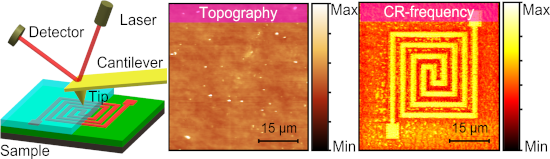
- stiffness contrast is demonstrated in Figure 5c where different normal forces have been used. From all the experiments, much better stiffness contrasts and larger uncertainties can be found for the first eigenmode. Owing to the relatively soft materials employed in the flexible circuits, a softer cantilever



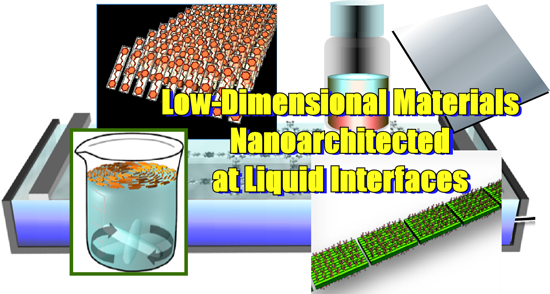
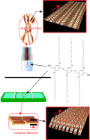
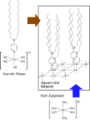
Materials nanoarchitectonics at two-dimensional liquid interfaces
Beilstein J. Nanotechnol. 2019, 10, 1559–1587, doi:10.3762/bjnano.10.153













Mechanical and thermodynamic properties of Aβ42, Aβ40, and α-synuclein fibrils: a coarse-grained method to complement experimental studies
Beilstein J. Nanotechnol. 2019, 10, 500–513, doi:10.3762/bjnano.10.51
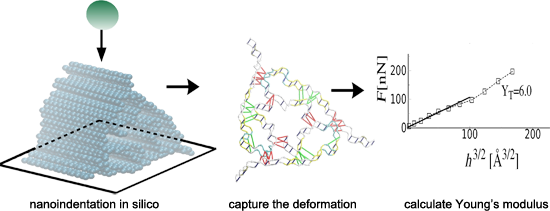
- heterogeneous soft materials. We investigate both the elastic and thermodynamic properties of the biological fibrils in order to substantiate experimental nanomechanical characterization techniques that are quickly developing and reaching dynamic imaging with video rate capabilities. The computational method


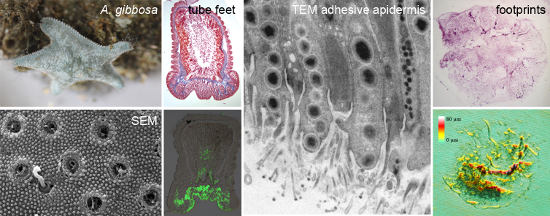
The structural and chemical basis of temporary adhesion in the sea star Asterina gibbosa
Beilstein J. Nanotechnol. 2018, 9, 2071–2086, doi:10.3762/bjnano.9.196
- its oscillation free amplitude in air. This mode is well adapted for soft materials such polymers or biological samples. Due to the fact that forces existing between the surface and the tip are intermittent and small, the technique preserves the samples from damaging while scanning their surface


Imaging of viscoelastic soft matter with small indentation using higher eigenmodes in single-eigenmode amplitude-modulation atomic force microscopy
Beilstein J. Nanotechnol. 2018, 9, 1116–1122, doi:10.3762/bjnano.9.103
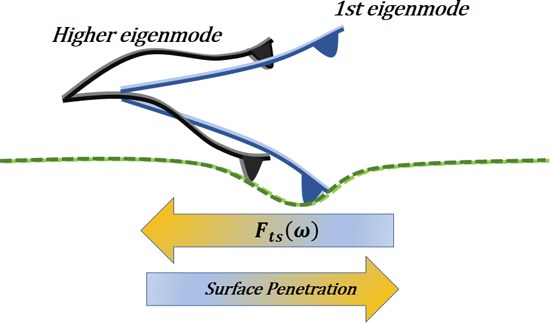
- reasons. For example, (i) the arguments made based on Equation 1 rely on the order of magnitude of the various terms, and the quality of the approximation A ≈ A0 = F0Q/k decreases as the amplitude setpoint is decreased. Additionally, (ii) not all soft materials are equally viscoelastic. Some samples may
- ]. Nevertheless, as our results show, it may in many instances be possible to reduce tip–sample indentation of soft materials by using higher eigenmodes during their AFM characterization, keeping in mind the amplitude adjustments based on matching the product kiAi of different eigenmodes and taking advantage of


Review: Electrostatically actuated nanobeam-based nanoelectromechanical switches – materials solutions and operational conditions
Beilstein J. Nanotechnol. 2018, 9, 271–300, doi:10.3762/bjnano.9.29
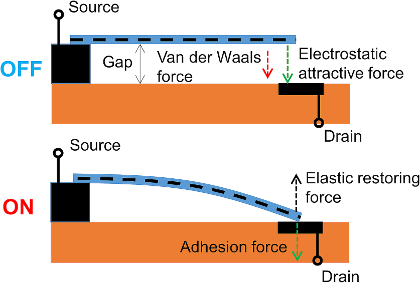
- experiment was carried out with an AFM in amplitude modulation mode complemented with molecular dynamics simulations. An exponential wear rate dependence on the peak force load was found, suggesting that lower contact forces are needed to reduce the wear rate. It should be noted that for soft materials


Luminescent supramolecular hydrogels from a tripeptide and nitrogen-doped carbon nanodots
Beilstein J. Nanotechnol. 2017, 8, 1553–1562, doi:10.3762/bjnano.8.157
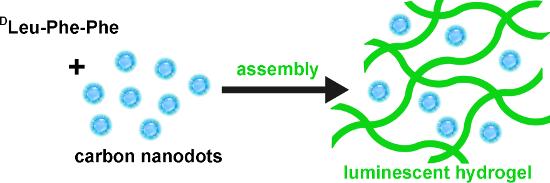
- gelling polymers, LMWGs have many advantages including well-defined chemical composition, and the possibility to achieve reversible gelation upon application of a specific trigger. Thus, smart, soft materials that can adapt to the environment can be obtained, mimicking natural biological tissues to
- useful approach to introduce additional properties to soft materials. In the case of self-assembling peptides, non-covalent π–π interactions between the nanocarbon and aromatic residues of the peptide offer a convenient means to bring the two components together into a supramolecular system [34]. This
- ]. In 2016, the interesting hydrogelation ability of guanosine 5′-monophosphate (5′-GMP)-derived CNDs was also reported [21]. To the best of our knowledge, the addition of CNDs to peptide-based hydrogels has not yet been investigated, despite this being an interesting class of supramolecular soft


Scaling law to determine peak forces in tapping-mode AFM experiments on finite elastic soft matter systems
Beilstein J. Nanotechnol. 2017, 8, 968–974, doi:10.3762/bjnano.8.98
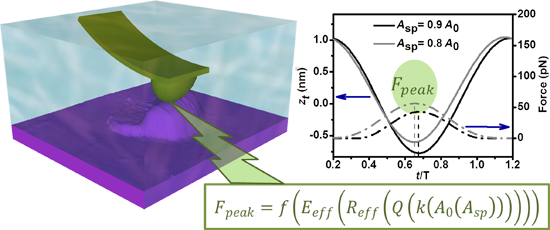
- . A closed-form analytical equation to estimate the tip–sample peak forces while imaging soft materials in liquid environment and within an elastic deformation regime has been deduced. We have combined a multivariate regression method with input from the virial–dissipation equations and Tatara’s
- words the dependence of the force is proportional to f(Eeff, Reff, Q, k, A0, Asp). Conclusion In short, we have deduced a closed-form equation that rapidly reproduces the peak force exerted by the AFM tip while imaging finite soft materials in liquid. The accuracy of this equation has been verified by
- means of numerical simulations for archetypical soft materials imaging conditions in AM-AFM based on Tatara’s contact mechanics. Those conditions are oscillation amplitudes in the range of 1–10 nm, and high set-point amplitudes (above 0.8A0). According to the Young’s moduli of the materials the





