Search results
Search for 日本10公里记录 in Full Text gives 2649 result(s) in Beilstein Journal of Nanotechnology. Showing first 200.
Upcycling agroindustrial waste into graphene oxide supports for gold nanoparticles: toward sustainable nanomaterials
Beilstein J. Nanotechnol. 2026, 17, 489–504, doi:10.3762/bjnano.17.32
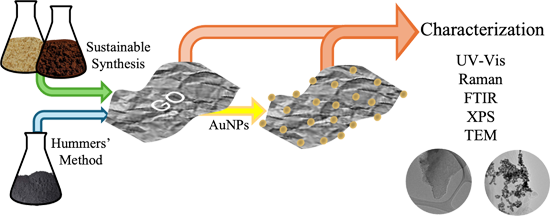
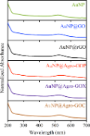
- conventionally synthesized through oxidation of graphite by chemical methods such as the Hummers' method or its modifications, which involve strong acids (e.g., H2SO4 or H3PO4), oxidants (e.g., KMnO4), and occasionally NaNO3 to facilitate exfoliation and oxidation of the graphite layers [6][7][8][9][10]. While
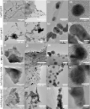
- heated in air to 300 °C at a heating rate of 10 °C·min−1, where it was held for 10 min. The resulting carbonaceous material was recovered and transferred into a 250 mL round-bottom flask containing 60 mL of 50% (v/v) nitric acid to remove residual ionic species introduced by ferrocene. The suspension was
- stirred at 200 rpm for 12 h at room temperature. Afterwards, the mixture was centrifuged at 7000 rpm for 10 min to precipitate Agro-GO and separate the supernatant containing dissolved iron ions. The solid was washed with deionized water until the pH reached 5. Finally, purified Agro-GO was vacuum-dried



Defects and defect-mediated engineering of two-dimensional materials: challenges and open questions
Beilstein J. Nanotechnol. 2026, 17, 454–488, doi:10.3762/bjnano.17.31
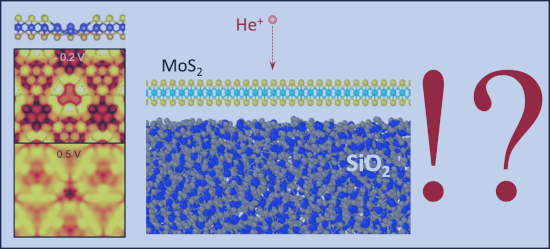
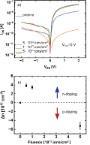
- of impurities, see [6][7][8][9][10] for an overview. Specifically, low-energy ion implantation [11][12][13][14][15][16][17] can be employed to directly create impurities in 2D materials. Alternatively, due to the 2D geometry, impurities can be introduced through filling the vacancies previously
- papers have been published. The findings have been summarized in several review articles [2][3][6][7][8][9][10]. However, the challenges and open questions that still remain in the field have received relatively little attention. In May 2025, these topics were addressed at the symposium “Defect-mediated
- transition taking place above 1% Re [135]. Vu et al. observed a linear increase of hole concentration in Nb-doped WS2 from 3%–8% [136]. Finally, Li et al. found V-doping to reduce the electron concentration of MoS2, which still remained n-type even at 10% V-doping [137]. As a result, compared to conventional





Nanocarrier-integrated multilayer films produced by 3D printing for improved skin adhesion and curcumin photostability
Beilstein J. Nanotechnol. 2026, 17, 440–453, doi:10.3762/bjnano.17.30
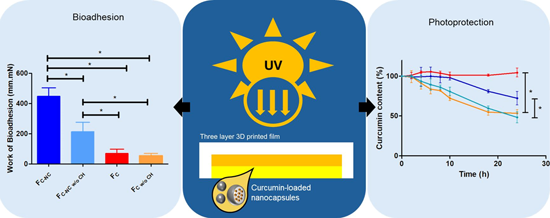
- may vary depending on the wound type, such as venous ulcers or burns [9][10][11][12]. An ideal dressing should exhibit suitable bioadhesive properties, prevent bacterial growth, minimise pain, and control odour, while also being cost-effective and easy to replace. Current research therefore focuses on
- concentrated to 10 mL. The experiment was carried out in a dark environment, protected from light. Blank formulations (B-NC) were prepared under the same conditions, without addition of curcumin in the organic phases. All formulations were prepared and characterised in triplicate. Particle size, pH and zeta
- potential The z-average particle size and the polydispersity index were measured by dynamic light scattering using a Zetasizer® Nano ZS (ZEN 3600, Malvern Instruments, USA). For this analysis, 10 µL of the C-NC formulation was diluted in 5 mL of ultrapure water (previously filtered through a 0.45 µm


First-principles study on elastic properties of Cu, (Cu1−x,Nix)3Sn and interfacial mechanical properties of (Cu1−x,Nix)3Sn/Cu in the lead-free solder joint
Beilstein J. Nanotechnol. 2026, 17, 428–439, doi:10.3762/bjnano.17.29
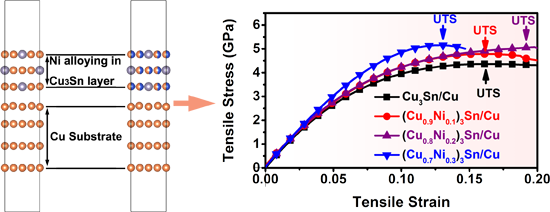
- . Therefore, high-lead solder remains the preferred choice for high-temperature applications at present [1]. In view of the fact that Ni and Pb belong to the same group in the periodic table of elements and have similar chemical and electronic properties [10], researchers have been intrigued to enhance the
- kinetic energy cutoff of 30 Hartree, a k-point mesh of 8 × 8 × 8 and a potential residual V(r) of less than 10−8 Hartree were used to achieve self-consistent convergence. Based on the optimized crystal structures, the elastic constants of FCC Cu and orthorhombic (CuxNi1−x)3Sn were calculated by finite
- , the strain along the z-axis was fixed; at the same time, the stresses along the x-axis and the y-axis were relaxed to less than 0.5 GPa. For the calculations on the interface structure, a kinetic energy cutoff of 30 Hartree, a k-point mesh of 4 × 4 × 1 and a potential residual V(r) of less than 10−8


Nanoinformatics: spanning scales, systems and solutions
Beilstein J. Nanotechnol. 2026, 17, 423–427, doi:10.3762/bjnano.17.28

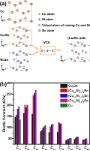
- nanoscale and advanced materials (so-called multi-criteria optimisation), and as a key driver of the knowledge and digital transitions that will underpin the next decade of industrial innovation as shown schematically in Figure 1. This thematic issue includes 13 articles (10 original research papers, two
- to treat neurodegenerative disease [10]. Moving into the realm of mixture toxicity and environmental impacts of nanomaterials, Petry et al. investigated the interaction of graphene oxide (GO) with tannic acid (TA) and its consequences for GO toxicity to the earthworm Caenorhabditis elegans. Reactive

Biomimetic nanoparticles in cancer photodynamic therapy: a review of targeted delivery systems and therapeutic outcomes
Beilstein J. Nanotechnol. 2026, 17, 396–422, doi:10.3762/bjnano.17.27
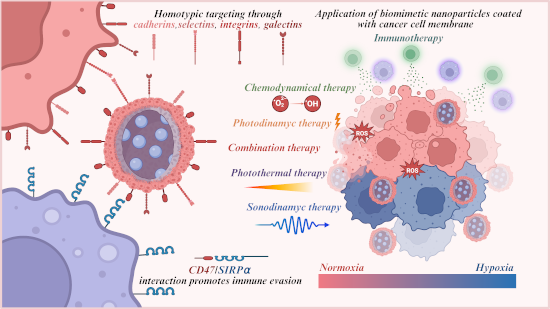
- , nanoencapsulation strategies for PSs are being actively developed [7][8]. Encapsulation of hydrophobic PSs in nanocarriers such as liposomes, polymeric nanoparticles, or micelles addresses solubility and stability, preventing aggregation [9]. Nanoparticles with sizes of 10–200 nm passively accumulate in tumor
- tissue via the enhanced permeability and retention (EPR) effect, driven by tumor vasculature characteristics [10]. This enhances delivery selectivity, reducing therapeutic doses and impact on healthy tissues. The nanoparticle shell isolates the PS, reducing dark toxicity and systemic phototoxicity [11


Eco-efficient materials for agricultural crops based on a mineral rich in MOR- and HEU-type zeolites
Beilstein J. Nanotechnol. 2026, 17, 381–395, doi:10.3762/bjnano.17.26
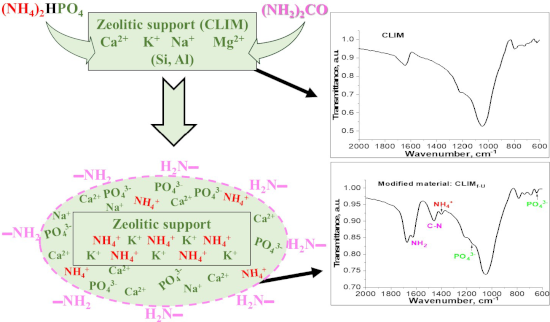
- increased nutrient utilization efficiency [3][4]. Several studies report improved growth, yield, and protection against pests and diseases in a wide range of agronomic and horticultural crops when zeolitic minerals are applied [10][11]. Also, native cations present in zeolites (Na+, K+, Ca2+, Mg2+) can be
- %) of ammonium hydrogenphosphate (DAP with 18% N and 46% P) for 24 h, and then with aqueous solutions of urea with different molar concentrations (0.5, 1.0, 2.0, and 5.0 mol/L) and contact time (4, 8, 12, and 24 h) using a solid/liquid ratio of 1 g/10 mL and agitation on a shaker with horizontal




Polycatecholamine nanocoatings on stainless steel: the effect on attachment of human fibroblasts and platelets
Beilstein J. Nanotechnol. 2026, 17, 365–380, doi:10.3762/bjnano.17.25
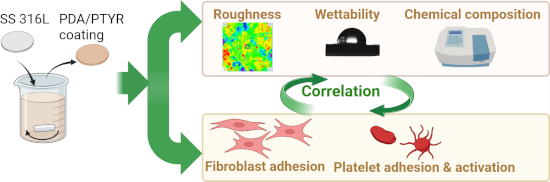
- (iv) reduce bacterial adhesion and thromboinflammatory responses [9][10][11]. In terms of stability, coating damage, such as cracking, delamination or peeling, not only impairs healing, but may also enhance platelet attachment, or release fragments into the bloodstream [12]. Thus, there is a clear
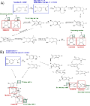
- : 10 min, 30 min, 1 h, or 4 h) or PTYR (reaction times: 30 min, 1 h, 4 h, or 24 h), according to the schematic presentation of the coating process shown in Figure 2a. The resulting appearance of the coating variants is shown in Figure 2b. The longer the time of reaction, the darker were PDA and PTYR
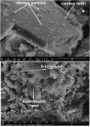
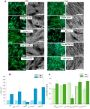
- times were subjected for further tests, that is, PDA 10 min, PDA 4 h, PTYR 30 min, and PTYR 24 h. Thickness of the coatings Thickness of the coatings was measured with SEM thanks to the tilt of the samples in the scratch location (Figure 3). The average thicknesses of PDA 10 min and 4 h coatings were




Ferroelectric nanodot reservoir for neuromorphic computing
Beilstein J. Nanotechnol. 2026, 17, 352–364, doi:10.3762/bjnano.17.24
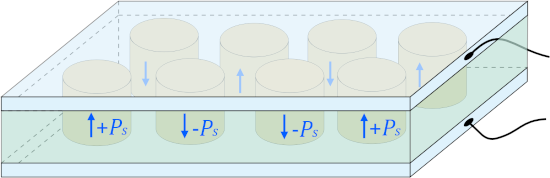
- [7][8][9][10][11]. In reservoir computing, a high-dimensional, nonlinear dynamical system, called the reservoir, transforms input signals into a rich temporal multiplexed feature space, from which a linear readout extracts the target output for further neuromorphic processing. In recent years


Interconnection morphology effects on the radio frequency response of carbon nanotube sponges
Beilstein J. Nanotechnol. 2026, 17, 343–351, doi:10.3762/bjnano.17.23
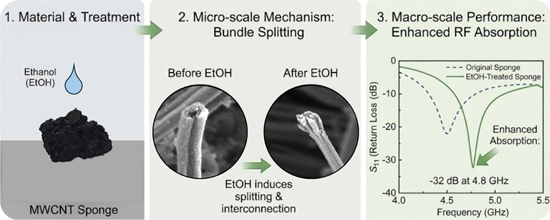
- . In particular, we observed that the response of S11 = −22.6 dB around 4.8 GHz from the CNS antenna improved after a mild treatment with ethanol, reaching S11 = −32.6 dB measured after 10 min of waiting. This observed effect is studied in detail with scanning electron microscopy and Raman spectroscopy
- being lighter and more resistant to a broad range of environmental and harsh operating conditions, while maintaining sufficient electrical conductivity. Among them, CNTs [10][11] proved to be well-performing materials in electronics and optoelectronic applications. CNT-based antennas have been realized
- conductors is not appreciable. Interesting results have been found for shear-aligned CNT films, which showed a radiation efficiency of 94% at 10 and 14 GHz, comparable to copper antennas [18]. Threads made of twisted bundles of as-grown CNTs worked as dipole antennas resonating at 2.45 GHz [6]. A recent



Beam shaping techniques for pulsed laser ablation in liquids: Unlocking tunable control of nanoparticle synthesis in liquids
Beilstein J. Nanotechnol. 2026, 17, 309–342, doi:10.3762/bjnano.17.22
- ). Additional NPs are formed within this bubble until it collapses, releasing and ejecting the remaining NPs into the liquid [9][10][11]. Although nanomaterials can be produced by alternative physical, chemical, or biological methods [12], PLAL offers several advantages [13]. Chemical methods are effective at
- production rates up to several grams per hour in specialised setups requiring fast scanning systems and high power (500 W) and repetition rate (10 MHz) picosecond laser sources [5][35][53][54]. Only recently, the employment of diffractive optical elements has enabled the gram-per-hour productivity scale with
- position corresponding to the smallest ablated spot. In fact, the maximum NP productivity with a 10 mm liquid layer was achieved for dzL = +2 mm. According to Figure 5, the smallest spot found for these parameters was at dzL = +4 mm. This 2 mm difference in the lens position induces a 260 times higher Au







Calculation of the dynamic stiffness of a cantilever under torsional oscillation
Beilstein J. Nanotechnol. 2026, 17, 303–308, doi:10.3762/bjnano.17.21
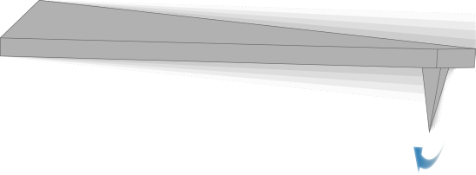
- with small stiffness and provides exceptional sensitivity to conservative and dissipative forces owing to the small stiffness [2][9][10][11]. Non-contact friction measurements with pendulum AFM on a Nb film across the superconducting transition indicate that friction is electronic in the metallic state
- , whereas phononic dissipation dominates in the superconducting state [10]. The cantilever in bimodal AFM oscillates in two modes, typically, the first flexural and first torsional modes [2]. The flexural mode is used for vertical tip-position control via its frequency shift, and the torsional mode detects

Fast vortex dynamics and relaxation times in NbRe-based heterostructures
Beilstein J. Nanotechnol. 2026, 17, 292–302, doi:10.3762/bjnano.17.20
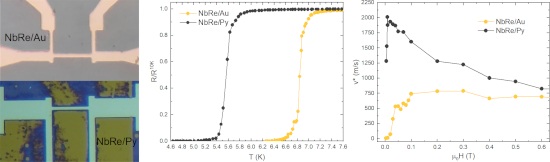
- optimization of superconducting quantum technologies, including superconducting detectors [10][11][12], superconducting qubits [13][14], and superconducting nano- and microstrips used in high-speed electronics [15], as well as for the development of hybrid architectures enabling magnon–fluxon interactions [16
- on SiO2 substrates. The base pressure was P = 2.2 × 10⁻⁸ mbar, and the Ar pressure during the deposition was = 6.6 μbar, = 12 μbar and = 6.3 μbar. During the deposition, the film thickness was monitored in situ by a thickness monitor, which provides a real-time measurement of the growth rate. The
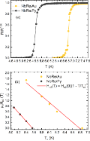
- with the surface perpendicular to the applied field. Resistive transition measurements were performed using a DC bias current Ib = 10 μA. For all samples, the critical temperature was defined as the temperature at which the resistance drops to 50% of the normal-state value measured at T = 10 K (R10K


Advancing nanolithography: a comprehensive review of materials for local anodic oxidation with AFM
Beilstein J. Nanotechnol. 2026, 17, 275–291, doi:10.3762/bjnano.17.19
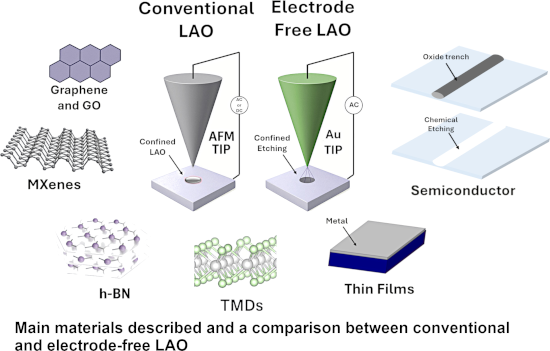
- maskless patterning under ambient conditions with sub-10 nm lateral resolution, enabling direct oxide formation or material removal with nanoscale precision, capabilities not readily achievable with conventional lithographic approaches. AFM-based LAO originated from earlier STM local oxidation studies [10
- aims to highlight the capability of LAO to pattern two-dimensional (2D) materials such as graphene [20][21][22], hexagonal boron nitride [23] (hBN), transition metal dichalcogenides (TMDs) [21][24][25][26][27], metals [18][28][29], as well as traditional semiconductors such as silicon (Si) [6][10][30
- stress and trapped charges hinder further ion transport. Together, these effects progressively slow oxidation and ultimately halt growth [48]. This explains why local oxidation experiments on Si report maximum features below 10 nm, while oxide features grown on SiC (with different stoichiometry and


Durable antimicrobial activity of fabrics functionalized with zeolite ion-exchanged nanomaterials against Staphylococcus aureus and Escherichia coli
Beilstein J. Nanotechnol. 2026, 17, 262–274, doi:10.3762/bjnano.17.18
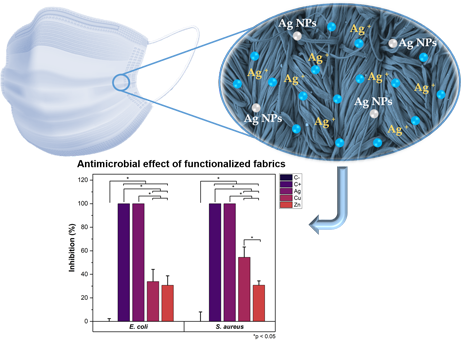
- synthesis methods, and relatively low cost [4][10][11]. One of the most extensively studied nanomaterials in terms of antimicrobial properties is colloidal silver as its antimicrobial action affects various parts of microorganisms. In addition to silver, copper has attracted significant attention for its
- concentrations of 10 and 20 ppm of Ag NPs exhibited strong bactericidal properties, reducing bacterial colonies by over 98%. Biogenic Ag NPs, obtained through fungal biosynthesis using extracellular filtrate of the epiphytic fungus Bionectria ochroleuca were incorporated into cotton and polyester fabrics using
- effective fixation of nanomaterials onto the fabrics. It is known that the high concentration of the binder could affect the antimicrobial activity of the fabrics [30]. Neither aggregation of the acrylic resin (10% w/w) nor degradation of the fibers after functionalization was observed for the prepared




Multilayered hyperbolic Au/TiO2 nanostructures for enhancing the nonlinear response around the epsilon-near-zero point
Beilstein J. Nanotechnol. 2026, 17, 251–261, doi:10.3762/bjnano.17.17
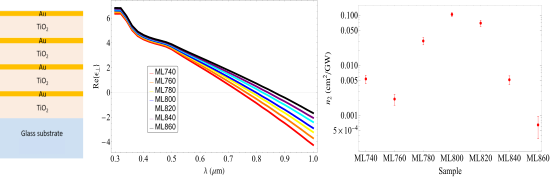
- layered Ag/TiO2 and determined via spectroscopy that its ENZ point laid within the visible spectrum [7]. Since then, a wide array of layered metal–dielectric configurations have been demonstrated, including silver-based combinations such as Ag/SiO2 [1], Ag/Al2O3 [6], Ag/LiF [8], Ag/TiO2 [9], Ag/Ge [10
- [20]. Work has also expanded into complex geometries, such as hybrid metal–dielectric layered pyramids [10], AZO nanotrenches for molecular absorption sensing [4], and the first nanowire array exhibiting hyperbolic properties with negative refraction at 780 nm [21]. Previously, our group has studied
- electronic and thermal contributions to the response as explained in [24]. We present results that enabled us to determine the thermal nonlinear response due to intrapulse heating. Design and Fabrication of Nanostructured Metal–Dielectric HMM For a multilayer system with layer widths of 10–100 nm, we can


Comparative study on 3D morphologies of delignified, single tracheids and fibers of five wood species
Beilstein J. Nanotechnol. 2026, 17, 239–250, doi:10.3762/bjnano.17.16
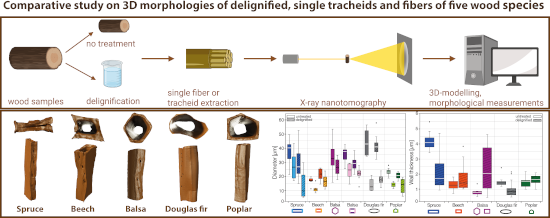
- (S1 and S2) and a tertiary wall (T) strongly supplemented by lignin. Apart from the middle lamella (ML) and the primary wall (P), the S2 layer being the thickest of the three main layers (S1, S2, and T), is the most important for mechanical support [1][10][11]. Lignin is present in all layers of the
- delignification, the wood specimens were added to a solution of NaClO2 (10% (w/v), AppliChem, Darmstadt, Germany) at 75 °C. The reaction was initiated by the addition of glacial acetic acid (4.0% (w/v), 100% purity, VWR) and maintained at this temperature for 6 h, during which the color of the solution changed
- nitrogen and subsequent lyophilization overnight (−45 °C, 0.080 mbar, Christ Alpha 2–4 LDplus, Christ, Osterode, Germany). Scanning electron microscopy Air-dried wood samples of each of the five species (untreated and delignified) were glued onto metal (SEM) stubs and sputter-coated with a 10 nm layer of


Gold nanoparticle-decorated reduced graphene oxide as a highly effective catalyst for the selective α,β-dehydrogenation of N-alkyl-4-piperidones
Beilstein J. Nanotechnol. 2026, 17, 218–238, doi:10.3762/bjnano.17.15
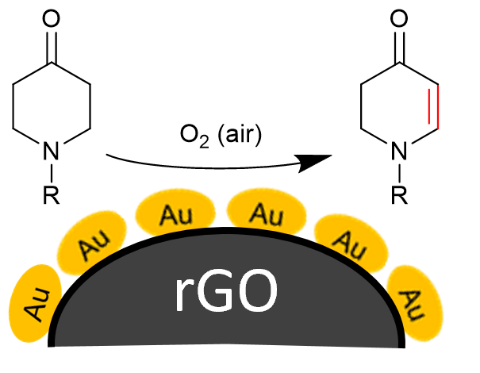
- carbon (AC), and carbon black (CB), to investigate the influence of the carbon support on the catalyst performance. As stabilizing agents for the AuNPs, citrate (Cit) and the polyoxometallate [SiW9O34]10− (SiW9) were used. Among the tested catalysts, the rGO-supported ones, Au-Cit/rGO, Au-SiW9/rGO, and
- nanoparticles, including gold nanoparticles [10][11]. POMs can act as both reducing and capping agents [12]. In 2022, Xia et al. demonstrated that among the fully occupied ([SiW12O40]4−, SiW12), monovacant ([SiW11O39]8−, SiW11), divacant ([SiW10O36]8−, SiW10), and trivacant ([SiW9O34]10−, SiW9) silicotungstate
- widespread use in direct oxidation processes, Au/C have been less explored in selective α,β-oxidative dehydrogenation reactions, particularly for β-N-substituted saturated ketones [19][21]. In this study, gold nanoparticles with an average size of 10–15 nm, stabilized by sodium citrate (NaCit), and of 3–8 nm


Micro- and nanoscale effects in biological and bioinspired materials and surfaces
Beilstein J. Nanotechnol. 2026, 17, 214–217, doi:10.3762/bjnano.17.14
- ][6][7], functions of animal surfaces [2][8], and timely reviews on bioinspired nanotechnology [9][10][11], it was decided to continue with a second thematic issue. This second thematic issue was initiated to address the great interest across readers and authors that took note of the previous issue as
Time of flight secondary ion mass spectrometry imaging of contaminant species in chemical vapour deposited graphene on copper
Beilstein J. Nanotechnol. 2026, 17, 200–213, doi:10.3762/bjnano.17.13
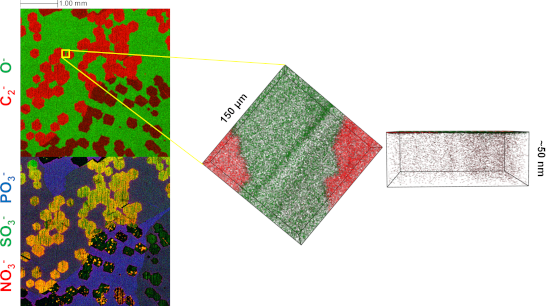
- ]. While nanocomposites incorporating graphene are expected to be disruptive in their own right [5][6], it is the potential for large area, single crystal graphene sheets, which CVD growth can realise [7][8][9][10] which may have the greatest impact. Such sheets are expected to harness the full potential
- × 10−2 mbar. The Cu foils were placed into the CVD chamber and the temperature was ramped to 1065 °C at 100 °C/min in either an Ar atmosphere (Ar) or a 4:1 (200 SCCM:50 SCCM) mixture of Ar and H2 (Ar:H2). The samples were then held at 1065 °C for an annealing time of 30 min. Subsequently, the carbon
- reactor cooled to room temperature in an Ar only atmosphere. During all stages of the process, a pressure of 50 mbar was regulated via a PID controlled outlet valve. Ex situ ToF-SIMS measurements were performed using a TOF SIMS IV instrument (ION-TOF Gmbh, Germany) at a vacuum pressure of <5 × 10⁻⁹ mbar





Structure-dependent thermochromism of PAZO thin films: theory and experiment
Beilstein J. Nanotechnol. 2026, 17, 186–199, doi:10.3762/bjnano.17.12
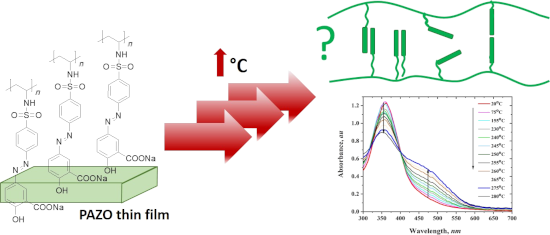
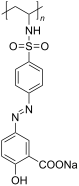
- isomerization leads to various effects, including molecular orientation, formation of surface relief structures, and photomechanical deformations. Consequently, azo polymers have been intensively studied as interesting photoresponsive materials [7][8][9][10][11]. One of the widely studied azo polymers is the


Safe and sustainable by design with ML/AI: A transformative approach to advancing nanotechnology
Beilstein J. Nanotechnol. 2026, 17, 176–185, doi:10.3762/bjnano.17.11
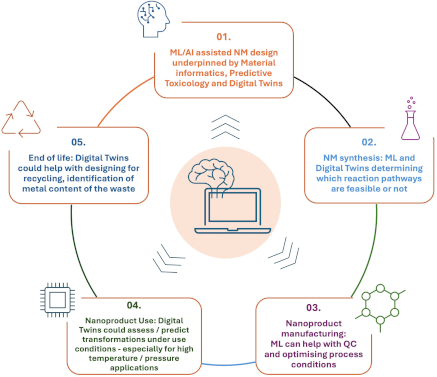
- , health, and safety (EHS) risks. The unique physicochemical properties of ENMs, including their high surface-to-volume ratio and reactivity, often result in unpredictable interactions with, and transformations by, biological and ecological systems [9][10]. Traditional risk assessment approaches, while


From shield to spear: Charge-reversible nanocarriers in overcoming cancer therapy barriers
Beilstein J. Nanotechnol. 2026, 17, 159–175, doi:10.3762/bjnano.17.10
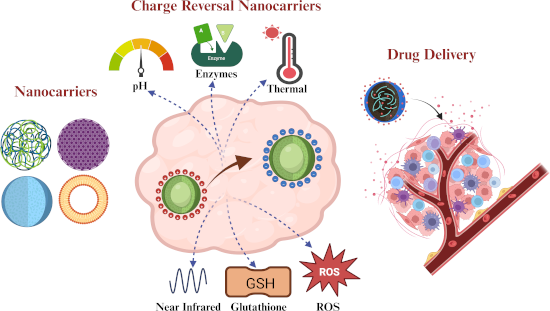
- pressing need for innovative solutions. An example would be smart nanocarrier drug delivery systems that enhance targeting precision and mitigate adverse effects [9][10]. Nanotechnology-based drug delivery systems have revolutionised cancer treatment by improving drug solubility, stability, and
- siRNA within lysosomes via protonation-induced release [21]. Similarly, a study presented a polymer nanocarrier with acid-triggered charge reversal achieving >60% drug release within 48 h at lysosomal pH 5.0, compared to less than 10% release at physiological pH 7.4. The system used tethered imidazole


Influence of surface characteristics on the in vitro stability and cell uptake of nanoliposomes for brain delivery
Beilstein J. Nanotechnol. 2026, 17, 139–158, doi:10.3762/bjnano.17.9
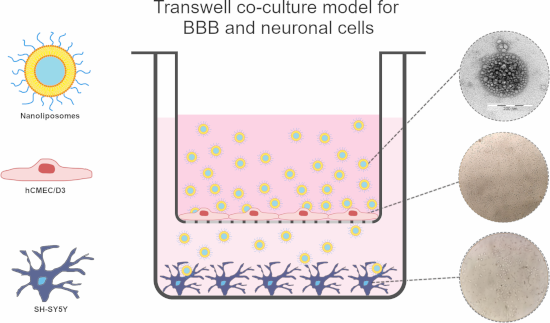
- /D3) and neuroblastoma cells (SH-SY5Y) under different conditions. The results obtained from comparative in vitro cell uptake studies on both cell culture lines after treatment with three different concentrations of fluorescently labelled NLs (5, 10, and 100 μg/mL) over a period of 1, 2, and 4 h
- . However, optimizing tight junctions to mirror human BBB characteristics remains a challenge [10][11]. On the other hand, the SH-SY5Y neuroblastoma cell line, which can further differentiate into neuronal-like morphologies, is often used to evaluate nanodelivery systems uptake kinetics and drug efficacy
- -potential of the nanoliposomes Тhe z-average diameter, the polydispersity index (PDI), and the z-potential (ZP) were determined using a Zetasizer Nano Series, (Nano-ZS, Malvern Instruments Ltd., UK), after diluting the optimal NL samples in 10 mM PB pH 7.4 (1:20, v/v). Measurements were made under the




Capabilities of the 3D-MLSI software tool in superconducting neuron design
Beilstein J. Nanotechnol. 2026, 17, 122–138, doi:10.3762/bjnano.17.8

- developed that are able to simulate 3D superconducting circuits [9][10][11][12][13]. One of the most popular tools [14] is InductEx [9], which is based on the FastHenry engine [10] originally developed for conventional CMOS circuits [15]. In 2001, the 3D-MLSI software tool was presented [11], which is
- insets in Figure 3), the variable segment has the simplest (two-layer) cross section. The simulation was performed with mesh steps of 0.125…1 μm, using a reduced-size superconducting screen truncated at a distance of 10 μm from the structure edges (see next section for details). For clarity, the data is
- of them falls well outside. However, even for this case, the divergence is not too large; the relative error is as small as 10% of the experimental values. The reasons for discrepancies require additional analysis, including those related to the sample fabrication process. Note that symbols in Figure