


Search results
Search for passenger subjective letter native Bering Strait Alaska 20th century in Full Text gives 405 result(s) in Beilstein Journal of Nanotechnology. Showing first 200.
Small protein sequences can induce cellular uptake of complex nanohybrids
Beilstein J. Nanotechnol. 2019, 10, 2477–2482, doi:10.3762/bjnano.10.238
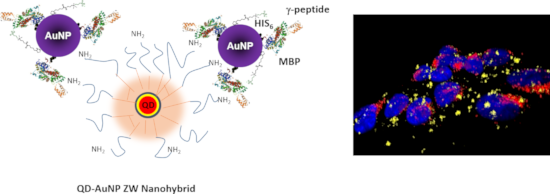
- Janeiro, Brazil The Scripps Research Institute, Department of Integrative Structural and Computational Biology, MB31, La Jolla, California 92037, United States Universitätsklinikum Hamburg Eppendorf, 20246, Martinistraße 52, 20251 Hamburg, Germany 10.3762/bjnano.10.238 Abstract In this letter, we report

pH-Controlled fluorescence switching in water-dispersed polymer brushes grafted to modified boron nitride nanotubes for cellular imaging
Beilstein J. Nanotechnol. 2019, 10, 2428–2439, doi:10.3762/bjnano.10.233
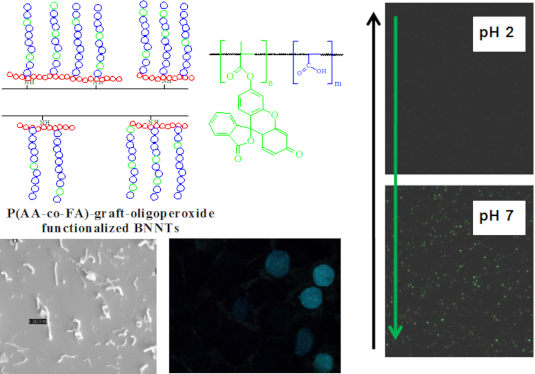
- functionalized BNNTs after the copolymerization of acrylic acid and fluorescein acrylate has demonstrated an excellent dispersibility in water (Figure 1b) forming a suspension with a light-yellow color without the formation of any visible aggregates. In contrast, native BNNTs are not dispersed at all and white
- solvents and water were repeated (see Experimental part). Figure 2 shows the TGA curves of native BNNTs (a), and oligoperoxide-functionalized BNNTs (b) and P(AA-co-FA)-functionalized BNNTs. The weight loss of oligoperoxide-functionalized BNNTs (Figure 2, curves b) is relatively low and is only a few
- -distribution profile (Figure 6) and zeta potential of BNNTs and P(AA-co-FA)-functionalized BNNTs in water were also studied. P(AA-co-FA)-functionalized BNNTs demonstrate a smaller Z-average diameter than the native BNNTs. The zeta potentials of BNNTs and P(AA-co-FA)-functionalized BNNTs are −19.4 and −14.3 mV



Atomic force acoustic microscopy reveals the influence of substrate stiffness and topography on cell behavior
Beilstein J. Nanotechnol. 2019, 10, 2329–2337, doi:10.3762/bjnano.10.223
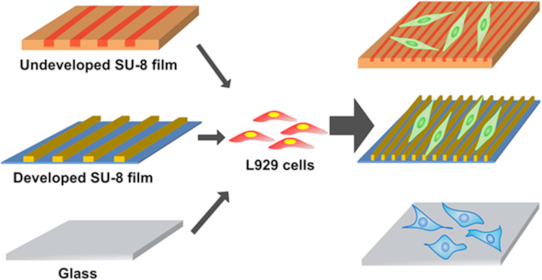
- distribution of molecules. However, many native tissues are not homogeneously stiff and it is not clear whether the controlled presentation of rigid and flexible material axes on the substrate governs the cytoskeletal and nuclear morphology [14]. Several techniques such as fluorescence microscopy [14][15


Microfluidics as tool to prepare size-tunable PLGA nanoparticles with high curcumin encapsulation for efficient mucus penetration
Beilstein J. Nanotechnol. 2019, 10, 2280–2293, doi:10.3762/bjnano.10.220
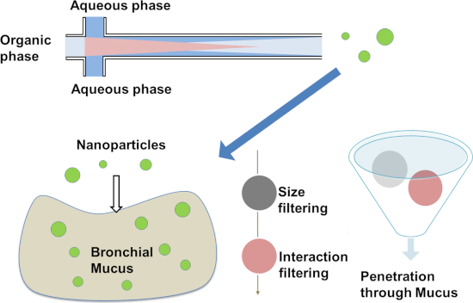
- before the experiments, frozen native pulmonary human mucus samples were left to thaw in the refrigerator at 4 °C. Rhodamine B labelled PLGA NPs of 60, 140 and 400 nm diameter were dispersed in Milli-Q water at 0.1% w/v. 5 μL of the nano-suspension was added on top of the mucus. Then, the time-dependent


Use of data processing for rapid detection of the prostate-specific antigen biomarker using immunomagnetic sandwich-type sensors
Beilstein J. Nanotechnol. 2019, 10, 2171–2181, doi:10.3762/bjnano.10.210
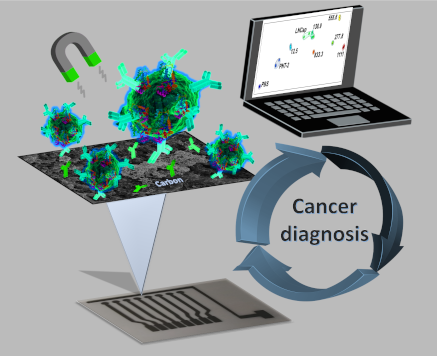
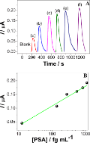
- native form. Figure 1A shows the cathodic peak current responses, with a linear dependence of the current on the logarithm of the PSA concentration in Figure 1B, according to the linear regression equation: I(nA) = 1.03·10−6 + 7.2·10−8 log(x). The detection limit calculated using the IUPAC method [35][36


Liquid crystal tunable claddings for polymer integrated optical waveguides
Beilstein J. Nanotechnol. 2019, 10, 2163–2170, doi:10.3762/bjnano.10.209
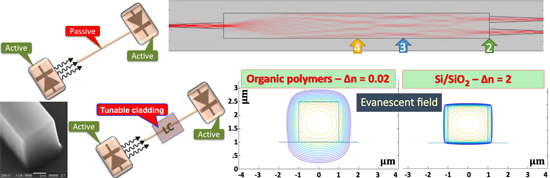
- elements (transistors) according to Moore’s law [2]. A single chip of a current EIC accumulates billions (109) of components. PICs were born just 15 years later, in 1969 [3]. Notwithstanding the half century of development of the technology, the achievements are far more modest. The most complex PICs


The importance of design in nanoarchitectonics: multifractality in MACE silicon nanowires
Beilstein J. Nanotechnol. 2019, 10, 2094–2102, doi:10.3762/bjnano.10.204
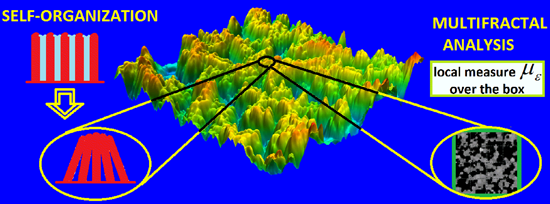
- present work. The procedure to grow the MACE samples is carried out as follows: (100)-oriented Si wafers are the substrates. As a first step, the native oxide is removed from their surfaces by UV-oxidizing (2 min) and then dipping them (5 min) in 5% HF. Subsequently, 2 nm thick Au layers are deposited on




Oblique angle deposition of nickel thin films by high-power impulse magnetron sputtering
Beilstein J. Nanotechnol. 2019, 10, 1914–1921, doi:10.3762/bjnano.10.186
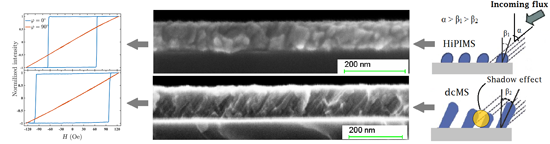
- was 25 cm. We used thermally oxidized Si(001) with an oxide thickness of 100 nm as substrates. However, for the scanning electron microscopy studies, Si(001) substrates with native oxide were used in order to eliminate the charging effect. All films were deposited at room temperature (25 °C) with a


Fabrication and characterization of Si1−xGex nanocrystals in as-grown and annealed structures: a comparative study
Beilstein J. Nanotechnol. 2019, 10, 1873–1882, doi:10.3762/bjnano.10.182
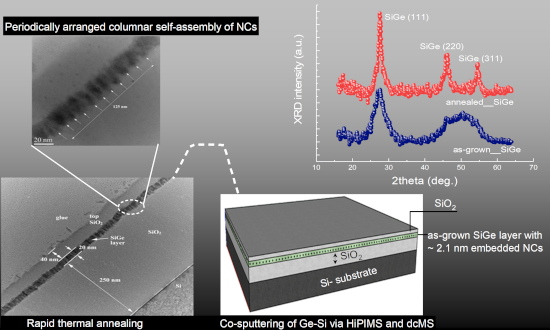
- . Prior to deposition, the substrate was etched with 2 M hydrofluoric acid (HF) for 120 s to remove native oxide. For the SiGe films, co-sputtering was carried out from individual targets of (6N purity) Si and Ge. Deposition of Si was carried out via dcMS at 180 W, whereas Ge was sputtered via HiPIMS


Precise local control of liquid crystal pretilt on polymer layers by focused ion beam nanopatterning
Beilstein J. Nanotechnol. 2019, 10, 1691–1697, doi:10.3762/bjnano.10.164
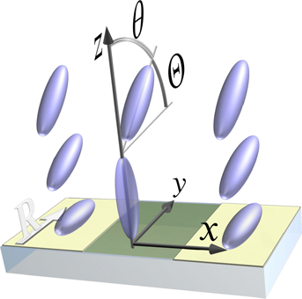
- particular LC alignments are highly valuable. Thin polymer layers induce either vertical alignment of nematic LCs, with the director oriented orthogonally to the interface plane, or planar alignment, with the director aligned in parallel to this plane. It was empirically established half a century ago that


Development of a new hybrid approach combining AFM and SEM for the nanoparticle dimensional metrology
Beilstein J. Nanotechnol. 2019, 10, 1523–1536, doi:10.3762/bjnano.10.150
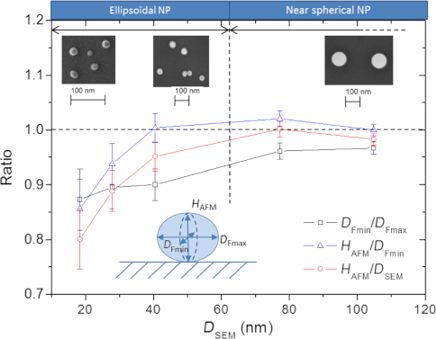
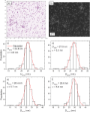
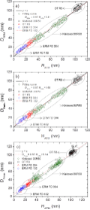
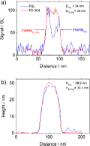
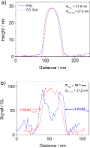
- formed by four crosses with a letter (from A to Y) nearby (Figure 3) for an easy localization of NPs to be analyzed. The distance between two crosses is 15 µm to allow the AFM to scan a complete square on a single image. As detailed above, the production method is based on lithography using a direct




Growth of lithium hydride thin films from solutions: Towards solution atomic layer deposition of lithiated films
Beilstein J. Nanotechnol. 2019, 10, 1443–1451, doi:10.3762/bjnano.10.142
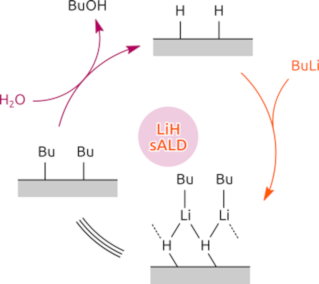
- line, and only afterwards was the chamber opened. Since the deposition took place on the entire chamber, the film deposited on the glass slide could be used for further analysis. The chamber had to be cleaned with nitric acid after every deposition. Substrates of Si with native oxide and Pt/Si were


Gas sensing properties of individual SnO2 nanowires and SnO2 sol–gel nanocomposites
Beilstein J. Nanotechnol. 2019, 10, 1380–1390, doi:10.3762/bjnano.10.136
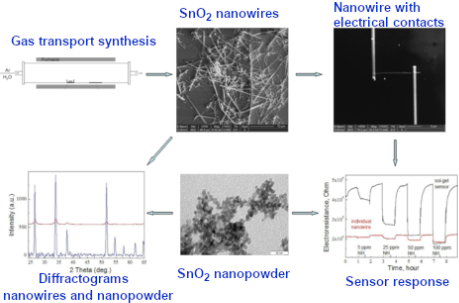
- spherical nanoparticles. The first nanowires were synthesized in the 1960s, but their widespread application only started in the beginning of the 21st century, when advancements in technology required the development of a wide range of nanomaterials and new methods for their treatment. The basic method for
- structure density of states is typical of native SnO2-x oxide covering the surface of pure metallic tin foils [37][38] and was confirmed for SnO2 powder samples by the presence of noticeable amounts of oxygen vacancies (Figure 7). XANES oxygen lines near K-edge spectra are presented in Figure 8. The fine




Janus-micromotor-based on–off luminescence sensor for active TNT detection
Beilstein J. Nanotechnol. 2019, 10, 1324–1331, doi:10.3762/bjnano.10.131
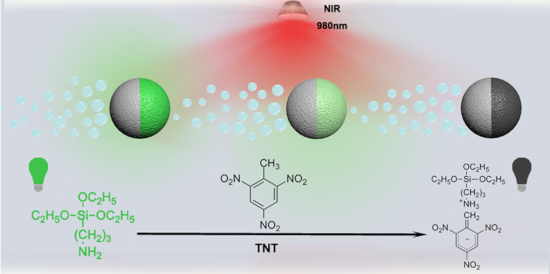
- luminescence was measured using a HORIBA Jobin Yvon FluoroMax-4 spectrophotometer with a 980 nm diode laser at a power of 1 W cm−2 (Shanghai Laser & Optics Century Co. Ltd). (a) Schematic representation of the fabrication process of Janus UCNP-modified polyelectrolyte capsule motors. (b) TEM images, (c) FTIR


Imaging the surface potential at the steps on the rutile TiO2(110) surface by Kelvin probe force microscopy
Beilstein J. Nanotechnol. 2019, 10, 1228–1236, doi:10.3762/bjnano.10.122
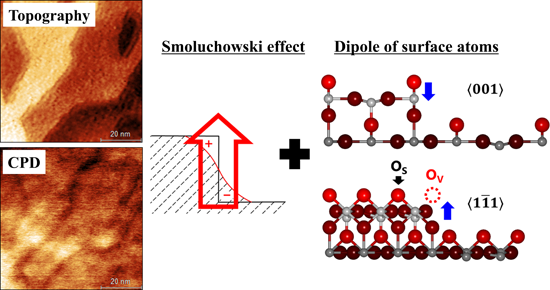
- (1 keV, 6.7 × 10⁻⁷ mbar, 5 min) and annealing (600 K, less than 2.7 × 10⁻¹⁰ mbar, 20 min) to remove the native oxide layer and other contaminants. A clean rutile TiO2(110) crystal (provided by Furuuchi Chemical Corporation) was prepared by dozens of cycles of Ar+ sputtering (1 keV, 1.3 × 10⁻⁶ mbar
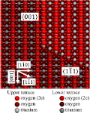
![[Graphic 16]](/bjnano/content/inline/2190-4286-10-122-i16.svg?max-width=637&scale=1.18182) and
and ![[Graphic 17]](/bjnano/content/inline/2190-4286-10-122-i17.svg?max-width=637&scale=1.18182) .
.
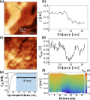

![[Graphic 38]](/bjnano/content/inline/2190-4286-10-122-i38.svg?max-width=637&scale=1.18182) and
and ![[Graphic 39]](/bjnano/content/inline/2190-4286-10-122-i39.svg?max-width=637&scale=1.18182) steps. (a) Topographic image...
steps. (a) Topographic image...


![[Graphic 72]](/bjnano/content/inline/2190-4286-10-122-i72.svg?max-width=637&scale=1.18182) , b)
, b) ![[Graphic 73]](/bjnano/content/inline/2190-4286-10-122-i73.svg?max-width=637&scale=1.18182) , c) reduced
, c) reduced ![[Graphic 74]](/bjnano/content/inline/2190-4286-10-122-i74.svg?max-width=637&scale=1.18182) , and d)
, and d) ![[Graphic 75]](/bjnano/content/inline/2190-4286-10-122-i75.svg?max-width=637&scale=1.18182) steps. B...
steps. B...
CuInSe2 quantum dots grown by molecular beam epitaxy on amorphous SiO2 surfaces
Beilstein J. Nanotechnol. 2019, 10, 1103–1111, doi:10.3762/bjnano.10.110
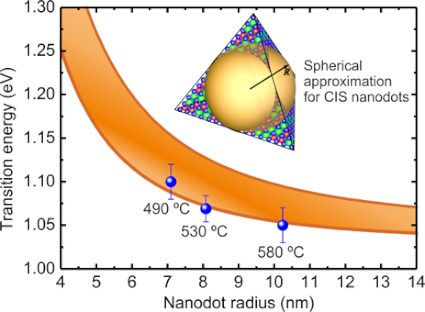
- preparation The samples presented in this work were grown in a molecular beam epitaxy system (Omicron EVO 50) by evaporating high-purity solid precursors. Nanodots were grown on Si(100) with an approximately 1.6 nm thick layer of native SiO2. The substrates were outgassed at 600 °C for 10 min before the
- typically produces films with a thickness of 50–70 nm. Results and Discussion We prepared three samples grown on Si(100) substrates with a ca. 1.6 nm layer of native SiO2 using exactly the same evaporation fluxes but at different substrate growth temperatures (TG) of 490, 530, and 580 °C. Figure 1 shows


Enhanced inhibition of influenza virus infection by peptide–noble-metal nanoparticle conjugates
Beilstein J. Nanotechnol. 2019, 10, 1038–1047, doi:10.3762/bjnano.10.104
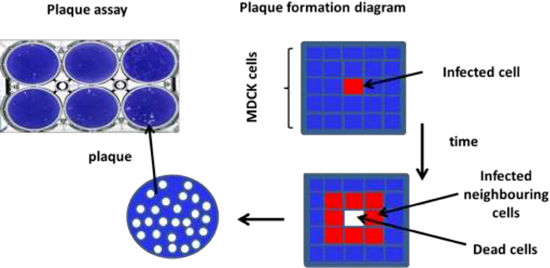
- together, these data indicate that the potency of FluPep ligand on the nanoparticles is greater than that of free FluPep ligand and of the native FluPep peptide (inset of Figure 3 and Table 1). Stability of FluPep functionalised silver nanoparticles Silver has well-established antimicrobial properties [33




Magnetic field-assisted assembly of iron oxide mesocrystals: a matter of nanoparticle shape and magnetic anisotropy
Beilstein J. Nanotechnol. 2019, 10, 894–900, doi:10.3762/bjnano.10.90
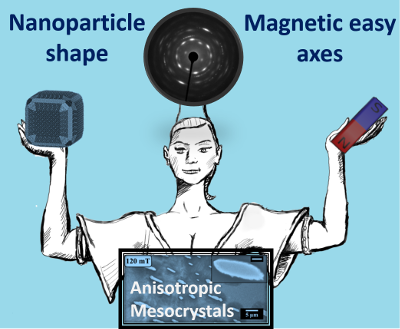
- Julian J. Brunner Marina Krumova Helmut Colfen Elena V. Sturm (nee Rosseeva) University of Konstanz, Konstanz, Germany 10.3762/bjnano.10.90 Abstract This letter describes the formation and detailed characterization of iron oxide mesocrystals produced by the directed assembly of superparamagnetic


On the transformation of “zincone”-like into porous ZnO thin films from sub-saturated plasma enhanced atomic layer deposition
Beilstein J. Nanotechnol. 2019, 10, 746–759, doi:10.3762/bjnano.10.74
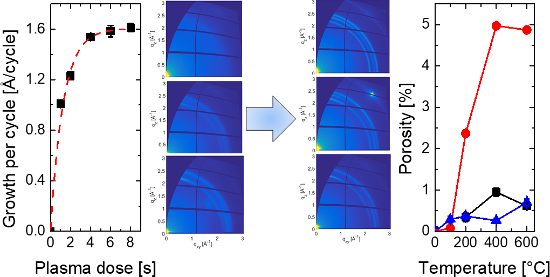
- the software CompleteEASE®. The thickness was determined by applying a three-layer model consisting of a silicon substrate, a native silicon-oxide layer with a fixed thickness of 1.5–2.0 nm, and a Cauchy layer, as follows in which n is the wavelength-dependent refractive index, λ is the wavelength and


Mechanical and thermodynamic properties of Aβ42, Aβ40, and α-synuclein fibrils: a coarse-grained method to complement experimental studies
Beilstein J. Nanotechnol. 2019, 10, 500–513, doi:10.3762/bjnano.10.51
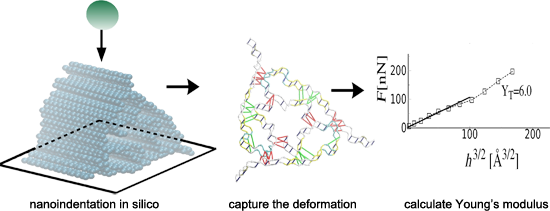
- kcal/mol/rad2 and = 5.0 kcal/mol/rad2. The choice of equilibrium values r0, θ0, and are based on two, three, and four α-C atoms, respectively, and are meant to favour the native geometry. The fourth term on the right-hand side of Equation 1 takes into account the non-bonded contact interactions
- capsids [35] and β-amyloids [36]. The strength of the repulsive non-native term, ε’, is set equal to ε. Our CG model takes into account native distances as in the case of a Gō-like model [37]. Hence, the native contacts are determined by the overlap criterion [48]. In practice, each heavy atom is assigned
- to a van der Waals radius, as proposed by Tsai and co-workers [49]. A sphere with the radius enlarged by a factor of 1.24 is built around the atom. If two amino acids have heavy atoms with overlapping spheres, then we consider a native contact between those two Cα atoms. In Figure 2, we show the CG


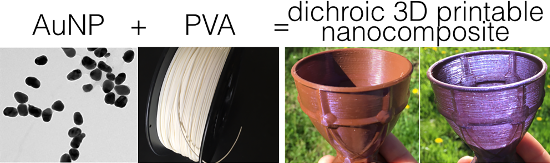
Gold nanoparticles embedded in a polymer as a 3D-printable dichroic nanocomposite material
Beilstein J. Nanotechnol. 2019, 10, 442–447, doi:10.3762/bjnano.10.43
- , nanoparticles received the lion’s share, conferring shiny colors to pottery and glass in different eras. Copper nanoparticles, for example, have been found in red glass from the late Bronze Age, 1200–1000 BCE [2]. The use of nanoparticles as a colorant boomed around the 4th century CE within the Roman empire
- 4th century puzzled scientists for long time: The Lycurgus cup [7]. This cup has a very peculiar dichroic filter property [8], as its color is dependent on the illumination angle, changing from clear red (transmittance) to opaque green (reflectance). It was later found that this optical property was
- modifying 3D-printable plastics with, for example, catalysts [11] or TiO2 nanoparticles [12] to obtain new improved materials with special characteristics. In this paper, we show how to fabricate a 3D-printable dichroic material using gold nanoparticles, jumping from the 4th century Roman glassmiths



Nanocomposite–parylene C thin films with high dielectric constant and low losses for future organic electronic devices
Beilstein J. Nanotechnol. 2019, 10, 428–441, doi:10.3762/bjnano.10.42
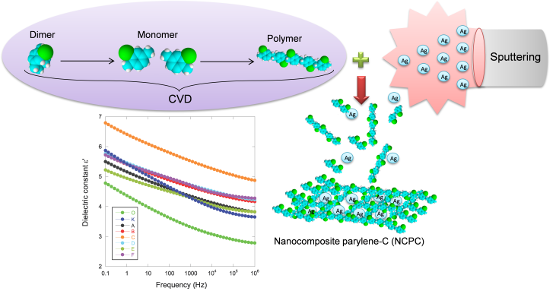
- final result, a gain in the gate insulation capacitance is expected for OFETs with the addition of conductive particles inside the native parylene C insulating gate. Results and Discussion Silver-PPXC co-deposition: film composition and structure Table 1 gives the experimental parameters of deposited




Advanced scanning probe lithography using anatase-to-rutile transition to create localized TiO2 nanorods
Beilstein J. Nanotechnol. 2019, 10, 412–418, doi:10.3762/bjnano.10.40
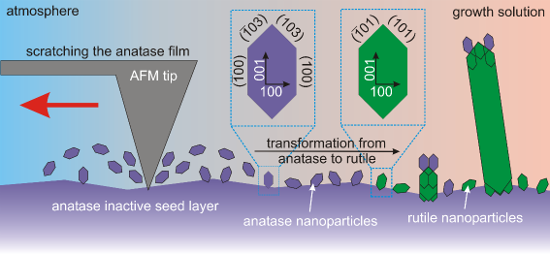
- deposition on a polished (100) silicon wafer with a native thin SiOx layer. Sputter deposition was performed at room temperature with a Gamma 1000C sputter system (Surrey NanoSystems Ltd) and a TiO2 sputter target (99.99% purity, Testbourne Ltd). The deposition rate was set to 0.2 Å/s and the process was
- and might charge the film locally. The charges are likely trapped in defect states generated by the scratching process. Furthermore, the native silicon oxide layer prevents a quick charge transport into the conductive boron-doped silicon substrate. A charged film might attract the precursor more


Geometrical optimisation of core–shell nanowire arrays for enhanced absorption in thin crystalline silicon heterojunction solar cells
Beilstein J. Nanotechnol. 2019, 10, 322–331, doi:10.3762/bjnano.10.31
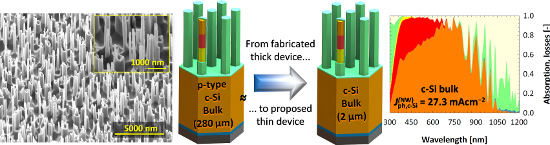
- 20 keV. Oxidation and annealing were carried out in dry ambient at 850 °C for 90 min, resulting in a sheet resistance RSH of 60 Ω/square. Before depositing the coating layers, the silicon wafer with nanowires on top was treated with diluted hydrofluoric acid, to remove the thin native oxide layer


Interaction of Te and Se interlayers with Ag or Au nanofilms in sandwich structures
Beilstein J. Nanotechnol. 2019, 10, 238–246, doi:10.3762/bjnano.10.22
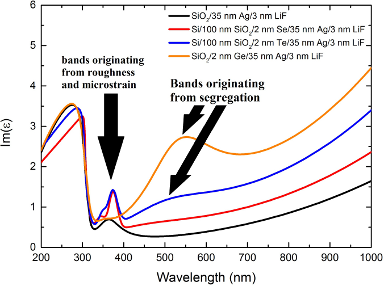
- spectrum allowed us to determine that both Se and Te migrate into the metal structure much slower than Ge. Experimental The experimental details are similar to our previous works [12][28][36]. For most measurements, 2 in Si (111) substrates with a native SiO2 film were covered with an additional 100 nm





