Search results
Search for 日本10公里记录 in Full Text gives 2649 result(s) in Beilstein Journal of Nanotechnology. Showing first 200.
Probing the potential of rare earth elements in the development of new anticancer drugs: single molecule studies
Beilstein J. Nanotechnol. 2025, 16, 187–194, doi:10.3762/bjnano.16.15
- fact that some metals have been successfully used, or are being investigated, as components of chemotherapeutic drugs [9][10], especially platinum [11][12][13][14][15][16] or, alternatively, ruthenium [17], titanium [18], gold, and copper. Here we report the high potential of three rare earth elements
- SM1711) in 10 mM Tris-HCl buffer with the addition of 10 mM of MgCl2 (pH 8.0), which is needed to reliably deposit the DNA molecules on mica substrates. PBS buffer cannot be used here since its high NaCl concentration disturbs the DNA adsorption on the substrates. The solution of DNA + ligand is first


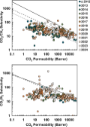
A review of metal-organic frameworks and polymers in mixed matrix membranes for CO2 capture
Beilstein J. Nanotechnol. 2025, 16, 155–186, doi:10.3762/bjnano.16.14
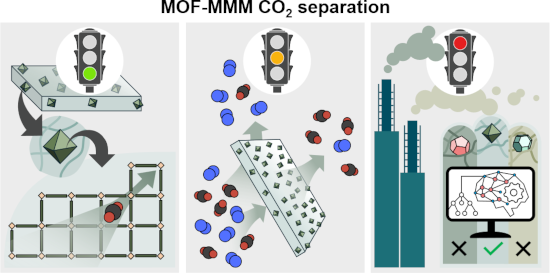
- , including regenerative solvent-based absorption [2][6], fixed-bed adsorption [7], cryogenic separation techniques [8], and membrane separation methods [9][10][11][12]. Of these, membrane technology offers advantages such as exceptional stability, high efficiency, low energy consumption, and ease of
- -integrated MMM. Specifically, they used oxolane, dichloromethane, chloroform, and methyl ethyl ketone (MEK) to prepare their precursor slurry. The MMMs were synthesized with 6FDD co-polyimide and MOF-808 at 0, 10, and 30 wt % loadings. Generally, the choice of solvent affects parameters such as viscosity
- was well-formed with 10 wt % MOF in the same solvent. Moreover, they found that the characteristics of the MMMs formed in the different solvents were reflected in the CO2/CH4 gas separation performance. With a MOF loading of 10 wt %, all MMMs showed increased permeability compared to the pristine




Clays enhanced with niobium: potential in wastewater treatment and reuse as pigment with antibacterial activity
Beilstein J. Nanotechnol. 2025, 16, 141–154, doi:10.3762/bjnano.16.13
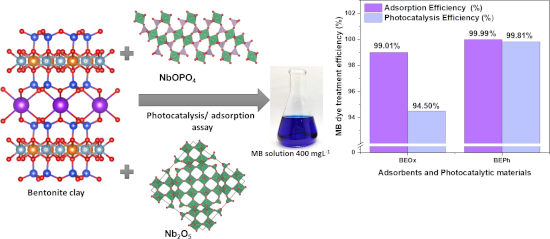
- , play a crucial role in industries requiring coloring, such as textile, food, cosmetics, rubber, printing, paper, and plastic. Globally, an estimated 7 × 10⁵ tons of dyes are produced, with 10–15% typically disposed of as wastewater pollutants [2]. Among the most used dyes, methylene blue (MB) is an
- out considering ambient light conditions in the laboratory. Following the adsorption process, the clay/Nb samples were centrifuged at 3500 rpm for 10 min, and the final concentration of the solutions was determined using a UV–vis spectrophotometer. These samples were named A-BEPh and A-BEOx to
- reactor at 25 °C (open), a magnetic stirrer, and a UV lamp (253.7 nm, 15 W, 220 V) within a dark chamber. After 3 h of exposure, the solutions were centrifuged at 3500 rpm for 10 min, and their final concentrations were determined using a UV–vis spectrophotometer. These samples were labeled as A-BEPhP and



TiO2 immobilized on 2D mordenite: effect of hydrolysis conditions on structural, textural, and optical characteristics of the nanocomposites
Beilstein J. Nanotechnol. 2025, 16, 128–140, doi:10.3762/bjnano.16.12
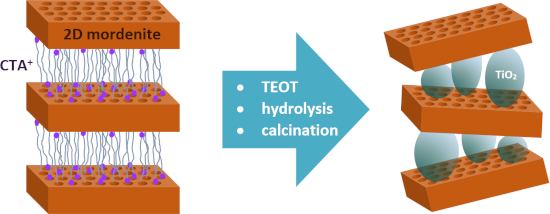
- distance and, hence, the mesopore size, but also the aluminum distribution and acidic properties of the obtained material, which are key parameters for catalysts [5][7][8][9][10]. One widely used component for the synthesis of 2D zeolites is CTAB [5][9][11][12][13]. To prepare mesoporous materials from
- efficiency than the bulk phase, but the bandgap of anatase particles smaller than 10 nm is very sensitive to their size [14]. One of the disadvantages of such free photocatalyst nanoparticles is the limitation of mass transfer between solid and liquid phases. From this perspective, the problem of
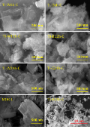
- calcination, all composites have a similar morphology. Thin plates of about 0.5 μm in size covered with nanoparticles of about 10 nm in size. The samples obtained by hydrolysis in 70% ethanol solution exhibit a more foam-like shape. Moreover, hydrolysis in 70% ethanol solution for 24 h results in the



Comparison of organic and inorganic hole transport layers in double perovskite material-based solar cell
Beilstein J. Nanotechnol. 2025, 16, 119–127, doi:10.3762/bjnano.16.11
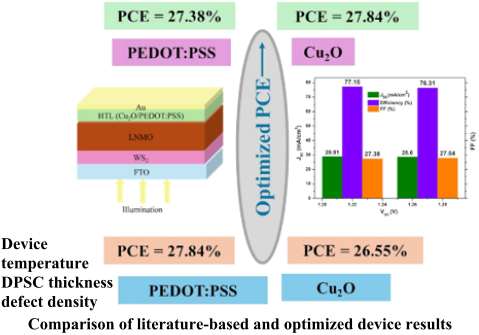
- corner-sharing BO6 and B′O6 units featuring a rock salt-like arrangement [10][11]. The commercialization of PSCs is impeded because of toxicity and long-term instability. DPSCs turned out to be better than PSCs because of better tunability, higher environmental stability, and higher efficiency. In DPSCs
- are given in Table 1. Experimental Verification In 2024, a lead-free DPSC was both designed and fabricated. The included LNMO material was synthesized using the sol–gel method. The experimental and simulated J–V curves showed PCEs of 4.5 % and 10%, respectively. For the simulation, TiO2 was used as


Nanocarriers and macrophage interaction: from a potential hurdle to an alternative therapeutic strategy
Beilstein J. Nanotechnol. 2025, 16, 97–118, doi:10.3762/bjnano.16.10
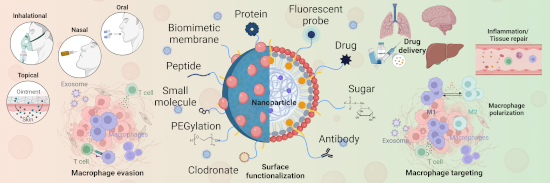
- ]. Strategies for manipulating macrophage activation and function are diverse, ranging from depleting macrophages in diseased tissues, such as in cancer immunotherapy [9][10][11], to employing non-surgical treatments like extracorporeal shock wave therapy in various rheumatic diseases to promote resolution and
- – pro-resolving functions: In contrast, M2 macrophages are activated by anti-inflammatory stimuli, such as IL-4 and IL-13, and are primarily involved in resolving inflammation and promoting tissue repair. They secrete anti-inflammatory cytokines such as IL-10 and transforming growth factor β (TGF-β) [20
- inflammation through the secretion of IL-10 and low levels of TNF-α. M2c macrophages, stimulated by IL-10 and glucocorticoids, resolve inflammation and promote tissue regeneration. Last, M2d macrophages, known as tumor-associated macrophages (TAMs), are activated by adenosine and IL-6 and characterized by


Modeling and simulation of carbon-nanocomposite-based gas sensors
Beilstein J. Nanotechnol. 2025, 16, 90–96, doi:10.3762/bjnano.16.9
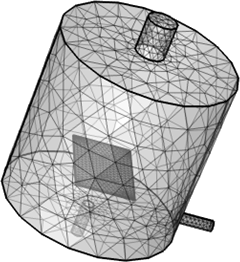
- showed high sensitivity towards strong electron-withdrawing molecules for NO2 gas detection [10]. To simulate gas adsorption in COMSOL Multiphysics for a gas sensor, several adsorption models can be employed depending on the physical and chemical behavior of the sensor. Commonly used models include the
- surface is assumed to be fully covered by ambient air molecules. The sensor is modeled as a block (10 mm × 15 mm × 0.125 mm) which is then placed inside a chamber with a radius of 1.5 cm and a height of 3 cm. The inlet with diameter of 0.5 cm and two outlets with a diameter of 0.2 cm each having a length



Characterization of ZnO nanoparticles synthesized using probiotic Lactiplantibacillus plantarum GP258
Beilstein J. Nanotechnol. 2025, 16, 78–89, doi:10.3762/bjnano.16.8
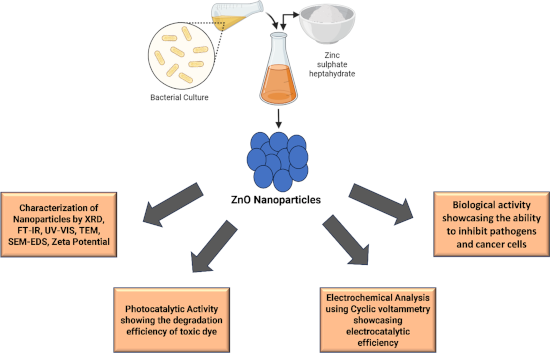
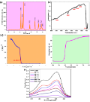
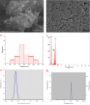
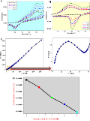
- measurements were employed to analyze the morphology, dimensions, and elemental composition of the generated nanoparticles. The experimental outcomes confirmed the presence of hexagonal wurtzite-structured ZnO NPs with an average size of 10 nm. The colloidal system demonstrated excellent stability with a zeta
- ambient conditions with a bandgap and high exciton binding energy of 3.37 eV and −60 meV, respectively [10]. Because of this high exciton binding energy even at room temperature, the excitonic transitions have a broad range of applications such as in optics, gas detecting, piezoelectrics, and
- produce hydroxyl radicals (•OH−). These radicals degrade the dye molecules into harmless substances; the degradation is shown in Figure 2d. TEM analysis The size of the ZnO NPs, which was determined from TEM using Image J software, varied from 7 to 98 nm, with an average size of 10 nm. The SAED pattern of



Instance maps as an organising concept for complex experimental workflows as demonstrated for (nano)material safety research
Beilstein J. Nanotechnol. 2025, 16, 57–77, doi:10.3762/bjnano.16.7

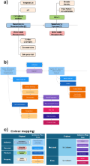
- Lynch Thomas E. Exner Department of Biosciences & Medical Biology, Paris Lodron University of Salzburg, Hellbrunnerstrasse 34, 5020 Salzburg, Austria Seven Past Nine d.o.o., Hribljane 10, 1380 Cerknica, Slovenia Center for the Environmental Implications of Nano Technology (CEINT), Civil & Environmental
- ). In medicine [7][8] and agriculture [9][10], loading of nanomaterials with active ingredients and targeting the materials to key sites for action are enabled through surface functionalisation and the small size of nanomaterials, which allows them to access all areas. An important consequence of the
- with 900 mL medium and can contain 10–15 adults, with the medium being refreshed three times per week. All cultures are fed the same daily algal ration of Chlorella vulgaris (7.5 mg C days 0–7, 11.25 mg C days 7 onwards, with double rations on Fridays to cover the weekend) and are kept in a 20 °C


Advanced atomic force microscopy techniques V
Beilstein J. Nanotechnol. 2025, 16, 54–56, doi:10.3762/bjnano.16.6

- , Germany Institute for Molecules and Materials, Radboud University, 6525 AJ Nijmegen, The Netherlands Institute of Physics and Astronomy, University of Potsdam, Karl-Liebknecht-Str. 24–25, 14476 Potsdam, Germany Physikalisches Institut, Universität Münster, Wilhelm-Klemm-Str. 10, 48149 Münster, Germany
- monolayers (SAMs) and conducting AFM [10]. The authors find that rougher surfaces lead to stronger variations in conductivity, and it is suggested that a correlation of topography and conductivity maps is carried out to identify suitable areas for a representative averaging of conductivity values. Müller et
Theoretical study of the electronic and optical properties of a composite formed by the zeolite NaA and a magnetite cluster
Beilstein J. Nanotechnol. 2025, 16, 44–53, doi:10.3762/bjnano.16.5
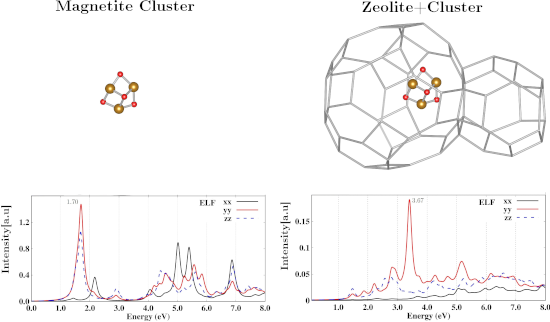
- characteristics of zeolites depend largely on the chemical composition of the framework, specifically the Si/Al ratio [1][2]. These characteristics make zeolites highly appealing for a wide range of applications, including the production of fine chemicals [3][4], gas separation [5][6][7], ion exchange [8][9][10
- tackle these challenges is to utilize zeolites, which are frequently employed as inert support materials [27][28][29][30][31][32]. Zeolites are well suited for the hosting and confinement of molecular clusters with dimensions below 10 Å. This approach has the potential to stabilize these clusters and
- , 1.60, 1.90, and 1.70 for aluminum, oxygen, silicon, sodium, and sulfur, respectively; the convergence number, that is, the smallest muffin-tin radii times the plane wave cutoff parameter, is set at RmtKmax = 6.0; the maximum l value for partial waves used inside atomic spheres is lmax = 10; and the




Precursor sticking coefficient determination from indented deposits fabricated by electron beam induced deposition
Beilstein J. Nanotechnol. 2025, 16, 35–43, doi:10.3762/bjnano.16.4

- the center region of an intentionally defocused electron beam. We employ the method to determine the precursor sticking coefficient for bis(benzene)chromium, Cr(C6H6)2, and trimethyl(methylcyclopentadienyl)platinum(IV), Me3CpPtMe, and find a value of about 10−2 for both precursors, which is
- estimate or initial guess in calculations or even simulations dedicated to FEBID for precursors such as WF6 [9], Me3CpPtMe [10][11][12][13][14][15], HCo3Fe(CO)12, and Nb(NMe2)3(N-t-Bu) [12], as well as tetraethyl orthosilicate (TEOS) [16]. The sticking coefficient has been determined only in the work of
- were 100 μm above the surface and 100 μm away from the beam axis. The base pressure of the instrument was 4 × 10⁻⁷ mbar, the chamber pressure during deposition which was used for the estimation of precursor flux was 5 × 10⁻⁷ mbar for Cr(C6H6)2 and 6 × 10⁻⁶ mbar for Me3CpPtMe, respectively. The


Bioinspired nanofilament coatings for scale reduction on steel
Beilstein J. Nanotechnol. 2025, 16, 25–34, doi:10.3762/bjnano.16.3

- SNFs. These filaments have been developed for coatings on polymers [10][11][12], textiles [12][13][14][15][16][17], aluminium and titanium [11][12], and glass [11][12][13][18][19], to replicate the water-repelling effects observed in nature [13][18][20][21]. Coatings with nano- or micrometer-sized
- polymerization of a polysiloxane on the material surface [18]. The polysiloxane methyl groups lower the surface energy and render the surface hydrophobic. Clearly, the surface chemistry of steel surfaces is very different from the previously used materials such as glass [11][12][13][18], polymers [10][11][12
- induce corrosion of the samples. Scanning electron microscopy and energy-dispersive X-ray spectroscopy measurements Scanning electron microscopy images were acquired in a TESCAN CLARA (S8151) using the ANALYSIS and the UH-resolution scan mode with an accelerator voltage of 15 keV and 10 keV, a beam


A nanocarrier containing carboxylic and histamine groups with dual action: acetylcholine hydrolysis and antidote atropine delivery
Beilstein J. Nanotechnol. 2025, 16, 11–24, doi:10.3762/bjnano.16.2

- Sciences, Arbuzov str. 8, Kazan 420088, Russia Alexander Butlerov Institute of Chemistry, Kazan Federal University, Lobachevsky str. 1/29, Kazan 420008, Russia Kazan National Research Technical University named after A.N. Tupolev - KAI, 10, K. Marx str., Kazan 420111, Russia Kazan National Research
- alkaloid used to regulate heart rate and treat eye ailments [9][10], is one such antidote. Despite its advantages, Atr has limitations in the treatment of OP poisoning. First, it can be harmful in high doses, and timely administration is vital to prevent permanent damage. Additionally, Atr itself can
- added to the solution, and it was homogenized for 10 min in an ultrasonic bath. The solvent was then removed under reduced pressure. Then, solutions of Hist-RA (4 mM, 0.5 mL, PB, pH 8.5), CA-RA (8.8 mM, 0.5 mL, PB, pH 8.5), and BA (1.25 mM, 4 mL, PB, pH 8.5) were added, and then the synthesis was


Orientation-dependent photonic bandgaps in gold-dust weevil scales and their titania bioreplicates
Beilstein J. Nanotechnol. 2025, 16, 1–10, doi:10.3762/bjnano.16.1
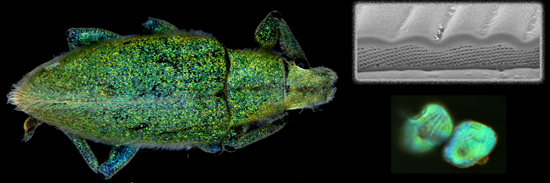
- copolymers [10][11], lithography, or laser etching [12][13], but it can be routinely found in animal integuments. Biomimetic approaches using templates from natural structures offers a possible alternative. The scales of many beetles and weevils contain diamond photonic crystals [14][15][16] that may serve
- by modeling is consistent with the measured peak reflectance in original and templated scales (original: <10, template: >10, referred to a diffuse white standard (Figure 1 and Figure 4c). The measured spectra, both of the native templates and the replica, are broader than those produced by the
- series [5×, 10×, 20×, 50×, and 100×] with apertures [NA = 0.13, 0.30, 0.60, 0.95, and 0.95], respectively. For reciprocal space imaging, we used the 50× and 100× objectives. The 100× objective has a smaller minimal illumination spot (field), but a bigger minimal aperture (angle of the illumination cone


Mechanistic insights into endosomal escape by sodium oleate-modified liposomes
Beilstein J. Nanotechnol. 2024, 15, 1667–1685, doi:10.3762/bjnano.15.131
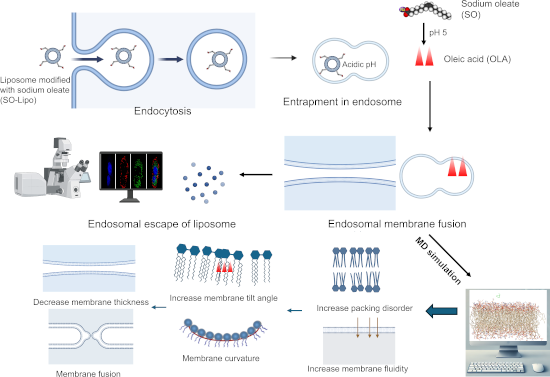
- potential of oleic acid (OLA), the protonated form of sodium oleate (SO), to enhance membrane fluidity in specific lipid bilayer models, including dioleoylphosphatidylcholine (DOPC) and dipalmitoylphosphatidylcholine (DPPC), as well as in complex biological systems such as the human skin barrier [9][10][11
- environment, which is representative of endosomal conditions. In contrast, at pH 7.4, the fusion percentage for SO was significantly lower, peaking at only 10% at the highest concentration, highlighting the pH-sensitivity of SO’s fusogenic effect. A similar trend was observed for the positive control, DOPE
- , conducted over a 200 ns period, began with OLA and AUR positioned 6 and 4 Å above the membrane, respectively. As illustrated in Figure 5a, the time-resolved insertion of OLA occurs progressively. Initially (0 ns), OLA is situated above the membrane; however, after 10 ns, it has started to penetrate the




Attempts to preserve and visualize protein corona on the surface of biological nanoparticles in blood serum using photomodification
Beilstein J. Nanotechnol. 2024, 15, 1654–1666, doi:10.3762/bjnano.15.130

- system, and the role of the corona in the pathogenesis of chronic diseases are being studied [5][10][11][12][13]. A number of works are devoted to the study of protein corona formation on EVs previously isolated from biological fluids [14][15]. The existence of a “natural” protein corona on EVs in the
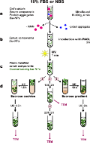
- -NPs from FBS and NBS. Results and Discussion Isolation of bio-NPs by ultracentrifugation To obtain samples of intact bio-NPs, we used single or double ultracentrifugation (UC) of 10% FBS, and the resulting samples were negatively stained and examined in TEM. The largest share of bio-NPs observed in
- these samples were spherical LPs of low electron density, having a homogeneous structure and different sizes (Figure 3a,e,f). According to [24], we identified LPs with a diameter of 10 nm and less as high-density LPs (Figure 3a,e,f), particles of 20–30 nm as low-density LPs (Figure 3a,e,f), and



Fabrication of hafnium-based nanoparticles and nanostructures using picosecond laser ablation
Beilstein J. Nanotechnol. 2024, 15, 1639–1653, doi:10.3762/bjnano.15.129
- [8] compared to bulk Hf. HfO2 is a wide-bandgap (5.68 eV) material with a high dielectric constant (≈25) [9][10]. HfC has a very high melting point (≈3900 °C) and ranks among the hardest materials, with a Vickers hardness value exceeding 20 GPa [4][11]. The properties vary substantially depending on
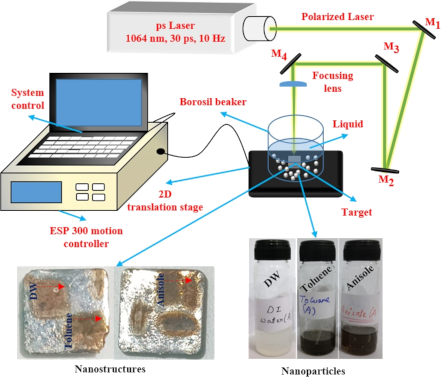
- literature. In our earlier reports, HfO2 nanoparticles, nanoribbons, and nanofibres were synthesised by ablating HfO2 pellets utilising femtosecond laser pulses at 800 nm [10][30]. A bulk Hf target was also ablated in another work using nanosecond laser pulses in different liquids to synthesise oxides and
- carbides [11][31]. In one of our earlier works [10], we performed femtosecond ablation and reported the formation of colloidal hafnium oxide NPs and nanoribbons in deionised water. The average sizes of NPs and nanoribbons were 13.5–18.0 and 10–20 nm, respectively. Further, we also reported that monoclinic




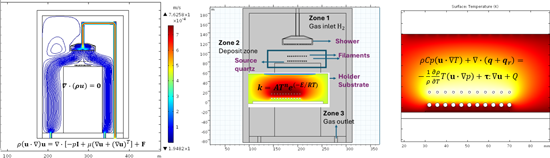
Heterogeneous reactions in a HFCVD reactor: simulation using a 2D model
Beilstein J. Nanotechnol. 2024, 15, 1627–1638, doi:10.3762/bjnano.15.128
- –metal devices exhibiting blue and white electroluminescence [7][8]. It was found that these films exhibit photoconductive and photoelectric effects suitable for electroluminescence and photovoltaics applications [9][10], as well as for other applications such as solar cells and anodes for Li batteries


Biomimetic nanocarriers: integrating natural functions for advanced therapeutic applications
Beilstein J. Nanotechnol. 2024, 15, 1619–1626, doi:10.3762/bjnano.15.127

- application of organic and inorganic compounds with activity against various diseases [10][11][12]. Faced with a physiological stimulus, the carrier decouples from the transported product and releases it at a specific interaction site (Figure 1-1). However, some challenges are encountered by these compounds
- nanoparticle was demonstrated by inhibiting proliferation through negative regulation of cyclin D1, halting the G0/G1 cell cycle in HeLa and SiHa cervical cancer cells [67][68]. Biomimetic-specific targets provide opportunities for personalized cancer therapies [10][11][12]. Coated nanocarriers have also been


Natural nanofibers embedded in the seed mucilage envelope: composite hydrogels with specific adhesive and frictional properties
Beilstein J. Nanotechnol. 2024, 15, 1603–1618, doi:10.3762/bjnano.15.126
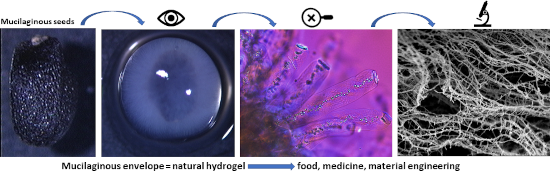
- features with synthetic hydrogels [2][9][10][11]. Hydrogels are 3D networks of polymers (i.e., polysaccharides in plant seeds) interacting via chemical bonds (ionic and covalent), physical interactions (hydrogen bonds), or van der Waals forces [3][11][12]. The ability to produce the mucilage envelope is a
- osmotic stress [4][5][6][10][24][25]. Depending on the hydration level, mucilage exhibits distinct physical properties, which are also connected with its biological functions. In a fully hydrated state, it demonstrates very low friction, important for example, in endozoochoric diaspore dispersal [26][27
- Action TD0906 (COST-STSM-ECOST-STSM-TD0906-020513-030288), by the German Academic Exchange Office (DAAD) (grant No. 323/A/10/02617), German Science Foundation (DFG) - the Short Stay Program No. GZ: GO 995/21-1, AOBJ: 611170 and funding from the European Union’s Horizon 2020 research and innovation


Liver-targeting iron oxide nanoparticles and their complexes with plant extracts for biocompatibility
Beilstein J. Nanotechnol. 2024, 15, 1593–1602, doi:10.3762/bjnano.15.125
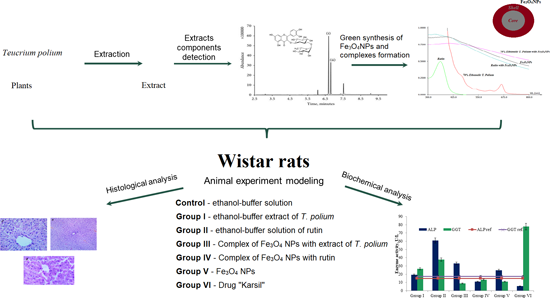
- in most biological and chemical reactions involved in the production of medical materials [10][11][12][13]. Magnetic nanoparticles (MNPs), such as iron oxides, not only exhibit superparamagnetism and high magnetic susceptibility, they also possess unique physical properties, biocompatibility
- that MNPs larger than 200 nm are captured by the spleen through mechanical filtration, while MNPs smaller than 10 nm can be eliminated via renal clearance. Therefore, the 10–100 nm range is considered optimal for administration in specific applications [29]. The biodistribution patterns of these
- . Experimental Synthesis and characterization of iron oxide nanoparticles The synthesis of iron oxide (Fe3O4) nanoparticles was carried out using a modified coprecipitation method with oleic acid as a stabilizer. 10 mL of 1 M FeSO4·7H2O and 10 mL of 2 M FeCl3·6H2O were added to 10 mL 4 M NaOH and 1 mL oleic acid


Facile synthesis of size-tunable L-carnosine-capped silver nanoparticles and their role in metal ion sensing and catalytic degradation of p-nitrophenol
Beilstein J. Nanotechnol. 2024, 15, 1576–1592, doi:10.3762/bjnano.15.124
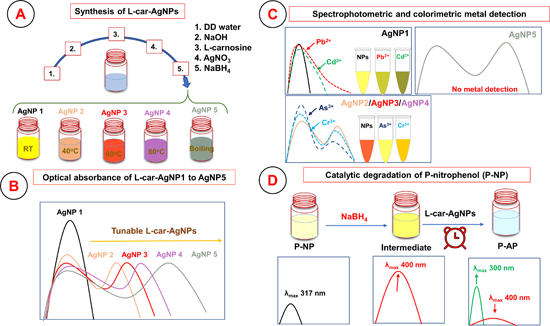
- (2.8 μM) for As3+, and 245.49 ppb (4.7 μM) for Cr3+. Additionally, these nanoparticles demonstrated catalytic activity regarding the degradation of p-nitrophenol (P-NP), achieving complete degradation of 0.25 and 1 mM solutions within 5 and 10 min, respectively. This study reveals the potential of ʟ
- Fenton-like oxidation or ozonation [10]. These techniques require expensive equipment, specialized operational skills, and extensive sample preparation, making them less practical for on-site testing, frequent monitoring, and remediation. In response to these challenges, recent advancements in
- . The functionalization of AgNPs with ʟ-carnosine was validated through Fourier-transform infrared spectroscopy (FTIR, Thermo Scientific Nicolet iS5, USA). For this, 10 mg of air-dried nanopowder was placed over a diamond, and the software (OMNIC™) was run over the spectral range of 400–4000 cm−1. The




Green synthesis of silver nanoparticles derived from algae and their larvicidal properties to control Aedes aegypti
Beilstein J. Nanotechnol. 2024, 15, 1566–1575, doi:10.3762/bjnano.15.123
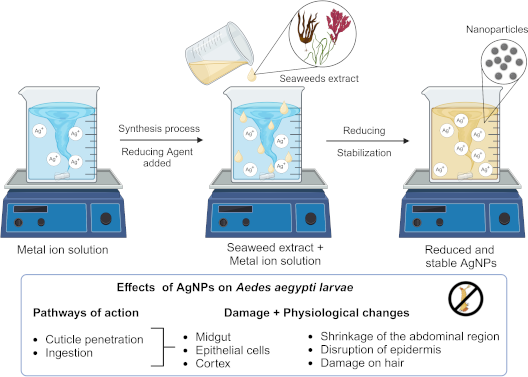
- vectors are nanomaterials or nanomaterial-based formulations as so-called nanopesticides, providing new, modern, and low-cost formulations [9][10] with the ability to penetrate through the exoskeleton into mosquito cells, causing mortality after binding to proteins or DNA [11]. Nanomaterials provide
- flavonoids [50]. Vinoth and colleagues also prepared AgNPs using brown seaweed, that is, the seaweed S. polycystum [51]. Initially, the authors prepared an aqueous extract (50 g of seaweed/500 mL H2O) via boiling for 30 min followed by cooling and filtration. The NPs were prepared from 10 mL of the aqueous
- evaluated as potential reducing agents in the biosynthesis of AgNPs were the secondary amines, aromatic primary amines, carboxylates, amides, alkenes, and aromatic compounds. Roni and collaborators prepared AgNPs from red algae [52]. An aqueous extract of H. musciformis was obtained (10 g of seaweed leaves


Ultrablack color in velvet ant cuticle
Beilstein J. Nanotechnol. 2024, 15, 1554–1565, doi:10.3762/bjnano.15.122

- spectacle among animals. These colors with high absorption are formed in nature by a sophisticated arrangement of microstructures (i.e., structures visible under microscope) alongside pigment depositions in underlying tissues [9][10]. For instance, in male peacock spiders (Figure 1A), ultrablack
- setup prolongs the light’s exposure to the melanized integument, thereby augmenting light absorption by the pigment [10]. Consequently, ultrablack colors exhibit an extraordinarily low reflectance across ultraviolet and visible (UV–vis) spectrum wavelengths, often falling below 0.5% of the incident
- light [10][13]. The ultrablack surfaces found in certain organisms present a remarkable adaptation shaped by selective pressures in their respective environments. For example, combining conspicuous visual cues with ultrablack colors may provide heightened internal visual contrast, thus highlighting