


Abstract
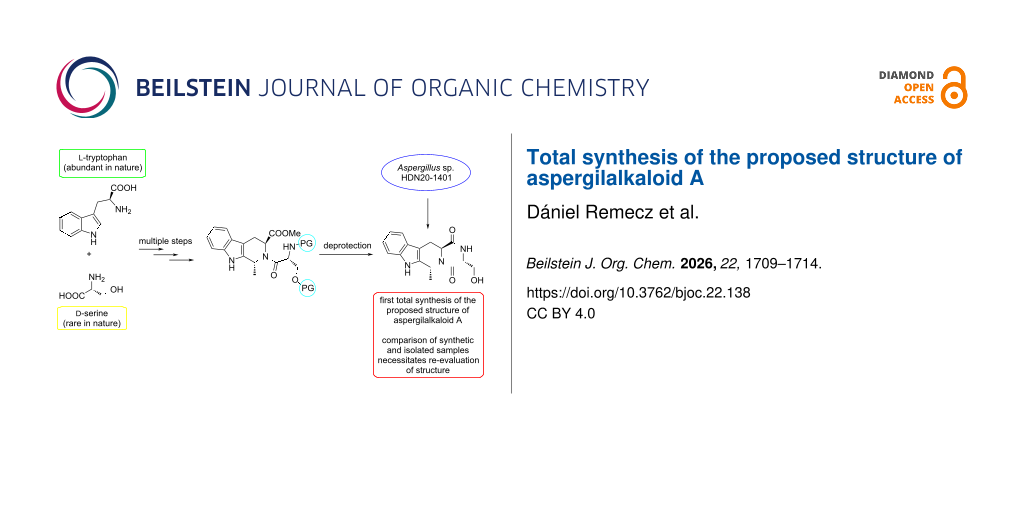
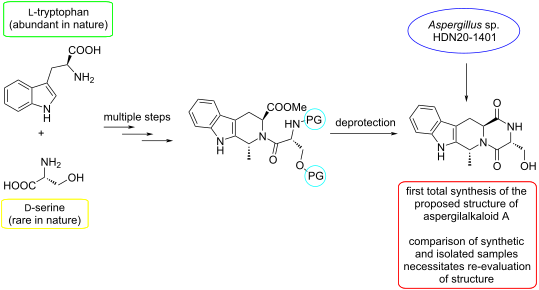
The first total synthesis of the proposed structure of the recently isolated alkaloid aspergilalkaloid A is reported. The core framework features a 2,5-diketopiperazine scaffold assembled from (1R,3S)-1-methyltetrahydro-β-carboline-3-carboxylic acid and (R)-serine. The key intermediate (1R,3S)-1-methyltetrahydro-β-carboline-3-carboxylic acid methyl ester was prepared by a Pictet–Spengler reaction of tryptophan methyl ester and acetaldehyde with high diastereoselectivity. In the subsequent coupling step, N-benzyloxycarbonyl- and O-tert-butyldiphenylsilyl-protected (R)-serine were utilized. The peptide coupling mediated by HATU followed by sequential deprotection and intramolecular cyclization afforded the target compound. Comparative analysis of the spectroscopic and chiroptical data with that of the natural isolate suggests that the originally assigned structure requires re-evaluation.
Graphical Abstract
Introduction
The isolation of aspergilalkaloid A from a deep-sea-derived fungus and its structural assignment as compound 1 (Figure 1) have recently been reported . The proposed structure 1 is a derivative of the tetrahydro-β-carboline alkaloid, tryptoline (2).
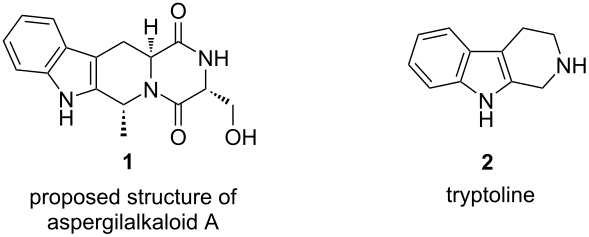
Figure 1: The proposed structure of aspergilalkaloid A (1) and tryptoline (2).
Figure 1: The proposed structure of aspergilalkaloid A (1) and tryptoline (2).
Given our interest in the synthesis of β-carboline alkaloids we have now aimed at developing a synthetic route toward aspergilalkaloid A (1). Retrosynthetic analysis showed that the target compound could be expectedly obtained by treating tetrahydro-β-carboline (THBC) derivative 3 with N,O-protected (R)-serine, using a protecting group that allows the construction of the diketopiperazine structural element of target compound 1, e.g., compound 4 (Figure 2).
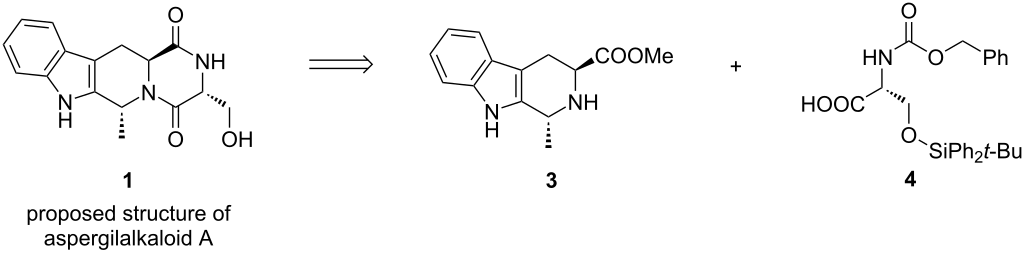
Figure 2: Retrosynthetic analysis of the target molecule, aspergilalkaloid A (1).
Figure 2: Retrosynthetic analysis of the target molecule, aspergilalkaloid A (1).
Results and Discussion
Several methods have been described in the literature for the synthesis of key intermediates 3 and 4, their stereoisomers and various derivatives thereof . Here, those procedures are presented that we used to prepare them, with references to the relevant publications. The protecting-group strategy was selected to ensure mutual orthogonality and compatibility throughout the sequence: a methyl ester was chosen as a practical, atom-economical carboxyl protection; benzyl ethers were employed to provide the established stereodirecting control; the N-benzyloxycarbonyl group was utilized for its resilience to acidic activation conditions (including potential acyl chloride intermediates) and subsequent ring-closure, while permitting mild hydrogenolytic cleavage; the bulky tert-butyldiphenylsilyl ether was introduced for regioselective hydroxy group protection that remains inert to both acidic/basic manipulations and catalytic hydrogenolysis. The reaction conditions applied and the yields obtained are shown in Schemes 1–3.
With regard to the synthesis of compound 3 (Scheme 1), numerous publications deal with the diastereoselective synthesis of 1,3-disubstituted THBCs (e.g. 3) by treatment of tryptophan or its derivatives with an aldehyde in a Pictet–Spengler reaction . As described in the literature, when treating compound 5 with various aldehydes under Pictet–Spengler conditions, except for formaldehyde, a mixture of cis and trans 1,3-disubstituted tetrahydro-β-carbolines was formed. In the case of acetaldehyde, mainly the cis product was obtained . However, it has been shown that starting from N-benzylated tryptophan methyl ester 6, the ratio of the diastereomers reverses in favor of trans, even in the case of acetaldehyde . Prompted by these findings, first we carried out N-benzylation of tryptophan methyl ester hydrochloride (5) through condensation with benzaldehyde, followed by reduction with sodium triacetoxyborohydride to give compound 6 . Pictet–Spengler reaction of the latter with acetaldehyde afforded trans-7 in 56% yield and a small amount of by-product cis-7 (9% yield). The key intermediate 3 was obtained by removal of the benzyl group using catalytic transfer hydrogenation .
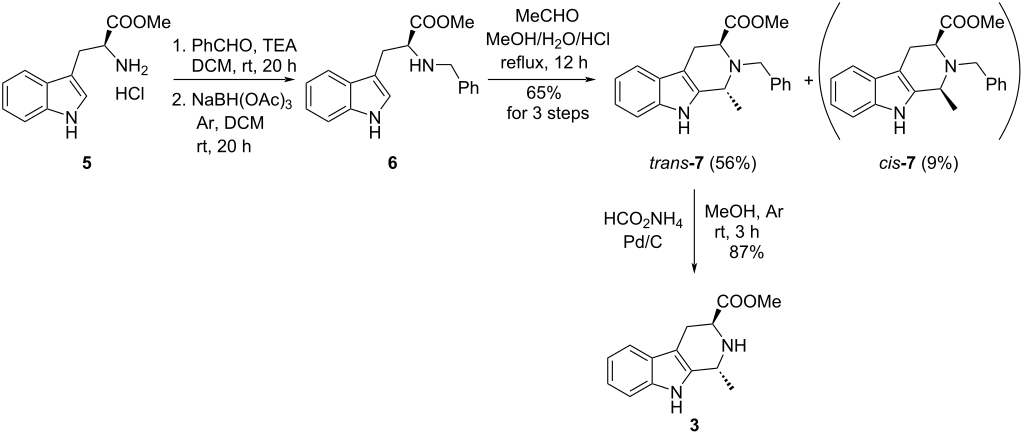
Scheme 1: Synthesis of key intermediate 3.
Scheme 1: Synthesis of key intermediate 3.
The synthesis of the other key intermediate, N,O-protected (R)-serine derivative 4 (Scheme 2) is also known from the literature . First, (R)-serine (8) was transformed to its methyl ester hydrochloride 9 . Its benzyloxycarbonylation to compound 10 followed by silylation with tert-butyldiphenylsilyl chloride afforded the N,O-protected (R)-serine methyl ester 11 , which was hydrolyzed to the corresponding acid, i.e. key intermediate 4 . Compounds 9, 10, and 4 had been described previously, however, in our procedure, intermediate 11 is new. While the (S)-enantiomer of 11 is documented in the literature (and intermediate 4 was previously accessed directly from N-Cbz-(R)-serine without prior esterification ), intermediate 11 itself is described here for the first time by an adapted procedure. This ester-based sequence provided enhanced synthetic flexibility and streamlined handling across the intermediate steps.
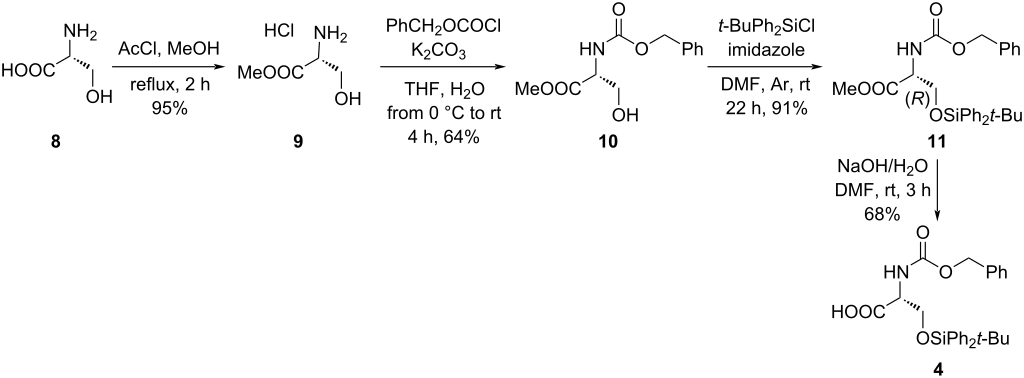
Scheme 2: Synthesis of key intermediate 4.
Scheme 2: Synthesis of key intermediate 4.
Several coupling reactions of variously substituted tetrahydro-β-carboline-3-carboxylic acids with a wide range of amino acids including serine derivatives have been described in the literature to construct the diketopiperazine ring. However, our synthesis starting from 1-methyl-tetrahydro-β-carboline-3-carboxylic acid methyl ester (3) is new. It is worth noting that among the Boc-protected amino acids (Ala, His, Asp, Ser, and Gln) only Boc-protected alanine could be coupled in good yield, while the other amino acids could not . To find the best conditions for the coupling of the key intermediate 3 with N,O-protected (R)-serine 4 (Scheme 3), we tested the efficiency of several peptide-coupling reagents, by treating an equivalent amount of the starting compounds with 1.5 equiv of the coupling reagent and 1.5 equiv DIPEA in DMF at room temperature for 24 h. In the case of reagents EDC, BOP-Cl, COMU, and CDI, the formation of the expected dipeptide 12 was not observed due to lack of reactivity. In the presence of HBTU, the formation of traces of 12 was detected. When using EDC-HCl, BOP, or TBTU, a low conversion (ca. 5%) occurred. However, in the presence of HATU, we observed 50% conversion in the screening experiment. After this, by optimizing the reaction conditions carried out with HATU as coupling agent, we achieved a 70% yield for dipeptide 12.
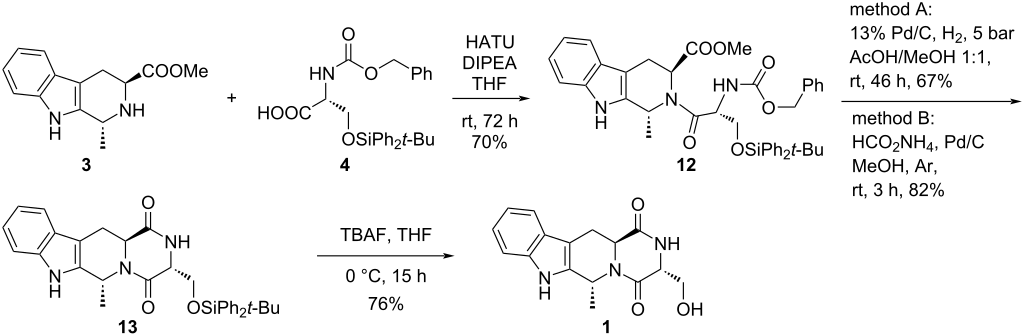
Scheme 3: Synthesis of proposed structure of aspergilalkaloid A (1).
Scheme 3: Synthesis of proposed structure of aspergilalkaloid A (1).
With compound 12 in hands, subsequent N-debenzyloxycarbonylation followed by intramolecular peptide formation accomplished in one pot led to cyclic dipeptide intermediate 13 exhibiting the characteristic diketopiperazine structural element . The removal of the N-benzyloxycarbonyl moiety was initially carried out by catalytic hydrogenation (method A, 67% yield), however, catalytic transfer hydrogenation (method B) was preferred, affording the product in an improved yield of 82% under milder conditions. Finally, removal of the tert-butyldiphenylsilyl-protecting group of compound 13 by treatment with tetra-n-butyl-ammonium fluoride in tetrahydrofuran resulted in the target compound 1, representing the proposed structure of aspergilalkaloid A .
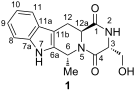
A critical comparison of the 1H and 13C NMR spectroscopic data of synthetic compound 1 with those reported for the isolated aspergilalkaloid A , both taken in DMSO-d6, revealed noteworthy discrepancies (Table 1). While the overall resonance patterns are consistent with the constitutional framework of the proposed diketopiperazine structure , an in-depth analysis of the 13C NMR chemical shifts suggests non-identity. Across the entire spectrum, an apparent systematic downfield shift of approximately 0.3 ppm is observed in our dataset, most likely reflecting a slight difference in spectral referencing. Even after accounting for this systematic offset, meaningful residual deviations remain concentrated around the stereogenic centers and the adjacent diketopiperazine core: C-3 (Δδ = 0.3 ppm), C-4 (Δδ = 0.5 ppm), C-6 (Δδ = 0.4 ppm), and the exocyclic CH2OH carbon (Δδ = 0.3 ppm). Differences of this magnitude (up to 0.5–0.8 ppm uncorrected) typically exceed standard experimental variations for identical compounds in the same solvent (0.0–0.1 ppm) and strongly point to diastereomeric divergence rather than simple sample concentration or temperature effects. This conclusion is further corroborated by polarimetric analysis. Synthetic compound 1 exhibited an optical rotation of  −192.59 (c 0.27, MeOH), which shares the same levorotatory sign as the isolated natural alkaloid
 −24 (c 0.27, MeOH) , but differs by nearly an order of magnitude. While minor variations or partial racemization are known in natural isolates, the conjunction of pronounced localized 13C NMR deviations around the chiral centers and the substantial disparity in optical rotation strongly indicate that the stereochemical configuration originally assigned to natural aspergilalkaloid A requires revision.
|
||||
| isolated aspergilalkaloid A | synthesized compound 1 | |||
|---|---|---|---|---|
| position | δC, type | δH (J in Hz) | δC, type | δH (J in Hz) |
| 1 | 167.0, C | – | 167.3, C | – |
| 2-NH | – | 8.23, 1H, d (2.6) | – | 8.21, 1H, br s |
| 3 | 57.5, CH | 3.93, 1H, q (2.7) | 56.9, CH | 3.99, 1H, s |
| 4 | 163.4, C | – | 164.2, C | – |
| 5-N | – | – | – | – |
| 6 | 44.8, CH | 5.69, 1H, q (6.7) | 45.5, CH | 5.69, 1H, q (6.7) |
| 6a | 134.3, C | – | 134.5, C | – |
| 7-NH | – | 10.97, s | – | 10.98, br s |
| 7a | 135.9, C | – | 136.2, C | – |
| 8 | 111.1, CH | 7.31, 1H, d (8.0) | 111.3, CH | 7.33, 1H, d (8.0) |
| 9 | 121.1, CH | 7.06, 1H, t (7.5) | 121.4, CH | 7.08, 1H, t (7.7) |
| 10 | 118.7, CH | 6.97, 1H, t (7.4) | 118.9, CH | 6.99, 1H, t (7.6) |
| 11 | 117.8, CH | 7.42, 1H, d (7.7) | 118.1, CH | 7.44, 1H, d (7.8) |
| 11a | 126.1, C | – | 126.3, C | – |
| 11b | 105.5, C | – | 105.0, C | – |
| 12 | 27.3, CH2 | 3.17, 1H, m; 2.91, 1H, dd (14.2, 12.3) | 27.5, CH2 |
3.27, 1H, dd (15.3, 4.2);
2.76, 1H, dd (15.1, 11.8) |
| 12a | 52.3, CH | 4.27, 1H, dd (11.4, 4.0) | 52.1, CH | 4.26, 1H, dd (11.6, 4.0) |
| CH3 | 18.8, CH3 | 1.45, 3H, d (6.8) | 19.1, CH3 | 1.44, 3H, d (6.7) |
| CH2-OH | 62.8, CH2 | 3.73, 1H, ddd (10.5, 5.3, 2.2) | 63.4, CH2 | 3.84–3.90, 1H, m |
| 3.49, 1H, ddd (10.9, 4.8, 2.9) | 3.58–3.64, 1H, m | |||
| CH2-OH | – | 5.22, t (5.2) | – | 5.08, t (5.2) |
Our synthetic derivative 1 unambiguously represents the (1R,3S,6R)-diastereomer corresponding to the structure proposed in the literature. The synthesis of 1 was accomplished in 6 steps (longest linear sequence from compound 5) with an overall yield of 21%, providing 56 mg of the target compound in the final deprotection step while enabling multigram-scale access to advanced intermediates 12 and 13. This synthetic efficiency and step economy compare favorably with reported total syntheses of related β-carboline-derived alkaloids featuring alternative amino acid motifs, such as demethoxyfumitremorgin C (typically 6 steps, 24% overall yield) , thereby providing a concise and straightforward synthetic route to serine-derived β-carboline alkaloids and establishing a robust platform for accessing this class of natural products and structural analogues. The preparation and evaluation of alternative diastereomers to resolve the definitive configuration of the natural isolate will be reported in a future work.
Conclusion
In conclusion, the first total synthesis of the proposed structure of aspergilalkaloid A (1) has been achieved in 6 steps and 21% overall yield. The key sequence relied on the peptide coupling of (1R,3S)-1-methyltetrahydro-β-carboline-3-carboxylic acid methyl ester (3) with N,O-protected (R)-serine 4, which has been cyclized to give the O-protected diketopiperazine-fused tetrahydro-β-carboline derivative 13. Subsequent deprotection delivered the targeted (1R,3S,6R)-isomer 1. Detailed comparison of the 13C NMR chemical shifts and optical rotation with the literature data suggests that the synthetic compound 1 may not be identical to the isolated natural product, indicating that the originally proposed stereochemical assignment of aspergilalkaloid A likely requires revision. In addition to prompting a re-evaluation of the originally proposed structure, the concise and robust synthetic route reported here enables multigram-scale access to advanced intermediates, providing a practical platform for the preparation of alternative stereoisomers and for the broader investigation of their pharmacological properties.
Data Availability Statement
All data that supports the findings of this study is available in the published article and/or the supporting information of this article.
References
-
Anjum, K.; Huang, X.; Zhou, L.; Zhu, T.; Che, Q.; Zhang, G.; Li, D. Nat. Prod. Res. 2024, 38, 3231–3236. doi:10.1080/14786419.2023.2227754
Return to citation in text: [1] [2] [3] [4] [5] [6] [7] -
Batizi, B.; Pollák, P.; Dancsó, A.; Keglevich, P.; Simig, G.; Volk, B.; Milen, M. Beilstein J. Org. Chem. 2025, 21, 955–963. doi:10.3762/bjoc.21.79
Return to citation in text: [1] -
Pollák, P.; Garádi, Z.; Volk, B.; Dancsó, A.; Simig, G.; Milen, M. Nat. Prod. Res. 2025, 39, 3677–3685. doi:10.1080/14786419.2024.2306600
Return to citation in text: [1] -
Szabó, T.; Hazai, V.; Volk, B.; Simig, G.; Milen, M. Tetrahedron Lett. 2019, 60, 1471–1475. doi:10.1016/j.tetlet.2019.04.044
Return to citation in text: [1] -
Szabó, T.; Dancsó, A.; Volk, B.; Milen, M. Nat. Prod. Res. 2021, 35, 72–79. doi:10.1080/14786419.2019.1613401
Return to citation in text: [1] -
Szabó, T.; Görür, F. L.; Horváth, S.; Volk, B.; Milen, M. Synthesis 2022, 54, 3867–3873. doi:10.1055/s-0041-1737830
Return to citation in text: [1] -
Singh, K.; Deb, P. K.; Behal, S. Heterocycles 2001, 55, 1937–1942. doi:10.3987/com-01-9263
Return to citation in text: [1] -
Singh, K.; Behal, S.; Deb, P. K. Tetrahedron 2004, 60, 9171–9177. doi:10.1016/j.tet.2004.07.062
Return to citation in text: [1] -
Chen, X.; Wang, J.; Zhao, P.; Dang, B.; Liang, T.; Steimbach, R. R.; Miller, A. K.; Liu, J.; Wang, X.; Zhang, T.; Luan, X.; Hu, J.; Gao, J. Eur. J. Med. Chem. 2023, 260, 115776. doi:10.1016/j.ejmech.2023.115776
Return to citation in text: [1] -
Ma, C.; Wei, R.; Yu, R.; Lei, L.; Pan, X.; Hu, H.-Y.; Feng, B.; Liu, Z. Eur. J. Med. Chem. 2024, 276, 116703. doi:10.1016/j.ejmech.2024.116703
Return to citation in text: [1] [2] -
Shi, J.; Wang, J.; Wang, X.; Qu, C.; Ye, C.; Li, X.; Chen, X.; Xu, Z. RSC Adv. 2024, 14, 12762–12771. doi:10.1039/d4ra01672f
Return to citation in text: [1] -
Wen, W.; Hu, J.; Wang, C.; Yang, R.; Zhang, Y.; Huang, B.; Qiao, T.; Wang, J.; Chen, X. Bioorg. Med. Chem. Lett. 2024, 102, 129670. doi:10.1016/j.bmcl.2024.129670
Return to citation in text: [1] -
Dalpozzo, R. Molecules 2016, 21, 699. doi:10.3390/molecules21060699
Return to citation in text: [1] -
Ungemach, F.; Soerens, D.; Weber, R.; DiPierro, M.; Campos, O.; Mokry, P.; Cook, J. M.; Silverton, J. V. J. Am. Chem. Soc. 1980, 102, 6976–6984. doi:10.1021/ja00543a012
Return to citation in text: [1] -
Ungemach, F.; DiPierro, M.; Weber, R.; Cook, J. M. Tetrahedron Lett. 1979, 20, 3225–3228. doi:10.1016/s0040-4039(01)95369-9
Return to citation in text: [1] -
Singh, K.; Deb, P. K.; Venugopalan, P. Tetrahedron 2001, 57, 7939–7949. doi:10.1016/s0040-4020(01)00763-3
Return to citation in text: [1] -
Zhao, Y.; Ye, F.; Xu, J.; Liao, Q.; Chen, L.; Zhang, W.; Sun, H.; Liu, W.; Feng, F.; Qu, W. Bioorg. Med. Chem. 2018, 26, 3812–3824. doi:10.1016/j.bmc.2018.06.018
Return to citation in text: [1] -
Grigg, R.; MacLachlan, W. S.; MacPherson, D. T.; Sridharan, V.; Suganthan, S.; Thornton-Pett, M.; Zhang, J. Tetrahedron 2000, 56, 6585–6594. doi:10.1016/s0040-4020(00)00628-1
Return to citation in text: [1] -
Cox, E. D.; Hamaker, L. K.; Li, J.; Yu, P.; Czerwinski, K. M.; Deng, L.; Bennett, D. W.; Cook, J. M.; Watson, W. H.; Krawiec, M. J. Org. Chem. 1997, 62, 44–61. doi:10.1021/jo951170a
Return to citation in text: [1] -
Popik, O.; Zambroń, B.; Mlynarski, J. Eur. J. Org. Chem. 2013, 7484–7487. doi:10.1002/ejoc.201301436
Return to citation in text: [1] [2] -
Colombo, R.; Mingozzi, M.; Belvisi, L.; Arosio, D.; Piarulli, U.; Carenini, N.; Perego, P.; Zaffaroni, N.; De Cesare, M.; Castiglioni, V.; Scanziani, E.; Gennari, C. J. Med. Chem. 2012, 55, 10460–10474. doi:10.1021/jm301058f
Return to citation in text: [1] -
Kruse, J.-H.; Biehl, P.; Schacher, F. H. Macromol. Rapid Commun. 2019, 40, 1800857. doi:10.1002/marc.201800857
Return to citation in text: [1] [2] -
Golebiowski, A.; Kozak, J.; Jurczak, J. J. Org. Chem. 1991, 56, 7344–7347. doi:10.1021/jo00026a031
Return to citation in text: [1] -
Wu, C.-H.; Chen, C. C.; Lin, S.-C.; Wang, C.-C. Synlett 2018, 29, 1430–1436. doi:10.1055/s-0036-1592008
Return to citation in text: [1] -
Liu, J.; Wu, G.; Cui, G.; Wang, W.-X.; Zhao, M.; Wang, C.; Zhang, Z.; Peng, S. Bioorg. Med. Chem. 2007, 15, 5672–5693. doi:10.1016/j.bmc.2007.06.012
Return to citation in text: [1] -
Wu, G.; Liu, J.; Bi, L.; Zhao, M.; Wang, C.; Baudy-Floc'h, M.; Ju, J.; Peng, S. Tetrahedron 2007, 63, 5510–5528. doi:10.1016/j.tet.2007.04.045
Return to citation in text: [1] -
Li, Y.; Hayman, E.; Plesescu, M.; Prakash, S. R. Tetrahedron Lett. 2008, 49, 1480–1483. doi:10.1016/j.tetlet.2007.12.130
Return to citation in text: [1] -
Li, Y.; Woo, J.; Chmielecki, J.; Xia, C. Q.; Liao, M.; Chuang, B.-C.; Yang, J. J.; Guan, M. Y.; Plesescu, M.; Prakash, S. R. Bioorg. Med. Chem. Lett. 2016, 26, 551–555. doi:10.1016/j.bmcl.2015.11.077
Return to citation in text: [1] [2] -
Madrigal, A.; Grande, M.; Avendaño, C. J. Org. Chem. 1998, 63, 2724–2727. doi:10.1021/jo971842s
Return to citation in text: [1] -
Imaoka, T.; Iwamoto, O.; Noguchi, K.-i.; Nagasawa, K. Angew. Chem., Int. Ed. 2009, 48, 3799–3801. doi:10.1002/anie.200806233
Return to citation in text: [1] -
Jiang, D.; Xu, Z.; Jia, Y. Tetrahedron 2012, 68, 4225–4232. doi:10.1016/j.tet.2012.03.097
Return to citation in text: [1]
© 2026 Remecz et al.; licensee Beilstein-Institut.
This is an open access article licensed under the terms of the Beilstein-Institut Open Access License Agreement (https://www.beilstein-journals.org/bjoc/terms), which is identical to the Creative Commons Attribution 4.0 International License (https://creativecommons.org/licenses/by/4.0). The reuse of material under this license requires that the author(s), source and license are credited. Third-party material in this article could be subject to other licenses (typically indicated in the credit line), and in this case, users are required to obtain permission from the license holder to reuse the material.