


Search results
Search for "[2 2] cycloaddition" in Full Text gives 117 result(s) in Beilstein Journal of Organic Chemistry.
Get a better glimpse on sequential photoreactions of trisnorbornadienes with 19F NMR spectroscopy
- Julian Felix Maria Hebborn,
- Ben Eric Merten,
- Thomas Paululat and
- Heiko Ihmels
Beilstein J. Org. Chem. 2026, 22, 527–534, doi:10.3762/bjoc.22.38
- emerging approach towards molecular solar thermal (MOST) energy storage [5][6][7][8]. In this context, norbornadienes are employed as well established photoswitches because they provide several favorable photochemical and physicochemical properties [9][10]. In a photochromic intramolecular [2 + 2
- ] cycloaddition reaction, these compounds are transformed into an energy-rich metastable photoproduct that, upon application of an external stimulus, isomerizes back in a cycloreversion reaction to the starting compound with the release of heat (Scheme 1) [5][7]. In comparison with other photochromic compounds

Graphical Abstract

Scheme 1: Photochromic reaction of norbornadiene (1a) and quadricyclane (2a) and selected physicochemical pro...

Figure 1: Structures and MOST parameters of representative bis- and trisnorbornadienes 1b–d; t1/2 = half-life...

Scheme 2: Synthesis and photochromic reaction of trisnorbornadiene 1f to the trisquadricyclane 2f0,3 (numberi...

Figure 2: Photometric monitoring of the photoreaction of 1f in MeCN (c = 20 µM) at λex = 315 nm. Inset: plot ...

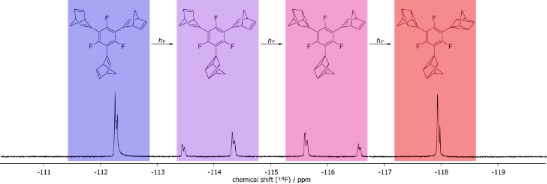
Figure 3: Left: 19F NMR-spectroscopic monitoring of the photocycloaddition reaction of 1f in the presence of ...

Scheme 3: Stepwise photoreaction of 1f to 2f0,3 (numbering of quadricyclanes 2fm,n: m = number of norbornadie...
Recent advances in the stereoselective synthesis of distal biaxially chiral molecules
- Fanxing Zhou,
- Chen Zhang,
- Lingyu Sun,
- Yiyun Fang,
- Siming Zheng,
- Lina Hu,
- Mengyang Shen,
- Zhen Zhao,
- Wei Xu,
- Yunqiang Sun and
- Zi-Qiang Rong
Beilstein J. Org. Chem. 2026, 22, 461–479, doi:10.3762/bjoc.22.34
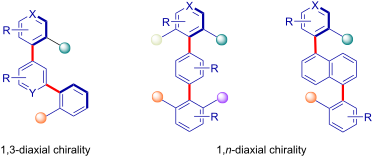
- [2 + 2 + 2] cycloaddition reaction between α,ω-diynes 1 and monoalkynes 2, providing an alternative to traditional asymmetric coupling strategies for the synthesis of C2-symmetric biaryl chiral compounds (Scheme 1a) [40]. They further demonstrated the feasibility of constructing N-, O-, and C
- [41]. This strategy delivered excellent enantioselectivity, diastereoselectivity, and overall efficiency, underscoring its unique advantages in the synthesis of multiaxially chiral scaffolds. In parallel, Tanaka and co-workers advanced a [2 + 2 + 2] cycloaddition strategy to realize an asymmetric
- suffer from the challenges of difficult stereoselectivity control and low conformational stability. For this reason, numerous attempts have been made towards the efficient construction of distally biaxially chiral skeletons, and a variety of synthetic strategies such as [2 + 2 + 2] cycloaddition and

Graphical Abstract

Figure 1: Natural products with various stereogenic axes.

Scheme 1: Iridium complex-catalyzed asymmetrical synthesis of axially chiral (a) teraryl compounds 3 [40] and (b)...

Scheme 2: Rhodium-catalyzed enantio- and diastereoselective cycloaddition of 1,2-bis(arylpropiolyl)benzenes w...

Scheme 3: Synthesis of remote double axially chiral phosphoric acids.

Scheme 4: Construction of chiral biaxial diphosphine ligand.

Scheme 5: Atroposelective synthesis of biaxially chiral 1,4-distyryl-2,3-naphthalene diols.

Scheme 6: H-Bond-enabled enantioselective synthesis of remote biaxially chiral amides mediated by the counter...

Scheme 7: Enantioselective synthesis of biaryl products with twofold chiral axes.

Scheme 8: Iridium-catalyzed C–H alkylation to obtain the distal biaxial atropisomers.

Scheme 9: Co/SPDO-catalyzed biaxial bridged terphenyl compounds.

Scheme 10: Atroposelective Co-catalyzed synthesis of pyridoindolones with two distinct C–N axes.

Scheme 11: NHC organocatalytic synthesis of fused 1,4-biaxial uracils with C–C and C–N chiral axes.

Scheme 12: Synthesis of the first biaxially chiral compound reported by Ito and co-workers [35].

Scheme 13: Synthesis of chiral homoaryl compounds by Suzuki–Miyaura coupling.

Scheme 14: Structurally complex APIs with multiple chiral axes.

Scheme 15: Synthesis of helicenes containing stereogenic axes.

Scheme 16: Chiral NHC–Pd complex-catalyzed Suzuki–Miyaura cross-coupling reaction for the synthesis of block-t...

Scheme 17: Highly enantioselective C–H arylation of heteroarenes.

Scheme 18: Synthesis of novel axially chiral N-arylcarbazole skeletons by the assembly of azidonaphthalenes an...

Scheme 19: Catalytic enantioselective synthesis of axially chiral polycyclic aromatic hydrocarbons.

Scheme 20: Catalytic synthesis of biaxial triphenylene block-transfer isomers.

Scheme 21: A Pd(II)-catalyzed trans-selective C–H alkenylation strategy through thioether-directed olefination....

Scheme 22: Synthesis of N-arylphthalimides from prochiral maleimides and NHC-activated dienolides.

Scheme 23: Ni-catalyzed synthesis of triaxially chiral polysubstituted naphthalene scaffolds.

Scheme 24: Enantioselective Ni-catalyzed Suzuki–Miyaura cross-coupling reaction.

Scheme 25: The stereoselective synthesis of axial chiral indole–quinoline systems.

Scheme 26: The synthesis of bisbenzofuran atropisomeric oligoarenes containing two distal C–C stereogenic axes....
Ring contraction and ring expansion reactions in terpenoid biosynthesis and their application to total synthesis
- Nicolas Kratena,
- Nicolas Heinzig and
- Peter Gärtner
Beilstein J. Org. Chem. 2026, 22, 289–343, doi:10.3762/bjoc.22.21
- the groups of Collado, Cane and Viaud could identify a protein titled BcBOT2 (= Botrytiscinerea BOTrydial) with similarity to microbial terpene synthases [78]. Starting from farnesyl pyrophosphate (9) BcBOT2 catalyses a rare, formal [2 + 2] cycloaddition to form the cyclobutyl carbenium ion 29a which

Graphical Abstract

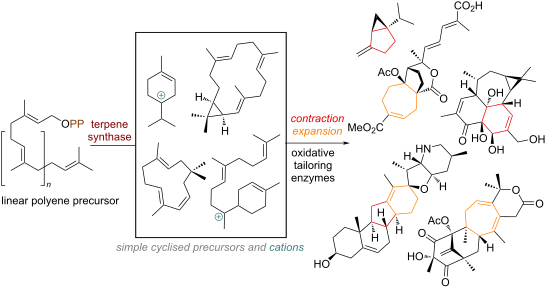
Scheme 1: Mechanistic overview of enzymes involved in ring-size-altering reactions: A: Difference in ionisati...

Scheme 2: A: Ring contraction through involvement of carbocationic intermediates in thujane monoterpene biosy...

Scheme 3: Examples of concerted ring expansions of carbocation intermediates in PxaTPS8-catalysed cyclisation...

Scheme 4: Sequential ring expansions during astellifadiene (17) synthesis reported by Abe and co-workers.

Scheme 5: Cyclobutane ring expansion and sequential ring contractions catalysed by the synthase AITS in the b...

Scheme 6: Ring expansion and transannular ring contraction of a cyclopentane to cyclobutane in the biosynthes...

Scheme 7: Computationally elucidated concerted cyclisations/alkyl/hydride shifts during the biosynthesis of t...

Scheme 8: Cyclisation events and 6→5-ring contraction during the construction of epi-isozizaene (26) catalyse...

Scheme 9: Transannular cyclisations and 4→5-membered ring expansion through dyotropic 1,2-rearrangement of al...

Scheme 10: Ring expansion in presilphiperfolan-8b-ol (31) biosynthesis and ring contraction of the presilphipe...

Scheme 11: Ring contraction via transannular cyclopropanation and opening of cyclopropane in the biosynthesis ...

Scheme 12: The crucial CYP450-catalysed oxidative rearrangement defining the skeleton in gibberellin biosynthe...

Scheme 13: CYP450-mediated oxidation of cyclopentane methylene expanding the 8-membered ring in the biosynthes...

Scheme 14: CYP450-mediated oxidation of an exocyclic methyl group to effect transannular cyclisation across th...

Scheme 15: Non-enzymatic transannular aldol reaction enables the formation of the 5/13/3-tricyclic ring system...

Scheme 16: A: Oxidative ring expansion of a cyclopentane by incorporation of a methyl group in the biosynthesi...

Scheme 17: Rearrangement and ring expansion in the construction of the complex bridged carbon framework of and...

Scheme 18: Ketoglutarate-mediated oxidations of preaustinoid A1 (53) en route to complex meroterpenoids, B-rin...

Scheme 19: Proposed putative biosynthetic formation of the tigliane skeleton from an E,E,Z-triene.

Scheme 20: Photocatalytic tandem ring expansion/contraction of santonin to give photosantonin products and gua...

Scheme 21: A: Proposed biosynthesis of stelleroid B (66) from stelleranoid I (65) by ketol rearrangement; B: o...

Scheme 22: Singular examples of A,B-ring contractions and expansions in the biosynthesis of sesquiterpenoids e...

Scheme 23: A: plausible proposed biosynthetic pathway for the tigliane/ingenane skeletal rearrangement and 1,2...

Scheme 24: A: Multiple ring-size alterations during xenovulene A (90) biosynthesis; B: Ring contraction and re...

Scheme 25: Proposed biosyntheses of the complex, polycyclic terpenoid illisimonin A (97) and the bridged antro...

Scheme 26: Proposed biogenetic origin for the meroterpenoid liphagal (104) via epoxide-mediated ring expansion....

Scheme 27: Proposed biogenetic origin for the ring-contracted members of the taiwaniaquinol family.
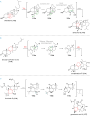
Scheme 28: A: Schenck ene/Hock/Aldol cascade effecting B-ring contraction in atheronal B (113); B: Selective C...
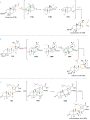
Scheme 29: A: D-ring expansion of buxenone (118) via cyclopropanation towards buxaustroine A (119); B: Propose...

Scheme 30: Biosynthetic origin of alstoscholarinoids A (124) and B (125) via cascade oxidative rearrangement c...

Scheme 31: Biogenetic origin of the hedgehog signalling inhibitor cyclopamine (129) by tandem ring contraction...

Scheme 32: Proposed biogenetic origin of the B-ring contracted spirocyclic triterpenoid spirochensilide A (131...

Scheme 33: A: Proposed B-ring contraction during the biosynthesis of holophyllane A (133); B: B-ring contracti...

Scheme 34: Radical and ionic/polar mechanisms for the C-ring-contracted triterpenoids phomopsterone B (139) an...

Scheme 35: A: Plausible mechanism for the formation of schiglautone A (144) from anwuweizic acid (145); B: Pro...

Scheme 36: Reported biosynthetic proposal for the formation of B-ring expanded triterpenoids rhodoterpenoids A...

Scheme 37: A: Final reaction step in the synthesis of euphorikanin A (154), benzilic acid-type ring contractio...

Scheme 38: Tricyclic ring expansion in the Gui synthesis of gibbosterol A (158) and sarocladione (160) via Ru-...

Scheme 39: A: A-ring expansion during the Gui synthesis of rubriflordilactone B (161); B: Mechanism for the bi...

Scheme 40: Photosantonin rearrangement effects A/B ring contraction/expansion in Li’s synthesis of the complex...

Scheme 41: Tandem A/B ring expansion/contraction of an ergosterol derivative via pinacol rearrangement in the ...

Scheme 42: Synthetic studies towards cyclocitrinol (179) by A) the semisynthetic approach by Gui et al. using ...

Scheme 43: A: Bioinspired synthesis of spirochensilide A (131) by the Heretsch group via selective 8,9-epoxida...
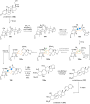
Scheme 44: Baran’s synthesis of cortistatin A (191), expanding the B-ring through a cyclopropane fragmentation....

Scheme 45: Ding’s total synthesis of retigeranic acid (198) showcasing sequential 6→5 ring contractions.

Scheme 46: A: Oxa-di-π-methane (ODPM) rearrangement of a bicyclic ketone en route to silphiperfolenone (203); ...

Scheme 47: Biomimetic synthesis of liphagal (104) from sclareolide (221) by George and co-workers.

Scheme 48: Wu’s bioinspired synthesis of cucurbalsaminones B (224) and C (225) by photocatalytic oxa-di-π-meth...

Scheme 49: Baran’s total synthesis of maoecrystal V (230) featuring a pinacol rearrangement for ring expansion...

Scheme 50: A: Ketol rearrangement leading to ring contraction in the total synthesis of preaustinoid B; B: Ben...

Scheme 51: A: Scheidt’s synthesis of isovelleral (251) by pinacol rearrangement triggered by Mitsunobu conditi...

Scheme 52: Biomimetic transformations of simplified test substrates related to Euphorbia diterpenoids.

Scheme 53: A: First generation synthesis of taiwaniaquinones by benzilic acid-type rearrangement of the B-ring...

Scheme 54: A: Norrish type 1 radical recombination leading to ring contraction en route to cuparenone (272): 1...

Scheme 55: Ring contraction of a bridged D-ring system in the total synthesis of andrastatin D (280), terrenoi...

Scheme 56: Biomimetic synthesis of hyperjapone A (284) and hyperjaponol C (285) by George et al.

Scheme 57: Heretsch’ synthesis of dankastarones A (288) and B (289), swinhoeisterol A (290), and periconiaston...

Scheme 58: A: Zhang’s ring contraction during the synthesis of stemar-13-ene (295) by pinacol rearrangement; B...

Scheme 59: Trauner’s biomimetic synthesis of preuisolactone A (307) featuring a ring contraction via benzilic ...

Scheme 60: Bioinspired approaches for ring contraction/expansion reactions in the synthesis of alstoscholarino...

Scheme 61: A: Sarpong and Li, Wang and co-workers’ ring expansion of cephanolide A (313) to reach harringtonol...
Spirobarbiturates with a pyrrolizidine moiety: synthesis, structure and biological evaluation
- Arthur A. Puzyrkov,
- Andrew S. Drachuk,
- Ekaterina A. Popova,
- Alexander V. Stepakov and
- Vitali M. Boitsov
Beilstein J. Org. Chem. 2026, 22, 274–288, doi:10.3762/bjoc.22.20
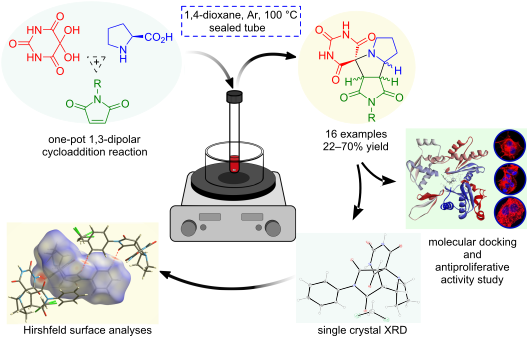
- ]. In 2018, Kota and Sreevani prepared spirobarbiturates via a Mo(CO)6-catalyzed intermolecular [2 + 2 + 2] cycloaddition of propargyl halides with dipropargylbarbituric acid [24]. Almeida and colleagues described the formation of spiroindoline barbiturates via thermal rearrangement of 2,1-benzisoxazole

Graphical Abstract

Scheme 1: Biologically active compounds with a spirobarbiturate moiety in their structure [7-12].

Scheme 2: Biologically active alkaloids with a pyrrolizidine moiety.

Scheme 3: Previous studies on the three-component synthesis of spirobarbiturates.
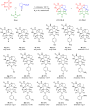
Scheme 4: Synthesis of racemic spirobarbiturates 4a–p via one-pot three-component reaction of alloxan (1), ʟ-...

Scheme 5: A plausible mechanism of spirobarbiturate formation from alloxan (1), ʟ-proline (2), and N-substitu...

Figure 1: Schematic structures of endo- and exo-adducts of spirobarbiturates 4.

Figure 2: X-ray crystal structures of compounds 4b (CCDC 2391172, left) and 4c (CCDC 2391171, right).

Figure 3: Unit cell packing of products 4b (left) and 4c (right).

Figure 4: HS mapped with dnorm for compounds 4b (left) and 4c (right).

Figure 5: A segment of the crystal structure of compound 4b with the HS (dnorm), showing intermolecular conta...

Figure 6: A segment of the crystal structure of compound 4c with the HS (dnorm), showing intermolecular conta...
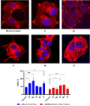
Figure 7: Microscopic images of treated cells and state of the actin cytoskeleton of Sk-mel-2 cells after cul...
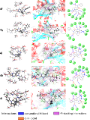
Figure 8: Docked view of compounds 4f, 4g, 4i, 4k, and 4l with the target protein (PDB ID: 8DNH).
Total synthesis of natural products based on hydrogenation of aromatic rings
- Haoxiang Wu and
- Xiangbing Qi
Beilstein J. Org. Chem. 2026, 22, 88–122, doi:10.3762/bjoc.22.4
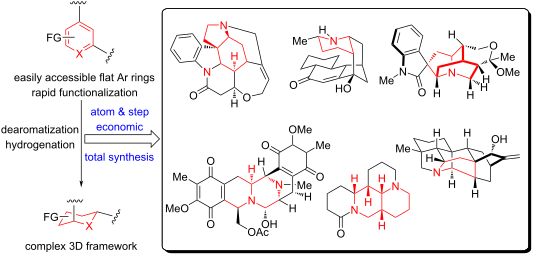
- (±)-LSD by Vollhardt and co-workers, the pyridine part was constructed by a Co-catalyzed [2 + 2 + 2] cycloaddition between alkyne 84 and nitrile 85, constructing the ergoline core 86. Methylation with MeOTf provided pyridinium 87, and subsequent NaBH4-mediated hydrogenation selectively generated the

Graphical Abstract

Scheme 1: The association between dearomatization and natural product synthesis.

Scheme 2: Key challenges in hydrogenation of aromatic rings.
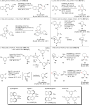
Scheme 3: Hydrogenation of heterocyclic aromatic rings.
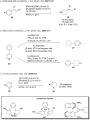
Scheme 4: Hydrogenation of the carbocyclic aromatic rings.
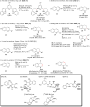
Scheme 5: Hydrogenation of the heterocycle part in bicyclic aromatic rings.
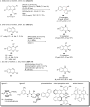
Scheme 6: Hydrogenation of the heterocycle part in bicyclic aromatic rings.
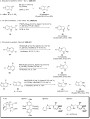
Scheme 7: Hydrogenation of benzofuran, indole, and their analogues.
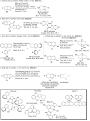
Scheme 8: Hydrogenation of benzofuran, indole, and their analogues.

Scheme 9: Total synthesis of (±)-keramaphidin B by Baldwin and co-workers.

Scheme 10: Total synthesis of (±)-LSD by Vollhardt and co-workers.

Scheme 11: Total synthesis of (±)-dihydrolysergic acid by Boger and co-workers.

Scheme 12: Total synthesis of (±)-lysergic acid by Smith and co-workers.

Scheme 13: Hydrogenation of (−)-tabersonine to (−)-decahydrotabersonine by Catherine Dacquet and co-workers.

Scheme 14: Total synthesis of (±)-nominine by Natsume and co-workers.
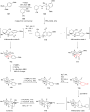
Scheme 15: Total synthesis of (+)-nominine by Gin and co-workers.

Scheme 16: Total synthesis of (±)-lemonomycinone and (±)-renieramycin by Magnus.

Scheme 17: Total synthesis of GB13 by Sarpong and co-workers.

Scheme 18: Total synthesis of GB13 by Shenvi and co-workers.

Scheme 19: Total synthesis of (±)-corynoxine and (±)-corynoxine B by Xia and co-workers.
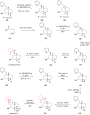
Scheme 20: Total synthesis of (+)-serratezomine E and the putative structure of huperzine N by Bonjoch and co-...

Scheme 21: Total synthesis of (±)-serralongamine A and the revised structure of huperzine N and N-epi-huperzin...

Scheme 22: Early attempts to indenopiperidine core.

Scheme 23: Homogeneous hydrogenation and completion of the synthesis.
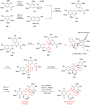
Scheme 24: Total synthesis of jorunnamycin A and jorumycin by Stoltz and co-workers.

Scheme 25: Early attempt towards (−)-finerenone by Aggarwal and co-workers.

Scheme 26: Enantioselective synthesis towards (−)-finerenone.

Scheme 27: Total synthesis of (+)-N-methylaspidospermidine by Smith, Grigolo and co-workers.

Scheme 28: Dearomatization approach towards matrine-type alkaloids.

Scheme 29: Asymmetric total synthesis to (−)-senepodine F via an asymmetric hydrogenation of pyridine.

Scheme 30: Selective hydrogenation of indole derivatives and application.
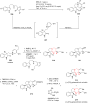
Scheme 31: Synthetic approaches to the oxindole alkaloids by Qi and co-workers.

Scheme 32: Total synthesis of annotinolide B by Smith and co-workers.
Synthesis of the tetracyclic skeleton of Aspidosperma alkaloids via PET-initiated cationic radical-derived interrupted [2 + 2]/retro-Mannich reaction
- Ru-Dong Liu,
- Jian-Yu Long,
- Zhi-Lin Song,
- Zhen Yang and
- Zhong-Chao Zhang
Beilstein J. Org. Chem. 2025, 21, 2470–2478, doi:10.3762/bjoc.21.189
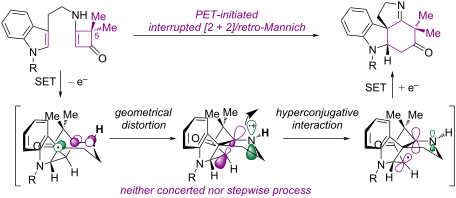
- involves a formal 1,3-C shift. Keywords: Aspidosperma alkaloids; [2 + 2]-cycloaddition/retro-Mannich reaction; DFT study; photoinduced electron transfer; Introduction Photochemical reactions, which enable the construction of topologically complex architectures from simple building blocks, have attracted
- considerable attention in recent decades. Numerous approaches to natural product synthesis have been reported in which a photochemical transformation represents a key step [1][2][3]. In this context, the photochemical [2 + 2] cycloaddition and subsequent fragmentation of the resulting cyclobutane provides a

Graphical Abstract
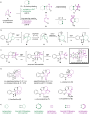
Figure 1: Synthetic plan. a) General model of cyclobutenone bond cleavage; b) our previously reported method;...

Scheme 1: Substrate scope.
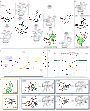
Figure 2: Computational study. a) Energy profiles from IN1 to IN3 and spin density of TS2 (isovalue = 0.004),...
Synthetic study toward vibralactone
- Liang Shi,
- Jiayi Song,
- Yiqing Li,
- Jia-Chen Li,
- Shuqi Li,
- Li Ren,
- Zhi-Yun Liu and
- Hong-Dong Hao
Beilstein J. Org. Chem. 2025, 21, 2376–2382, doi:10.3762/bjoc.21.182

- . This intermediate was intended to be prepared through allylation [36] with its precursor 15 accessible from aldehyde 16 and acetyl chloride through ketene–aldehyde [2 + 2] cycloaddition [37]. Results and Discussion Our synthetic route commenced from the known aldehyde 16 which is readily accessed in a

Graphical Abstract

Figure 1: Selected representative natural products and derivatives with β-lactone moiety.

Scheme 1: Previous syntheses of vibralactone (6).

Scheme 2: Retrosynthetic analysis of vibralactone (6).

Scheme 3: Synthetic study toward vibralactone (6) in the present of β-lactone.

Scheme 4: C–H insertion utilizing linear precursor 19.

Scheme 5: Construction the bicyclic skeleton of vibralactone (6) through C–H insertion.
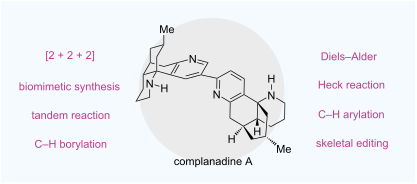
Comparative analysis of complanadine A total syntheses
- Reem Al-Ahmad and
- Mingji Dai
Beilstein J. Org. Chem. 2025, 21, 2334–2344, doi:10.3762/bjoc.21.178
- intramolecular cyclization to afford alkyne–nitrile 19 for the first [2 + 2 + 2] cycloaddition with bis(trimethylsilyl)butadiyne (20). This transformation proceeded smoothly under thermal conditions with CpCo(CO)2 to afford 21 as the major regioisomer (rr = 25:1) [22]. Removal of the two TMS groups and
- reinstallation of a single TMS on the alkyne provided pyridyl-alkyne 22 for the second [2 + 2 + 2] cycloaddition reaction which proved nontrivial, with the protecting group on the secondary amine of the alkyne-nitrile moiety and the choice of ligand playing crucial roles. Specifically, when using 19 as the

Graphical Abstract
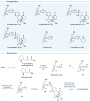
Scheme 1: Complanadine natural products and their plausible biosynthesis.

Scheme 2: The Siegel total synthesis of complanadine A enabled by [2 + 2 + 2] cycloadditions.
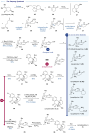
Scheme 3: The Sarpong total synthesis of complanadine A enabled by a biomimetic strategy and C–H activation.
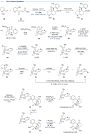
Scheme 4: The Tsukano total synthesis of complanadine A enabled by Diels–Alder cycloaddition, Heck cyclizatio...
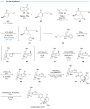
Scheme 5: The Dai total synthesis of complanadine A using single-atom skeletal editing.

Scheme 6: Comparative summary of the four complanadine A total syntheses.
Pathway economy in cyclization of 1,n-enynes
- Hezhen Han,
- Wenjie Mao,
- Bin Lin,
- Maosheng Cheng,
- Lu Yang and
- Yongxiang Liu
Beilstein J. Org. Chem. 2025, 21, 2260–2282, doi:10.3762/bjoc.21.173
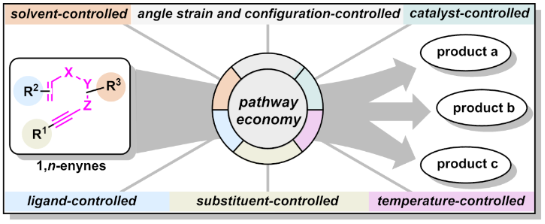
- controlled synthesis of nitrogen-containing heterocycles via reaction pathway modulation (Scheme 32) [45]. Under catalysis of Cu(OAc)2 and HOAc, the substrate was subjected to decyanation and followed copper-promoted [2 + 2] cycloaddition that yielded cyclobutene intermediate 155. Carbocation rearrangement
- 60 °C initiated nickel-mediated intramolecular [2 + 2] cycloaddition to form dihydrocyclobuta[c]quinolin-3-one framework 164. Conversely, when the temperature was elevated to 140 °C, thermal ring-expansion of the four-membered intermediate was induced through C–C bond cleavage/reorganization
- -ynes were employed by the García group to construct borylated polycyclic products via a temperature-controlled boracyclization reaction mediated by BCl3 (Scheme 34) [47]. At 0 °C, BCl3-mediated activation of the alkyne triggered an intramolecular [2 + 2] cycloaddition, generating a boron-chlorine

Graphical Abstract

Scheme 1: Economical synthesis and pathway economy.

Scheme 2: Au(I)-catalyzed cascade cyclization paths of 1,5-enynes.

Scheme 3: Au(I)-catalyzed cyclization paths of 1,7-enynes.

Scheme 4: I2/TBHP-mediated radical cycloisomerization paths of 1,n-enyne.

Scheme 5: Au(I)-catalyzed cycloisomerization paths of 3-allyloxy-1,6-diynes.

Scheme 6: Pd(II)-catalyzed cycloisomerization paths of 2-alkynylbenzoate-cyclohexadienone.

Scheme 7: Stereoselective cyclization of 1,5-enynes.

Scheme 8: Substituent-controlled cycloisomerization of propargyl vinyl ethers.

Scheme 9: Au(I)-catalyzed pathway-controlled domino cyclization of 1,2-diphenylethynes.

Scheme 10: Au(I)-catalyzed tandem cyclo-isomerization of tryptamine-N-ethynylpropiolamide.

Scheme 11: Au(I)-catalyzed tunable cyclization of 1,6-cyclohexenylalkyne.

Scheme 12: Substituent-controlled 7-exo- and 8-endo-dig-selective cyclization of 2-propargylaminobiphenyl deri...

Scheme 13: BiCl3-catalyzed cycloisomerization of tryptamine-ynamide derivatives.

Scheme 14: Au(I)-mediated substituent-controlled cycloisomerization of 1,6-enynes.

Scheme 15: Ligand-controlled regioselective cyclization of 1,6-enynes.

Scheme 16: Ligand-dependent cycloisomerization of 1,7-enyne esters.

Scheme 17: Ligand-controlled cycloisomerization of 1,5-enynes.

Scheme 18: Ligand-controlled cyclization strategy of alkynylamide tethered alkylidenecyclopropanes.

Scheme 19: Ag(I)-mediated pathway-controlled cycloisomerization of tryptamine-ynamides.

Scheme 20: Gold-catalyzed cycloisomerization of indoles with alkynes.

Scheme 21: Catalyst-dependent cycloisomerization of dienol silyl ethers.

Scheme 22: Cycloisomerization of aromatic enynes governed by catalyst.

Scheme 23: Catalyst-dependent 1,2-migration in cyclization of 1-(indol-2-yl)-3-alkyn-1-ols.

Scheme 24: Gold-catalyzed cycloisomerization of N-propargyl-N-vinyl sulfonamides.

Scheme 25: Gold(I)-mediated enantioselective cycloisomerizations of ortho-(alkynyl)styrenes.

Scheme 26: Catalyst-controlled intramolecular cyclization of 1,7-enynes.

Scheme 27: Brønsted acid-catalyzed cycloisomerizations of tryptamine ynamides.

Scheme 28: Catalyst-controlled cyclization of indolyl homopropargyl amides.

Scheme 29: Angle strain-dominated 6-endo-trig cyclization of propargyl vinyl ethers.

Scheme 30: Angle strain-controlled cycloisomerization of alkyn-tethered indoles.

Scheme 31: Geometrical isomeration-dependent cycloisomerization of 1,3-dien-5-ynes.

Scheme 32: Temperature-controlled cyclization of 1,7-enynes.

Scheme 33: Cycloisomerizations of n-(o-ethynylaryl)acrylamides through temperature modulation.

Scheme 34: Temperature-controlled boracyclization of biphenyl-embedded 1,3,5-trien-7-ynes.
Chiral phosphoric acid-catalyzed asymmetric synthesis of helically chiral, planarly chiral and inherently chiral molecules
- Wei Liu and
- Xiaoyu Yang
Beilstein J. Org. Chem. 2025, 21, 1864–1889, doi:10.3762/bjoc.21.145
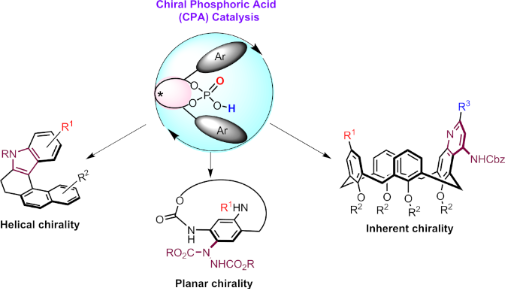
- , including the asymmetric [2 + 2 + 2] cycloaddition of aryl-substituted polyynes and hydroarylation of alkynes [18][19]. In contrast, the application of asymmetric organocatalysis for enantioselective synthesis of chiral helicenes remains relatively underdeveloped compared to transition metal-catalyzed

Graphical Abstract

Figure 1: General structure of CPAs and selected CPAs with various chiral scaffolds.
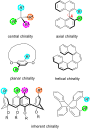
Figure 2: Representative elements of molecular chirality.

Scheme 1: CPA-catalyzed asymmetric synthesis of azahelicenes via Fischer indole synthesis.
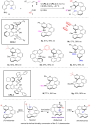
Scheme 2: CPA-catalyzed asymmetric synthesis of azahelicenes via sequential Povarov reaction and oxidative ar...

Scheme 3: CPA-catalyzed asymmetric synthesis of azahelicenes via sequential Povarov reaction involving 3-viny...
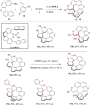
Scheme 4: CPA-catalyzed asymmetric synthesis of heterohelicenes via sequential Povarov reaction involving 2-v...

Scheme 5: Diverse enantioselective synthesis of hetero[7]helicenes via a CPA-catalyzed double annulation stra...

Scheme 6: CPA-catalyzed asymmetric synthesis of indolohelicenoids through enantioselective cycloaddition and ...

Scheme 7: Kinetic resolution of helical polycyclic phenols via CPA-catalyzed enantioselective aminative dearo...

Scheme 8: Kinetic resolution of azahelicenes via CPA-catalyzed transfer hydrogenation.

Scheme 9: Asymmetric synthesis of planarly chiral macrocycles via CPA-catalyzed electrophilic aromatic aminat...

Scheme 10: Enantioselective synthesis of planarly chiral macrocycles via CPA-catalyzed macrocyclization.

Scheme 11: (Dynamic) kinetic resolution of planarly chiral paracyclophanes via CPA-catalyzed asymmetric reduct...

Scheme 12: Kinetic resolution of macrocyclic paracyclophanes through CPA/Bi-catalyzed asymmetric allylation.

Scheme 13: Enantioselective synthesis of planarly chiral macrocycles via CPA-catalyzed coupling of carboxylic ...
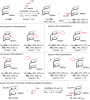
Scheme 14: Kinetic resolution of substituted amido[2.2]paracyclophanes via CPA-catalyzed asymmetric electrophi...
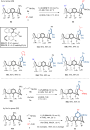
Scheme 15: Enantioselective synthesis of inherently chiral calix[4]arenes via sequential CPA-catalyzed Povarov...

Scheme 16: Asymmetric synthesis of inherently chiral calix[4]arenes via CPA-catalyzed aminative desymmetrizati...

Scheme 17: Asymmetric synthesis of chiral heterocalix[4]arenes via CPA-catalyzed intramolecular SNAr reaction.
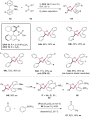
Scheme 18: Enantioselective synthesis of inherently chiral DDDs via CPA-catalyzed cyclocondensation.
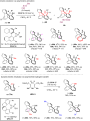
Scheme 19: Asymmetric synthesis of saddle-shaped inherently chiral 9,10-dihydrotribenzoazocines via CPA-cataly...

Scheme 20: Enantioselective synthesis of inherently chiral saddle-shaped dibenzo[b,f][1,5]diazocines via CPA-c...
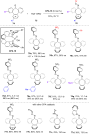
Scheme 21: Enantioselective synthesis of inherent chiral 7-membered tribenzocycloheptene oximes via CPA-cataly...
Photocatalysis and photochemistry in organic synthesis
- Timothy Noël and
- Bartholomäus Pieber
Beilstein J. Org. Chem. 2025, 21, 1645–1647, doi:10.3762/bjoc.21.128
- ], hydrogen atom transfer [22], halogen atom transfer [23], and energy transfer catalysis [24][25] – have been established as powerful additions to the arsenal of photon-driven reactions. Three articles in this thematic issue exemplify this: The Molloy group developed an intramolecular [2 + 2]-cycloaddition

Advances in nitrogen-containing helicenes: synthesis, chiroptical properties, and optoelectronic applications
- Meng Qiu,
- Jing Du,
- Nai-Te Yao,
- Xin-Yue Wang and
- Han-Yuan Gong
Beilstein J. Org. Chem. 2025, 21, 1422–1453, doi:10.3762/bjoc.21.106
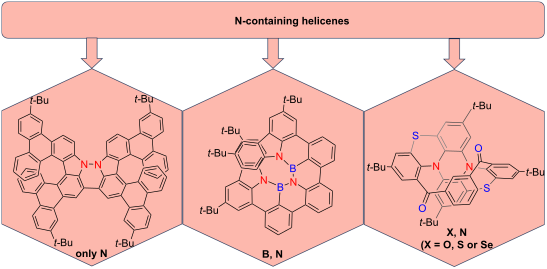
- responses. Concurrently, Tanaka’s group achieved the enantioselective synthesis of aza[6]- and aza[7]helicene-like molecules via Rh(I)/chiral bisphosphine-catalyzed [2 + 2 + 2] cycloaddition [80]. The resulting S-shaped double aza[6]helicene-like compound 66 displayed high enantiomeric excess (up to 89% ee

Oxetanes: formation, reactivity and total syntheses of natural products
- Peter Gabko,
- Martin Kalník and
- Maroš Bella
Beilstein J. Org. Chem. 2025, 21, 1324–1373, doi:10.3762/bjoc.21.101
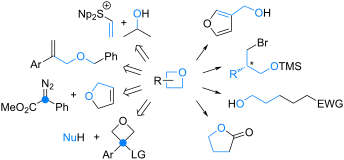
- ] Cycloadditions Another widely used method for oxetane synthesis is the [2 + 2] cycloaddition between carbonyls and olefins (Scheme 19), and the two main variations include light-induced Paternò–Büchi reactions and Lewis acid- or base-catalysed formal [2 + 2] cycloadditions. The main advantages of these reactions
- . published a light-induced cross-selective [2 + 2] cycloaddition between 3-(arylmethylidene)oxetanes 159 and electron-deficient alkenes 160 (Scheme 40) [91]. The methodology used a commercially available iridium-based photosensitiser and blue-light irradiation at a slightly elevated temperature. The

Graphical Abstract

Figure 1: Bond lengths and bond angles in oxetane at 140 K [2].

Figure 2: Analogy of 3-substituted oxetanes to carbonyl and gem-dimethyl groups [12].

Figure 3: Use of oxetanes in drug design – selected examples.

Figure 4: Examples of oxetane-containing natural products.

Scheme 1: Synthetic strategies towards construction of the oxetane ring.

Scheme 2: Overview of intramolecular Williamson etherification and competing Grob fragmentation.

Scheme 3: Synthesis of spiro-oxetanes via 1,4-C–H insertion and Williamson etherification.

Scheme 4: Use of phenyl vinyl selenone in the synthesis of spirooxindole oxetanes.

Scheme 5: Synthesis of bicyclic 3,5-anhydrofuranoses via double epoxide opening/etherification.

Scheme 6: Preparation of spirooxetanes by cycloisomerisation via MHAT/RPC.

Scheme 7: Oxetane synthesis via alcohol C–H functionalisation.

Scheme 8: Access to oxetanes 38 from α-acetyloxy iodides.

Scheme 9: The kilogram-scale synthesis of oxetane intermediate 41.

Scheme 10: Overview of the intramolecular opening of 3-membered rings.

Scheme 11: Synthesis of 4,7-dioxatricyclo[3.2.1.03,6]octane skeletons.

Scheme 12: Silicon-directed electrophilic cyclisation of homoallylic alcohols.

Scheme 13: Hydrosilylation–iodocyclisation of homopropargylic alcohols.

Scheme 14: Cu-catalysed intramolecular O-vinylation of γ-bromohomoallylic alcohols.

Scheme 15: Cu-catalysed intramolecular cross-coupling of hydroxyvinylstannanes.

Scheme 16: Isomerisation of oxiranyl ethers containing weakly carbanion-stabilising groups.

Scheme 17: Cyclisation of diethyl haloalkoxymalonates.

Scheme 18: Synthesis of oxetanes through a 1,5-HAT/radical recombination sequence.

Scheme 19: General approach to oxetanes via [2 + 2] cycloadditions.

Scheme 20: Synthesis of tricyclic 4:4:4 oxetanes through a photochemical triple cascade reaction.

Scheme 21: Iridium-catalysed Paternò–Büchi reaction between α-ketoesters and simple alkenes.

Scheme 22: Three-step synthesis of spirocyclic oxetanes 83 via Paternò–Büchi reaction, nucleophilic ring openi...

Scheme 23: Enantioselective Paternò–Büchi reaction catalysed by a chiral iridium photocatalyst.

Scheme 24: Synthesis of polysubstituted oxetanes 92 via Cu(II)-mediated formal [2 + 2] cycloadditions.

Scheme 25: Synthesis of alkylideneoxetanes via NHC- and DBU-mediated formal [2 + 2] cycloadditions.

Scheme 26: Use of sulphur-stabilised carbanions in ring expansions.

Scheme 27: Synthesis of α,α-difluoro(arylthio)methyl oxetanes.

Scheme 28: Ring expansion in an industrial synthesis of PF-06878031.

Scheme 29: Ring contraction of triflated 2-hydroxy-γ-lactones.

Scheme 30: Ring contraction in an industrial synthesis of PF-06878031.

Scheme 31: Photochemical ring contraction of 2,5-dihydrofurans by aryldiazoacetic acid esters.

Scheme 32: Synthesis of 3-oxetanones via O-H insertion of carbenes.

Scheme 33: Synthesis of phosphonate oxetanones via gold-mediated alkyne oxidation/O–H insertion.

Scheme 34: Syntheses and common derivatisations of 3-oxetanone.

Scheme 35: SN1 substitution of 3-aryloxetan-3-ols by thiols and alcohols.

Scheme 36: Fe–Ni dual-catalytic olefin hydroarylation towards 3-alkyl-3-(hetero)aryloxetanes.

Scheme 37: Synthesis of 3-aryloxetan-3-carboxylic acids.

Scheme 38: Decarboxylative alkylation of 3-aryloxetan-3-carboxylic acids.

Scheme 39: Synthesis of 3-amino-3-aryloxetanes via photoredox/nickel cross-coupling catalysis.
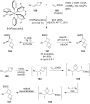
Scheme 40: Intermolecular cross-selective [2 + 2] photocycloaddition towards spirooxetanes.

Scheme 41: Synthesis of 3-aryl-3-aminooxetanes via defluorosulphonylative coupling.

Scheme 42: Two-step synthesis of amide bioisosteres via benzotriazolyl Mannich adducts 170.

Scheme 43: Functionalisation of oxetanyl trichloroacetimidates 172.

Scheme 44: Synthesis of oxetane-amino esters 176.

Scheme 45: Tandem Friedel–Crafts alkylation/intramolecular ring opening of 3-aryloxetan-3-ols.

Scheme 46: Synthesis of polysubstituted furans and pyrroles.

Scheme 47: Synthesis of oxazolines and bisoxazolines.

Scheme 48: Tandem, one-pot syntheses of various polycyclic heterocycles.

Scheme 49: Synthesis of 1,2-dihydroquinolines via skeletal reorganisation of oxetanes.

Scheme 50: Synthesis of benzoindolines and 2,3-dihydrobenzofurans and their derivatisations.

Scheme 51: Synthesis of polysubstituted 1,4-dioxanes.

Scheme 52: Preparation of various lactones via ring opening of oxetane-carboxylic acids 219.

Scheme 53: Tsuji-Trost allylation/ring opening of 3-aminooxetanes.

Scheme 54: Arylative skeletal rearrangement of 3-vinyloxetan-3-ols to 2,5-dihydrofurans.

Scheme 55: Reductive opening of oxetanes using catalytic Mg–H species.

Scheme 56: Opening of oxetanes by silyl ketene acetals.

Scheme 57: Rhodium-catalysed hydroacylation of oxetanes.

Scheme 58: Generation of radicals from oxetanes mediated by a vitamin B12-derived cobalt catalyst.

Scheme 59: Reductive opening of oxetanes by B–Si frustrated Lewis pairs.
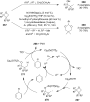
Scheme 60: Zirconocene-mediated reductive opening of oxetanes.

Scheme 61: Enantioselective syntheses of small and medium-size rings using chiral phosphoric acids.

Scheme 62: Asymmetric synthesis of 2,3-dihydrobenzo[b]oxepines catalysed by a chiral scandium complex.

Scheme 63: Enantioselective synthesis of 1,3-bromohydrins under a chiral squaramide catalysis.

Scheme 64: Enantioselective opening of 2-aryl-2-ethynyloxetanes by anilines.

Scheme 65: Ru-catalysed insertion of diazocarbonyls into oxetanes.

Scheme 66: Ring expansion of oxetanes by stabilised carbenes generated under blue light irradiation.

Scheme 67: Expansion of oxetanes via nickel-catalysed insertion of alkynyltrifluoroborates.

Scheme 68: Nickel-catalysed expansion of oxetanes into ε-caprolactones.

Scheme 69: Expansion of oxetanes via cobalt-catalysed carbonyl insertion.

Scheme 70: Gold-catalysed intramolecular 1,1-carboalkoxylation of oxetane-ynamides.

Scheme 71: Expansion of oxetanes by stabilised sulphoxonium ylides.

Scheme 72: Cu-catalysed ring expansion of 2-vinyloxetanes by diazoesters.

Scheme 73: Total synthesis of (+)-oxetin.

Scheme 74: Total synthesis of racemic oxetanocin A.

Scheme 75: Total synthesis of (−)-merrilactone A.
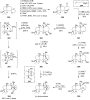
Scheme 76: Total synthesis of (+)-dictyoxetane.

Scheme 77: Total synthesis of ent-dichrocephone B.

Scheme 78: Total synthesis of (−)-mitrephorone A.
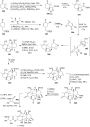
Scheme 79: Total synthesis of (−)-taxol.
Recent advances in synthetic approaches for bioactive cinnamic acid derivatives
- Betty A. Kustiana,
- Galuh Widiyarti and
- Teni Ernawati
Beilstein J. Org. Chem. 2025, 21, 1031–1086, doi:10.3762/bjoc.21.85
- 350–352 in good yields via benzyne intermediate 353 followed by a [2 + 2] cycloaddition with the sulfoxide affording an o-quinone intermediate 354 (Scheme 78) [132]. Furthermore, dioxolane compounds have also been subjected to synthesize cinnamic acid derivatives through CO2 release. For example, Chen

Graphical Abstract

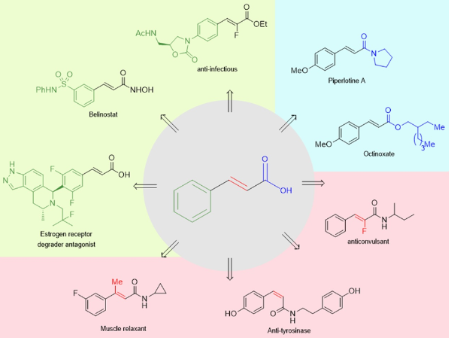
Figure 1: Biologically active cinnamic acid derivatives.

Scheme 1: General synthetic strategies for cinnamic acid derivatizations.

Scheme 2: Cinnamic acid coupling via isobutyl anhydride formation.
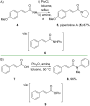
Scheme 3: Amidation reaction via O/N-pivaloyl activation.

Scheme 4: Cinnamic acid amidation using TCCA/PPh3 reagent.
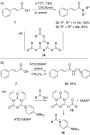
Scheme 5: Cinnamic acid amidation using triazine-based reagents.

Scheme 6: Cinnamic acid amidation using continuous flow mechanochemistry.

Scheme 7: Cinnamic acid amidation using COMU as coupling reagent.
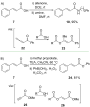
Scheme 8: Cinnamic acid amidation using allenone coupling reagent.

Scheme 9: Cinnamic acid amidation using 4-acetamidophenyl triflimide as reagent.

Scheme 10: Cinnamic acid amidation using methyltrimethoxysilane (MTM).

Scheme 11: Cinnamic acid amidation utilizing amine–borane reagent.

Scheme 12: Cinnamic acid amidation using TCCA/PPh3 reagent.

Scheme 13: Cinnamic acid amidation using PPh3/I2 reagent.

Scheme 14: Cinnamic acid amidation using PCl3 reagent.

Scheme 15: Cinnamic acid amidation utilizing pentafluoropyridine (PFP) as reagent.

Scheme 16: Cinnamic acid amidation using hypervalent iodine(III).

Scheme 17: Mechanochemical amidation using 1,1,2,2-tetrafluoroethyl-N,N-dimethylamine (TFEDMA) reagent.

Scheme 18: Methyl ester preparation using tris(2,4,6-trimethoxyphenyl)phosphine (TMPP).

Scheme 19: N-Trifluoromethyl amide preparation using isothiocyanate and AgF.

Scheme 20: POCl3-mediated amide coupling of carboxylic acid and DMF.

Scheme 21: O-Alkylation of cinnamic acid using alkylating agents.

Scheme 22: Glycoside preparation via Mitsunobu reaction.

Scheme 23: O/N-Acylation via rearrangement reactions.

Scheme 24: Amidation reactions using sulfur-based alkylating agents.

Scheme 25: Amidation reaction catalyzed by Pd0 via C–N cleavage.

Scheme 26: Amidation reaction catalyzed by CuCl/PPh3.

Scheme 27: Cu(II) triflate-catalyzed N-difluoroethylimide synthesis.

Scheme 28: Cu/Selectfluor-catalyzed transamidation reaction.

Scheme 29: CuO–CaCO3-catalyzed amidation reaction.

Scheme 30: Ni-catalyzed reductive amidation.

Scheme 31: Lewis acidic transition-metal-catalyzed O/N-acylations.

Scheme 32: Visible-light-promoted amidation of cinnamic acid.

Scheme 33: Sunlight/LED-promoted amidation of cinnamic acid.

Scheme 34: Organophotocatalyst-promoted N–O cleavage of Weinreb amides to synthesize primary amides.

Scheme 35: Cinnamamide synthesis through [Ir] photocatalyst-promoted C–N-bond cleavage of tertiary amines.

Scheme 36: Blue LED-promoted FeCl3-catalyzed reductive transamidation.

Scheme 37: FPyr/TCT-catalyzed amidation of cinnamic acid derivative 121.

Scheme 38: Cs2CO3/DMAP-mediated esterification.

Scheme 39: HBTM organocatalyzed atroposelective N-acylation.

Scheme 40: BH3-catalyzed N-acylation reactions.
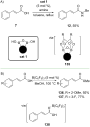
Scheme 41: Borane-catalyzed N-acylation reactions.

Scheme 42: Catalytic N-acylation reactions via H/F bonding activation.

Scheme 43: Brønsted base-catalyzed synthesis of cinnamic acid esters.

Scheme 44: DABCO/Fe3O4-catalyzed N-methyl amidation of cinnamic acid 122.

Scheme 45: Catalytic oxidation reactions of acylating agents.

Scheme 46: Preparation of cinnamamide-substituted benzocyclooctene using I(I)/I(III) catalysis.

Scheme 47: Pd-colloids-catalyzed oxidative esterification of cinnamyl alcohol.

Scheme 48: Graphene-supported Pd/Au alloy-catalyzed oxidative esterification via hemiacetal intermediate.

Scheme 49: Au-supported on A) carbon nanotubes (CNT) and B) on porous boron nitride (pBN) as catalyst for the ...

Scheme 50: Cr-based catalyzed oxidative esterification of cinnamyl alcohols with H2O2 as the oxidant.

Scheme 51: Co-based catalysts used for oxidative esterification of cinnamyl alcohol.

Scheme 52: Iron (A) and copper (B)-catalyzed oxidative esterification of cinnamaldehyde.

Scheme 53: NiHPMA-catalyzed oxidative esterification of cinnamaldehyde.

Scheme 54: Synthesis of cinammic acid esters through NHC-catalyzed oxidative esterification via intermolecular...
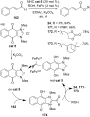
Scheme 55: Redox-active NHC-catalyzed esterification via intramolecular oxidation.

Scheme 56: Electrochemical conversion of cinnamaldehyde to methyl cinnamate.

Scheme 57: Bu4NI/TBHP-catalyzed synthesis of bisamides from cinnamalaldehyde N-tosylhydrazone.

Scheme 58: Zn/NC-950-catalyzed oxidative esterification of ketone 182.

Scheme 59: Ru-catalyzed oxidative carboxylation of terminal alkenes.

Scheme 60: Direct carboxylation of alkenes using CO2.

Scheme 61: Carboxylation of alkenylboronic acid/ester.

Scheme 62: Carboxylation of gem-difluoroalkenes with CO2.

Scheme 63: Photoredox-catalyzed carboxylation of difluoroalkenes.

Scheme 64: Ru-catalyzed carboxylation of alkenyl halide.
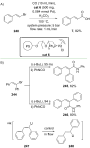
Scheme 65: Carboxylation of alkenyl halides under flow conditions.

Scheme 66: Cinnamic acid ester syntheses through carboxylation of alkenyl sulfides/sulfones.

Scheme 67: Cinnamic acid derivatives synthesis through a Ag-catalyzed decarboxylative cross-coupling proceedin...
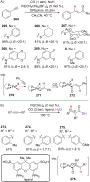
Scheme 68: Pd-catalyzed alkyne hydrocarbonylation.

Scheme 69: Fe-catalyzed alkyne hydrocarbonylation.

Scheme 70: Alkyne hydrocarboxylation using CO2.
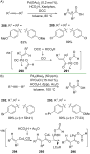
Scheme 71: Alkyne hydrocarboxylation using HCO2H as CO surrogate.

Scheme 72: Co/AlMe3-catalyzed alkyne hydrocarboxylation using DMF.

Scheme 73: Au-catalyzed oxidation of Au–allenylidenes.
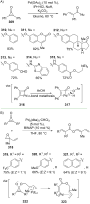
Scheme 74: Pd-catalyzed C–C-bond activation of cyclopropenones to synthesize unsaturated esters and amides.
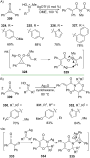
Scheme 75: Ag-catalyzed C–C-bond activation of diphenylcyclopropenone.

Scheme 76: Cu-catalyzed C–C bond activation of diphenylcyclopropenone.

Scheme 77: PPh3-catalyzed C–C-bond activation of diphenylcyclopropenone.

Scheme 78: Catalyst-free C–C-bond activation of diphenylcyclopropenone.

Scheme 79: Cu-catalyzed dioxolane cleavage.

Scheme 80: Multicomponent coupling reactions.

Scheme 81: Pd-catalyzed partial hydrogenation of electrophilic alkynes.

Scheme 82: Nickel and cobalt as earth-abundant transition metals used as catalysts for the partial hydrogenati...
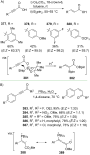
Scheme 83: Metal-free-catalyzed partial hydrogenation of conjugated alkynes.

Scheme 84: Horner–Wadsworth–Emmons reaction between triethyl 2-fluoro-2-phosphonoacetate and aldehydes with ei...

Scheme 85: Preparation of E/Z-cinnamates using thiouronium ylides.

Scheme 86: Transition-metal-catalyzed ylide reactions.

Scheme 87: Redox-driven ylide reactions.
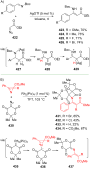
Scheme 88: Noble transition-metal-catalyzed olefination via carbenoid species.

Scheme 89: TrBF4-catalyzed olefination via carbene species.

Scheme 90: Grubbs catalyst (cat 7)/photocatalyst-mediated metathesis reactions.

Scheme 91: Elemental I2-catalyzed carbonyl-olefin metathesis.

Scheme 92: Cu-photocatalyzed E-to-Z isomerization of cinnamic acid derivatives.

Scheme 93: Ni-catalyzed E-to-Z isomerization.

Scheme 94: Dehydration of β-hydroxy esters via an E1cB mechanism to access (E)-cinnamic acid esters.

Scheme 95: Domino ring-opening reaction induced by a base.
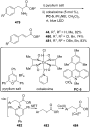
Scheme 96: Dehydroamination of α-aminoester derivatives.

Scheme 97: Accessing methyl cinnamate (44) via metal-free deamination or decarboxylation.

Scheme 98: The core–shell magnetic nanosupport-catalyzed condensation reaction.
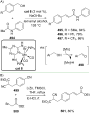
Scheme 99: Accessing cinnamic acid derivatives from acetic acid esters/amides through α-olefination.
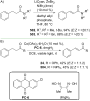
Scheme 100: Accessing cinnamic acid derivatives via acceptorless α,β-dehydrogenation.

Scheme 101: Cu-catalyzed formal [3 + 2] cycloaddition.

Scheme 102: Pd-catalyzed C–C bond formation via 1,4-Pd-shift.

Scheme 103: NHC-catalyzed Rauhut–Currier reactions.
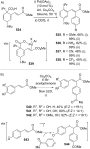
Scheme 104: Heck-type reaction for Cα arylation.

Scheme 105: Cu-catalyzed trifluoromethylation of cinnamamide.

Scheme 106: Ru-catalyzed alkenylation of arenes using directing groups.

Scheme 107: Earth-abundant transition-metal-catalyzed hydroarylation of α,β-alkynyl ester 374.

Scheme 108: Precious transition-metal-catalyzed β-arylation of cinnamic acid amide/ester.

Scheme 109: Pd-catalyzed β-amination of cinnamamide.

Scheme 110: S8-mediated β-amination of methyl cinnamate (44).

Scheme 111: Pd-catalyzed cross-coupling reaction of alkynyl esters with phenylsilanes.

Scheme 112: Pd-catalyzed β-cyanation of alkynyl amide/ester.

Scheme 113: Au-catalyzed β-amination of alkynyl ester 374.
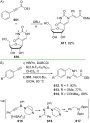
Scheme 114: Metal-free-catalyzed Cβ-functionalizations of alkynyl esters.

Scheme 115: Heck-type reactions.

Scheme 116: Mizoroki–Heck coupling reactions using unconventional functionalized arenes.
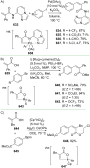
Scheme 117: Functional group-directed Mizoroki–Heck coupling reactions.
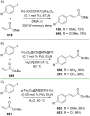
Scheme 118: Pd nanoparticles-catalyzed Mizoroki–Heck coupling reactions.

Scheme 119: Catellani-type reactions to access methyl cinnamate with multifunctionalized arene.
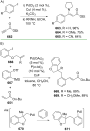
Scheme 120: Multicomponent coupling reactions.

Scheme 121: Single atom Pt-catalyzed Heck coupling reaction.

Scheme 122: Earth-abundant transition metal-catalyzed Heck coupling reactions.
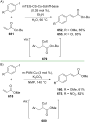
Scheme 123: Polymer-coated earth-abundant transition metals-catalyzed Heck coupling reactions.

Scheme 124: Earth-abundant transition-metal-based nanoparticles as catalysts for Heck coupling reactions.

Scheme 125: CN- and Si-based directing groups to access o-selective cinnamic acid derivatives.
Scheme 126: Amide-based directing group to access o-selective cinnamic acid derivatives.

Scheme 127: Carbonyl-based directing group to access o-selective cinnamic acid derivatives.

Scheme 128: Stereoselective preparation of atropisomers via o-selective C(sp2)–H functionalization.

Scheme 129: meta-Selective C(sp2)–H functionalization using directing group-tethered arenes.

Scheme 130: para-Selective C(sp2)–H functionalization using directing group-tethered arenes.

Scheme 131: Non-directed C(sp2)–H functionalization via electrooxidative Fujiwara–Moritani reaction.
Scheme 132: Interconversion of functional groups attached to cinnamic acid.

Scheme 133: meta-Selective C(sp2)–H functionalization of cinnamate ester.

Scheme 134: C(sp2)–F arylation using Grignard reagents.

Scheme 135: Truce–Smiles rearrangement of N-aryl metacrylamides.

Scheme 136: Phosphine-catalyzed cyclization of γ-vinyl allenoate with enamino esters.
Light-enabled intramolecular [2 + 2] cycloaddition via photoactivation of simple alkenylboronic esters
- Lewis McGhie,
- Hannah M. Kortman,
- Jenna Rumpf,
- Peter H. Seeberger and
- John J. Molloy
Beilstein J. Org. Chem. 2025, 21, 854–863, doi:10.3762/bjoc.21.69
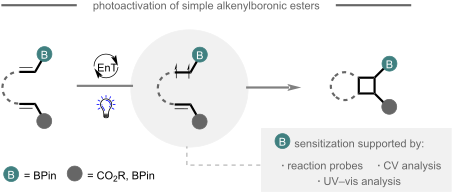
- , and control reactions support sensitization, enabling an intramolecular [2 + 2] cycloaddition to be realized accessing 3D bicyclic fragments containing a boron handle. Keywords: boron; catalysis; [2 + 2] cycloaddition; energy transfer; photochemistry; Introduction The strategic use of a photon to
- reactivity in EnT catalysis has also been intensively pursued (Figure 1B). The controlled geometric isomerization of boron-containing conjugated dienes [42], styrenes [43][44][45] and β-boryl acrylates [46][47] has been established with great effect, while elegant [2 + 2] cycloaddition strategies to readily
- . Herein, we demonstrate the sensitization of alkenylboronates to enable efficient intramolecular [2 + 2] cycloaddition using high energy photosensitizers (Figure 1C). Sensitization was quickly established and explored through the use of alkene scrambling (geometrical isomerization) reaction probes, to

Graphical Abstract
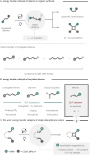
Figure 1: A) Energy transfer catalysis of alkenes in organic synthesis. B) Energy transfer catalysis of conju...
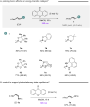
Figure 2: Probing boron effects on reactivity (A) and confirming the generation of a photostationary state eq...

Figure 3: Probing EnT catalysis enabled [2 + 2] cycloaddition of simple alkenylboronic esters.
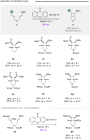
Scheme 1: Establishing the substrate scope. Conditions: 3 (1 equiv), xanthone (20 mol %), MeCN (0.03 M), unde...

Scheme 2: A) Product derivatization and B) transition-metal EnT catalysis. Reaction conditions A): 4d (1 equi...
Unprecedented visible light-initiated topochemical [2 + 2] cycloaddition in a functionalized bimane dye
- Metodej Dvoracek,
- Brendan Twamley,
- Mathias O. Senge and
- Mikhail A. Filatov
Beilstein J. Org. Chem. 2025, 21, 500–509, doi:10.3762/bjoc.21.37
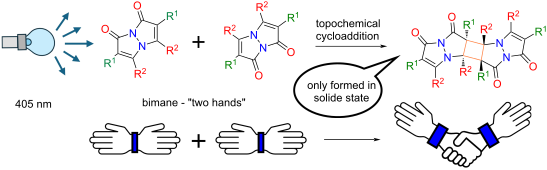
- promising strategy for synthesizing substituted cyclobutanes without the need for ultraviolet irradiation. Keywords: bimane; [2 + 2] cycloaddition; fluorescence; topochemical polymerization; X-ray crystallography; Introduction Topochemical polymerizations refer to polymerization reactions occurring in the
- conventions. Although these dyes have been known since 1978, their photochemistry has only been briefly explored. In this work, during the synthesis of a series of these dyes (Figure 2a), we observed an unprecedented intermolecular [2 + 2] cycloaddition of syn-(ethoxycarbonyl,chloro)bimane (Cl2B), seen in
- a [2 + 2] cycloaddition reaction, with approximately 20% yield of the dimer in the crystal. This was particularly notable, given that the compound had spent minimal time in solution with limited exposure to visible light, and no exposure to ultraviolet light. To further explore this phenomenon, we

Graphical Abstract

Figure 1: Structures of a) the unfunctionalized bimane scaffold and b) the two isomers of bimanes with their ...

Figure 2: a) Structures of the bimanes studied and b) the reaction scheme of the [2 + 2] photocycloaddition o...

Figure 3: Synthetic approach to bimanes.

Figure 4: View of the molecular structures in the crystal of the functionalized bimanes studied: a) Cl2B (B),...

Figure 5: View of the molecular structure in the crystal of a) symmetry generated by inversion bimanes Cl2B (...

Figure 6: View of the packing of the unit cells of a) Me2B viewed normal to the c-axis and b) Me4B viewed nor...

Figure 7: UV–vis spectrum of Cl2B after irradiation in DCM.

Figure 8: Proposed mechanism for the topochemical [2 + 2] photocycloaddition of Cl2B.
Photomechanochemistry: harnessing mechanical forces to enhance photochemical reactions
- Francesco Mele,
- Ana M. Constantin,
- Andrea Porcheddu,
- Raimondo Maggi,
- Giovanni Maestri,
- Nicola Della Ca’ and
- Luca Capaldo
Beilstein J. Org. Chem. 2025, 21, 458–472, doi:10.3762/bjoc.21.33
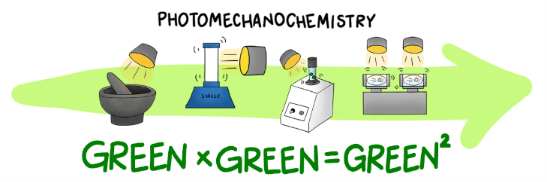
- alignment within the crystal drives the reaction. For example, in 2008, Vittal et al. [62] designed a mechanochemical strategy to align the C=C bonds of 4,4'-bipyridylethylene (bpe, 1.1) molecules to drive efficient [2 + 2] cycloaddition and give the corresponding cyclobutanes (1.2). This approach relied on
- are crucial for product formation. Lastly, the author noted that the inclusion of acetonitrile as a LAG agent enabled the transformation even without the presence of a photocatalyst [72][74]. In 2023, Braunschweig and co-workers reported the photomechanochemical [2 + 2] cycloaddition of acenaphthylene
- + 2] cycloaddition (Scheme 11). Regarding the experimental setup, the authors adapted a commercially available ball mill, by introducing a custom-made stainless steel safety shield to minimize unwanted light leakage. The interior surface of the shield is somewhat reflective. A hole in the milling

Graphical Abstract

Figure 1: The Grotthuss–Draper, Einstein–Stark, and Beer–Lambert laws. T: transmittance; ε: molar attenuation...

Figure 2: The benefits of merging photochemistry with mechanochemical setups (top). Most common setups for ph...

Scheme 1: Mechanochemically triggered pedal-like motion in solid-state [2 + 2] photochemical cycloaddition fo...
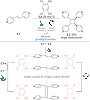
Scheme 2: Mechanically promoted [2 + 2] photodimerization of trans-1,2-bis(4-pyridyl)ethylene (2.1) via supra...

Scheme 3: Photo-thermo-mechanosynthesis of quinolines [65].

Scheme 4: Study of the mechanically assisted [2 + 2] photodimerization of chalcone [66].

Scheme 5: Liquid-assisted vortex grinding (LAVG) for the synthesis of [2.2]paracyclophane [68].

Scheme 6: Photomechanochemical approach for the riboflavin tetraacetate-catalyzed photocatalytic oxidation of...

Scheme 7: Photomechanochemical oxidation of 1,2-diphenylethyne to benzil. The photo in Scheme 7 was republished with ...

Scheme 8: Photomechanochemical borylation of aryldiazonium salts. The photo in Scheme 8 was reproduced from [72] (© 2017 ...

Scheme 9: Photomechanochemical control over stereoselectivity in the [2 + 2] dimerization of acenaphthylene. ...

Scheme 10: Photomechanochemical synthesis of polyaromatic compounds using UV light. The photo in Scheme 10 was reproduc...

Scheme 11: Mechanically assisted photocatalytic reactions: A) atom-transfer-radical addition, B) pinacol coupl...

Scheme 12: Use of mechanoluminescent materials as photon sources for photomechanochemistry. SAOED: SrAl2O4:Eu2+...

Figure 3: SWOT (strengths, weaknesses, opportunities, threats) analysis of photomechanochemistry.
Emerging trends in the optimization of organic synthesis through high-throughput tools and machine learning
- Pablo Quijano Velasco,
- Kedar Hippalgaonkar and
- Balamurugan Ramalingam
Beilstein J. Org. Chem. 2025, 21, 10–38, doi:10.3762/bjoc.21.3
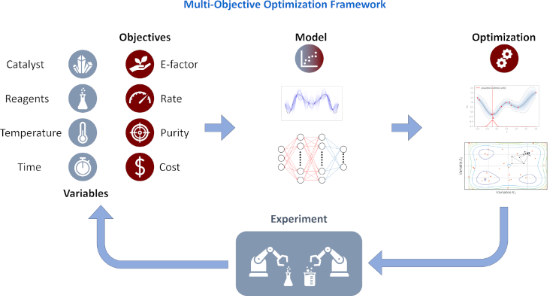
- . Photochemical reactions require uniform light penetration of the reaction mixture, and flow setups with uniform path lengths would be ideal for such reactions. A self-optimizing continuous-flow reactor was designed by Poscharny et al. [59] for [2 + 2]-cycloaddition reactions promoted by light. The optimization

Graphical Abstract

Figure 1: A high-level representation of the workflow and framework used for the optimization of organic reac...

Figure 2: (a) Photograph showing a Chemspeed HTE platform using 96-well reaction blocks. (b) Mobile robot equ...

Figure 3: (a) Description of a slug flow platform developed using segments of gas as separation medium for hi...

Figure 4: Schematic representation (a) and photograph (b) of the flow parallel synthesizer intelligently desi...

Figure 5: (a) Schematic representation of an ASFR for obtaining an optimal solution with minimal human interv...

Figure 6: (a) A modular flow platform developed for a wider variety of chemical syntheses. (b) Various catego...

Figure 7: Implementation of four complementary PATs into the optimization process of a three-step synthesis.

Figure 8: Overlay of several Raman spectra of a single condition featuring the styrene vinyl region (a) and t...

Figure 9: (a) Schematic description of the process of chemical reaction optimization through ML methods. (b) ...

Figure 10: (a) Comparison between a standard GP (single-task) and a multitask GP. Training an auxiliary task u...

Figure 11: Comparison of the reaction yield between optimizations campaign where the catalyst ligand selection...
Synthesis of acenaphthylene-fused heteroarenes and polyoxygenated benzo[j]fluoranthenes via a Pd-catalyzed Suzuki–Miyaura/C–H arylation cascade
- Merve Yence,
- Dilgam Ahmadli,
- Damla Surmeli,
- Umut Mert Karacaoğlu,
- Sujit Pal and
- Yunus Emre Türkmen
Beilstein J. Org. Chem. 2024, 20, 3290–3298, doi:10.3762/bjoc.20.273
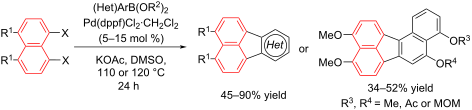
- reaction cascade starting from diarylalkynes 8, which involves indole formation/peri-C–H annulation and N-dealkylation reactions to afford acenaphthylene-fused indole products 9 (Scheme 1b) [41]. Recently, Takeuchi and co-workers reported an effective Ir-catalyzed [2 + 2 + 2] cycloaddition between 1,8
- )-catalyzed [2 + 2 + 2] cycloaddition reactions with 1,8-dialkynylnaphthalenes to access azafluoranthenes and 2-pyridone-fused naphthalenes [27]. In 2017, we reported a Pd-catalyzed cascade reaction that involves a sequential Suzuki–Miyaura cross-coupling and a subsequent intramolecular C–H arylation between

Graphical Abstract

Figure 1: Examples of important azafluoranthene and benzo[j]fluoranthene natural products, and acenaphthylene...

Scheme 1: Selected synthetic strategies towards heterocyclic fluoranthene analogues, and our approach.

Scheme 2: Synthesis of benzo[j]fluoranthene 18.

Scheme 3: Synthesis of benzo[j]fluoranthene 23.

Scheme 4: Synthesis of benzo[j]fluoranthene 28.
Extension of the π-system of monoaryl-substituted norbornadienes with acetylene bridges: influence on the photochemical conversion and storage of light energy
- Robin Schulte,
- Dustin Schade,
- Thomas Paululat,
- Till J. B. Zähringer,
- Christoph Kerzig and
- Heiko Ihmels
Beilstein J. Org. Chem. 2024, 20, 3061–3068, doi:10.3762/bjoc.20.254
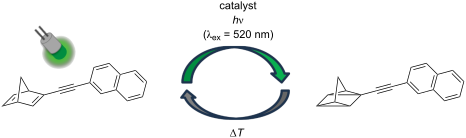
- . Photometric monitoring of the irradiation of 1i (A) and 1l (B) in the presence of [Ru(phen)3](PF6)2; λex = 520 nm. For clarity, the absorption of the sensitizer has been deducted. Insets: plot of absorption at long-wavelength maximum versus irradiation time t [38]. Photoinduced [2 + 2]-cycloaddition

Graphical Abstract

Scheme 1: Photoinduced [2 + 2]-cycloaddition–cycloreversion cycle of norbornadiene (1a) and quadricyclane (2a...

Figure 1: Representative bis- and tris-norbornadienyl-substituted benzene derivatives.

Scheme 2: Synthesis of alkynyl-arene-linked norbornadienes 1h–n by Sonogashira–Hagihara coupling reactions.

Scheme 3: Photoisomerization of norbornadiene derivatives 1h–l,n (20 µM) to quadricyclanes 2h–l,n in cyclohex...

Figure 2: Photometric monitoring of the irradiation of 1h (A), 1i (B), 1j (C), 1k (D), 1l (E), and 1n (F); λex...

Scheme 4: Triplet-sensitized photoisomerization of norbornadiene 1o to quadricyclane 2o.

Figure 3: Photometric monitoring of the irradiation of 1i (A) and 1l (B) in the presence of [Ru(phen)3](PF6)2...
Metal-free double azide addition to strained alkynes of an octadehydrodibenzo[12]annulene derivative with electron-withdrawing substituents
- Naoki Takeda,
- Shuichi Akasaka,
- Susumu Kawauchi and
- Tsuyoshi Michinobu
Beilstein J. Org. Chem. 2024, 20, 2234–2241, doi:10.3762/bjoc.20.191
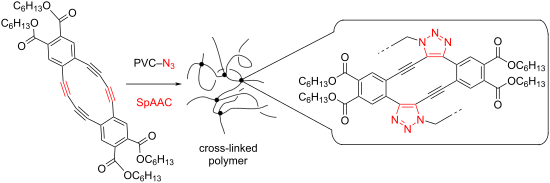
- oxidation-controlled cyclooctyne-1,2-quinone cycloaddition (SPOCQ) was developed and employed in the same fields of chemical biology [6][7]. On the other hand, the use of the SpAAC in materials science was slow. We developed another class of metal-free click chemistry reactions, such as the [2 + 2
- ] cycloaddition–retroelectrocyclization (CA-RE) between electron-rich alkynes and electron-deficient olefins [8]. The [2 + 2] CA-RE click reactions were employed to produce a variety of functional materials, such as nonlinear optical chromophores [9][10], super acceptors [11][12], ion sensing D–A systems [13

Graphical Abstract

Figure 1: Previously reported regioselective double azide addition to DBA with hexyloxy substituents and mole...

Scheme 1: Synthesis of DBA 5.
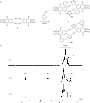
Figure 2: (a) Strain-promoted azide–alkyne cycloaddition between DBA 5 and benzyl azide and (b) 1H NMR spectr...

Figure 3: Arrhenius plots of the rate constants for the reaction between 5 and benzyl azide in CDCl3.

Figure 4: Proposed reaction mechanism for the formation of compound 6a. Free energy profiles (ΔG298 in kJ mol...

Figure 5: Absorption (blue) and fluorescence (red) spectra of 6a (2 × 10⁻⁵ M) in CH2Cl2.

Figure 6: (a) Crosslinking reaction of PVC-N3 (x = 0.11) with compound 5. (b,c) Strain-stress curves of PVC-N3...
Efficacy of radical reactions of isocyanides with heteroatom radicals in organic synthesis
- Akiya Ogawa and
- Yuki Yamamoto
Beilstein J. Org. Chem. 2024, 20, 2114–2128, doi:10.3762/bjoc.20.182
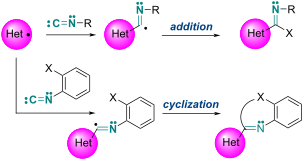
- lack of geometrical isomerization of the C–N double bond of the dithiolation products [32]. The thioselenation product 6’, an imine derivative, can be converted to a β-lactam derivative by [2 + 2] cycloaddition with ketene generated in situ. For example, thioselenation of RNC (R = (EtO)2P(O)–CH2) gave
- imine 6’ (96%), which underwent [2 + 2] cycloaddition with methoxyketene to afford β-lactam derivative 7 (79%) (Scheme 4). Selective replacement of the PhSe group of 7 with a 3-butanonyl group (34%) and the subsequent intramolecular Horner–Emmons reaction successfully led to carbacephem skeleton 8 (96

Graphical Abstract

Figure 1: Resonance structures and reactivity of carbon monoxide.

Figure 2: Resonance structures and reactivity of isocyanides.

Scheme 1: Possible three pathways of the E• formation for imidoylation.

Scheme 2: Radical addition of thiols to isocyanides.

Scheme 3: Selective thioselenation and catalytic dithiolation of isocyanides.

Scheme 4: Synthesis of carbacephem framework.

Scheme 5: Sequential addition of (PhSe)2 to ethyl propiolate and isocyanide.

Scheme 6: Isocyanide insertion reaction into carbon-tellurium bonds.

Scheme 7: Radical addition to isocyanides with disubstituted phosphines.

Scheme 8: Radical addition to phenyl isocyanides with diphosphines.

Scheme 9: Radical reaction of tin hydride and hydrosilane toward isocyanide.

Scheme 10: Isocyanide insertion into boron compounds.

Scheme 11: Isocyanide insertion into cyclic compounds containing boron units.

Scheme 12: Photoinduced hydrodefunctionalization of isocyanides.

Scheme 13: Tin hydride-mediated indole synthesis and cross-coupling.

Scheme 14: 2-Thioethanol-mediated radical cyclization of alkenyl isocyanide.

Scheme 15: Thiol-mediated radical cyclization of o-alkenylaryl isocyanide.

Scheme 16: (PhTe)2-assisted dithiolative cyclization of o-alkenylaryl isocyanide.

Scheme 17: Trapping imidoyl radicals with heteroatom moieties.

Scheme 18: Trapping imidoyl radicals with isocyano group.

Scheme 19: Quinoline synthesis via aza-Bergman cyclization.

Scheme 20: Phenanthridine synthesis via radical cyclization of 2-isocyanobiaryls.

Scheme 21: Phenanthridine synthesis by radical reactions with AIBN, DBP and TTMSS.

Scheme 22: Phenanthridine synthesis by oxidative cyclization of 2-isocyanobiaryls.

Scheme 23: Phenanthridine synthesis using a photoredox system.

Scheme 24: Phenanthridine synthesis induced by phosphorus-centered radicals.

Scheme 25: Phenanthridine synthesis induced by sulfur-centered radicals.

Scheme 26: Phenanthridine synthesis induced by boron-centered radicals.

Scheme 27: Phenanthridine synthesis by oxidative cyclization of 2-aminobiaryls.
Multicomponent syntheses of pyrazoles via (3 + 2)-cyclocondensation and (3 + 2)-cycloaddition key steps
- Ignaz Betcke,
- Alissa C. Götzinger,
- Maryna M. Kornet and
- Thomas J. J. Müller
Beilstein J. Org. Chem. 2024, 20, 2024–2077, doi:10.3762/bjoc.20.178


Graphical Abstract

Scheme 1: Consecutive three-component synthesis of pyrazoles 1 via in situ-formed 1,3-diketones 2 [44].

Scheme 2: Consecutive three-component synthesis of 4-ethoxycarbonylpyrazoles 5 via SmCl3-catalyzed acylation ...

Scheme 3: Consecutive four-component synthesis of 1-(thiazol-2-yl)pyrazole-3-carboxylates 8 [51].

Scheme 4: Three-component synthesis of thiazolylpyrazoles 17 via in situ formation of acetoacetylcoumarins 18 ...

Scheme 5: Consecutive pseudo-four-component and four-component synthesis of pyrazoles 21 from sodium acetylac...

Scheme 6: Consecutive three-component synthesis of 1-substituted pyrazoles 24 from boronic acids, di(Boc)diim...

Scheme 7: Consecutive three-component synthesis of N-arylpyrazoles 25 via in situ formation of aryl-di(Boc)hy...

Scheme 8: Consecutive three-component synthesis of 1,3,4-substituted pyrazoles 27 and 28 from methylhydrazine...

Scheme 9: Consecutive three-component synthesis of 4-allylpyrazoles 32 via oxidative allylation of 1,3-dicarb...

Scheme 10: Pseudo-five-component synthesis of tris(pyrazolyl)methanes 35 [61].

Scheme 11: Pseudo-three-component synthesis of 5-(indol-3-yl)pyrazoles 39 from 1,3,5-triketones 38 [64].

Scheme 12: Three-component synthesis of thiazolylpyrazoles 43 [65].

Scheme 13: Three-component synthesis of triazolo[3,4-b]-1,3,4-thiadiazin-3-yl substituted 5-aminopyrazoles 47 [67]....

Scheme 14: Consecutive three-component synthesis of 5-aminopyrazoles 49 via formation of β-oxothioamides 50 [68].
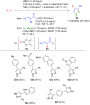
Scheme 15: Synthesis of 3,4-biarylpyrazoles 52 from aryl halides, α-bromocinnamaldehyde, and tosylhydrazine vi...

Scheme 16: Consecutive three-component synthesis of 3,4-substituted pyrazoles 57 from iodochromones 55 by Suzu...

Scheme 17: Pseudo-four-component synthesis of pyrazolyl-2-pyrazolines 59 by ring opening/ring closing cyclocon...

Scheme 18: Consecutive three-component synthesis of pyrazoles 61 [77].

Scheme 19: Three-component synthesis of pyrazoles 62 from malononitrile, aldehydes, and hydrazines [78-90].

Scheme 20: Four-component synthesis of pyrano[2,3-c]pyrazoles 63 [91].

Scheme 21: Three-component synthesis of persubstituted pyrazoles 65 from aldehydes, β-ketoesters, and hydrazin...

Scheme 22: Three-component synthesis of pyrazol-4-carbodithioates 67 [100].

Scheme 23: Regioselective three-component synthesis of persubstituted pyrazoles 68 catalyzed by ionic liquid [...

Scheme 24: Consecutive three-component synthesis of 4-halopyrazoles 69 and anellated pyrazoles 70 [102].

Scheme 25: Three-component synthesis of 2,2,2-trifluoroethyl pyrazole-5-carboxylates 72 [103].

Scheme 26: Synthesis of pyrazoles 75 in a one-pot process via carbonylative Heck coupling and subsequent cycli...

Scheme 27: Copper-catalyzed three-component synthesis of 1,3-substituted pyrazoles 76 [105].

Scheme 28: Pseudo-three-component synthesis of bis(pyrazolyl)methanes 78 by ring opening-ring closing cyclocon...

Scheme 29: Three-component synthesis of 1,4,5-substituted pyrazoles 80 [107].

Scheme 30: Consecutive three-component synthesis of 3,5-bis(fluoroalkyl)pyrazoles 83 [111].

Scheme 31: Consecutive three-component synthesis of difluoromethanesulfonyl-functionalized pyrazole 88 [114].

Scheme 32: Consecutive three-component synthesis of perfluoroalkyl-substituted fluoropyrazoles 91 [115].

Scheme 33: Regioselective consecutive three-component synthesis of 1,3,5-substituted pyrazoles 93 [116].

Scheme 34: Three-component synthesis of pyrazoles 96 mediated by trimethyl phosphite [117].

Scheme 35: One-pot synthesis of pyrazoles 99 via Liebeskind–Srogl cross-coupling/cyclocondensation [118].

Scheme 36: Synthesis of 1,3,5-substituted pyrazoles 101 via domino condensation/Suzuki–Miyaura cross-coupling ...

Scheme 37: Consecutive three-component synthesis of 1,3,5-trisubstituted pyrazoles 102 and 103 by Sonogashira ...

Scheme 38: Polymer analogous consecutive three-component synthesis of pyrazole-based polymers 107 [132].

Scheme 39: Synthesis of 1,3,5-substituted pyrazoles 108 by sequentially Pd-catalyzed Kumada–Sonogashira cycloc...

Scheme 40: Consecutive four-step one-pot synthesis of 1,3,4,5-substituted pyrazoles 110 [137].

Scheme 41: Four-component synthesis of pyrazoles 113, 115, and 117 via Sonogashira coupling and subsequent Suz...

Scheme 42: Consecutive four- or five-component synthesis for the preparation of 4-pyrazoly-1,2,3-triazoles 119...

Scheme 43: Four-component synthesis of pyrazoles 121 via alkynone formation by carbonylative Pd-catalyzed coup...

Scheme 44: Preparation of 3-azulenyl pyrazoles 124 by glyoxylation, decarbonylative Sonogashira coupling, and ...

Scheme 45: Four-component synthesis of a 3-indoloylpyrazole 128 [147].

Scheme 46: Two-step synthesis of 5-acylpyrazoles 132 via glyoxylation-Stephen–Castro sequence and subsequent c...

Scheme 47: Copper on iron mediated consecutive three-component synthesis of 3,5-substituted pyrazoles 136 [150].

Scheme 48: Consecutive three-component synthesis of 3-substituted pyrazoles 141 by Sonogashira coupling and su...

Scheme 49: Consecutive three-component synthesis of pyrazoles 143 initiated by Cu(I)-catalyzed carboxylation o...

Scheme 50: Consecutive three-component synthesis of benzamide-substituted pyrazoles 146 starting from N-phthal...

Scheme 51: Consecutive three-component synthesis of 1,3,5-substituted pyrazoles 148 [156].

Scheme 52: Three-component synthesis of 4-ninhydrin-substituted pyrazoles 151 [158].

Scheme 53: Consecutive four-component synthesis of 4-(oxoindol)-1-phenylpyrazole-3-carboxylates 155 [159].

Scheme 54: Three-component synthesis of pyrazoles 160 [160].

Scheme 55: Consecutive three-component synthesis of pyrazoles 165 [162].

Scheme 56: Consecutive three-component synthesis of 3,5-disubstituted and 3-substituted pyrazoles 168 and 169 ...

Scheme 57: Three-component synthesis of 3,4,5-substituted pyrazoles 171 via 1,3-dipolar cycloaddition of vinyl...

Scheme 58: Three-component synthesis of pyrazoles 173 and 174 from aldehydes, tosylhydrazine, and vinylidene c...

Scheme 59: Three-component synthesis of pyrazoles 175 from glyoxyl hydrates, tosylhydrazine, and electron-defi...

Scheme 60: Pseudo-four-component synthesis of pyrazoles 177 from glyoxyl hydrates, tosylhydrazine, and aldehyd...

Scheme 61: Consecutive three-component synthesis of pyrazoles 179 via Knoevenagel-cycloaddition sequence [179].

Scheme 62: Three-component synthesis of 5-dimethylphosphonate substituted pyrazoles 182 from aldehydes, the Be...

Scheme 63: Consecutive three-component synthesis of 5-(dimethyl phosphonate)-substituted pyrazoles 185 from al...

Scheme 64: Three-component synthesis of 5-(dimethyl phosphonate)-substituted pyrazoles 187 from aldehydes, the...

Scheme 65: Three-component synthesis of 5-diethylphosphonate/5-phenylsulfonyl substituted pyrazoles 189 from a...

Scheme 66: Pseudo-three-component synthesis of 3-(dimethyl phosphonate)-substituted pyrazoles 190 [185].

Scheme 67: Three-component synthesis of 3-trifluoromethylpyrazoles 193 [186].

Scheme 68: Consecutive three-component synthesis of 5-stannyl-substituted 4-fluoropyrazole 197 [191,192].

Scheme 69: Pseudo-three-component synthesis of 3,5-diacyl-4-arylpyrazoles 199 [195].

Scheme 70: Three-component synthesis of pyrazoles 204 via nitrilimines [196].

Scheme 71: Three-component synthesis of 1,3,5-substituted pyrazoles 206 via formation of nitrilimines and sali...

Scheme 72: Pseudo four-component synthesis of pyrazoles 209 from acetylene dicarboxylates 147, hydrazonyl chlo...

Scheme 73: Consecutive three-component synthesis of pyrazoles 213 via syndnones 214 [200].

Scheme 74: Consecutive three-component synthesis of pyrazoles 216 via in situ-formed diazomethinimines 217 [201].

Scheme 75: Consecutive three-component synthesis of 3-methylthiopyrazoles 219 from aldehydes, hydrazine, and 1...

Scheme 76: Three-component synthesis of 1,3,5-substituted pyrazoles 220 from aldehydes, hydrazines, and termin...

Scheme 77: Three-component synthesis of 1,3,4,5-substituted pyrazoles 222 from aldehydes, hydrazines, and DMAD ...

Scheme 78: Pseudo three-component synthesis of pyrazoles 224 from sulfonyl hydrazone and benzyl acrylate under...

Scheme 79: Titanium-catalyzed consecutive four-component synthesis of pyrazoles 225 via enamino imines 226 [211]. a...

Scheme 80: Titanium-catalyzed three-component synthesis of pyrazoles 227 via enhydrazino imine complex interme...

Scheme 81: Pseudo-three-component synthesis of pyrazoles 229 via Glaser coupling of terminal alkynes and photo...

Scheme 82: Copper(II)acetate-mediated three-component synthesis of pyrazoles 232 [216].

Scheme 83: Copper-catalyzed three-component synthesis of 1,3,4-substituted pyrazole 234 from oxime acetates, a...

Scheme 84: Three-component synthesis of 3-trifluoroethylpyrazoles 239 [218].

Scheme 85: Pseudo-three-component synthesis of 1,4-bisulfonyl-substituted pyrazoles 242 [219].

Scheme 86: Three-component synthesis of 4-hydroxypyrazole 246 [221].
1,2-Difluoroethylene (HFO-1132): synthesis and chemistry
- Liubov V. Sokolenko,
- Taras M. Sokolenko and
- Yurii L. Yagupolskii
Beilstein J. Org. Chem. 2024, 20, 1955–1966, doi:10.3762/bjoc.20.171

- . Photochemical [2 + 2]-cycloaddition with fluorinated aldehydes and ketones gives access to a variety of fluorinated oxygen-containing heterocycles. We hope that this article will help chemists to utilize HFO-1132 and that this olefin will find applications as a useful synthon in organic chemistry. 1,2
- higher reactivity than (Z)-1,2-difluoroethylene in this reaction. The reaction of either (E)- or (Z)-1,2-difluoroethylene with perfluoroaldehydes resulted in the formation of three isomeric oxetanes in a 1.0:1.7:1.3 ratio in a high yield of 78–94% (Scheme 22) [49]. All data reported for the [2 + 2
- ]-cycloaddition reaction of fluorinated ketones and aldehydes [49][100] were indicative of the fact that under photochemical conditions, this reaction is likely to be a stepwise process involving the formation of a biradical intermediate. Either (Z)- or (E)-1,2-difluoroethylene easily reacted with

Graphical Abstract

Scheme 1: 1,2-Difluoroethylene synthesis from HFO-1123.

Scheme 2: 1,2-Difluoroethylene synthesis from CFC-112 and HCFC-132.

Scheme 3: 1,2-Difluoroethylene synthesis from HFC-143.

Scheme 4: 1,2-Difluoroethylene synthesis from HCFC-142 via HCFC-142a.

Scheme 5: 1,2-Difluoroethylene synthesis from CFO-1112.

Scheme 6: 1,2-Difluoroethylene synthesis from 1,2-dichloroethylene.

Scheme 7: 1,2-Difluoroethylene synthesis from perfluoropropyl vinyl ether.

Scheme 8: Deuteration reaction of 1,2-difluoroethylene.

Scheme 9: Halogen addition to 1,2-difluoroethylene.

Scheme 10: Hypohalite addition to 1,2-difluoroethylene.

Scheme 11: N-Bromobis(trifluoromethyl)amine addition to 1,2-difluoroethylene.

Scheme 12: N-Chloroimidobis(sulfonyl fluoride) addition to 1,2-difluoroethylene.

Scheme 13: Trichlorosilane addition to 1,2-difluoroethylene.

Scheme 14: SF5Br addition to 1,2-difluoroethylene.

Scheme 15: PCl3/O2 addition to 1,2-difluoroethylene.

Scheme 16: Reaction of tetramethyldiarsine with 1,2-difluoroethylene.

Scheme 17: Reaction of trichlorofluoromethane with 1,2-difluoroethylene.

Scheme 18: Addition of perfluoroalkyl iodides to 1,2-difluoroethylene.

Scheme 19: Cyclopropanation of 1,2-difluoroethylene.

Scheme 20: Diels–Alder reaction of 1,2-difluoroethylene and hexachlorocyclopentadiene.

Scheme 21: Cycloaddition reaction of 1,2-difluoroethylene and fluorinated ketones.

Scheme 22: Cycloaddition reaction of 1,2-difluoroethylene and perfluorinated aldehydes.

Scheme 23: Photochemical cycloaddition of 1,2-difluoroethylene and hexafluorodiacetyl.

Scheme 24: Reaction of 1,2-difluoroethylene with difluorosilylene.

Scheme 25: Reaction of 1,2-difluoroethylene with aryl iodides.
Access to 2-oxoazetidine-3-carboxylic acid derivatives via thermal microwave-assisted Wolff rearrangement of 3-diazotetramic acids in the presence of nucleophiles
- Ivan Lyutin,
- Vasilisa Krivovicheva,
- Grigory Kantin and
- Dmitry Dar’in
Beilstein J. Org. Chem. 2024, 20, 1894–1899, doi:10.3762/bjoc.20.164

- reported in the literature are based on the construction of the β-lactam ring (Scheme 1). The main methods include the [2 + 2] cycloaddition of acyl ketenes, generated by various methods, with imines [11][12][13][14] and the Wolff rearrangement of γ-amino-α-diazo-β-ketoesters followed by intramolecular

Graphical Abstract

Scheme 1: Synthetic routes to 2-oxoazetidine-3-carboxylic acid derivatives.

Scheme 2: Scope of diazotetramic acids 1 thermolysis in the presence of various nucleophiles. PMP = p-methoxy...

Scheme 3: Negative results with several N-, O-, and C-nucleophiles and with diazo reagent 1m.

Scheme 4: Preparation of acids 4 by hydrogenolysis of benzyl esters and examples of acid 4a amidation.



