


Search results
Search for "C–H bond" in Full Text gives 223 result(s) in Beilstein Journal of Organic Chemistry. Showing first 200.
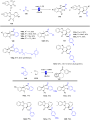
Palladium-catalyzed benzocyclization reactions of quinoline-2-carboxamides via sequential C–H/N–H functionalization
Beilstein J. Org. Chem. 2026, 22, 905–914, doi:10.3762/bjoc.22.71
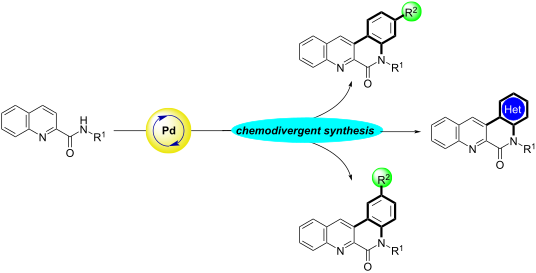
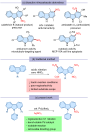
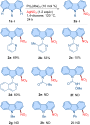
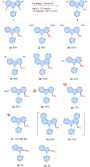
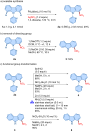
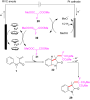
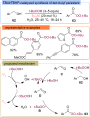
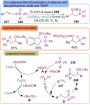
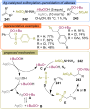
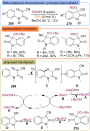
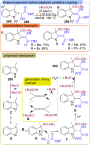
- proceeds at the C–H bond on the quinoline adjacent to the amide group and at the amide N–H bond in the presence of 10 mol % Pd(OAc)2 in o-xylene as a solvent to afford the cyclized product in 34% yield. The yield increases to 81% when the reaction is carried out with 80 mol % P(4-MeOC6H4)3 as a ligand and




The trans-influence in gold chemistry from a catalytic perspective
Beilstein J. Org. Chem. 2026, 22, 838–856, doi:10.3762/bjoc.22.66
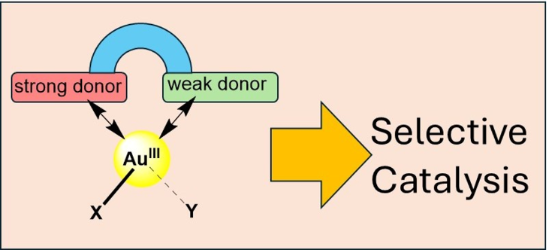
- values correlate well with the corresponding C–H bond dissociation energies [25], not unexpectedly perhaps given the similarity of electronegativities (Au, 2.54; C, 2.55; H, 2.20). Toste et al. selected the ratio of [4 + 3] vs [4 + 2] alkene–allene cycloadditions as a probe for ligand effects, employing
- and proved resistant to β-H elimination or H/D exchange [91]. The same system also catalyses the hydroarylation of alkynes with 1,3,5-trimethoxybenzene (TMB), by anti-addition of a C–H bond of TMB to give the Z-vinyl. Given the precedence for insertion chemistry with the C^P ligand, the alkyne


Computational prediction of C–H hydricities and their use in predicting the regioselectivity of electron-rich C–H functionalisation reactions
Beilstein J. Org. Chem. 2026, 22, 603–610, doi:10.3762/bjoc.22.46
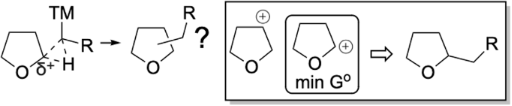
- out, “the reacting C–H bond tends to be electron-rich or adorned with substituents that can stabilise the formation of a developing positive charge.” It is thus possible that predicted hydricities could help predict the regioselectivity of such reactions. However, hydricity and BDEs both follow the
- out at each unique site by converting a SMILES string into a RDKit molecule object, producing a list of SMILES for each C–H bond. We generate min(1 + 3nrot, 20) conformers for each SMILES using RDKit (v.2023.09.3) [12], where (nrot) represents the number of rotatable bonds. Each conformer undergoes


![[Graphic 6]](/bjoc/content/inline/1860-5397-22-46-i8.svg?max-width=637&scale=1.18182)


Visible-light-driven NHC and organophotoredox dual catalysis for the synthesis of carbonyl compounds
Beilstein J. Org. Chem. 2025, 21, 2584–2603, doi:10.3762/bjoc.21.200
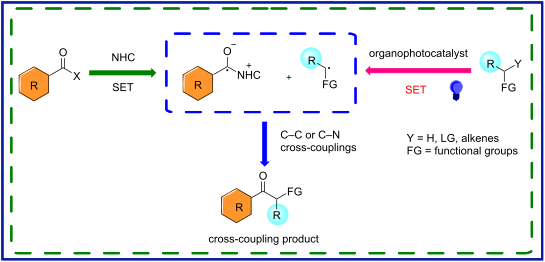
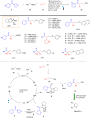
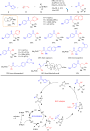
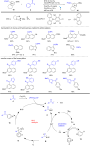
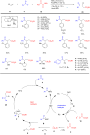
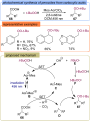
- –H bond functionalization of important structural motifs with good to excellent diastereoselectivities, high yields, and late-stage functionalization of drugs and complex natural products. The visible-light-promoted dual catalytic method opens new avenues in direct C–H bond acylation and complements
- existing metal-catalyzed C–H bond functionalization methods (Scheme 3) [53]. Recently, Scheidt et al. discovered an NHC/organic photoredox-catalyzed three-component coupling reaction for the efficient and novel preparation of γ-aryloxy ketone scaffolds 12. This transformation builds on the emerging field
- substrate 7, generating the aryl radical cation C along with the formation of corresponding radical anion of the photocatalyst (PC•–). The reduction potentials are (E1/2(P/P•–) = –1.37V vs SCE for [Ir(dF(CF₃)ppy)₂(dtbbpy)]PF₆ and –1.21V vs SCE for 4CzIPN as an organophotocatalyst. This method permits the C





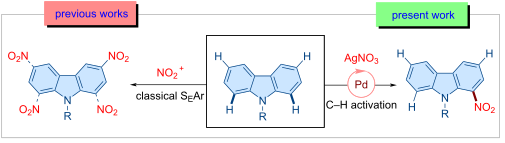
Palladium-catalyzed regioselective C1-selective nitration of carbazoles
Beilstein J. Org. Chem. 2025, 21, 2479–2488, doi:10.3762/bjoc.21.190
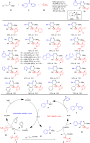
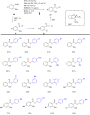
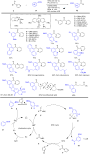
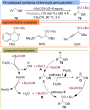
- after 2 hours, indicating that C–H bond cleavage is kinetically relevant and likely involved in the rate-determining step (Scheme 5b). To gain additional mechanistic insight, we synthesized palladacycle intermediate 6 following the reported procedure [58]. Then, the reaction was carried out using
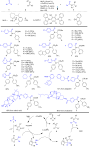
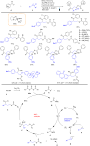
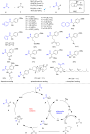
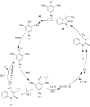
- ][78][79][80], a plausible catalytic cycle is proposed (Figure 2). The catalytic cycle commences with the formation of active palladium(II) species 7 in the presence of AgNO3. Coordination of the pyridyl group of 1a to Pd(NO₃)₂ is followed by irreversible C–H bond cleavage via cyclopalladation to form


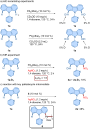
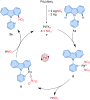
Catalytic enantioselective synthesis of selenium-containing atropisomers via C–Se bond formations
Beilstein J. Org. Chem. 2025, 21, 2447–2455, doi:10.3762/bjoc.21.186
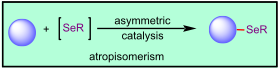
- has emerged as a powerful strategy for the rapid synthesis of functionally enriched axially chiral diaryl compounds. However, due to the potential strong coordination between organoselenium compounds and transition metals, the direct construction of C–Se bonds via metal-catalyzed C–H bond


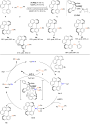


Recent advances in Norrish–Yang cyclization and dicarbonyl photoredox reactions for natural product synthesis
Beilstein J. Org. Chem. 2025, 21, 2315–2333, doi:10.3762/bjoc.21.177
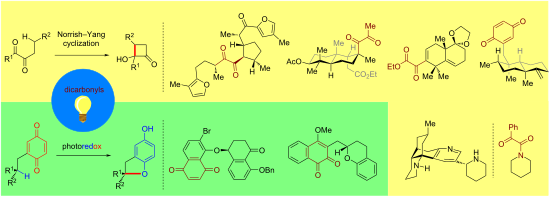
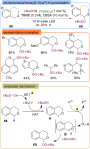
- proximal phenol, yielding the cyclization product H (Scheme 1b). Notably, the quinone is reduced, while the proximal C–H bond is subject to oxidation. Building on these mechanistic insights and the synthetic merits of dicarbonyls, Norrish–Yang cyclization and related photoredox reactions have been serving
- key late-stage step in this total synthesis, the Norrish–Yang photocyclization exhibits high chemoselectivity and efficiency. It regulates selectivity through C–H bond dissociation energy and restricted bond rotation, constructing a 6/6/4 fused ring system with three contiguous quaternary carbons
- converting the biradical to the corresponding zwitterion; (3) oxy-cyclization to afford the product. This process constitutes an intramolecular redox reaction, wherein the quinone is reduced to a hydroquinone while the proximal C–H bond is oxidized to a C–O bond. Although related photoredox reactions had




Pathway economy in cyclization of 1,n-enynes
Beilstein J. Org. Chem. 2025, 21, 2260–2282, doi:10.3762/bjoc.21.173
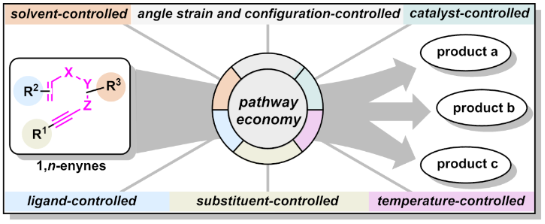
- distinct from those generated through thermal Diels–Alder cycloaddition of (Z)-100. However, when [ReCl(CO)5] was used as the catalyst, a regioselective C–H bond insertion pathway was observed for substrate (E)-100, leading to the formation of tricyclic products 104 and 105 (Scheme 21, path b). This


Bioinspired total syntheses of natural products: a personal adventure
Beilstein J. Org. Chem. 2025, 21, 2048–2061, doi:10.3762/bjoc.21.160
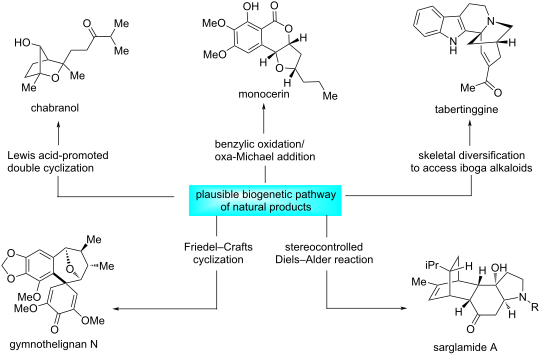
- functionalities in a complex framework are formidable challenges for mankind since such transformations in nature are precisely induced by enzymes. Bioinspired functionalization of C–H bond in total synthesis is rarely developed and it represents another challenge, despite numerous methodologies have been




Transition-state aromaticity and its relationship with reactivity in pericyclic reactions
Beilstein J. Org. Chem. 2025, 21, 1613–1626, doi:10.3762/bjoc.21.125
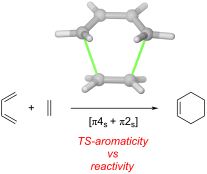
- analysis (b) of the DGRT between ethane and formaldehyde (black lines) and the analogous process involving methanol (red lines) and projected onto the C···H bond-forming distance. AICD plots of the transition states associated with the Hopf cyclization reactions involving cis-hexa-1,3-diene-5-yne (a) and


Recent advances in amidyl radical-mediated photocatalytic direct intermolecular hydrogen atom transfer
Beilstein J. Org. Chem. 2025, 21, 1306–1323, doi:10.3762/bjoc.21.100
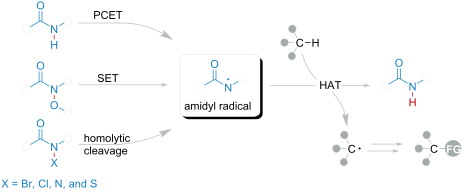
- molecules. On the other hand, C–H bonds exhibit low reactivity due to their relatively high bond dissociation energy (BDE) (Figure 1a). Therefore, the direct functionalization of C–H bonds is extremely challenging [1][2][3][4][5]. In recent decades, transition-metal-catalyzed C–H bond functionalization
- demonstrated a decent methodology of organic synthesis. These elegant strategies presented powerful C–H bond transformation toolkits (Figure 1b) [6][7][8]. One of the exceptions to the perfection is the pre-functionalization of substrates. Current catalytic methodologies predominantly rely on substrate






Recent advances in oxidative radical difunctionalization of N-arylacrylamides enabled by carbon radical reagents
Beilstein J. Org. Chem. 2025, 21, 1207–1271, doi:10.3762/bjoc.21.98
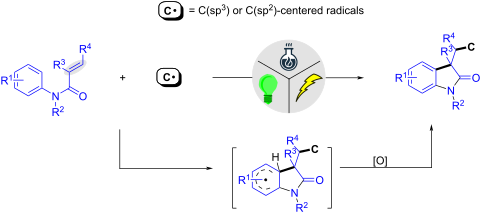
- mechanism, control experiments were conducted. The addition of radical scavengers such as BHT and TEMPO significantly inhibited the reaction, confirming the involvement of a radical intermediate. Kinetic isotope effect (KIE) studies showed a KIE of 1.0, suggesting that C–H-bond cleavage was not the rate
- -coupling, using Cp2Fe-catalyzed electrochemical oxidation. This method leveraged the selective activation of the acidic α-C–H bond within the 1,3-dicarbonyl moiety to generate a carbon-centered radical, which was crucial for the subsequent cyclization. The reaction was carried out under reflux conditions
- . Based on these results and previous studies, a detailed reaction mechanism was proposed as shown in Scheme 12. The process begins with the oxidation of Cp2Fe at the anode to form Cp2Fe+, which then facilitates the deprotonation of the α-C–H bond of the 1,3-dicarbonyl compound by methoxide, generated at












Enhancing chemical synthesis planning: automated quantum mechanics-based regioselectivity prediction for C–H activation with directing groups
Beilstein J. Org. Chem. 2025, 21, 1171–1182, doi:10.3762/bjoc.21.94
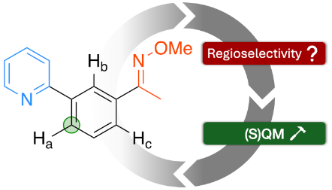
- directing group facilitates this step as it stabilizes the complex through coordination to the Pd atom, thereby lowering the reaction barrier. A depiction of the CMD step is shown in Figure 1. Upon C–H bond breaking, the Pd atom moves into the plane of the aromatic ring, forming a palladacycle intermediate
- no reasonable 3D geometry can be generated. To determine whether or not a pair of C–H bond and heteroatom can form a reasonable 3D geometry, we generate a 3D geometry of a dummy “palladacycle” intermediate between the substrate and a CCl2 fragment using ETKDG. The CCl2 fragment is used to mimic the
- same site marked with the black arrow. Example of a combination of C–H bond and DG that is discarded because of the angle constraint on the left and a combination that is considered valid on the right. Example of combinations of C–H bonds and DGs that are considered identical because of symmetry of the


Recent advances in the electrochemical synthesis of organophosphorus compounds
Beilstein J. Org. Chem. 2025, 21, 770–797, doi:10.3762/bjoc.21.61
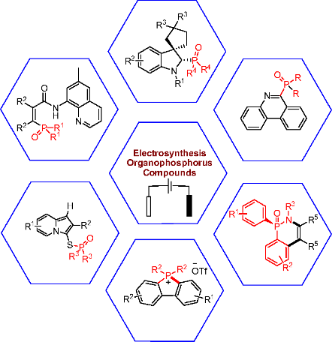
- -yield products were obtained when two methyl groups were positioned at the para or meta positions. The evaluation of the synthetic potential of the C−P bond formation revealed that the cleavage of the C−H bond in thiophene likely does not participate in the rate-determining step. Based on the
- and the overall structure of the complex highly influence the oxidation potential of Pd(II). At first, a complex of phenylpyridine with palladium (including insertion of Pd to C–H bond) and dialkyl phosphonate was formed, followed by anodic oxidation to give the final coupling product. In 2023, Zhou


Origami with small molecules: exploiting the C–F bond as a conformational tool
Beilstein J. Org. Chem. 2025, 21, 680–716, doi:10.3762/bjoc.21.54
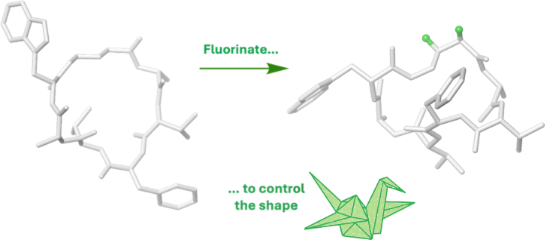
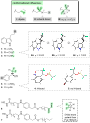
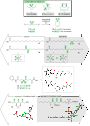
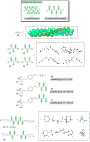
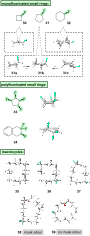
- polar C–F bonds at the end of an alkyl chain, is that the terminal C–H bond also becomes polarised. In the case of the difluoromethyl group, the terminal hydrogen bears a partial positive charge and is able to act as a H-bond donor (II, Figure 2). This can influence the conformation of the molecule if
- rotamers have different energies. When the C–F bonds are aligned gauche, the vacant σ* orbital of each C–F bond is able to mix with the filled σ orbital of an adjacent C–H bond, and this hyperconjugative interaction stabilises the gauche conformer (III, Figure 2). The anti conformer does not benefit from








Entry to 2-aminoprolines via electrochemical decarboxylative amidation of N‑acetylamino malonic acid monoesters
Beilstein J. Org. Chem. 2025, 21, 630–638, doi:10.3762/bjoc.21.50
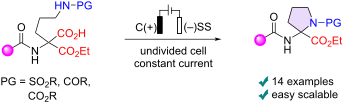
- observed by LC–MS when the electrolysis was performed in 5:1 MeCN/D2O (Scheme 2, reaction 2). The considerably higher O–H bond dissociation energy (119 kcal/mol) [12] as compared to that of the C–H bond in MeCN (86 kcal/mol) [13] renders the hydrogen atom abstraction from water by a carbon-centered radical



Formaldehyde surrogates in multicomponent reactions
Beilstein J. Org. Chem. 2025, 21, 564–595, doi:10.3762/bjoc.21.45
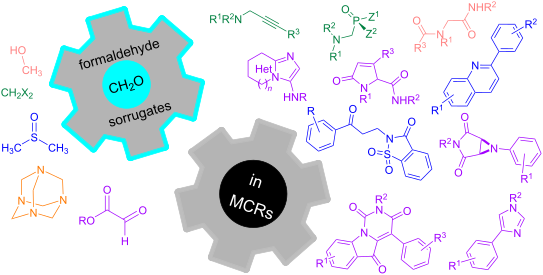
- (DMF), dimethyl sulfoxide (DMSO), or dioxane to achieve high yields. The assumed mechanism is initiated by activation of the C–H bond of the terminal alkyne by a metal catalyst. The resulting metal acetylide reacts with the imine/enamine through a nucleophilic addition. Because imines/enamines are
- to the AAA coupling, except for iron, where the temperature must be increased to 100 °C. This can be explained in terms of the activation of both the C–H and C–X bonds by metal catalysis, which is not the case in AAA couplings, where only the C–H bond is activated, making the last step (nucleophilic
- between 60–95% for all metal catalysis conditions. The most widely accepted mechanism is as follows: the alkynyl C–H bond is activated by the metal catalyst (Scheme 23). The metal can be added in its proper oxidation state (such as Cu(I)) or generated in situ (as in the case of Au(I), Co(I), Fe(II) and Ni


Quantifying the ability of the CF2H group as a hydrogen bond donor
Beilstein J. Org. Chem. 2025, 21, 189–199, doi:10.3762/bjoc.21.11
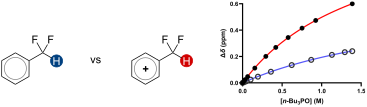
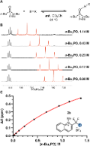
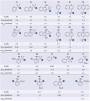
- reveal the fundamental differences between the C–H bond and the O–H bond as HB donors and provide important quantitative information for applying the CF2H group as an OH group mimic. We next attempted to establish correlations of experimentally determined HB donation ability, in terms of Kd or ΔGexp



Recent advances in electrochemical copper catalysis for modern organic synthesis
Beilstein J. Org. Chem. 2025, 21, 155–178, doi:10.3762/bjoc.21.9

- with a newly formed C–H bond. These radical species then enter the second catalytic cycle, facilitating the asymmetric cyanide transfer. The radical species 93 undergo a single oxidative addition to the Cu(II)–CN catalyst 96, forming a Cu(III) complex. Finally, reductive elimination delivers the








Intramolecular C–H arylation of pyridine derivatives with a palladium catalyst for the synthesis of multiply fused heteroaromatic compounds
Beilstein J. Org. Chem. 2024, 20, 3256–3262, doi:10.3762/bjoc.20.269
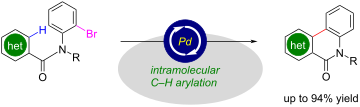
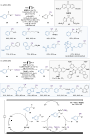
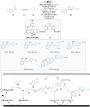
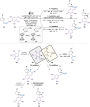
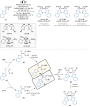
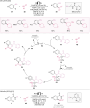
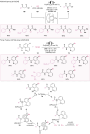
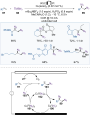
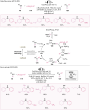
- Abstract The C–H arylation of 2-quinolinecarboxyamide bearing a C–Br bond at the N-aryl moiety is carried out with a palladium catalyst. The reaction proceeds at the C–H bond on the pyridine ring adjacent to the amide group in the presence of 10 mol % Pd(OAc)2 at 110 °C to afford the cyclized product in 42


Advances in radical peroxidation with hydroperoxides
Beilstein J. Org. Chem. 2024, 20, 2959–3006, doi:10.3762/bjoc.20.249
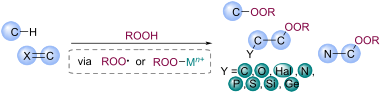
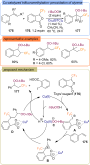
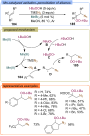
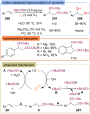
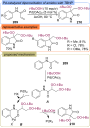
- catalytic cycle. A Pd-catalyzed synthesis of di-tert-butylperoxyoxoindole derivatives 210 from acrylic acid anilides 209 and TBHP was developed (Scheme 65) [134]. The authors proposed that the initially formed diperoxide A undergoes electrophilic attack by cationic Pd(II) on an aromatic C–H bond with the
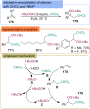
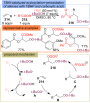
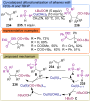
- -peroxyamides 148 with TBHP and formamide derivatives 147 by difunctionalization of 1,3-diene, 1,3-enynes as well as styrenes 146 (Scheme 46) [110]. The iron catalyst is believed to mediate the formation of tert-butoxy and tert-butylperoxy radicals. The former abstracts the hydrogen atom from the formyl C–H
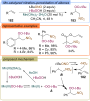
- bond, revealing the amino acyl radical, which is then added to the double bond. Tetra-n-butylammonium bromide (TBAB)-catalyzed carbonylation–peroxidation of styrene derivatives 149 with TBHP and aldehydes 150, which allows for the synthesis of β-peroxy ketones 151, was described (Scheme 47) [111]. tert































C–H Trifluoromethylthiolation of aldehyde hydrazones
Beilstein J. Org. Chem. 2024, 20, 2883–2890, doi:10.3762/bjoc.20.242
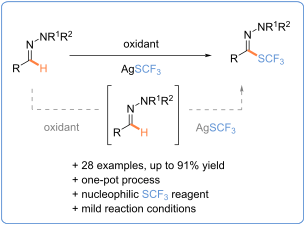
- ). Mechanistic investigations revealed that AgSCF3 was the active species in the transformation. Keywords: C–H bond functionalization; C–S bond formation; hydrazones; synthetic method; trifluoromethylthiolation; Introduction Fluorinated molecules are of paramount importance [1][2][3][4][5][6][7][8][9][10][11
- towards trifluoromethylthiolated hydrazones will be the direct C–H functionalization of the corresponding aldehyde hydrazone, an uncharted transformation to date. Forging a C–S bond by the direct C–H-bond functionalization of hydrazones is still underdeveloped. Except for transformations leading to the


Transition-metal-free synthesis of arylboronates via thermal generation of aryl radicals from triarylbismuthines in air
Beilstein J. Org. Chem. 2024, 20, 2577–2584, doi:10.3762/bjoc.20.216
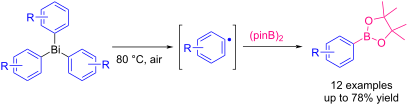
- with halogen or triflate groups. Recently, transition-metal-catalyzed direct borylation of arenes via C–H bond activation has been reported, although the design of the substrate and ligands is somewhat complicated [16][17][18][19][20][21][22]. Since the complete removal of catalyst-derived metal



A review of recent advances in electrochemical and photoelectrochemical late-stage functionalization classified by anodic oxidation, cathodic reduction, and paired electrolysis
Beilstein J. Org. Chem. 2024, 20, 2500–2566, doi:10.3762/bjoc.20.214
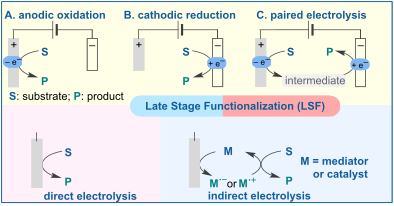
- been systematically summarized, classifying them by targeted C–H bond functionalization and the newly formed bonds [4][5]. In this review, we aim to provide a comprehensive classification and overview of the currently available electrochemical and photoelectrochemical methods for the LSF of
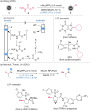
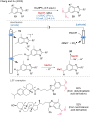
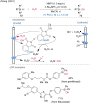
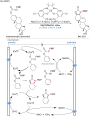
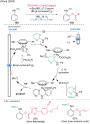
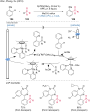
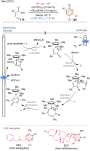
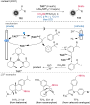
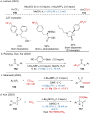
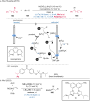
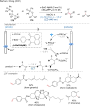
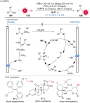
- in schemes as H2↑) in the cathodic half-reaction, which will however not be addressed in greater detail in this review. 1.1 Direct anodic oxidation of substrates 1.1.1 C–H bond functionalization. C–H bond carbofunctionalization: CF3 groups can be installed on heteroarenes at a late stage via a TM
- bioactive compounds such as caffeine and prothioconazole (Scheme 2a). Additionally, Lin, Terrett and Neurock's group [8] reported the electrochemical C(sp3)–H methylation of complex molecules. This strategy enabled the synthesis of the "magic methyl" product, a TRPA1 antagonist (Scheme 2b). C–H bond


























Deuterated reagents in multicomponent reactions to afford deuterium-labeled products
Beilstein J. Org. Chem. 2024, 20, 2270–2279, doi:10.3762/bjoc.20.195
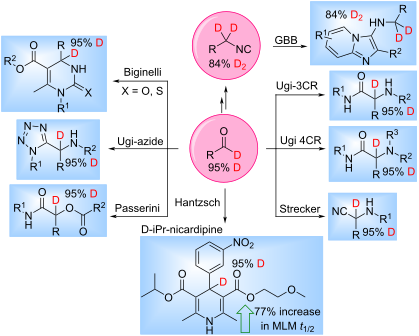
- this position was thought a reasonable approach to extend drug t1/2 through exploitation of the kinetic isotope effect underpinned by the C–D bond being slightly shorter and stronger than a C–H bond. Such site-specific labeling was hypothesized to slow CYP3A4 metabolism. To evaluate the hypothesis





