


Search results
Search for "C–N bond" in Full Text gives 199 result(s) in Beilstein Journal of Organic Chemistry.
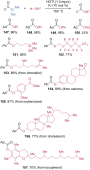
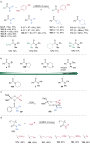
Recent advances in copper-catalyzed direct hydroamination of alkenes with (hetero)aromatic amines
Beilstein J. Org. Chem. 2026, 22, 925–947, doi:10.3762/bjoc.22.73
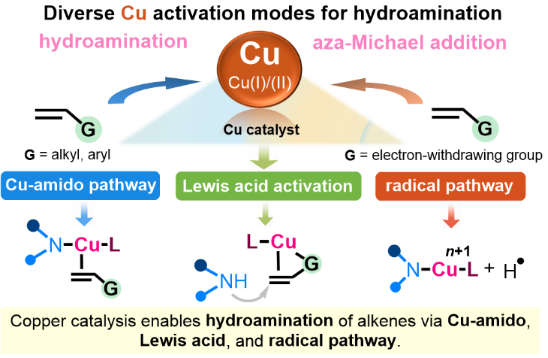
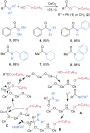
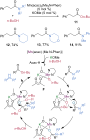
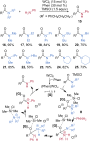
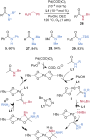
- pharmaceuticals and functional materials, making efficient C–N bond formation a fundamental transformation in synthetic chemistry. The direct hydroamination of alkenes using (hetero)aromatic N–H nucleophiles offers an atom- and step-economical strategy; however, the reduced nucleophilicity and distinct
- remains a primary objective of modern organic synthesis [5][6]. Among the diverse strategies available for C–N bond formation, the direct addition of an N–H bond across a C–C double bond, known as hydroamination, is an ideal transformation considering atom and step economy [7][8][9][10][11][12
- –amido intermediate or aminocupration-type pathways, enabling efficient C–N bond formation under relatively mild conditions. Copper species may also operate in a Lewis acid-type capacity, where coordination to the alkene or copper-derived Brønsted acidity generated in situ increases alkene







Palladium-catalyzed benzocyclization reactions of quinoline-2-carboxamides via sequential C–H/N–H functionalization
Beilstein J. Org. Chem. 2026, 22, 905–914, doi:10.3762/bjoc.22.71
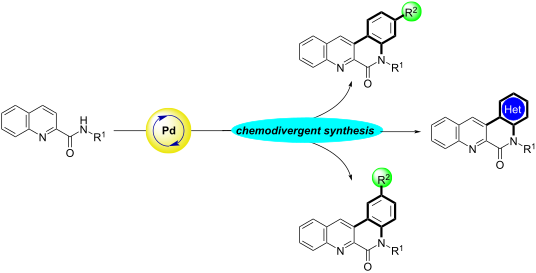
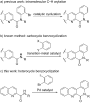
- NOESY (Figure 1d and e). These results suggested that the carbon–iodine bond in 1-bromo-2-iodobenzene was involved in the formation of the C–C bond, while the carbon–bromine bond was involved in the formation of the C–N bond (Scheme 4). Accordingly, a plausible reaction mechanism is proposed in Scheme 5
- demonstrated high chemoselectivity because it proceeds via initial C–C bond formation at C–I, followed by C–N bond formation at C–Br. Thus, the positions of substituents on the products are controlled based on the position of the substituents in the 1-bromo-2-iodobenzene substrates, thus providing facile and




Cascade transformation of 2-(diazoacetyl)-2H-azirines to 2-aroyl-3-hydroxy-1H-pyrroles via condensation with aromatic aldehydes
Beilstein J. Org. Chem. 2026, 22, 897–904, doi:10.3762/bjoc.22.70
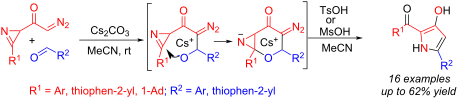
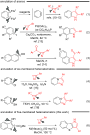
- with aromatic aldehydes does not result in the formation of an azirinyl-substituted β-hydroxy-α-diazocarbonyl compound, but is accompanied by a tandem intramolecular cyclization involving the hydroxy group and the C=N bond of the azirine to form a bicyclic intermediate, a 4-diazo-2-oxa-7-azabicyclo
- reaction of 2-(diazoacetyl)-2H-azirines 1 with aromatic aldehydes 2, which does not terminate in condensation to form an azirinyl-substituted β-hydroxy-α-diazocarbonyl compound 3, but is accompanied by a tandem intramolecular cyclization involving the hydroxy group and the azirine C=N bond to form a
- proceeds via an azirinyl-substituted β-hydroxy-α-diazocarbonyl compound, which undergoes intramolecular cyclization involving the hydroxy group and the C=N bond of azirine, leading to the formation of a bicyclic intermediate, a 4-diazo-2-oxa-7-azabicyclo[4.1.0]heptan-5-one derivative. Acid-catalyzed


Diastereodivergent electrophilic trapping of α-boryl lithium derivatives
Beilstein J. Org. Chem. 2026, 22, 882–887, doi:10.3762/bjoc.22.68
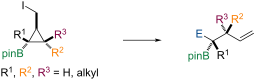
- engaging in diverse bond-forming processes, including C–C, C–O and C–N bond formations [3][4][5][6][7][8][9][10][11][12][13][14][15][16][17][18][19][20][21][22][23][24]. Despite their growing utility, controlling the stereoselectivity in substitution reactions of α-boryl carbanions remains a formidable




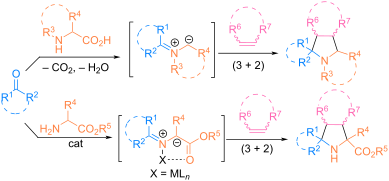
Synthesis of heterocycles based on azomethine ylides from α-amino acids (or amines) and carbonyl compounds
Beilstein J. Org. Chem. 2026, 22, 705–741, doi:10.3762/bjoc.22.55
- -nitro-1,2-diphenylcyclopropene 127 in primary, secondary, and tertiary alcohols, as well as using certain thiols. The authors suggest that the reactions proceed via a stage of heterolytic cleavage of the C–N bond of the starting 3-nitro-1,2-diphenylcyclopropene to form a cyclopropenyl cation, which then


Recent advances in the cleavage of non-activated amides
Beilstein J. Org. Chem. 2026, 22, 352–369, doi:10.3762/bjoc.22.23
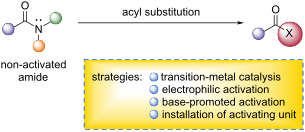
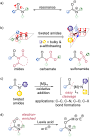
- , bioactive molecules, and advanced materials. However, its exceptional resonance stabilization renders the C–N bond highly inert, posing a persistent synthetic challenge for its transformation. While twisted amides with distorted C–N bonds have offered useful reactivity enhancements, the selective activation
- strongly activating reagents are typically required to cleave the amide C–N bond for its chemical transformation [20][21][22][23]. To address this reactivity issue, twisted amides have emerged as a powerful solution [24][25][26][27]. Incorporation of sterically demanding and electron-withdrawing
- substituents on the nitrogen (e.g., tosyl, carbamate, or acyl groups) distorts the planarity of the amide and diminishes amidic conjugation (Scheme 1b). These “twisted” amides exhibit a dramatically enhanced electrophilicity at the carbonyl carbon and a significantly weaker C–N bond strength [28][29][30][31










Conformational analysis of difluoromethylornithine: factors influencing its gas-phase and bioactive conformations
Beilstein J. Org. Chem. 2026, 22, 237–243, doi:10.3762/bjoc.22.17
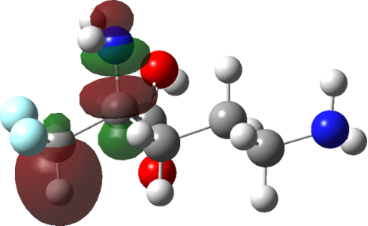
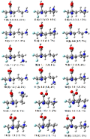
- this framework, DFMO is expected to display the gauche effect when type-I structures dominate, because the polar C–N bond forms two gauche interactions with the polar C–F bonds. High-level DLPNO-CCSD(T)/CBS calculations support this expectation: the four lowest-energy structures are type I and together
- part because its C–N bond is not flanked by two C–F bonds. At the other extreme, structure 13 is highly destabilized sterically due to folding of the N-alkyl chain, which brings N–H and C–N bonds into close contact with C–H, C–C, and C=O bonds. This geometry generates several n/σ and σ/σ interactions




Competitive cyclization of ethyl trifluoroacetoacetate and methyl ketones with 1,3-diamino-2-propanol into hydrogenated oxazolo- and pyrimido-condensed pyridones
Beilstein J. Org. Chem. 2025, 21, 2716–2729, doi:10.3762/bjoc.21.209
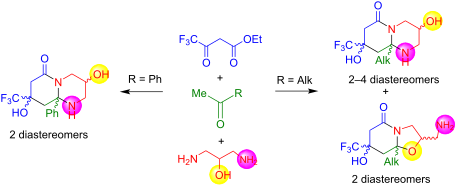
- at the acyl moiety with the amino group of diamino alcohol 3 to generate a three-component intermediate B (Scheme 4). The latter undergoes intramolecular cyclization involving the C=N bond in two equally probable directions: by adding a free amino group to form a hexahydropyrimidine ring of


Rotaxanes with integrated photoswitches: design principles, functional behavior, and emerging applications
Beilstein J. Org. Chem. 2025, 21, 2345–2366, doi:10.3762/bjoc.21.179

- capable of modulating reaction stereoselectivity. Hydrazone Hydrazones undergo trans–cis isomerization at the C=N bond when exposed to light, and in some instances, they can also undergo thermal isomerization (Figure 2) [69]. Although there are early reports of hydrazone derivatives in rotaxanes [70], the


Pd-catalyzed dehydrogenative arylation of arylhydrazines to access non-symmetric azobenzenes, including tetra-ortho derivatives
Beilstein J. Org. Chem. 2025, 21, 2234–2242, doi:10.3762/bjoc.21.170
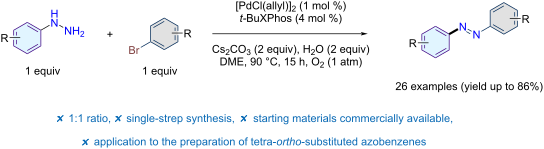
- intricate and inefficient using these standard synthetic protocols. The transition-metal-catalyzed C–N bond formation has emerged as a viable route to access non-symmetric azobenzenes, owing to the broad functional group tolerance of Buchwald–Hartwig amination reactions [34][35][36][37][38][39][40]. Kong
- hydrazines. Their method involved a three-step process comprising Cu and Pd-catalyzed C–N bond formations followed by a dehydrogenative deprotection step (Figure 1b, top) [42]. This desymmetric approach was further employed by Oestreich and co-workers in 2022, who introduced silicon-masked diazenyl anions in
- contrast to classic Buchwald–Hartwig couplings – aryl bromides with substituents at the ortho-position (3a and 3c–g) are more reactive than those with substituents at the para-position (3b and 3h–l). This difference might be explained by steric repulsion, which may favor C–N-bond coupling with the terminal


A m-quaterphenyl probe for absolute configurational assignments of primary and secondary amines
Beilstein J. Org. Chem. 2025, 21, 2211–2219, doi:10.3762/bjoc.21.168
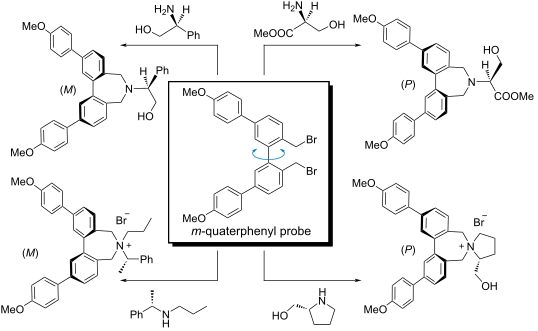
- derivatives [41] the preferred conformation of (S)-2a can be proposed (Figure 2). In the case of the P conformer, a Newman projection along the C–N bond reveals that the bulkier substituent, the hydroxymethyl group (denoted as L), is close to a seven-membered ring, and is destabilized by steric repulsion with


Understanding the origin of stereoselectivity in the photochemical denitrogenation of 2,3-diazabicyclo[2.2.1]heptene and its derivatives with non-adiabatic molecular dynamics
Beilstein J. Org. Chem. 2025, 21, 2007–2020, doi:10.3762/bjoc.21.156
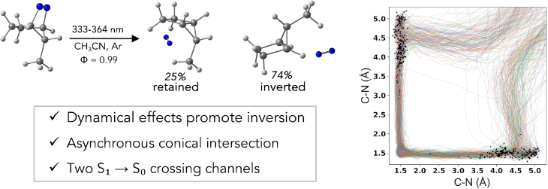
- , and T2, conical intersections, transition structures, and singlet–triplet crossing were computed using CASSCF(10,8)/6-31G(d)//MP2/6-31G(d) [81]. The results suggested a stepwise C–N bond breaking with the formation of the diazenyl diradical intermediate [81]. In 2003, Olivucci and his co-workers
- inverted housane [83]. Chen and Li explored the potential energy surfaces and surface crossing points of 2,3-diazabicyclo[2.1.1]hex-2-ene with CASPT2(12,10)/6-31G(d)//CASSCF(12,10)/6-31G(d,p) in 2006 and concluded that on the S1 surface one C–N bond is broken [84]. In 2011, Abe and co-workers investigated
- the denitrogenation mechanism of 7,7‐diethoxy‐2,3‐diazabicyclo[2.2.1]hept‐2‐ene, showing that a stepwise C–N-bond cleavage is energetically favored using broken‐symmetry (BS)‐(U)CCSD/6‐31G(d) and suggested that an equatorial conformation of the diazinyl diradical leads to the formation of the inverted


Photoswitches beyond azobenzene: a beginner’s guide
Beilstein J. Org. Chem. 2025, 21, 1808–1853, doi:10.3762/bjoc.21.143
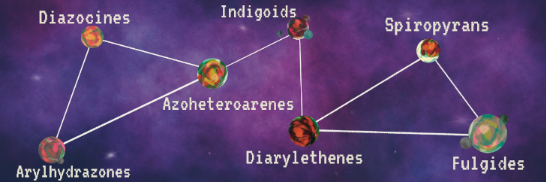
- already known as dye [89] have only been studied very recently. Exchanging the C=C bond for a C=N bond gives a new subclass of extremely short-lived T-type photoswitches with visible light activation, thermal half-lives in the µs range, and very large spectral separation. The study of iminothioindoxyl
- the stator shortens the thermal half-life due to a change in mechanism, from inversion to rotation around the C=N bond (Scheme 32B). Due to the direct conjugation of NMe2 with the hydrazone core, both isomers of 102 are red-shifted, resulting in strong spectral overlap which gives only 27% of the E
- -E (Figure 18) that leads to a weakening of the C=N bond and consequent rotation mechanism (similar to 103 in Scheme 32C). This hypothesis was corroborated by the same trend in the presence of the base Et3N. Acylhydrazones 110 are also worth mentioning in this section for their structural and




Fe-catalyzed efficient synthesis of 2,4- and 4-substituted quinolines via C(sp2)–C(sp2) bond scission of styrenes
Beilstein J. Org. Chem. 2025, 21, 1799–1807, doi:10.3762/bjoc.21.142
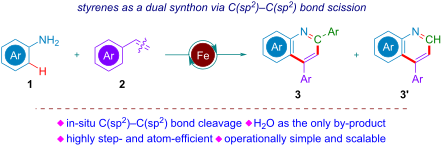
- employed an I2/DMSO-facilitated C–C bond-scission strategy of styrenes, followed by C–N bond formation and subsequent [4 + 2] annulation. Jiang and co-workers developed a method for synthesizing 4-substituted quinolines using vinyl azides as dual synthons, facilitating both the C–C and C–N bond cleavage




Unique halogen–π association detected in single crystals of C–N atropisomeric N-(2-halophenyl)quinolin-2-one derivatives and the thione analogue
Beilstein J. Org. Chem. 2025, 21, 1748–1756, doi:10.3762/bjoc.21.138
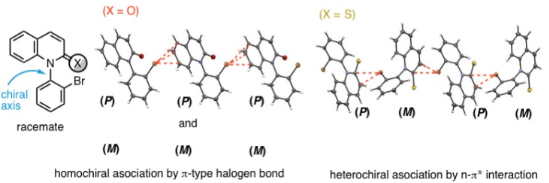
- )quinoline-2-thione, heterochiral layered polymers, in which (P)- and (M)-atropisomers were alternately connected, were formed through an n–π* interaction between a lone electron pair on the bromine atom and a π* orbital of the quinoline-2-thione. Keywords: atropisomers; C–N bond; halogen bond; quinolinones
- poor (11% ee and 9% ee) [31]. In addition, rotational stability about the C–N bond in 1a,b was not mentioned at all. We prepared racemates rac-1a,b in accordance with Scheme 1 and separated their enantiomers [(P)-1a,b and (M)-1a,b] through medium pressure liquid chromatography (MPLC) using a semi


Preparation of a furfural-derived enantioenriched vinyloxazoline building block and exploring its reactivity
Beilstein J. Org. Chem. 2025, 21, 1737–1741, doi:10.3762/bjoc.21.136

- attack to the double bond in intermediate A is kinetically preferred from the face forming the R-configured carbon of the C–N bond as a result of a minimized steric interaction of the oxygen in zwitterion with iPr substituent of oxazoline. Conclusion Unsaturated ester obtained by Torii-type ester


3-Aryl-2H-azirines as annulation reagents in the Ni(II)-catalyzed synthesis of 1H-benzo[4,5]thieno[3,2-b]pyrroles
Beilstein J. Org. Chem. 2025, 21, 1595–1602, doi:10.3762/bjoc.21.123
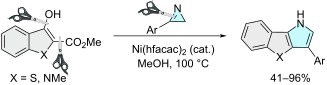
- to the azirine C=N bond, followed by cyclization and the aziridine ring opening into the [3 + 2] cycloaddition product 5 (Scheme 3). It is noteworthy that the annulation proceeds via the azirine N‒C3 bond cleavage. Elimination of the methoxycarbonyl group most likely occurs under the action of



pH-Controlled isomerization kinetics of ortho-disubstituted benzamidines: E/Z isomerism and axial chirality
Beilstein J. Org. Chem. 2025, 21, 1568–1576, doi:10.3762/bjoc.21.120
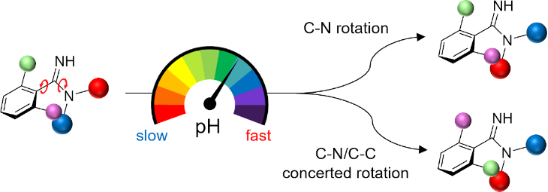
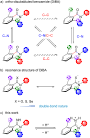
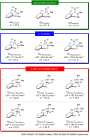
- barriers by protonation, providing a novel approach to control the kinetics of isomerization via pH adjustment. The results showed that protonation of the amidine moiety significantly suppresses both C–N bond rotation and C–N/C–C concerted rotation, demonstrating the potential of ortho-disubstituted
- switches [19]. For example, hydrazone-based molecular switches undergo reversible E/Z isomerization around the C=N bond [1][2][3][4][5][6][7], with protonation significantly shifting the equilibrium. Beyond double-bond isomerization, pH stimuli have also been employed to modulate rotational barriers in
- substitution of an ortho-disubstituted benzamide (DiBA) increases the rotational barrier of the C–N and C–N/C–C concerted rotation (Figure 1a,b) [20]. The observation can be explained mainly by the double-bond nature of the chalcogen amide C–N bond, which is attributed to a zwitterionic resonance structure of



Facile synthesis of hydantoin/1,2,4-oxadiazoline spiro-compounds via 1,3-dipolar cycloaddition of nitrile oxides to 5-iminohydantoins
Beilstein J. Org. Chem. 2025, 21, 1552–1560, doi:10.3762/bjoc.21.118

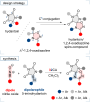
- aromatic core hinders rotation around the C–N bond. Cytotoxicity The cytotoxic properties of hydantoin/1,2,4-oxadiazoline spiro-compounds were investigated using the MTT [42] assay on human colorectal carcinoma cell line HCT116. To evaluate the cytotoxicity of the compounds in vitro, cells were placed in
- -CH3 to -OCH3 led to a decrease in IC50 by at least 20 µM and turned out to be comparable to that obtained for 5d. Conclusion In this study, we firstly investigated the 1,3-dipolar cycloaddition reactions of nitrile oxides to 5-iminohydantoins at their exocyclic C=N bond. A convenient preparative



Tautomerism and switching in 7-hydroxy-8-(azophenyl)quinoline and similar compounds
Beilstein J. Org. Chem. 2025, 21, 1404–1421, doi:10.3762/bjoc.21.105
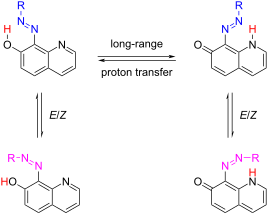
- E/Z isomerization around the C=N bond leads to reduced efficiency of the tautomeric based switching [52]. In this respect, based on the excellent stability of the azo compounds, it is interesting to understand the effect of the competitive proton transfer and E/Z switching by replacement of the




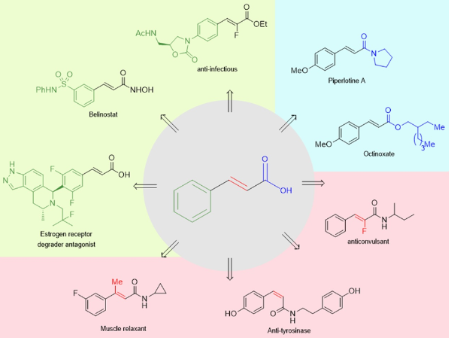
Recent advances in synthetic approaches for bioactive cinnamic acid derivatives
Beilstein J. Org. Chem. 2025, 21, 1031–1086, doi:10.3762/bjoc.21.85
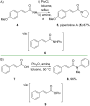
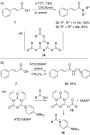
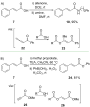
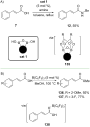
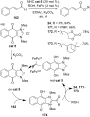
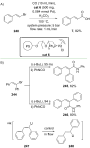
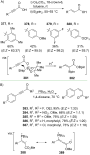
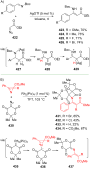
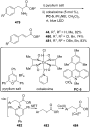
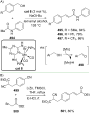
- proceeding via C–N-bond cleavage of the oxidized tertiary amine 116 (Scheme 35) [70]. Cinnamic acid (7) was activated by forming the acyl radical 118 after −OPyf group cleavage from 117. Recently, Li and co-workers (2024) studied visible-light-mediated FeCl3-catalyzed reductive transamidation of nitro













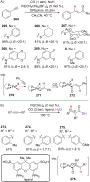


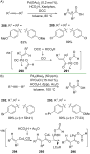


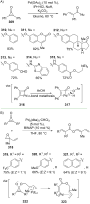
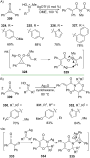























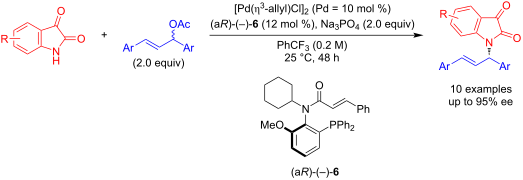
Pd-Catalyzed asymmetric allylic amination with isatin using a P,olefin-type chiral ligand with C–N bond axial chirality
Beilstein J. Org. Chem. 2025, 21, 1018–1023, doi:10.3762/bjoc.21.83
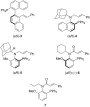
- ligands with axial chirality for Pd-catalyzed asymmetric allylic substitution reactions. For example, the Zhou group reported a P,olefin-type chiral ligand 3 with C–C bond axial chirality for this reaction (Figure 2) [27]. Additionally, we have recently reported chiral ligands with C–N bond axial




Recent advances in controllable/divergent synthesis
Beilstein J. Org. Chem. 2025, 21, 890–914, doi:10.3762/bjoc.21.73

- compounds 78 or 79 under ruthenium catalysis, generating indoles 81 and 3H-indoles 80, respectively (Scheme 21) [52]. α-Diazo-β-ketoesters form indoles by cleaving the C(N₂)–C(acyl) bond, while diazomalonates form 3H-indoles through C–N-bond cleavage. Mechanistically, the cyclometalation of iminamides
- into the carbenoid unit, providing heptacyclic ruthenium ring intermediate Int-77. Intermediate Int-78 is then formed via ruthenium migration insertion into the C=N bond from Ru–C(alkyl). For diazoketoester substrates, the final product 81 is released from Int-78 through protonation, intramolecular
- different substituents and polysubstituted annular boronic acids 98, a Suzuki coupling was employed to synthesize advanced isoquinoline intermediates 100. Following this, a 6π electrocyclization reaction and nucleophilic reaction were developed to achieve C–C and C–N bond constructions, respectively


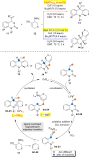


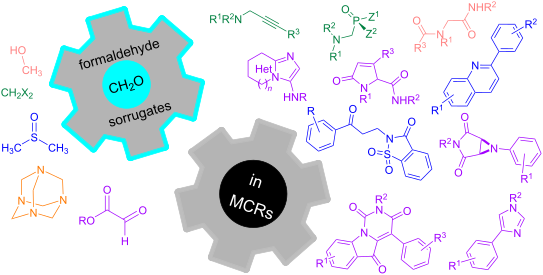
Formaldehyde surrogates in multicomponent reactions
Beilstein J. Org. Chem. 2025, 21, 564–595, doi:10.3762/bjoc.21.45
- containing a PH bond adds to the C=N bond of a preformed imine 30, while in the three-component Kabachnik–Fields reaction, the imine, which is generated in situ from a carbonyl compound and an amine, reacts with the dialkyl phosphite to produce the desired α-aminophosphonates 32 (Scheme 25) [72][74]. This


Synthesis of N-acetyl diazocine derivatives via cross-coupling reaction
Beilstein J. Org. Chem. 2025, 21, 490–499, doi:10.3762/bjoc.21.36
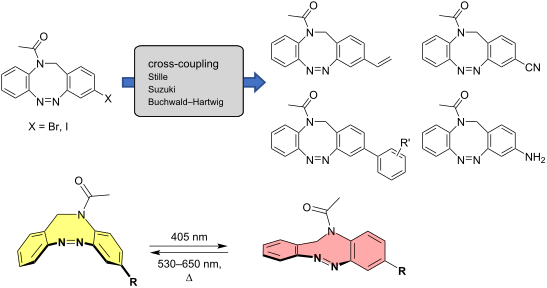
- amination is a versatile and powerful tool for C–N bond formation and widely applied in the synthesis of new pharmaceutical substances [29][30][31]. Furthermore, azobenzenes [32][33], as well as diazocines [34][35], have been derivatized via Buchwald–Hartwig amination. The Buchwald–Hartwig amination of





