


Search results
Search for "conformers" in Full Text gives 243 result(s) in Beilstein Journal of Organic Chemistry. Showing first 200.
Diastereodivergent electrophilic trapping of α-boryl lithium derivatives
Beilstein J. Org. Chem. 2026, 22, 882–887, doi:10.3762/bjoc.22.68
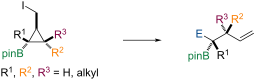
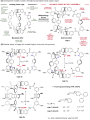
- calculations, this model assumes initial coordination of both the vinyl group and the Bpin moiety to the lithium counterion. Within this constrained geometry, when R2 = H, R3 = alkyl, the diastereocontrol is then governed by the relative steric interactions present in these two possible conformers B and C




Rongalite addition to dienones: diastereoselectivity in cyclic sulfone synthesis; stereochemical rationalization and prospects as a general conjugate nucleophile
Beilstein J. Org. Chem. 2026, 22, 742–752, doi:10.3762/bjoc.22.56

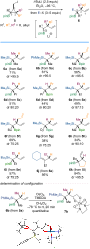
- regarding the conformational preferences of sulfur-containing 6-membered rings – spectroscopy of structurally related 5,6-dihydro-2H-thiopyrans suggests a preference for a half-chair in the unsubstituted ring but there is some evidence for boat-like major conformers in substituted systems [23][34][35][36




Computational prediction of C–H hydricities and their use in predicting the regioselectivity of electron-rich C–H functionalisation reactions
Beilstein J. Org. Chem. 2026, 22, 603–610, doi:10.3762/bjoc.22.46
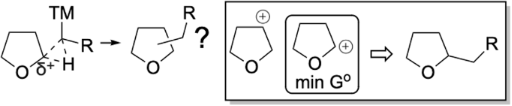
- out at each unique site by converting a SMILES string into a RDKit molecule object, producing a list of SMILES for each C–H bond. We generate min(1 + 3nrot, 20) conformers for each SMILES using RDKit (v.2023.09.3) [12], where (nrot) represents the number of rotatable bonds. Each conformer undergoes
- optimization in dimethyl sulfoxide (DMSO, ε = 47.2) using the GFN-FF-xTB [13] force field and the analytical linearised Poisson–Boltzmann (ALPB) [14] as the implicit solvation model. We then remove conformers with relative energies above 3 kcal/mol and select unique conformers by taking the centroids of a
- Butina clustering using pairwise heavy-atom root mean square deviation (RMSD) with a threshold of 0.5 Å [12][15]. To identify the lowest-energy conformer, we subsequently re-optimise the remaining conformers in DMSO with the semiemprical quantum chemistry method GFN2-xTB[16] and apply the ALPB implicit


![[Graphic 6]](/bjoc/content/inline/1860-5397-22-46-i8.svg?max-width=637&scale=1.18182)


Electrosynthetic access to unsymmetrical oxaza[8]helicenes with high chiral stability and strong circularly polarized luminescence (CPL)
Beilstein J. Org. Chem. 2026, 22, 372–382, doi:10.3762/bjoc.22.25
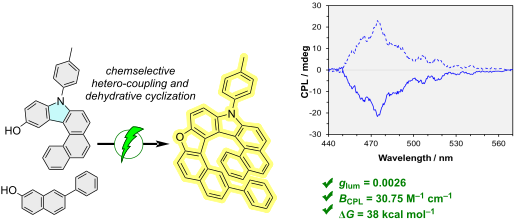
- rings, yielding stable enantiomeric conformers with pronounced optical activity. The combination of rigid helical topology and tunable electronic structure has propelled helicenes into diverse applications, spanning chiral photonics [6][7][8][9], organic electronics [10][11], molecular machines [12




Conformational analysis of difluoromethylornithine: factors influencing its gas-phase and bioactive conformations
Beilstein J. Org. Chem. 2026, 22, 237–243, doi:10.3762/bjoc.22.17
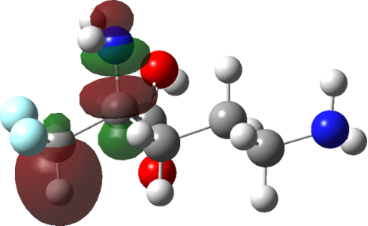
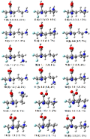
- conformational stability. High-level DLPNO-CCSD(T)/CBS calculations revealed that type-I conformers – those maximizing gauche interactions between C–F and C–N bonds – dominate the equilibrium population, confirming the presence of the fluorine gauche effect. natural bond orbital (NBO) analysis showed that this
- preference arises primarily from hyperconjugative stabilization, particularly the σCH → σ*CN interaction, while steric effects modulate the relative stability among low-energy conformers. The gauche effect is intensified in the zwitterionic form due to electrostatic interactions. In contrast, the
- type-III geometry, it exhibits a σCH → σ*CC interaction (2.4 kcal mol−1) instead of the more favorable σCH → σ*CN interaction. Overall, the gauche effect in DFMO appears to be driven by hyperconjugation and modulated by steric effects. For instance, conformers 1 and 2 are similarly stabilized by




Reactivity umpolung of the cycloheptatriene core in hexa(methoxycarbonyl)cycloheptatriene
Beilstein J. Org. Chem. 2026, 22, 64–70, doi:10.3762/bjoc.22.2
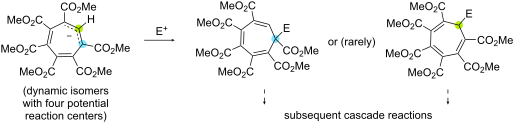
- , the antiaromatic properties of anion 2 [21] allow to regard these reactions as one of those driven by the relief of antiaromaticity [22][23][24][25][26][27]. Results and Discussion In our previous work [21], we demonstrated that most cycloheptatrienyl anions prefer conformers distorted to an allylic
- planarity of the two neighboring ester groups and thereby stabilize the anion. The prevalence of this isomer is also confirmed by the NMR data [21], however, other conformers with different charge distributions are also available in solution. To understand the nucleophilic reactivity of the most stable
- the set of conformations of anion 2 and found that conformer 2', with an allyl-anionic fragment shifted to form a nucleophilic CH fragment (Figure 3), is only 9.6 kcal/mol less stable than the main conformer 2 (the energy values of other conformers are given in Supporting Information File 1). Note


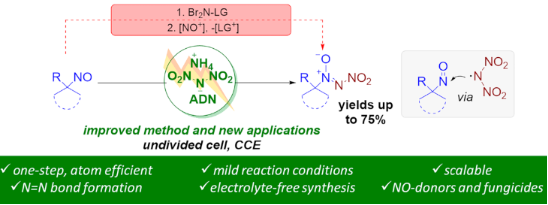
Sustainable electrochemical synthesis of aliphatic nitro-NNO-azoxy compounds employing ammonium dinitramide and their in vitro evaluation as potential nitric oxide donors and fungicides
Beilstein J. Org. Chem. 2025, 21, 2739–2754, doi:10.3762/bjoc.21.211
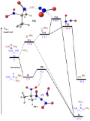
- length constraints were used for the generation of conformer ensembles of transition states in order to avoid optimization to starting reagent(s) or product(s). On the next step, most stable conformers were identified by re-optimization of generated conformers and vibrational analysis on ωB97X-3c [94
- ]/CPCM(MeCN) level of theory (in the case of >15 conformers, 15 most stable according to GFN2-xTB were analyzed). CV-curves of 0.01 M solutions of a) 1a (blue), b) 1f (azure), c) 1c (pink), d) 1i (yellow), e) S4 (red), f) S3 (green), g) S2 (brown), and h) S1 (orange) in 0.1 M n-Bu4NBF4 solution in MeCN





The intramolecular stabilizing effects of O-benzoyl substituents as a driving force of the acid-promoted pyranoside-into-furanoside rearrangement
Beilstein J. Org. Chem. 2025, 21, 2456–2464, doi:10.3762/bjoc.21.187
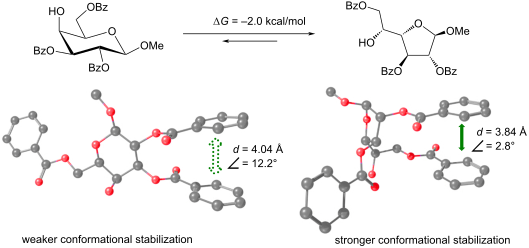
- , we turned to computational studies to elucidate the driving force of this pyranoside-into-furanoside isomerisation. The DFT B3LYP-D3 approach was employed for this task with additional validation of its results at DLPNO-CCSD(T) level for the lowest energy conformers. The results demonstrate that the
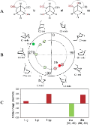
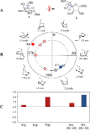
- ° correspondingly, after which the starting structures were fully optimized. Quite expectedly for galactose, the gt conformer was found to have the lowest energy. Supporting Information File 1, Table S1 contains the energies obtained for the three conformers and Figure 4C provides graphical representation of the
- +60° there were produced some conformers with the energy of the furanoside substantially lower than that of the pyranoside form. The energies are provided in Supporting Information File 1, Table S2 and the graphical representation is given in Figure 4C, bars 2-a and 2-b, and Figure 4B. The Altona




A m-quaterphenyl probe for absolute configurational assignments of primary and secondary amines
Beilstein J. Org. Chem. 2025, 21, 2211–2219, doi:10.3762/bjoc.21.168
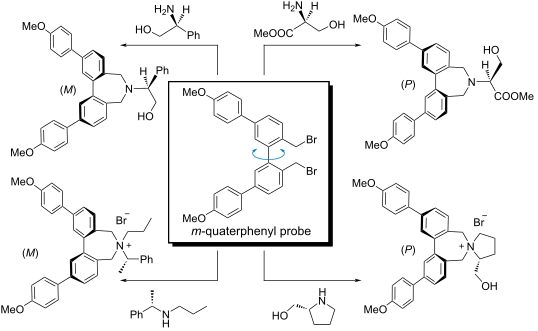
- conformers, obtained via DFT calculations, show a correlation with both the sign and intensity of the experimentally observed CD spectra. Keywords: absolute configuration; chiral amine; chiral quaternary ammonium salt; circular dichroism; DFT calculation; Introduction Determining the absolute
- at room temperature [41][42][43]. The central biphenyl moiety of conjugates 2a–h also rotates freely, forming an equilibrium mixture of P and M conformers. The relative amounts of P and M conformers depend on the chirality of the linked amine moieties. Figure 1a shows the UV and CD spectra of the
- conjugates (S)-2a–g and (R)-2h, theoretical calculations were carried out using a methoxy-omitted model (S)-3a–g and (R)-3h. To estimate the relative populations of the P and M conformers of (S)-3a, an initial conformational search was performed using the MMFF force field, followed by geometry optimizations


Photoswitches beyond azobenzene: a beginner’s guide
Beilstein J. Org. Chem. 2025, 21, 1808–1853, doi:10.3762/bjoc.21.143
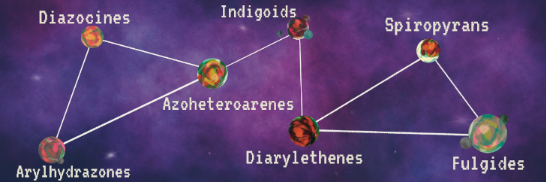
- [49]. The metastable E-diazocine exists in two conformers that can interconvert and have different absorption spectra (Scheme 10): twist (generally more stable) and chair (less stable). The spectrum of the chair conformer overlaps with the Z-isomer. Thus, to obtain better PSSs, the right conditions


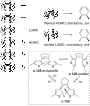


Wittig reaction of cyclobisbiphenylenecarbonyl
Beilstein J. Org. Chem. 2025, 21, 1454–1461, doi:10.3762/bjoc.21.107
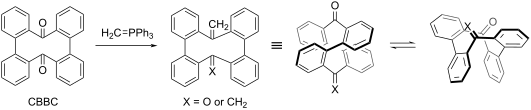
- temperature. These are attributable to the mixture of conformers with the figure-eight conformation as minor and the bathtub conformation as major conformer with a ratio of ca. 1:7. The obtained temperature-dependent 1H NMR data were subjected to the van't Hoff plot, affording an enthalpy ΔH and an entropy ΔS


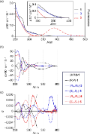

Enhancing chemical synthesis planning: automated quantum mechanics-based regioselectivity prediction for C–H activation with directing groups
Beilstein J. Org. Chem. 2025, 21, 1171–1182, doi:10.3762/bjoc.21.94
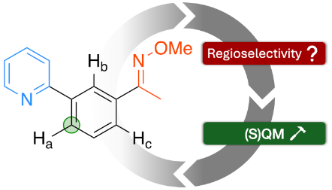
- bonds and directing groups, the corresponding intermediate substrate–Pd(OAc)–complex is generated. For each complex 3Nrot + 3 conformers are generated with ETKDG; here Nrot is the number of rotatable bonds in the substrate [19][20]. The conformers are clustered based on their RMSD with a cutoff of 1.0 Å
- , and the conformer corresponding to the centroid of each cluster is retained. The remaining conformers of each complex are optimized using GFN1-xTB in the implicit solvent model ALPB with parameters for CH2Cl2[21][22]. After each optimization, the geometry of the complex is analysed to determine
- within a plane. Once all calculations for all conformers of all complexes are completed, the complex with the overall lowest-energy conformer is selected, and its corresponding reaction site is considered the most likely to react. All complexes that have conformers within a defined energy threshold of


A versatile route towards 6-arylpipecolic acids
Beilstein J. Org. Chem. 2025, 21, 1104–1115, doi:10.3762/bjoc.21.88
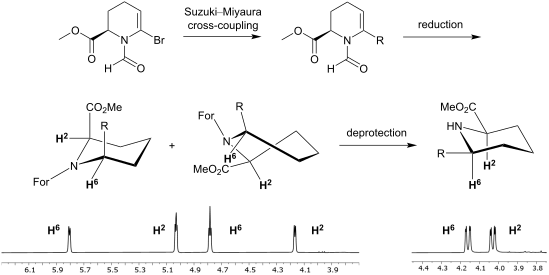
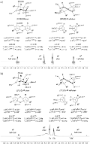
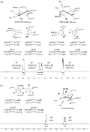
- evident by an antiperiplanar coupling of the axially positioned H6 with 3J(H6,H5,pro-S) = 11.7 Hz and a gauche coupling with 3J(H6,H5,pro-R) = 3.3 Hz. The major diastereomer, assigned as (2R,6S)-9 was found as a mixture of conformers in solution (Figure 2a). Like for (2R,6R)-9, one conformer of (2R,6S)-9





Orthogonal photoswitching of heterobivalent azobenzene glycoclusters: the effect of glycoligand orientation in bacterial adhesion
Beilstein J. Org. Chem. 2025, 21, 736–748, doi:10.3762/bjoc.21.57
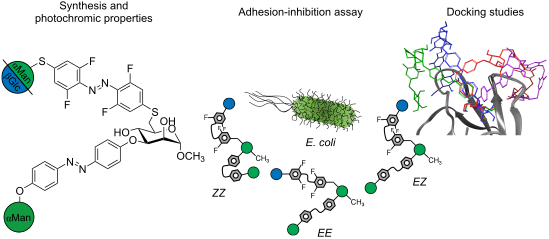
- . Supporting Information File 1). The calculations were performed with two conformers of FimH, the open and the closed gate conformation, PDB 1KLF [45] and PDB 1UWF [46], respectively. These protein structures differ in the relative orientation of the so-called tyrosine gate, which is formed by Tyr48 and


Origami with small molecules: exploiting the C–F bond as a conformational tool
Beilstein J. Org. Chem. 2025, 21, 680–716, doi:10.3762/bjoc.21.54
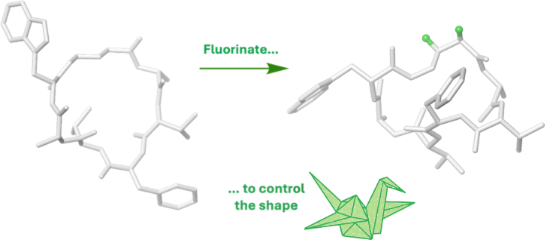
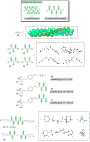
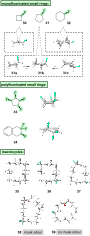
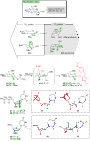
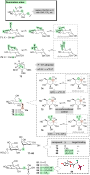
- concepts to their own scaffolds of interest. Review 1 Alkanes The simplest organic scaffolds are the alkanes. In such molecules, C–C bond rotations often have low energy barriers, and they often deliver conformers that are similar in energy, and this means that many alkanes have considerable conformational
- suffers from Lewis F···O repulsion. In contrast, the ga and ag conformers have less hyperconjugation but also less F···O repulsion, and are less polar. Since all three conformers are close in energy, the difluoroethyl ether moiety in 51 can be considered to have chameleonic polarity. 3 Alcohols We now
- -bond donor. For non-rigid molecules, the greater the population of intramolecularly H-bonded conformers, the worse the hydroxy group will be as an intermolecular H-bond donor [106]. To be clear, fluorine can make the hydroxy group a stronger intermolecular H-bond donor in certain circumstances, for








Deep-blue emitting 9,10-bis(perfluorobenzyl)anthracene
Beilstein J. Org. Chem. 2025, 21, 515–525, doi:10.3762/bjoc.21.39
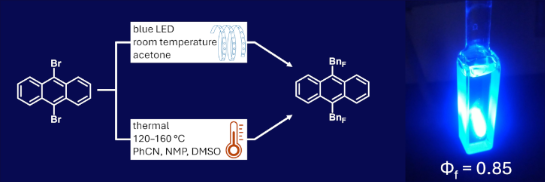
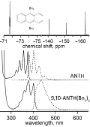
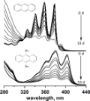
- . Interestingly, only one conformer is observed, with both perfluorobenzyl groups pointing in the same direction (instead of the opposite directions) on the ANTH core, in contrast with the earlier reported by us presence of two different conformers of perfuorobenzylated corannulene in the single crystal, which





Beyond symmetric self-assembly and effective molarity: unlocking functional enzyme mimics with robust organic cages
Beilstein J. Org. Chem. 2025, 21, 421–443, doi:10.3762/bjoc.21.30
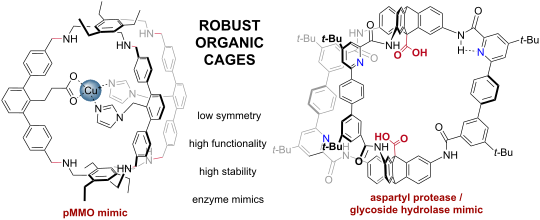
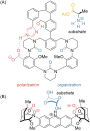
- (Figure 9A) [39][40]. For cage 1, DFT calculations suggests a population consisting of perhaps two major conformers (C5, C9), with 3–4 minor contributors (298 K, THF) [39][40], but we can control the preference of these conformers by introducing functionality which favors particular amide orientations [39
- therefore can be subjected to automated and high-throughput crystallization studies and, with Szczypiński, Slater, Cooper and co-workers, we were able to isolate all five calculated lowest-energy conformers of cage 1 in the solid state (see crystal cavity heights marked under conformers in Figure 9A) [40
- of control of rigidity in supramolecular catalysis [25]. In contrast to cage 2, cage 1 has access to at least 5 conformers by amide rotation, covering a flexibility of perhaps 1.5–2 Å (≈20% increase from the smallest size) [39][40]. This “macro-flexibility” is more akin to large enzyme-like movements




Antibiofilm and cytotoxic metabolites from the entomopathogenic fungus Samsoniella aurantia
Beilstein J. Org. Chem. 2025, 21, 327–339, doi:10.3762/bjoc.21.23
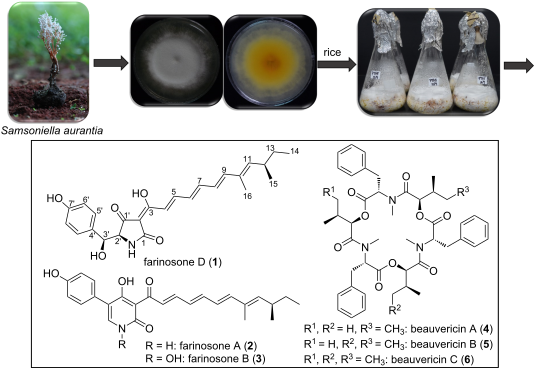
- the samples and the control group was assessed through a two-tailed Student's t-test. The level of statistical significance was set at p < 0.05. The examination was conducted utilizing GraphPad Prism 9® (GraphPad Software, San Diego, CA, USA). Computational details The distribution of conformers was
- simulated using Spartan’10 [26] on the PM6 level of theory [27]. Density-functional theory (DFT) calculations were computed utilizing the Gaussian program package, revision C.01 [28]. The geometry of the conformers was optimized on the B3LYP/6-311+G(2d,p) [29][30][31][32] level of theory with tight cutoffs
- on forces and step size. The IEFPCM solvent model [33] was used to simulate the solvent effects of methanol and frequency calculations were used to determine the conformers as minima. Conformers 4.5 kcal/mol above the lowest energy conformer and double conformers were discarded. Time-dependent DFT


Quantifying the ability of the CF2H group as a hydrogen bond donor
Beilstein J. Org. Chem. 2025, 21, 189–199, doi:10.3762/bjoc.21.11
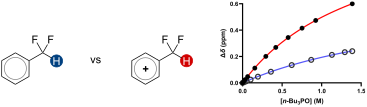
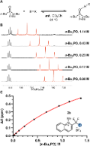
- analysis oversimplified the system by neglecting to account for potential contributions from different conformers possibly involved in HB interactions. To rectify this problem, we searched for two possible structures for each Me3PO–HB donor pair, where the HB donor adopts a different conformation in each




Synthesis, structure and π-expansion of tris(4,5-dehydro-2,3:6,7-dibenzotropone)
Beilstein J. Org. Chem. 2025, 21, 1–7, doi:10.3762/bjoc.21.1
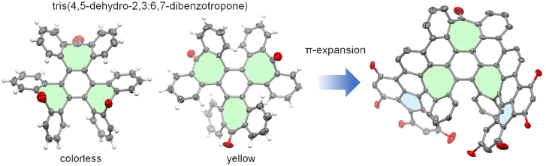
- synthesis of 1 using a Ni-mediated Yamamoto coupling reaction and the simultaneous crystallization of its two different conformers from the same solution. Expanding the π-skeleton of 1 through a Barton–Kellogg reaction followed by a subsequent Scholl reaction resulted in a new polycyclic arene (3 in Figure
- ring of Cs-1 is essentially flat, exhibiting the largest torsion angle of 8.15° (C4–C5–C6–C1). Unlike the colorless crystal, the yellow crystal consists of conformers of 1 with approximate C2 symmetry [27]. They exist as a pair of enantiomers, namely, (P,M,P)-1 and (M,P,M)-1, where P and M represent
- presents an apparently twisted central benzene ring with large torsion angles: C1–C2–C3–C4 at 19.5°, C3–C4–C5–C6 at 21.8°, and C5–C6–C1–C2 at 21.5°. The crystallization of the two conformers of 1 in different polymorphs suggests the flexibility of its polycyclic skeleton, with both its [5]helicenoid and


Synthesis of extended fluorinated tripeptides based on the tetrahydropyridazine scaffold
Beilstein J. Org. Chem. 2024, 20, 3174–3181, doi:10.3762/bjoc.20.262
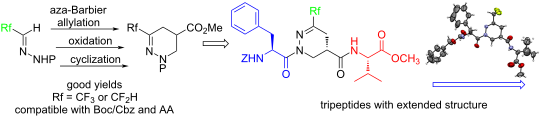
- stabilizes their secondary structure and their metabolic stability, which is useful for numerous applications [3][4][5]. Indeed, the cyclic structure considerably reduces the number of possible rotational conformers, allowing a rational control of the 3D conformational space. Among these cyclic structures
- could easily be synthesized under the same reaction conditions starting from the corresponding hydrazide amino acid. Compounds 3e and 3f were obtained as a mixture of conformers (1:1 ratio) which is often observed with N-acylhydrazones [29][30][31]. Indeed, in theory, N-acylhydrazones can exhibit four
- isomers, two due to the E and Z isomers of the imine group (–N=CH–) and two due to the syn/anti-conformers of the amide bond (–NH-CO–). Experimentally, the E isomer is often more stable and so, predominant. The strong correlation between the NH and CH of the imine observed in 2D 1H-1H NOE experiments for


Deciphering the mechanism of γ-cyclodextrin’s hydrophobic cavity hydration: an integrated experimental and theoretical study
Beilstein J. Org. Chem. 2024, 20, 2635–2643, doi:10.3762/bjoc.20.221

- two main possible conformers of the unhydrated γ-CD with differently oriented primary hydroxy groups. As stated earlier, all native CDs are lined with primary and secondary hydroxy groups (Figure 1). The presence of multiple closely spaced OH groups enables these groups to participate in
- energetically more favorable than the “open” configuration (by 22.3 kcal mol−1), which is why the “head–tail” structure was used in subsequent evaluations. It should be noted that for the two conformers modelled, the “closed” one has the typical truncated cone shape whereas the open one is more like a cylinder
- G09 package. The PyMOL software was used to create molecular graphics images [32]. Chemical structure of γ-CD (A); M062X/6-31G(d,p) optimized conformers of nonhydrated γ-CD in two projections – side view (B) and top view from O6 side of the truncated cone (C). The "closed" conformation is with


Applications of microscopy and small angle scattering techniques for the characterisation of supramolecular gels
Beilstein J. Org. Chem. 2024, 20, 2608–2634, doi:10.3762/bjoc.20.220


Machine learning-guided strategies for reaction conditions design and optimization
Beilstein J. Org. Chem. 2024, 20, 2476–2492, doi:10.3762/bjoc.20.212

- -scale global models, descriptors with longer feature lengths and higher computational efficiency, such as the first four methods, are preferred. However, for small-scale local models, QM features can offer more compact and accurate information, but they require sampling and optimizing the 3D conformers


Catalysing (organo-)catalysis: Trends in the application of machine learning to enantioselective organocatalysis
Beilstein J. Org. Chem. 2024, 20, 2280–2304, doi:10.3762/bjoc.20.196

- structure, it is important to include information from relevant conformers. To avoid losing important information from discarding conformers, Paton and co-workers [85] introduced wSterimol, which takes into account structures from the entire conformer ensemble via Boltzmann-weighting. The authors used their
- and type II’ β-hairpin. Even though the latter was consistently lower in ground state energy (up to 6 kcal/mol for some catalysts), predictive models for enantioselectivity were found for both catalyst conformers in separate MLR models. For organophosphorous ligands of transition metal complexes, the
- from Denmark and co-workers has been adopted by other groups to develop and/or benchmark descriptors [107][108], models that use architectures designed to deal with multiple conformers [109][110][111] (see Figure 9A and also Section 2.1) or models that are based on multiple fingerprints [112]. In





