Search results
Search for "fluorine" in Full Text gives 446 result(s) in Beilstein Journal of Organic Chemistry. Showing first 200.
Halogenated azobenzene acrylates: from efficient solution photoswitching to stable solid-state photochromic materials
Beilstein J. Org. Chem. 2026, 22, 782–794, doi:10.3762/bjoc.22.60
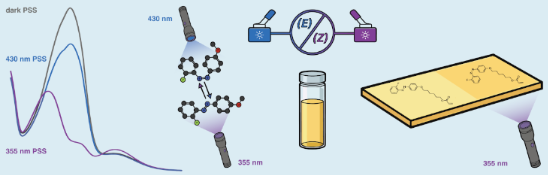
- halogenated azobenzene acrylate monomers bearing fluorine, chlorine or bromine substituents is reported. The monomers were prepared via a facile three-step synthetic route involving azo-coupling, O-alkylation and O-acylation. Apart from the steady electrochemical properties, halogen substitution proved to be
- transition occurs upon cooling. This implies that the tendency to crystallize is clearly controlled by the type of the corresponding halide atom(s). When a very small fluorine atom is attached, the planar azobenzene scaffold is most likely to π-stack very efficiently, which is a significant promoter of the
- falls within the range of 221–229 °C. The derivative 1b bearing the smallest fluorine atoms proved to be the most thermally stable but the differences in Td values are rather minor. When comparing the Ti values, a slightly higher liquid-phase volatility is seen for the disubstituted analogues (compare


Synthesis and biological evaluation of new brassinosteroid analogs with C-22 benzoate function
Beilstein J. Org. Chem. 2026, 22, 753–762, doi:10.3762/bjoc.22.57
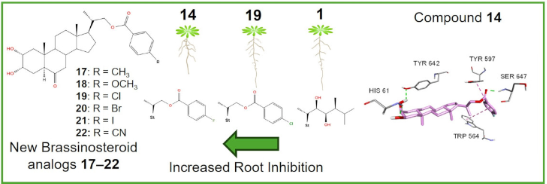
- explain experimental correlations between activity and chemical structure of BR analogs [34][48][49]. For example, previous molecular docking studies have predicted similar or better binding energies than brassinolide (1) for compounds with a phenyl ring with small groups such as fluorine, chlorine, or


Synthesis of heterocycles based on azomethine ylides from α-amino acids (or amines) and carbonyl compounds
Beilstein J. Org. Chem. 2026, 22, 705–741, doi:10.3762/bjoc.22.55
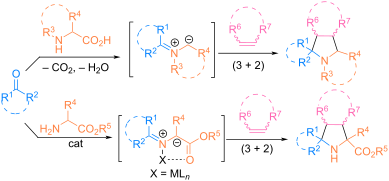
- , allowing the production of functionalized pyrrolidines with potential biological activity [54]. Currently, organofluorine chemistry is one of the most pressing areas of modern chemistry, since the introduction of fluorine-containing groups into compounds often has a significant impact on their biological
- . Various aryl-substituted gem-difluorostyrenes, not only with electron-withdrawing but also with electron-donating and neutral substituents in the aromatic ring, can also participate in this reaction, since cycloaddition is facilitated by the electron-withdrawing inductive effect of fluorine atoms. In
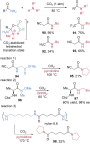
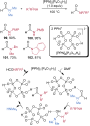
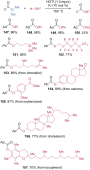
- , nitrogen, sulfur or a sulfone group as heteroatoms, reacted with azomethine ylide to form spirocyclic or fused pyrrolidines 95 in yields up to 98%. The authors suggest that the reaction of silylamine 92 with LiF proceeds via a concerted mechanism: in transition state I, the polarized fluorine atom (δ


Photoorganocatalytic trifluoromethylation of (het)arenes in green conditions
Beilstein J. Org. Chem. 2026, 22, 662–671, doi:10.3762/bjoc.22.50
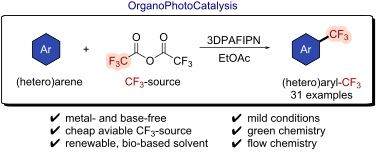
- indicate that among the solvents employed in the procedures shown in Scheme 1, ethyl acetate represents a more environmentally sustainable alternative. Herein, as a continuation of our studies on photochemical approaches to the synthesis of fluorine-containing compounds [23][24][25] and on the development




Recent advances in the cleavage of non-activated amides
Beilstein J. Org. Chem. 2026, 22, 352–369, doi:10.3762/bjoc.22.23
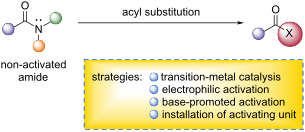
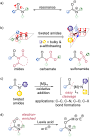
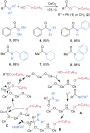
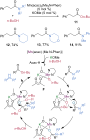
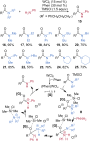
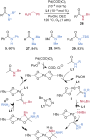
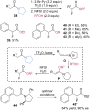
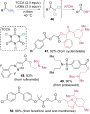
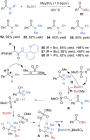
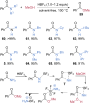
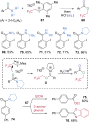
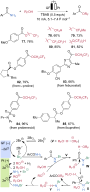
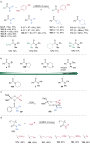
- cleavage of tertiary anilides in 2020 [76]. In the presence of CuBr2 and Selectfluor as an electrophilic fluorine source, the C–N bond of N-PMB-substituted anilides undergoes smooth oxidative cleavage to form the corresponding acyl fluoride intermediate 194, thereby facilitating transamidation via in-situ










Spirobarbiturates with a pyrrolizidine moiety: synthesis, structure and biological evaluation
Beilstein J. Org. Chem. 2026, 22, 274–288, doi:10.3762/bjoc.22.20
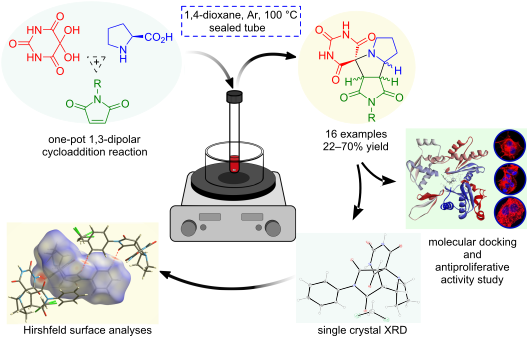
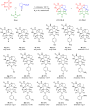
- ). Substitution of the meta-chlorine with fluorine also favored the exo-isomer (compound 4j, 70%, endo/exo 1:2), similar to 4l. The presence of an electron-withdrawing group at the meta-position of the maleimide’s N-aryl group likely facilitates exo-isomer formation. Reactions with maleimides containing meta-NO2
- for endo-4f–p could be unambiguously identified, as they remain virtually unchanged compared to those in the pure endo-isomers 4a–e. 19F NMR analysis of 4j revealed two fluorine signals (δF −114.3 ppm for exo, −114.4 ppm for endo), while the CF3 group in 4m showed analogous splitting (δF −61.2 ppm




A mild and atom-efficient four-component cascade strategy for the construction of biologically relevant 4-hydroxyquinolin-2(1H)-one derivatives
Beilstein J. Org. Chem. 2026, 22, 244–256, doi:10.3762/bjoc.22.18
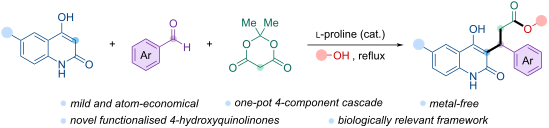
- -hydroxyquinoline core – 3-(6-halo-4-hydroxy-2-oxo-1,2-dihydroquinolin-3-yl)-3-(3,4-dimethoxyphenyl)propanoates (Figure 2). The C6 position of the quinoline ring was halogenated with fluorine, chlorine, or bromine, as halogenation at this site is known to influence both the physicochemical properties and biological


Conformational analysis of difluoromethylornithine: factors influencing its gas-phase and bioactive conformations
Beilstein J. Org. Chem. 2026, 22, 237–243, doi:10.3762/bjoc.22.17
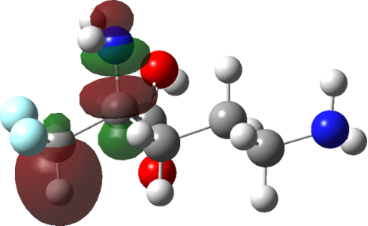
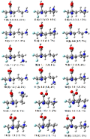
- decarboxylase and as a therapeutic agent against African trypanosomiasis. Beyond its pharmacological importance, DFMO provides a valuable model for examining how fluorine substitution governs molecular conformation. A comprehensive quantum-chemical study was performed to elucidate the origins of DFMO’s
- conformational stability. High-level DLPNO-CCSD(T)/CBS calculations revealed that type-I conformers – those maximizing gauche interactions between C–F and C–N bonds – dominate the equilibrium population, confirming the presence of the fluorine gauche effect. natural bond orbital (NBO) analysis showed that this
- exploring conformational effects associated with the difluoromethyl (–CHF₂) motif. The presence of vicinal fluorine substituents is known to strongly influence conformational equilibria through stereoelectronic effects, notably the fluorine gauche effect [7]. This effect arises from hyperconjugative




Advances in Zr-mediated radical transformations and applications to total synthesis
Beilstein J. Org. Chem. 2026, 22, 71–87, doi:10.3762/bjoc.22.3
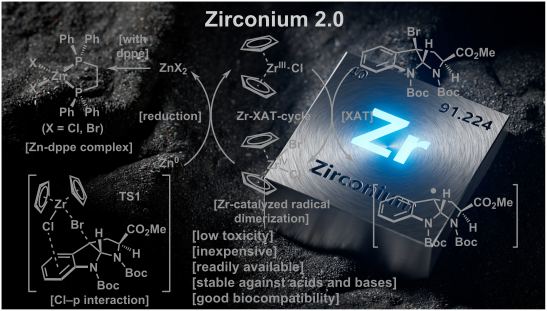
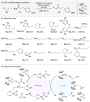
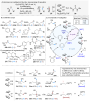
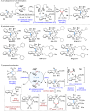
- radical homo coupling of alkyl chlorides. Zr-catalyzed fluorine atom transfer. Zr-catalyzed C–O bond cleavage. aYield without the use of P(OEt)3. Application to the total synthesis of halichondrins. Zr-catalyzed C3 dimerization of 3-bromotryptophan derivatives. aCp2ZrCl2 was used. Mechanistic studies








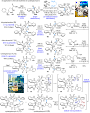
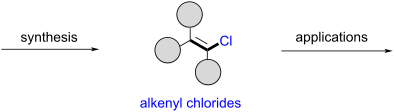
Synthesis and applications of alkenyl chlorides (vinyl chlorides): a review
Beilstein J. Org. Chem. 2026, 22, 1–63, doi:10.3762/bjoc.22.1
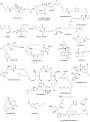
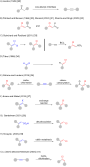
- with SOCl2, and treatment with base (Scheme 38; yields refer to the transformation of B → C) [139]. A reaction which includes a fluorine–chlorine exchange and subsequent elimination of HCl was reported by Shibata and co-workers (Scheme 39) [140]. In this reaction the AlEt2Cl has a dual role of fluorine























Competitive cyclization of ethyl trifluoroacetoacetate and methyl ketones with 1,3-diamino-2-propanol into hydrogenated oxazolo- and pyrimido-condensed pyridones
Beilstein J. Org. Chem. 2025, 21, 2716–2729, doi:10.3762/bjoc.21.209
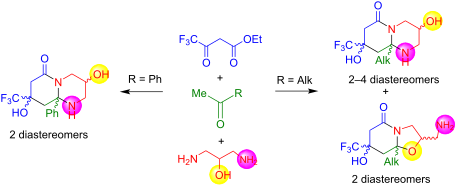
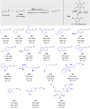
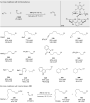
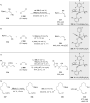
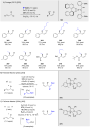
- ], fluopyram [36], and the nematicide fluazaindolisine [37] (Figure 1). The trifluoromethyl piperidine backbone is part of the structure of anticancer [38] and antirheumatic [39] agents. The fluorine-containing pyridines and their heteroannelated derivatives are known to exhibit a high biological potential, on
- the one hand, owing to the fact that the pyridine framework is widespread among natural compounds [40][41], and, on the other hand, because of the unique properties of fluorine [42][43][44][45]. In this work, 1,3-diaminopropan-2-ol (3) has for the first time been introduced into the reaction of ethyl
- -equatorial position and is in the trans-position toward the Bu group. The single crystal structure of the bicycle 5ctc is ordered by intermolecular hydrogen bonds between the hydroxy group and the amino group as well as between the amino group and fluorine of the CF3 substituent of the neighboring molecule


Catalytic enantioselective synthesis of selenium-containing atropisomers via C–Se bond formations
Beilstein J. Org. Chem. 2025, 21, 2447–2455, doi:10.3762/bjoc.21.186
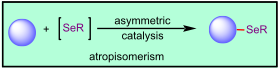
- ]. When a para-fluorine substituent is present on the naphthalene ring of the substrate, the reaction proceeds with a yield of up to 90% and an enantioselectivity reaching 92% ee. The methodology demonstrates a broad substrate scope, accommodating various polycyclic naphthalene isoquinolines as well as




Halogenated butyrolactones from the biomass-derived synthon levoglucosenone
Beilstein J. Org. Chem. 2025, 21, 2297–2301, doi:10.3762/bjoc.21.175
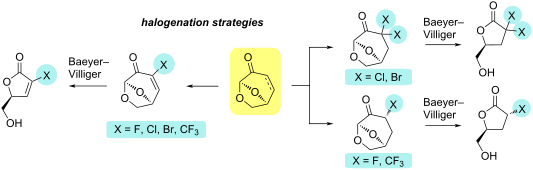
- Baeyer–Villiger oxidation affording the fluorinated, chlorinated, and brominated dideoxyribonolactones. Keywords: butyrolactone; cyrene; fluorine; halogenation; levoglucosenone; Introduction The γ-butyrolactone ring is a privileged scaffold found in natural products and can be used as a valuable
- intermediate in synthesis [1][2]. Several nucleoside analogue drugs are prepared using γ-butyrolactones, that when reduced give pentose sugars that can be used as glycosyl donors [3][4]. A number of these clinically used drugs contain fluorine as a hydroxy bioisostere at C2, most notably gemcitabine (1) and
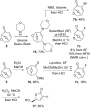
- electrophilic fluorine in the best case gave 15% conversion for NFSI and less than 8% isolated yield of 7c for SF. The major product in these reactions was 5, due to a β-elimination of the amine. In comparison, the reaction of 15 with NBS afforded 7b in an unoptimized yield of 48% after hydrolysis, which



Thermodynamics and polarity-driven properties of fluorinated cyclopropanes
Beilstein J. Org. Chem. 2025, 21, 1742–1747, doi:10.3762/bjoc.21.137
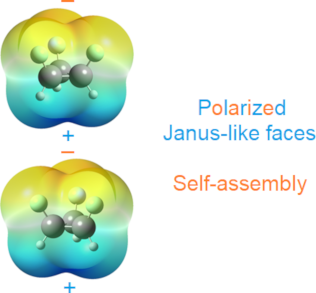
- polarity, with these effects varying based on the amount, position, and orientation of the fluorine substituents [7][8]. Mondal and colleagues have extensively reviewed additional properties of fluorinated cyclopropanes, including the conformational behavior of substituents attached to a fluorinated
- kcal mol−1 more stable than two isolated molecules – and an atoms in molecules (AIM) analysis reveals a bond path between hydrogen and fluorine atoms, with an electron density of 0.0048 at the bond critical point (Figure 2). Based on AIM charges (qH = +0.0851 and qF = −0.6003) and a H···F distance of
- these complexes, the cation coordinates with the fluorine atoms, while the anion interacts with the positively charged hydrogen atoms. The complexation is thermodynamically favorable when compared to the isolated species (ions and 1.2.3-c.c.), as indicated by the ΔH0 of formation: −32.5 kcal mol−1 for


Highly distinguishable isomeric states of a tripodal arylazopyrazole derivative on graphite through electron/hole-induced switching at ambient conditions
Beilstein J. Org. Chem. 2025, 21, 1496–1507, doi:10.3762/bjoc.21.112
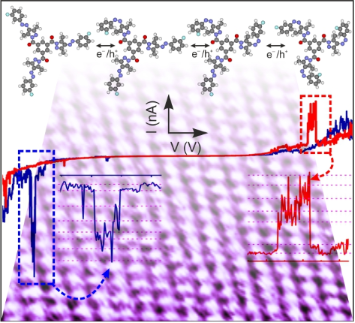
- surface at ambient conditions. The fluorine substitution is chosen in FNAAP for its better photoisomerization efficiency (in solution as well as in solid state) and higher molecular stability [29]. Possible photoisomers of FNAAP, EEE, EEZ, EZZ and ZZZ are shown in Figure 1. FNAAP molecules assemble into
- is to be noted that the fluorine atoms are oriented toward the aromatic and aliphatic hydrogen and the carbonyl group to aromatic hydrogen. This suggests possible directional non-bonding interactions between the molecules. For molecules with 3-fold symmetry, the 3-fold orientation within the assembly
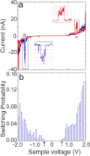
- the vectors. Black arrows indicate the compact lattice directions of graphite. Magenta dashed lines depict possible non-bonding interactions between carbonyl groups and aromatic hydrogen atoms. Blue dashed lines depict the same between fluorine and aromatic/methyl hydrogen atoms. (a) Current versus



Tautomerism and switching in 7-hydroxy-8-(azophenyl)quinoline and similar compounds
Beilstein J. Org. Chem. 2025, 21, 1404–1421, doi:10.3762/bjoc.21.105
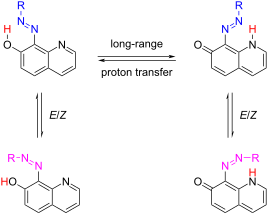
- group surrounded by fluorine atoms, which could spontaneously deprotonate in polar solvents, while the tautomeric OH/NH group is always a part of strong intramolecular hydrogen bonding and the possibility for deprotonation is low. The deprotonation of the phenyl OH group is also supposed by the
- the diazonium salts are made alkaline the para-fluorine atom is so readily replaced by a hydroxy group, and that the 4-hydroxy-2,3,5,6-tetrafluorobenzene cation is the entity formed first [90][91]. A 50 mL round-bottomed flask equipped with a mini magnet was charged with pentafluoroaniline (0.64 g




Reactions of acryl thioamides with iminoiodinanes as a one-step synthesis of N-sulfonyl-2,3-dihydro-1,2-thiazoles
Beilstein J. Org. Chem. 2025, 21, 1397–1403, doi:10.3762/bjoc.21.104
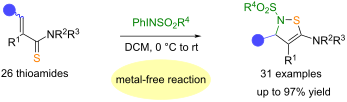
- compounds is provided by the variation of substituents in positions 2–5 of the 1,2-thiazole ring. Thus, arylsulfonyl groups containing a methyl, fluorine, chlorine, or nitro group at the aryl moiety, or a mesyl substituent were introduced into position 2 of the thiazole ring and various aryls, quinolinyl



Oxetanes: formation, reactivity and total syntheses of natural products
Beilstein J. Org. Chem. 2025, 21, 1324–1373, doi:10.3762/bjoc.21.101








Recent advances in oxidative radical difunctionalization of N-arylacrylamides enabled by carbon radical reagents
Beilstein J. Org. Chem. 2025, 21, 1207–1271, doi:10.3762/bjoc.21.98
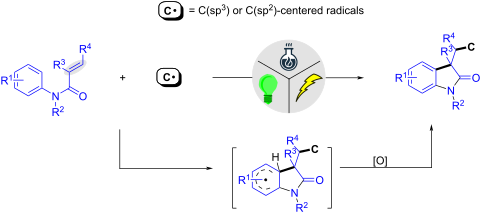
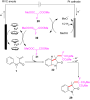
- difluoroethylsulfinate (DFES-Na) to generate difluoroethyl radicals via anodic single-electron oxidation (Scheme 23) [14]. The method was evaluated with various N-arylacrylamides, revealing that substrates with different substituents, including fluorine, chlorine, bromine, and iodine, participated well in the reaction
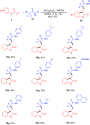
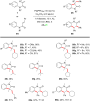
- –c) and electron-withdrawing (e.g., fluorine, chlorine, ester groups) (78d–f) substituents on bromodifluoroacetamides were well tolerated, yielding high reaction efficiency. Interestingly, the reaction was less sensitive to electronic effects on the aromatic ring, as yields remained high regardless












On the photoluminescence in triarylmethyl-centered mono-, di-, and multiradicals
Beilstein J. Org. Chem. 2025, 21, 964–998, doi:10.3762/bjoc.21.80
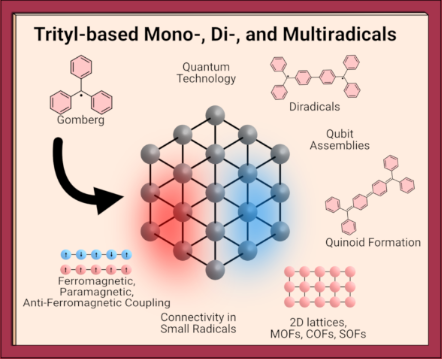
- low ϕ (see Figure 2a) [50][51]. Perfluorinated triphenylmethyl radicals have been reported as well; however, neither UV–vis nor photoluminescence data are available [54]. Mixed perhalogenated triphenylmethyl radicals with fluorine, chlorine, and bromine substituents have been synthesized in an attempt
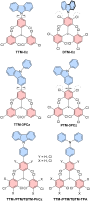
- , these molecules display greatly enhanced photostability compared to PTM and TTM. The ortho-positions on the pyridyl ring have been substituted with fluorine, chlorine, and bromine moieties, and it was found that the change in substitution affects the emission color from yellow in case of fluorine, to
- orange for chlorine, and to red for bromine [6][57]. This shift can be explained by the decreasing electronegativity of the halide substituents. The more electronegative fluorine will reduce the HDMO energy more strongly than the bromine, while the SOMO remains energetically almost unaffected, explaining









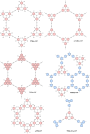
Recent advances in controllable/divergent synthesis
Beilstein J. Org. Chem. 2025, 21, 890–914, doi:10.3762/bjoc.21.73

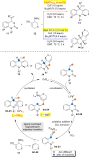
- imides and TMS-alkynes, enabling the rapid construction of S(VI)–C(sp2) or S(VI)–C(sp) bonds efficiently (Scheme 24) [55]. This linkage utilizes the high bond dissociation energy (BDE = 135 kcal/mol) of silicon–fluorine bonds, employing trifluoroborate as a fluorine transfer reagent to simultaneously




Recent advances in the electrochemical synthesis of organophosphorus compounds
Beilstein J. Org. Chem. 2025, 21, 770–797, doi:10.3762/bjoc.21.61
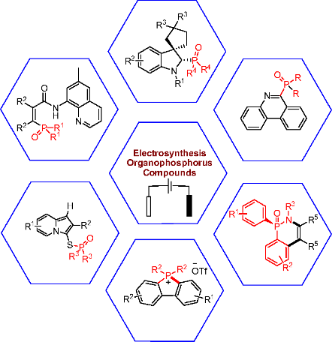
- phosphoroselenoates were formed with moderate to high yields in the presence of electron-donating groups such as methyl (Me) and methoxy (OMe), as well as electron-withdrawing groups like fluorine (F), chlorine (Cl), bromine (Br), and nitro (NO2) at the 5-position of the phenyl ring in indole. Studies showed that


Orthogonal photoswitching of heterobivalent azobenzene glycoclusters: the effect of glycoligand orientation in bacterial adhesion
Beilstein J. Org. Chem. 2025, 21, 736–748, doi:10.3762/bjoc.21.57
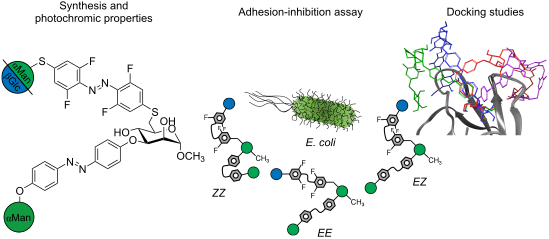
- azobenzene derivative 9 [34] to furnish 10. This reaction had to be carried out at −78 °C in order to suppress nucleophilic substitution of the ortho-fluorine substituents in 9 by the thiol 8, a reaction that competes with the desired cross-coupling. For the second Buchwald–Hartwig–Migita cross-coupling, the


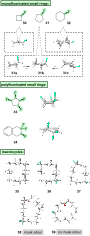
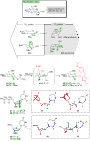
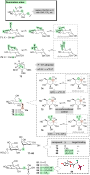
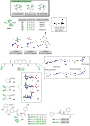
Origami with small molecules: exploiting the C–F bond as a conformational tool
Beilstein J. Org. Chem. 2025, 21, 680–716, doi:10.3762/bjoc.21.54
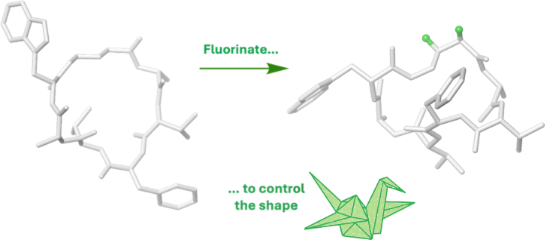
- stereoelectronic effects such as hyperconjugation and electrostatic attraction/repulsion. These fluorine-derived conformational effects have been exploited to control the shapes, and thereby enhance the properties, of a wide variety of functional molecules including pharmaceutical agents, liquid crystals
- fluorine atoms into the structure. The C–F bond has certain fundamental characteristics that enable it to serve as an effective conformational tool (Figure 1) [2][3][4]. First, the C–F bond is quite short at only ≈1.35 Å (cf. ≈1.09 Å for C–H, or ≈1.43 Å for C–O). The short length of the C–F bond, and the
- compact size of the fluorine atom itself, means that fluorine can be incorporated into an organic molecule as a replacement for hydrogen without drastically altering the molecular volume. Second, the C–F bond is highly polarised. This means that any molecular conformation in which the C–F dipole is








Photochemically assisted synthesis of phenacenes fluorinated at the terminal benzene rings and their electronic spectra
Beilstein J. Org. Chem. 2025, 21, 670–679, doi:10.3762/bjoc.21.53

- phenacene molecules are quite robust against an oxidative environment even under photoillumination, they are considered to be promising platforms for constructing practical organic functional molecules. Recently, fluorinated PAHs attracted considerable attention because the introduction of fluorine atoms
- 18-crown-6 produced fluorine-containing diarylethene 8 as a mixture of E- and Z-isomers. Subsequently, the E/Z mixture of 8 was subjected to the Mallory photoreaction without separation. Thus, compound 8 was irradiated with fluorescent black-light lamps (300 nm, 6 × 16 W) in the presence of a
- -extension (ΔλABS = ca. 6 nm per increment of one benzene ring) and the spectral profiles resemble each other irrespective of the length of the phenacene π conjugation and the fluorine substitution. The results suggest that these factors could provide insignificant effects on the apparent electronic spectral