


Search results
Search for "isomerization" in Full Text gives 471 result(s) in Beilstein Journal of Organic Chemistry. Showing first 200.
Synthesis and acaricidal activity against Varroa destructor of α- and γ-costic acid dimers
Beilstein J. Org. Chem. 2026, 22, 1088–1096, doi:10.3762/bjoc.22.87
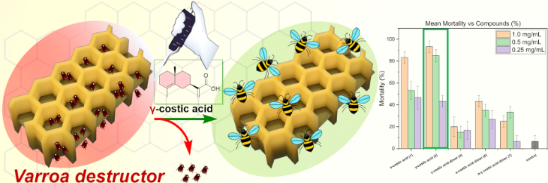
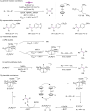
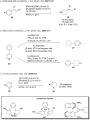
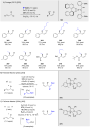
- homo- and heterodimers 4, 6, and 7 (Scheme 1). Accordingly, the formation of dimer of 6 with ethylene glycol was first attempted under classical acid-catalyzed Fischer esterification conditions, in the presence of p-toluenesulfonic acid (pTsOH) (Scheme 1). However, these conditions led to isomerization
- -dimethylaminopyridine (DMAP), provided the monoester 5 and no trace of isomerization products. Finally, both the α-costic acid homodimer 6 and the α/γ-costic acid heterodimer 7 were obtained by Steglich esterification of 5 with α-costic acid (1) and γ-costic acid (3), respectively (Scheme 1). The acaricidal activity of


Z-Selective semihydrogenation of alkynes via Ni/Lewis acid synergistic catalyzed system using DMF as hydrogen source and solvent
Beilstein J. Org. Chem. 2026, 22, 1004–1012, doi:10.3762/bjoc.22.79
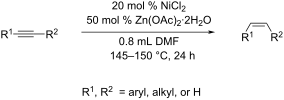
- several limitations – including batch variability, alkene isomerization, and over-reduction to alkanes, which are particularly problematic for terminal and polar substrates [7][8][9][10]. Recent review articles have comprehensively summarized advances in this research field. For instance, Gregori et al
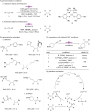
- detected after 64 h, thus ruling out a catalyst-mediated Z/E isomerization. To further verify that formic acid serves as the hydrogen donor while the polar amide solvent assists the catalytic cycle, diphenylacetylene was subjected to the standard reaction conditions using DMA together with 2.5 equivalents



Electrochemical reduction of unsaturated carbon–carbon bonds via 3d transition-metal catalysis
Beilstein J. Org. Chem. 2026, 22, 955–981, doi:10.3762/bjoc.22.75
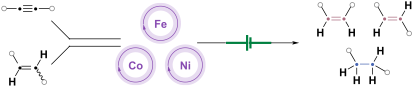
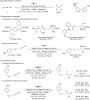
- involving migratory insertion and β-hydride elimination, which ultimately accounts for the observed preference for E-selective alkyne reduction [96]. In addition to the alkyne reduction process, the same e-HAT platform could be extended to alkene isomerization and reduction as well. In 2026, the Derosa








Recent advances in copper-catalyzed direct hydroamination of alkenes with (hetero)aromatic amines
Beilstein J. Org. Chem. 2026, 22, 925–947, doi:10.3762/bjoc.22.73
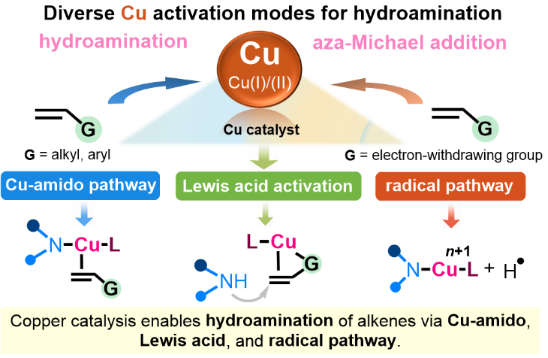
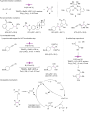
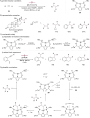
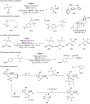
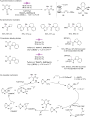
- . This mechanistic framework highlights the central role of the in situ-generated copper–amido complex and underscores the dual function of copper in substrate isomerization and C–N bond formation. This cooperative activation accounts for the high β-regioselectivity observed in Scheme 6 and further







Halogenated azobenzene acrylates: from efficient solution photoswitching to stable solid-state photochromic materials
Beilstein J. Org. Chem. 2026, 22, 782–794, doi:10.3762/bjoc.22.60
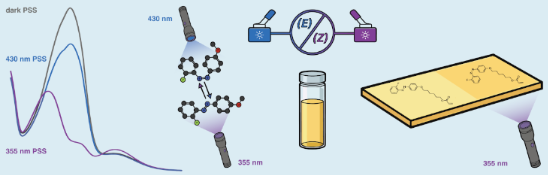
- for over 90 days. These findings demonstrate that ortho-halogenation is a powerful tool for tuning the properties of photoresponsive materials for potential applications in colorimetric thermal sensing and light-controlled functional systems. Keywords: azobenzene; E/Z isomerization; halogen
- ; photoswitch; polymer; thin film; Introduction The azobenzene photoinduced E/Z isomerization represents a well-investigated switching process that found various utilizations [1][2][3][4]. In contrast to the state-of-the-art achieved in solution and despite its perhaps even greater application potential, a
- to the viscoelastic state of (Z)-azobenzene. Hence, the azobenzene-doped polymer can be photo-welded going from the viscoelastic to the glassy state after reverse Z→E isomerization. Laser-induced surface relief grating (SRG) on azobenzene-containing polymers is another prominent application of the


Synthesis of depressin, cryptomeridiol and 4-epi-cryptomeridiol enabled by a terpenoid chiral pool-producing platform
Beilstein J. Org. Chem. 2026, 22, 683–690, doi:10.3762/bjoc.22.53
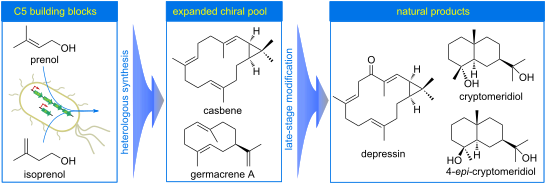
- bond of 15 was confirmed to be Z based on the NOESY correlations between 13-H/20-H3. The formation of product 15 could be attributed to the isomerization of the C13 allylic radical, generated by methyl oxalyl ester deoxygenation step, to the C11 allylic radical, followed by hydrogen abstraction from n


Harnessing light energy with molecules
Beilstein J. Org. Chem. 2026, 22, 680–682, doi:10.3762/bjoc.22.52
- and can be potentially used at a later stage. A strong emphasis is on molecular photoswitches (photochromic molecules) that upon irradiation undergo cis/trans isomerization, intramolecular photocycloaddition, or an electrocyclic reaction. In addition, several articles describe absorption tuning by
- -ray-induced isomerization within micelles generated from two different photosurfactants (containing either an azobenzene or arylazopyrazole photoswitch), thereby creating guidelines for using small-angle X-ray scattering to study photoresponsive materials of potential applications in solar energy
Modern synthetic pathways towards eribulin and its subunits
Beilstein J. Org. Chem. 2026, 22, 495–526, doi:10.3762/bjoc.22.37
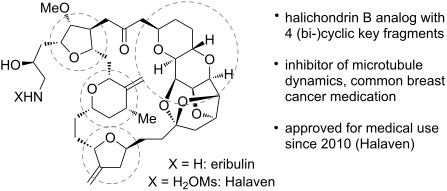
- towards 113 upon acidic treatment and TBDMS-protection. Reduction, cleavage of the silyl-protecting groups and acetylation led to tetrahydropyran 114. Lewis acid-catalyzed C-allylation, cross metathesis, basic cleavage of the acetate motifs and transesterification enabled the DBU-induced isomerization of
- stereoselective hydroboration with texylborane and oxidation yielded primary alcohol 285. Another DMP-oxidation, isomerization under basic conditions, reduction and Ms-protection were conducted to assemble 289. Substitution of the mesylate with PhSNa, replacement of both Bz- with TBDMS-protecting groups and








Electrosynthetic access to unsymmetrical oxaza[8]helicenes with high chiral stability and strong circularly polarized luminescence (CPL)
Beilstein J. Org. Chem. 2026, 22, 372–382, doi:10.3762/bjoc.22.25
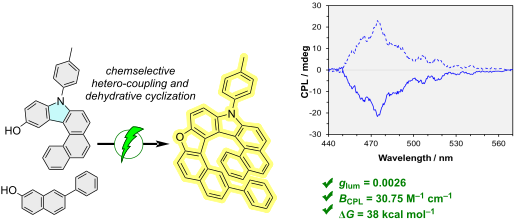
- characteristic transformations of the organosulfur functionality [32][33]. In 2024, Badani, Karnik, and co-workers accessed one member of this class, 7,12-dioxa[8]helicene I, through a sequence featuring photochemical E–Z isomerization, electrocyclization, and oxidative aromatization [34]. In parallel, Liu and




Total synthesis of natural products based on hydrogenation of aromatic rings
Beilstein J. Org. Chem. 2026, 22, 88–122, doi:10.3762/bjoc.22.4
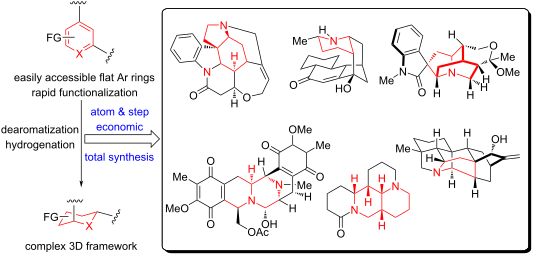
- process relies on the rapid interconversion of the enantiomers in the racemic substrate, which in turn relies on the acid-promoted isomerization between the aromatic indole and the nonaromatic exocyclic enamine intermediate. Very recently, Chen and co-workers reported that using a Mn catalyst with
- 81 was prepared via a Polonovski–Polish reaction and isomerization, which, when adopting the proper conformation, spontaneously underwent an intramolecular [4 + 2] cycloaddition to construct the unsaturated bridged ring of (±)-keramaphidin B in a single transformation. Subsequently, the iminium ion
- protonation during reduction or an isomerization event. Kinetic translocation of the double bond to the correct position enabled an intramolecular Heck reaction, a transformation originally developed by Fukuyama (Scheme 12) [78]. Hydrogenation of (−)-tabersonine to (−)-decahydrotabersonine by Catherine










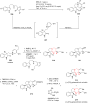

Reactivity umpolung of the cycloheptatriene core in hexa(methoxycarbonyl)cycloheptatriene
Beilstein J. Org. Chem. 2026, 22, 64–70, doi:10.3762/bjoc.22.2
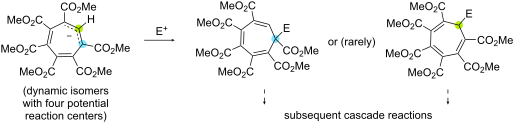
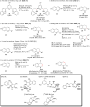
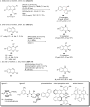
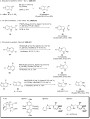
- isomerization. However, these isomerizations are known to proceed as 1,5-sigmatropic shift [32] as observed in the formation of compounds 8 and 9, whereas the formation of products 4 through this pathway would require at least two consequent shifts. Thus, the absence of any intermediate-shift products along


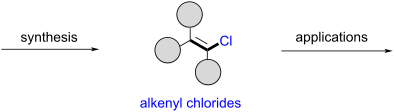
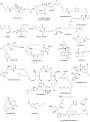
Synthesis and applications of alkenyl chlorides (vinyl chlorides): a review
Beilstein J. Org. Chem. 2026, 22, 1–63, doi:10.3762/bjoc.22.1















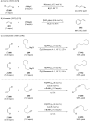


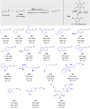
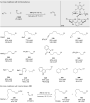
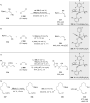






Tandem hydrothiocyanation/cyclization of CF3-iminopropargyl alcohols with NaSCN in the presence of AcOH
Beilstein J. Org. Chem. 2025, 21, 2694–2702, doi:10.3762/bjoc.21.207
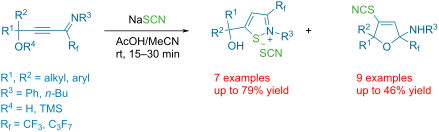
- having electron-withdrawing groups at the triple bond can easily undergo prototropic isomerization to form corresponding unstable allene structures, particularly in acidic conditions. When N-n-Bu CF3-iminopropargyl alcohol 1h was introduced to the reaction, product 2h was obtained in a slightly lower



Recent advancements in the synthesis of Veratrum alkaloids
Beilstein J. Org. Chem. 2025, 21, 2657–2693, doi:10.3762/bjoc.21.206
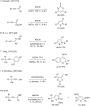
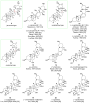
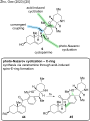
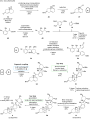
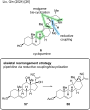
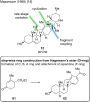
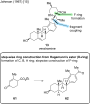
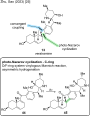
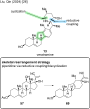
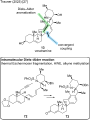
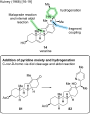
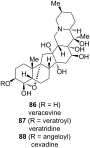
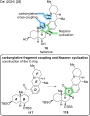
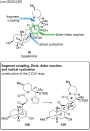
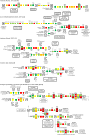
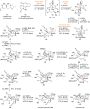
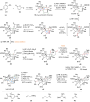
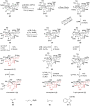
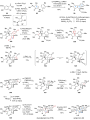
- of green for strategic connections, yellow for neutral, e.g., functional group interconversion and isomerization, orange for non-strategic reactions, and red for protecting group (PG) manipulations (Scheme 3). Protecting group manipulations refer to any protection or deprotection of a functional
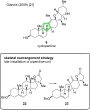
- introduction of the F-ring and isomerization of the exo-methylene motif in the D-ring. First, the nitrogen was introduced via an α-azidation of the lactone, which itself was then reduced to a lactol, enabling a Horner–Wadsworth–Emmons (HWE) reaction with phosphonate 28 to provide 29. Peterson olefination
- gave the protected sulfonamide 30. For the isomerization of the exo-double bond, an Alder-ene reaction with N-sulfinylbenzenesulfonamide and subsequent desulfurization was the way of choice. Finally, both remaining protecting groups were removed to furnish cyclopamine (6). In total, 6 was prepared in
















Recent advances in total synthesis of illisimonin A
Beilstein J. Org. Chem. 2025, 21, 2571–2583, doi:10.3762/bjoc.21.199
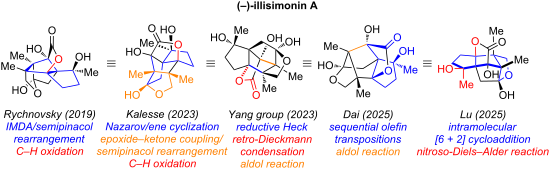
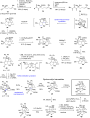
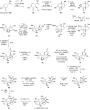
- the same pot to give 72. Isomerization of the allylic methyl ether to an enol methyl ether was achieved using Crabtree’s catalyst in refluxing THF. Subsequent ketalization with the primary alcohol yielded the bridged ketal 73. A Schenck ene reaction on 73 induced the second olefin isomerization
- -catalyzed oxidative lactonization, yielding 76 with a newly established quaternary center at C1 and isomerization of the double bond to C2=C3. Photocatalyzed isomerization of the C2–C3 double bond in 76 to C3=C4 furnished 77 [39][40]. A Mukaiyama hydration introduced a hydroxy group at C4, accompanied by






Total syntheses of highly oxidative Ryania diterpenoids facilitated by innovations in synthetic strategies
Beilstein J. Org. Chem. 2025, 21, 2553–2570, doi:10.3762/bjoc.21.198
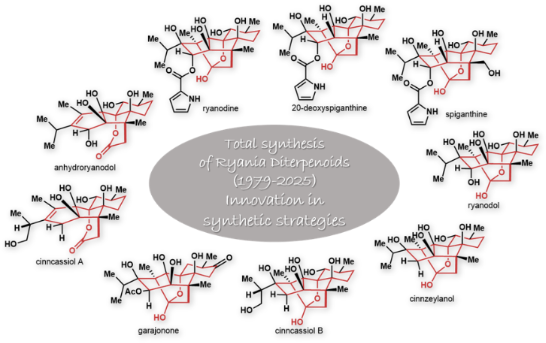
- reaction with allyltributylstannane, yielding compound 40. After isomerization of the C11 allyl double bond and introduction of a C6 isobutenyl group, the resulting diene 42 underwent RCM catalyzed by the Hoveyda–Grubbs catalyst to form the pentacyclic skeleton 43, thus completing the C ring of the natural







Effect of a photoswitchable rotaxane on membrane permeabilization across lipid compositions
Beilstein J. Org. Chem. 2025, 21, 2498–2512, doi:10.3762/bjoc.21.192
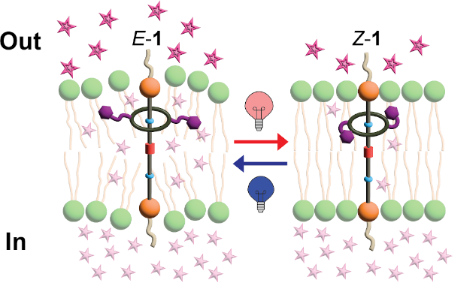
- bilayers through the shuttling of the macrocycle carrying the ions or through a relay mechanism [10][11]. In one example, the isomerization of an azobenzene photoswitch incorporated into the axle was used to modulate the shuttling rate of the macrocycle and, consequently, the efficiency of potassium ion
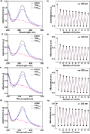
- minimal disruption of lipid packing appears to promote water accumulation in this system, and these dominant effects preclude assessing additional contributions from azobenzene isomerization. Likewise, upon light irradiation, rotaxane 2 and axle 3 induced dye release levels (65% and 54%, respectively
- E isomer and residing deeper within the bilayer in the Z isomer. Accordingly, this change in membrane localization influences water accumulation and disrupts lipid packing, thereby modulating membrane permeability. However, even though isomerization still occurs in the more rigid and thicker EYPC




The intramolecular stabilizing effects of O-benzoyl substituents as a driving force of the acid-promoted pyranoside-into-furanoside rearrangement
Beilstein J. Org. Chem. 2025, 21, 2456–2464, doi:10.3762/bjoc.21.187
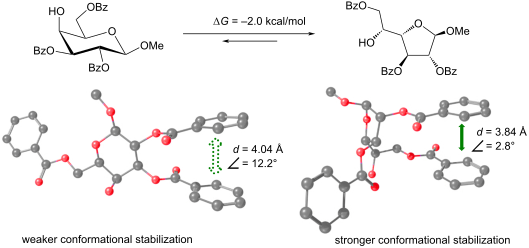
- , transformation of galactopyranosides to galactofuranosides under the action of TsOH in methanol [29] and silica-supported perchloric acid [30] is known. However, in both these cases di-O-isopropylidene ketals were used that underwent removal upon the isomerization leading to the loss of the aglycon. Recently, we
- resource by Shinya Fushinobu [39]. Results and Discussion In this study three examples of the pyranoside into furanoside isomerization were examined. The first one represented a case where methyl β-ᴅ-galactoside 1 was involved and the reaction resulted in a considerable amount of the furanose form in the
- equilibrium mixture (Figure 3A). Other two examples were the cases in which the isomerization to furanoside gave only minute quantities of product in the equilibrium or did not occur at all (Figure 3B and 3C). We used a DFT B3LYP-D3 approach to study possible driving forces of these reactions. First, the


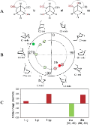

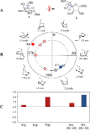

Transformation of the cyclohexane ring to the cyclopentane fragment of biologically active compounds
Beilstein J. Org. Chem. 2025, 21, 2416–2446, doi:10.3762/bjoc.21.185
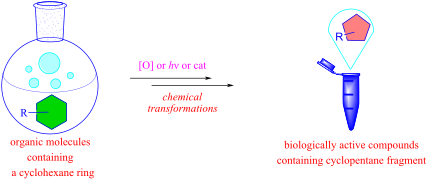
- ring contraction of (S,S)-carveol-derived TBS ether 163b with triethylborane (Scheme 31). This reaction proceeded with isomerization and formation of the intermediate carbocation 181, which underwent 1,2-carbon migration to form the cyclopentane product 182. A sequence of oxidations of borane 182 with
- converted by a series of synthetic transformations to (−)-spirochensilide A (228) with a total yield of 2.2% in 22 steps starting from acetylenic epoxide 229. 4.1 Wagner–Meerwein rearrangement The isomerization of terpenes via cleavage, addition or nucleophilic substitution reactions accompanied by a


The high potential of methyl laurate as a recyclable competitor to conventional toxic solvents in [3 + 2] cycloaddition reactions
Beilstein J. Org. Chem. 2025, 21, 2389–2415, doi:10.3762/bjoc.21.184
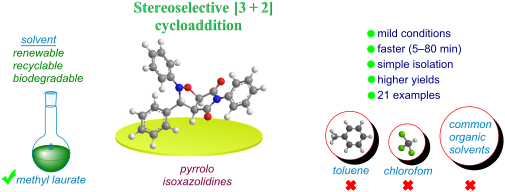
- ) has led to limitations on the use of chlorinated solvents, toluene, DMF etc., with the implementation of particular prerequisites [89]. The double bond present in oleic acid and methyl oleate may be disadvantageous for these solvents in comparison to methyl laurate. The potential isomerization and






Synthetic study toward vibralactone
Beilstein J. Org. Chem. 2025, 21, 2376–2382, doi:10.3762/bjoc.21.182

- featuring a novel Pd-catalyzed β-lactone formation [29]. In addition to these approaches, Nelson and co-workers reported a very concise and impressive total synthesis of vibralactone involving photochemical valence isomerization of substituted pyrone, cyclopropanation, and ring expansion [30]. Zeng, Liu and


Rotaxanes with integrated photoswitches: design principles, functional behavior, and emerging applications
Beilstein J. Org. Chem. 2025, 21, 2345–2366, doi:10.3762/bjoc.21.179

- or upon irradiation with light at 280 nm. Azobenzene Azobenzene is one of the most widely utilized photoresponsive units in the design and synthesis of photoswitchable rotaxanes. These photoswitches undergo trans–cis isomerization and are classified as T-type, due to the thermal reversibility of the
- isomerization (Figure 2) [29]. In 1997, Nakashima and co-workers reported the first rotaxane where the azobenzene was located on the axle, acting as a recognition site for a β-cyclodextrin macrocycle. Photoisomerization of the azobenzene controlled the shuttling of the macrocycle [30]. Later, Stoddart and co
- -workers developed a rotaxane where the azobenzene was located between two phenyl rings that work as recognition sites for a CBPQT4+ macrocycle. Likewise, isomerization of the azobenzene modulates the shuttling of the macrocycle among the recognition sites [31]. In the same year, Anderson and co-workers


Recent advances in Norrish–Yang cyclization and dicarbonyl photoredox reactions for natural product synthesis
Beilstein J. Org. Chem. 2025, 21, 2315–2333, doi:10.3762/bjoc.21.177
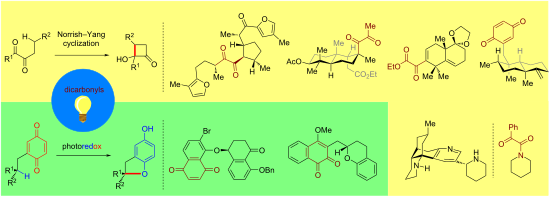
- -strain between the methyl group at C10 and the substituent at C8 restricts the free rotation of the C8–C13 bond (although this steric hindrance can be circumvented through chair–boat isomerization of the six-membered ring, the barrier for this isomerization is relatively high), resulting in a




Enantioselective radical chemistry: a bright future ahead
Beilstein J. Org. Chem. 2025, 21, 2283–2296, doi:10.3762/bjoc.21.174
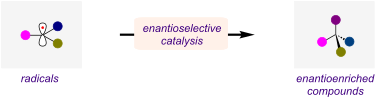
- isomerization reactions of cyclic meso-epoxides as part of a bimetallic titanium/cobalt catalytic system [64]. Photoredox catalysis in radical reactions The ability of a photocatalyst (organic small molecule or transition-metal complex) to undergo single electron transfer (SET) to a variety of organic


Pathway economy in cyclization of 1,n-enynes
Beilstein J. Org. Chem. 2025, 21, 2260–2282, doi:10.3762/bjoc.21.173
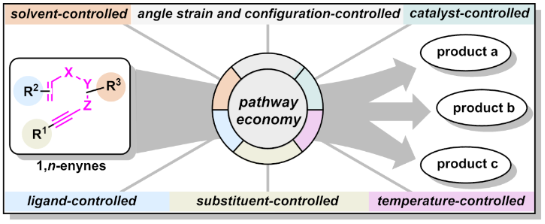
- 2021, the Shibata group reported a gold-catalyzed ring isomerization strategy to synthesize medium-sized nitrogen heterocycles (Scheme 12) [19]. The seven-membered dibenzo[b,d]azepine and eight-membered dibenzo[b,d]azocine frameworks were successfully obtained through the modulation of alkyne terminal
- /cycloisomerization sequences. In 2019 and 2020, Liu and co-workers achieved pathway-controlled cyclization–isomerization of tryptamine-ynamides using ligand-influenced silver catalytic systems (Scheme 19) [27][28][29]. To circumvent decomposition caused by the inherent high reactivity of ynamides under catalytic
- (Scheme 28, path b). When IPrAuNTf2 was used as the catalyst, product 138 was obtained via a 6-exo-dig cyclization, whereas when Ph3PAuNTf2 was employed as the catalyst, product 139 was exclusively obtained through a hydroarylation/isomerization/elimination pathway. This work disclosed an unprecedented





