Search results
Search for "photocatalysis" in Full Text gives 113 result(s) in Beilstein Journal of Organic Chemistry.
Harnessing light energy with molecules
Beilstein J. Org. Chem. 2026, 22, 680–682, doi:10.3762/bjoc.22.52

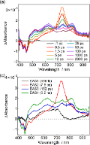
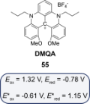
- . Photoinduced charge separation is a key process in the development of systems for artificial photosynthesis, photovoltaics, and photocatalysis. Kobayashi and co-workers [19] studied in detail the excited-state dynamics of donor–acceptor dyads based on perylene and phenothiazine, in which triphenylamine units
Photoorganocatalytic trifluoromethylation of (het)arenes in green conditions
Beilstein J. Org. Chem. 2026, 22, 662–671, doi:10.3762/bjoc.22.50
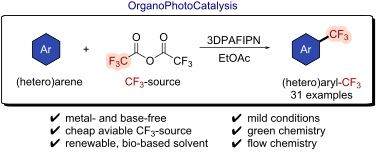
- amenable to scale-up, with continuous-flow operation delivering a significant increase in space–time yield, highlighting its potential for sustainable synthesis of CF3-containing molecules. Keywords: green chemistry; photocatalysis; photochemistry; trifluoromethylation; Introduction Trifluoromethylated




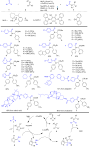
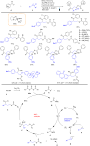
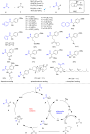
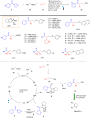
Visible-light-driven NHC and organophotoredox dual catalysis for the synthesis of carbonyl compounds
Beilstein J. Org. Chem. 2025, 21, 2584–2603, doi:10.3762/bjoc.21.200
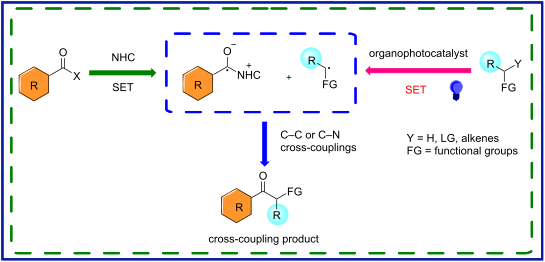
- -coupling processes. This cooperative organic dual catalysis has great potential in medicinal, pharmaceutical, and materials science applications, including the development of organic semiconductors and polymers. In recent years, NHC-involved photocatalysis has attracted considerable attention in synthetic
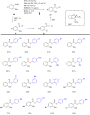
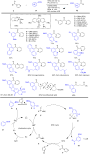
- ][2][3][4][5][6]. Recently developed photocatalysis affords sustainable, regioselective green methods for producing a wide range of functionalized carbonyl compounds and their related bioactive chiral intermediates under mild conditions, employing dual organic photoredox catalysis [7][8][9][10][11
- chemistry and active pharmaceutical ingredients [38][39][40]. Over the years, the groups of Hopkinson, Wang, Dong, Marzo, and co-workers published a comprehensive review detailing the synthetic approaches and mechanistic insights of visible light-promoted dual photocatalysis that combined N-heterocyclic





Ni-promoted reductive cyclization cascade enables a total synthesis of (+)-aglacin B
Beilstein J. Org. Chem. 2025, 21, 2548–2552, doi:10.3762/bjoc.21.197
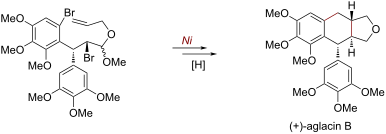
- relies on a non-photocatalysis approach. Results and Discussion Retrosynthetic analysis of (+)-aglacin B Based on the retrosynthetic analysis shown in Scheme 1, both C8′–C8 and C7–C1 bonds in (+)-aglacin B (2) could be constructed in one-step from the β-bromo acetal 5 by a Ni-promoted tandem radical


Photocatalysis and photochemistry in organic synthesis
Beilstein J. Org. Chem. 2025, 21, 1645–1647, doi:10.3762/bjoc.21.128
- Timothy Noel Bartholomaus Pieber Van’t Hoff Institute for Molecular Sciences (HIMS), University of Amsterdam, Science Park 904, 1098 XH Amsterdam, Netherlands Institute of Science and Technology Austria (ISTA), Am Campus 1, 3400 Klosterneuburg, Austria 10.3762/bjoc.21.128 Keywords: photocatalysis
- early as the 1970s [10]. However, these remained largely isolated cases – more mechanistic curiosities than general synthetic platforms. The narrative shifted significantly in the late 2000s, when interest in early pioneering work on photocatalysis was revisited, and systematic investigations began to
- implement. Two decades later, photocatalysis and photochemistry remain among the most studied topics in modern organic synthesis. Nowadays, chemists can choose from a wide range of organometallic [12][13], organic [14][15], or heterogeneous photocatalysts [16][17] to trigger visible-light photoredox

3-Aryl-2H-azirines as annulation reagents in the Ni(II)-catalyzed synthesis of 1H-benzo[4,5]thieno[3,2-b]pyrroles
Beilstein J. Org. Chem. 2025, 21, 1595–1602, doi:10.3762/bjoc.21.123
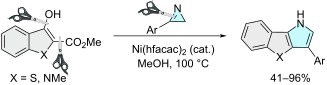
- reactions of intermolecular annulation of a variety of non-aromatic five- [4][5][6] and six-membered carbo- and heterocycles [7][8][9] with azirines, which occur under transition metal catalysis or photocatalysis. Annulation of the pyrrole ring to an aromatic system is limited to reactions of functionalized

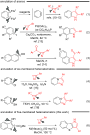


Thermodynamic equilibrium between locally excited and charge transfer states in perylene–phenothiazine dyads
Beilstein J. Org. Chem. 2025, 21, 1577–1586, doi:10.3762/bjoc.21.121
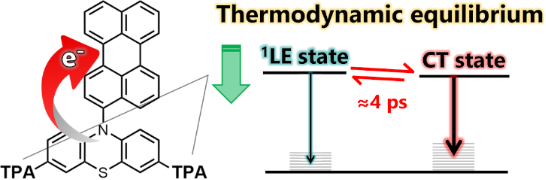
- processes underlying a wide range of applications, including artificial photosynthesis, solar energy conversion, and photocatalysis [1][2][3]. In particular, the formation of long-lived charge-separated states is crucial for efficient energy conversion and advanced photofunctions driven by light. Among


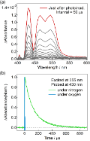


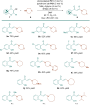
General method for the synthesis of enaminones via photocatalysis
Beilstein J. Org. Chem. 2025, 21, 1535–1543, doi:10.3762/bjoc.21.116
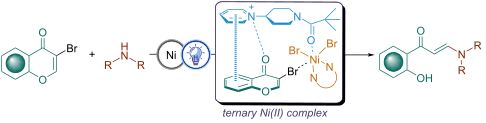
- ; enaminones; nickel; photocatalysis; Introduction Enaminones are relevant intermediates in organic chemistry and the pharmaceutical industry [1][2][3][4][5][6]. These enamines have a carbonyl group conjugated to a carbon–carbon double bond, owing its great versatility in organic synthesis to its ability to
- organic chemistry. With the increasing concern on the environmental impact of organic synthesis, photocatalysis emerged as a powerful synthetic tool in organic chemistry, offering new ways to deliver diverse organic products via mild, easy to handle, and environmentally benign operations [34][35][36




Advances in nitrogen-containing helicenes: synthesis, chiroptical properties, and optoelectronic applications
Beilstein J. Org. Chem. 2025, 21, 1422–1453, doi:10.3762/bjoc.21.106
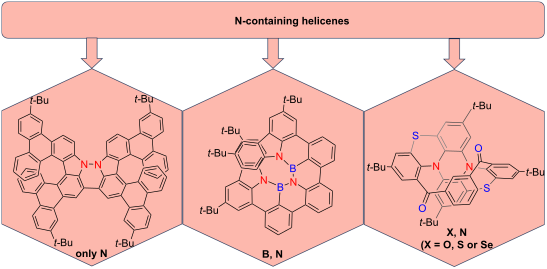
- in applications such as organic light-emitting diodes (OLEDs) [8], circularly polarized luminescence (CPL) [9], and chiral photocatalysis [10]. In the past decade, heteroatom-containing helicenes have attracted increasing attention due to their tunable optoelectronic properties and potential

Recent advances in amidyl radical-mediated photocatalytic direct intermolecular hydrogen atom transfer
Beilstein J. Org. Chem. 2025, 21, 1306–1323, doi:10.3762/bjoc.21.100
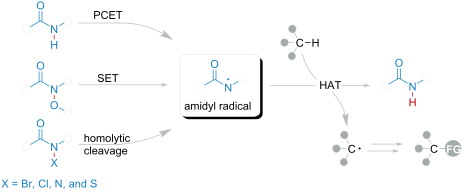
- modified. In recent years, photocatalysis has been widely adopted due to its green and efficient nature [45][46][47][48][49][50][51]. The generation of amidyl radical is implemented by HRP. Six different methods (Figure 2c), which have been developed for visible-light mediated reactions, could generate
- the research of direct functionalization via HAT processes and the development of green chemistry in photocatalysis, this review will focus on the generation of amidyl radicals and reaction mechanisms and highlight the photocatalyzed reaction characteristics. This review aims to provide researchers






Recent advances in synthetic approaches for bioactive cinnamic acid derivatives
Beilstein J. Org. Chem. 2025, 21, 1031–1086, doi:10.3762/bjoc.21.85
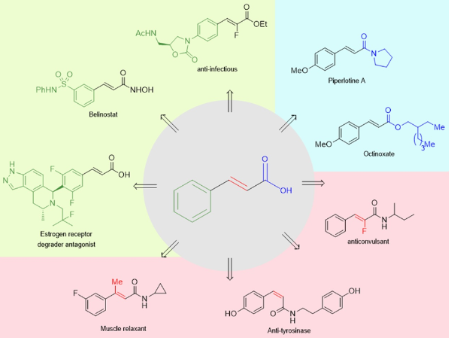
- applications in the pharmaceutical industry. In addition, innovative synthetic methodologies, including environmentally sustainable approaches [21][22][23], advanced catalytic systems [24][25][26], photocatalysis [27][28][29], and cutting-edge technologies, such as flow chemistry [30][31], have contributed
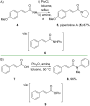
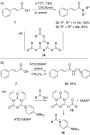
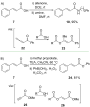
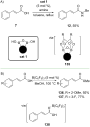
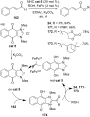
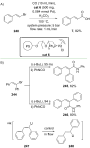
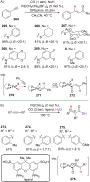
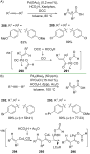
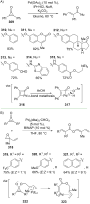
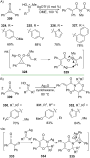
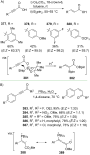
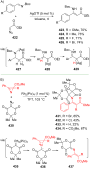
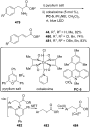
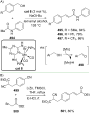
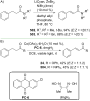
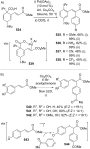
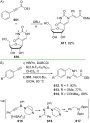
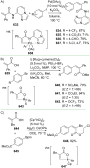
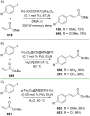
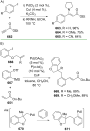
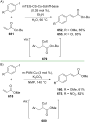
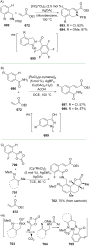
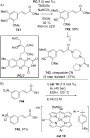
- cinnamic acid (7) to give amide 12 in excellent yield via Ti(IV)–O=C complex 102 (Scheme 31C) [69]. 2.1.3 Photocatalysis: Photoredox catalysis has gained much attention as a sustainable alternative approach to performing O/N-acylation by utilizing light as a renewable source. For example, Li and co-workers








































Biobased carbon dots as photoreductants – an investigation by using triarylsulfonium salts
Beilstein J. Org. Chem. 2025, 21, 1024–1030, doi:10.3762/bjoc.21.84
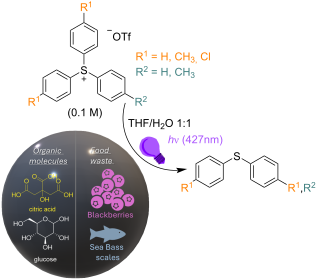
- , among the others, optoelectronics [5], sensing [6] and biomedicine (including bioimaging [7] and drug delivery [8]). Unlike traditional semiconductors, CDs are composed primarily of carbon, which makes them environmentally friendly easy-to-synthesize and appealing nanomaterials for photocatalysis [9


Study of tribenzo[b,d,f]azepine as donor in D–A photocatalysts
Beilstein J. Org. Chem. 2025, 21, 935–944, doi:10.3762/bjoc.21.76

- great applicability in the field of photocatalysis. Most of these compounds are based on complex D–A–D structures or multi-D–A systems, such as 4CzIPN. Whereas these systems have been widely studied and applied as photocatalysts, simpler D–A structures remain less explored. Nevertheless, the simplicity
- demonstrate that these simple D–A structures exhibit promising photocatalytic properties, comparable to those of more complex D–A–D systems. Keywords: donor–acceptor system; photocatalyst design; photoredox catalysis; organic photocatalyst; Introduction In recent years, photocatalysis has emerged as a
- –properties dependence to modulate its optical and photoredox properties [4]. For instance, molecules with donor–acceptor (D–A) structures, classically used as OLED emitters, have gained relevance by finding alternative applications in the field of photocatalysis [5]. In this type of structure, the electron



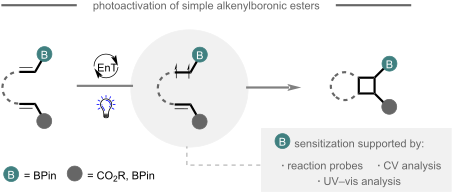
Light-enabled intramolecular [2 + 2] cycloaddition via photoactivation of simple alkenylboronic esters
Beilstein J. Org. Chem. 2025, 21, 854–863, doi:10.3762/bjoc.21.69
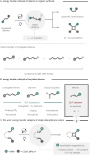
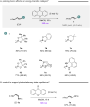
- Discussion To validate the proposed sensitization of alkenylboronic esters, we initiated our study probing the geometric isomerization of easily accessible substrate (E)-1a under photocatalysis conditions (Table 1). It is pertinent to note, while the core substrate (E)-1a lacks the necessary non-covalent


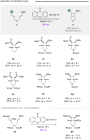

Recent advances in the electrochemical synthesis of organophosphorus compounds
Beilstein J. Org. Chem. 2025, 21, 770–797, doi:10.3762/bjoc.21.61
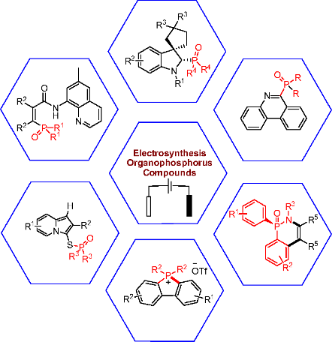
- recent years on developing new methods for synthesizing organophosphorus compounds [22][23][24][25][26][27][28][29][30][31][32][33][34][35]. Developing sustainable and green methods for synthesizing organophosphorus materials is a growing field. Methods based on photocatalysis [36], flow-based


Photocatalyzed elaboration of antibody-based bioconjugates
Beilstein J. Org. Chem. 2025, 21, 616–629, doi:10.3762/bjoc.21.49
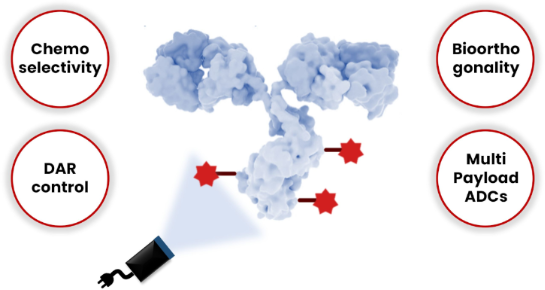
- thus to have a better control of the selectivity and the DAR, leading to more homogeneous ADCs. In this specific context, photocatalysis (Figure 2) enables site-specific bioconjugation by generating reactive intermediates (such as radicals or electron-deficient species) that can selectively react under
- potential to overcome these limitations, particularly by enabling modifications under mild and controlled conditions. Unlike classical methods, such as thiol chemistry [22] or widely used click reactions [33], photocatalysis could provide innovative solutions to produce ADCs, especially in terms of


Photomechanochemistry: harnessing mechanical forces to enhance photochemical reactions
Beilstein J. Org. Chem. 2025, 21, 458–472, doi:10.3762/bjoc.21.33

- : the authors termed this approach “mechanochemically-assisted solid-state photocatalysis” (Scheme 7) [70]. Therein, a custom-built photoreactor was integrated into a standard laboratory ball mill apparatus. This reactor, equipped with blue LEDs, allowed for adjustable light intensity and maintained
- acylation of electrophilic olefins (Scheme 11C). Compared to solution-phase photocatalysis, photomechanochemical conditions allowed to reduce the reaction time from 24 h to 3 h while maintaining comparable yields. Finally, the authors proved that photomechanochemistry contributes to the initial rate
- -diphenylethyne to benzil. The photo in Scheme 7 was republished with permission of The Royal Society of Chemistry, from [70] (“Mechanochemically-assisted solid-state photocatalysis (MASSPC)” by V. Štrukil et al., Chem. Commun., vol. 53, © 2017); permission conveyed through Copyright Clearance Center, Inc. This




Beyond symmetric self-assembly and effective molarity: unlocking functional enzyme mimics with robust organic cages
Beilstein J. Org. Chem. 2025, 21, 421–443, doi:10.3762/bjoc.21.30
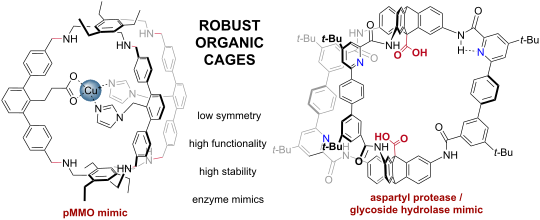
- catalysis [229]. Methods to study the structural detail of catalysis in frameworks remain limited, and crucial techniques like solution-phase NMR are rarely useful [22]. Enzyme encapsulation [230], and electro- and photocatalysis are known [228], and chiral and low symmetry MOFs are an exciting avenue


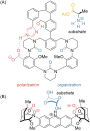


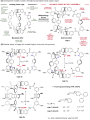
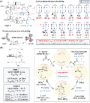
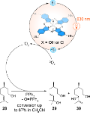
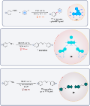
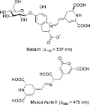
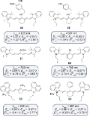
Red light excitation: illuminating photocatalysis in a new spectrum
Beilstein J. Org. Chem. 2025, 21, 296–326, doi:10.3762/bjoc.21.22

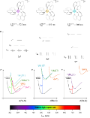
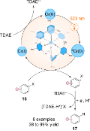
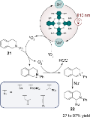
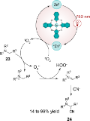
- Picardie Jules Verne UR 7378, 10 rue Baudelocque, 80000 Amiens, France Institute of Physics and Chemistry of Materials of Strasbourg (IPCMS), University of Strasbourg UMR 7504, 23 rue du Loess, BP 43, 67034 Strasbourg CEDEX 2, France 10.3762/bjoc.21.22 Abstract Red-light-activated photocatalysis has
- , red-light photocatalysis enables innovative applications in phototherapy and controlled drug release, exploiting its tissue penetration and low cytotoxicity. Together, these developments underscore the versatility and impact of red-light photocatalysis, positioning it as a cornerstone of green organic
- chemistry with significant potential in synthetic and biomedical fields. Keywords: green chemistry; medicinal chemistry; organic photochemistry; photocatalysis; red-light mediated transformations; Introduction Red-light-activated photocatalysis has recently gained significant interest as a tool for















Hydrogen-bonded macrocycle-mediated dimerization for orthogonal supramolecular polymerization
Beilstein J. Org. Chem. 2025, 21, 179–188, doi:10.3762/bjoc.21.10
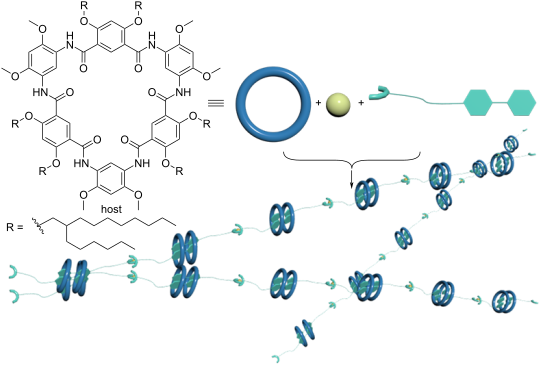
- noncovalent bonding interactions. It also confers on supramolecular assemblies with higher complexity and multilevel ordering [9][10][11], leading to a vast number of applications, for example, for use in detection and separation [12], sensing [13], photocatalysis [14], release [15], and as thermochromic and



Giese-type alkylation of dehydroalanine derivatives via silane-mediated alkyl bromide activation
Beilstein J. Org. Chem. 2024, 20, 3274–3280, doi:10.3762/bjoc.20.271
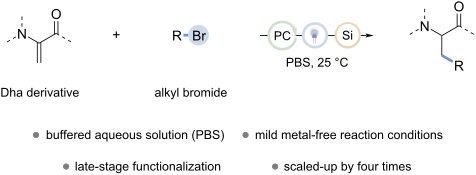
- , forming a new C(sp3)–C(sp3) bond. The reaction can be performed in a phosphate-buffered saline (PBS) solution and shows post-functionalization prospects through pathways involving classical peptide chemistry. Keywords: dehydroalanine; Giese-type reaction; hydroalkylation; photocatalysis; water



Advances in the use of metal-free tetrapyrrolic macrocycles as catalysts
Beilstein J. Org. Chem. 2024, 20, 3085–3112, doi:10.3762/bjoc.20.257
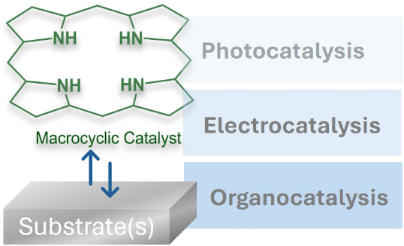
- two macrocycles as metal-free catalysts. Keywords: calix[4]pyrroles; electrocatalysis; free-base porphyrins; organocatalysis; photocatalysis; tetrapyrrolic macrocycles; Introduction Tetrapyrrolic macrocycles are a class of cyclic compounds that contain four pyrrolic units in their ring. Examples of
- these macrocyclic catalysts is in a very nascent stage. In this review, the recent advancement in the field of metal-free macrocycles for catalysis will be summarized; mainly focused on porphyrins and calix[4]pyrroles and in the field of organocatalysis, photocatalysis, and electrocatalysis. Review 1
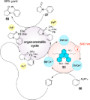
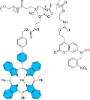
- macrocycles as photoredox catalysts Supramolecular photocatalysis using different metal-free macrocyclic hosts, including cyclodextrins, cucurbiturils, porphyrins, and calixarenes has been extensively explored due to their unique characteristics, such as ease of modification, presence of hydrophobic cavities


Advances in radical peroxidation with hydroperoxides
Beilstein J. Org. Chem. 2024, 20, 2959–3006, doi:10.3762/bjoc.20.249
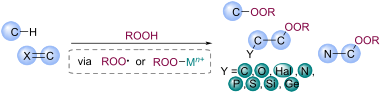
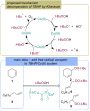
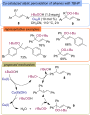
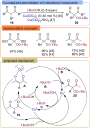
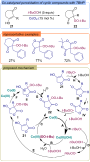
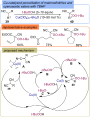
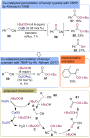
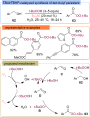
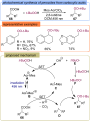
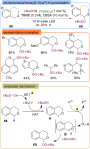
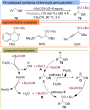
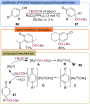
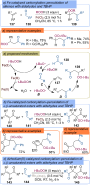
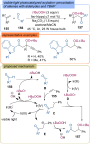
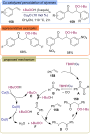
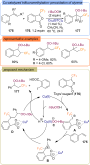
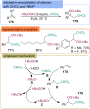
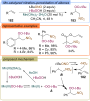
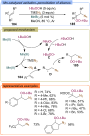
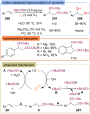
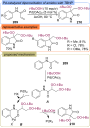
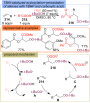
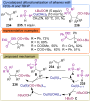
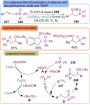
- –peroxidation of alkenes 155 with TBHP and aldehydes 156 through visible-light photocatalysis was developed using fac-Ir(ppy)3 as the photoredox catalyst (Scheme 49) [113]. Under visible light irradiation, the excited state Ir(III)* is generated, and the single electron transfer of Ir(III)* with TBHP results in


























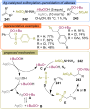


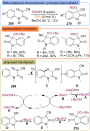


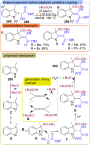

A review of recent advances in electrochemical and photoelectrochemical late-stage functionalization classified by anodic oxidation, cathodic reduction, and paired electrolysis
Beilstein J. Org. Chem. 2024, 20, 2500–2566, doi:10.3762/bjoc.20.214
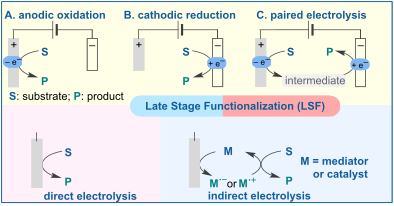
- electro- and photocatalysis can lead to highly precise electron-driven reactions that are otherwise inaccessible [61][62][63][64][65][66][67]. The photoelectrochemical method for the alkylation of C–H heteroarenes using organotrifluoroborates, developed by Xu and coworkers, has demonstrated excellent
- into a carbon radical intermediate. The photocatalyst then oxidizes this intermediate, leading to the final product (Scheme 45). This approach underscores the significant potential of combining electro- and photocatalysis to achieve selective and mild transformations in organic synthesis, particularly


























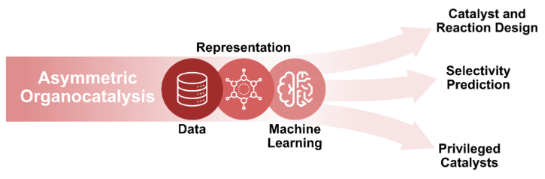
Catalysing (organo-)catalysis: Trends in the application of machine learning to enantioselective organocatalysis
Beilstein J. Org. Chem. 2024, 20, 2280–2304, doi:10.3762/bjoc.20.196