


Search results
Search for "pyridines" in Full Text gives 184 result(s) in Beilstein Journal of Organic Chemistry.
Triazole-based hybrid molecules in anticancer drug discovery: structural classes and mechanistic insights, 2014–2025
- Meena Bhandari,
- Akshi Goyal and
- Deepak Yadav
Beilstein J. Org. Chem. 2026, 22, 1168–1195, doi:10.3762/bjoc.22.94
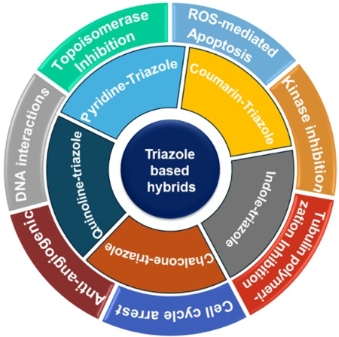
- search for anticancer drugs because of their varied biological profiles and structural adaptability. The versatility of triazole scaffolds in forming hybrid molecules with other compounds such as pyridines, coumarins, chalcones, pyrimidines, indoles, etc., has expanded the range of potential anticancer
- imidazo[1,2-a]pyridines-1,2,3-triazole conjugates 87 (Figure 16) were explored for cytotoxic effects across multiple cancer cell lines, including MCF-7, A549, HepG2, and T98G. The methoxy substituted derivatives exhibited the most potent antiproliferative activity and showed negligible cytotoxicity to

Graphical Abstract

Figure 1: Some important examples of FDA approved anticancer drugs.

Figure 2: Some natural products based anticancer drugs.

Figure 3: Chemical structures of isomeric triazole rings.

Figure 4: FDA approved drugs containing an 1,2,3- or 1,2,4-triazole moiety.

Figure 5: Anticancer compounds with an 1,2,3- or 1,2,4-triazole moiety.

Figure 6: Types of triazole containing hybrids.
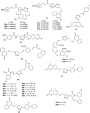
Figure 7: Structures of diverse coumarin–1,2,3-triazole hybrids 20–29.

Figure 8: Structures of diverse coumarin–1,2,3-triazole hybrids 30–34.
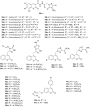
Figure 9: Structures of diverse coumarin–1,2,4-triazole hybrids 35–41.
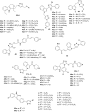
Figure 10: Structures of indole–triazole hybrids.
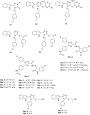
Figure 11: Structures of indoly–1,2,4-triazole hybrids and indolin-2-one-1,2,4-triazoles.
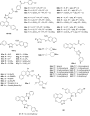
Figure 12: Structures of quinoline/quinolone–triazole hybrids 60–68.

Figure 13: Structures of quinoline/quinolone–triazole hybrids 69–72.

Figure 14: Structures of chalcone–triazole hybrids 73–79.
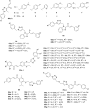
Figure 15: Structures of chalcone–triazole hybrids 80–85.
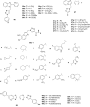
Figure 16: Structures of 1,2,3-triazole–pyridine derivatives 86–89.

Figure 17: Structures of 1,2,3-triazolyl–3-cyanopyridine hybrids 90–96.
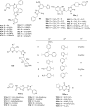
Figure 18: Structures of pyridine/pyrimidine–triazole hybrids 97–102.
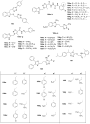
Figure 19: Structures of bistriazolyl-2-mercaptobenzimidazole 103, benzimidazole-1,2,3-triazole conjugates 104...
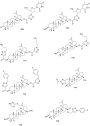
Figure 20: Structures of botulin-based triazole hybrids 109–116.
Preparation of 3-(alkylamino)imidazo[1,2-a]pyridine-2-carbaldehydes via Kornblum oxidation and unexpected ring-opening reactions of the corresponding alcohols under oxidative conditions
- Sandile J. Mkhize,
- Memory Zimuwandeyi,
- Manuel A. Fernandes,
- Amanda L. Rousseau and
- Moira L. Bode
Beilstein J. Org. Chem. 2026, 22, 763–770, doi:10.3762/bjoc.22.58
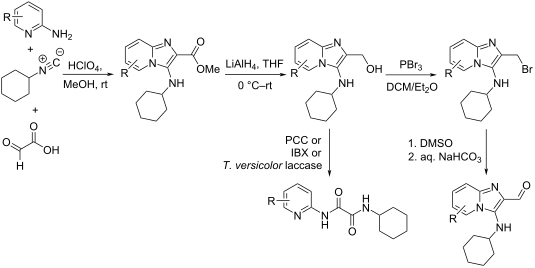
- ; Kornblum oxidation; oxidative ring-opening; reductive amination; Introduction Imidazo[1,2-a]pyridines display a wide range of different biological activities, and this scaffold has come to be regarded as being biologically privileged [1]. Compounds containing the imidazo[1,2-a]pyridine core have been
- derivatives have been found to be of interest in the development of organic materials with interesting properties [11][12]. The importance of imidazo[1,2-a]pyridines is evidenced by the plethora of recent review articles covering methods for their preparation [13][14][15][16] and functionalisation reactions
- [17][18][19]. Our own interest in the chemistry of imidazo[1,2-a]pyridines arose from the discovery that compounds such as 5 exhibit significant activity against wild-type HIV-1, acting as non-nucleoside reverse transcriptase inhibitors (NNRTIs) [5]. Subsequent investigations revealed that these

Graphical Abstract

Figure 1: Examples of biologically active imidazo[1,2-a]pyridines.

Figure 2: Compounds envisaged for synthesis.

Scheme 1: Preparation of methyl esters 13 versus unsubstituted derivatives 12 under various conditions. Metho...

Scheme 2: Ester hydrolysis and in situ decarboxylation.

Figure 3: Previously reported 3-amino-2-carboxylic acid derivatives.

Scheme 3: Ester reduction to the corresponding alcohols. Reaction yields are provided in parentheses.

Figure 4: Single crystal X-ray structure of 18a. ORTEP diagram drawn at 50% probability level.

Scheme 4: Oxidative ring-opening with loss of one carbon atom. Yields are provided in parentheses.

Scheme 5: Oxidative conditions applied to decarboxylated compound 12b.

Figure 5: Different oxidative cleavage products obtained under different conditions.

Scheme 6: Unexpected aldehyde formation from tosylation reaction.

Scheme 7: Kornblum oxidation to give imidazo[1,2-a]pyridine-2-carbaldehydes 20. Yield over two steps from the...

Scheme 8: Reductive amination reactions to give target molecules 8.
Arene activation via π-bond localization: concepts and opportunities
- Paul Meiners,
- Julian J. Melder and
- Tobias Morack
Beilstein J. Org. Chem. 2026, 22, 257–273, doi:10.3762/bjoc.22.19
- (Figure 6C), so suitable aromatic ligands are limited to those lacking strongly π-acidic functional groups, e.g., alkenes, alkynes, aldehydes, certain ketones, and nitriles. Lewis-basic heteroarenes, such as pyridines or imidazoles, tend to coordinate via nitrogen instead, disfavoring η2-binding (Figure
- electrophilic addition. Comparable effects are observed for furans and pyridines, where η2-coordination accentuates their vinyl ether and imine character, respectively. As an illustrative example, treatment of the phenol complex 5 with methyl vinyl ketone and pyridine affords 4-alkylated 4H-phenol complex 6 as

Graphical Abstract

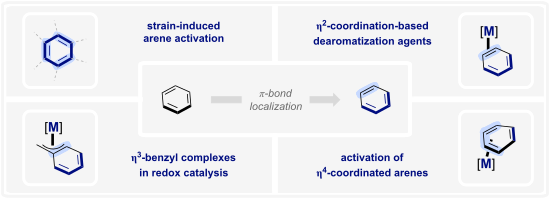
Figure 1: Aromatic molecules as the foundation of modern molecular chemistry.

Figure 2: Arenes as springboards to three-dimensional chemical space and strategies toward arene activation v...

Figure 3: Structure and synthetic utilization of strained arenes; NICS: nucleus independent chemical shifts [26-28].

Figure 4: Bonding and reactivity of η2-coordinated aromatic systems [44,46].

Figure 5: Illustrative selection of η2-coordinating dearomatization agents; MeIm: N-methylimidazole, NHE: nor...

Figure 6: Preparation, lability and most stable linkage isomers of pentaammineosmium(II) complexes.

Scheme 1: Heteroatom-directed reactions of η2-arene complexes [45,50].

Figure 7: Latent functionality through transient metal binding.
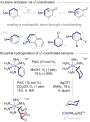
Figure 8: Selective hydrogenation of η2-coordinated benzene to cyclohexene under ambient conditions [53,54].

Scheme 2: Synthesis and utilization of enantioenrichted Mo(η2-arene) complexes in enantioselective synthesis [55]....

Scheme 3: Synthesis of trisubstituted cyclohexenes from phenyl sulfones enabled by tungsten-mediated dearomat...

Scheme 4: Diels–Alder reactions of η2-arene complexes with alkenes and alkynes; NMM: N-methylmaleimide [64,65].

Scheme 5: Binding characteristics and pioneering examples of isolable η3-benzyl complexes.

Figure 9: Divergent functionalization of benzyl electrophiles leveraging η3-benzyl complexes toward benzylic ...

Scheme 6: p-Selective allylation of benzyl chlorides with allylstannanes and subsequent synthetic expansion o...

Figure 10: Strategies for para- and ortho-selective arene functionalization/dearomatization via η3-benzyl comp...

Scheme 7: Substrate-dependent ortho- and para-selective dearomatization of naphthyl chlorides and leveraging ...

Figure 11: η4-Arene coordination as an underexplored but promising pathway for arene activation [96,98-100].
Total synthesis of natural products based on hydrogenation of aromatic rings
- Haoxiang Wu and
- Xiangbing Qi
Beilstein J. Org. Chem. 2026, 22, 88–122, doi:10.3762/bjoc.22.4
- . Three subsequent steps (74% overall yield) then provided the key hydrogenation precursor 161. Hydrogenation of 161 under heterogeneous catalytic conditions (Pd/C, Pt/C, Raney Ni, Rh/C, Ru/C) proved inefficient, giving complex mixtures that included partially or fully hydrogenated pyridines, over-reduced

Graphical Abstract

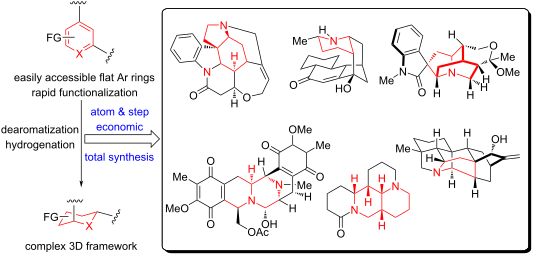
Scheme 1: The association between dearomatization and natural product synthesis.

Scheme 2: Key challenges in hydrogenation of aromatic rings.
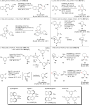
Scheme 3: Hydrogenation of heterocyclic aromatic rings.
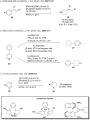
Scheme 4: Hydrogenation of the carbocyclic aromatic rings.
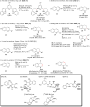
Scheme 5: Hydrogenation of the heterocycle part in bicyclic aromatic rings.
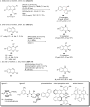
Scheme 6: Hydrogenation of the heterocycle part in bicyclic aromatic rings.
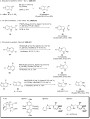
Scheme 7: Hydrogenation of benzofuran, indole, and their analogues.
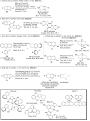
Scheme 8: Hydrogenation of benzofuran, indole, and their analogues.

Scheme 9: Total synthesis of (±)-keramaphidin B by Baldwin and co-workers.

Scheme 10: Total synthesis of (±)-LSD by Vollhardt and co-workers.

Scheme 11: Total synthesis of (±)-dihydrolysergic acid by Boger and co-workers.

Scheme 12: Total synthesis of (±)-lysergic acid by Smith and co-workers.

Scheme 13: Hydrogenation of (−)-tabersonine to (−)-decahydrotabersonine by Catherine Dacquet and co-workers.

Scheme 14: Total synthesis of (±)-nominine by Natsume and co-workers.
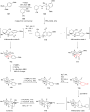
Scheme 15: Total synthesis of (+)-nominine by Gin and co-workers.

Scheme 16: Total synthesis of (±)-lemonomycinone and (±)-renieramycin by Magnus.

Scheme 17: Total synthesis of GB13 by Sarpong and co-workers.

Scheme 18: Total synthesis of GB13 by Shenvi and co-workers.

Scheme 19: Total synthesis of (±)-corynoxine and (±)-corynoxine B by Xia and co-workers.
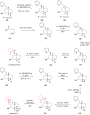
Scheme 20: Total synthesis of (+)-serratezomine E and the putative structure of huperzine N by Bonjoch and co-...

Scheme 21: Total synthesis of (±)-serralongamine A and the revised structure of huperzine N and N-epi-huperzin...

Scheme 22: Early attempts to indenopiperidine core.

Scheme 23: Homogeneous hydrogenation and completion of the synthesis.
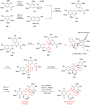
Scheme 24: Total synthesis of jorunnamycin A and jorumycin by Stoltz and co-workers.

Scheme 25: Early attempt towards (−)-finerenone by Aggarwal and co-workers.

Scheme 26: Enantioselective synthesis towards (−)-finerenone.

Scheme 27: Total synthesis of (+)-N-methylaspidospermidine by Smith, Grigolo and co-workers.

Scheme 28: Dearomatization approach towards matrine-type alkaloids.

Scheme 29: Asymmetric total synthesis to (−)-senepodine F via an asymmetric hydrogenation of pyridine.

Scheme 30: Selective hydrogenation of indole derivatives and application.
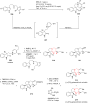
Scheme 31: Synthetic approaches to the oxindole alkaloids by Qi and co-workers.

Scheme 32: Total synthesis of annotinolide B by Smith and co-workers.
Competitive cyclization of ethyl trifluoroacetoacetate and methyl ketones with 1,3-diamino-2-propanol into hydrogenated oxazolo- and pyrimido-condensed pyridones
- Svetlana O. Kushch,
- Marina V. Goryaeva,
- Yanina V. Burgart,
- Marina A. Ezhikova,
- Mikhail I. Kodess,
- Pavel A. Slepukhin,
- Alexandrina S. Volobueva,
- Vladimir V. Zarubaev and
- Victor I. Saloutin
Beilstein J. Org. Chem. 2025, 21, 2716–2729, doi:10.3762/bjoc.21.209
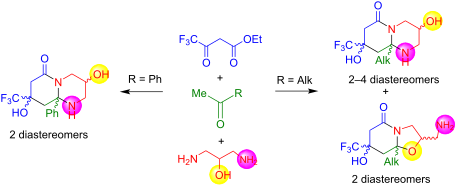
- are cyclized with aldehydes and ammonia (monoamines) or urea to yield a certain type of products only: pyridines and pyrimidines; and formation of the products proceeds with the involvement of an acyl fragment and the meso-position of an oxo ester component [9]. Although the introduction of 2
- ], fluopyram [36], and the nematicide fluazaindolisine [37] (Figure 1). The trifluoromethyl piperidine backbone is part of the structure of anticancer [38] and antirheumatic [39] agents. The fluorine-containing pyridines and their heteroannelated derivatives are known to exhibit a high biological potential, on

Graphical Abstract

Figure 1: Structures of bioactive molecules with trifluoromethylpyridine and piperidine frameworks.

Scheme 1: The reaction of ethyl trifluoroacetoacetate (1), acetone (2a) and 1,3- diaminopropan-2-ol (3).

Scheme 2: Three-component reaction of ethyl trifluoroacetoacetate (1), alkyl methyl ketones 2b,c and 1,3-diam...

Scheme 3: Three-component reaction of ethyl trifluoroacetoacetate (1), acetophenone (2d) and 1,3-diaminopropa...

Scheme 4: The proposed mechanism of three-component cyclization of 3-oxo ester 1, methyl ketones 2a–d and 1,3...

Figure 2: ORTEP view of compounds 4асc (a, CCDC: 2479553), 4аct (b, CCDC: 2479554), 4аtt (c, CCDC: 2479555), ...

Figure 3: ORTEP view of compound 5ctc (a, CCDC: 2479558), 5ctt (b, CCDC: 2479559) showing with the thermal el...

Figure 4: The fragments of the 1H NMR spectra (400 MHz, DMSO-d6) of diastereomers 4acc (a), 4аct (b), 4аtt (c...

Figure 5: Fragments of 1H NMR spectra (400 MHz, DMSO-d6) of hexahydrooxazolo[3,2-a]pyridin-5-ones 5ctc (a) an...
Thiazolidinones: novel insights from microwave synthesis, computational studies, and potentially bioactive hybrids
- Luan A. Martinho,
- Victor H. J. G. Praciano,
- Guilherme D. R. Matos,
- Claudia C. Gatto and
- Carlos Kleber Z. Andrade
Beilstein J. Org. Chem. 2025, 21, 2618–2636, doi:10.3762/bjoc.21.203
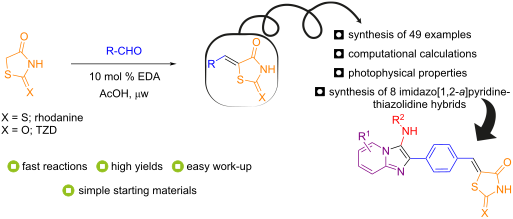
- (intramolecular charge transfer) process. Keywords: fluorescence; hybridization; imidazo[1,2-a]pyridines; Knoevenagel reaction; thiazolidinone; Introduction Heterocycles are compounds of significant interest to organic chemists as drug candidates due to their already widespread presence in many commercially

Graphical Abstract

Figure 1: Structure of thiazolidinone derivatives.

Figure 2: Selected examples of commercial drugs containing the thiazolidinone core.

Scheme 1: Multicomponent reaction of benzaldehyde, rhodanine, and piperidine in ethanol leading directly to a...
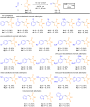
Scheme 2: Substrate scope of the EDA-catalyzed Knoevenagel condensation reactions using a range of aromatic/h...

Scheme 3: Limitations of the EDA-catalyzed Knoevenagel reactions for the synthesis of rhodanine or thiazolidi...

Scheme 4: Plausible reaction mechanism for the EDA-catalyzed Knoevenagel condensation reactions.

Scheme 5: Substrate scope of the HPW-catalyzed GBB reactions.

Scheme 6: Synthesis of imidazo[1,2-a]pyridine-thiazolidinone hybrids by EDA-catalyzed Knoevenagel condensatio...
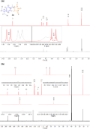
Figure 3: Overlay of predicted (red) and experimental (black) NMR spectra for compound 3n: a) 1H NMR spectra ...

Figure 4: a) Molecular structure of 3n with crystallographic labeling (50% probability displacement). b) Pers...

Scheme 7: a) Tautomeric forms of thiazolidinones and b) resonance structures for compounds 3n and 4n.

Figure 5: Molecular energy as a function of the torsion angle obtained from a relaxed dihedral scan at the M0...

Figure 6: Identification of the carbon atoms used in the theoretical study of chemical shifts. In red, easily...

Figure 7: a) Visual impressions of the solvatochromic study in various solvents (10−5 M) after excitation wit...

Scheme 8: Proposed ICT-type mechanism for the fluorescence process, adapted from ref. [89].

Figure 8: Photophysical study in aqueous solution under different pH values for compound 3n (10−5 M) at room ...

Scheme 9: Two equilibria of compound 3n in aqueous solutions, adapted from ref. [92,93].

Figure 9: Molecular fragments associated with intramolecular charge transfer states.

Figure 10: Frontier molecular orbitals of compounds 3n and 4n in three different states: protonated, deprotona...
Ex-situ generation of gaseous nitriles in two-chamber glassware for facile haloacetimidate synthesis
- Nikolai B. Akselvoll,
- Jonas T. Larsen and
- Christian M. Pedersen
Beilstein J. Org. Chem. 2025, 21, 2465–2469, doi:10.3762/bjoc.21.188
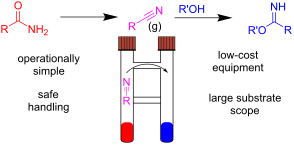
- of various trifluoromethyl-containing aza-heterocycles, such as pyridines [2], pyridinones and pyrimidinones [3], tetrazoles [4], tetrazapentalenes [5] and uracil [6]. In addition, it has also been used for the synthesis of fluoro-substituted ketones [7] and substituted trifluoroacetamides via the

Graphical Abstract

Figure 1: Examples of methods for the synthesis of trifluoroacetonitrile and our set-up using a two-chamber r...

Scheme 1: Reactions in chambers A and B. Chamber A: generation of the haloacetonitrile by dehydration of the ...

Figure 2: Glycosyl haloacetimidates synthesized using the two-chamber method.

Figure 3: Synthesis of arylmethylene fluoroacetimidates using the two-chamber method.
Catalytic asymmetric reactions of isocyanides for constructing non-central chirality
- Jia-Yu Liao
Beilstein J. Org. Chem. 2025, 21, 1648–1660, doi:10.3762/bjoc.21.129
- ] involving 6-aryl-2-aminopyridines 27, aldehydes, and isocyanides (Scheme 5a) [35]. By employing chiral phosphoric acid (CPA) C1 as the catalyst, this reaction worked well to afford axially chiral imidazo[1,2-a]pyridines 28 in high-to-excellent yields (up to 99%) and enantioselectivities (up to >99% ee). It

Graphical Abstract

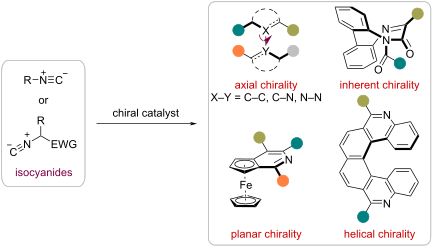
Figure 1: a) Common types of chirality. b) Representative functional molecules bearing non-central chirality.

Scheme 1: Construction of planar chirality.

Scheme 2: Construction of axial chirality.

Scheme 3: Construction of inherent chirality.

Scheme 4: Construction of helical chirality.
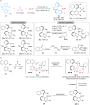
Scheme 5: CPA-catalyzed enantioselective Groebke–Blackburn–Bienaymé reaction.

Scheme 6: Construction of axially chiral 3-arylpyrroles via de novo pyrrole formation.

Scheme 7: Synthesis of atropoisomeric 3-arylpyrroles via central-to-axial chirality transfer.
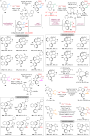
Scheme 8: Dynamic kinetic resolution of bridged biaryls with α-acidic isocyanides.
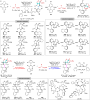
Scheme 9: Desymmetrization of prochiral compounds with α-acidic isocyanides.
3-Aryl-2H-azirines as annulation reagents in the Ni(II)-catalyzed synthesis of 1H-benzo[4,5]thieno[3,2-b]pyrroles
- Julia I. Pavlenko,
- Pavel A. Sakharov,
- Anastasiya V. Agafonova,
- Derenik A. Isadzhanyan,
- Alexander F. Khlebnikov and
- Mikhail S. Novikov
Beilstein J. Org. Chem. 2025, 21, 1595–1602, doi:10.3762/bjoc.21.123
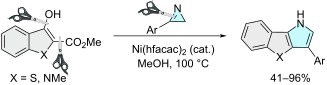
- reactions of heteroaromatics with azirines are known only for 2-chloro- and 2-sulfanylpyridines [14][15], which result in the formation of imidazo[1,2-a]pyridines (Scheme 1, reactions 4 and 5). To the best of our knowledge, no successful methods enabling the fusion of a pyrrole or azole ring to a 5-membered

Graphical Abstract
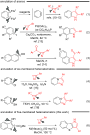
Scheme 1: Synthesis of fused pyrroles and azoles by [3 + 2] annulation reactions of azirines.

Scheme 2: Synthesis of benzo[4,5]thieno[3,2-b]pyrroles 3.

Scheme 3: Plausible mechanism for the formation of compounds 3.

Scheme 4: Post-modifications of 1H-benzo[4,5]thieno[3,2-b]pyrrole (3b).

Scheme 5: Synthesis of pyrrolo[3,2-b]indole 10.

Scheme 6: IPrCuCl-catalyzed reactions of indoles 9b,c with azirine 2a.

Scheme 7: Ni(II)- and Cu(I)-catalyzed reactions of indole 15 with azirine 2a.
A multicomponent reaction-initiated synthesis of imidazopyridine-fused isoquinolinones
- Ashutosh Nath,
- John Mark Awad and
- Wei Zhang
Beilstein J. Org. Chem. 2025, 21, 1161–1169, doi:10.3762/bjoc.21.92
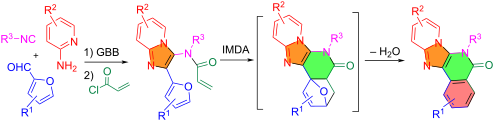
- GBB reactions for the preparation of imidazo[1,2-a]pyridines 4 were conducted using aminopyridines 1 (0.5 mmol), isocyanides 3 (0.6 mmol, 1.2 equiv), and furfuraldehyde 2 (0.6 mmol, 1.2 equiv) in 3:1 DCM/MeOH (4 mL) with Yb(OTf)3 (0.04 mmol, 0.08 equiv) as a Lewis acid catalyst under microwave
- preparation of imidazo[1,2-a]pyridines 6. Substrate scope for IMDA and dehydrative aromatization in making 8. Reaction conditions: 6 and AlCl3 (10 mol %) in 1,2-dichlorobenzene at 180 °C for 4 h. Using thiophene-2-carbaldehyde for the synthesis of 8t. Proposed mechanisms for IMDA reaction and dehydration re

Graphical Abstract

Figure 1: Bioactive compounds bearing imidazopyridine (red) and isoquinolinone-kind (blue) rings.

Scheme 1: GBB-initiated synthesis of imidazopyridine-fused isoquinolinones.

Scheme 2: GBB reaction and N-acylation for the preparation of imidazo[1,2-a]pyridines 6.
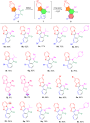
Scheme 3: Substrate scope for IMDA and dehydrative aromatization in making 8. Reaction conditions: 6 and AlCl3...
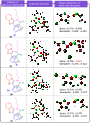
Figure 2: Transition state analysis of IMDA reactions for 6a, 6j, 6h and 6r.

Figure 3: Relative energy diagram for the synthesis of 8a from 6a.

Scheme 4: Using thiophene-2-carbaldehyde for the synthesis of 8t.

Scheme 5: Proposed mechanisms for IMDA reaction and dehydration re-aromatization.
Recent advances in synthetic approaches for bioactive cinnamic acid derivatives
- Betty A. Kustiana,
- Galuh Widiyarti and
- Teni Ernawati
Beilstein J. Org. Chem. 2025, 21, 1031–1086, doi:10.3762/bjoc.21.85

Graphical Abstract

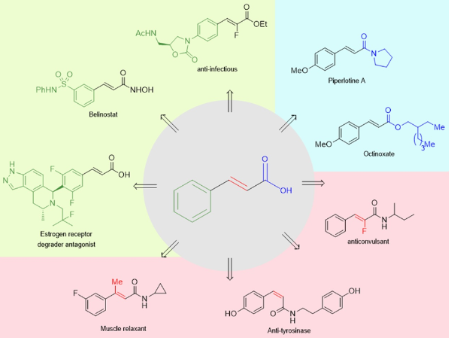
Figure 1: Biologically active cinnamic acid derivatives.

Scheme 1: General synthetic strategies for cinnamic acid derivatizations.

Scheme 2: Cinnamic acid coupling via isobutyl anhydride formation.
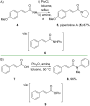
Scheme 3: Amidation reaction via O/N-pivaloyl activation.

Scheme 4: Cinnamic acid amidation using TCCA/PPh3 reagent.
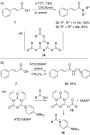
Scheme 5: Cinnamic acid amidation using triazine-based reagents.

Scheme 6: Cinnamic acid amidation using continuous flow mechanochemistry.

Scheme 7: Cinnamic acid amidation using COMU as coupling reagent.
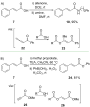
Scheme 8: Cinnamic acid amidation using allenone coupling reagent.

Scheme 9: Cinnamic acid amidation using 4-acetamidophenyl triflimide as reagent.

Scheme 10: Cinnamic acid amidation using methyltrimethoxysilane (MTM).

Scheme 11: Cinnamic acid amidation utilizing amine–borane reagent.

Scheme 12: Cinnamic acid amidation using TCCA/PPh3 reagent.

Scheme 13: Cinnamic acid amidation using PPh3/I2 reagent.

Scheme 14: Cinnamic acid amidation using PCl3 reagent.

Scheme 15: Cinnamic acid amidation utilizing pentafluoropyridine (PFP) as reagent.

Scheme 16: Cinnamic acid amidation using hypervalent iodine(III).

Scheme 17: Mechanochemical amidation using 1,1,2,2-tetrafluoroethyl-N,N-dimethylamine (TFEDMA) reagent.

Scheme 18: Methyl ester preparation using tris(2,4,6-trimethoxyphenyl)phosphine (TMPP).

Scheme 19: N-Trifluoromethyl amide preparation using isothiocyanate and AgF.

Scheme 20: POCl3-mediated amide coupling of carboxylic acid and DMF.

Scheme 21: O-Alkylation of cinnamic acid using alkylating agents.

Scheme 22: Glycoside preparation via Mitsunobu reaction.

Scheme 23: O/N-Acylation via rearrangement reactions.

Scheme 24: Amidation reactions using sulfur-based alkylating agents.

Scheme 25: Amidation reaction catalyzed by Pd0 via C–N cleavage.

Scheme 26: Amidation reaction catalyzed by CuCl/PPh3.

Scheme 27: Cu(II) triflate-catalyzed N-difluoroethylimide synthesis.

Scheme 28: Cu/Selectfluor-catalyzed transamidation reaction.

Scheme 29: CuO–CaCO3-catalyzed amidation reaction.

Scheme 30: Ni-catalyzed reductive amidation.

Scheme 31: Lewis acidic transition-metal-catalyzed O/N-acylations.

Scheme 32: Visible-light-promoted amidation of cinnamic acid.

Scheme 33: Sunlight/LED-promoted amidation of cinnamic acid.

Scheme 34: Organophotocatalyst-promoted N–O cleavage of Weinreb amides to synthesize primary amides.

Scheme 35: Cinnamamide synthesis through [Ir] photocatalyst-promoted C–N-bond cleavage of tertiary amines.

Scheme 36: Blue LED-promoted FeCl3-catalyzed reductive transamidation.

Scheme 37: FPyr/TCT-catalyzed amidation of cinnamic acid derivative 121.

Scheme 38: Cs2CO3/DMAP-mediated esterification.

Scheme 39: HBTM organocatalyzed atroposelective N-acylation.

Scheme 40: BH3-catalyzed N-acylation reactions.
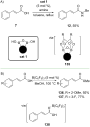
Scheme 41: Borane-catalyzed N-acylation reactions.

Scheme 42: Catalytic N-acylation reactions via H/F bonding activation.

Scheme 43: Brønsted base-catalyzed synthesis of cinnamic acid esters.

Scheme 44: DABCO/Fe3O4-catalyzed N-methyl amidation of cinnamic acid 122.

Scheme 45: Catalytic oxidation reactions of acylating agents.

Scheme 46: Preparation of cinnamamide-substituted benzocyclooctene using I(I)/I(III) catalysis.

Scheme 47: Pd-colloids-catalyzed oxidative esterification of cinnamyl alcohol.

Scheme 48: Graphene-supported Pd/Au alloy-catalyzed oxidative esterification via hemiacetal intermediate.

Scheme 49: Au-supported on A) carbon nanotubes (CNT) and B) on porous boron nitride (pBN) as catalyst for the ...

Scheme 50: Cr-based catalyzed oxidative esterification of cinnamyl alcohols with H2O2 as the oxidant.

Scheme 51: Co-based catalysts used for oxidative esterification of cinnamyl alcohol.

Scheme 52: Iron (A) and copper (B)-catalyzed oxidative esterification of cinnamaldehyde.

Scheme 53: NiHPMA-catalyzed oxidative esterification of cinnamaldehyde.

Scheme 54: Synthesis of cinammic acid esters through NHC-catalyzed oxidative esterification via intermolecular...
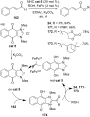
Scheme 55: Redox-active NHC-catalyzed esterification via intramolecular oxidation.

Scheme 56: Electrochemical conversion of cinnamaldehyde to methyl cinnamate.

Scheme 57: Bu4NI/TBHP-catalyzed synthesis of bisamides from cinnamalaldehyde N-tosylhydrazone.

Scheme 58: Zn/NC-950-catalyzed oxidative esterification of ketone 182.

Scheme 59: Ru-catalyzed oxidative carboxylation of terminal alkenes.

Scheme 60: Direct carboxylation of alkenes using CO2.

Scheme 61: Carboxylation of alkenylboronic acid/ester.

Scheme 62: Carboxylation of gem-difluoroalkenes with CO2.

Scheme 63: Photoredox-catalyzed carboxylation of difluoroalkenes.

Scheme 64: Ru-catalyzed carboxylation of alkenyl halide.
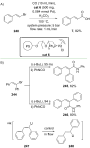
Scheme 65: Carboxylation of alkenyl halides under flow conditions.

Scheme 66: Cinnamic acid ester syntheses through carboxylation of alkenyl sulfides/sulfones.

Scheme 67: Cinnamic acid derivatives synthesis through a Ag-catalyzed decarboxylative cross-coupling proceedin...
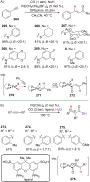
Scheme 68: Pd-catalyzed alkyne hydrocarbonylation.

Scheme 69: Fe-catalyzed alkyne hydrocarbonylation.

Scheme 70: Alkyne hydrocarboxylation using CO2.
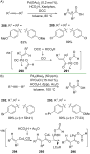
Scheme 71: Alkyne hydrocarboxylation using HCO2H as CO surrogate.

Scheme 72: Co/AlMe3-catalyzed alkyne hydrocarboxylation using DMF.

Scheme 73: Au-catalyzed oxidation of Au–allenylidenes.
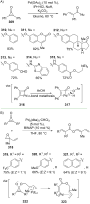
Scheme 74: Pd-catalyzed C–C-bond activation of cyclopropenones to synthesize unsaturated esters and amides.
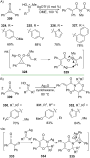
Scheme 75: Ag-catalyzed C–C-bond activation of diphenylcyclopropenone.

Scheme 76: Cu-catalyzed C–C bond activation of diphenylcyclopropenone.

Scheme 77: PPh3-catalyzed C–C-bond activation of diphenylcyclopropenone.

Scheme 78: Catalyst-free C–C-bond activation of diphenylcyclopropenone.

Scheme 79: Cu-catalyzed dioxolane cleavage.

Scheme 80: Multicomponent coupling reactions.

Scheme 81: Pd-catalyzed partial hydrogenation of electrophilic alkynes.

Scheme 82: Nickel and cobalt as earth-abundant transition metals used as catalysts for the partial hydrogenati...
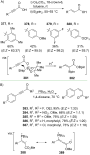
Scheme 83: Metal-free-catalyzed partial hydrogenation of conjugated alkynes.

Scheme 84: Horner–Wadsworth–Emmons reaction between triethyl 2-fluoro-2-phosphonoacetate and aldehydes with ei...

Scheme 85: Preparation of E/Z-cinnamates using thiouronium ylides.

Scheme 86: Transition-metal-catalyzed ylide reactions.

Scheme 87: Redox-driven ylide reactions.
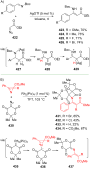
Scheme 88: Noble transition-metal-catalyzed olefination via carbenoid species.

Scheme 89: TrBF4-catalyzed olefination via carbene species.

Scheme 90: Grubbs catalyst (cat 7)/photocatalyst-mediated metathesis reactions.

Scheme 91: Elemental I2-catalyzed carbonyl-olefin metathesis.

Scheme 92: Cu-photocatalyzed E-to-Z isomerization of cinnamic acid derivatives.

Scheme 93: Ni-catalyzed E-to-Z isomerization.

Scheme 94: Dehydration of β-hydroxy esters via an E1cB mechanism to access (E)-cinnamic acid esters.

Scheme 95: Domino ring-opening reaction induced by a base.
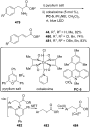
Scheme 96: Dehydroamination of α-aminoester derivatives.

Scheme 97: Accessing methyl cinnamate (44) via metal-free deamination or decarboxylation.

Scheme 98: The core–shell magnetic nanosupport-catalyzed condensation reaction.
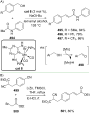
Scheme 99: Accessing cinnamic acid derivatives from acetic acid esters/amides through α-olefination.
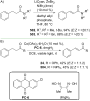
Scheme 100: Accessing cinnamic acid derivatives via acceptorless α,β-dehydrogenation.

Scheme 101: Cu-catalyzed formal [3 + 2] cycloaddition.

Scheme 102: Pd-catalyzed C–C bond formation via 1,4-Pd-shift.

Scheme 103: NHC-catalyzed Rauhut–Currier reactions.
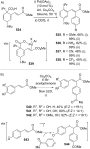
Scheme 104: Heck-type reaction for Cα arylation.

Scheme 105: Cu-catalyzed trifluoromethylation of cinnamamide.

Scheme 106: Ru-catalyzed alkenylation of arenes using directing groups.

Scheme 107: Earth-abundant transition-metal-catalyzed hydroarylation of α,β-alkynyl ester 374.

Scheme 108: Precious transition-metal-catalyzed β-arylation of cinnamic acid amide/ester.

Scheme 109: Pd-catalyzed β-amination of cinnamamide.

Scheme 110: S8-mediated β-amination of methyl cinnamate (44).

Scheme 111: Pd-catalyzed cross-coupling reaction of alkynyl esters with phenylsilanes.

Scheme 112: Pd-catalyzed β-cyanation of alkynyl amide/ester.

Scheme 113: Au-catalyzed β-amination of alkynyl ester 374.
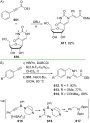
Scheme 114: Metal-free-catalyzed Cβ-functionalizations of alkynyl esters.

Scheme 115: Heck-type reactions.

Scheme 116: Mizoroki–Heck coupling reactions using unconventional functionalized arenes.
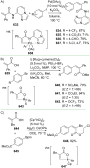
Scheme 117: Functional group-directed Mizoroki–Heck coupling reactions.
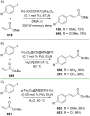
Scheme 118: Pd nanoparticles-catalyzed Mizoroki–Heck coupling reactions.

Scheme 119: Catellani-type reactions to access methyl cinnamate with multifunctionalized arene.
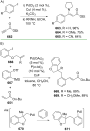
Scheme 120: Multicomponent coupling reactions.

Scheme 121: Single atom Pt-catalyzed Heck coupling reaction.

Scheme 122: Earth-abundant transition metal-catalyzed Heck coupling reactions.
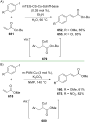
Scheme 123: Polymer-coated earth-abundant transition metals-catalyzed Heck coupling reactions.

Scheme 124: Earth-abundant transition-metal-based nanoparticles as catalysts for Heck coupling reactions.

Scheme 125: CN- and Si-based directing groups to access o-selective cinnamic acid derivatives.
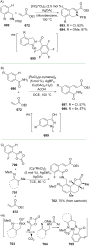
Scheme 126: Amide-based directing group to access o-selective cinnamic acid derivatives.

Scheme 127: Carbonyl-based directing group to access o-selective cinnamic acid derivatives.

Scheme 128: Stereoselective preparation of atropisomers via o-selective C(sp2)–H functionalization.

Scheme 129: meta-Selective C(sp2)–H functionalization using directing group-tethered arenes.

Scheme 130: para-Selective C(sp2)–H functionalization using directing group-tethered arenes.

Scheme 131: Non-directed C(sp2)–H functionalization via electrooxidative Fujiwara–Moritani reaction.
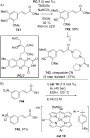
Scheme 132: Interconversion of functional groups attached to cinnamic acid.

Scheme 133: meta-Selective C(sp2)–H functionalization of cinnamate ester.

Scheme 134: C(sp2)–F arylation using Grignard reagents.

Scheme 135: Truce–Smiles rearrangement of N-aryl metacrylamides.

Scheme 136: Phosphine-catalyzed cyclization of γ-vinyl allenoate with enamino esters.
On the photoluminescence in triarylmethyl-centered mono-, di-, and multiradicals
- Daniel Straub,
- Markus Gross,
- Mona E. Arnold,
- Julia Zolg and
- Alexander J. C. Kuehne
Beilstein J. Org. Chem. 2025, 21, 964–998, doi:10.3762/bjoc.21.80
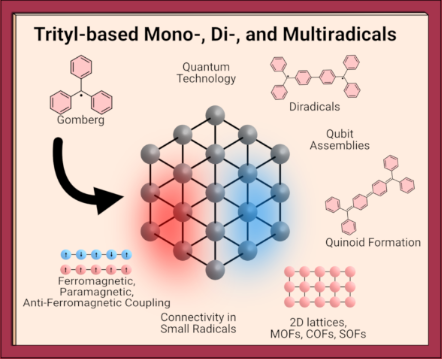

Graphical Abstract

Figure 1: a) Tris(trichlorophenyl)methyl (TTM) radical and related trityl radicals, b) HDMO, SOMO, LUMO orbit...

Figure 2: Mixed halide tri- and perhalogenated triphenylmethyl radicals: a) Molecular structures of homo- and...

Figure 3: Pyridine-functionalized triarylmethyl radicals. a) Chemical structures of X2PyBTM, Py2MTM, and Au-F2...

Figure 4: Pyridine-functionalized triarylmethyl radicals. a) Molecular structure of Mes2F2PyBTM, and b) its f...

Figure 5: Carbazole functionalized triarylmethyl radical. a) Chemical structure of Cz-BTM and b) its energy d...
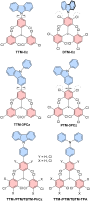
Figure 6: Donor-functionalized triphenylmethyl radicals. Molecular structures of TTM-Cz, DTM-Cz, TTM-3PCz, PT...

Figure 7: Tuning of the donor strength. Functionalization with electron-donating and electron-withdrawing gro...
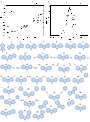
Figure 8: Tuning of the donor strength, by varying the Cz-derived donor (1–36) on a TTM radical fragment. a) ...

Figure 9: Three-state model and Marcus theory: q is the charge transfer coordinate and G the free energy. Gro...

Figure 10: Dendronized carbazole donors on TTM radicals. a) Molecular structures of G3TTM and G4TTM. b) Photol...

Figure 11: Electronic extension of the Cz donor. a) Molecular structures and optoelectronic properties of TTM-...

Figure 12: Kekulé diradicals: a) hexadeca- and perchlorinated Thiele (TTH, PTH), Chichibabin (TTM-TTM, PTM-PTM...
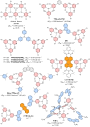
Figure 13: Non-Kekulé diradicals: perchlorinated Schlenk–Brauns radical (m-PTH), meta-coupled TTM radicals in ...

Figure 14: UV–vis absorption and photoluminescence spectra of a) TTH in solvents of different polarity, b) dir...

Figure 15: Molecular structures of m-4BTH (meta-butylated Thiele hydrocarbon), m-4TTH (meta-trichlorinated Thi...

Figure 16: a) Polystyrene-based TTM-Cz polymer. b) Molecular structure of radical particles with backbone thro...
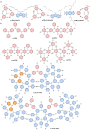
Figure 17: Molecular structures of polyradicals. a) Molecular structures of p-TBr6Cl3M-F8, p-TBr6Cl3M-acF8 and ...
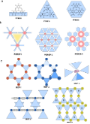
Figure 18: Structures of coordination and metal-organic frameworks. a) Carboxylic acid functionalized monomers...

Figure 19: Structures of coordination and metal-organic frameworks. a) Molecular structures of monomers TTMDI, ...

Figure 20: Molecular structures of covalent organic frameworks m-TPM-Ph-COF, m-PTM-Ph-COF, p-TPH-COF, p-PTH-COF...
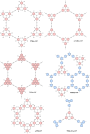
Figure 21: Molecular structures of covalent organic frameworks PTMAc-COF, oxTAMAc-COF, TOTAc-COF, PTMTAz-COF, p...
Asymmetric synthesis of β-amino cyanoesters with contiguous tetrasubstituted carbon centers by halogen-bonding catalysis with chiral halonium salt
- Yasushi Yoshida,
- Maho Aono,
- Takashi Mino and
- Masami Sakamoto
Beilstein J. Org. Chem. 2025, 21, 547–555, doi:10.3762/bjoc.21.43
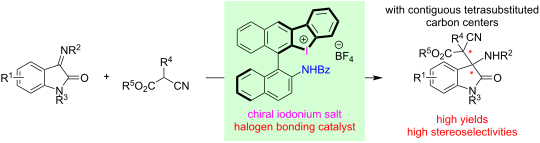
- , which provided the products in high yields with up to 33% ee [19]. In 2023, García Mancheño and co-workers reported the tetrakis(iodotriazole) 3-catalyzed dearomatization of halogen-substituted pyridines 4, which formed the corresponding products 5 in high yields with up to 90% ee (Figure 1b) [20

Graphical Abstract

Figure 1: Selected examples and applications of chiral halogen-bonding catalysts.

Figure 2: Selected examples for the construction of contiguous tetrasubstituted carbon centers via the Mannic...

Scheme 1: Catalyst screening for the asymmetric Mannich reaction. All yields were determined by 1H NMR spectr...

Scheme 2: N-Protecting group optimization for the asymmetric Mannich reaction. All yields were determined by 1...

Scheme 3: Catalyst screening using 7b as a substrate. All yields were determined by 1H NMR spectroscopy using...

Scheme 4: Substrate scope for the asymmetric Mannich reaction using 0.06 mmol of 7. Isolated product yields a...

Figure 3: Plausible reaction mechanism.
Cu(OTf)2-catalyzed multicomponent reactions
- Sara Colombo,
- Camilla Loro,
- Egle M. Beccalli,
- Gianluigi Broggini and
- Marta Papis
Beilstein J. Org. Chem. 2025, 21, 122–145, doi:10.3762/bjoc.21.7

- formation releasing Cu(OTf)2. The final bicyclic product 33 arises from isomerization and water elimination. Recently, Singh's research group developed a cascade process to access imidazo[1,2-a]pyridines-linked isoxazoles 35. Isoxazole carbaldehydes treated with 2-aminopyridines and isonitriles in the
- -dihydroquinazolin-4(1H)-one derivatives 26. Synthesis of polysubstituted pyrroles 27. Enantioselective synthesis of polysubstituted pyrrolidines 30 directed by the copper complex 29. Synthesis of 4,5-dihydropyrazoles 31. Synthesis of 2 arylisoindolinones 32. Synthesis of imidazo[1,2-a]pyridines 33. Synthesis of

Graphical Abstract

Figure 1: Plausible general catalytic activation for ionic or radical mechanisms.

Scheme 1: Synthesis of α-aminonitriles 1.

Scheme 2: Synthesis of β-amino ketone or β-amino ester derivatives 3.

Scheme 3: Synthesis of 1-(α-aminoalkyl)-2-naphthol derivatives 4.

Scheme 4: Synthesis of thioaminals 5.

Scheme 5: Synthesis of aryl- or amine-containing alkanes 6 and 7.
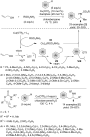
Scheme 6: Synthesis of 1-aryl-2-sulfonamidopropanes 8.

Scheme 7: Synthesis of α-substituted propargylamines 10.

Scheme 8: Synthesis of N-propargylcarbamates 11.

Scheme 9: Synthesis of (E)-vinyl sulfones 12.

Scheme 10: Synthesis of o-halo-substituted aryl chalcogenides 13.

Scheme 11: Synthesis of α-aminophosphonates 14.

Scheme 12: Synthesis of unsaturated furanones and pyranones 15–17.
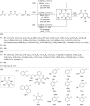
Scheme 13: Synthesis of substituted dihydropyrimidines 18.

Scheme 14: Regioselective synthesis of 1,4-dihydropyridines 20.

Scheme 15: Synthesis of tetrahydropyridines 21.

Scheme 16: Synthesis of furoquinoxalines 22.

Scheme 17: Synthesis of 2,4-substituted quinolines 23.

Scheme 18: Synthesis of cyclic ether-fused tetrahydroquinolines 24.

Scheme 19: Practical route for 1,2-dihydroisoquinolines 25.

Scheme 20: Synthesis of 2,3-dihydroquinazolin-4(1H)-one derivatives 26.

Scheme 21: Synthesis of polysubstituted pyrroles 27.

Scheme 22: Enantioselective synthesis of polysubstituted pyrrolidines 30 directed by the copper complex 29.

Scheme 23: Synthesis of 4,5-dihydropyrazoles 31.

Scheme 24: Synthesis of 2 arylisoindolinones 32.

Scheme 25: Synthesis of imidazo[1,2-a]pyridines 33.

Scheme 26: Synthesis of isoxazole-linked imidazo[1,2-a]azines 35.

Scheme 27: Synthesis of 2,3-dihydro-1,2,4-triazoles 36.

Scheme 28: Synthesis of naphthopyrans 37.

Scheme 29: Synthesis of benzo[g]chromene derivatives 38.

Scheme 30: Synthesis of naphthalene annulated 2-aminothiazoles 39, piperazinyl-thiazoloquinolines 40 and thiaz...

Scheme 31: Synthesis of furo[3,4-b]pyrazolo[4,3-f]quinolinones 42.

Scheme 32: Synthesis of spiroindoline-3,4’-pyrano[3,2-b]pyran-4-ones 43.

Scheme 33: Synthesis of N-(α-alkoxy)alkyl-1,2,3-triazoles 44.

Scheme 34: Synthesis of 4-(α-tetrasubstituted)alkyl-1,2,3-triazoles 45.
5th International Symposium on Synthesis and Catalysis (ISySyCat2023)
- Anthony J. Burke and
- Elisabete P. Carreiro
Beilstein J. Org. Chem. 2024, 20, 2704–2707, doi:10.3762/bjoc.20.227
- Suzuki couplings and the reduction of the thiazole moiety to 2,3-dihydro[1,3]thiazolo[4,5-b]pyridines, a crucial intermediate, using BH3⋅NH3 and tris(pentafluorophenyl)borane as a Lewis acid, followed by treatment with formic acid. Gillie et al. reported the synthesis of a laterally fused N-heterocyclic

Efficient modification of peroxydisulfate oxidation reactions of nitrogen-containing heterocycles 6-methyluracil and pyridine
- Alfiya R. Gimadieva,
- Yuliya Z. Khazimullina,
- Aigiza A. Gilimkhanova and
- Akhat G. Mustafin
Beilstein J. Org. Chem. 2024, 20, 2599–2607, doi:10.3762/bjoc.20.219
- compounds such as phenols, coumarins, pyridines, pyrimidines, quinolines, and others. This has resulted in the production of numerous valuable products. The reaction's appeal lies in its simplicity and the fact that there is no requirement to protect sensitive functional groups, thus making the introduction
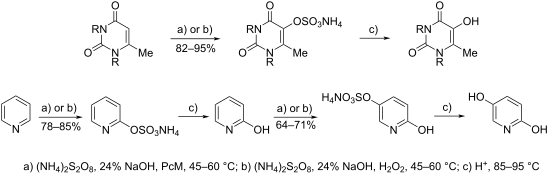
- determined that room temperature is inadequate for fully oxidizing substrates. The optimal oxidation temperature for uracils 1 and 4 is between 60–65 °C, whereas for pyridines 7 and 9 it is 45 °C. Heating the reaction mixture at a temperature higher than the optimum level causes the substrates to be

Graphical Abstract

Figure 1: Derivatives of 6-methyluracil and 2-hydroxypyridine demonstrating pharmacological activity: 5-hydro...

Scheme 1: Peroxydisulfate oxidation of 6-methyluracil and 1,3,6-trimethyluracil. Сonditions: a) (NH4)2S2O8, 2...

Scheme 2: Peroxydisulfate oxidation of pyridine and 2-hydroxypyridine. Сonditions: a) (NH4)2S2O8, 24% NaOH, 4...

Scheme 3: Potential mechanism of peroxydisulfate oxidation of 6-methyluracil and 1,3,6-trimethyluracil.
Catalysing (organo-)catalysis: Trends in the application of machine learning to enantioselective organocatalysis
- Stefan P. Schmid,
- Leon Schlosser,
- Frank Glorius and
- Kjell Jorner
Beilstein J. Org. Chem. 2024, 20, 2280–2304, doi:10.3762/bjoc.20.196
- three different reactions (Figure 11A). Mechanistic model transferability for CPA-catalysed Minisci reactions [125] was utilised for the derivatization of quinolines and pyridines. Models trained on these compound classes show good generalisation towards other nitrogen-containing heteroaromatics

Graphical Abstract

Figure 1: Schematic depiction of available data sources for predictive modelling, each with its advantages an...

Figure 2: Schematic depiction of different kinds of molecular representations for fluoronitroethane. Among th...

Figure 3: Depiction of the energy diagram of a generic enantioselective reaction. In the centre, catalyst and...

Figure 4: Hammett parameters are derived from the equilibrium constant of substituted benzoic acids (example ...

Figure 5: Selected examples of popular descriptors applied to model organocatalytic reactions. Descriptors en...

Figure 6: Example bromocyclization reaction from Toste and co-workers using a DABCOnium catalyst system and C...

Figure 7: Example from Neel et al. using a chiral ion pair catalyst for the selective fluorination of allylic...

Figure 8: Data set created by Denmark and co-workers for the CPA-catalysed thiol addition to N-acylimines [67]. T...

Figure 9: Selected examples of ML developments that used the dataset from Denmark and co-workers [67]. (A) Varnek...

Figure 10: Study from Reid and Sigman developing statistical models for CPA-catalysed nucleophilic addition re...

Figure 11: Selected examples of studies where mechanistic transferability was exploited to model multiple reac...

Figure 12: Generality approach by Denmark and co-workers [132] for the iodination of arylpyridines. From the releva...

Figure 13: Betinol et al. [133] clustered the relevant chemical space and then evaluated the average ee for every c...

Figure 14: Corminboeuf and co-workers [134] chose a representative subset of the reaction space (indicated by dark ...

Figure 15: Example for data-driven modelling to improve substrate and catalyst design. (A) C–N coupling cataly...

Figure 16: Example for utilising a genetic algorithm for catalyst design. (A) Morita–Baylis–Hillman reaction s...

Figure 17: Organocatalysed synthesis of spirooxindole analogues by Kondo et al. [171] (A) Reaction scheme of dienon...

Figure 18: Schematic depiction of required developments in order to overcome current limitations of ML for org...
Deuterated reagents in multicomponent reactions to afford deuterium-labeled products
- Kevin Schofield,
- Shayna Maddern,
- Yueteng Zhang,
- Grace E. Mastin,
- Rachel Knight,
- Wei Wang,
- James Galligan and
- Christopher Hulme
Beilstein J. Org. Chem. 2024, 20, 2270–2279, doi:10.3762/bjoc.20.195
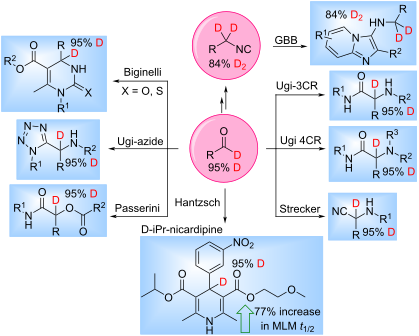
- , Scheme 10. In line with all prior MCRs, good yields were observed with no deuterium scrambling. Calcium channel blockers derived from this methodology are heavily metabolized by CYP3A4 via dehydrogenation to afford inactive pyridines, Scheme 11 [54]. As such, bio-isosteric deuterium–hydrogen exchange at

Graphical Abstract

Scheme 1: Competitive examples of D2-benzylamine formation via phenyl-nitriles.

Scheme 2: Proposed tentative mechanism of [D3]-formamide formation via modified Leuckart–Wallach reaction wit...

Scheme 3: Ugi-4CR products: no deuterium scrambling observed.

Scheme 4: Ugi-3CR products. No deuterium scrambling observed.

Scheme 5: Ugi-azide reaction products, no deuterium scrambling observed.

Scheme 6: Passerini products, no deuterium scrambling observed. aWater was used as solvent.

Scheme 7: Strecker reaction products (precursors to [D1]-α-amino acids), no deuterium scrambling was observed...

Scheme 8: Biginelli reaction products, no deuterium scrambling was observed. Six site-specific deuterated Big...

Scheme 9: GBB reaction products, no deuterium scrambling was observed. aA 70% [D2]-isocyanide was used in 7a ...

Scheme 10: Modified Hantzsch pyridine synthesis to afford 1,4-dihydropyridines. No deuterium scrambling was ob...

Scheme 11: CYP3A4 mediated dehydrogenation of dihydropyridines.
Harnessing the versatility of hydrazones through electrosynthetic oxidative transformations
- Aurélie Claraz
Beilstein J. Org. Chem. 2024, 20, 1988–2004, doi:10.3762/bjoc.20.175
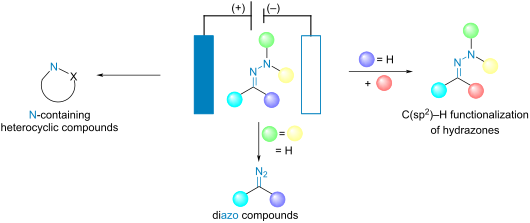
- one, which is consistent with the finding of ketone side-product. In 2018, the group of Zhang established an intramolecular C(sp2)–H functionalization of aldehyde-derived N-(2-pyridinyl)hydrazones 15 to produce 1,2,4-triazolo[4,3-a]pyridines 16 (Scheme 4) [39]. Interestingly, the hydrazone was in situ
- applications in industry. Synthesis of triazolopyridinium salts [34][35][36]. Synthesis of pyrazoles [37]. Synthesis of indazoles from ketone-derived hydrazones [38]. Intramolecular C(sp2)–H functionalization of aldehyde-derived N-(2-pyridinyl)hydrazones for the synthesis of 1,2,4-triazolo[4,3-a]pyridines [39

Graphical Abstract

Scheme 1: Synthesis of triazolopyridinium salts [34-36].

Scheme 2: Synthesis of pyrazoles [37].
Scheme 3: Synthesis of indazoles from ketone-derived hydrazones [38].
Scheme 4: Intramolecular C(sp2)–H functionalization of aldehyde-derived N-(2-pyridinyl)hydrazones for the syn...

Scheme 5: Synthesis of pyrazolo[4,3-c]quinoline derivatives [40].
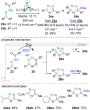
Scheme 6: Synthesis of 1,3,4-oxadiazoles and Δ3-1,3,4-oxadiazolines [41].
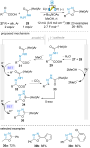
Scheme 7: Synthesis of 1,3,4-oxadiazoles [43].
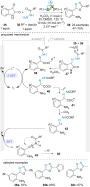
Scheme 8: Synthesis of 2-(1,3,4-oxadiazol-2-yl)anilines [44].
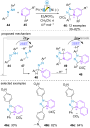
Scheme 9: Synthesis of fused s-triazolo perchlorates [45].
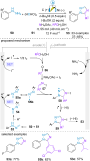
Scheme 10: Synthesis of 1-aryl and 1,5-disubstitued 1,2,4-triazoles [49].
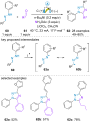
Scheme 11: Synthesis of 1,3,5-trisubstituted 1,2,4-triazoles [50].

Scheme 12: Alternative synthesis of 1,3,5-trisubstituted 1,2,4-triazoles [51].

Scheme 13: Synthesis of 5-amino 1,2,4-triazoles [55].
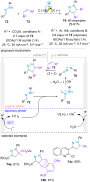
Scheme 14: Synthesis of 1-arylpyrazolines [58].
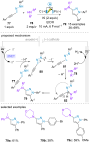
Scheme 15: Synthesis of 3‑aminopyrazoles [60].

Scheme 16: Synthesis of [1,2,4]triazolo[4,3-a]quinolines [61].·
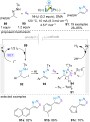
Scheme 17: Synthesis of 1,2,3-thiadiazoles [64].
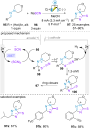
Scheme 18: Synthesis of 5-thioxo-1,2,4-triazolium inner salts [65].
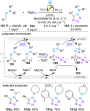
Scheme 19: Synthesis of 1-aminotetrazoles [66].
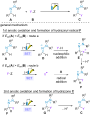
Scheme 20: C(sp2)–H functionalization of aldehyde-derived hydrazones: general mechanisms.

Scheme 21: C(sp2)–H functionalization of benzaldehyde diphenyl hydrazone [68,69].

Scheme 22: Phosphorylation of aldehyde-derived hydrazones [70].

Scheme 23: Azolation of aldehyde-derived hydrazones [72].

Scheme 24: Thiocyanation of benzaldehyde-derived hydrazone 122 [73].

Scheme 25: Sulfonylation of aromatic aldehyde-derived hydrazones [74].

Scheme 26: Trifluoromethylation of aromatic aldehyde-derived hydrazones [76].

Scheme 27: Electrooxidation of benzophenone hydrazones [77].

Scheme 28: Electrooxidative coupling of benzophenone hydrazones and alkenes [77].

Scheme 29: Electrosynthesis of α-diazoketones [78].
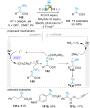
Scheme 30: Electrosynthesis of stable diazo compounds [80].
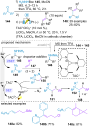
Scheme 31: Photoelectrochemical synthesis of alkenes through in situ generation of diazo compounds [81].

Scheme 32: Synthesis of nitriles [82].
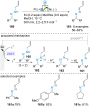
Scheme 33: Electrochemical oxidation of ketone-derived NH-allylhydrazone [83].
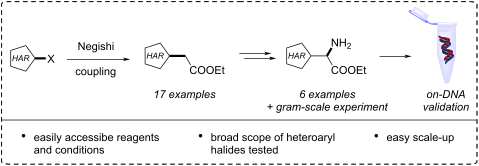
Negishi-coupling-enabled synthesis of α-heteroaryl-α-amino acid building blocks for DNA-encoded chemical library applications
- Matteo Gasparetto,
- Balázs Fődi and
- Gellért Sipos
Beilstein J. Org. Chem. 2024, 20, 1922–1932, doi:10.3762/bjoc.20.168
- , this approach was applied to the synthesis of N-substituted pyrazoles and poly-substituted isothiazoles [24][25]. Glycine derivatives can be reacted with indoles using copper catalysis or metallophotoredox catalysis [26]. Le et al. reported the use of the same approach for imidazo[1,2-a]pyridines [27
- underrepresented in the peer-reviewed literature in comparison to phenyl groups or their six-membered counterparts (e.g., pyridines, pyrimidines) [42]. Furthermore, the increasing importance of small heteroaromatic rings containing nitrogen, sulfur and/or oxygen in medicinal chemistry is well depicted by the list

Graphical Abstract

Scheme 1: Known and improved synthetic strategies to access α-(hetero)aryl-amino acids.

Scheme 2: Reformatsky reagent production.

Scheme 3: Scope of ethyl heteroarylacetates. Isolated yields are given. *Dark reactions were carried out for ...

Scheme 4: Telescoped flow synthesis of heteroarylacetates.

Scheme 5: Potential routes for the preparation of oximes.

Scheme 6: Oxime group insertion step.

Scheme 7: Amino ester production: general scheme, scope and gram scale experiment. The numbers in brackets re...

Scheme 8: Reactions scheme and results for the on-DNA experiments. The reported values represent the normaliz...
2-Heteroarylethylamines in medicinal chemistry: a review of 2-phenethylamine satellite chemical space
- Carlos Nieto,
- Alejandro Manchado,
- Ángel García-González,
- David Díez and
- Narciso M. Garrido
Beilstein J. Org. Chem. 2024, 20, 1880–1893, doi:10.3762/bjoc.20.163
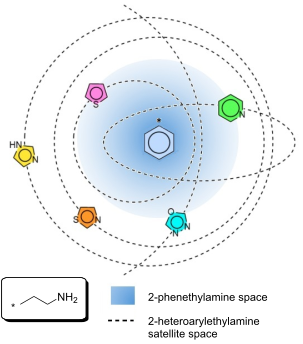
- specific heteroaromatic subsection indicates no biologically relevant data has been reported up to date. Review 2‑Heteroarylethylamine scaffolds of biological importance Six-membered heteroaromatic rings Pyridines: IL4I1, interleukin-4 induced gene 1, encodes ʟ-phenylalanine oxidase IL4I1 present in the
Graphical Abstract

Scheme 1: Description of the 2-heteroarylethylamine scope of the present review featuring appropriate heteroa...

Scheme 2: 2-Aminoethylpyridine derivatives with therapeutic activity.

Scheme 3: 2-Aminoethylfuran derivatives with therapeutic activity.

Scheme 4: 2-Aminoethylthiophene derivatives with therapeutic activity, part 1.

Scheme 5: 2-Aminoethylthiophene derivatives with therapeutic activity, part 2.

Scheme 6: 2-Aminoethylthiophene derivatives with therapeutic activity, part 3.

Scheme 7: 2-Aminoethylpyrrole derivatives with therapeutic activity.

Scheme 8: Histamine metabolic pathway.

Scheme 9: 2-Aminoethylimidazole derivatives with therapeutic activity, part 1. Krel is referred as histamine ...

Scheme 10: Conformationally restricted 2-aminoethylimidazole derivatives with therapeutic activity, part 2.
Scheme 11: 2-Aminoethylimidazole derivatives with therapeutic activity, part 3.

Scheme 12: 2-Aminoethylimidazole derivatives with therapeutic activity, part 4.

Scheme 13: 2-Aminoethylpyrazole derivatives with therapeutic activity.

Scheme 14: 2-Aminoethylisoxazole derivatives with therapeutic activity.

Scheme 15: 2-Aminoethylthiazole derivatives with therapeutic activity.

Scheme 16: 2-Aminoethyloxadiazole derivatives with therapeutic activity.

Scheme 17: 2-Aminoethyltriazole derivatives with therapeutic activity.

Scheme 18: 2-Aminoethyloxadiazole derivatives with therapeutic activity.
The Groebke–Blackburn–Bienaymé reaction in its maturity: innovation and improvements since its 21st birthday (2019–2023)
- Cristina Martini,
- Muhammad Idham Darussalam Mardjan and
- Andrea Basso
Beilstein J. Org. Chem. 2024, 20, 1839–1879, doi:10.3762/bjoc.20.162
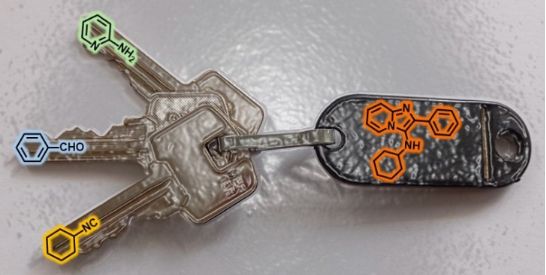
- achieved during the last five years, and classifies them into five categories: synthetic methods, building blocks, scaffolds, biological activities and physical properties. Keywords: Groebke–Blackburn–Bienaymé reaction; multicomponent reactions; heterocycles; imidazo[1,2-a]pyridines; isocyanides
- also in the work reported by Shankar et al. [10], already mentioned in chapter 1. The authors established a solvent-catalyzed GBB-3CR to synthesize glycosylated imidazo[1,2-a]pyridines 33 starting from 1-formyl glycals 32; using HFIP as the solvent, the addition of any metal catalyst was not needed
- acetonitrile (not shown) led to the formation of benzoxazolpyrroles 106 (X = O) and indolizines (not shown), respectively. The GBB reaction is a powerful tool for the construction of imidazo[1,2,a]pyridines. Khan et al. [69] envisioned an isocyanide-free protocol based on arylglyoxals 107, 2-aminopyridines and

Graphical Abstract

Scheme 1: Mechanism of the GBB reaction.

Scheme 2: Comparison of the performance of Sc(OTf)3 with some RE(OTf)3 in a model GBB reaction. Conditions: a...

Scheme 3: Comparison of the performance of various Brønsted acid catalysts in the synthesis of GBB adduct 6. ...

Scheme 4: Synthesis of Brønsted acidic ionic liquid catalyst 7. Conditions: a) neat, 60 °C, 24 h; b) TfOH, DC...

Scheme 5: Aryliodonium derivatives as organic catalysts in the GBB reaction. In the box the proposed binding ...

Scheme 6: DNA-encoded GBB reaction in micelles made of amphiphilic polymer 13. Conditions: a) 13 (50 equiv), ...

Scheme 7: GBB reaction catalyzed by cyclodextrin derivative 14. Conditions: a) 14 (1 mol %), water, 100 °C, 4...

Scheme 8: Proposed mode of activation of CALB. a) activation of the substrates; b) activation of the imine; c...

Scheme 9: One-pot GBB reaction–Suzuki coupling with a bifunctional hybrid biocatalyst. Conditions: a) Pd(0)-C...

Scheme 10: GBB reaction employing 5-HMF (23) as carbonyl component. Conditions: a) TFA (20 mol %), EtOH, 60 °C...

Scheme 11: GBB reaction with β-C-glucopyranosyl aldehyde 26. Conditions: a) InCl3 (20 mol %), MeOH, 70 °C, 2–3...

Scheme 12: GBB reaction with diacetylated 5-formyldeoxyuridine 29, followed by deacetylation of GBB adduct 30....

Scheme 13: GBB reaction with glycal aldehydes 32. Conditions: a) HFIP, 25 °C, 2–4 h.

Scheme 14: Vilsmeier–Haack formylation of 6-β-acetoxyvouacapane (34) and subsequent GBB reaction. Conditions: ...

Scheme 15: GBB reaction of 4-formlyl-PCP 37. Conditions: a) HOAc or HClO4, MeOH/DCM (2:3), rt, 3 d.

Scheme 16: GBB reaction with HexT-aldehyde 39. Conditions: a) 39 (20 nmol) and amidine (20 μmol), MeOH, rt, 6 ...

Scheme 17: GBB reaction of 2,4-diaminopirimidine 41. Conditions: a) Sc(OTf)3 (20 mol %), MeCN, 120 °C (MW), 1 ...

Scheme 18: Synthesis of N-edited guanine derivatives from 3,6-diamine-1,2,4-triazin-5-one 44. Conditions: a) S...

Scheme 19: Synthesis of 2-aminoimidazoles 49 by a Mannich-3CR followed by a one-pot intramolecular oxidative a...

Scheme 20: On DNA Suzuki–Miyaura reaction followed by GBB reaction. Conditions: a) CsOH, sSPhos-Pd-G2; b) AcOH...

Scheme 21: One-pot cascade synthesis of 5-iminoimidazoles. Conditions: a) Na2SO4, DMF, 220 °C (MW).

Scheme 22: GBB reaction of 5-amino-1H-imidazole-4-carbonile 57. Conditions: a) HClO4 (5 mol %), MeOH, rt, 24 h....

Scheme 23: One-pot cascade synthesis of indole-imidazo[1,2,a]pyridine hybrids. In blue the structural motif in...

Scheme 24: One-pot cascade synthesis of fused polycyclic indoles 67 or 69 from indole-3-carbaldehyde. Conditio...

Scheme 25: One-pot cascade synthesis of linked- and bridged polycyclic indoles from indole-2-carbaldehyde (70)...

Scheme 26: One-pot cascade synthesis of pentacyclic dihydroisoquinolines (X = N or CH). In blue the structural...

Scheme 27: One-pot stepwise synthesis of imidazopyridine-fused benzodiazepines 85. Conditions: a) p-TsOH (20 m...

Scheme 28: One-pot stepwise synthesis of benzoxazepinium-fused imidazothiazoles 89. Conditions: a) Yb(OTf)3 (2...

Scheme 29: One-pot stepwise synthesis of fused imidazo[4,5,b]pyridines 95. Conditions: a) HClO4, MeOH, rt, ove...

Scheme 30: Synthesis of heterocyclic polymers via the GBB reaction. Conditions: a) p-TsOH, EtOH, 70 °C, 24 h.
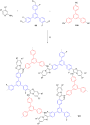
Scheme 31: One-pot multicomponent reaction towards the synthesis of covalent organic frameworks via the GBB re...
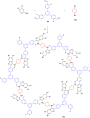
Scheme 32: One-pot multicomponent reaction towards the synthesis of covalent organic frameworks via the GBB re...

Scheme 33: GBB-like multicomponent reaction towards the synthesis of benzothiazolpyrroles (X = S) and benzoxaz...

Scheme 34: GBB-like multicomponent reaction towards the formation of imidazo[1,2,a]pyridines. Conditions: a) I2...

Scheme 35: Post-functionalization of GBB products via Ugi reaction. Conditions a) HClO4, DMF, rt, 24 h; b) MeO...

Scheme 36: Post-functionalization of GBB products via Click reaction. Conditions: a) solvent-free, 150 °C, 24 ...

Scheme 37: Post-functionalization of GBB products via cascade alkyne–allene isomerization–intramolecular nucle...

Scheme 38: Post-functionalization of GBB products via metal-catalyzed intramolecular N-arylation. In red and b...

Scheme 39: Post-functionalization of GBB products via isocyanide insertion (X = N or CH). Conditions: a) HClO4...

Scheme 40: Post-functionalization of GBB products via intramolecular nucleophilic addition to nitriles. Condit...

Scheme 41: Post-functionalization of GBB products via Pictet–Spengler cyclization. Conditions: a) 4 N HCl/diox...

Scheme 42: Post-functionalization of GBB products via O-alkylation. Conditions: a) TFA (20 mol %), EtOH, 120 °...

Scheme 43: Post-functionalization of GBB products via macrocyclization (X = -CH2CH2O-, -CH2-, -(CH2)4-). Condi...
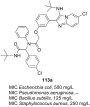
Figure 1: Antibacterial activity of GBB-Ugi adducts 113 on both Gram-negative and Gram-positive strains.

Scheme 44: GBB multicomponent reaction using trimethoprim as the precursor. Conditions: a) Yb(OTf)3 or Y(OTf)3...

Figure 2: Antibacterial activity of GBB adducts 152 against MRSA and VRE; NA = not available.

Figure 3: Antibacterial activity of GBB adduct 153 against Leishmania amazonensis promastigotes and amastigot...

Figure 4: Antiviral and anticancer evaluation of the GBB adducts 154a and 154b. In vitro antiproliferative ac...

Figure 5: Anticancer activity of the GBB-furoxan hybrids 145b, 145c and 145d determined through antiprolifera...

Scheme 45: Synthesis and anticancer activity of the GBB-gossypol conjugates. Conditions: a) Sc(OTf)3 (10 mol %...

Figure 6: Anticancer activity of polyheterocycles 133a and 136a against human neuroblastoma. Clonogenic assay...

Figure 7: Development of GBB-adducts 158a and 158b as PD-L1 antagonists. HTRF assays were carried out against...

Figure 8: Development of imidazo[1,2-a]pyridines and imidazo[1,2-a]pyrazines as TDP1 inhibitors. The SMM meth...

Figure 9: GBB adducts 164a–c as anticancer through in vitro HDACs inhibition assays. Additional cytotoxic ass...

Figure 10: GBB adducts 165, 166a and 166b as anti-inflammatory agents through HDAC6 inhibition; NA = not avail...

Scheme 46: GBB reaction of triphenylamine 167. Conditions: a) NH4Cl (10 mol %), MeOH, 80 °C (MW), 1 h.

Scheme 47: 1) Modified GBB-3CR. Conditions: a) TMSCN (1.0 equiv), Sc(OTf)3 (0.2 equiv), MeOH, 140 °C (MW), 20 ...

Scheme 48: GBB reaction to assemble imidazo-fused heterocycle dimers 172. Conditions: a) Sc(OTf)3 (20 mol %), ...

Figure 11: Model compounds 173 and 174, used to study the acid/base-triggered reversible fluorescence response...
Syntheses and medicinal chemistry of spiro heterocyclic steroids
- Laura L. Romero-Hernández,
- Ana Isabel Ahuja-Casarín,
- Penélope Merino-Montiel,
- Sara Montiel-Smith,
- José Luis Vega-Báez and
- Jesús Sandoval-Ramírez
Beilstein J. Org. Chem. 2024, 20, 1713–1745, doi:10.3762/bjoc.20.152
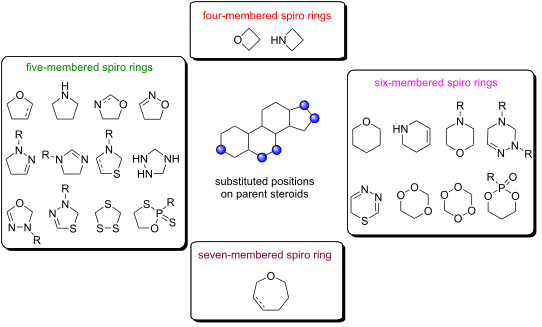
- tolylhydrazonoyl chloride derivative 54 [35]. The reaction conducted in the presence of silver acetate at room temperature, achieved yields of 78–81% of the 16-spiropyrazolines 55a,b (Scheme 17). 6-Spiroimidazoline steroids In 2015, Dar’s group reported a small library of spiroimidazo[1,2-a]pyridines obtained

Graphical Abstract

Figure 1: Steroidal spiro heterocycles with remarkable pharmacological activity.

Scheme 1: Synthesis of the spirooxetanone 2. a) t-BuOK, THF, rt, 16%.

Scheme 2: Synthesis of the 17-spirooxetane derivative 7. a) HC≡C(CH2)2CH2OTBDPS, n-BuLi, THF, BF3·Et2O, −78 °...

Scheme 3: Pd-catalyzed carbonylation of steroidal alkynols to produce α-methylene-β-lactones at C-3 and C-17 ...

Scheme 4: Catalyst-free protocol to obtain functionalized spiro-lactones by an intramolecular C–H insertion. ...

Scheme 5: One-pot procedure from dienamides to spiro-β-lactams. a) 1. Ac2O, DMAP, Et3N, CH2Cl2, 2. malononitr...

Scheme 6: Spiro-γ-lactone 20 afforded from 7α-alkanamidoestrone derivative 17. a) HC≡CCH2OTHP, n-BuLi, THF, –...

Scheme 7: Synthesis of the 17-spiro-γ-lactone 23, a key intermediate to obtain spironolactone. a) Ethyl propi...

Scheme 8: Synthetic pathway to obtain 17-spirodihydrofuran-3(2H)-ones from 17-oxosteroids. a) 1-Methoxypropa-...

Scheme 9: One-pot procedure to obtain 17-spiro-2H-furan-3-one compounds. a) NaH, diethyl oxalate, benzene, rt...

Scheme 10: Synthesis of 17-spiro-2H-furan-3-one derivatives. a) RCH=NOH, N-chlorosuccinimide/CHCl3, 99%; b) H2...

Scheme 11: Intramolecular condensation of a γ-acetoxy-β-ketoester to synthesize spirofuranone 37. a) (CH3CN)2P...

Scheme 12: Synthesis of spiro 2,5-dihydrofuran derivatives. a) Allyl bromide, DMF, NaH, 0 °C to rt, 93%; b) G-...

Scheme 13: First reported synthesis of C-16 dispiropyrrolidine derivatives. a) Sarcosine, isatin, MeOH, reflux...

Scheme 14: Cycloadducts 47 with antiproliferative activity against human cancer cell lines. a) 1,4-Dioxane–MeO...

Scheme 15: Spiropyrrolidine compounds generated from (E)-16-arylidene steroids and different ylides. a) Acenap...

Scheme 16: 3-Spiropyrrolidines 52a–c obtained from ketones 50a–c. a) p-Toluenesulfonyl hydrazide, MeOH, rt; b)...

Scheme 17: 16-Spiropyrazolines from 16-methylene-13α-estrone derivatives. a) AgOAc, toluene, rt, 78–81%.

Scheme 18: 6-Spiroimidazolines 57 synthesized by a one-pot multicomponent reaction. a) R3-NC, T3P®, DMSO, 70 °...

Scheme 19: Synthesis of spiro-1,3-oxazolines 60, tested as progesterone receptor antagonist agents. a) CF3COCF3...

Scheme 20: Synthesis of spiro-1,3-oxazolidin-2-ones 63 and 66a,b. a) RNH2, EtOH, 70 °C, 70–90%; b) (CCl3O)2CO,...

Scheme 21: Formation of spiro 1,3-oxazolidin-2-one and spiro 2-substituted amino-4,5-dihydro-1,3-oxazoles from ...

Scheme 22: Synthesis of diastereomeric spiroisoxazolines 74 and 75. a) Ar-C(Cl)=N-OH, DIPEA, toluene, rt, 74 (...

Scheme 23: Spiro 1,3-thiazolidine derivatives 77–79 obtained from 2α-bromo-5α-cholestan-3-one 76. a) 2-aminoet...

Scheme 24: Method for the preparation of derivative 83. a) Benzaldehyde, MeOH, reflux, 77%; b) thioglycolic ac...

Scheme 25: Synthesis of spiro 1,3-thiazolidin-4-one derivatives from steroidal ketones. a) Aniline, EtOH, refl...

Scheme 26: Synthesis of spiro N-aryl-1,3-thiazolidin-4-one derivatives 91 and 92. a) Sulfanilamide, DMF, reflu...

Scheme 27: 1,2,4-Trithiolane dimers 94a–e selectively obtained from carbonyl derivatives. a) LR, CH2Cl2, reflu...

Scheme 28: Spiro 1,2,4-triazolidin-3-ones synthesized from semicarbazones. a) H2O2, CHCl3, 0 °C, 82–85%.

Scheme 29: Steroidal spiro-1,3,4-oxadiazoline 99 obtained in two steps from cholest-5-en-3-one (97). a) NH2NHC...

Scheme 30: Synthesis of spiro-1,3,4-thiadiazoline 101 by cyclization and diacetylation of thiosemicarbazone 100...

Scheme 31: Mono- and bis(1,3,4-thiadiazolines) obtained from estrane and androstane derivatives. a) H2NCSNHNH2...

Scheme 32: Different reaction conditions to synthesize spiro-1,3,2-oxathiaphospholanes 108 and 109.

Scheme 33: Spiro-δ-lactones derived from ADT and epi-ADT as inhibitors of 17β-HSDs. a) CH≡C(CH2)2OTHP, n-BuLi,...

Scheme 34: Spiro-δ-lactams 123a,b obtained in a five-step reaction sequence. a) (R)-(+)-tert-butylsulfinamide,...

Scheme 35: Steroid-coumarin conjugates as fluorescent DHT analogues to study 17-oxidoreductases for androgen m...

Scheme 36: 17-Spiro estradiolmorpholinones 130 bearing two types of molecular diversity. a) ʟ- or ᴅ-amino acid...

Scheme 37: Steroidal spiromorpholinones as inhibitors of enzyme 17β-HSD3. a) Methyl ester of ʟ- or ᴅ-leucine, ...

Scheme 38: Steroidal spiro-morpholin-3-ones achieved by N-alkylation or N-acylation of amino diols 141, follow...

Scheme 39: Straightforward method to synthesize a spiromorpholinone derivative from estrone. a) BnBr, K2CO3, CH...

Scheme 40: Pyrazolo[4,3-e][1,2,4]-triazine derivatives 152–154. a) 4-Aminoantipyrine, EtOH/DMF, reflux, 82%; b...

Scheme 41: One-pot procedure to synthesize spiro-1,3,4-thiadiazine derivatives. a) NH2NHCSCONHR, H2SO4, dioxan...

Scheme 42: 1,2,4-Trioxanes with antimalarial activity. a) 1. O2, methylene blue, CH3CN, 500 W tungsten halogen...

Scheme 43: Tetraoxanes 167 and 168 synthesized from ketones 163, 165 and 166. a) NaOH, iPrOH/H2O, 80 °C, 93%; ...

Scheme 44: 1,2,4,5-Tetraoxanes bearing a steroidal moiety and a cycloalkane. a) 30% H2O2/CH2Cl2/CH3CN, HCl, rt...

Scheme 45: Spiro-1,3,2-dioxaphosphorinanes obtained from estrone derivatives. a) KBH4, MeOH, THF or CH2Cl2; b)...

Scheme 46: Synthesis of steroidal spiro-ε-lactone 183. a) 1. Jones reagent, acetone, 0 °C to rt, 2. ClCOCOCl, ...

Scheme 47: Synthesis of spiro-2,3,4,7-tetrahydrooxepines 185 and 187 derived from mestranol and lynestrenol (38...
Oxidation of benzylic alcohols to carbonyls using N-heterocyclic stabilized λ3-iodanes
- Thomas J. Kuczmera,
- Pim Puylaert and
- Boris J. Nachtsheim
Beilstein J. Org. Chem. 2024, 20, 1677–1683, doi:10.3762/bjoc.20.149
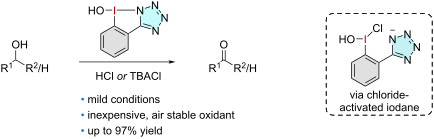
- higher yields of 84% and 71%, respectively. The steric inhibition of a doubly substituted phenyl ring was observed in a diminished formation of 2,6-dichlorobenzaldehyde (4m) in 39% yield. Naphthalen-2-ylmethanol gave aldehyde 4n in 44% yield. Pyridines 4o and 4p were also compatible and gave good yields

Graphical Abstract

Figure 1: Overview of common non-iodine-based (left) and iodine-based (right) oxidizing reagents for the gene...

Figure 2: NHIs investigated for the oxidation of benzylic alcohols and the crystal structure (ORTEP drawing) ...
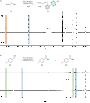
Figure 3: 1H NMR spectra of the time-dependent formation of a) an alkoxy-NHI which is causing a significant d...
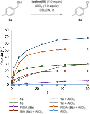
Figure 4: Oxidation of 3a to 4a using different iodine(III) reagents with AlCl3 as an additive. Conditions: T...

Figure 5: Substrate scope of aldehydes and ketones synthesized from the corresponding alcohols. Isolated yiel...

Scheme 1: Possible reaction mechanisms via the formation of a) a Cl(I) species and b) the formation of an alk...
Generation of multimillion chemical space based on the parallel Groebke–Blackburn–Bienaymé reaction
- Evgen V. Govor,
- Vasyl Naumchyk,
- Ihor Nestorak,
- Dmytro S. Radchenko,
- Dmytro Dudenko,
- Yurii S. Moroz,
- Olexiy D. Kachkovsky and
- Oleksandr O. Grygorenko
Beilstein J. Org. Chem. 2024, 20, 1604–1613, doi:10.3762/bjoc.20.143

- reaction is a three-component condensation of an α-amino heterocycle (e.g., 2-aminopyridine) 1, an aldehyde 2, and an isonitrile 3 providing the corresponding fused imidazoles (e.g., imidazo[1,2-a]pyridines) of general formula 4 (Scheme 1) [18][19][20][21]. Imidazo[1,2-a]pyridines and related heterocycles

Graphical Abstract

Scheme 1: Groebke–Blackburn–Bienaymé (GBB) reaction.

Figure 1: Marketed drugs comprising imidazo[1,2-a]azine scaffolds.

Figure 2: Yields of library members 4 synthesized using both Sc(OTf)3 and TsOH as the catalysts.

Figure 3: Amino heterocycles 1{1–27} demonstrating poor performance in the parallel GBB reaction.

Figure 4: (Hetero)aromatic aldehydes 2{1–6} illustrating electronic and steric effects on the parallel GBB re...

Scheme 2: A) Parallel GBB reaction and B) examples of library members 4 obtained (relative configurations are...

Figure 5: Physicochemical properties of the chemical space of 271 Mln. members obtained by virtual GBB reacti...

Figure 6: Distribution of maximal values among pairwise-calculated Tanimoto similarities T (MFP2 fingerprints ...

Figure 7: t-Distributed stochastic neighbor embedding (t-SNE) comparative analysis of 50,000 randomly selecte...

Figure 8: Some biologically active representatives of the generated GBB chemical space found in the ChEMBL da...



