


Search results
Search for "alcohol" in Full Text gives 1190 result(s) in Beilstein Journal of Organic Chemistry. Showing first 200.
Total synthesis of asperdinones B, C, D, E and terezine D
Beilstein J. Org. Chem. 2025, 21, 2730–2738, doi:10.3762/bjoc.21.210
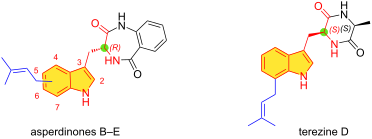
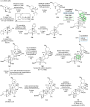
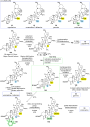
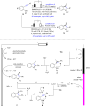
- bond formation and functional group compatibility presented unforeseen challenges. Methods for the chemical synthesis of prenyltryptophans (approach A, A–C) are scarce [25][26]. Adopting a bio-inspired approach, Ishikawa et al. treated tryptophan ethyl ester with prenyl alcohol in the presence of 2
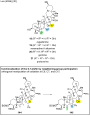
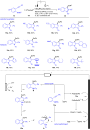
- product 11 in 37% yield (Scheme 2). Despite the modest yield, product 11 was transformed to the corresponding tertiary alcohol 12. Removal of the N-Piv group and dehydration with the Burgess reagent [35] led to an inseparable mixture of olefins slightly in favor of the exo-olefin isomer. Dehydration in


Competitive cyclization of ethyl trifluoroacetoacetate and methyl ketones with 1,3-diamino-2-propanol into hydrogenated oxazolo- and pyrimido-condensed pyridones
Beilstein J. Org. Chem. 2025, 21, 2716–2729, doi:10.3762/bjoc.21.209
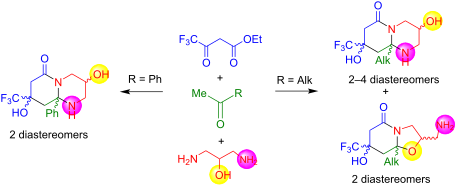
- at the acyl moiety with the amino group of diamino alcohol 3 to generate a three-component intermediate B (Scheme 4). The latter undergoes intramolecular cyclization involving the C=N bond in two equally probable directions: by adding a free amino group to form a hexahydropyrimidine ring of


Tandem hydrothiocyanation/cyclization of CF3-iminopropargyl alcohols with NaSCN in the presence of AcOH
Beilstein J. Org. Chem. 2025, 21, 2694–2702, doi:10.3762/bjoc.21.207
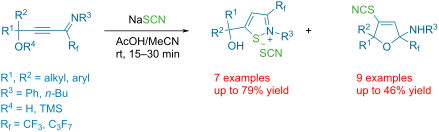
- . Results and Discussion We commenced our investigation using CF3-subsituted iminopropargyl alcohol 1a and NaSCN as model substrates. The completion of the reaction was monitored using IR spectroscopy to observe the disappearance of the band at 2219 cm−1 (–C≡C–). It was found that CF3-iminopropargyl alcohol
- and solvent. In a hexane/H2O biphasic system upon vigorous stirring, the reaction of CF3-iminopropargyl alcohol 1a and the NaSCN/KHSO4 system (ratio of 1a/NaSCN/acid 1:2:2) gave products 2a and 3a in 31% and 10% yields, respectively (Table 1, entry 1). Replacing hexane with THF doubled the yield of
- , providing products 2b,c and 3b,c with similar yields (Table 2, entries 1 and 2). The slightly decreased yield observed for product 3c obtained from iminopropargyl alcohol having a cyclohexyl substituent, is probably due to the steric effect (Table 2, entry 2). The more sterically hindered CF3-iminopropargyl



Recent advancements in the synthesis of Veratrum alkaloids
Beilstein J. Org. Chem. 2025, 21, 2657–2693, doi:10.3762/bjoc.21.206
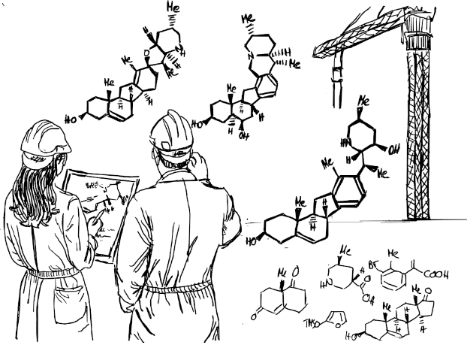
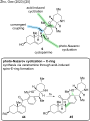
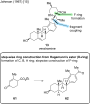
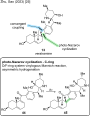
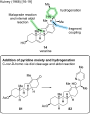
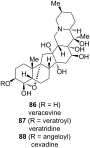
- selectively, and, through acid-catalyzed cyclization, the spiro-E-ring was fused. Elimination of the alcohol moiety at C13 installed the double bond in the correct position at C12–C13. Final Fmoc-deprotection furnished cyclopamine (6). In summary, the Zhu/Gao group disclosed the total synthesis of cyclopamine
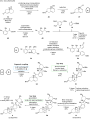
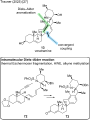
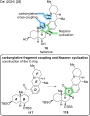
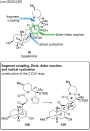
- formation and reductive coupling with an aldehyde made accessible β-amino alcohol 60 over two steps. A cascade reaction occurred upon treatment with HCl in acetone followed by treatment with KOH. Indeed, a tandem 5-exo-trig cyclization, sulfinyl removal, and lactamization occurred in one-pot. Finally
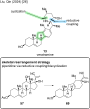
- , which provided the need for reprotection of the secondary amine moiety, and the alcohol was eliminated to furnish 65 in three steps. Compound 65 already closely resembles the desired target 12 but lacks the oxidation at C11 and the double bond in position C5–C6. Eight more steps were needed for the
















Synthesis of new tetra- and pentacyclic, methylenedioxy- and ethylenedioxy-substituted derivatives of the dibenzo[c,f][1,2]thiazepine ring system
Beilstein J. Org. Chem. 2025, 21, 2645–2656, doi:10.3762/bjoc.21.205
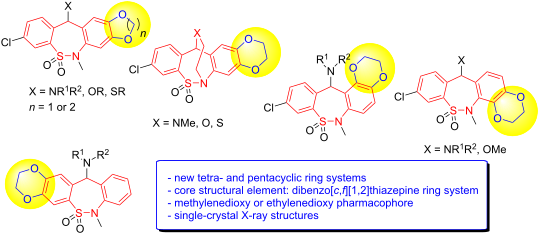
- ): reduction of 8 with NaBH4, followed by chlorination of alcohol 36 with SOCl2 and substitution of chloro derivative 37 with various amines resulted in compounds 38a–c. Tianeptine analogue 38d was obtained by hydrolysis of ester 38c. The synthesis of the new regioisomeric tetracyclic compounds containing the
- regioselectivity. Reduction of 51 with NaBH4 and subsequent chlorination of alcohol 52 with SOCl2 gave chloro derivative 53, which was treated with amines to afford compounds 54a–e. 7-Aminoheptanoic acid ester derivative 54e was hydrolyzed to tianeptine analogue 54f. Conclusion As continuation of our efforts to


Silica gel with covalently attached bambusuril macrocycle for dicyanoaurate sorption from water
Beilstein J. Org. Chem. 2025, 21, 2604–2611, doi:10.3762/bjoc.21.201
- example, an amphiphilic poly(methyl methacrylate)-based polymer modified with calix[4]pyrrole was found to form micelles in water that capture anions from caesium salts and can be precipitated from solution upon heating [11]. Similarly, a hydrogel composed of poly(vinyl alcohol) cross-linked by a “Texas


Visible-light-driven NHC and organophotoredox dual catalysis for the synthesis of carbonyl compounds
Beilstein J. Org. Chem. 2025, 21, 2584–2603, doi:10.3762/bjoc.21.200
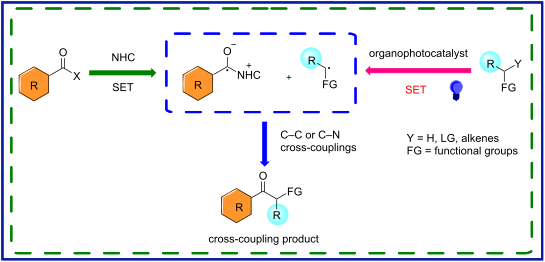
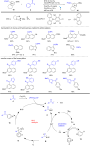
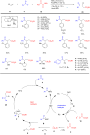
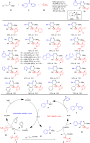
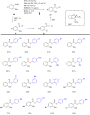
- –C, C–HA bond-forming reactions [36][37]. These chiral NHC catalysts, used to access enantiopure alcohol/amine derivatives, particularly 2° and 3° alcohols/amines, are significant structural motifs in numerous drugs and natural products and have found widespread synthetic applications in medicinal





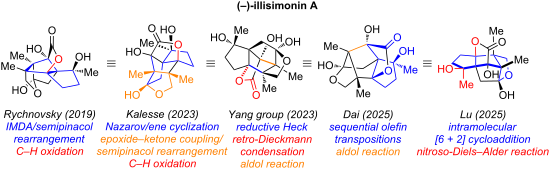
Recent advances in total synthesis of illisimonin A
Beilstein J. Org. Chem. 2025, 21, 2571–2583, doi:10.3762/bjoc.21.199
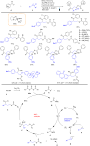
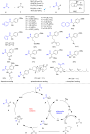
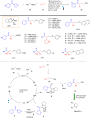
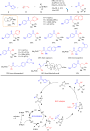
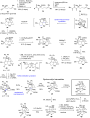
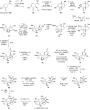
- , which was subsequently subjected to a one-pot desilylation to afford 24. Reduction of both the ester and ketone functionalities in 24, followed by selective protection of the primary alcohol and re-oxidation of the secondary alcohol to ketone, furnished compound 25 in three steps. The ketone in 25 was
- then converted to vinyl iodide 26 via hydrazine formation followed by iodination using Barton’s method. Subsequent Bouvealt aldehyde synthesis and in situ reduction delivered allylic alcohol 27. Epoxidation of 27 with m-CPBA afforded the rearrangement precursor 28. Protonic acid-promoted semipinacol
- rearrangement of 28 enabled the rearrangement of cis-pentalene to trans-pentalene, delivering intermediate 29, which possesses the same carbon skeleton as the natural product. Further oxidation of the primary alcohol to a carboxylic acid, accompanied by TBS deprotection, afforded hemiketal 30. Finally, a White






Total syntheses of highly oxidative Ryania diterpenoids facilitated by innovations in synthetic strategies
Beilstein J. Org. Chem. 2025, 21, 2553–2570, doi:10.3762/bjoc.21.198
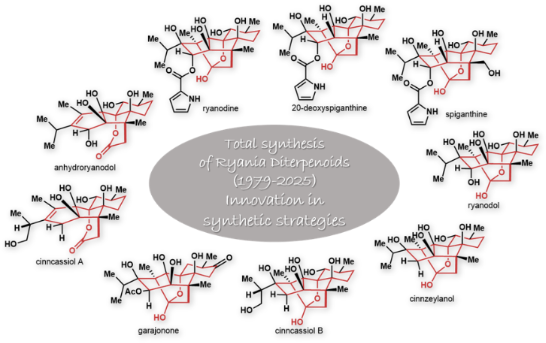
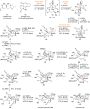
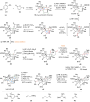
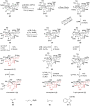
- route commenced from (−)-pulegone. After introducing oxidation states at C6 and C10 and installing an alkynyl group at C11, oxidative cleavage of a double bond yielded the key propargylic alcohol intermediate 66. This compound underwent a 1,2-addition with alkynyl Grignard reagent 67, and the resulting
- . Leveraging this regioselective oxidation, the authors achieved the total synthesis of (+)-20-deoxyspiganthine (2) from compound 71. Thus, 71 was converted to 79 via selective SeO2 oxidation (with H2O), triflation, and isopropenyl installation. After protecting the C12 tertiary alcohol and performing a
- , thus establishing the core C and D rings. Base-mediated equilibration fully converted 93 into lactone 94. Finally, selective hydroxy protection in 94, diastereoselective introduction of the C10 secondary alcohol, and global deprotection completed the total synthesis of anhydroryanodol (10). Application







Ni-promoted reductive cyclization cascade enables a total synthesis of (+)-aglacin B
Beilstein J. Org. Chem. 2025, 21, 2548–2552, doi:10.3762/bjoc.21.197
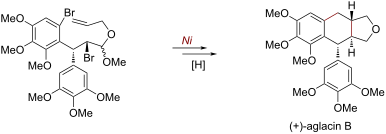
- cyclization, and a subsequent acetal reduction under acidic conditions then can complete the total synthesis of this molecule. The cyclization precursor 5 could be prepared from the primary alcohol 6 through transforming functional groups of the alkyl chain and installing an allyl group. It was envisioned
- diastereocontrol for 12 (dr = 20:1), and could easily proceed on a scale of ten grams (Supporting Information File 1). For the reduction of the chiral auxiliary in 12, NaBH4 in THF/H2O proved to be the optimal conditions, giving the primary alcohol 6 in 80% yield. Subsequently, oxidation of this alcohol by IBX
- 2,4,4,6-tetrabromo-2,5-cyclohexadienone (TBCD) in CH2Cl2 followed by reaction with allyl alcohol, provided β-bromo acetal 5 in 30% overall yield starting from alcohol 6. With a successful preparation of the cyclization precursor 5, the designed nickel-promoted reductive tandem cyclization was pursued


Rapid access to the core of malayamycin A by intramolecular dipolar cycloaddition
Beilstein J. Org. Chem. 2025, 21, 2542–2547, doi:10.3762/bjoc.21.196
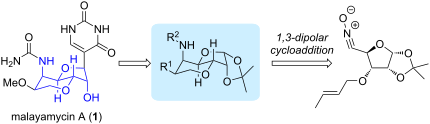
- details). The following reductive cleavage of the N–O bond was carried out by Mo(CO)6 in refluxing CH3CN [39]. Subsequent oxidation of the resulting secondary alcohol with Dess–Martin periodinane (DMP) [40] afforded methyl ketone 20 in 53% yield for 2 steps. Moreover, the minor isomer 19b also underwent
- from the INOC cycloaddition can be converted to a single stereoisomer of 20. With all required stereogenic centers embedded in the 6-5 trans-fused bicyclic skeleton, the remaining problem is converting C to O to install the secondary alcohol at C2 with retention of the β-configuration. The programmed




Synthesis and characterization of a isothiouronium-calix[4]arene derivative: self-assembly and anticancer activity
Beilstein J. Org. Chem. 2025, 21, 2535–2541, doi:10.3762/bjoc.21.195
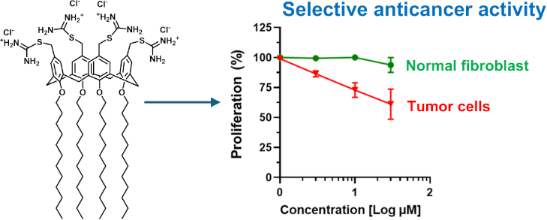
- chains were tethered to the calixarene hydroxy groups (lower rim) by reaction with dodecyl iodide in the presence of NaH. At the upper rim of this derivative, four formyl groups were introduced by reaction with hexamethylenetetramine in trifluoroacetic acid. The formyl groups were reduced to alcohol


Assembly strategy for thieno[3,2-b]thiophenes via a disulfide intermediate derived from 3-nitrothiophene-2,5-dicarboxylate
Beilstein J. Org. Chem. 2025, 21, 2489–2497, doi:10.3762/bjoc.21.191
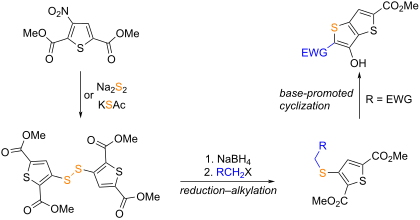
- , but it was obtained as a mixture of ester forms, namely dimethyl and diethyl esters in ethanol, and dimethyl and diisopropyl esters in isopropanol. These results indicate that the reaction with alcohol solvents resulted in partial transesterification of the methoxycarbonyl groups, while reductive



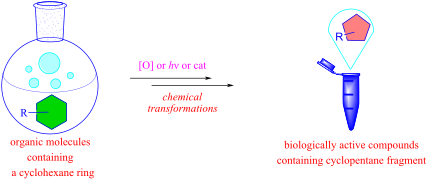
Transformation of the cyclohexane ring to the cyclopentane fragment of biologically active compounds
Beilstein J. Org. Chem. 2025, 21, 2416–2446, doi:10.3762/bjoc.21.185
- available (+)-sclareolide (101) as starting compound, from which key alcohol 102 was synthesized in 7 steps. Selective mesylation of the secondary alcohol in 102 followed by semipinacol rearrangement catalyzed by t-BuOK afforded diketone 104 as a pair of epimers at C12 in a 1:1 ratio, with 70% overall yield
- reagent 118 using trifluoromethanesulfonic acid (TfOH) or TMSOTf as Lewis acids. The authors suggested that the reaction proceeded via the formation of an intermediate 119 followed by reaction with an alcohol nucleophile and a 1,2-carbon migration to produce a cyclopentane derivative 120 with a yield of
- challenging [6-5-5-7]-tetracyclic ring system embedded within a fully functionalized cyclopentane, as well as seven contiguous stereogenic centers. In 2017, (−)-pavidolide B (134) was prepared in 13 steps from the known chiral alcohol 135, which in turn was synthesized from commercially available (+)-carvone


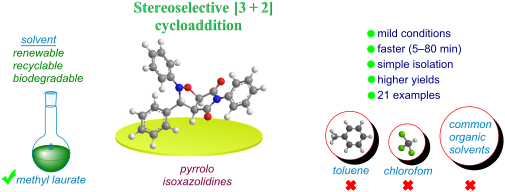
The high potential of methyl laurate as a recyclable competitor to conventional toxic solvents in [3 + 2] cycloaddition reactions
Beilstein J. Org. Chem. 2025, 21, 2389–2415, doi:10.3762/bjoc.21.184
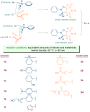
- 1,3-dipole and/or dipolarophile and therefore, in some cases, cis-diastereoselectivity arises [85][114][115][116][117]. For instance, in the [3 + 2] cycloaddition reactions examined in earlier studies, intramolecular H-bonding, facilitated by the amide or alcohol functionality present in the nitrone






Comparative analysis of complanadine A total syntheses
Beilstein J. Org. Chem. 2025, 21, 2334–2344, doi:10.3762/bjoc.21.178
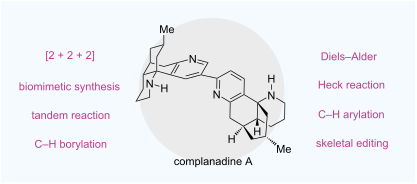
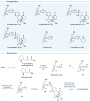
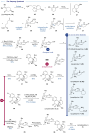
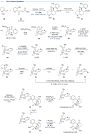
- , followed by acetylation of the resulting propargylic alcohol afforded 17 which was further advanced to 18 via copper-catalyzed selective displacement of the propargyl acetate with benzylamine and hydrolysis of the primary acetate. The primary alcohol of 18 was activated with PPh3/CCl4, triggering an



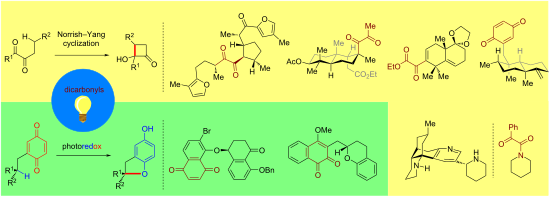
Recent advances in Norrish–Yang cyclization and dicarbonyl photoredox reactions for natural product synthesis
Beilstein J. Org. Chem. 2025, 21, 2315–2333, doi:10.3762/bjoc.21.177
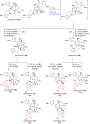
- known two-step sequence to 61, followed by Mitsunobu reaction, ester reduction, thioether oxidation, and silylation of the primary alcohol to furnish sulfone 64. The two key fragments – aldehyde 60 and sulfone 64 – were merged via Julia–Kocienski olefination to construct alkene 65. Treatment of 65 with
- (C6F5)3B triggered a Meinwald rearrangement, generating aldehyde 66. Nucleophilic addition, oxidation of the resulting alcohol, and base-promoted epimerization at C6 of 67' delivered 67. Subsequent dihydroxylation of the alkene in 67 and protection of the resulting 1,2-diol as a cyclic carbonate
- , ketone reduction, hydroquinone oxidation, and alcohol oxidation – led to the labile ketone 118. Completion of preussomerin EG3 (99) from 118 relied on a simple sequence including a formal intramolecular 1,6-addition, followed by simultaneous methanol trapping of the resulting electrophilic quinone




Pathway economy in cyclization of 1,n-enynes
Beilstein J. Org. Chem. 2025, 21, 2260–2282, doi:10.3762/bjoc.21.173
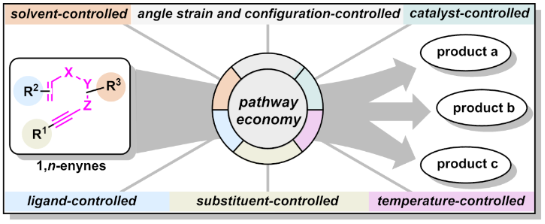
- preferentially initiated 6-endo-trig cyclization, affording iodinated homoallylic alcohol piperidines 15 (Scheme 4, path a). Conversely, cyclopropane-annulated pyrrolidines 17 were constructed using methanol as solvent through hydroxyl radical-mediated 5-exo-trig cyclization pathway (Scheme 4, path b). This


A chiral LC–MS strategy for stereochemical assignment of natural products sharing a 3-methylpent-4-en-2-ol moiety in their terminal structures
Beilstein J. Org. Chem. 2025, 21, 2243–2249, doi:10.3762/bjoc.21.171
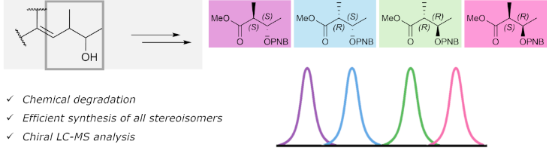
- investigated. First, alcohol 3 was converted to (R)-MTPA ester 4 (Scheme 1B). Despite numerous attempts to optimize the chromatographic conditions, the resulting diastereomers could not be separated (Figure S1, Supporting Information File 1). Next, p-bromobenzoyl ester 5 was synthesized (Scheme 1B). Although


Thiadiazino-indole, thiadiazino-carbazole and benzothiadiazino-carbazole dioxides: synthesis, physicochemical and early ADME characterization of representatives of new tri-, tetra- and pentacyclic ring systems and their intermediates
Beilstein J. Org. Chem. 2025, 21, 2220–2233, doi:10.3762/bjoc.21.169
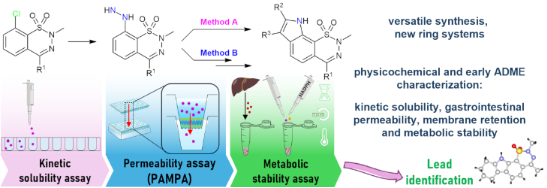
- water (5 mL) was added. The mixture was extracted with EtOAc (3 × 5 mL), washed with water (5 mL) and brine (5 mL), dried over MgSO4 and evaporated to give crude products 3 or 10, which were purified by recrystallization from isopropyl alcohol or by flash chromatography. Method B for the preparation of


Electrochemical cyclization of alkynes to construct five-membered nitrogen-heterocyclic rings
Beilstein J. Org. Chem. 2025, 21, 2173–2201, doi:10.3762/bjoc.21.166
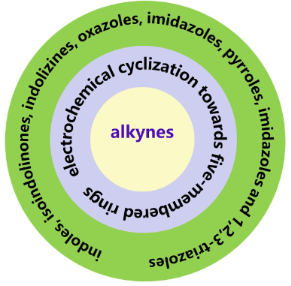
- copper catalyst was still required in that procedure. In 2023, Bera presented an electrochemical oxidative [3 + 2] cycloaddition of secondary propargyl alcohol to access 1,2,3-triazole (Scheme 19) [273]. After probing the reaction systematically, the optimal conditions were presented as following: a
- mixture of propargyl alcohol 50 (0.7 mmol), NaN3 (2.8 mmol), n-Bu4NI (0.5 mmol) and MeCN (10 mL) under electrolysis (graphite rod as anode, stainless-steel plate as cathode, 11 mA) at rt for 10 h. According to the experimental results and density functional theory (DFT) calculations, a plausible mechanism
- electrochemical annulation of alkynes with enamides. Electrochemical [3 + 2] cyclization of heteroarylamine was an efficient access towards imidazopyridine. The electrochemical oxidative [3 + 2] cycloaddition of secondary propargyl alcohol produced 1,2,3-triazole. In most of these above reactions, the target









C2 to C6 biobased carbonyl platforms for fine chemistry
Beilstein J. Org. Chem. 2025, 21, 2103–2172, doi:10.3762/bjoc.21.165
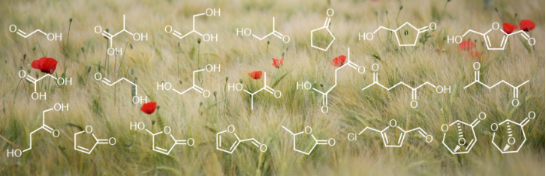
- electrocatalyst supported on nitrogen-doped carbon nanosheets (Cu/NCNSs). This catalyst exhibits high activity for the oxidation of various substrates, including GLY, gluconic acid (GLU), 5-hydroxymethylfurfural (HMF), benzyl alcohol (BA), furfuryl alcohol (FA), and ethylene glycol (EG) (Scheme 7) [35]. Park et
- hydrogenation to produce furfuryl alcohol. This latter is a versatile intermediate for the production of resins, coatings, polymers and used as a solvent. It can also be converted into other chemicals through oxidative cleavage, over-reduction and etherification (Scheme 49) [177]. Zhang et al. reported the use
- Meerwein–Ponndorf–Verley reduction, while acetaldehyde is generated in situ by ethanol oxidation (Scheme 50). The equilibrium allows furfural to be simultaneously converted into furfuryl alcohol and 3-(2-furyl)acrolein in one pot through a redox reaction. The highest mass conversion rate of furfural can


The application of desymmetric enantioselective reduction of cyclic 1,3-dicarbonyl compounds in the total synthesis of terpenoid and alkaloid natural products
Beilstein J. Org. Chem. 2025, 21, 2085–2102, doi:10.3762/bjoc.21.164
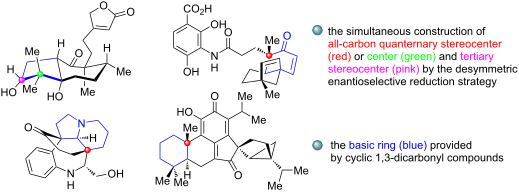
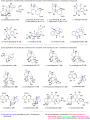
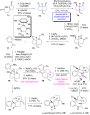
- reduction of diketone 28 for preparing alcohol 30 under the CBS conditions [8] with (S)-29 as the catalyst (Scheme 1) [14]. Notably, this reaction could be performed on multiple gram scales with satisfactory yield (72%) and ee value (92%). Protection of the alcohol group in 30 with TBSCl followed by
- modification of the terminal double bond afforded ketoaldehyde 31. The 2-bromoallylation [15] of 31 with boronic ester 32 stereoselectively constructed the C3–OH group to give homoallylic alcohol 33. Next, a successive manipulation by removal of TBS group, CSA-catalyzed ketalization, and DMP oxidation of the
- secondary alcohol to a ketone allowed for rapid construction of bicyclic ketone 34 in high overall yield. The oxidative dehydrogenation of 34 gave α,β-unsaturated bicyclic ketone 35 smoothly. Sequential A-ring construction and functional group modifications of 35 produced the diketone 36. Subsequently, 36





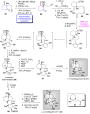


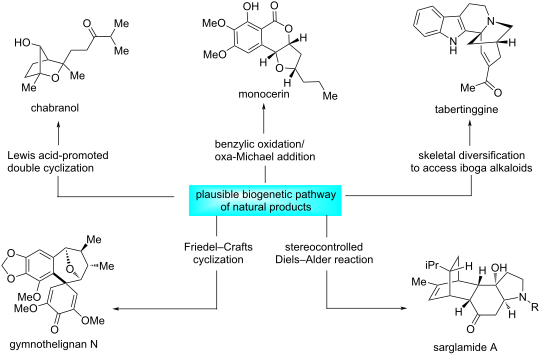
Bioinspired total syntheses of natural products: a personal adventure
Beilstein J. Org. Chem. 2025, 21, 2048–2061, doi:10.3762/bjoc.21.160
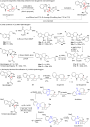
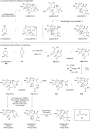
- propose the biosynthetic pathway, which has not yet been reported in Duh’s isolation report (Scheme 1a). In our proposal, the linear sesquiterpenoid trans-nerolidol (1) with a chiral tertiary alcohol undergoes dihydroxylation to generate triol 2, which further proceeds a C–C bond cleavage to afford
- aldehyde 3. This linear aldehyde would be activated by an acid to trigger a key Prins cyclization with the trisubstituted olefin through reaction model 3 and generate a putative tertiary carbocation to be trapped by the chiral alcohol, providing bicycle 4 stereoselectively. Finally, the last olefin would
- TBS protection in one pot. Oxidation of the primary alcohol using Swern oxidation gave the hydroxy aldehyde 3, which was activated with a formal silicon cation to trigger the Prins cyclization terminated by the tertiary alcohol, affording silylated bicycle 9 directly through the designed bioinspired




Aryl iodane-induced cascade arylation–1,2-silyl shift–heterocyclization of propargylsilanes under copper catalysis
Beilstein J. Org. Chem. 2025, 21, 1984–1994, doi:10.3762/bjoc.21.154
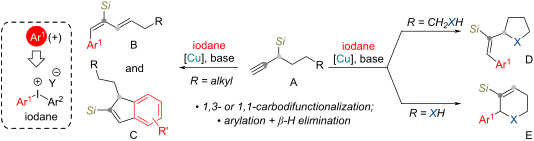
- using the symmetrical dithiophen-2-yliodonium p-tosylate (I-7). It should be noted that all products 8 were obtained with exclusive (E)-selectivity. Tetrahydrofuran 8a and some analogous compounds could be synthesized previously from alcohol 7d, but in two steps, employing a halogen electrophile-induced
- described by us recently, among other possible transformations [21][22]. Interestingly, the addition of O-nucleophiles to form 1,3-carbofunctionalization products, can only be achieved in an intramolecular fashion. In the presence of an excess (5 equiv) of external an O-nucleophile R–OX (alcohol, carboxylic
- internal nucleophiles (Scheme 4), that could be used instead of the alcohol. The carboxylic acid-containing silane 7 (R = COOH), which was obtained by stepwise oxidation of the alcohol 7d, failed to give the desired lactone 8t product due to O-arylation of the carboxylic acid, leading to phenyl alkyl ester





