Search results
Search for "binding" in Full Text gives 989 result(s) in Beilstein Journal of Organic Chemistry. Showing first 200.
Ring contraction and ring expansion reactions in terpenoid biosynthesis and their application to total synthesis
Beilstein J. Org. Chem. 2026, 22, 289–343, doi:10.3762/bjoc.22.21
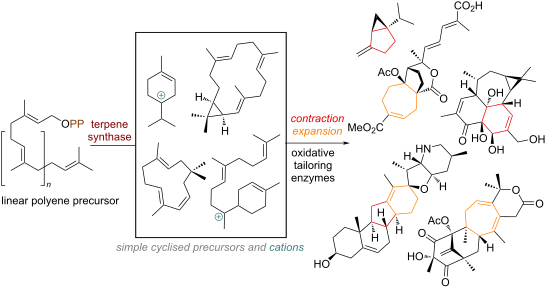
- terpenoid modification in nature are depicted. Terpene synthase enzymes are centrally important for determining the carbon skeleton and thus family the terpenoid belongs to. These cyclisation enzymes are divided into Class I (active site cleft contains multiple Mg2+-binding motifs which are responsible for






Spirobarbiturates with a pyrrolizidine moiety: synthesis, structure and biological evaluation
Beilstein J. Org. Chem. 2026, 22, 274–288, doi:10.3762/bjoc.22.20
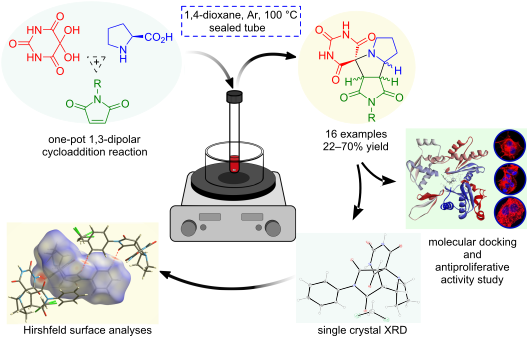
- absorption (HIA), in vitro permeability to Caco-2 cells (Caco2), in vitro binding to plasma proteins (PPB), solubility, and inhibition of CYP2D6. The following were selected as descriptors of toxicity: carcinogenicity for rats and mice, mutagenicity according to the Ames test, and cardiotoxicity by
- inhibition of hERG in vitro. The results are shown in Supporting Information File 1, Table S5. As can be seen from the table, the obtained results suggest that the compounds have a good intestinal absorption and medium permeability. However they are expected to have low plasma protein binding and permeation
- . Taking into account that the conformation of the actin monomer in the described structures is basically the same, the structure of non-muscle β-actin (8DNH, 2.99 Å) obtained by cryo-electron microscopy was used for this study. Docking was performed to both known clefts (hydrophobic or target-binding one




Arene activation via π-bond localization: concepts and opportunities
Beilstein J. Org. Chem. 2026, 22, 257–273, doi:10.3762/bjoc.22.19
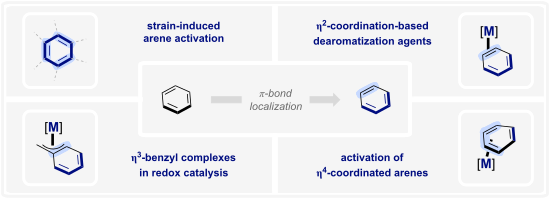
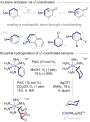
- configuration promotes strong binding to π-acidic ligands, effectively compensating for the loss of aromaticity upon η2-coordination to arenes, while disfavoring oxidative addition due to geometric constraints of the octahedral complex. The resulting η2-arene complexes, encompassing both arenes and heteroarenes
- (Figure 6C), so suitable aromatic ligands are limited to those lacking strongly π-acidic functional groups, e.g., alkenes, alkynes, aldehydes, certain ketones, and nitriles. Lewis-basic heteroarenes, such as pyridines or imidazoles, tend to coordinate via nitrogen instead, disfavoring η2-binding (Figure
- aromatic complexes is their fluxionality [47]. Despite clear thermodynamic preferences for specific binding sites, the metal can migrate across the π-system without detaching from the aromatic ring (Figure 7A). This flexibility allows for the generation of multiple organic functionalities from a single




A mild and atom-efficient four-component cascade strategy for the construction of biologically relevant 4-hydroxyquinolin-2(1H)-one derivatives
Beilstein J. Org. Chem. 2026, 22, 244–256, doi:10.3762/bjoc.22.18
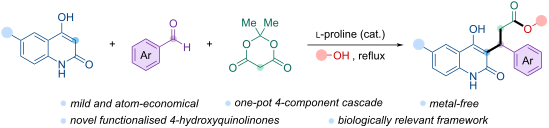
- activity [33]. Halogen substituents in this position have been shown to modulate antibacterial, antiviral, and antiproliferative activities, likely through electronic effects and improved target binding. The C3 position was functionalized with a propanoic acid moiety, explored in both its open-chain (acid


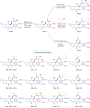
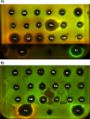
Conformational analysis of difluoromethylornithine: factors influencing its gas-phase and bioactive conformations
Beilstein J. Org. Chem. 2026, 22, 237–243, doi:10.3762/bjoc.22.17
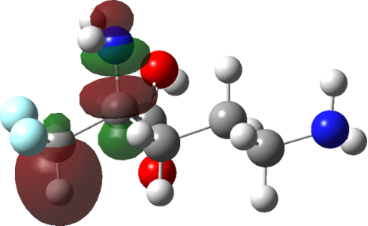
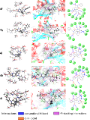
- decarboxylase from Leishmania infantum complexed with PLP and DFMO, the bound ligand corresponds instead to human arginase I (PDB code 3GN0). While binding to arginase I is not related to DFMO’s pharmacological activity, both enzymes recognize ornithine-related substrates, allowing DFMO to occupy the arginase
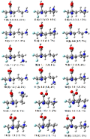
- amino acid residues and water molecules, while the ligand is delineated by a contour line to distinguish it from the binding cavity. Lowest-energy type-I, type-II, and type-III conformers of the zwitterionic form of (S)-DFMO. Color labels: H = blue, C = pink, N = orange, O = red, F = yellow. DFT




Silica gel with covalently attached bambusuril macrocycle for dicyanoaurate sorption from water
Beilstein J. Org. Chem. 2025, 21, 2604–2611, doi:10.3762/bjoc.21.201
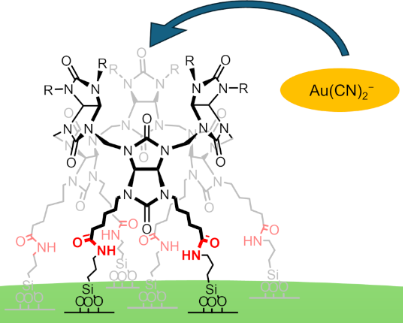
- competing dicyanoargentate(I) anions. We also examine the recyclability of the material and assess its stability in organic solvents, comparing its performance with that of a previously developed material containing noncovalently bound bambusuril. Keywords: anion binding; anion extraction; anion receptor
- -sized” molecular box has been used to extract various anions from water [12]. Another family of macrocyclic compounds suitable for anion recognition and binding are bambusurils (BUs). BUs act as very potent anion receptors in both organic solvents and water. Furthermore, their portals can be variously
- , exhibiting near-quantitative binding at millimolar concentrations [17]. The lower binding efficiency of BUs attached to the material compared to the free macrocycle in solution can likely be attributed to the heterogeneous nature of the solid-phase system. Moreover, the anion binding ability of BU1 may be


Total syntheses of highly oxidative Ryania diterpenoids facilitated by innovations in synthetic strategies
Beilstein J. Org. Chem. 2025, 21, 2553–2570, doi:10.3762/bjoc.21.198
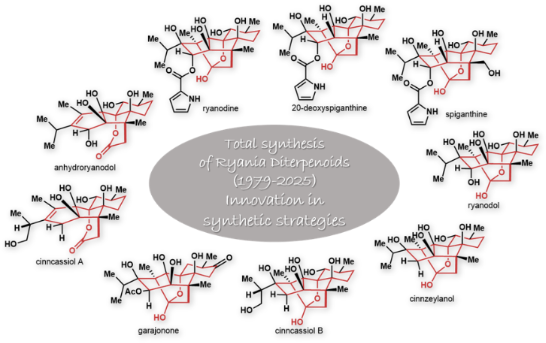
- core, successfully completing the first asymmetric total synthesis of ryanodol (4) in 41 steps. To elucidate the role of the C15 hemiacetal hydroxy group in ryanodine (1)-type diterpenoid natural products in binding to ryanodine receptors, the authors initially proposed reducing the lactone moiety in
- , epoxidation of the C1–C2 double bond, and Li/NH3-promoted reductive cyclization to construct the core E ring, completing the asymmetric total synthesis of (+)-ryanodol (4). The 800-fold greater binding affinity of (+)-ryanodine (1) for cardiac ryanodine receptors (RyRs) compared to its hydrolysis product
- , (+)-ryanodol (4), indicates that the pyrrole-2-carboxylate unit at the C3 position is critical for receptor binding, as established by structure–activity relationship (SAR) studies [28]. However, the direct and selective modification of the highly sterically hindered C3 hydroxy group within this







Synthesis and characterization of a isothiouronium-calix[4]arene derivative: self-assembly and anticancer activity
Beilstein J. Org. Chem. 2025, 21, 2535–2541, doi:10.3762/bjoc.21.195
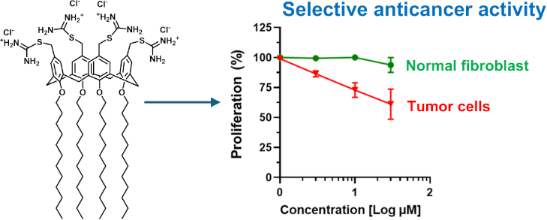
- . Multiple ligand–receptor interactions can significantly enhance receptor binding affinity and cellular uptake, as well as more effectively modulate signal transduction pathways, for instance when receptor clustering is necessary on the cell membrane [3]. Designing multivalent bioactive compounds thus


Isoorotamide-based peptide nucleic acid nucleobases with extended linkers aimed at distal base recognition of adenosine in double helical RNA
Beilstein J. Org. Chem. 2025, 21, 2513–2523, doi:10.3762/bjoc.21.193
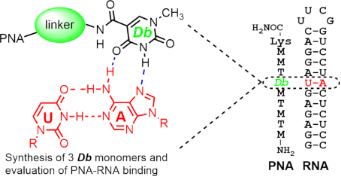
- regions of RNA. We herein report the synthesis and binding studies of new isoorotamide-based PNA monomers that target uridine–adenosine base pairs via a distal base recognition strategy. Monomers were designed with an arylisoorotamide core attached to a linker aimed at bypassing the uridine in a U–A pair
- distal binding monomers (Db) demonstrated slightly higher affinity for A–U base pairs while one demonstrated slightly higher affinity for the G–C base pair. These results provide insight into the nature of PNA monomer design particularly around linker design and rigidity. Keywords: Hoogsteen hydrogen
- possible base pairs (G–C, A–U, C–G, and U–A). Notably, each synthetic nucleobase takes advantage of favorable hydrogen bonding interactions to the proximal nucleobase in the Watson–Crick base pair. Strong binding has been reported for purine recognition given the propensity for two Hoogsteen hydrogen bonds


Conformational effects on iodide binding: a comparative study of flexible and rigid carbazole macrocyclic analogs
Beilstein J. Org. Chem. 2025, 21, 2369–2375, doi:10.3762/bjoc.21.181
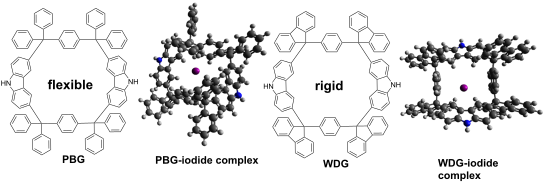
- work represents one of the earliest comparative studies on the anion-binding behaviors of carbazole-based structural analogs, demonstrating that a flexible macrocycle markedly improves iodide binding affinity via an induced-fit mechanism. The flexible analog PBG exhibits a 22.78-fold higher
- fluorescence quenching efficiency upon iodide binding compared to the rigid WDG (KPBG/KWDG = 22.78), demonstrating its potential as a highly sensitive optical probe and offering a novel strategy for engineering dynamic supramolecular receptors. Two carbazole-based macrocyclic probes, PBG (flexible benzene ring
- demonstrated that flexible PBG achieves superior I− binding (KPBG = 1.387 × 10⁵ M−1) through induced-fit conformational adjustments, whereas rigid WDG (KWDG = 6.089 × 10³ M−1) is constrained by preorganized cavity geometry, adhering to a conformational selection mechanism. This work elucidates the synergistic



Rotaxanes with integrated photoswitches: design principles, functional behavior, and emerging applications
Beilstein J. Org. Chem. 2025, 21, 2345–2366, doi:10.3762/bjoc.21.179

- reported in 2014 the first examples of rotaxanes with a dithienylethene switch on the axle [57]. They synthesized [3]- and [5]rotaxanes with a symmetric axle containing a dithienylethene in the center and alkylammonium binding sites on each side, which interact with N-hetero crown ether macrocycles
- fluorescence quenching phenomena with aggregate-induced emission (AIE) in aqueous media. They synthesized a [2]rotaxane with one dithienylethene unit as a stopper, and one BAA and one urea binding site, as well as one DB24C8 macrocycle with a tetraphenylethene (TPE) fluorophore [16] (Figure 7). Addition of
- incorporation of functional hydrazone photoswitches into rotaxanes began more recently with Leigh. Thus, these photoswitches are underexplored in MIMs. Specifically, Leigh and co-workers synthesized [2]rotaxanes in which a pyridyl-acyl hydrazone moiety functioned as both photo- and thermal-switchable binding


Insoluble methylene-bridged glycoluril dimers as sequestrants for dyes
Beilstein J. Org. Chem. 2025, 21, 2302–2314, doi:10.3762/bjoc.21.176
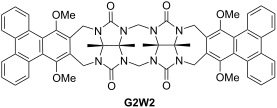
- cucurbit[n]uril (CB[n]) molecular containers [21][22]. Macrocyclic CB[n] display ultratight binding toward hydrophobic cations in water which renders them an attractive new class of sequestrants [23][24][25][26]. For example, Buschmann and Jekel demonstrated the use of CB[6] (Figure 1) for the removal of
- have studied water-soluble acyclic CB[n] based on methylene-bridged glycoluril monomer–tetramer and found that glycoluril tetramer-derived hosts displayed the highest binding affinity toward hydrophobic alicyclic dications due to enhanced ion–dipole interactions [40][41]. Separately, we studied



Research towards selective inhibition of the CLK3 kinase
Beilstein J. Org. Chem. 2025, 21, 2250–2259, doi:10.3762/bjoc.21.172
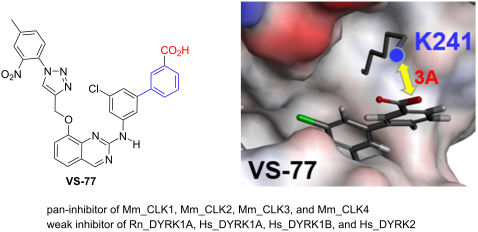
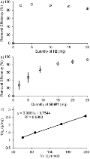
- , examination of the structure of CLK3 shows that this key lysine 241 is very close to the entry of the ATP binding site (Figure 1B). Lysine 241 could be considered as an opportunity to design new molecules with an improved affinity to CLK3, by adding specific interactions with this amino acid bearing a primary
- linker between the core of the inhibitor and the acidic function. The acid could be placed in meta or para positions taking into account the flexible backbone of lysine 241 (Figure 3). Further, in case the binding of these new targets would require a little more flexibility around the basic skeleton, we
- ). Second, molecular docking using DYRK1A crystal structure was used to understand the unexpected binding on the DYRK kinases (Figure 6). Surprisingly, another lysine (K175) is also located near the acidic group of VS-77 (at 3.2 Å between the carbonyl carbon atom and nitrogen from amine). This residue is


Discovery of cytotoxic indolo[1,2-c]quinazoline derivatives through scaffold-based design
Beilstein J. Org. Chem. 2025, 21, 2062–2071, doi:10.3762/bjoc.21.161
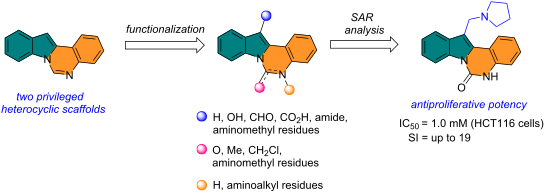
- . Such compounds can intercalate into nucleic acids, primarily through π–π stacking interactions with nitrogenous bases. The introduction of side chains with terminal amino groups enhances binding to oligonucleotides via additional ionic interactions and hydrogen bonds. The indolo[1,2-c]quinazolin-6(5H
- (Figure S1 in Supporting Information File 1). The interaction of compounds 7a–c with duplex DNA was then investigated by fluorescence titration, measuring the quenching of ligand fluorescence upon binding to the nucleic acid. Fluorimetric titration studies confirmed the interaction of 7a–c with double
- ionic strength of the solution to 20 mM Tris buffer significantly enhanced DNA binding (Figure S2 in Supporting Information File 1). Notably, the spectral characteristics of the compounds remained virtually unchanged upon DNA binding. Scatchard plot analysis of the binding isotherms revealed a binding


Synthesis, biological and electrochemical evaluation of glycidyl esters of phosphorus acids as potential anticancer drugs
Beilstein J. Org. Chem. 2025, 21, 1909–1916, doi:10.3762/bjoc.21.148
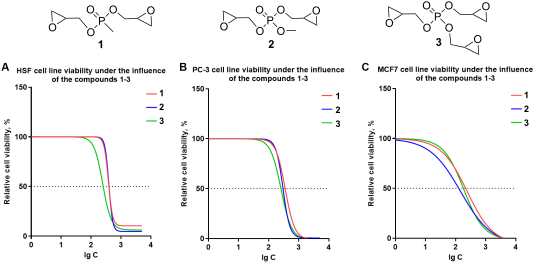
- , the significant suppression or disappearance of the HSA oxidation peak upon addition of glycidyl esters 1–3 can be interpreted as evidence of covalent modification (alkylating) of nucleophilic sites on HSA, rather than non-specific binding or merely non-reactive association [27][28][29]. The observed


Systematic pore lipophilization to enhance the efficiency of an amine-based MOF catalyst in the solvent-free Knoevenagel reaction
Beilstein J. Org. Chem. 2025, 21, 1854–1863, doi:10.3762/bjoc.21.144
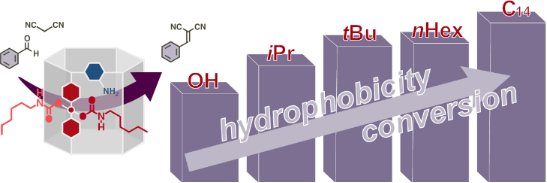
- by increasing the binding affinity for the lipophilic reactants and by decreasing the energy required to desolvate acid/base amino acid catalysts [34][35]. Lipophilicity has also been found to be beneficial in condensation reactions as the removed water molecules are repelled by the hydrophobic


Photoswitches beyond azobenzene: a beginner’s guide
Beilstein J. Org. Chem. 2025, 21, 1808–1853, doi:10.3762/bjoc.21.143
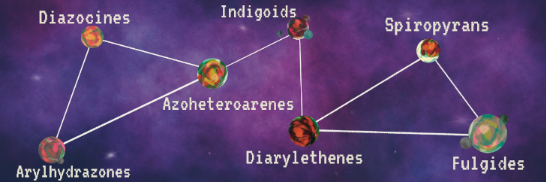
- the protein-binding site than the bent Z-isomer. However, it would be more desirable to have an inactive molecule in its most stable state which can be activated by irradiation [51][59]. Hernando and co-workers were able to design photoswitchable neurotransmitters of ionotropic kainate receptors by




Research progress on calixarene/pillararene-based controlled drug release systems
Beilstein J. Org. Chem. 2025, 21, 1757–1785, doi:10.3762/bjoc.21.139
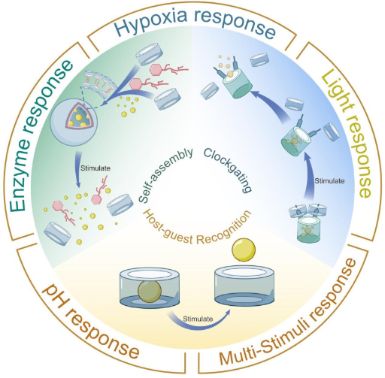
- , stimulus responsiveness, specific recognition and binding, and multi-target synergistic action [14][15][16]. These characteristics enable precise control of drug release and targeted drug delivery, thereby improving drug stability and bioavailability, and reducing drug toxicity and side effects
- in pH, light, and enzyme activity, the binding affinity between the guest and host molecules can be altered, thereby achieving controlled drug release and targeted delivery. (2) Drugs are loaded into self-assembled host–guest systems [29][30][31][32]. The chemical structure or properties of the host
- of supramolecular interactions [33][34]. Different external stimuli, including pH changes, enzymes, light irradiation, hypoxia, and multi-stimuli responses, can alter the supramolecular structure or binding affinity to activate the opening and closing of the nano-valves. In addition to the three






3,3'-Linked BINOL macrocycles: optimized synthesis of crown ethers featuring one or two BINOL units
Beilstein J. Org. Chem. 2025, 21, 1719–1729, doi:10.3762/bjoc.21.134
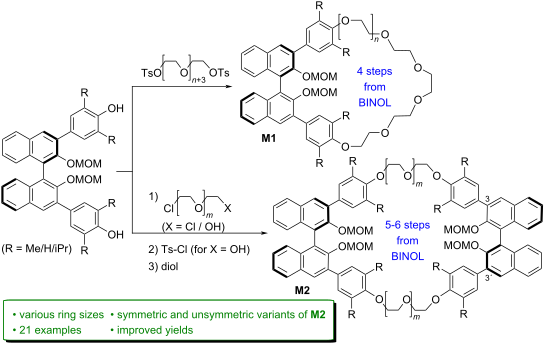
- ) [41][42][43] have been used for attaching the crown ether macrocycle, although this strategy has the advantage that the 2,2'-hydroxy groups remain intact and can be used for further binding or functionalization. Our group recently became interested in synthesizing BINOL derivatives featuring


Approaches to stereoselective 1,1'-glycosylation
Beilstein J. Org. Chem. 2025, 21, 1700–1718, doi:10.3762/bjoc.21.133
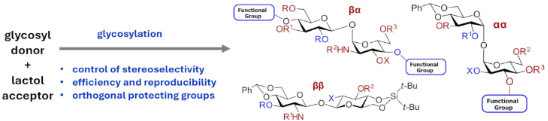
- exhibits activity against multidrug-resistant Streptococci and Staphylococci including S. aureus via a unique mechanism involving binding to an exclusive site on the bacterial ribosome [10][59]. Accordingly, the β-anomeric configuration in the 3-O-p-methoxybenzyl-protected mannose lactol 31 was fixed by


Formal synthesis of a selective estrogen receptor modulator with tetrahydrofluorenone structure using [3 + 2 + 1] cycloaddition of yne-vinylcyclopropanes and CO
Beilstein J. Org. Chem. 2025, 21, 1639–1644, doi:10.3762/bjoc.21.127
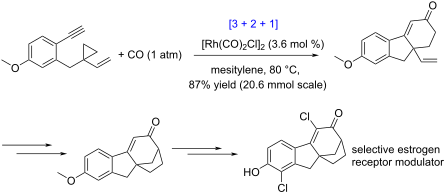
- bridged tetrahydrofluorenone derivatives, represented by molecules V and VI, showed significant ERβ binding affinity and high selectivity [15][16][17][18][19]. So far, there are only two routes for accessing bridged tetrahydrofluorenone derivative VI. The first one shown in Scheme 2A includes a Robinson


On the aromaticity and photophysics of 1-arylbenzo[a]imidazo[5,1,2-cd]indolizines as bicolor fluorescent molecules for barium tagging in the study of double-beta decay of 136Xe
Beilstein J. Org. Chem. 2025, 21, 1627–1638, doi:10.3762/bjoc.21.126
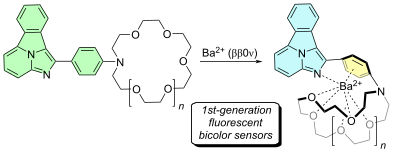
- validating a fluorescent indicator that would fulfill the following conditions: (i) high discrimination between the free and Ba2+-bound states; (ii) high binding affinity for Ba2+, and low background signal for the chelated state. We reasoned that a bicolor fluorescent indicator [7] (FBI), namely, a
- binding between this cation and 12-crown-4 (16a, n = 1), 15-crown-5 (16b, n = 2), 18-crown-6 (16c, n = 3) and 21-crown-7 (16d, n = 4), to form Ba2+·crown ethers 15a–d. We compared the corresponding binding energies by means of the following isodesmic equation: Where the different terms correspond to Gibbs
- defined by the two aromatic components of the sensor result in an essentially planar conformation at the free state, whereas binding to a naked barium cation results in a perpendicular arrangement between the benzo[a]imidazo[5,1,2-cd]indolizine and the 1,4-phenylene components, thus promoting a blue shift


Facile synthesis of hydantoin/1,2,4-oxadiazoline spiro-compounds via 1,3-dipolar cycloaddition of nitrile oxides to 5-iminohydantoins
Beilstein J. Org. Chem. 2025, 21, 1552–1560, doi:10.3762/bjoc.21.118

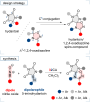
- determined by the configuration of the spiro-core, while still allowing for the possibility of relative rotation to facilitate better binding to the targets. Furthermore, it appears to be as exceedingly advantageous from a synthesis perspective, as it enables the application of methods that have been



Azobenzene protonation as a tool for temperature sensing
Beilstein J. Org. Chem. 2025, 21, 1528–1534, doi:10.3762/bjoc.21.115
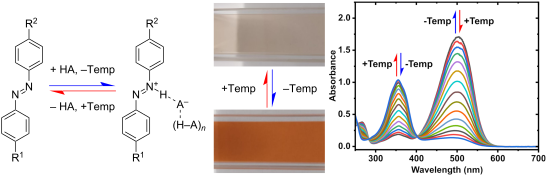
- other transformations that can offer useful functionalities. These include ionization via protonation of one of the nitrogens forming the azo bond [12][13], azo–hydrazone tautomerization [14][15], and binding of analytes to side groups [16]. Such transformations depend on the azobenzene structure but


Heterologous biosynthesis of cotylenol and concise synthesis of fusicoccane diterpenoids
Beilstein J. Org. Chem. 2025, 21, 1489–1495, doi:10.3762/bjoc.21.111
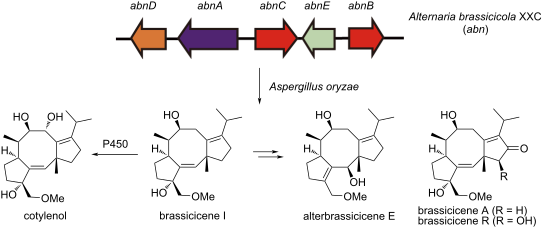
- -inflammatory, antimicrobial, antiparasitic, and plant growth regulating activities. For instance, cotylenin A (1) and fusicoccin A (2) function as molecular glues to stabilize the interactions between 14-3-3 proteins and their binding partners in plant and animal cells [8][9][10][11][12]. It has been reported